Silanes
Sous-catégories appartenant à la catégorie "Silanes"
1234 produits trouvés pour "Silanes"
DIMETHYLSILA-14-CROWN-5, 95%
CAS :Silacrown (250.37 g/mol)
2,2-Dimethyl-1,3,6,9,12-pentaoxa-2-silacyclotetradecaneCrown ether analogDual end protected PEGPotential Li ion electrolyteFormule :C10H22O5SiDegré de pureté :95%Couleur et forme :LiquidMasse moléculaire :250.37DIALLYLDIMETHYLSILANE, 92%
CAS :Formule :C8H16SiDegré de pureté :92%Couleur et forme :Straw LiquidMasse moléculaire :140.3PENTAFLUOROPHENYLTRIETHOXYSILANE
CAS :Arylsilane Cross-Coupling Agent
The cross-coupling reaction is a highly useful methodology for the formation of carbon-carbon bonds. It involves two reagents, with one typically being a suitable organometallic reagent - the nucleophile - and the other a suitable organic substrate, normally an unsaturated halide, tosylate or similar - the electrophile.
Pentafluorophenyltriethoxysilane; Triethoxysilylperfluorobenzene
Forms hydrogen-free silicone resins useful in optical coatingsUseful for the preparation of pentafluorophenyl derivativesExtensive review of silicon based cross-coupling agents: Denmark, S. E. et al. "Organic Reactions, Volume 75" Denmark, S. E. ed., John Wiley and Sons, 233, 2011Formule :C12H15F5O3SiDegré de pureté :97%Couleur et forme :Straw LiquidMasse moléculaire :330.331,2-BIS(TRIMETHOXYSILYL)DECANE
CAS :Alkyl Silane - Dipodal Surface Bonding
Aliphatic, fluorinated aliphatic or substituted aromatic hydrocarbon substituents are the hydrophobic entities which enable silanes to induce surface hydrophobicity. The organic substitution of the silane must be non-polar. The hydrophobic effect of the organic substitution can be related to the free energy of transfer of hydrocarbon molecules from an aqueous phase to a homogeneous hydrocarbon phase. A successful hydrophobic coating must eliminate or mitigate hydrogen bonding and shield polar surfaces from interaction with water by creating a non-polar interphase. Although silane and silicone derived coatings are in general the most hydrophobic, they maintain a high degree of permeability to water vapor. This allows coatings to breathe and reduce deterioration at the coating interface associated with entrapped water. Since ions are not transported through non-polar silane and silicone coatings, they offer protection to composite structures ranging from pigmented coatings to rebar reinforced concrete. A selection guide for hydrophobic silanes can be found on pages 22-31 of the Hydrophobicity, Hydrophilicity and Silane Surface Modification brochure.
Non Functional Alkoxy Silane
Silane coupling agents have the ability to form a durable bond between organic and inorganic materials to generate desired heterogeneous environments or to incorporate the bulk properties of different phases into a uniform composite structure. The general formula has two classes of functionality. The hydrolyzable group forms stable condensation products with siliceous surfaces and other oxides such as those of aluminum, zirconium, tin, titanium, and nickel. The organofunctional group alters the wetting or adhesion characteristics of the substrate, utilizes the substrate to catalyze chemical transformations at the heterogeneous interface, orders the interfacial region, or modifies its partition characteristics, and significantly effects the covalent bond between organic and inorganic materials.
Dipodal Silane
Dipodal silanes are a series of adhesion promoters that have intrinsic hydrolytic stabilities up to ~10,000 times greater than conventional silanes and are used in applications such as plastic optics, multilayer printed circuit boards and as adhesive primers for ferrous and nonferrous metals. They have the ability to form up to six bonds to a substrate compared to conventional silanes with the ability to form only three bonds to a substrate. Many conventional coupling agents are frequently used in combination with 10-40% of a non-functional dipodal silane, where the conventional coupling agent provides the appropriate functionality for the application, and the non-functional dipodal silane provides increased durability. Also known as bis-silanes additives enhance hydrolytic stability, which impacts on increased product shelf life, ensures better substrate bonding and also leads to improved mechanical properties in coatings as well as composite applications.
1,2-Bis(trimethoxysilyl)decane; 3,3,6,6-Tetramethoxy-4-octyl-2,7-dioxa-3,6-disilaoctane
Pendant dipodal silaneEmployed in high pH HPLCEmployed in the fabrication of luminescent molecular thermometersFormule :C16H38O6Si2Degré de pureté :97%Couleur et forme :LiquidMasse moléculaire :382.65n-BUTYLDIMETHYLCHLOROSILANE
CAS :Alkyl Silane - Conventional Surface Bonding
Aliphatic, fluorinated aliphatic or substituted aromatic hydrocarbon substituents are the hydrophobic entities which enable silanes to induce surface hydrophobicity. The organic substitution of the silane must be non-polar. The hydrophobic effect of the organic substitution can be related to the free energy of transfer of hydrocarbon molecules from an aqueous phase to a homogeneous hydrocarbon phase. A successful hydrophobic coating must eliminate or mitigate hydrogen bonding and shield polar surfaces from interaction with water by creating a non-polar interphase. Although silane and silicone derived coatings are in general the most hydrophobic, they maintain a high degree of permeability to water vapor. This allows coatings to breathe and reduce deterioration at the coating interface associated with entrapped water. Since ions are not transported through non-polar silane and silicone coatings, they offer protection to composite structures ranging from pigmented coatings to rebar reinforced concrete. A selection guide for hydrophobic silanes can be found on pages 22-31 of the Hydrophobicity, Hydrophilicity and Silane Surface Modification brochure.
n-Butyldimethylchlorosilane; Butylchlorodimethylsilane; Butyldimethylsilyl chloride; Chlorodimethyl-n-butylsilane
Forms bonded phases for HPLCFormule :C6H15ClSiDegré de pureté :97%Couleur et forme :LiquidMasse moléculaire :150.72(3-ACRYLOXYPROPYL)METHYLDIMETHOXYSILANE, tech
CAS :Acrylate Functional Dialkoxysilane
Silane coupling agents have the ability to form a durable bond between organic and inorganic materials to generate desired heterogeneous environments or to incorporate the bulk properties of different phases into a uniform composite structure. The general formula has two classes of functionality. The hydrolyzable group forms stable condensation products with siliceous surfaces and other oxides such as those of aluminum, zirconium, tin, titanium, and nickel. The organofunctional group alters the wetting or adhesion characteristics of the substrate, utilizes the substrate to catalyze chemical transformations at the heterogeneous interface, orders the interfacial region, or modifies its partition characteristics, and significantly effects the covalent bond between organic and inorganic materials.
3-(acryloxypropyl)methyldimethoxysilane, dimethoxymethylsilylpropyl acrylate
Employed in fabrication of photoimageable, low shrinkage multimode waveguidesCoupling agent for UV cure systemsUsed in microparticle surface modificationComonomer for free-radical polymerizaitonInhibited with MEHQFormule :C9H18O4SiDegré de pureté :techCouleur et forme :Straw LiquidMasse moléculaire :218.331,3-BIS(4-BIPHENYL)-1,1,3,3-TETRAMETHYLDISILAZANE, 95%
CAS :Phenyl-Containing Blocking Agent
Used as a protecting group for reactive hydrogens in alcohols, amines, thiols, and carboxylic acids. Organosilanes are hydrogen-like, can be introduced in high yield, and can be removed under selective conditions. They are stable over a wide range of reaction conditions and can be removed in the presence of other functional groups, including other protecting groups. The tolerance of silylated alcohols to chemical transformations summary is presented in Table 1 of the Silicon-Based Blocking Agents brochure.
1,3-Bis(4-biphenyl)-1,1,3,3-tetramethyldisilazane
Reactivity and stability similar to that of SID4586.0Summary of selective deprotection conditions is provided in Table 7 through Table 20 of the Silicon-Based Blocking Agents brochureFormule :C28H31NSi2Degré de pureté :95%Couleur et forme :White SolidMasse moléculaire :437.731,1,3,3-TETRAMETHYLDISILOXANE, 99%
CAS :Formule :C4H14OSi2Degré de pureté :99%Couleur et forme :LiquidMasse moléculaire :134.33((CHLOROMETHYL)PHENYLETHYL)TRIMETHOXYSILANE
CAS :Halogen Functional Trialkoxy Silane
Silane coupling agents have the ability to form a durable bond between organic and inorganic materials to generate desired heterogeneous environments or to incorporate the bulk properties of different phases into a uniform composite structure. The general formula has two classes of functionality. The hydrolyzable group forms stable condensation products with siliceous surfaces and other oxides such as those of aluminum, zirconium, tin, titanium, and nickel. The organofunctional group alters the wetting or adhesion characteristics of the substrate, utilizes the substrate to catalyze chemical transformations at the heterogeneous interface, orders the interfacial region, or modifies its partition characteristics, and significantly effects the covalent bond between organic and inorganic materials.
((Chloromethyl)phenylethyl)trimethoxysilane; [2-[3(or 4)-(Chloromethyl)phenyl]ethyl]trimethoxysilane; (Trimethoxysilylethyl)benzyl chloride
Mixed m-, p- isomersUsed in microparticle surface modificationAdhesion promoter for polyphenylenesulfide and polyimide coatingsEmployed as a high temperature coupling agentDetermined by TGA a 25% weight loss of dried hydrolysates at 495 °CReagent for surface initiated atom-transfer radical-polymerization (ATRP) of N-isopropylacrylamide-butylmethacrylate copolymersFormule :C12H19ClO3SiDegré de pureté :97%Couleur et forme :Straw LiquidMasse moléculaire :274.82(30-35% TRIETHOXYSILYLETHYL)ETHYLENE-(35-40% 1,4-BUTADIENE)-(25-30% STYRENE) terpolymer, 50% in toluene
(30-35% Triethoxysilylethyl)ethylene-(35-40% 1,4-butadiene)-(25-30% styrene) terpolymer; (vinyltriethoxysilane)-(1,2-butadiene)-(styrene) terpolymer
Multi-functional polymeric trialkoxy silaneHydrophobic modified polybutadiene50% in tolueneViscosity: 20-30 cStCouleur et forme :Pale Yellow Amber LiquidMasse moléculaire :4500-55001,1,1,3,3,3-HEXAMETHYLDISILAZANE, 99% 5-GAL DRUM
CAS :Alkyl Silane - Conventional Surface Bonding
Aliphatic, fluorinated aliphatic or substituted aromatic hydrocarbon substituents are the hydrophobic entities which enable silanes to induce surface hydrophobicity. The organic substitution of the silane must be non-polar. The hydrophobic effect of the organic substitution can be related to the free energy of transfer of hydrocarbon molecules from an aqueous phase to a homogeneous hydrocarbon phase. A successful hydrophobic coating must eliminate or mitigate hydrogen bonding and shield polar surfaces from interaction with water by creating a non-polar interphase. Although silane and silicone derived coatings are in general the most hydrophobic, they maintain a high degree of permeability to water vapor. This allows coatings to breathe and reduce deterioration at the coating interface associated with entrapped water. Since ions are not transported through non-polar silane and silicone coatings, they offer protection to composite structures ranging from pigmented coatings to rebar reinforced concrete. A selection guide for hydrophobic silanes can be found on pages 22-31 of the Hydrophobicity, Hydrophilicity and Silane Surface Modification brochure.
Silane Cross-Coupling Agent
The cross-coupling reaction is a highly useful methodology for the formation of carbon-carbon bonds. It involves two reagents, with one typically being a suitable organometallic reagent - the nucleophile - and the other a suitable organic substrate, normally an unsaturated halide, tosylate or similar - the electrophile.
Trimethylsilyl Blocking Agent
Used as a protecting group for reactive hydrogens in alcohols, amines, thiols, and carboxylic acids. Organosilanes are hydrogen-like, can be introduced in high yield, and can be removed under selective conditions. They are stable over a wide range of reaction conditions and can be removed in the presence of other functional groups, including other protecting groups. The tolerance of silylated alcohols to chemical transformations summary is presented in Table 1 of the Silicon-Based Blocking Agents brochure.
ALD Material
Atomic layer deposition (ALD) is a chemically self-limiting deposition technique that is based on the sequential use of a gaseous chemical process. A thin film (as fine as -0.1 Å per cycle) results from repeating the deposition sequence as many times as needed to reach a certain thickness. The major characteristic of the films is the resulting conformality and the controlled deposition manner. Precursor selection is key in ALD processes, namely finding molecules which will have enough reactivity to produce the desired films yet are stable enough to be handled and safely delivered to the reaction chamber.
1,1,1,3,3,3-Hexamethyldisilazane; HMDS; HMDZ; Bis(trimethylsilyl)amine
<5 ppm chlorideStandard grade available, SIH6110.0Viscosity: 0.90 cStΔHcomb: 25,332 kJ/molΔHvap: 34.7 kJ/molDipole moment: 0.37 debyeSurface tension: 18.2 mN/mSpecific wetting surface: 485 m2/gVapor pressure, 50 °: 50 mmpKa: 7.55Photoresist adhesion promoterDielectric constant: 1000 Hz: 2.27Ea, reaction w/SiO2 surface: 73.7 kJ/molVersatile silylation reagentCreates hydrophobic surfacesConverts acid chlorides and alcohols to amines in a three-component reactionReacts with formamide and ketones to form pyrimidinesLithium reagent reacts w/ aryl chlorides or bromides to provide primary anilinesUsed to convert ketones to α-aminophosphonatesFormule :C6H19NSi2Degré de pureté :99%Couleur et forme :Colourless LiquidMasse moléculaire :161.39VINYLPENTAMETHYLDISILOXANE
CAS :Formule :C7H18OSi2Degré de pureté :97%Couleur et forme :LiquidMasse moléculaire :174.39HEXADECYLTRIETHOXYSILANE, 92%
CAS :Alkyl Silane - Conventional Surface Bonding
Aliphatic, fluorinated aliphatic or substituted aromatic hydrocarbon substituents are the hydrophobic entities which enable silanes to induce surface hydrophobicity. The organic substitution of the silane must be non-polar. The hydrophobic effect of the organic substitution can be related to the free energy of transfer of hydrocarbon molecules from an aqueous phase to a homogeneous hydrocarbon phase. A successful hydrophobic coating must eliminate or mitigate hydrogen bonding and shield polar surfaces from interaction with water by creating a non-polar interphase. Although silane and silicone derived coatings are in general the most hydrophobic, they maintain a high degree of permeability to water vapor. This allows coatings to breathe and reduce deterioration at the coating interface associated with entrapped water. Since ions are not transported through non-polar silane and silicone coatings, they offer protection to composite structures ranging from pigmented coatings to rebar reinforced concrete. A selection guide for hydrophobic silanes can be found on pages 22-31 of the Hydrophobicity, Hydrophilicity and Silane Surface Modification brochure.
Hexadecyltriethoxysilane; Triethoxysilylhexadecane; Cetyltriethoxysilane
Trialkoxy silaneFormule :C22H48O3SiDegré de pureté :92%Couleur et forme :Straw LiquidMasse moléculaire :388.71n-OCTADECYLTRICHLOROSILANE, 97%
CAS :Alkyl Silane - Conventional Surface Bonding
Aliphatic, fluorinated aliphatic or substituted aromatic hydrocarbon substituents are the hydrophobic entities which enable silanes to induce surface hydrophobicity. The organic substitution of the silane must be non-polar. The hydrophobic effect of the organic substitution can be related to the free energy of transfer of hydrocarbon molecules from an aqueous phase to a homogeneous hydrocarbon phase. A successful hydrophobic coating must eliminate or mitigate hydrogen bonding and shield polar surfaces from interaction with water by creating a non-polar interphase. Although silane and silicone derived coatings are in general the most hydrophobic, they maintain a high degree of permeability to water vapor. This allows coatings to breathe and reduce deterioration at the coating interface associated with entrapped water. Since ions are not transported through non-polar silane and silicone coatings, they offer protection to composite structures ranging from pigmented coatings to rebar reinforced concrete. A selection guide for hydrophobic silanes can be found on pages 22-31 of the Hydrophobicity, Hydrophilicity and Silane Surface Modification brochure.
n-Octadecyltrichlorosilane; OTS; Trichlorosilyloctadecane; Trichlorooctadecylsilane
Contains <5% C18 isomersProvides lipophilic surface coatingsEmployed in patterning and printing of electroactive molecular filmsImmobilizes physiologically active cell organellesTreated substrates increase electron transport of pentacene filmsHighest concentration of terminal silane substitutionFormule :C18H37Cl3SiDegré de pureté :97% including isomersCouleur et forme :Straw LiquidMasse moléculaire :387.93n-OCTYLTRICHLOROSILANE
CAS :Alkyl Silane - Conventional Surface Bonding
Aliphatic, fluorinated aliphatic or substituted aromatic hydrocarbon substituents are the hydrophobic entities which enable silanes to induce surface hydrophobicity. The organic substitution of the silane must be non-polar. The hydrophobic effect of the organic substitution can be related to the free energy of transfer of hydrocarbon molecules from an aqueous phase to a homogeneous hydrocarbon phase. A successful hydrophobic coating must eliminate or mitigate hydrogen bonding and shield polar surfaces from interaction with water by creating a non-polar interphase. Although silane and silicone derived coatings are in general the most hydrophobic, they maintain a high degree of permeability to water vapor. This allows coatings to breathe and reduce deterioration at the coating interface associated with entrapped water. Since ions are not transported through non-polar silane and silicone coatings, they offer protection to composite structures ranging from pigmented coatings to rebar reinforced concrete. A selection guide for hydrophobic silanes can be found on pages 22-31 of the Hydrophobicity, Hydrophilicity and Silane Surface Modification brochure.
n-Octyltrichlorosilane; Trichlorosilyloctane; Trichlorooctylsilane
Vapor pressure, 125 °C: 1 mmSiO2 surface modification improves pentacene organic electronic performanceFormule :C8H17Cl3SiDegré de pureté :97%Couleur et forme :Straw LiquidMasse moléculaire :247.67TRIETHOXYSILYLBUTYRALDEHYDE, tech
CAS :Aldehyde Functional Trialkoxy Silane
Silane coupling agents have the ability to form a durable bond between organic and inorganic materials to generate desired heterogeneous environments or to incorporate the bulk properties of different phases into a uniform composite structure. The general formula has two classes of functionality. The hydrolyzable group forms stable condensation products with siliceous surfaces and other oxides such as those of aluminum, zirconium, tin, titanium, and nickel. The organofunctional group alters the wetting or adhesion characteristics of the substrate, utilizes the substrate to catalyze chemical transformations at the heterogeneous interface, orders the interfacial region, or modifies its partition characteristics, and significantly effects the covalent bond between organic and inorganic materials.
Triethoxysilylbutyraldehyde; Triethoxysilylbutanal
Coupling agent for chitosan to titaniumContains 3-triethoxysilyl-2-methylpropanal isomer and cyclic siloxy acetal, 2,2,6-triethoxy-1-oxa-2-silacyclohexaneFormule :C10H22O4SiDegré de pureté :85%Couleur et forme :Straw LiquidMasse moléculaire :234.37N-(TRIMETHOXYSILYLPROPYL)ETHYLENEDIAMINETRIACETATE, TRIPOTASSIUM SALT, 30% in water
CAS :N-(Trimethoxysilylpropyl)ethylenediaminetriacetate, tripotassium salt; trihydroxysilylpropyl edta, potassium salt; glycine, N-[2- [bis(carboxymethyl)-aminoethyl]-N-[3-(trihydroxysilyl)propyl-, potassium salt
Carboxylate functional trialkoxyl silaneEssentially silanetriol, contains KClChelates metal ions30% in waterFormule :C14H25K3N2O9SiCouleur et forme :LiquidMasse moléculaire :510.75STYRYLETHYLTRIMETHOXYSILANE, tech
CAS :Olefin Functional Trialkoxy Silane
Silane coupling agents have the ability to form a durable bond between organic and inorganic materials to generate desired heterogeneous environments or to incorporate the bulk properties of different phases into a uniform composite structure. The general formula has two classes of functionality. The hydrolyzable group forms stable condensation products with siliceous surfaces and other oxides such as those of aluminum, zirconium, tin, titanium, and nickel. The organofunctional group alters the wetting or adhesion characteristics of the substrate, utilizes the substrate to catalyze chemical transformations at the heterogeneous interface, orders the interfacial region, or modifies its partition characteristics, and significantly effects the covalent bond between organic and inorganic materials.
Styrylethyltrimethoxysilane; m,p-Vinylphenethyltrimethoxysilane; m,p-triethoxysilylethylstyrene
Copolymerization parameter, e,Q: -0.880, 1.500Comonomer for polyolefin polymerizationUsed in microparticle surface modificationInhibited with t-butyl catecholMixed m-, p-isomers and α-, β-isomersAdhesion promoter for Pt-cure siliconesContains ethylphenethyltrimethoxysilaneFormule :C13H20O3SiDegré de pureté :92%Couleur et forme :Straw LiquidMasse moléculaire :252.38N-n-BUTYL-AZA-SILACYCLOPENTANE
CAS :Formule :C7H17NSiDegré de pureté :95%Couleur et forme :Colourless Clear LiquidMasse moléculaire :143.3n-BUTYLTRIMETHOXYSILANE
CAS :Alkyl Silane - Conventional Surface Bonding
Aliphatic, fluorinated aliphatic or substituted aromatic hydrocarbon substituents are the hydrophobic entities which enable silanes to induce surface hydrophobicity. The organic substitution of the silane must be non-polar. The hydrophobic effect of the organic substitution can be related to the free energy of transfer of hydrocarbon molecules from an aqueous phase to a homogeneous hydrocarbon phase. A successful hydrophobic coating must eliminate or mitigate hydrogen bonding and shield polar surfaces from interaction with water by creating a non-polar interphase. Although silane and silicone derived coatings are in general the most hydrophobic, they maintain a high degree of permeability to water vapor. This allows coatings to breathe and reduce deterioration at the coating interface associated with entrapped water. Since ions are not transported through non-polar silane and silicone coatings, they offer protection to composite structures ranging from pigmented coatings to rebar reinforced concrete. A selection guide for hydrophobic silanes can be found on pages 22-31 of the Hydrophobicity, Hydrophilicity and Silane Surface Modification brochure.
n-Butyltrimethoxysilane; TrimethoxysilylbutaneFormule :C7H18O3SiDegré de pureté :97%Couleur et forme :Straw LiquidMasse moléculaire :178.3PHENYLTRIMETHOXYSILANE
CAS :Arylsilane Cross-Coupling Agent
The cross-coupling reaction is a highly useful methodology for the formation of carbon-carbon bonds. It involves two reagents, with one typically being a suitable organometallic reagent - the nucleophile - and the other a suitable organic substrate, normally an unsaturated halide, tosylate or similar - the electrophile.
Aromatic Silane - Conventional Surface Bonding
Aliphatic, fluorinated aliphatic or substituted aromatic hydrocarbon substituents are the hydrophobic entities which enable silanes to induce surface hydrophobicity. The organic substitution of the silane must be non-polar. The hydrophobic effect of the organic substitution can be related to the free energy of transfer of hydrocarbon molecules from an aqueous phase to a homogeneous hydrocarbon phase. A successful hydrophobic coating must eliminate or mitigate hydrogen bonding and shield polar surfaces from interaction with water by creating a non-polar interphase. Although silane and silicone derived coatings are in general the most hydrophobic, they maintain a high degree of permeability to water vapor. This allows coatings to breathe and reduce deterioration at the coating interface associated with entrapped water. Since ions are not transported through non-polar silane and silicone coatings, they offer protection to composite structures ranging from pigmented coatings to rebar reinforced concrete. A selection guide for hydrophobic silanes can be found on pages 22-31 of the Hydrophobicity, Hydrophilicity and Silane Surface Modification brochure.
Phenyltrimethoxysilane, Trimethoxysilylbenzene
Viscosity, 25 °C: 2.1 cStVapor pressure, 108 °: 20 mmDipole moment: 1.77Dielectric constant: 4.44Cross-couples w/ aryl bromides w/o fluoride and w/ NaOHHigh yields w/ Pd and carbene ligandsCross-coupled in presence of aryl aldehydeUndergoes 1,4-addition to enones 1,2- and 1,4-addition to aldehydeUndergoes coupling and asymmetric coupling w/ α-bromoestersReacts with 2° amines to give anilinesN-arylates nitrogen heterocyclesCross-coupled w/ alkynyl bromides and iodidesUsed with p-aminophenyltrimethoxysilane, SIA0599.1 , to increase the dispersibility of mesoporous silicaIntermediate for high temperature silicone resinsHydrophobic additive to other silanes with excellent thermal stabilityCross couples with aryl halidesPhenylates heteroaromatic carboxamidesDirectly couples with primary alkyl bromides and iodidesConverts carboxylic acids to phenyl esters and vinyl carboxylatesConverts arylselenyl bromides to arylphenylselenidesReacts with anhydrides to form the mixed diester, phenyl and methoxy transferUsed in nickel-catalyzed direct phenylation of C-H bonds in heteroaromatic systems, benzoxazolesImmobilization reagent for aligned metallic single wall nanotubes (SWNT)High purity grade available, SIP6822.1Extensive review of silicon based cross-coupling agents: Denmark, S. E. et al. "Organic Reactions, Volume 75" Denmark, S. E. ed., John Wiley and Sons, 233, 2011Formule :C9H14O3SiDegré de pureté :97%Couleur et forme :Straw LiquidMasse moléculaire :198.29BIS(TRICHLOROSILYL)METHANE
CAS :Formule :CH2Cl6Si2Degré de pureté :97%Couleur et forme :Straw LiquidMasse moléculaire :282.9[HYDROXY(POLYETHYLENEOXY)PROPYL]TRIETHOXYSILANE, (8-12 EO), 50% in ethanol
CAS :Tipped PEG Silane (575-750 g/mol)
PEO, Hydroxyl, Triethoxysilane termination utilized for hydrophilic surface modificationDual functional PEGylation reagentHydroxylic silane
Related Products
SIA0078.0: 2-[ACETOXY(POLYETHYLENEOXY)PROPYL] TRIETHOXYSILANE, 95%SIH6185.0: 3-[HYDROXY(POLYETHYLENEOXY)PROPYL] HEPTAMETHYLTRISILOXANE, 90%Formule :CH3O(C2H4O)6-9(CH2)3Si(OCH3)3Couleur et forme :Straw LiquidMasse moléculaire :575-750NONAFLUOROHEXYLTRIETHOXYSILANE
CAS :Fluoroalkyl Silane - Conventional Surface Bonding
Aliphatic, fluorinated aliphatic or substituted aromatic hydrocarbon substituents are the hydrophobic entities which enable silanes to induce surface hydrophobicity. The organic substitution of the silane must be non-polar. The hydrophobic effect of the organic substitution can be related to the free energy of transfer of hydrocarbon molecules from an aqueous phase to a homogeneous hydrocarbon phase. A successful hydrophobic coating must eliminate or mitigate hydrogen bonding and shield polar surfaces from interaction with water by creating a non-polar interphase. Although silane and silicone derived coatings are in general the most hydrophobic, they maintain a high degree of permeability to water vapor. This allows coatings to breathe and reduce deterioration at the coating interface associated with entrapped water. Since ions are not transported through non-polar silane and silicone coatings, they offer protection to composite structures ranging from pigmented coatings to rebar reinforced concrete. A selection guide for hydrophobic silanes can be found on pages 22-31 of the Hydrophobicity, Hydrophilicity and Silane Surface Modification brochure.
Nonafluorohexyltriethoxysilane; (Perfluorobutyl)ethyltriethoxysilane
Critical surface tension, treated surface: 23 mN/mOleophobic, hydrophobic surface treatmentTrialkoxy silaneFormule :C12H19F9O3SiDegré de pureté :97%Couleur et forme :Straw LiquidMasse moléculaire :410.353-AMINOPROPYLMETHYLDIETHOXYSILANE
CAS :Monoamino Functional Dialkoxy Silane
Silane coupling agents have the ability to form a durable bond between organic and inorganic materials to generate desired heterogeneous environments or to incorporate the bulk properties of different phases into a uniform composite structure. The general formula has two classes of functionality. The hydrolyzable group forms stable condensation products with siliceous surfaces and other oxides such as those of aluminum, zirconium, tin, titanium, and nickel. The organofunctional group alters the wetting or adhesion characteristics of the substrate, utilizes the substrate to catalyze chemical transformations at the heterogeneous interface, orders the interfacial region, or modifies its partition characteristics, and significantly effects the covalent bond between organic and inorganic materials.
3-Aminopropylmethyldiethoxysilane, 3-(diethoxymethylsilyl)propylamine
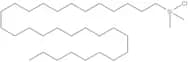
Primary amine coupling agent for UV cure and epoxy systemsUsed in microparticle surface modificationUsed in foundry resins: phenolic novolaks and resolsVapor phase deposition >150 °C on silica yields high density amine functionalityFormule :C8H21NO2SiDegré de pureté :97%Couleur et forme :Straw LiquidMasse moléculaire :191.34n-OCTADECYLDIMETHYLCHLOROSILANE, 97%
CAS :Alkyl Silane - Conventional Surface Bonding
Aliphatic, fluorinated aliphatic or substituted aromatic hydrocarbon substituents are the hydrophobic entities which enable silanes to induce surface hydrophobicity. The organic substitution of the silane must be non-polar. The hydrophobic effect of the organic substitution can be related to the free energy of transfer of hydrocarbon molecules from an aqueous phase to a homogeneous hydrocarbon phase. A successful hydrophobic coating must eliminate or mitigate hydrogen bonding and shield polar surfaces from interaction with water by creating a non-polar interphase. Although silane and silicone derived coatings are in general the most hydrophobic, they maintain a high degree of permeability to water vapor. This allows coatings to breathe and reduce deterioration at the coating interface associated with entrapped water. Since ions are not transported through non-polar silane and silicone coatings, they offer protection to composite structures ranging from pigmented coatings to rebar reinforced concrete. A selection guide for hydrophobic silanes can be found on pages 22-31 of the Hydrophobicity, Hydrophilicity and Silane Surface Modification brochure.
n-Octadecyldimethylchlorosilane; Dimethyl-n-octadecylchlorosilane; Chlorodimethyloctadecylsilane; Chlorodimethylsilyl-n-octadecane
Contains <5% C18 isomersEmployed in bonded HPLC reverse phasesFormule :C20H43ClSiDegré de pureté :97% including isomersCouleur et forme :Off-White SolidMasse moléculaire :347.1n-OCTADECYLDIMETHYL(DIMETHYLAMINO)SILANE
CAS :Alkyl Silane - Conventional Surface Bonding
Aliphatic, fluorinated aliphatic or substituted aromatic hydrocarbon substituents are the hydrophobic entities which enable silanes to induce surface hydrophobicity. The organic substitution of the silane must be non-polar. The hydrophobic effect of the organic substitution can be related to the free energy of transfer of hydrocarbon molecules from an aqueous phase to a homogeneous hydrocarbon phase. A successful hydrophobic coating must eliminate or mitigate hydrogen bonding and shield polar surfaces from interaction with water by creating a non-polar interphase. Although silane and silicone derived coatings are in general the most hydrophobic, they maintain a high degree of permeability to water vapor. This allows coatings to breathe and reduce deterioration at the coating interface associated with entrapped water. Since ions are not transported through non-polar silane and silicone coatings, they offer protection to composite structures ranging from pigmented coatings to rebar reinforced concrete. A selection guide for hydrophobic silanes can be found on pages 22-31 of the Hydrophobicity, Hydrophilicity and Silane Surface Modification brochure.
n-Octadecyldimethyl(dimethylamino)silane; (Dimethylamino)dimethyl(octadecyl)silane; N,N,1,1-Tetramethyl-1-octadecylsilanamine; N,N,1,1-Tetramethyl-1-octadecylsilanamine; (N,N-Dimethylamino)dimethyloctadecylsilane; (N,N-Dimethylamino)octadecyldimethylsilane
Contains 5-10% C18 isomersEmployed in bonded HPLC reverse phasesFormule :C22H49NSiDegré de pureté :97% including isomersCouleur et forme :Straw LiquidMasse moléculaire :355.723-AMINOPROPYLTRIMETHOXYSILANE, 99%
CAS :Monoamine Functional Trialkoxy Silane
Silane coupling agents have the ability to form a durable bond between organic and inorganic materials to generate desired heterogeneous environments or to incorporate the bulk properties of different phases into a uniform composite structure. The general formula has two classes of functionality. The hydrolyzable group forms stable condensation products with siliceous surfaces and other oxides such as those of aluminum, zirconium, tin, titanium, and nickel. The organofunctional group alters the wetting or adhesion characteristics of the substrate, utilizes the substrate to catalyze chemical transformations at the heterogeneous interface, orders the interfacial region, or modifies its partition characteristics, and significantly effects the covalent bond between organic and inorganic materials.
3-Aminopropyltrimethoxysilane, Trimethoxysilylpropylamine, APTES, AMEO, GAPS, A-1100, ?-Aminopropyltrimethoxysilane
Vapor pressure, 67 °: 5 mmSuperior reactivity in vapor phase and non-aqueous surface treatmentsSuperior reactivity in vapor phase and non-aqueous surface treatmentsHydrolysis rate vs SIA0610.0 : 6:1Used to immobilize Cu and Zn Schiff base precatalysts for formation of cyclic carbonatesUsed in microparticle surface modification Standard grade available as SIA0611.0Formule :C6H17NO3SiDegré de pureté :99%Couleur et forme :Straw LiquidMasse moléculaire :179.29(TRIDECAFLUORO-1,1,2,2-TETRAHYDROOCTYL)METHYLDICHLOROSILANE
CAS :Formule :C9H7Cl2F13SiDegré de pureté :97%Couleur et forme :Straw LiquidMasse moléculaire :461.12(HEPTADECAFLUORO-1,1,2,2-TETRAHYDRODECYL)METHYLDICHLOROSILANE
CAS :Fluorinated Alkyl Silane - Conventional Surface Bonding
Aliphatic, fluorinated aliphatic or substituted aromatic hydrocarbon substituents are the hydrophobic entities which enable silanes to induce surface hydrophobicity. The organic substitution of the silane must be non-polar. The hydrophobic effect of the organic substitution can be related to the free energy of transfer of hydrocarbon molecules from an aqueous phase to a homogeneous hydrocarbon phase. A successful hydrophobic coating must eliminate or mitigate hydrogen bonding and shield polar surfaces from interaction with water by creating a non-polar interphase. Although silane and silicone derived coatings are in general the most hydrophobic, they maintain a high degree of permeability to water vapor. This allows coatings to breathe and reduce deterioration at the coating interface associated with entrapped water. Since ions are not transported through non-polar silane and silicone coatings, they offer protection to composite structures ranging from pigmented coatings to rebar reinforced concrete. A selection guide for hydrophobic silanes can be found on pages 22-31 of the Hydrophobicity, Hydrophilicity and Silane Surface Modification brochure.
(Heptadecafluoro-1,1,2,2-tetrahydrodecyl)methyldichlorosilane; (1H,1H,2H,2H-Perfluorodecyl)methyldichlorosilane
Packaged over copper powderFormule :C11H7Cl2F17SiDegré de pureté :97%Couleur et forme :Straw Off-White LiquidMasse moléculaire :561.14N-METHYL-AZA-2,2,4-TRIMETHYLSILACYCLOPENTANE
CAS :N-methyl-aza-2,2,4-trimethylsilacyclopentane
Amine functional silane coupling agentNon-cross-linking cyclic azasilaneEmployed in vapor phase modification of nanoparticlesFormule :C7H17NSiDegré de pureté :97%Couleur et forme :Straw LiquidMasse moléculaire :143.3TETRAKIS(TRIMETHYLSILOXY)TITANIUM
CAS :Formule :C12H36O4Si4TiDegré de pureté :97%Couleur et forme :Pale Yellow LiquidMasse moléculaire :404.662-(3,4-EPOXYCYCLOHEXYL)ETHYLTRIMETHOXYSILANE
CAS :2-(3,4-Epoxycyclohexyl)ethyltrimethoxysilane; (2-trimethoxysilylethyl)cyclohexyloxirane
Epoxy functional trialkoxy silaneViscosity: 5.2 cStCoefficient of thermal expansion: 0.8 x 10⁻³Vapor pressure, 152 °C: 10 mmSpecific wetting surface: 317 m2/gγc of treated surfaces: 39.5 mN/mRing epoxide more reactive than glycidoxypropyl systemsUV initiated polymerization of epoxy group with weak acid donorsForms UV-curable coating resins by controlled hydrolysisUsed to make epoxy-organosilica particles w/ high positive Zeta potentialEpoxy silane treated surfaces convert to hydrophilic-diols when exposed to moistureFormule :C11H22O4SiDegré de pureté :97%Couleur et forme :Straw LiquidMasse moléculaire :246.383-MERCAPTOPROPYLMETHYLDIMETHOXYSILANE, 96%
CAS :3-Mercaptopropylmethyldimethoxysilane; 3-(methyldimethoxysilyl)propylmercaptan; dimethoxy(3-mercaptopropyl)methylsilane; dimethoxymethyl(3-mercaptopropyl)silane
Sulfur functional dialkoxy silaneIntermediate for silicones in thiol-ene UV-cure systemsAdhesion promoter for polysulfide sealantsUsed to make thiol-organosilica nanoparticlesFormule :C6H16O2SSiDegré de pureté :96%Couleur et forme :Straw LiquidMasse moléculaire :180.34BIS(3-TRIETHOXYSILYLPROPYL)AMINE, 95%
CAS :Bis(3-triethoxysilylpropyl)amine
Amine functional dipodal silaneViscosity: 5.5 cStCoupling agent for polyamides with improved hydrolytic stabilityAdhesion promoter, crosslinking agent for hot melt adhesivesAdhesion promoter for aluminum-polyester multilayer laminatesAdhesion promoter, crosslinker for 2-part condensation cure siliconesCyclic analog: SIT8187.2 Advanced silane in SIVATE A610 and SIVATE E610Formule :C18H43NO6Si2Degré de pureté :95%Couleur et forme :Straw LiquidMasse moléculaire :425.71n-OCTADECYLMETHYLDICHLOROSILANE
CAS :Alkyl Silane - Conventional Surface Bonding
Aliphatic, fluorinated aliphatic or substituted aromatic hydrocarbon substituents are the hydrophobic entities which enable silanes to induce surface hydrophobicity. The organic substitution of the silane must be non-polar. The hydrophobic effect of the organic substitution can be related to the free energy of transfer of hydrocarbon molecules from an aqueous phase to a homogeneous hydrocarbon phase. A successful hydrophobic coating must eliminate or mitigate hydrogen bonding and shield polar surfaces from interaction with water by creating a non-polar interphase. Although silane and silicone derived coatings are in general the most hydrophobic, they maintain a high degree of permeability to water vapor. This allows coatings to breathe and reduce deterioration at the coating interface associated with entrapped water. Since ions are not transported through non-polar silane and silicone coatings, they offer protection to composite structures ranging from pigmented coatings to rebar reinforced concrete. A selection guide for hydrophobic silanes can be found on pages 22-31 of the Hydrophobicity, Hydrophilicity and Silane Surface Modification brochure.
n-Octadecylmethyldichlorosilane; Dichloromethyl-n-octadecylsilane; Methyldichlorosilyloctadecane; Dichloromethylsilyloctadecane
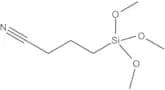
Contains 5-10% C18 isomersViscosity: 7 cStFormule :C19H40Cl2SiDegré de pureté :97% including isomersCouleur et forme :Straw LiquidMasse moléculaire :367.523-CYANOPROPYLMETHYLDIMETHOXYSILANE
CAS :Formule :C7H15NO2SiDegré de pureté :97%Couleur et forme :Straw LiquidMasse moléculaire :173.29METHACRYLOXYPROPYLTRIETHOXYSILANE
CAS :Methacrylate Functional Trialkoxy Silane
Silane coupling agents have the ability to form a durable bond between organic and inorganic materials to generate desired heterogeneous environments or to incorporate the bulk properties of different phases into a uniform composite structure. The general formula has two classes of functionality. The hydrolyzable group forms stable condensation products with siliceous surfaces and other oxides such as those of aluminum, zirconium, tin, titanium, and nickel. The organofunctional group alters the wetting or adhesion characteristics of the substrate, utilizes the substrate to catalyze chemical transformations at the heterogeneous interface, orders the interfacial region, or modifies its partition characteristics, and significantly effects the covalent bond between organic and inorganic materials.
Methacryloxypropyltriethoxysilane
Coupling agent for radical cure polymer systems and UV cure systemsUsed in microparticle surface modificationComonomer for free-radical polymerizaitonInhibited with MEHQFormule :C13H26O5SiDegré de pureté :97%Couleur et forme :Straw LiquidMasse moléculaire :290.43METHYLTRICHLOROSILANE, 98%
CAS :Alkyl Silane - Conventional Surface Bonding
Aliphatic, fluorinated aliphatic or substituted aromatic hydrocarbon substituents are the hydrophobic entities which enable silanes to induce surface hydrophobicity. The organic substitution of the silane must be non-polar. The hydrophobic effect of the organic substitution can be related to the free energy of transfer of hydrocarbon molecules from an aqueous phase to a homogeneous hydrocarbon phase. A successful hydrophobic coating must eliminate or mitigate hydrogen bonding and shield polar surfaces from interaction with water by creating a non-polar interphase. Although silane and silicone derived coatings are in general the most hydrophobic, they maintain a high degree of permeability to water vapor. This allows coatings to breathe and reduce deterioration at the coating interface associated with entrapped water. Since ions are not transported through non-polar silane and silicone coatings, they offer protection to composite structures ranging from pigmented coatings to rebar reinforced concrete. A selection guide for hydrophobic silanes can be found on pages 22-31 of the Hydrophobicity, Hydrophilicity and Silane Surface Modification brochure.
Methyltrichlorosilane; Trichloromethylsilane; Trichlorosilylmethane
Viscosity: 0.46 cStΔHvap: 31.0 kJ/molSurface tension: 20.3 mN/mIonization potential: 11.36 eVSpecific heat: 0.92 J/g/°Vapor pressure, 13.5 °C: 100 mmCritical temperature: 243 °CCritical pressure: 39 atmCoefficient of thermal expansion: 1.3 x 10⁻³Fundamental builing-block for silicone resinsForms silicon carbide by pyrolysisIn a synergistic fashion with boron trifluoride etherate catalyzes the crossed imino aldehyde pinacol couplingHigher purity grade available, SIM6520.1Formule :CH3Cl3SiDegré de pureté :98%Couleur et forme :Straw LiquidMasse moléculaire :149.48n-PROPYLDIMETHYLCHLOROSILANE
CAS :Alkyl Silane - Conventional Surface Bonding
Aliphatic, fluorinated aliphatic or substituted aromatic hydrocarbon substituents are the hydrophobic entities which enable silanes to induce surface hydrophobicity. The organic substitution of the silane must be non-polar. The hydrophobic effect of the organic substitution can be related to the free energy of transfer of hydrocarbon molecules from an aqueous phase to a homogeneous hydrocarbon phase. A successful hydrophobic coating must eliminate or mitigate hydrogen bonding and shield polar surfaces from interaction with water by creating a non-polar interphase. Although silane and silicone derived coatings are in general the most hydrophobic, they maintain a high degree of permeability to water vapor. This allows coatings to breathe and reduce deterioration at the coating interface associated with entrapped water. Since ions are not transported through non-polar silane and silicone coatings, they offer protection to composite structures ranging from pigmented coatings to rebar reinforced concrete. A selection guide for hydrophobic silanes can be found on pages 22-31 of the Hydrophobicity, Hydrophilicity and Silane Surface Modification brochure.
n-Propyldimethylchlorosilane; Chlorodimethyl-n-propylsilaneFormule :C5H13ClSiDegré de pureté :97%Couleur et forme :Straw LiquidMasse moléculaire :136.7PHENYLSILANE
CAS :Mono-substituted Silane Reducing Agent
Organosilanes are hydrocarbon-like and possess the ability to serve as both ionic and free-radical reducing agents. These reagents and their reaction by-products are safer and more easily handled and disposed than many other reducing agents. The metallic nature of silicon and its low electronegativity relative to hydrogen lead to polarization of the Si-H bond yielding a hydridic hydrogen and a milder reducing agent compared to aluminum-, boron-, and other metal-based hydrides. A summary of some key silane reductions are presented in Table 1 of the Silicon-Based Reducing Agents brochure.
Trihydridosilane
Silyl Hydrides are a distinct class of silanes that behave and react very differently than conventional silane coupling agents. They react with the liberation of byproduct hydrogen. Silyl hydrides can react with hydroxylic surfaces under both non-catalyzed and catalyzed conditions by a dehydrogenative coupling mechanism. Trihydridosilanes react with a variety of pure metal surfaces including gold, titanium, zirconium and amorphous silicon, by a dissociative adsorption mechanism. The reactions generally take place at room temperature and can be conducted in the vapor phase or with the pure silane or solutions of the silane in aprotic solvents. Deposition should not be conducted in water, alcohol or protic solvents.
Phenylsilane; Silylbenzene
ΔHvap: 34.8 kJ/molEmployed in the reduction of esters to ethersReduces α,β-unsaturated ketones to saturated ketones in the presence of tri-n-butyltin hydrideReduces tin amides to tin hydridesUsed in the tin-catalyzed reduction of nitroalkanes to alkanesReduces α-halo ketones in presence of Mo(0)Adds to norbornene with high eeReducing reagent in radical reductionsYields ISiH3 on treatments with HI in presence of AlI3Extensive review of silicon based reducing agents: Larson, G.; Fry, J. L. "Ionic and Organometallic-Catalyzed Organosilane Reductions", Wipf, P., Ed.; Wiley, 2007Formule :C6H8SiDegré de pureté :97%Couleur et forme :LiquidMasse moléculaire :108.213-CYANOPROPYLDIISOPROPYL(DIMETHYLAMINO)SILANE
CAS :Formule :C12H26N2SiDegré de pureté :97%Couleur et forme :Straw LiquidMasse moléculaire :226.44BIS(DIMETHYLAMINO)DIMETHYLSILANE
CAS :Bridging Silicon-Based Blocking Agent
Used as a protecting group for reactive hydrogens in alcohols, amines, thiols, and carboxylic acids. Organosilanes are hydrogen-like, can be introduced in high yield, and can be removed under selective conditions. They are stable over a wide range of reaction conditions and can be removed in the presence of other functional groups, including other protecting groups. The tolerance of silylated alcohols to chemical transformations summary is presented in Table 1 of the Silicon-Based Blocking Agents brochure.
ALD Material
Atomic layer deposition (ALD) is a chemically self-limiting deposition technique that is based on the sequential use of a gaseous chemical process. A thin film (as fine as -0.1 Å per cycle) results from repeating the deposition sequence as many times as needed to reach a certain thickness. The major characteristic of the films is the resulting conformality and the controlled deposition manner. Precursor selection is key in ALD processes, namely finding molecules which will have enough reactivity to produce the desired films yet are stable enough to be handled and safely delivered to the reaction chamber.
Alkyl Silane - Conventional Surface Bonding
Aliphatic, fluorinated aliphatic or substituted aromatic hydrocarbon substituents are the hydrophobic entities which enable silanes to induce surface hydrophobicity. The organic substitution of the silane must be non-polar. The hydrophobic effect of the organic substitution can be related to the free energy of transfer of hydrocarbon molecules from an aqueous phase to a homogeneous hydrocarbon phase. A successful hydrophobic coating must eliminate or mitigate hydrogen bonding and shield polar surfaces from interaction with water by creating a non-polar interphase. Although silane and silicone derived coatings are in general the most hydrophobic, they maintain a high degree of permeability to water vapor. This allows coatings to breathe and reduce deterioration at the coating interface associated with entrapped water. Since ions are not transported through non-polar silane and silicone coatings, they offer protection to composite structures ranging from pigmented coatings to rebar reinforced concrete. A selection guide for hydrophobic silanes can be found on pages 22-31 of the Hydrophobicity, Hydrophilicity and Silane Surface Modification brochure.
Bis(Dimethylamino)dimethylsilane; Dimethylbis(dimethylamino)silane; Hexamethylsilanediamine; DMS
More reactive than SIB4120.0Couples silanol terminated siloxanesReacted with diols, diamines, and treatment for glassSummary of selective deprotection conditions is provided in Table 7 through Table 20 of the Silicon-Based Blocking Agents brochureFormule :C6H18N2SiDegré de pureté :97%Couleur et forme :Straw LiquidMasse moléculaire :146.31VINYLMETHYLDICHLOROSILANE
CAS :Alkenylsilane Cross-Coupling Agent
The cross-coupling reaction is a highly useful methodology for the formation of carbon-carbon bonds. It involves two reagents, with one typically being a suitable organometallic reagent - the nucleophile - and the other a suitable organic substrate, normally an unsaturated halide, tosylate or similar - the electrophile.
Vinylmethyldichlorosilane; Dichlorovinylmethylsilane; Methylvinyldichlorosilane; Dichloroethenylmethylsilane
Viscosity: 0.70 cStΔHvap: 33.9 kJ/molCritical temperature: 272 °CCoefficient of thermal expansion: 1.4 x 10⁻³Reacts to vinylate aryl halides under NaOH-moderated conditionsUsed as a tether in synthesis of C-glycosidesExtensive review of silicon based cross-coupling agents: Denmark, S. E. et al. "Organic Reactions, Volume 75" Denmark, S. E. ed., John Wiley and Sons, 233, 2011Formule :C3H6Cl2SiDegré de pureté :97%Couleur et forme :Straw Amber LiquidMasse moléculaire :141.07TETRACHLOROSILANE, 99.99+%
CAS :Formule :Cl4SnDegré de pureté :99.99%Couleur et forme :Straw LiquidMasse moléculaire :169.9BIS(CHLOROMETHYL)DIMETHYLSILANE
CAS :Formule :C4H10Cl2SiDegré de pureté :97%Couleur et forme :Straw LiquidMasse moléculaire :157.11TETRAKIS(METHOXYETHOXY)SILANE, tech
CAS :Formule :C12H28O8SiDegré de pureté :95%Couleur et forme :LiquidMasse moléculaire :328.43TETRAMETHYLSILANE, 99+%
CAS :Tetramethylsilane; 4MS; TMS
NMR gradeViscosity: 0.4 cSt?Hcomb: 3,851 kJ/mol?Hform: -232 kJ/mol?Hvap: 26.8 kJ/mol?Hfus: 6.7 kJ/molPhotoionization threshold: 8.1 eVCe: 1.838 x 10⁻³Vapor pressure, 20 °C: 589 mmCritical temperature: 185 °CCritical pressure: 33 atmHeat capacity: 195.2 Jmol-1K-1Dielectric constant: 1.92Intermediate for ?-SiC:H thin films by PECVDFormule :C4H12SiDegré de pureté :99%Couleur et forme :Straw LiquidMasse moléculaire :88.22TETRA-n-PROPOXYSILANE
CAS :Formule :C12H28O4SiDegré de pureté :97%Couleur et forme :LiquidMasse moléculaire :264.44HEXYLMETHYLDICHLOROSILANE
CAS :Alkyl Silane - Conventional Surface Bonding
Aliphatic, fluorinated aliphatic or substituted aromatic hydrocarbon substituents are the hydrophobic entities which enable silanes to induce surface hydrophobicity. The organic substitution of the silane must be non-polar. The hydrophobic effect of the organic substitution can be related to the free energy of transfer of hydrocarbon molecules from an aqueous phase to a homogeneous hydrocarbon phase. A successful hydrophobic coating must eliminate or mitigate hydrogen bonding and shield polar surfaces from interaction with water by creating a non-polar interphase. Although silane and silicone derived coatings are in general the most hydrophobic, they maintain a high degree of permeability to water vapor. This allows coatings to breathe and reduce deterioration at the coating interface associated with entrapped water. Since ions are not transported through non-polar silane and silicone coatings, they offer protection to composite structures ranging from pigmented coatings to rebar reinforced concrete. A selection guide for hydrophobic silanes can be found on pages 22-31 of the Hydrophobicity, Hydrophilicity and Silane Surface Modification brochure.
Hexylmethyldichlorosilane; DichlorohexylmethylsilaneFormule :C7H16Cl2SiDegré de pureté :97%Couleur et forme :Straw LiquidMasse moléculaire :199.19n-OCTADECYLTRICHLOROSILANE
CAS :Alkyl Silane - Conventional Surface Bonding
Aliphatic, fluorinated aliphatic or substituted aromatic hydrocarbon substituents are the hydrophobic entities which enable silanes to induce surface hydrophobicity. The organic substitution of the silane must be non-polar. The hydrophobic effect of the organic substitution can be related to the free energy of transfer of hydrocarbon molecules from an aqueous phase to a homogeneous hydrocarbon phase. A successful hydrophobic coating must eliminate or mitigate hydrogen bonding and shield polar surfaces from interaction with water by creating a non-polar interphase. Although silane and silicone derived coatings are in general the most hydrophobic, they maintain a high degree of permeability to water vapor. This allows coatings to breathe and reduce deterioration at the coating interface associated with entrapped water. Since ions are not transported through non-polar silane and silicone coatings, they offer protection to composite structures ranging from pigmented coatings to rebar reinforced concrete. A selection guide for hydrophobic silanes can be found on pages 22-31 of the Hydrophobicity, Hydrophilicity and Silane Surface Modification brochure.
n-Octadecyltrichlorosilane; OTS; Trichlorosilyloctadecane; Trichlorooctadecylsilane
Contains 5-10% C18 isomersProvides lipophilic surface coatingsEmployed in patterning and printing of electroactive molecular filmsImmobilizes physiologically active cell organellesTreated substrates increase electron transport of pentacene filmsFormule :C18H37Cl3SiDegré de pureté :97% including isomersCouleur et forme :Straw LiquidMasse moléculaire :387.93((CHLOROMETHYL)PHENYLETHYL)TRICHLOROSILANE
CAS :Formule :C9H10Cl4SiDegré de pureté :97%Couleur et forme :Straw LiquidMasse moléculaire :288.08PENTAFLUOROPHENYLPROPYLDIMETHYLCHLOROSILANE
CAS :Formule :C11H12ClF5SiDegré de pureté :97%Couleur et forme :LiquidMasse moléculaire :302.743-MERCAPTOPROPYLTRIMETHOXYSILANE
CAS :3-Mercaptopropyltrimethoxysilane; 3-(trimethoxysilyl)propanethiol; 3-trimethoxysilyl)propylmercaptan
Sulfur functional trialkoxy silaneγc of treated surfaces: 41 mN/mViscosity: 2 cStSpecific wetting surface: 348 m2/gCoupling agent for ethylene propylene diene monomer, EPDM, and mechanical rubber applicationsAdhesion promoter for polysulfide adhesivesFor enzyme immobilizationTreatment of mesoporous silica yields highly efficient heavy metal scavengerCouples fluorescent biological tags to semiconductor CdS nanoparticlesModified mesoporous silica supports Pd in coupling reactionsUsed to make thiol-organosilica nanoparticlesForms modified glass and silica surfaces suitable for successive ionic layer adsorption and reaction (SILAR) fabrication of CdS thin filmsFormule :C6H16O3SSiDegré de pureté :97%Couleur et forme :Straw LiquidMasse moléculaire :196.34HEXAMETHYLCYCLOTRISILOXANE
CAS :Formule :C6H18O3Si3Degré de pureté :80%Couleur et forme :SolidMasse moléculaire :222.46CYCLOHEXYLTRICHLOROSILANE
CAS :Alkyl Silane - Conventional Surface Bonding
Aliphatic, fluorinated aliphatic or substituted aromatic hydrocarbon substituents are the hydrophobic entities which enable silanes to induce surface hydrophobicity. The organic substitution of the silane must be non-polar. The hydrophobic effect of the organic substitution can be related to the free energy of transfer of hydrocarbon molecules from an aqueous phase to a homogeneous hydrocarbon phase. A successful hydrophobic coating must eliminate or mitigate hydrogen bonding and shield polar surfaces from interaction with water by creating a non-polar interphase. Although silane and silicone derived coatings are in general the most hydrophobic, they maintain a high degree of permeability to water vapor. This allows coatings to breathe and reduce deterioration at the coating interface associated with entrapped water. Since ions are not transported through non-polar silane and silicone coatings, they offer protection to composite structures ranging from pigmented coatings to rebar reinforced concrete. A selection guide for hydrophobic silanes can be found on pages 22-31 of the Hydrophobicity, Hydrophilicity and Silane Surface Modification brochure.
Cyclohexyltrichlorosilane; Trichlorosilylcyclohexane; trichloro(cyclohexyl)silane; Trichlorosilylcyclohexane
Intermediate for melt-processable silsesquioxane-siloxanesEmployed in solid-phase extraction columnsFormule :C6H11Cl3SiDegré de pureté :97%Couleur et forme :Straw LiquidMasse moléculaire :217.63-CYANOPROPYLDIISOPROPYLCHLOROSILANE
CAS :Formule :C10H20ClNSiDegré de pureté :97%Couleur et forme :Straw LiquidMasse moléculaire :217.82N-(3-TRIETHOXYSILYLPROPYL)-4,5-DIHYDROIMIDAZOLE
CAS :N-(3-triethoxysilylpropyl)-4,5-dihydroimidazole; 3-(2-imidazolin-1-yl)propyltriethoxysilane; IMEO; 4,5-dihydro-1-[3-(triethoxysilyl)propyl]-1H-imidazole; 4,5-dihydroimidazolepropyltriethoxysilane
Specialty amine functional trialkoxy silaneViscosity: 5 cStCoupling agent for elevated temperature-cure epoxiesUtilized in HPLC of metal chelatesForms proton vacancy conducting polymers with sulfonamides by sol-gelLigand for molecular imprinting of silica with chymotrypsin transition state analogFormule :C12H26N2O3SiDegré de pureté :97%Couleur et forme :Yellow To Brown LiquidMasse moléculaire :274.431,3-BIS(3-METHACRYLOXYPROPYL)TETRAKIS(TRIMETHYLSILOXY)DISILOXANE, tech
CAS :Formule :C26H58O9Si6Degré de pureté :87%Couleur et forme :Straw LiquidMasse moléculaire :683.253-CHLOROPROPYLTRICHLOROSILANE
CAS :Formule :C3H6Cl4SiDegré de pureté :97%Couleur et forme :Straw LiquidMasse moléculaire :211.98DIPHENYLDIMETHOXYSILANE, 98%
CAS :Arylsilane Cross-Coupling Agent
The cross-coupling reaction is a highly useful methodology for the formation of carbon-carbon bonds. It involves two reagents, with one typically being a suitable organometallic reagent - the nucleophile - and the other a suitable organic substrate, normally an unsaturated halide, tosylate or similar - the electrophile.
Aromatic Silane - Conventional Surface Bonding
Aliphatic, fluorinated aliphatic or substituted aromatic hydrocarbon substituents are the hydrophobic entities which enable silanes to induce surface hydrophobicity. The organic substitution of the silane must be non-polar. The hydrophobic effect of the organic substitution can be related to the free energy of transfer of hydrocarbon molecules from an aqueous phase to a homogeneous hydrocarbon phase. A successful hydrophobic coating must eliminate or mitigate hydrogen bonding and shield polar surfaces from interaction with water by creating a non-polar interphase. Although silane and silicone derived coatings are in general the most hydrophobic, they maintain a high degree of permeability to water vapor. This allows coatings to breathe and reduce deterioration at the coating interface associated with entrapped water. Since ions are not transported through non-polar silane and silicone coatings, they offer protection to composite structures ranging from pigmented coatings to rebar reinforced concrete. A selection guide for hydrophobic silanes can be found on pages 22-31 of the Hydrophobicity, Hydrophilicity and Silane Surface Modification brochure.
Diphenyldimethoxysilane; Dimethoxydiphenylsilane
Viscosity, 25°C: 8.4 cStAlternative to phenyltrimethoxysilane for the cross-coupling of a phenyl groupIntermediate for high temperature silicone resinsDialkoxy silaneFormule :C14H16O2SiDegré de pureté :98%Couleur et forme :Straw LiquidMasse moléculaire :244.36ACRYLOXYMETHYLTRIMETHOXYSILANE
CAS :Acrylate Functional Trialkoxy Silane
Silane coupling agents have the ability to form a durable bond between organic and inorganic materials to generate desired heterogeneous environments or to incorporate the bulk properties of different phases into a uniform composite structure. The general formula has two classes of functionality. The hydrolyzable group forms stable condensation products with siliceous surfaces and other oxides such as those of aluminum, zirconium, tin, titanium, and nickel. The organofunctional group alters the wetting or adhesion characteristics of the substrate, utilizes the substrate to catalyze chemical transformations at the heterogeneous interface, orders the interfacial region, or modifies its partition characteristics, and significantly effects the covalent bond between organic and inorganic materials.
Acryloxymethyltrimethoxysilane
Coupling agent for UV curable systemsComonomer for ormosilsUsed in microparticle surface modificationComonomer for free-radical polymerizaitonInhibited with MEHQFormule :C7H14O5SiDegré de pureté :97%Couleur et forme :Straw LiquidMasse moléculaire :206.27METHACRYLOXYPROPYLTRIMETHOXYSILANE
CAS :Methacrylate Functional Trialkoxy Silane
Silane coupling agents have the ability to form a durable bond between organic and inorganic materials to generate desired heterogeneous environments or to incorporate the bulk properties of different phases into a uniform composite structure. The general formula has two classes of functionality. The hydrolyzable group forms stable condensation products with siliceous surfaces and other oxides such as those of aluminum, zirconium, tin, titanium, and nickel. The organofunctional group alters the wetting or adhesion characteristics of the substrate, utilizes the substrate to catalyze chemical transformations at the heterogeneous interface, orders the interfacial region, or modifies its partition characteristics, and significantly effects the covalent bond between organic and inorganic materials.
Methacryloxypropyltrimethoxysilane, 3-(Trimethoxysilyl)propyl methacrylate, MEMO
Viscosity: 2 cStSpecific wetting surface: 314 m2/gCopolymerization parameters-e, Q: 0.07, 2.7Coupling agent for radical cure polymer systems and UV cure systemsWidely used in unsaturated polyester-fiberglass compositesCopolymerized with styrene in formation of sol-gel compositesAnalog of (3-acryloxypropyl)trimethoxysilane (SIA0200.0)Used in microparticle surface modification and dental polymer compositesSlower hydrolysis rate than methacryloxymethyltrimethoxysilane (SIM6483.0)Comonomer for free-radical polymerizaitonDetermined by TGA a 25% weight loss of dried hydrolysates at 395°Inhibited with MEHQ, HQFormule :C10H20O5SiDegré de pureté :97%Couleur et forme :Straw LiquidMasse moléculaire :248.35(N,N-DIMETHYLAMINO)DIMETHYLSILANE, 95%
CAS :Formule :C4H13NSiDegré de pureté :95%Couleur et forme :Straw LiquidMasse moléculaire :103.24BIS(3-TRIETHOXYSILYLPROPYL)POLYETHYLENE OXIDE (25-30 EO)
CAS :Dipodal PEG Silane (1,400-1,600 g/mol)
PEO, Triethoxysilane termination utilized for hydrophilic surface modificationDual functional PEGylation reagentHydrogen bonding hydrophilic silaneHydrolytically stable hydrophilic silaneFormule :CH3O(C2H4O)6-9(CH2)3Si(OCH3)3Couleur et forme :Off-White SolidMasse moléculaire :1400-1600n-OCTYLDIMETHYLMETHOXYSILANE
CAS :Alkyl Silane - Conventional Surface Bonding
Aliphatic, fluorinated aliphatic or substituted aromatic hydrocarbon substituents are the hydrophobic entities which enable silanes to induce surface hydrophobicity. The organic substitution of the silane must be non-polar. The hydrophobic effect of the organic substitution can be related to the free energy of transfer of hydrocarbon molecules from an aqueous phase to a homogeneous hydrocarbon phase. A successful hydrophobic coating must eliminate or mitigate hydrogen bonding and shield polar surfaces from interaction with water by creating a non-polar interphase. Although silane and silicone derived coatings are in general the most hydrophobic, they maintain a high degree of permeability to water vapor. This allows coatings to breathe and reduce deterioration at the coating interface associated with entrapped water. Since ions are not transported through non-polar silane and silicone coatings, they offer protection to composite structures ranging from pigmented coatings to rebar reinforced concrete. A selection guide for hydrophobic silanes can be found on pages 22-31 of the Hydrophobicity, Hydrophilicity and Silane Surface Modification brochure.
n-Octyldimethylmethoxysilane; Methoxydimethyloctylsilane; Dimethylmethoxysilyloctane
Monoalkoxy silaneFormule :C11H26OSiDegré de pureté :97%Couleur et forme :Straw LiquidMasse moléculaire :202.42PHENETHYLDIMETHYLCHLOROSILANE
CAS :Aromatic Silane - Conventional Surface Bonding
Aliphatic, fluorinated aliphatic or substituted aromatic hydrocarbon substituents are the hydrophobic entities which enable silanes to induce surface hydrophobicity. The organic substitution of the silane must be non-polar. The hydrophobic effect of the organic substitution can be related to the free energy of transfer of hydrocarbon molecules from an aqueous phase to a homogeneous hydrocarbon phase. A successful hydrophobic coating must eliminate or mitigate hydrogen bonding and shield polar surfaces from interaction with water by creating a non-polar interphase. Although silane and silicone derived coatings are in general the most hydrophobic, they maintain a high degree of permeability to water vapor. This allows coatings to breathe and reduce deterioration at the coating interface associated with entrapped water. Since ions are not transported through non-polar silane and silicone coatings, they offer protection to composite structures ranging from pigmented coatings to rebar reinforced concrete. A selection guide for hydrophobic silanes can be found on pages 22-31 of the Hydrophobicity, Hydrophilicity and Silane Surface Modification brochure.
Phenethyldimethylchlorosilane; 2-(Chlorodimethylsilylethyl)benzene; Chlorodimethyl(2-phenylethyl)silane
Contains α-, β-isomersFormule :C10H15ClSiDegré de pureté :97%Couleur et forme :Pale Yellow LiquidMasse moléculaire :198.773-AMINOPROPYLMETHYLBIS(TRIMETHYLSILOXY)SILANE
CAS :Formule :C10H29NO2Si3Degré de pureté :97%Couleur et forme :Straw LiquidMasse moléculaire :279.61DI-t-BUTYLSILYLBIS(TRIFLUOROMETHANESULFONATE), 95%
CAS :Bridging Silicon-Based Blocking Agent
Used as a protecting group for reactive hydrogens in alcohols, amines, thiols, and carboxylic acids. Organosilanes are hydrogen-like, can be introduced in high yield, and can be removed under selective conditions. They are stable over a wide range of reaction conditions and can be removed in the presence of other functional groups, including other protecting groups. The tolerance of silylated alcohols to chemical transformations summary is presented in Table 1 of the Silicon-Based Blocking Agents brochure.
Di-tert-butylsilylbis(trifluoromethanesulfonate); Di-t-butylsilylbis(triflate); DTBS
More reactive than SID3205.0Converts 1,3-diols to cyclic protected 1,3-diolsReacts with 1,3-diols in preference to 1,2-diolsSummary of selective deprotection conditions is provided in Table 7 through Table 20 of the Silicon-Based Blocking Agents brochureFormule :C10H18F6O6S2SiDegré de pureté :95%Couleur et forme :Straw LiquidMasse moléculaire :440.461,3-BIS(GLYCIDOXYPROPYL)TETRAMETHYLDISILOXANE
CAS :Formule :C16H34O5Si2Degré de pureté :97%Couleur et forme :Straw LiquidMasse moléculaire :362.61N-(TRIETHOXYSILYLPROPYL)-O-POLYETHYLENE OXIDE URETHANE, 95%
CAS :N-(triethoxysilylpropyl)-O-polyethylene oxide urethane; O-polyethylene oxide-N-(triethoxysilylpropyl)-urethane
Hydroxy functional trialkoxy silaneContains some bis(urethane) analogViscosity: 75-125 cStHydrophilic surface modifierForms PEGylated glass surfaces suitable for capillary electrophoresisFormule :C10H22NO4SiO(CH2CH2O)4-6HDegré de pureté :95%Couleur et forme :Straw LiquidMasse moléculaire :400-5001,3,5-TRIVINYL-1,3,5-TRIMETHYLCYCLOTRISILOXANE
CAS :Alkenylsilane Cross-Coupling Agent
The cross-coupling reaction is a highly useful methodology for the formation of carbon-carbon bonds. It involves two reagents, with one typically being a suitable organometallic reagent - the nucleophile - and the other a suitable organic substrate, normally an unsaturated halide, tosylate or similar - the electrophile.
1,3,5-Trivinyl-1,3,5-trimethylcyclotrisiloxane; D’3; Trimethyltrivinylcyclotrisiloxane; Trivinyltrimethylcyclotrisiloxane; 2,4,6-Trimethyl-2,4,6-trivinylcyclotrisiloxane
Reagent formation of styrenes and dienes.Undergoes “living” anion ring-opening polymerizationReagent for vinylations via cross-coupling protocolsExtensive review of silicon based cross-coupling agents: Denmark, S. E. et al. "Organic Reactions, Volume 75" Denmark, S. E. ed., John Wiley and Sons, 233, 2011Formule :C9H18O3Si3Degré de pureté :97%Couleur et forme :LiquidMasse moléculaire :258.5VINYLMETHYLDIETHOXYSILANE
CAS :Olefin Functional Dialkoxy Silane
Silane coupling agents have the ability to form a durable bond between organic and inorganic materials to generate desired heterogeneous environments or to incorporate the bulk properties of different phases into a uniform composite structure. The general formula has two classes of functionality. The hydrolyzable group forms stable condensation products with siliceous surfaces and other oxides such as those of aluminum, zirconium, tin, titanium, and nickel. The organofunctional group alters the wetting or adhesion characteristics of the substrate, utilizes the substrate to catalyze chemical transformations at the heterogeneous interface, orders the interfacial region, or modifies its partition characteristics, and significantly effects the covalent bond between organic and inorganic materials.
Vinylmethyldiethoxysilane; Methylvinyldiethoxysilane; (Diethoxymethyl)silylethylene
Used in microparticle surface modificationDipole moment: 1.27 debyeCopolymerization parameters- e,Q; -0.86, 0.020Chain extender, crosslinker for silicone RTVs and hydroxy-functional resinsFormule :C7H16O2SiDegré de pureté :97%Couleur et forme :LiquidMasse moléculaire :160.291,2-BIS(TRICHLOROSILYL)ETHANE, 95%
CAS :Formule :C2H4Cl6Si2Degré de pureté :95%Couleur et forme :Off-White SolidMasse moléculaire :296.944-BIPHENYLYLDIMETHYLCHLOROSILANE
CAS :Formule :C14H15ClSiDegré de pureté :97%Couleur et forme :Off-White SolidMasse moléculaire :246.811,3-DICHLOROTETRAMETHYLDISILOXANE
CAS :Alkyl Silane - Conventional Surface Bonding
Aliphatic, fluorinated aliphatic or substituted aromatic hydrocarbon substituents are the hydrophobic entities which enable silanes to induce surface hydrophobicity. The organic substitution of the silane must be non-polar. The hydrophobic effect of the organic substitution can be related to the free energy of transfer of hydrocarbon molecules from an aqueous phase to a homogeneous hydrocarbon phase. A successful hydrophobic coating must eliminate or mitigate hydrogen bonding and shield polar surfaces from interaction with water by creating a non-polar interphase. Although silane and silicone derived coatings are in general the most hydrophobic, they maintain a high degree of permeability to water vapor. This allows coatings to breathe and reduce deterioration at the coating interface associated with entrapped water. Since ions are not transported through non-polar silane and silicone coatings, they offer protection to composite structures ranging from pigmented coatings to rebar reinforced concrete. A selection guide for hydrophobic silanes can be found on pages 22-31 of the Hydrophobicity, Hydrophilicity and Silane Surface Modification brochure.
1,3-Dichlorotetramethyldisiloxane; Tetramethyldichlorodisiloxane; 1,3-Dichloro-1,1,3,3-tetramethyldisiloxane
Vapor pressure, 25 °C: 8 mmDiol protection reagentFormule :C4H12Cl2OSi2Degré de pureté :97%Couleur et forme :Straw Amber LiquidMasse moléculaire :203.22[(5-BICYCLO[2.2.1]HEPT-2-ENYL)ETHYL]TRIETHOXYSILANE, tech, endo/exo isomers
CAS :Olefin Functional Trialkoxy Silane
Silane coupling agents have the ability to form a durable bond between organic and inorganic materials to generate desired heterogeneous environments or to incorporate the bulk properties of different phases into a uniform composite structure. The general formula has two classes of functionality. The hydrolyzable group forms stable condensation products with siliceous surfaces and other oxides such as those of aluminum, zirconium, tin, titanium, and nickel. The organofunctional group alters the wetting or adhesion characteristics of the substrate, utilizes the substrate to catalyze chemical transformations at the heterogeneous interface, orders the interfacial region, or modifies its partition characteristics, and significantly effects the covalent bond between organic and inorganic materials.
[(5-Bicyclo[2.2.1]hept-2-enyl)ethyl]triethoxysilane; (Norbornenyl)ethyltriethoxysilane; Triethoxysilylethylnorbornene
Endo/exo isomersUsed in microparticle surface modificationComonomer for polyolefin polymerizationFormule :C15H28O3SiDegré de pureté :techMasse moléculaire :284.47DIPHENYLDICHLOROSILANE, 99%
CAS :Bridging Silicon-Based Blocking Agent
Used as a protecting group for reactive hydrogens in alcohols, amines, thiols, and carboxylic acids. Organosilanes are hydrogen-like, can be introduced in high yield, and can be removed under selective conditions. They are stable over a wide range of reaction conditions and can be removed in the presence of other functional groups, including other protecting groups. The tolerance of silylated alcohols to chemical transformations summary is presented in Table 1 of the Silicon-Based Blocking Agents brochure.
Aromatic Silane - Conventional Surface Bonding
Aliphatic, fluorinated aliphatic or substituted aromatic hydrocarbon substituents are the hydrophobic entities which enable silanes to induce surface hydrophobicity. The organic substitution of the silane must be non-polar. The hydrophobic effect of the organic substitution can be related to the free energy of transfer of hydrocarbon molecules from an aqueous phase to a homogeneous hydrocarbon phase. A successful hydrophobic coating must eliminate or mitigate hydrogen bonding and shield polar surfaces from interaction with water by creating a non-polar interphase. Although silane and silicone derived coatings are in general the most hydrophobic, they maintain a high degree of permeability to water vapor. This allows coatings to breathe and reduce deterioration at the coating interface associated with entrapped water. Since ions are not transported through non-polar silane and silicone coatings, they offer protection to composite structures ranging from pigmented coatings to rebar reinforced concrete. A selection guide for hydrophobic silanes can be found on pages 22-31 of the Hydrophobicity, Hydrophilicity and Silane Surface Modification brochure.
Diphenyldichlorosilane; Dichlorodiphenylsilane; DPS
Viscosity, 25 °C: 4.1 cStΔHvap: 62.8 kJ/molDipole moment: 2.6 debyeVapor pressure, 125 °C: 2mm Coefficient of thermal expansion: 0.7 x 10⁻³Specific heat: 1.26 J/g/°Silicone monomerForms diol on contact with waterReacts with alcohols, diols, 2-hydroxybenzoic acidsSummary of selective deprotection conditions is provided in Table 7 through Table 20 of the Silicon-Based Blocking Agents brochureStandard grade available, SID4510.0Formule :C12H10Cl2SiDegré de pureté :99%Couleur et forme :Colourless LiquidMasse moléculaire :253.2BIS(TRIETHOXYSILYL)METHANE
CAS :Alkyl Silane - Dipodal Surface Bonding
Aliphatic, fluorinated aliphatic or substituted aromatic hydrocarbon substituents are the hydrophobic entities which enable silanes to induce surface hydrophobicity. The organic substitution of the silane must be non-polar. The hydrophobic effect of the organic substitution can be related to the free energy of transfer of hydrocarbon molecules from an aqueous phase to a homogeneous hydrocarbon phase. A successful hydrophobic coating must eliminate or mitigate hydrogen bonding and shield polar surfaces from interaction with water by creating a non-polar interphase. Although silane and silicone derived coatings are in general the most hydrophobic, they maintain a high degree of permeability to water vapor. This allows coatings to breathe and reduce deterioration at the coating interface associated with entrapped water. Since ions are not transported through non-polar silane and silicone coatings, they offer protection to composite structures ranging from pigmented coatings to rebar reinforced concrete. A selection guide for hydrophobic silanes can be found on pages 22-31 of the Hydrophobicity, Hydrophilicity and Silane Surface Modification brochure.
Non Functional Alkoxy Silane
Silane coupling agents have the ability to form a durable bond between organic and inorganic materials to generate desired heterogeneous environments or to incorporate the bulk properties of different phases into a uniform composite structure. The general formula has two classes of functionality. The hydrolyzable group forms stable condensation products with siliceous surfaces and other oxides such as those of aluminum, zirconium, tin, titanium, and nickel. The organofunctional group alters the wetting or adhesion characteristics of the substrate, utilizes the substrate to catalyze chemical transformations at the heterogeneous interface, orders the interfacial region, or modifies its partition characteristics, and significantly effects the covalent bond between organic and inorganic materials.
Dipodal Silane
Dipodal silanes are a series of adhesion promoters that have intrinsic hydrolytic stabilities up to ~10,000 times greater than conventional silanes and are used in applications such as plastic optics, multilayer printed circuit boards and as adhesive primers for ferrous and nonferrous metals. They have the ability to form up to six bonds to a substrate compared to conventional silanes with the ability to form only three bonds to a substrate. Many conventional coupling agents are frequently used in combination with 10-40% of a non-functional dipodal silane, where the conventional coupling agent provides the appropriate functionality for the application, and the non-functional dipodal silane provides increased durability. Also known as bis-silanes additives enhance hydrolytic stability, which impacts on increased product shelf life, ensures better substrate bonding and also leads to improved mechanical properties in coatings as well as composite applications.
Bis(triethoxysilyl)methane; 4,4,6,6-tetraethoxy-3,7-dioxa-4,6-disilanonane
Intermediate for sol-gel coatings, hybrid inorganic-organic polymersForms methylene-bridged mesoporous structuresForms modified silica membranes that separate propylene/propane mixturesFormule :C13H32O6Si2Degré de pureté :97%Couleur et forme :LiquidMasse moléculaire :340.561,3-DIALLYLTETRAMETHYLDISILOXANE, tech
CAS :Formule :C10H22OSi2Degré de pureté :techCouleur et forme :LiquidMasse moléculaire :214.45n-PROPYLTRICHLOROSILANE
CAS :Alkyl Silane - Conventional Surface Bonding
Aliphatic, fluorinated aliphatic or substituted aromatic hydrocarbon substituents are the hydrophobic entities which enable silanes to induce surface hydrophobicity. The organic substitution of the silane must be non-polar. The hydrophobic effect of the organic substitution can be related to the free energy of transfer of hydrocarbon molecules from an aqueous phase to a homogeneous hydrocarbon phase. A successful hydrophobic coating must eliminate or mitigate hydrogen bonding and shield polar surfaces from interaction with water by creating a non-polar interphase. Although silane and silicone derived coatings are in general the most hydrophobic, they maintain a high degree of permeability to water vapor. This allows coatings to breathe and reduce deterioration at the coating interface associated with entrapped water. Since ions are not transported through non-polar silane and silicone coatings, they offer protection to composite structures ranging from pigmented coatings to rebar reinforced concrete. A selection guide for hydrophobic silanes can be found on pages 22-31 of the Hydrophobicity, Hydrophilicity and Silane Surface Modification brochure.
n-Propyltrichlorosilane; Trichloropropylsilane
ΔHvap: 36.4 kJ/molVapor pressure, 16 °C: 10 mmFormule :C3H7Cl3SiDegré de pureté :97%Couleur et forme :Straw LiquidMasse moléculaire :177.53N-n-BUTYL-AZA-2,2-DIMETHOXYSILACYCLOPENTANE
CAS :N-n-Butyl-aza-2,2-dimethoxysilacyclopentane
Amine functional dialkoxy silaneCross-linking cyclic azasilaneCoupling agent for nanoparticlesInterlayer bonding agent for anti-reflective lensesConventional analog available: SIB1932.2Formule :C9H21NO2SiDegré de pureté :97%Couleur et forme :Straw LiquidMasse moléculaire :203.36ETHYLTRIMETHOXYSILANE
CAS :Alkyl Silane - Conventional Surface Bonding
Aliphatic, fluorinated aliphatic or substituted aromatic hydrocarbon substituents are the hydrophobic entities which enable silanes to induce surface hydrophobicity. The organic substitution of the silane must be non-polar. The hydrophobic effect of the organic substitution can be related to the free energy of transfer of hydrocarbon molecules from an aqueous phase to a homogeneous hydrocarbon phase. A successful hydrophobic coating must eliminate or mitigate hydrogen bonding and shield polar surfaces from interaction with water by creating a non-polar interphase. Although silane and silicone derived coatings are in general the most hydrophobic, they maintain a high degree of permeability to water vapor. This allows coatings to breathe and reduce deterioration at the coating interface associated with entrapped water. Since ions are not transported through non-polar silane and silicone coatings, they offer protection to composite structures ranging from pigmented coatings to rebar reinforced concrete. A selection guide for hydrophobic silanes can be found on pages 22-31 of the Hydrophobicity, Hydrophilicity and Silane Surface Modification brochure.
Ethyltrimethoxysilane; Trimethoxysilylethane; Trimethoxyethylsilane
Viscosity: 0.5 cStΔHcomb: 14,336 kJ/molDevelops clear resin coating systems more readily than methyltrimethoxysilaneTrialkoxy silaneFormule :C5H14O3SiDegré de pureté :97%Couleur et forme :LiquidMasse moléculaire :150.253-PHENOXYPROPYLDIMETHYLCHLOROSILANE
CAS :Aromatic Silane - Conventional Surface Bonding
Aliphatic, fluorinated aliphatic or substituted aromatic hydrocarbon substituents are the hydrophobic entities which enable silanes to induce surface hydrophobicity. The organic substitution of the silane must be non-polar. The hydrophobic effect of the organic substitution can be related to the free energy of transfer of hydrocarbon molecules from an aqueous phase to a homogeneous hydrocarbon phase. A successful hydrophobic coating must eliminate or mitigate hydrogen bonding and shield polar surfaces from interaction with water by creating a non-polar interphase. Although silane and silicone derived coatings are in general the most hydrophobic, they maintain a high degree of permeability to water vapor. This allows coatings to breathe and reduce deterioration at the coating interface associated with entrapped water. Since ions are not transported through non-polar silane and silicone coatings, they offer protection to composite structures ranging from pigmented coatings to rebar reinforced concrete. A selection guide for hydrophobic silanes can be found on pages 22-31 of the Hydrophobicity, Hydrophilicity and Silane Surface Modification brochure.
3-Phenoxypropyldimethylchlorosilane; (3-Dimethylchlorosilylpropoxy)benzeneFormule :C11H17ClOSiDegré de pureté :97%Couleur et forme :Pale Yellow LiquidMasse moléculaire :228.78BIS[m-(2-TRIETHOXYSILYLETHYL)TOLYL]POLYSULFIDE
CAS :Bis[m-(2-triethoxysilylethyl)tolyl]polysulfide
Sulfur functional dipodal silaneDark, viscous liquid Coupling agent for styrene-butadiene rubber, SBRFormule :C30H50O6S(2-4)Si2Degré de pureté :85%Couleur et forme :Dark LiquidMasse moléculaire :627-691(HEPTADECAFLUORO-1,1,2,2-TETRAHYDRODECYL)TRIMETHOXYSILANE
CAS :Fluorinated Alkyl Silane - Conventional Surface Bonding
Aliphatic, fluorinated aliphatic or substituted aromatic hydrocarbon substituents are the hydrophobic entities which enable silanes to induce surface hydrophobicity. The organic substitution of the silane must be non-polar. The hydrophobic effect of the organic substitution can be related to the free energy of transfer of hydrocarbon molecules from an aqueous phase to a homogeneous hydrocarbon phase. A successful hydrophobic coating must eliminate or mitigate hydrogen bonding and shield polar surfaces from interaction with water by creating a non-polar interphase. Although silane and silicone derived coatings are in general the most hydrophobic, they maintain a high degree of permeability to water vapor. This allows coatings to breathe and reduce deterioration at the coating interface associated with entrapped water. Since ions are not transported through non-polar silane and silicone coatings, they offer protection to composite structures ranging from pigmented coatings to rebar reinforced concrete. A selection guide for hydrophobic silanes can be found on pages 22-31 of the Hydrophobicity, Hydrophilicity and Silane Surface Modification brochure.
(Heptadecafluoro-1,1,2,2-tetrahydrodecyl)trimethoxysilane; (1H,1H,2H,2H-Perfluorodecyl)trimethoxysilane; Heptadecafluorodecyltrimethoxysilane
Packaged over copper powderTreated surface contact angle, water: 115 °Cγc of treated surfaces: 12 mN/mSurface modification of titanium and silica substrates reduces coefficient of frictionForms inorganic hybrids with photoinduceable refractive index reductionTrialkoxy silaneFormule :C13H13F17O3SiDegré de pureté :97%Couleur et forme :Straw LiquidMasse moléculaire :568.33-[METHOXY(POLYETHYLENEOXY)6-9]PROPYLTRIMETHOXYSILANE, tech
CAS :Tipped PEG Silane (459-591 g/mol)
Methoxy-PEG-9C3-silanePEO, Trimethoxysilane termination utilized for hydrophilic surface modificationForms charge neutral coatings on CdSe quantum dots which conjugate DNAPEGylation reagentReduces non-specific binding of proteinsHydrogen bonding hydrophilic silaneFormule :CH3O(C2H4O)6-9(CH2)3Si(OCH3)3Couleur et forme :Clear Yellow To Amber LiquidMasse moléculaire :459-591N-(2-AMINOETHYL)-3-AMINOPROPYLTRIMETHOXYSILANE, tech
CAS :Diamino Functional Trialkoxy Silane
Silane coupling agents have the ability to form a durable bond between organic and inorganic materials to generate desired heterogeneous environments or to incorporate the bulk properties of different phases into a uniform composite structure. The general formula has two classes of functionality. The hydrolyzable group forms stable condensation products with siliceous surfaces and other oxides such as those of aluminum, zirconium, tin, titanium, and nickel. The organofunctional group alters the wetting or adhesion characteristics of the substrate, utilizes the substrate to catalyze chemical transformations at the heterogeneous interface, orders the interfacial region, or modifies its partition characteristics, and significantly effects the covalent bond between organic and inorganic materials.
N-(2-Aminoethyl)-3-aminopropyltrimethoxysilane; N-[3-(Trimethoxysilyl)propyl]ethylenediamine; DAMO
For higher purity see SIA0591.1 Viscosity: 6.5 cStγc of treated surfaces: 36.5 mN/mSpecific wetting surface: 358 m2/gCoefficient of thermal expansion: 0.8x10⁻³Coupling agent for polyamides, polycarbonates (e.g. in CDs), polyesters and copper/brass adhesionFilm-forming coupling agent/primer, berglass size componentFor cyclic version: SID3543.0 For pre-hydrolyzed version: SIA0590.0 Used in the immobilization of copper (II) catalyst on silicaUsed together w/ SID3396.0 to anchor PdCl2 catalyst to silica for acceleration of the Tsuji-Trost reaction in the allylation of nucleophilesDetermined by TGA a 25% weight loss of dried hydrolysates at 390 °CAvailable as a cohydrolysate with n-propyltrimethoxysilane (SIP6918.0) ; see SIA0591.3Formule :C8H22N2O3SiDegré de pureté :techCouleur et forme :Straw LiquidMasse moléculaire :222.363-CYANOPROPYLTRIMETHOXYSILANE
CAS :Formule :C7H15NO3SiDegré de pureté :97%Couleur et forme :Straw LiquidMasse moléculaire :189.29TRIACONTYLDIMETHYLCHLOROSILANE, blend
CAS :Formule :C32H67ClSiCouleur et forme :SolidMasse moléculaire :515.42n-PROPYLDIMETHYLMETHOXYSILANE
CAS :Alkyl Silane - Conventional Surface Bonding
Aliphatic, fluorinated aliphatic or substituted aromatic hydrocarbon substituents are the hydrophobic entities which enable silanes to induce surface hydrophobicity. The organic substitution of the silane must be non-polar. The hydrophobic effect of the organic substitution can be related to the free energy of transfer of hydrocarbon molecules from an aqueous phase to a homogeneous hydrocarbon phase. A successful hydrophobic coating must eliminate or mitigate hydrogen bonding and shield polar surfaces from interaction with water by creating a non-polar interphase. Although silane and silicone derived coatings are in general the most hydrophobic, they maintain a high degree of permeability to water vapor. This allows coatings to breathe and reduce deterioration at the coating interface associated with entrapped water. Since ions are not transported through non-polar silane and silicone coatings, they offer protection to composite structures ranging from pigmented coatings to rebar reinforced concrete. A selection guide for hydrophobic silanes can be found on pages 22-31 of the Hydrophobicity, Hydrophilicity and Silane Surface Modification brochure.
n-Propyldimethylmethoxysilane; Methoxypropyldimethylsilane
Monoalkoxy silaneFormule :C6H16OSiDegré de pureté :97%Couleur et forme :LiquidMasse moléculaire :132.28t-BUTYLDIMETHYLSILYLTRIFLUOROMETHANESULFONATE
CAS :Trialkylsilyl Blocking Agent
Used as a protecting group for reactive hydrogens in alcohols, amines, thiols, and carboxylic acids. Organosilanes are hydrogen-like, can be introduced in high yield, and can be removed under selective conditions. They are stable over a wide range of reaction conditions and can be removed in the presence of other functional groups, including other protecting groups. The tolerance of silylated alcohols to chemical transformations summary is presented in Table 1 of the Silicon-Based Blocking Agents brochure.
tert-Butyldimethylsilyltrifluoromethanesulfonate; TBS-OTf; t-Butyldimethylsilyltriflate
More reactive than SIB1935.0Converts acetates to TBS ethersUsed for the protection of alcohols, amines, thiols, lactams, and carboxylic acidsClean NMR characteristics of protecting groupFacile removal with flouride ion sourcesSummary of selective deprotection conditions is provided in Table 7 through Table 20 of the Silicon-Based Blocking Agents brochureFormule :C7H15F3O3SSiCouleur et forme :Straw LiquidMasse moléculaire :264.33TRIMETHYLETHOXYSILANE
CAS :Formule :C5H14OSiDegré de pureté :97%Couleur et forme :Clear To Straw LiquidMasse moléculaire :118.25ETHYLTRICHLOROSILANE
CAS :Alkyl Silane - Conventional Surface Bonding
Aliphatic, fluorinated aliphatic or substituted aromatic hydrocarbon substituents are the hydrophobic entities which enable silanes to induce surface hydrophobicity. The organic substitution of the silane must be non-polar. The hydrophobic effect of the organic substitution can be related to the free energy of transfer of hydrocarbon molecules from an aqueous phase to a homogeneous hydrocarbon phase. A successful hydrophobic coating must eliminate or mitigate hydrogen bonding and shield polar surfaces from interaction with water by creating a non-polar interphase. Although silane and silicone derived coatings are in general the most hydrophobic, they maintain a high degree of permeability to water vapor. This allows coatings to breathe and reduce deterioration at the coating interface associated with entrapped water. Since ions are not transported through non-polar silane and silicone coatings, they offer protection to composite structures ranging from pigmented coatings to rebar reinforced concrete. A selection guide for hydrophobic silanes can be found on pages 22-31 of the Hydrophobicity, Hydrophilicity and Silane Surface Modification brochure.
Ethyltrichlorosilane; Trichloroethylsilane
Viscosity: 0.48 cStΔHcomb: -2,696 kJ/molΔHform: -84 kJ/molΔHvap: 37.7 kJ/molΔHfus: 7.0 kJ/molDipole moment: 2.1Vapor pressure, 20 °C: 26 mmVapor pressure, 30.4 °C: 66 mmCritical temperature: 287 °CCoefficient of thermal expansion: 1.5 x 10⁻³Employed in the cobalt-catalyzed Diels-Alder approach to 1,3-disubstituted and 1,2,3-trisubstituted benzenesFormule :C2H5Cl3SiDegré de pureté :97%Couleur et forme :Straw LiquidMasse moléculaire :163.512-(4-CHLOROSULFONYLPHENYL)ETHYLTRICHLOROSILANE, 50% in toluene
CAS :Formule :C8H8Cl4O2SSiCouleur et forme :Straw Amber LiquidMasse moléculaire :338.11PHENYLDIMETHYLCHLOROSILANE
CAS :Phenyl-Containing Blocking Agent
Used as a protecting group for reactive hydrogens in alcohols, amines, thiols, and carboxylic acids. Organosilanes are hydrogen-like, can be introduced in high yield, and can be removed under selective conditions. They are stable over a wide range of reaction conditions and can be removed in the presence of other functional groups, including other protecting groups. The tolerance of silylated alcohols to chemical transformations summary is presented in Table 1 of the Silicon-Based Blocking Agents brochure.
Aromatic Silane - Conventional Surface Bonding
Aliphatic, fluorinated aliphatic or substituted aromatic hydrocarbon substituents are the hydrophobic entities which enable silanes to induce surface hydrophobicity. The organic substitution of the silane must be non-polar. The hydrophobic effect of the organic substitution can be related to the free energy of transfer of hydrocarbon molecules from an aqueous phase to a homogeneous hydrocarbon phase. A successful hydrophobic coating must eliminate or mitigate hydrogen bonding and shield polar surfaces from interaction with water by creating a non-polar interphase. Although silane and silicone derived coatings are in general the most hydrophobic, they maintain a high degree of permeability to water vapor. This allows coatings to breathe and reduce deterioration at the coating interface associated with entrapped water. Since ions are not transported through non-polar silane and silicone coatings, they offer protection to composite structures ranging from pigmented coatings to rebar reinforced concrete. A selection guide for hydrophobic silanes can be found on pages 22-31 of the Hydrophobicity, Hydrophilicity and Silane Surface Modification brochure.
Phenyldimethylchlorosilane; Chlorodimethylphenylsilane; Dimethylphenylchlorosilane
Viscosity: 1.4 cStΔHvap: 47.7 kJ/molVapor pressure, 25 °: 1 mmForms cuprateUsed in analytical proceduresSummary of selective deprotection conditions is provided in Table 7 through Table 20 of the Silicon-Based Blocking Agents brochureFormule :C8H11ClSiDegré de pureté :97%Couleur et forme :Straw LiquidMasse moléculaire :170.711,3,5-TRIISOPROPYLCYCLOTRISILAZANE
CAS :Formule :C9H27N3Si3Degré de pureté :95%Couleur et forme :LiquidMasse moléculaire :261.59HEXYLTRIMETHOXYSILANE
CAS :Alkyl Silane - Conventional Surface Bonding
Aliphatic, fluorinated aliphatic or substituted aromatic hydrocarbon substituents are the hydrophobic entities which enable silanes to induce surface hydrophobicity. The organic substitution of the silane must be non-polar. The hydrophobic effect of the organic substitution can be related to the free energy of transfer of hydrocarbon molecules from an aqueous phase to a homogeneous hydrocarbon phase. A successful hydrophobic coating must eliminate or mitigate hydrogen bonding and shield polar surfaces from interaction with water by creating a non-polar interphase. Although silane and silicone derived coatings are in general the most hydrophobic, they maintain a high degree of permeability to water vapor. This allows coatings to breathe and reduce deterioration at the coating interface associated with entrapped water. Since ions are not transported through non-polar silane and silicone coatings, they offer protection to composite structures ranging from pigmented coatings to rebar reinforced concrete. A selection guide for hydrophobic silanes can be found on pages 22-31 of the Hydrophobicity, Hydrophilicity and Silane Surface Modification brochure.
Hexyltrimethoxysilane; Trimethoxyhexylsilane; Trimethoxysilylhexane
Surface modification of TiO2 pigments improves dispersionTrialkoxy silaneFormule :C9H22O3SiDegré de pureté :97%Couleur et forme :Straw LiquidMasse moléculaire :206.35
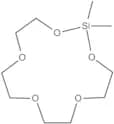


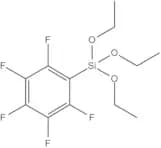
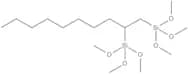
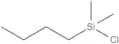
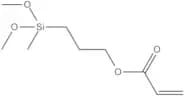
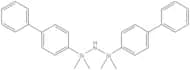
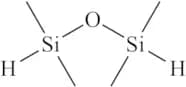
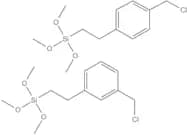


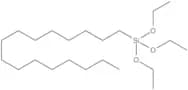

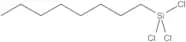
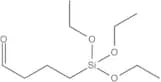
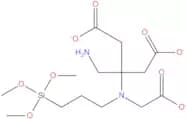

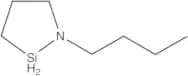
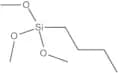

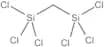
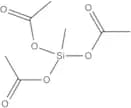
![[HYDROXY(POLYETHYLENEOXY)PROPYL]TRIETHOXYSILANE, (8-12 EO), 50% in ethanol](/_next/image/?url=https%3A%2Fstatic.cymitquimica.com%2Fproducts%2F3H%2Fthumb-webp%2FSIH6188.0.webp&w=3840&q=75)
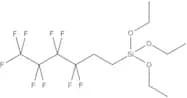

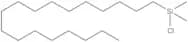

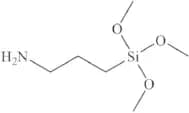

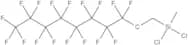

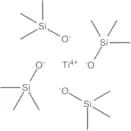

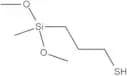
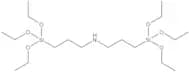

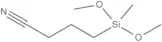
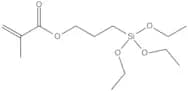


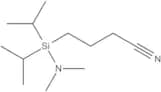


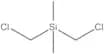
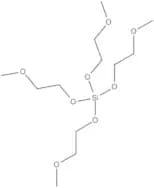

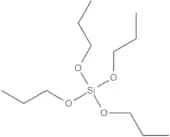
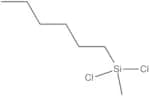

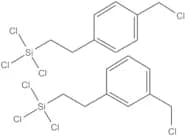
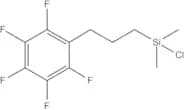
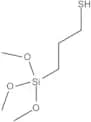


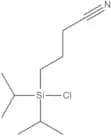
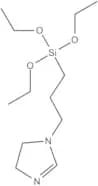

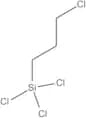

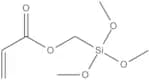
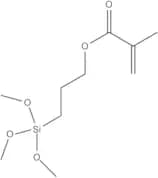

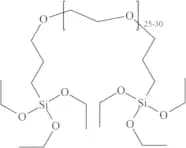


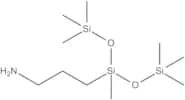
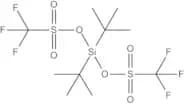
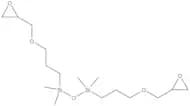
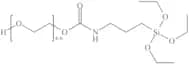
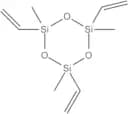
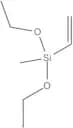

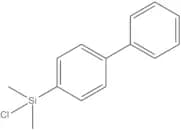
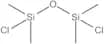
![[(5-BICYCLO[2.2.1]HEPT-2-ENYL)ETHYL]TRIETHOXYSILANE, tech, endo/exo isomers](/_next/image/?url=https%3A%2Fstatic.cymitquimica.com%2Fproducts%2F3H%2Fthumb-webp%2FSIB0987.0.webp&w=3840&q=75)
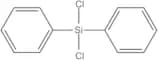

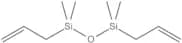

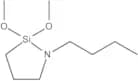


![BIS[m-(2-TRIETHOXYSILYLETHYL)TOLYL]POLYSULFIDE](/_next/image/?url=https%3A%2Fstatic.cymitquimica.com%2Fproducts%2F3H%2Fthumb-webp%2FSIB1820.5.webp&w=3840&q=75)
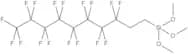
![3-[METHOXY(POLYETHYLENEOXY)6-9]PROPYLTRIMETHOXYSILANE, tech](/_next/image/?url=https%3A%2Fstatic.cymitquimica.com%2Fproducts%2F3H%2Fthumb-webp%2FSIM6492.7.webp&w=3840&q=75)