Silanes
Sous-catégories appartenant à la catégorie "Silanes"
1234 produits trouvés pour "Silanes"
(3- GLYCIDOXYPROPYL)TRIMETHOXYSILANE
CAS :(3- Glycidoxypropyl)trimethoxysilane; 3-(2,3-epoxypropoxy)propyltrimethoxysilane; trimethoxy-[3-(oxiran-2-ylmethoxy)propyl]silane; 3-(trimethoxysilyl)propyl glycidyl ether; GLYMO
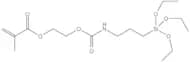
Epoxy functional trialkoxy silaneViscosity: 3.2 cStγc of treated surfaces: 38.55 mN/mSpecific wetting surface area: 331 m2/gComponent in aluminum metal bonding adhesivesCoupling agent for epoxy composites employed in electronic "chip" encapsulationComponent in abrasion resistant coatings for plastic opticsUsed to prepare epoxy-containing hybrid organic-inorganic materialsUsed in microparticle surface modificationEpoxy silane treated surfaces convert to hydrophilic-diols when exposed to moistureFormule :C9H20O5SiDegré de pureté :98%Couleur et forme :Straw LiquidMasse moléculaire :236.34O-(METHACRYLOXYETHYL)-N-(TRIETHOXYSILYLPROPYL)CARBAMATE, 90%
CAS :Methacrylate Functional Trialkoxy Silane
Silane coupling agents have the ability to form a durable bond between organic and inorganic materials to generate desired heterogeneous environments or to incorporate the bulk properties of different phases into a uniform composite structure. The general formula has two classes of functionality. The hydrolyzable group forms stable condensation products with siliceous surfaces and other oxides such as those of aluminum, zirconium, tin, titanium, and nickel. The organofunctional group alters the wetting or adhesion characteristics of the substrate, utilizes the substrate to catalyze chemical transformations at the heterogeneous interface, orders the interfacial region, or modifies its partition characteristics, and significantly effects the covalent bond between organic and inorganic materials.
O-(Methacryloxyethyl)-N-(triethoxysilylpropyl)carbamate
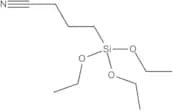
Coupling agent for UV cure systemsHydrophilic monomerUsed in microparticle surface modificationInhibited with MEHQFormule :C16H31NO7SiDegré de pureté :90%Couleur et forme :Straw LiquidMasse moléculaire :377.513-CYANOPROPYLTRIETHOXYSILANE
CAS :Formule :C10H21NO3SiDegré de pureté :97%Couleur et forme :Straw LiquidMasse moléculaire :231.3711-AZIDOUNDECYLTRIMETHOXYSILANE, 95%
CAS :Azide Functional Trialkoxy Silane
Silane coupling agents have the ability to form a durable bond between organic and inorganic materials to generate desired heterogeneous environments or to incorporate the bulk properties of different phases into a uniform composite structure. The general formula has two classes of functionality. The hydrolyzable group forms stable condensation products with siliceous surfaces and other oxides such as those of aluminum, zirconium, tin, titanium, and nickel. The organofunctional group alters the wetting or adhesion characteristics of the substrate, utilizes the substrate to catalyze chemical transformations at the heterogeneous interface, orders the interfacial region, or modifies its partition characteristics, and significantly effects the covalent bond between organic and inorganic materials.
11-Azidoundecyltrimethoxysilane, 11-(trimethoxysilyl)undecyl azide
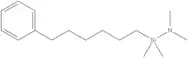
Coupling agent for surface modificationUsed in "click" chemistryAVOID CONTACT WITH METALSFormule :C14H31N3O3SiDegré de pureté :95%Couleur et forme :Straw To Amber LiquidMasse moléculaire :317.56-PHENYLHEXYLDIMETHYL(DIMETHYLAMINO)SILANE
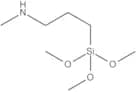
CAS :Formule :C16H29NSiDegré de pureté :97%Couleur et forme :Straw LiquidMasse moléculaire :263.49N-METHYLAMINOPROPYLTRIMETHOXYSILANE
CAS :N-Methylaminopropyltrimethoxysilane, 3-(trimethoxysilyl)-n-methyl-1-propanamine
Secondary amino functional trialkoxy silaneγc of treated surfaces: 31 mN/mpKb 25H2O: 5.18Used in microparticle surface modificationCoupling agent for UV cure and epoxy systemsOrients liquid crystalsReacts with urethane prepolymers to form moisture-curable resinsFormule :C7H19NO3SiDegré de pureté :97%Couleur et forme :Straw LiquidMasse moléculaire :193.32(N,N-DIMETHYLAMINO)TRIMETHYLSILANE
CAS :Trimethylsilyl Blocking Agent
Used as a protecting group for reactive hydrogens in alcohols, amines, thiols, and carboxylic acids. Organosilanes are hydrogen-like, can be introduced in high yield, and can be removed under selective conditions. They are stable over a wide range of reaction conditions and can be removed in the presence of other functional groups, including other protecting groups. The tolerance of silylated alcohols to chemical transformations summary is presented in Table 1 of the Silicon-Based Blocking Agents brochure.
Alkyl Silane - Conventional Surface Bonding
Aliphatic, fluorinated aliphatic or substituted aromatic hydrocarbon substituents are the hydrophobic entities which enable silanes to induce surface hydrophobicity. The organic substitution of the silane must be non-polar. The hydrophobic effect of the organic substitution can be related to the free energy of transfer of hydrocarbon molecules from an aqueous phase to a homogeneous hydrocarbon phase. A successful hydrophobic coating must eliminate or mitigate hydrogen bonding and shield polar surfaces from interaction with water by creating a non-polar interphase. Although silane and silicone derived coatings are in general the most hydrophobic, they maintain a high degree of permeability to water vapor. This allows coatings to breathe and reduce deterioration at the coating interface associated with entrapped water. Since ions are not transported through non-polar silane and silicone coatings, they offer protection to composite structures ranging from pigmented coatings to rebar reinforced concrete. A selection guide for hydrophobic silanes can be found on pages 22-31 of the Hydrophobicity, Hydrophilicity and Silane Surface Modification brochure.
Dimethylaminotrimethylsilane; Pentamethylsilanamine; Trimethylsilyldimethylamine; TMSDMA
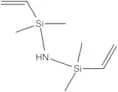
ΔHvap: 31.8 kJ/molSelectively silylates equatorial hydroxyl groups in prostaglandin synthesisStronger silylation reagent than HMDS; silylates amino acidsDialkylaminotrimethylsilanes are used in the synthesis of pentamethinium saltsWith aryl aldehydes converts ketones to α,β-unsaturated ketonesSimilar to SID6110.0 and SID3398.0Liberates Me2NH upon reactionSilylates urea-formaldehyde polycondensatesSilylates phosphorous acidsNafion SAC-13 has been shown to be a recyclable catalyst for the trimethylsilylation of primary, secondary, and tertiary alcohols in excellent yields and short reaction timesSummary of selective deprotection conditions is provided in Table 7 through Table 20 of the Silicon-Based Blocking Agents brochureFormule :C5H15NSiDegré de pureté :97%Couleur et forme :Straw LiquidMasse moléculaire :117.271,3-DIVINYL-1,1,3,3-TETRAMETHYLDISILAZANE
CAS :Diolefin Functional Amino Silane
Silane coupling agents have the ability to form a durable bond between organic and inorganic materials to generate desired heterogeneous environments or to incorporate the bulk properties of different phases into a uniform composite structure. The general formula has two classes of functionality. The hydrolyzable group forms stable condensation products with siliceous surfaces and other oxides such as those of aluminum, zirconium, tin, titanium, and nickel. The organofunctional group alters the wetting or adhesion characteristics of the substrate, utilizes the substrate to catalyze chemical transformations at the heterogeneous interface, orders the interfacial region, or modifies its partition characteristics, and significantly effects the covalent bond between organic and inorganic materials.
DVTMDZ; Bis(vinyldimethylsilyl)amine; N-(Dimethylvinylsilyl)-1,1-dimethyl-1-vinylsilylamine; 1,1,3,3-Tetramethyl-1,3-divinyldisilazane
Adhesion promoter for negative photoresistsFor silylation of glass capillary columnsCopolymerizes with ethyleneFormule :C8H19NSi2Degré de pureté :97%Couleur et forme :LiquidMasse moléculaire :185.422-CHLOROETHYLTRICHLOROSILANE, 95%
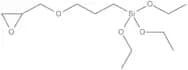
CAS :Formule :C2H4Cl4SiDegré de pureté :95%Couleur et forme :Straw LiquidMasse moléculaire :197.95(3-GLYCIDOXYPROPYL)TRIETHOXYSILANE
CAS :(3-Glycidoxypropyl)triethoxysilane; triethoxy[3-(oxiranylmethoxy)propyl]-silane; 2-[[3- (triethoxysilyl)propoxy]methyl]-oxirane; triethoxy[3- (oxiranylmethoxy)propyl]silane; 3-(2,3- epoxypropoxypropyl)triethoxysilane
Epoxy functional trialkoxy silaneViscosity: 3 cSt Coupling agent for latex polymersUsed in microparticle surface modificationPrimer for aluminum and glass to epoxy coatings and adhesives when applied as a 1-2% solution in solventCoupling agent for UV cure and epoxy systemsEpoxy silane treated surfaces convert to hydrophilic-diols when exposed to moistureFormule :C12H26O5SiCouleur et forme :Straw LiquidMasse moléculaire :278.42VINYLDIMETHYLCHLOROSILANE
CAS :Formule :C4H9ClSiDegré de pureté :97%Couleur et forme :Straw LiquidMasse moléculaire :120.65TRIETHOXYSILANE
CAS :Tri-substituted Silane Reducing Agent
Organosilanes are hydrocarbon-like and possess the ability to serve as both ionic and free-radical reducing agents. These reagents and their reaction by-products are safer and more easily handled and disposed than many other reducing agents. The metallic nature of silicon and its low electronegativity relative to hydrogen lead to polarization of the Si-H bond yielding a hydridic hydrogen and a milder reducing agent compared to aluminum-, boron-, and other metal-based hydrides. A summary of some key silane reductions are presented in Table 1 of the Silicon-Based Reducing Agents brochure.
Triethoxysilane; Silicon triethoxide; Triethoxysilylhydride
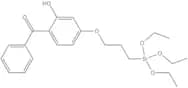
CAUTION: VAPORS CAUSE BLINDNESS — GOGGLES MUST BE WORNDISPROPORTIONATES IN PRESENCE OF BASE TO PYROPHORIC PRODUCTSContains trace Si–Cl for stabilityΔHcomb: -4,604 kJ/molΔHform: 925 kJ/molΔHvap: 175.4 kJ/molSurface tension: 22.3 mN/mVapor pressure, 20 °C: 20.2 mmCritical temperature: 244 °CDipole moment: 1.78 debyeHydrosilylates olefins in presence of PtUsed to convert alkynes to (E)–alkenes via hydrosilylation-desilylationReduces amides to amines in the presence of Zn(OAc)2Used in the reduction of phosphine oxides to phosphinesReduces esters in the presence of zinc hydride catalystReduces aldehydes and ketones to alcohols via the silyl ethers in presence of fluoride ionGives 1,2 reduction of enones to allyl alcoholsExtensive review of silicon based reducing agents: Larson, G.; Fry, J. L. "Ionic and Organometallic-Catalyzed Organosilane Reductions", Wipf, P., Ed.; Wiley, 2007Formule :C6H16O3SiDegré de pureté :97%Couleur et forme :LiquidMasse moléculaire :164.282-HYDROXY-4-(3-TRIETHOXYSILYLPROPOXY)DIPHENYLKETONE, tech
CAS :2-Hydroxy-4-(3-triethoxysilylpropoxy)diphenylketone; 4-(3-triethoxysilylpropoxy)-2-hydroxybenzophenone [2-hydroxy-4-[3-(triethoxysilyl)propoxy]phenyl]phenylmethanone
UV active trialkoxy silaneAmber liquidViscosity, 25 °C: 125-150 cStUV max: 230, 248, 296 (s), 336Strong UV blocking agent for optically clear coatings,Absorbs from 210-420 nmUsed in Bird-deterrent Glass CoatingsFormule :C22H30O6SiDegré de pureté :95%Couleur et forme :Straw To Amber LiquidMasse moléculaire :418.56N-PHENYLAMINOPROPYLTRIMETHOXYSILANE
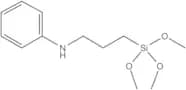
CAS :N-Phenylaminopropyltrimethoxysilane; N-[3-(trimethoxysilyl)propyl]aniline; [3-(trimethoxysilyl)propyl]aniline
Secondary amino functional trialkoxy silaneSpecific wetting surface: 307 m2/gCoupling agent for UV cure and epoxy systemsOxidatively stable coupling agent for polyimides, phenolics, epoxiesUsed in microparticle surface modificationFormule :C12H21NO3SiDegré de pureté :92%Couleur et forme :Straw Amber LiquidMasse moléculaire :255.383-[METHOXY(POLYETHYLENEOXY)9-12]PROPYLTRIMETHOXYSILANE, tech
CAS :Tipped PEG Silane (591-723 g/mol)
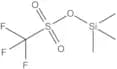
PEO, Trimethoxysilane termination utilized for hydrophilic surface modificationPEGylation reagentHydrogen bonding hydrophilic silaneFormule :CH3(C2H4O)9-12(CH2)3OSi(OCH3)3Couleur et forme :Straw LiquidMasse moléculaire :591-723TRIMETHYLSILYL TRIFLUOROMETHANESULFONATE CYLINDER
CAS :Trimethylsilyl Blocking Agent
Used as a protecting group for reactive hydrogens in alcohols, amines, thiols, and carboxylic acids. Organosilanes are hydrogen-like, can be introduced in high yield, and can be removed under selective conditions. They are stable over a wide range of reaction conditions and can be removed in the presence of other functional groups, including other protecting groups. The tolerance of silylated alcohols to chemical transformations summary is presented in Table 1 of the Silicon-Based Blocking Agents brochure.
Trimethylsilyltrifluoromethanesulfonate; Trimethylsilyltriflate; TMSOTf
Strong silylating agent for C- or O-silylationsReacts with nitroalkanes to give N,N-bis(trimethylsiloxy)enaminesNafion SAC-13 has been shown to be a recyclable catalyst for the trimethylsilylation of primary, secondary, and tertiary alcohols in excellent yields and short reaction timesSummary of selective deprotection conditions is provided in Table 7 through Table 20 of the Silicon-Based Blocking Agents brochureFormule :C4H9F3O3SSiCouleur et forme :Straw LiquidMasse moléculaire :222.25t-BUTYLDIMETHYLCHLOROSILANE
CAS :Trialkylsilyl Blocking Agent
Used as a protecting group for reactive hydrogens in alcohols, amines, thiols, and carboxylic acids. Organosilanes are hydrogen-like, can be introduced in high yield, and can be removed under selective conditions. They are stable over a wide range of reaction conditions and can be removed in the presence of other functional groups, including other protecting groups. The tolerance of silylated alcohols to chemical transformations summary is presented in Table 1 of the Silicon-Based Blocking Agents brochure.
Alkyl Silane - Conventional Surface Bonding
Aliphatic, fluorinated aliphatic or substituted aromatic hydrocarbon substituents are the hydrophobic entities which enable silanes to induce surface hydrophobicity. The organic substitution of the silane must be non-polar. The hydrophobic effect of the organic substitution can be related to the free energy of transfer of hydrocarbon molecules from an aqueous phase to a homogeneous hydrocarbon phase. A successful hydrophobic coating must eliminate or mitigate hydrogen bonding and shield polar surfaces from interaction with water by creating a non-polar interphase. Although silane and silicone derived coatings are in general the most hydrophobic, they maintain a high degree of permeability to water vapor. This allows coatings to breathe and reduce deterioration at the coating interface associated with entrapped water. Since ions are not transported through non-polar silane and silicone coatings, they offer protection to composite structures ranging from pigmented coatings to rebar reinforced concrete. A selection guide for hydrophobic silanes can be found on pages 22-31 of the Hydrophobicity, Hydrophilicity and Silane Surface Modification brochure.
tert-Butyldimethylchlorosilane; TBS-Cl; Chlorodimethyl-t-butylsilane; tert-Butylchlorodimethylsilane; Chloro(1,1-dimethylethyl)dimethylsilane
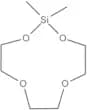
Excellent for 1° and 2° alcoholsSilylation catalyzed by imidazoleBlocking agent widely used in prostaglandin synthesisStable to many reagentsCan be selectively cleaved in presence of acetate, THP and benzyl ethers among othersUsed for the protection of alcohols, amines, thiols, lactams, and carboxylic acidsClean NMR characteristics of protecting groupSilylation reagent - derivatives resistant to Grignards, alkyl lithium compounds, etcFacile removal with flouride ion sourcesSummary of selective deprotection conditions is provided in Table 7 through Table 20 of the Silicon-Based Blocking Agents brochureFormule :C6H15ClSiDegré de pureté :97%Couleur et forme :Translucent SolidMasse moléculaire :150.72DIMETHYLSILA-11-CROWN-4, 95%
CAS :Silacrown (206.31 g/mol)
1,1-Dimethyl-1,3,6,9,11-tetraoxa-1-silacycloundecaneCrown ether analogDual end protected PEGFormule :C8H18O4SiDegré de pureté :95%Couleur et forme :LiquidMasse moléculaire :206.313-[METHOXY(POLYETHYLENEOXY)6-9]PROPYLTRICHLOROSILANE, tech
CAS :Tipped PEG Silane (472-604 g/mol)
90% oligomersPEO, Trichlorosilane termination utilized for hydrophilic surface modificationPEGylation reagentHydrogen bonding hydrophilic silaneProvides protein antifouling surfaceFormule :CH3O(C2H4O)6-9(CH2)3Cl3SiCouleur et forme :Straw LiquidMasse moléculaire :472-604n-OCTYLSILANE
CAS :Mono-substituted Silane Reducing Agent
Organosilanes are hydrocarbon-like and possess the ability to serve as both ionic and free-radical reducing agents. These reagents and their reaction by-products are safer and more easily handled and disposed than many other reducing agents. The metallic nature of silicon and its low electronegativity relative to hydrogen lead to polarization of the Si-H bond yielding a hydridic hydrogen and a milder reducing agent compared to aluminum-, boron-, and other metal-based hydrides. A summary of some key silane reductions are presented in Table 1 of the Silicon-Based Reducing Agents brochure.
Trihydridosilane
Silyl Hydrides are a distinct class of silanes that behave and react very differently than conventional silane coupling agents. They react with the liberation of byproduct hydrogen. Silyl hydrides can react with hydroxylic surfaces under both non-catalyzed and catalyzed conditions by a dehydrogenative coupling mechanism. Trihydridosilanes react with a variety of pure metal surfaces including gold, titanium, zirconium and amorphous silicon, by a dissociative adsorption mechanism. The reactions generally take place at room temperature and can be conducted in the vapor phase or with the pure silane or solutions of the silane in aprotic solvents. Deposition should not be conducted in water, alcohol or protic solvents.
n-Octylsilane; 1-Sila-nonane
Fugitive inhibitor of hydrosilylationForms SAMs on titanium, gold and silicon surfacesExtensive review of silicon based reducing agents: Larson, G.; Fry, J. L. "Ionic and Organometallic-Catalyzed Organosilane Reductions", Wipf, P., Ed.; Wiley, 2007Formule :C8H20SiDegré de pureté :97%Couleur et forme :LiquidMasse moléculaire :144.334-PHENYLBUTYLTRIMETHOXYSILANE
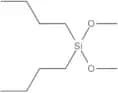
CAS :Formule :C13H22O3SiDegré de pureté :97%Couleur et forme :Straw LiquidMasse moléculaire :254.4DI-n-BUTYLDIMETHOXYSILANE
CAS :Alkyl Silane - Conventional Surface Bonding
Aliphatic, fluorinated aliphatic or substituted aromatic hydrocarbon substituents are the hydrophobic entities which enable silanes to induce surface hydrophobicity. The organic substitution of the silane must be non-polar. The hydrophobic effect of the organic substitution can be related to the free energy of transfer of hydrocarbon molecules from an aqueous phase to a homogeneous hydrocarbon phase. A successful hydrophobic coating must eliminate or mitigate hydrogen bonding and shield polar surfaces from interaction with water by creating a non-polar interphase. Although silane and silicone derived coatings are in general the most hydrophobic, they maintain a high degree of permeability to water vapor. This allows coatings to breathe and reduce deterioration at the coating interface associated with entrapped water. Since ions are not transported through non-polar silane and silicone coatings, they offer protection to composite structures ranging from pigmented coatings to rebar reinforced concrete. A selection guide for hydrophobic silanes can be found on pages 22-31 of the Hydrophobicity, Hydrophilicity and Silane Surface Modification brochure.
Di-n-butyldimethoxysilane; Dimethoxydi-n-butylsilane
Dialkoxy silaneFormule :C10H24O2SiDegré de pureté :97%Couleur et forme :Straw LiquidMasse moléculaire :204.391-[3-(2-AMINOETHYL)-3-AMINOISOBUTYL]-1,1,3,3,3-PENTAETHOXY-1,3-DISILAPROPANE, 95%
CAS :1-[3-(2-Aminoethyl)-3-aminoisobutyl]-1,1,3,3,3-pentaethoxy-1,3-disilapropane; 3-[2-(aminoethylamino-5-methyl)]-1,1,1,3,3-pentaethoxydisilahexane
Diamine functional pendant dipodal silaneAdhesion promoter for metal substratesPrimary amine coupling agent for UV cure and epoxy systemsFormule :C17H42N2O5Si2Degré de pureté :95%Masse moléculaire :410.7DECAMETHYLCYCLOPENTASILOXANE
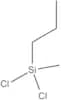
CAS :Formule :C10H30O5Si5Degré de pureté :97%Couleur et forme :LiquidMasse moléculaire :370.77n-PROPYLMETHYLDICHLOROSILANE
CAS :Alkyl Silane - Conventional Surface Bonding
Aliphatic, fluorinated aliphatic or substituted aromatic hydrocarbon substituents are the hydrophobic entities which enable silanes to induce surface hydrophobicity. The organic substitution of the silane must be non-polar. The hydrophobic effect of the organic substitution can be related to the free energy of transfer of hydrocarbon molecules from an aqueous phase to a homogeneous hydrocarbon phase. A successful hydrophobic coating must eliminate or mitigate hydrogen bonding and shield polar surfaces from interaction with water by creating a non-polar interphase. Although silane and silicone derived coatings are in general the most hydrophobic, they maintain a high degree of permeability to water vapor. This allows coatings to breathe and reduce deterioration at the coating interface associated with entrapped water. Since ions are not transported through non-polar silane and silicone coatings, they offer protection to composite structures ranging from pigmented coatings to rebar reinforced concrete. A selection guide for hydrophobic silanes can be found on pages 22-31 of the Hydrophobicity, Hydrophilicity and Silane Surface Modification brochure.
n-Propylmethyldichlorosilane; Dichloromethyl-n-propylsilane
Viscosity, 20 °C: 0.8 cStFormule :C4H10Cl2SiDegré de pureté :97%Couleur et forme :LiquidMasse moléculaire :157.11DIPHENYLDIETHOXYSILANE
CAS :Arylsilane Cross-Coupling Agent
The cross-coupling reaction is a highly useful methodology for the formation of carbon-carbon bonds. It involves two reagents, with one typically being a suitable organometallic reagent - the nucleophile - and the other a suitable organic substrate, normally an unsaturated halide, tosylate or similar - the electrophile.
Aromatic Silane - Conventional Surface Bonding
Aliphatic, fluorinated aliphatic or substituted aromatic hydrocarbon substituents are the hydrophobic entities which enable silanes to induce surface hydrophobicity. The organic substitution of the silane must be non-polar. The hydrophobic effect of the organic substitution can be related to the free energy of transfer of hydrocarbon molecules from an aqueous phase to a homogeneous hydrocarbon phase. A successful hydrophobic coating must eliminate or mitigate hydrogen bonding and shield polar surfaces from interaction with water by creating a non-polar interphase. Although silane and silicone derived coatings are in general the most hydrophobic, they maintain a high degree of permeability to water vapor. This allows coatings to breathe and reduce deterioration at the coating interface associated with entrapped water. Since ions are not transported through non-polar silane and silicone coatings, they offer protection to composite structures ranging from pigmented coatings to rebar reinforced concrete. A selection guide for hydrophobic silanes can be found on pages 22-31 of the Hydrophobicity, Hydrophilicity and Silane Surface Modification brochure.
Diphenyldiethoxysilane; Diethoxydiphenylsilane; 1,1'-(Diethoxysilylene)bis-benzene
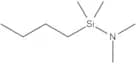
Vapor pressure, 125 °: 2 mmAlternative to phenyltriethoxysilane for the cross-coupling of a phenyl groupProvides hydrophobic coatings with good thermal and UV resistanceDialkoxy silaneFormule :C16H20O2SiDegré de pureté :97%Couleur et forme :Straw LiquidMasse moléculaire :272.42n-BUTYLDIMETHYL(DIMETHYLAMINO)SILANE
CAS :Trialkylsilyl Blocking Agent
Used as a protecting group for reactive hydrogens in alcohols, amines, thiols, and carboxylic acids. Organosilanes are hydrogen-like, can be introduced in high yield, and can be removed under selective conditions. They are stable over a wide range of reaction conditions and can be removed in the presence of other functional groups, including other protecting groups. The tolerance of silylated alcohols to chemical transformations summary is presented in Table 1 of the Silicon-Based Blocking Agents brochure.
Alkyl Silane - Conventional Surface Bonding
Aliphatic, fluorinated aliphatic or substituted aromatic hydrocarbon substituents are the hydrophobic entities which enable silanes to induce surface hydrophobicity. The organic substitution of the silane must be non-polar. The hydrophobic effect of the organic substitution can be related to the free energy of transfer of hydrocarbon molecules from an aqueous phase to a homogeneous hydrocarbon phase. A successful hydrophobic coating must eliminate or mitigate hydrogen bonding and shield polar surfaces from interaction with water by creating a non-polar interphase. Although silane and silicone derived coatings are in general the most hydrophobic, they maintain a high degree of permeability to water vapor. This allows coatings to breathe and reduce deterioration at the coating interface associated with entrapped water. Since ions are not transported through non-polar silane and silicone coatings, they offer protection to composite structures ranging from pigmented coatings to rebar reinforced concrete. A selection guide for hydrophobic silanes can be found on pages 22-31 of the Hydrophobicity, Hydrophilicity and Silane Surface Modification brochure.
n-Butyldimethyl(dimethylamino)silane; Trimethylsilyldimethylamine
Reactive aminofunctional organosilaneHighly reactive reagent for bonded phases without acidic byproductSummary of selective deprotection conditions is provided in Table 7 through Table 20 of the Silicon-Based Blocking Agents brochureFormule :C8H21NSiDegré de pureté :97%Couleur et forme :Straw LiquidMasse moléculaire :159.352-CYANOETHYLTRIETHOXYSILANE
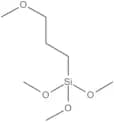
CAS :Formule :C9H19NO3SiDegré de pureté :97%Couleur et forme :Straw LiquidMasse moléculaire :217.343-METHOXYPROPYLTRIMETHOXYSILANE
CAS :Formule :C7H18O4SiDegré de pureté :97%Couleur et forme :Straw LiquidMasse moléculaire :194.3TRIMETHYLMETHOXYSILANE
CAS :Formule :C4H12OSiDegré de pureté :97%Couleur et forme :Straw LiquidMasse moléculaire :104.22TRIS(DIMETHYLAMINO)SILANE
CAS :ALD Material
Atomic layer deposition (ALD) is a chemically self-limiting deposition technique that is based on the sequential use of a gaseous chemical process. A thin film (as fine as -0.1 Å per cycle) results from repeating the deposition sequence as many times as needed to reach a certain thickness. The major characteristic of the films is the resulting conformality and the controlled deposition manner. Precursor selection is key in ALD processes, namely finding molecules which will have enough reactivity to produce the desired films yet are stable enough to be handled and safely delivered to the reaction chamber.
Tris(dimethylamino)silane; Tris(dimethylamido)silylhydride; N,N,N',N',N'',N''-Hexamethylsilanetriamine
AIR TRANSPORT FORBIDDENVapor pressure, 4 °C: 1 6 mmHydrosilylates olefins in presence of Rh2Cl2(CO)4Reacts with ammonia to form silicon nitride prepolymersEmployed in low pressure CVD of silicon nitrideFormule :C6H19N3SiDegré de pureté :97%Couleur et forme :Straw LiquidMasse moléculaire :161.32DIMETHYLDICHLOROSILANE, 98%
CAS :Bridging Silicon-Based Blocking Agent
Used as a protecting group for reactive hydrogens in alcohols, amines, thiols, and carboxylic acids. Organosilanes are hydrogen-like, can be introduced in high yield, and can be removed under selective conditions. They are stable over a wide range of reaction conditions and can be removed in the presence of other functional groups, including other protecting groups. The tolerance of silylated alcohols to chemical transformations summary is presented in Table 1 of the Silicon-Based Blocking Agents brochure.
Alkyl Silane - Conventional Surface Bonding
Aliphatic, fluorinated aliphatic or substituted aromatic hydrocarbon substituents are the hydrophobic entities which enable silanes to induce surface hydrophobicity. The organic substitution of the silane must be non-polar. The hydrophobic effect of the organic substitution can be related to the free energy of transfer of hydrocarbon molecules from an aqueous phase to a homogeneous hydrocarbon phase. A successful hydrophobic coating must eliminate or mitigate hydrogen bonding and shield polar surfaces from interaction with water by creating a non-polar interphase. Although silane and silicone derived coatings are in general the most hydrophobic, they maintain a high degree of permeability to water vapor. This allows coatings to breathe and reduce deterioration at the coating interface associated with entrapped water. Since ions are not transported through non-polar silane and silicone coatings, they offer protection to composite structures ranging from pigmented coatings to rebar reinforced concrete. A selection guide for hydrophobic silanes can be found on pages 22-31 of the Hydrophobicity, Hydrophilicity and Silane Surface Modification brochure.
Dimethyldichlorosilane; Dichlorodimethylsilane; DMS
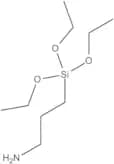
AIR TRANSPORT FORBIDDENViscosity: 0.47 cStVapor pressure, 17 °C: 100 mmSpecific heat: 0.92 J/g/°ΔHcomb: -2,055 kJ/molΔHvap: 33.5 kJ/molSurface tension: 20.1 mN/mCoefficient of thermal expansion: 1.3 x 10⁻³Critical temperature: 247.2 °CCritical pressure: 34.4 atmFundamental monomer for siliconesEmployed in the tethering of two olefins for the cross metathesis-coupling step in the synthesis of Attenol AAids in the intramolecular Pinacol reactionReacts with alcohols, diols, and hydroxy carboxylic acidsEmployed as a protecting group/template in C-glycoside synthesisHigher purity available as SID4120.1Summary of selective deprotection conditions is provided in Table 7 through Table 20 of the Silicon-Based Blocking Agents brochureFormule :C2H6Cl2SiDegré de pureté :98%Couleur et forme :Straw Amber LiquidMasse moléculaire :129.063-AMINOPROPYLTRIMETHOXYSILANE
CAS :Monoamine Functional Trialkoxy Silane
Silane coupling agents have the ability to form a durable bond between organic and inorganic materials to generate desired heterogeneous environments or to incorporate the bulk properties of different phases into a uniform composite structure. The general formula has two classes of functionality. The hydrolyzable group forms stable condensation products with siliceous surfaces and other oxides such as those of aluminum, zirconium, tin, titanium, and nickel. The organofunctional group alters the wetting or adhesion characteristics of the substrate, utilizes the substrate to catalyze chemical transformations at the heterogeneous interface, orders the interfacial region, or modifies its partition characteristics, and significantly effects the covalent bond between organic and inorganic materials.
3-Aminopropyltrimethoxysilane, Trimethoxysilylpropylamine, ?-Aminopropyltrimethoxysilane, APTES, AMEO, GAPS, A-1100
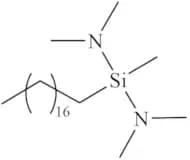
Higher purity material available as SIA0611.1Vapor pressure, 67 °: 5 mmSuperior reactivity in vapor phase and non-aqueous surface treatmentsPrimary amine coupling agent for UV cure and epoxy systemsHydrolysis rate vs SIA0610.0 : 6:1Used to immobilize Cu and Zn Schiff base precatalysts for formation of cyclic carbonatesUsed in microparticle surface modificationFormule :C6H17NO3SiDegré de pureté :97%Couleur et forme :Straw LiquidMasse moléculaire :179.29n-OCTADECYLMETHYLBIS(DIMETHYLAMINO)SILANE
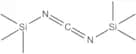
Formule :C23H52N2SiDegré de pureté :92%Couleur et forme :Straw LiquidMasse moléculaire :384.76BIS(TRIMETHYLSILYL)CARBODIIMIDE
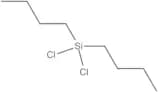
CAS :Formule :C7H18N2Si2Degré de pureté :97%Couleur et forme :Straw LiquidMasse moléculaire :186.4DI-n-BUTYLDICHLOROSILANE
CAS :Alkyl Silane - Conventional Surface Bonding
Aliphatic, fluorinated aliphatic or substituted aromatic hydrocarbon substituents are the hydrophobic entities which enable silanes to induce surface hydrophobicity. The organic substitution of the silane must be non-polar. The hydrophobic effect of the organic substitution can be related to the free energy of transfer of hydrocarbon molecules from an aqueous phase to a homogeneous hydrocarbon phase. A successful hydrophobic coating must eliminate or mitigate hydrogen bonding and shield polar surfaces from interaction with water by creating a non-polar interphase. Although silane and silicone derived coatings are in general the most hydrophobic, they maintain a high degree of permeability to water vapor. This allows coatings to breathe and reduce deterioration at the coating interface associated with entrapped water. Since ions are not transported through non-polar silane and silicone coatings, they offer protection to composite structures ranging from pigmented coatings to rebar reinforced concrete. A selection guide for hydrophobic silanes can be found on pages 22-31 of the Hydrophobicity, Hydrophilicity and Silane Surface Modification brochure.
Di-n-butyldichlorosilane; Dichlorodi-n-butylsilaneFormule :C8H18Cl2SiDegré de pureté :96%Couleur et forme :Straw LiquidMasse moléculaire :213.22VINYLTRIISOPROPENOXYSILANE, tech
CAS :Olefin Functional Trialkoxy Silane
Silane coupling agents have the ability to form a durable bond between organic and inorganic materials to generate desired heterogeneous environments or to incorporate the bulk properties of different phases into a uniform composite structure. The general formula has two classes of functionality. The hydrolyzable group forms stable condensation products with siliceous surfaces and other oxides such as those of aluminum, zirconium, tin, titanium, and nickel. The organofunctional group alters the wetting or adhesion characteristics of the substrate, utilizes the substrate to catalyze chemical transformations at the heterogeneous interface, orders the interfacial region, or modifies its partition characteristics, and significantly effects the covalent bond between organic and inorganic materials.
Vinyltriisopropenoxysilane; Triisopropenoxyethenylsilane; Tris(isopropenyloxy)vinylsilane; Triisopropenoxysilylethylene
Employed as a cross-linker and in vapor phase derivatizationByproduct is acetoneNeutral crosslinker for high-speed moisture-cure (enoxy-cure) siliconesFormule :C11H18O3SiDegré de pureté :97%Couleur et forme :LiquidMasse moléculaire :226.35N-(TRIMETHYLSILYL)IMIDAZOLE
CAS :Trimethylsilyl Blocking Agent
Used as a protecting group for reactive hydrogens in alcohols, amines, thiols, and carboxylic acids. Organosilanes are hydrogen-like, can be introduced in high yield, and can be removed under selective conditions. They are stable over a wide range of reaction conditions and can be removed in the presence of other functional groups, including other protecting groups. The tolerance of silylated alcohols to chemical transformations summary is presented in Table 1 of the Silicon-Based Blocking Agents brochure.
Trimethylsilylimidazole; TMSIM; 1-(Trimethylsilyl)imidazole
Powerful silylating agent for alcoholsDoes not react with aliphatic aminesNafion SAC-13 has been shown to be a recyclable catalyst for the trimethylsilylation of primary, secondary, and tertiary alcohols in excellent yields and short reaction timesSummary of selective deprotection conditions is provided in Table 7 through Table 20 of the Silicon-Based Blocking Agents brochureFormule :C6H12N2SiDegré de pureté :97%Couleur et forme :Straw LiquidMasse moléculaire :140.261,3-BIS(CYANOPROPYL)TETRAMETHYLDISILOXANE, 92%
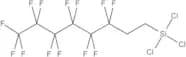
CAS :Formule :C12H24N2OSi2Degré de pureté :92%Couleur et forme :Straw LiquidMasse moléculaire :268.51(TRIDECAFLUORO-1,1,2,2-TETRAHYDROOCTYL)TRICHLOROSILANE
CAS :Formule :C8H4Cl3F13SiDegré de pureté :97%Couleur et forme :Straw LiquidMasse moléculaire :481.55TRIS(3-TRIMETHOXYSILYLPROPYL)ISOCYANURATE, tech
CAS :Tris(3-trimethoxysilylpropyl)isocyanurate; 1,3,5-tris[3-(trimethoxysilyl)propyl]-1,3,5-triazine-2,4,6(1h,3h,5h)-trione
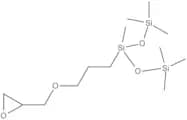
Masked isocyanate functional trialkoxy silaneViscosity: 150-350 cStCoupling agent for polyimides to silicon metalAdhesion promoter for hotmelt adhesivesForms periodic mesoporous silicasFormule :C21H45N3O12Si3Degré de pureté :95% functional actives (contains analogous compounds)Couleur et forme :Straw LiquidMasse moléculaire :615.863-[HYDROXY(POLYETHYLENEOXY)PROPYL]HEPTAMETHYLTRISILOXANE, 90%
CAS :PEGylated Silicone, Trisiloxane (550-650 g/mol)
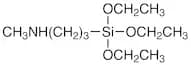
PEO, PEG, Hydroxyl terminated trisiloxane utilized for hydrophilic surface modificationPEGylation reagentViscosity: 35 cStFormule :HO(CH2CH2O)6-9(CH2)3(CH3)[OSi(CH3)3]2SiDegré de pureté :90%Couleur et forme :LiquidMasse moléculaire :550-650N-Methyl-3-(triethoxysilyl)propan-1-amine
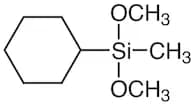
CAS :Formule :C10H25NO3SiDegré de pureté :>97.0%(GC)(T)Couleur et forme :Colorless to Light yellow clear liquidMasse moléculaire :235.40Cyclohexyl(dimethoxy)methylsilane
CAS :Formule :C9H20O2SiDegré de pureté :>98.0%(GC)Couleur et forme :Colorless to Almost colorless clear liquidMasse moléculaire :188.342-Propynyl [3-(Triethoxysilyl)propyl]carbamate
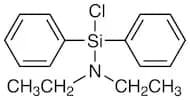
CAS :Formule :C13H25NO5SiDegré de pureté :>90.0%(GC)Couleur et forme :Colorless to Yellow clear liquidMasse moléculaire :303.431-Chloro-N,N-diethyl-1,1-diphenylsilanamine
CAS :Formule :C16H20ClNSiDegré de pureté :>95.0%(T)Couleur et forme :Colorless to Light yellow clear liquidMasse moléculaire :289.88Chlorodimethyl[3-(2,3,4,5,6-pentafluorophenyl)propyl]silane
CAS :Formule :C11H12ClF5SiDegré de pureté :>95.0%(GC)Couleur et forme :Colorless to Light yellow clear liquid to cloudy liquidMasse moléculaire :302.742,5-Bis[(trimethylsilyl)ethynyl]thiophene
CAS :Formule :C14H20SSi2Degré de pureté :>96.0%(GC)Couleur et forme :Light yellow to Yellow to Orange powder to crystalMasse moléculaire :276.541-Methyl-3-[3-(trimethoxysilyl)propyl]-1H-imidazol-3-ium Chloride
CAS :Formule :C10H21ClN2O3SiDegré de pureté :>95.0%(T)(HPLC)Couleur et forme :Colorless to Light yellow to Light orange clear liquidMasse moléculaire :280.82[3-(Trimethoxysilyl)propyl]succinic Anhydride
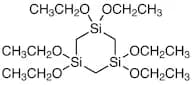
CAS :Formule :C10H18O6SiDegré de pureté :>95.0%(T)Couleur et forme :Colorless to Light yellow clear liquidMasse moléculaire :262.331,1,3,3,5,5-Hexaethoxy-1,3,5-trisilacyclohexane
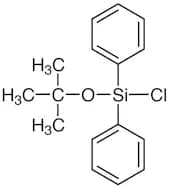
CAS :Formule :C15H36O6Si3Degré de pureté :>90.0%(GC)Couleur et forme :Colorless to Almost colorless clear liquidMasse moléculaire :396.70tert-Butoxydiphenylchlorosilane (stabilized with CaCO3)
CAS :Formule :C16H19ClOSiDegré de pureté :>95.0%(GC)Couleur et forme :Colorless to Almost colorless clear liquidMasse moléculaire :290.86Diethyl(methyl)silane
CAS :Formule :C5H14SiDegré de pureté :>98.0%(GC)Couleur et forme :White to Light yellow powder to crystalMasse moléculaire :102.252-[Methoxy(polyethyleneoxy)6-9propyl]trimethoxysilane
CAS :S25235 - 2-[Methoxy(polyethyleneoxy)6-9propyl]trimethoxysilane
Formule :(C2H4O2)nC7H18O3SiDegré de pureté :90%Couleur et forme :LiquidMasse moléculaire :459-591Aminopropyl terminated polydimethylsiloxane cSt 4,000-6,000
CAS :DMS-A35 - Aminopropyl terminated polydimethylsiloxane cSt 4,000-6,000
Couleur et forme :Liquid, ClearMasse moléculaire :0.0Silanol terminated polydimethylsiloxanes cSt 50,000
CAS :DMS-S45 - Silanol terminated polydimethylsiloxanes cSt 50,000
Couleur et forme :Liquid, ClearMasse moléculaire :0.0Aminopropyl terminated polydimethylsiloxane cSt 100-120
CAS :DMS-A21 - Aminopropyl terminated polydimethylsiloxane cSt 100-120
Couleur et forme :Liquid, ClearMasse moléculaire :338.187722538Silanol terminated polydimethylsiloxane cSt 5000
CAS :DMS-S35 - Silanol terminated polydimethylsiloxane cSt 5000
Couleur et forme :Liquid, ClearMasse moléculaire :0.0Aminoproplyterminated polydimethylsiloxane cSt 20-30
CAS :DMS-A12 - Aminoproplyterminated polydimethylsiloxane cSt 20-30
Couleur et forme :Liquid, ClearMasse moléculaire :338.187722538MonoCarbinol terminated functional Polydimethylsiloxane - symmetric cSt 35-40
CAS :MCS-C13 - MonoCarbinol terminated functional Polydimethylsiloxane - symmetric cSt 35-40
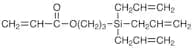
Couleur et forme :Liquid, Clear LiquidMasse moléculaire :0.03-(Triallylsilyl)propyl Acrylate (stabilized with MEHQ)
CAS :Formule :C15H24O2SiDegré de pureté :>92.0%(GC)Couleur et forme :Light yellow to Brown clear liquidMasse moléculaire :264.44(Trifluoromethyl)Trimethylsilane
CAS :Formule :C4H9F3SiDegré de pureté :98%Couleur et forme :LiquidMasse moléculaire :142.1950n-DECYLTRIETHOXYSILANE
CAS :Alkyl Silane - Conventional Surface Bonding
Aliphatic, fluorinated aliphatic or substituted aromatic hydrocarbon substituents are the hydrophobic entities which enable silanes to induce surface hydrophobicity. The organic substitution of the silane must be non-polar. The hydrophobic effect of the organic substitution can be related to the free energy of transfer of hydrocarbon molecules from an aqueous phase to a homogeneous hydrocarbon phase. A successful hydrophobic coating must eliminate or mitigate hydrogen bonding and shield polar surfaces from interaction with water by creating a non-polar interphase. Although silane and silicone derived coatings are in general the most hydrophobic, they maintain a high degree of permeability to water vapor. This allows coatings to breathe and reduce deterioration at the coating interface associated with entrapped water. Since ions are not transported through non-polar silane and silicone coatings, they offer protection to composite structures ranging from pigmented coatings to rebar reinforced concrete. A selection guide for hydrophobic silanes can be found on pages 22-31 of the Hydrophobicity, Hydrophilicity and Silane Surface Modification brochure.
n-Decyltriethoxysilane; Triethoxysilyldecane
Trialkoxy silaneFormule :C16H36O3SiDegré de pureté :97%Couleur et forme :Straw LiquidMasse moléculaire :304.541,3,5,7,9-PENTAMETHYLCYCLOPENTASILOXANE, 90%
CAS :Siloxane-Based Silane Reducing Agent
Organosilanes are hydrocarbon-like and possess the ability to serve as both ionic and free-radical reducing agents. These reagents and their reaction by-products are safer and more easily handled and disposed than many other reducing agents. The metallic nature of silicon and its low electronegativity relative to hydrogen lead to polarization of the Si-H bond yielding a hydridic hydrogen and a milder reducing agent compared to aluminum-, boron-, and other metal-based hydrides. A summary of some key silane reductions are presented in Table 1 of the Silicon-Based Reducing Agents brochure.
1,3,5,7,9-Pentamethylcyclopentasiloxane; D'5; Methyl hydrogen cyclic pentamer; 2,4,6,8,10-Pentamethylcyclopentasiloxane
ΔHvap: 47.3 kJ/molContains other cyclic homologsExtensive review of silicon based reducing agents: Larson, G.; Fry, J. L. "Ionic and Organometallic-Catalyzed Organosilane Reductions", Wipf, P., Ed.; Wiley, 2007Formule :C5H20O5Si5Degré de pureté :90%Couleur et forme :LiquidMasse moléculaire :300.64ISOTETRASILANE
CAS :Volatile Higher Silane
Volatile higher silanes are low temperature, high deposition rate precursors. By appropriate selection of precursor and deposition conditions, silicon deposition can be shifted from amorphous hydrogenated silicon toward microcrystalline silicon structures. As the number of silicon atoms increases beyond two, electrons are capable of sigma–sigma bond conjugation. The dissociative adsorption of two of the three hydrogen atoms on terminal silicon atoms has a lower energy barrier.
Isotetrasilane; (Trisilyl)silane; 2-Silyltrisilane
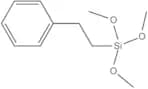
PYROPHORICAIR TRANSPORT FORBIDDEN?Hvap: 32.5 kJ/molPrecursor for low temp. epitaxy of doped crystalline siliconEmployed in low temperature CVD of amorphous siliconFormule :H10Si4Degré de pureté :98%Couleur et forme :Colourless LiquidMasse moléculaire :122.42PHENETHYLTRIMETHOXYSILANE, tech
CAS :Aromatic Silane - Conventional Surface Bonding
Aliphatic, fluorinated aliphatic or substituted aromatic hydrocarbon substituents are the hydrophobic entities which enable silanes to induce surface hydrophobicity. The organic substitution of the silane must be non-polar. The hydrophobic effect of the organic substitution can be related to the free energy of transfer of hydrocarbon molecules from an aqueous phase to a homogeneous hydrocarbon phase. A successful hydrophobic coating must eliminate or mitigate hydrogen bonding and shield polar surfaces from interaction with water by creating a non-polar interphase. Although silane and silicone derived coatings are in general the most hydrophobic, they maintain a high degree of permeability to water vapor. This allows coatings to breathe and reduce deterioration at the coating interface associated with entrapped water. Since ions are not transported through non-polar silane and silicone coatings, they offer protection to composite structures ranging from pigmented coatings to rebar reinforced concrete. A selection guide for hydrophobic silanes can be found on pages 22-31 of the Hydrophobicity, Hydrophilicity and Silane Surface Modification brochure.
Phenethyltrimethoxysilane; Phenylethyltrimethoxysilane; Trimethoxy(2-phenylethyl)silane
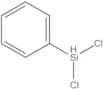
Contains α-, β-isomersComponent in optical coating resinsIn combination with TEOS,SIT7110.0, forms hybrid silicalite-1 molecular sievesFormule :C11H18O3SiDegré de pureté :97%Couleur et forme :Straw To Dark Amber LiquidMasse moléculaire :226.35PHENYLDICHLOROSILANE
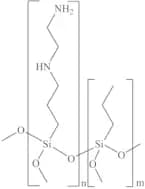
CAS :Formule :C6H6Cl2SiDegré de pureté :95%Couleur et forme :Straw LiquidMasse moléculaire :177.1N-(2-AMINOETHYL)-3-AMINOPROPYLTRIMETHOXYSILANE-PROPYLTRIMETHOXYSILANE, oligomeric co-hydrolysate
Diamine Functional Polymeric Silane
Silane coupling agents have the ability to form a durable bond between organic and inorganic materials to generate desired heterogeneous environments or to incorporate the bulk properties of different phases into a uniform composite structure. The general formula has two classes of functionality. The hydrolyzable group forms stable condensation products with siliceous surfaces and other oxides such as those of aluminum, zirconium, tin, titanium, and nickel. The organofunctional group alters the wetting or adhesion characteristics of the substrate, utilizes the substrate to catalyze chemical transformations at the heterogeneous interface, orders the interfacial region, or modifies its partition characteristics, and significantly effects the covalent bond between organic and inorganic materials.
N-(2-Aminoethyl)-3-aminopropyltrimethoxsilane-propyltrimethoxysilane,N-[3-(trimethoxysilyl)propyl]ethylenediamine-(trimethoxysilyl)propane, oligomeric co-hydrolysate
Cohydrolysate of SIA0591.1 and SIP6918.0Couleur et forme :Straw LiquidMasse moléculaire :222.36PHENYLMETHYLDICHLOROSILANE
CAS :Aromatic Silane - Conventional Surface Bonding
Aliphatic, fluorinated aliphatic or substituted aromatic hydrocarbon substituents are the hydrophobic entities which enable silanes to induce surface hydrophobicity. The organic substitution of the silane must be non-polar. The hydrophobic effect of the organic substitution can be related to the free energy of transfer of hydrocarbon molecules from an aqueous phase to a homogeneous hydrocarbon phase. A successful hydrophobic coating must eliminate or mitigate hydrogen bonding and shield polar surfaces from interaction with water by creating a non-polar interphase. Although silane and silicone derived coatings are in general the most hydrophobic, they maintain a high degree of permeability to water vapor. This allows coatings to breathe and reduce deterioration at the coating interface associated with entrapped water. Since ions are not transported through non-polar silane and silicone coatings, they offer protection to composite structures ranging from pigmented coatings to rebar reinforced concrete. A selection guide for hydrophobic silanes can be found on pages 22-31 of the Hydrophobicity, Hydrophilicity and Silane Surface Modification brochure.
Arylsilane Cross-Coupling Agent
The cross-coupling reaction is a highly useful methodology for the formation of carbon-carbon bonds. It involves two reagents, with one typically being a suitable organometallic reagent - the nucleophile - and the other a suitable organic substrate, normally an unsaturated halide, tosylate or similar - the electrophile.
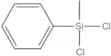
Phenylmethyldichlorosilane; Methylphenyldichlorosilane; Dichloromethylphenylsilane
Viscosity, 20 °C: 1.2 cStΔHvap: 48.1 kJ/molVapor pressure, 82.5 °C: 13 mmMonomer for high temperature siliconesReacts well under the influence of NaOH versus fluoride activation w/ aryl chlorides, bromides, and iodidesFormule :C7H8Cl2SiDegré de pureté :97%Couleur et forme :LiquidMasse moléculaire :191.13SILICON DIOXIDE, amorphous GEL, 30% in isopropanol
CAS :Formule :SiO2Couleur et forme :Translucent LiquidMasse moléculaire :60.09PHENYLMETHYLDIMETHOXYSILANE
CAS :Aromatic Silane - Conventional Surface Bonding
Aliphatic, fluorinated aliphatic or substituted aromatic hydrocarbon substituents are the hydrophobic entities which enable silanes to induce surface hydrophobicity. The organic substitution of the silane must be non-polar. The hydrophobic effect of the organic substitution can be related to the free energy of transfer of hydrocarbon molecules from an aqueous phase to a homogeneous hydrocarbon phase. A successful hydrophobic coating must eliminate or mitigate hydrogen bonding and shield polar surfaces from interaction with water by creating a non-polar interphase. Although silane and silicone derived coatings are in general the most hydrophobic, they maintain a high degree of permeability to water vapor. This allows coatings to breathe and reduce deterioration at the coating interface associated with entrapped water. Since ions are not transported through non-polar silane and silicone coatings, they offer protection to composite structures ranging from pigmented coatings to rebar reinforced concrete. A selection guide for hydrophobic silanes can be found on pages 22-31 of the Hydrophobicity, Hydrophilicity and Silane Surface Modification brochure.
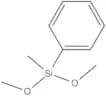
Phenylmethyldimethoxysilane; Methylphenyldimethoxysilane; Dimethoxymethylphenylsilane
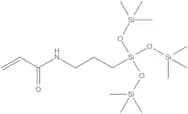
Viscosity, 20 °C: 1.65 cStAdditive to coupling agent systems, increasing interface flexibility, UV stabilityDialkoxy silaneFormule :C9H14O2SiDegré de pureté :97%Couleur et forme :Straw LiquidMasse moléculaire :182.293-ACRYLAMIDOPROPYLTRIS(TRIMETHYLSILOXY)SILANE, tech
CAS :Formule :C15H37NO4Si4Degré de pureté :95%Couleur et forme :SolidMasse moléculaire :407.8N-(2-AMINOETHYL)-3-AMINOPROPYLTRIETHOXYSILANE, 92%
CAS :Diamino Functional Trialkoxy Silane
Silane coupling agents have the ability to form a durable bond between organic and inorganic materials to generate desired heterogeneous environments or to incorporate the bulk properties of different phases into a uniform composite structure. The general formula has two classes of functionality. The hydrolyzable group forms stable condensation products with siliceous surfaces and other oxides such as those of aluminum, zirconium, tin, titanium, and nickel. The organofunctional group alters the wetting or adhesion characteristics of the substrate, utilizes the substrate to catalyze chemical transformations at the heterogeneous interface, orders the interfacial region, or modifies its partition characteristics, and significantly effects the covalent bond between organic and inorganic materials.
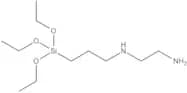
N-(2-Aminoethyl)-3-aminopropyltriethoxysilane; N-[3-(Triethoxysilyl)propyl]-1,2-ethanediamine; N-[3-(Triethoxysilyl)propyl]-ethylenediamine
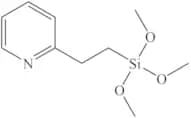
Primary amine with an internal secondary amine coupling agent for UV cure and epoxy systemsUsed in microparticle surface modificationSlower hydrolysis rate than SIA0591.0 and SIA0592.6Formule :C11H28N2O3SiDegré de pureté :92%Couleur et forme :Straw LiquidMasse moléculaire :264.552-(2-PYRIDYLETHYL)TRIMETHOXYSILANE
CAS :2-(2-Pyridylethyl)trimethoxysilane, 2-(trimethoxysilylethyl)pyridine
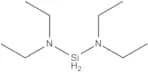
Monoamino functional trialkoxy silaneUsed in microparticle surface modificationFormule :C10H17NO3SiDegré de pureté :97%Couleur et forme :Straw Amber LiquidMasse moléculaire :227.33BIS(DIETHYLAMINO)SILANE
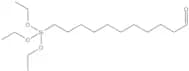
CAS :Formule :C8H22N2SiDegré de pureté :97%Couleur et forme :Straw LiquidMasse moléculaire :174.16TRIETHOXYSILYLUNDECANAL, tech
CAS :Aldehyde Functional Trialkoxy Silane
Silane coupling agents have the ability to form a durable bond between organic and inorganic materials to generate desired heterogeneous environments or to incorporate the bulk properties of different phases into a uniform composite structure. The general formula has two classes of functionality. The hydrolyzable group forms stable condensation products with siliceous surfaces and other oxides such as those of aluminum, zirconium, tin, titanium, and nickel. The organofunctional group alters the wetting or adhesion characteristics of the substrate, utilizes the substrate to catalyze chemical transformations at the heterogeneous interface, orders the interfacial region, or modifies its partition characteristics, and significantly effects the covalent bond between organic and inorganic materials.
Triethoxysilylundecanal
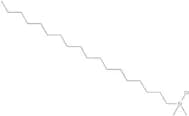
Treated surface contact angle, water: 70°Long chain coupling agent for DNAProvides greater stability for coupled proteins than shorter alkyl homologsLong chain homolog of triethoxysilylbutyraldehyde (SIT8185.3)Formule :C17H36O4SiDegré de pureté :techCouleur et forme :Straw LiquidMasse moléculaire :332.56n-OCTADECYLDIMETHYLCHLOROSILANE, 70% in toluene
CAS :Alkyl Silane - Conventional Surface Bonding
Aliphatic, fluorinated aliphatic or substituted aromatic hydrocarbon substituents are the hydrophobic entities which enable silanes to induce surface hydrophobicity. The organic substitution of the silane must be non-polar. The hydrophobic effect of the organic substitution can be related to the free energy of transfer of hydrocarbon molecules from an aqueous phase to a homogeneous hydrocarbon phase. A successful hydrophobic coating must eliminate or mitigate hydrogen bonding and shield polar surfaces from interaction with water by creating a non-polar interphase. Although silane and silicone derived coatings are in general the most hydrophobic, they maintain a high degree of permeability to water vapor. This allows coatings to breathe and reduce deterioration at the coating interface associated with entrapped water. Since ions are not transported through non-polar silane and silicone coatings, they offer protection to composite structures ranging from pigmented coatings to rebar reinforced concrete. A selection guide for hydrophobic silanes can be found on pages 22-31 of the Hydrophobicity, Hydrophilicity and Silane Surface Modification brochure.
n-Octadecyldimethylchlorosilane; Dimethyl-n-octadecylchlorosilane; Chlorodimethyloctadecylsilane; Chlorodimethylsilyl-n-octadecane
Contains 5-10% C18 isomers70% in tolueneFormule :C20H43ClSiCouleur et forme :Straw Amber LiquidMasse moléculaire :347.13-ISOCYANOTOPROPYLTRIMETHOXYSILANE, 92%
CAS :3-Isocyanotopropyltrimethoxysilane; trimethoxysilylpropylisocyanate
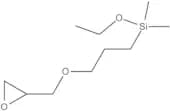
Isocyanate functional trialkoxy silaneViscosity: 1.4 cStCoupling agent for urethanes, polyols, and aminesComponent in hybrid organic/inorganic urethanesFormule :C7H15NO4SiDegré de pureté :92%Couleur et forme :Straw LiquidMasse moléculaire :205.29(3-GLYCIDOXYPROPYL)DIMETHYLETHOXYSILANE
CAS :(3-Glycidoxypropyl)dimethylethoxysilane; 3-(2,3-epoxypropoxypropyl)dimethylethoxysilane
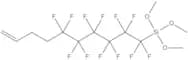
Epoxy functional monoalkoxy silaneUsed in microparticle surface modificationCoupling agent for UV cure and epoxy systemsEpoxy silane treated surfaces convert to hydrophilic-diols when exposed to moistureFormule :C10H22O3SiDegré de pureté :97%Couleur et forme :Straw LiquidMasse moléculaire :218.37DODECAFLUORODEC-9-ENE-1-YLTRIMETHOXYSILANE
CAS :Olefin Functional Trialkoxy Silane
Silane coupling agents have the ability to form a durable bond between organic and inorganic materials to generate desired heterogeneous environments or to incorporate the bulk properties of different phases into a uniform composite structure. The general formula has two classes of functionality. The hydrolyzable group forms stable condensation products with siliceous surfaces and other oxides such as those of aluminum, zirconium, tin, titanium, and nickel. The organofunctional group alters the wetting or adhesion characteristics of the substrate, utilizes the substrate to catalyze chemical transformations at the heterogeneous interface, orders the interfacial region, or modifies its partition characteristics, and significantly effects the covalent bond between organic and inorganic materials.
9-Trimethoxysilyl-3,3,4,4,5,5,6,6,7,7,8,8-dodecafluorodecene; Dodecafluorodec-9-ene-1-yltrimethoxysilane
Forms self-assembled monolayers; reagent for immobilization of DNAUsed in microparticle surface modificationHalogenated alkyl hydrophobic linkerSimilar to discontinued product, SIH5919.0Formule :C13H16F12O3SiDegré de pureté :97%Couleur et forme :Straw LiquidMasse moléculaire :476.33TRIS(TRIMETHYLSILOXY)CHLOROSILANE
CAS :Formule :C9H27ClO3Si4Degré de pureté :97%Couleur et forme :Straw LiquidMasse moléculaire :331.11,3-DIVINYLTETRAMETHYLDISILOXANE
CAS :Alkenylsilane Cross-Coupling Agent
The cross-coupling reaction is a highly useful methodology for the formation of carbon-carbon bonds. It involves two reagents, with one typically being a suitable organometallic reagent - the nucleophile - and the other a suitable organic substrate, normally an unsaturated halide, tosylate or similar - the electrophile.
1,3-Divinyltetramethyldisiloxane; Diethenyltetramethyldisiloxane; Tetramethyldivinyldisiloxane; Divinyltetramethyldisiloxane
Silicone end-capperPotential vinyl nucleophile in cross-coupling reactionsModifier for vinyl addition silicone formulationsPotential vinyl donor in cross-coupling reactionsExtensive review of silicon based cross-coupling agents: Denmark, S. E. et al. "Organic Reactions, Volume 75" Denmark, S. E. ed., John Wiley and Sons, 233, 2011Formule :C8H18OSi2Degré de pureté :97%Couleur et forme :LiquidMasse moléculaire :186.4SILICON DIOXIDE, precipitated
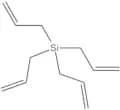
CAS :Formule :SiO2Couleur et forme :White SolidMasse moléculaire :60.09TETRAALLYLSILANE
CAS :Formule :C12H20SiDegré de pureté :97%Couleur et forme :Straw LiquidMasse moléculaire :192.371,3-BIS(3-METHACRYLOXYPROPYL)TETRAMETHYLDISILOXANE
CAS :Formule :C18H34O5Si2Degré de pureté :92%Couleur et forme :Straw LiquidMasse moléculaire :386.64(CYCLOHEXYLAMINOMETHYL)TRIETHOXYSILANE
CAS :(N-Cyclohexylaminomethyl)triethoxysilane; [(triethoxysilyl)methyl]aminocyclohexane
Secondary amino functional trialkoxy silaneInternal secondary amine coupling agent for UV cure and epoxy systemsUsed in microparticle surface modificationFormule :C13H29NO3SiDegré de pureté :95%Couleur et forme :Clear To Straw LiquidMasse moléculaire :275.46TRIVINYLMETHYLSILANE
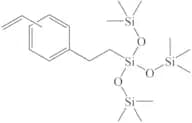
CAS :Formule :C7H12SiDegré de pureté :95%Couleur et forme :Straw LiquidMasse moléculaire :124.26STYRYLETHYLTRIS(TRIMETHYLSILOXY)SILANE, mixed isomers, tech
CAS :Formule :C19H38O3Si4Degré de pureté :techCouleur et forme :Straw LiquidMasse moléculaire :426.841,3-DIPHENYL-1,1,3,3-TETRAMETHYLDISILAZANE
CAS :Phenyl-Containing Blocking Agent
Used as a protecting group for reactive hydrogens in alcohols, amines, thiols, and carboxylic acids. Organosilanes are hydrogen-like, can be introduced in high yield, and can be removed under selective conditions. They are stable over a wide range of reaction conditions and can be removed in the presence of other functional groups, including other protecting groups. The tolerance of silylated alcohols to chemical transformations summary is presented in Table 1 of the Silicon-Based Blocking Agents brochure.
Aromatic Silane - Conventional Surface Bonding
Aliphatic, fluorinated aliphatic or substituted aromatic hydrocarbon substituents are the hydrophobic entities which enable silanes to induce surface hydrophobicity. The organic substitution of the silane must be non-polar. The hydrophobic effect of the organic substitution can be related to the free energy of transfer of hydrocarbon molecules from an aqueous phase to a homogeneous hydrocarbon phase. A successful hydrophobic coating must eliminate or mitigate hydrogen bonding and shield polar surfaces from interaction with water by creating a non-polar interphase. Although silane and silicone derived coatings are in general the most hydrophobic, they maintain a high degree of permeability to water vapor. This allows coatings to breathe and reduce deterioration at the coating interface associated with entrapped water. Since ions are not transported through non-polar silane and silicone coatings, they offer protection to composite structures ranging from pigmented coatings to rebar reinforced concrete. A selection guide for hydrophobic silanes can be found on pages 22-31 of the Hydrophobicity, Hydrophilicity and Silane Surface Modification brochure.
Diphenyltetramethyldisilazane; N-(Dimethylphenylsilyl)-1,1-dimethyl-1-phenyl silane amine; N-(Dimethylphenylsilyl)-1,1-dimethyl-1-phenylsilylamine
Similar to SIP6728.0Emits ammonia upon reactionUsed for silylation of capillary columnsSummary of selective deprotection conditions is provided in Table 7 through Table 20 of the Silicon-Based Blocking Agents brochureFormule :C16H23NSi2Degré de pureté :97%Couleur et forme :LiquidMasse moléculaire :285.54TRIETHYLSILANE, 98%
CAS :Tri-substituted Silane Reducing Agent
Organosilanes are hydrocarbon-like and possess the ability to serve as both ionic and free-radical reducing agents. These reagents and their reaction by-products are safer and more easily handled and disposed than many other reducing agents. The metallic nature of silicon and its low electronegativity relative to hydrogen lead to polarization of the Si-H bond yielding a hydridic hydrogen and a milder reducing agent compared to aluminum-, boron-, and other metal-based hydrides. A summary of some key silane reductions are presented in Table 1 of the Silicon-Based Reducing Agents brochure.
Triethylsilane; Triethylsilyl hydride; Triethylsilicon hydride
Viscosity: 4.9 cStDipole moment: 0.75 debyeSurface tension: 20.7 mN/mΔHform: -172 kJ/molΔHcomb: -5,324 kJ/molVapor pressure, 20 °: 40 mmSilylates tertiary alcohols in presence of tris(pentafluorophenyl)boraneSilylates arenes in presence of Ru catalyst and t-butylethyleneUsed in reductive cyclization of ynalsReadily converted directly to triethylsilyl carboxylatesUsed to reduce metal saltsEnhances deprotection of t-butoxycarbonyl-protected amines and tert-butyl estersUsed in the reductive amidation of oxazolidinones with amino acids to provide dipeptidesConverts aldehydes to symmetrical and unsymmetrical ethersUsed in the ‘in-situ’ preparation of diborane and haloboranesExtensive review of silicon based reducing agents: Larson, G.; Fry, J. L. "Ionic and Organometallic-Catalyzed Organosilane Reductions", Wipf, P., Ed.; Wiley, 2007Formule :C6H16SiDegré de pureté :98%Couleur et forme :Colourless LiquidMasse moléculaire :116.281,2-BIS(TRIMETHOXYSILYL)ETHANE, tech
CAS :Non-functional Alkoxy Silane
Silane coupling agents have the ability to form a durable bond between organic and inorganic materials to generate desired heterogeneous environments or to incorporate the bulk properties of different phases into a uniform composite structure. The general formula has two classes of functionality. The hydrolyzable group forms stable condensation products with siliceous surfaces and other oxides such as those of aluminum, zirconium, tin, titanium, and nickel. The organofunctional group alters the wetting or adhesion characteristics of the substrate, utilizes the substrate to catalyze chemical transformations at the heterogeneous interface, orders the interfacial region, or modifies its partition characteristics, and significantly effects the covalent bond between organic and inorganic materials.
Dipodal Silane
Dipodal silanes are a series of adhesion promoters that have intrinsic hydrolytic stabilities up to ~10,000 times greater than conventional silanes and are used in applications such as plastic optics, multilayer printed circuit boards and as adhesive primers for ferrous and nonferrous metals. They have the ability to form up to six bonds to a substrate compared to conventional silanes with the ability to form only three bonds to a substrate. Many conventional coupling agents are frequently used in combination with 10-40% of a non-functional dipodal silane, where the conventional coupling agent provides the appropriate functionality for the application, and the non-functional dipodal silane provides increased durability. Also known as bis-silanes additives enhance hydrolytic stability, which impacts on increased product shelf life, ensures better substrate bonding and also leads to improved mechanical properties in coatings as well as composite applications.
Alkyl Silane - Dipodal Surface Bonding
Aliphatic, fluorinated aliphatic or substituted aromatic hydrocarbon substituents are the hydrophobic entities which enable silanes to induce surface hydrophobicity. The organic substitution of the silane must be non-polar. The hydrophobic effect of the organic substitution can be related to the free energy of transfer of hydrocarbon molecules from an aqueous phase to a homogeneous hydrocarbon phase. A successful hydrophobic coating must eliminate or mitigate hydrogen bonding and shield polar surfaces from interaction with water by creating a non-polar interphase. Although silane and silicone derived coatings are in general the most hydrophobic, they maintain a high degree of permeability to water vapor. This allows coatings to breathe and reduce deterioration at the coating interface associated with entrapped water. Since ions are not transported through non-polar silane and silicone coatings, they offer protection to composite structures ranging from pigmented coatings to rebar reinforced concrete. A selection guide for hydrophobic silanes can be found on pages 22-31 of the Hydrophobicity, Hydrophilicity and Silane Surface Modification brochure.
1,2-Bis(trimethoxysilyl)ethane; 3,3,6,6-Tetramethoxy-2,7-dioxa-3,6-disilaoctane
Caution: Inhalation HazardAir Transport ForbiddenVapor pressure, 20 °C: 0.08 mmEmployed in fabrication of multilayer printed circuit boardsFormule :C8H22O6Si2Degré de pureté :95%Couleur et forme :LiquidMasse moléculaire :270.43(3-GLYCIDOXYPROPYL)BIS(TRIMETHYLSILOXY)METHYLSILANE
CAS :Formule :C13H32O4Si3Degré de pureté :97% including isomersCouleur et forme :Straw LiquidMasse moléculaire :336.65TRIETHOXYSILYL MODIFIED POLY-1,2-BUTADIENE, 50% in volatile silicone
CAS :Triethoxysilyl modified poly-1,2-butadiene; vinyltriethoxysilane-1,2-butadiene copolymer; triethoxysilyl modified poly(1,2-butadiene)
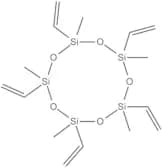
Multi-functional polymeric trialkoxy silane50% in volatile silicone (decamethylcyclopentasiloxane)Hydrophobic modified polybutadieneViscosity: 600-1200 cStPrimer coating for silicone rubbersCouleur et forme :Pale Yellow Amber LiquidMasse moléculaire :3500-4500PENTAVINYLPENTAMETHYLCYCLOPENTASILOXANE, 92%
CAS :Formule :C15H30O5Si5Degré de pureté :92%Couleur et forme :LiquidMasse moléculaire :430.82VINYLTRICHLOROSILANE
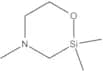
CAS :Formule :C2H3Cl3SiDegré de pureté :97%Couleur et forme :Straw Amber LiquidMasse moléculaire :161.492,2,4-TRIMETHYL-1-OXA-4-AZA-2-SILACYCLOHEXANE
CAS :Formule :C6H15NOSiCouleur et forme :LiquidMasse moléculaire :145.28SIVATE A610: ACTIVATED AMINE FUNCTIONAL SILANE
CAS :SIVATE A610 (Activated AMEO)
Activated silane blend of aminopropyltriethoxysilane (SIA0610.0) and (1-(3-triethoxysilyl)propyl)-2,2-diethoxy-1-aza-silacyclopentane (SIT8187.2)Reacts at high speed (seconds compared to hours)Does not require moisture or hydrolysis to initiate surface reactivityReacts with a greater variety of substratesPrimer for high speed UV cure systems (e.g. acrylated urethanes)
Activated Amine Functional Trialkoxy Silane
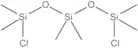
Silane coupling agents have the ability to form a durable bond between organic and inorganic materials to generate desired heterogeneous environments or to incorporate the bulk properties of different phases into a uniform composite structure. The general formula has two classes of functionality. The hydrolyzable group forms stable condensation products with siliceous surfaces and other oxides such as those of aluminum, zirconium, tin, titanium, and nickel. The organofunctional group alters the wetting or adhesion characteristics of the substrate, utilizes the substrate to catalyze chemical transformations at the heterogeneous interface, orders the interfacial region, or modifies its partition characteristics, and significantly effects the covalent bond between organic and inorganic materials.Formule :C9H23NO3SiCouleur et forme :Colourless To Straw LiquidMasse moléculaire :221.371,5-DICHLOROHEXAMETHYLTRISILOXANE, tech
CAS :Alkyl Silane - Conventional Surface Bonding
Aliphatic, fluorinated aliphatic or substituted aromatic hydrocarbon substituents are the hydrophobic entities which enable silanes to induce surface hydrophobicity. The organic substitution of the silane must be non-polar. The hydrophobic effect of the organic substitution can be related to the free energy of transfer of hydrocarbon molecules from an aqueous phase to a homogeneous hydrocarbon phase. A successful hydrophobic coating must eliminate or mitigate hydrogen bonding and shield polar surfaces from interaction with water by creating a non-polar interphase. Although silane and silicone derived coatings are in general the most hydrophobic, they maintain a high degree of permeability to water vapor. This allows coatings to breathe and reduce deterioration at the coating interface associated with entrapped water. Since ions are not transported through non-polar silane and silicone coatings, they offer protection to composite structures ranging from pigmented coatings to rebar reinforced concrete. A selection guide for hydrophobic silanes can be found on pages 22-31 of the Hydrophobicity, Hydrophilicity and Silane Surface Modification brochure.
1,5-Dichlorohexamethyltrisiloxane; Hexamethyldichlorotrisiloxane; 1,5-Dichloro-1,1,3,3,5,5-hexamethyltrisiloxane
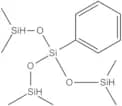
ΔHvap: 47.7 kJ/molVapor pressure, 50 °C: 1 mmFormule :C6H18Cl2O2Si3Degré de pureté :92%Couleur et forme :Straw Amber LiquidMasse moléculaire :277.37PHENYLTRIS(DIMETHYLSILOXY)SILANE
CAS :Siloxane-Based Silane Reducing Agent
Organosilanes are hydrocarbon-like and possess the ability to serve as both ionic and free-radical reducing agents. These reagents and their reaction by-products are safer and more easily handled and disposed than many other reducing agents. The metallic nature of silicon and its low electronegativity relative to hydrogen lead to polarization of the Si-H bond yielding a hydridic hydrogen and a milder reducing agent compared to aluminum-, boron-, and other metal-based hydrides. A summary of some key silane reductions are presented in Table 1 of the Silicon-Based Reducing Agents brochure.
Phenyltris(dimethylsiloxy)silane; Phenyl hydride cross-linker; 3-[(Dimethylsilyl)oxy]-1,1,5,5-tetramethyl-3-phenyltrisiloxane
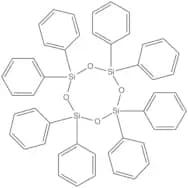
High molecular weight silane reducing agentCrosslinker for vinylphenylsilicone 2-component elastomersExtensive review of silicon based reducing agents: Larson, G.; Fry, J. L. "Ionic and Organometallic-Catalyzed Organosilane Reductions", Wipf, P., Ed.; Wiley, 2007Formule :C12H26O3Si4Degré de pureté :97%Couleur et forme :LiquidMasse moléculaire :330.68OCTAPHENYLCYCLOTETRASILOXANE, 95%
CAS :Formule :C48H40O4Si4Couleur et forme :White SolidMasse moléculaire :793.18







![3-[METHOXY(POLYETHYLENEOXY)9-12]PROPYLTRIMETHOXYSILANE, tech](/_next/image/?url=https%3A%2Fstatic.cymitquimica.com%2Fproducts%2F3H%2Fthumb-webp%2FSIM6492.72.webp&w=3840&q=75)

![3-[METHOXY(POLYETHYLENEOXY)6-9]PROPYLTRICHLOROSILANE, tech](/_next/image/?url=https%3A%2Fstatic.cymitquimica.com%2Fproducts%2F3H%2Fthumb-webp%2FSIM6492.66.webp&w=3840&q=75)


![1-[3-(2-AMINOETHYL)-3-AMINOISOBUTYL]-1,1,3,3,3-PENTAETHOXY-1,3-DISILAPROPANE, 95%](/_next/image/?url=https%3A%2Fstatic.cymitquimica.com%2Fproducts%2F3H%2Fthumb-webp%2FSIA0587.6.webp&w=3840&q=75)









![3-[HYDROXY(POLYETHYLENEOXY)PROPYL]HEPTAMETHYLTRISILOXANE, 90%](/_next/image/?url=https%3A%2Fstatic.cymitquimica.com%2Fproducts%2F3H%2Fthumb-webp%2FSIH6185.0.webp&w=3840&q=75)

![2-Propynyl [3-(Triethoxysilyl)propyl]carbamate](/_next/image/?url=https%3A%2Fstatic.cymitquimica.com%2Fproducts%2F3B%2Fthumb-webp%2FP2258.webp&w=3840&q=75)
![Chlorodimethyl[3-(2,3,4,5,6-pentafluorophenyl)propyl]silane](/_next/image/?url=https%3A%2Fstatic.cymitquimica.com%2Fproducts%2F3B%2Fthumb-webp%2FC2700.webp&w=3840&q=75)
![2,5-Bis[(trimethylsilyl)ethynyl]thiophene](/_next/image/?url=https%3A%2Fstatic.cymitquimica.com%2Fproducts%2F3B%2Fthumb-webp%2FB4240.webp&w=3840&q=75)
![1-Methyl-3-[3-(trimethoxysilyl)propyl]-1H-imidazol-3-ium Chloride](/_next/image/?url=https%3A%2Fstatic.cymitquimica.com%2Fproducts%2F3B%2Fthumb-webp%2FM3446.webp&w=3840&q=75)
![[3-(Trimethoxysilyl)propyl]succinic Anhydride](/_next/image/?url=https%3A%2Fstatic.cymitquimica.com%2Fproducts%2F3B%2Fthumb-webp%2FT3360.webp&w=3840&q=75)

![2-[Methoxy(polyethyleneoxy)6-9propyl]trimethoxysilane](/_next/image/?url=https%3A%2Fstatic.cymitquimica.com%2Fproducts%2F10%2Fthumb-webp%2FS25235.webp&w=3840&q=75)