Silanes
Les silanes sont des composés à base de silicium avec un ou plusieurs groupes organiques attachés à un atome de silicium. Ils servent de building blocks cruciaux dans la synthèse organique et inorganique, notamment dans la modification de surface, la promotion de l'adhésion et la production de revêtements et de mastics. Les silanes sont largement utilisés dans l'industrie des semi-conducteurs, le traitement du verre et comme agents de réticulation en chimie des polymères. Chez CymitQuimica, nous proposons une gamme variée de silanes conçus pour vos applications de recherche et industrielles.
Sous-catégories appartenant à la catégorie "Silanes"
1235 produits trouvés pour "Silanes"
Trier par
Degré de pureté (%)
0
100
|
0
|
50
|
90
|
95
|
100
1,2,3,4,5,6 HEXAMETHYLCYCLOTRISILAZANE, tech
CAS :Formule :C6H21N3Si3Degré de pureté :techCouleur et forme :LiquidMasse moléculaire :219.511,3,5,7-TETRAVINYL-1,3,5,7-TETRAMETHYLCYCLOTETRASILOXANE
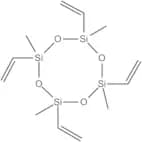
CAS :<p>Alkenylsilane Cross-Coupling Agent<br>The cross-coupling reaction is a highly useful methodology for the formation of carbon-carbon bonds. It involves two reagents, with one typically being a suitable organometallic reagent - the nucleophile - and the other a suitable organic substrate, normally an unsaturated halide, tosylate or similar - the electrophile.<br>1,3,5,7-Tetravinyl-1,3,5,7-tetramethylcyclotetrasiloxane; Methylvinylcyclosiloxane; Tetramethyltetravinylcyclotetrasiloxane; Tetramethyltetraethenylcyclotetrasiloxane<br>Viscosity: 3.9 cStExcellent and inexpensive reagent for vinylations in cross-coupling reactions for the formation of styrenes and dienesUndergoes ring-opening polymerizationModifier for Pt-catalyst in 2-component RTVsCore molecule for dendrimersExtensive review of silicon based cross-coupling agents: Denmark, S. E. et al. "Organic Reactions, Volume 75" Denmark, S. E. ed., John Wiley and Sons, 233, 2011<br></p>Formule :C12H24O4Si4Degré de pureté :97%Couleur et forme :LiquidMasse moléculaire :344.661,3-BIS[2-(3,4-EPOXYCYCLOHEXYL)ETHYL]TETRAMETHYLDISILOXANE
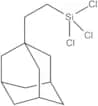
CAS :Formule :C20H38O3Si2Degré de pureté :techCouleur et forme :Straw LiquidMasse moléculaire :382.69ADAMANTYLETHYLTRICHLOROSILANE
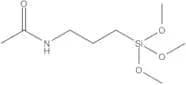
CAS :<p>Alkyl Silane - Conventional Surface Bonding<br>Aliphatic, fluorinated aliphatic or substituted aromatic hydrocarbon substituents are the hydrophobic entities which enable silanes to induce surface hydrophobicity. The organic substitution of the silane must be non-polar. The hydrophobic effect of the organic substitution can be related to the free energy of transfer of hydrocarbon molecules from an aqueous phase to a homogeneous hydrocarbon phase. A successful hydrophobic coating must eliminate or mitigate hydrogen bonding and shield polar surfaces from interaction with water by creating a non-polar interphase. Although silane and silicone derived coatings are in general the most hydrophobic, they maintain a high degree of permeability to water vapor. This allows coatings to breathe and reduce deterioration at the coating interface associated with entrapped water. Since ions are not transported through non-polar silane and silicone coatings, they offer protection to composite structures ranging from pigmented coatings to rebar reinforced concrete. A selection guide for hydrophobic silanes can be found on pages 22-31 of the Hydrophobicity, Hydrophilicity and Silane Surface Modification brochure.<br>Adamantylethyltrichlorosilane; Trichlorosilylethyladamantane; Trichloro(2-tricyclo[3.3.1.13,7]decylethyl)silane<br>Contains approximately 25% α-isomerForms silica bonded phases for reverse phase chromatography<br></p>Formule :C12H19Cl3SiDegré de pureté :97%Couleur et forme :Off-White SolidMasse moléculaire :297.73(3-ACETAMIDOPROPYL)TRIMETHOXYSILANE
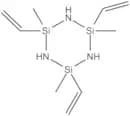
CAS :Formule :C8H19NO4SiDegré de pureté :97%Couleur et forme :LiquidMasse moléculaire :221.331,3,5-TRIVINYL-1,3,5-TRIMETHYLCYCLOTRISILAZANE, 92%
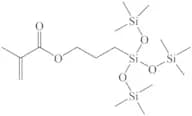
CAS :Formule :C9H21N3Si3Degré de pureté :92%Couleur et forme :LiquidMasse moléculaire :255.54METHACRYLOXYPROPYLTRIS(TRIMETHYLSILOXY)SILANE
CAS :Formule :C16H38O5Si4Degré de pureté :98%Couleur et forme :Straw LiquidMasse moléculaire :422.82DIMETHYLDIMETHOXYSILANE, 99+%
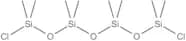
CAS :<p>Alkyl Silane - Conventional Surface Bonding<br>Aliphatic, fluorinated aliphatic or substituted aromatic hydrocarbon substituents are the hydrophobic entities which enable silanes to induce surface hydrophobicity. The organic substitution of the silane must be non-polar. The hydrophobic effect of the organic substitution can be related to the free energy of transfer of hydrocarbon molecules from an aqueous phase to a homogeneous hydrocarbon phase. A successful hydrophobic coating must eliminate or mitigate hydrogen bonding and shield polar surfaces from interaction with water by creating a non-polar interphase. Although silane and silicone derived coatings are in general the most hydrophobic, they maintain a high degree of permeability to water vapor. This allows coatings to breathe and reduce deterioration at the coating interface associated with entrapped water. Since ions are not transported through non-polar silane and silicone coatings, they offer protection to composite structures ranging from pigmented coatings to rebar reinforced concrete. A selection guide for hydrophobic silanes can be found on pages 22-31 of the Hydrophobicity, Hydrophilicity and Silane Surface Modification brochure.<br>Dimethyldimethoxysilane; DMDMOS; Dimethoxydimethylsilane<br>Viscosity, 20 °: 0.44 cStΔHcomb: 3,483 kJ/molΔHform: 716 kJ/molDipole moment: 1.33 debyeVapor pressure, 36 °C: 100 mmCoefficient of thermal expansion: 1.3 x 10⁻³Provides hydrophobic surface treatments in vapor phase applicationsDialkoxy silane<br></p>Formule :C4H12O2SiDegré de pureté :99%Couleur et forme :Colourless LiquidMasse moléculaire :120.221,7-DICHLOROOCTAMETHYLTETRASILOXANE, 92%
CAS :Formule :C8H24Cl2O3Si4Degré de pureté :92%Couleur et forme :Straw Amber LiquidMasse moléculaire :351.52n-OCTYLDIMETHYLCHLOROSILANE
CAS :<p>Alkyl Silane - Conventional Surface Bonding<br>Aliphatic, fluorinated aliphatic or substituted aromatic hydrocarbon substituents are the hydrophobic entities which enable silanes to induce surface hydrophobicity. The organic substitution of the silane must be non-polar. The hydrophobic effect of the organic substitution can be related to the free energy of transfer of hydrocarbon molecules from an aqueous phase to a homogeneous hydrocarbon phase. A successful hydrophobic coating must eliminate or mitigate hydrogen bonding and shield polar surfaces from interaction with water by creating a non-polar interphase. Although silane and silicone derived coatings are in general the most hydrophobic, they maintain a high degree of permeability to water vapor. This allows coatings to breathe and reduce deterioration at the coating interface associated with entrapped water. Since ions are not transported through non-polar silane and silicone coatings, they offer protection to composite structures ranging from pigmented coatings to rebar reinforced concrete. A selection guide for hydrophobic silanes can be found on pages 22-31 of the Hydrophobicity, Hydrophilicity and Silane Surface Modification brochure.<br>n-Octyldimethylchlorosilane; Dimethyloctylchlorosilane; Chlorodimethyloctylsilane<br></p>Formule :C10H23ClSiDegré de pureté :97%Couleur et forme :Pale Yellow LiquidMasse moléculaire :206.831,2-BIS(CHLORODIMETHYLSILYL)ETHANE
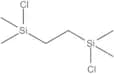
CAS :<p>Alkyl Silane - Dipodal Surface Bonding<br>Aliphatic, fluorinated aliphatic or substituted aromatic hydrocarbon substituents are the hydrophobic entities which enable silanes to induce surface hydrophobicity. The organic substitution of the silane must be non-polar. The hydrophobic effect of the organic substitution can be related to the free energy of transfer of hydrocarbon molecules from an aqueous phase to a homogeneous hydrocarbon phase. A successful hydrophobic coating must eliminate or mitigate hydrogen bonding and shield polar surfaces from interaction with water by creating a non-polar interphase. Although silane and silicone derived coatings are in general the most hydrophobic, they maintain a high degree of permeability to water vapor. This allows coatings to breathe and reduce deterioration at the coating interface associated with entrapped water. Since ions are not transported through non-polar silane and silicone coatings, they offer protection to composite structures ranging from pigmented coatings to rebar reinforced concrete. A selection guide for hydrophobic silanes can be found on pages 22-31 of the Hydrophobicity, Hydrophilicity and Silane Surface Modification brochure.<br>Bridging Silicon-Based Blocking Agent<br>Used as a protecting group for reactive hydrogens in alcohols, amines, thiols, and carboxylic acids. Organosilanes are hydrogen-like, can be introduced in high yield, and can be removed under selective conditions. They are stable over a wide range of reaction conditions and can be removed in the presence of other functional groups, including other protecting groups. The tolerance of silylated alcohols to chemical transformations summary is presented in Table 1 of the Silicon-Based Blocking Agents brochure.<br>Dipodal Silane<br>Dipodal silanes are a series of adhesion promoters that have intrinsic hydrolytic stabilities up to ~10,000 times greater than conventional silanes and are used in applications such as plastic optics, multilayer printed circuit boards and as adhesive primers for ferrous and nonferrous metals. They have the ability to form up to six bonds to a substrate compared to conventional silanes with the ability to form only three bonds to a substrate. Many conventional coupling agents are frequently used in combination with 10-40% of a non-functional dipodal silane, where the conventional coupling agent provides the appropriate functionality for the application, and the non-functional dipodal silane provides increased durability. Also known as bis-silanes additives enhance hydrolytic stability, which impacts on increased product shelf life, ensures better substrate bonding and also leads to improved mechanical properties in coatings as well as composite applications.<br>Bis(dimethylchlorosilyl)ethane; Tetramethyldichlorodisilethylene; Ethylenebis[chlorodimethylsilane]; STABASE-Cl<br>Protection for 1° amines, including amino acid estersSummary of selective deprotection conditions is provided in Table 7 through Table 20 of the Silicon-Based Blocking Agents brochure<br></p>Formule :C6H16Cl2Si2Degré de pureté :97%Couleur et forme :Off-White SolidMasse moléculaire :215.27METHYLTRIACETOXYSILANE, 95%
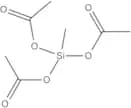
CAS :<p>Alkyl Silane - Conventional Surface Bonding<br>Aliphatic, fluorinated aliphatic or substituted aromatic hydrocarbon substituents are the hydrophobic entities which enable silanes to induce surface hydrophobicity. The organic substitution of the silane must be non-polar. The hydrophobic effect of the organic substitution can be related to the free energy of transfer of hydrocarbon molecules from an aqueous phase to a homogeneous hydrocarbon phase. A successful hydrophobic coating must eliminate or mitigate hydrogen bonding and shield polar surfaces from interaction with water by creating a non-polar interphase. Although silane and silicone derived coatings are in general the most hydrophobic, they maintain a high degree of permeability to water vapor. This allows coatings to breathe and reduce deterioration at the coating interface associated with entrapped water. Since ions are not transported through non-polar silane and silicone coatings, they offer protection to composite structures ranging from pigmented coatings to rebar reinforced concrete. A selection guide for hydrophobic silanes can be found on pages 22-31 of the Hydrophobicity, Hydrophilicity and Silane Surface Modification brochure.<br>Methyltriacetoxysilane; Methylsilane Triacetate; Triacetoxymethylsilane; MTAC<br>Vapor pressure, 94 °C: 9 mmMost common cross-linker for condensation cure silicone RTVsFor liquid version see blend, SIM6519.2<br></p>Formule :C7H12O6SiDegré de pureté :95%Couleur et forme :Off-White SolidMasse moléculaire :220.253-(m-AMINOPHENOXY)PROPYLTRIMETHOXYSILANE, tech
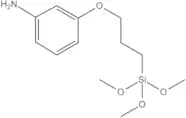
CAS :<p>Monoamino Functional Trialkoxy Silane<br>Silane coupling agents have the ability to form a durable bond between organic and inorganic materials to generate desired heterogeneous environments or to incorporate the bulk properties of different phases into a uniform composite structure. The general formula has two classes of functionality. The hydrolyzable group forms stable condensation products with siliceous surfaces and other oxides such as those of aluminum, zirconium, tin, titanium, and nickel. The organofunctional group alters the wetting or adhesion characteristics of the substrate, utilizes the substrate to catalyze chemical transformations at the heterogeneous interface, orders the interfacial region, or modifies its partition characteristics, and significantly effects the covalent bond between organic and inorganic materials.<br>3-(m-Aminophenoxy)propyltrimethoxysilane; m-[3-(Trimethoxysilyl)propoxy]aniline; 4-[3-(Trimethoxysilyl)propoxy]-benzenamine<br>Primary amine coupling agent for UV cure and epoxy systemsUsed in microparticle surface modificationAmber liquidHigh temperature coupling agent<br></p>Formule :C12H21NO4SiDegré de pureté :92%Couleur et forme :Amber Brown LiquidMasse moléculaire :271.39PHENYLMETHYLCYCLOSILOXANES, 92%
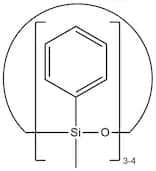
CAS :Formule :C21H24O3Si3 - C28H32O4Si4Degré de pureté :92%Couleur et forme :LiquidMasse moléculaire :408.7-544.9n-DECYLDIMETHYLCHLOROSILANE
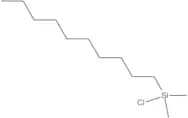
CAS :<p>Alkyl Silane - Conventional Surface Bonding<br>Aliphatic, fluorinated aliphatic or substituted aromatic hydrocarbon substituents are the hydrophobic entities which enable silanes to induce surface hydrophobicity. The organic substitution of the silane must be non-polar. The hydrophobic effect of the organic substitution can be related to the free energy of transfer of hydrocarbon molecules from an aqueous phase to a homogeneous hydrocarbon phase. A successful hydrophobic coating must eliminate or mitigate hydrogen bonding and shield polar surfaces from interaction with water by creating a non-polar interphase. Although silane and silicone derived coatings are in general the most hydrophobic, they maintain a high degree of permeability to water vapor. This allows coatings to breathe and reduce deterioration at the coating interface associated with entrapped water. Since ions are not transported through non-polar silane and silicone coatings, they offer protection to composite structures ranging from pigmented coatings to rebar reinforced concrete. A selection guide for hydrophobic silanes can be found on pages 22-31 of the Hydrophobicity, Hydrophilicity and Silane Surface Modification brochure.<br>n-Decyldimethylchlorosilane; Chlorodimethylsilyldecane; Chlorodecyldimethylsilane<br></p>Formule :C12H27ClSiDegré de pureté :97%Couleur et forme :Straw LiquidMasse moléculaire :234.88DIISOPROPYLDICHLOROSILANE
CAS :<p>Bridging Silicon-Based Blocking Agent<br>Used as a protecting group for reactive hydrogens in alcohols, amines, thiols, and carboxylic acids. Organosilanes are hydrogen-like, can be introduced in high yield, and can be removed under selective conditions. They are stable over a wide range of reaction conditions and can be removed in the presence of other functional groups, including other protecting groups. The tolerance of silylated alcohols to chemical transformations summary is presented in Table 1 of the Silicon-Based Blocking Agents brochure.<br>Alkyl Silane - Conventional Surface Bonding<br>Aliphatic, fluorinated aliphatic or substituted aromatic hydrocarbon substituents are the hydrophobic entities which enable silanes to induce surface hydrophobicity. The organic substitution of the silane must be non-polar. The hydrophobic effect of the organic substitution can be related to the free energy of transfer of hydrocarbon molecules from an aqueous phase to a homogeneous hydrocarbon phase. A successful hydrophobic coating must eliminate or mitigate hydrogen bonding and shield polar surfaces from interaction with water by creating a non-polar interphase. Although silane and silicone derived coatings are in general the most hydrophobic, they maintain a high degree of permeability to water vapor. This allows coatings to breathe and reduce deterioration at the coating interface associated with entrapped water. Since ions are not transported through non-polar silane and silicone coatings, they offer protection to composite structures ranging from pigmented coatings to rebar reinforced concrete. A selection guide for hydrophobic silanes can be found on pages 22-31 of the Hydrophobicity, Hydrophilicity and Silane Surface Modification brochure.<br>Diisopropyldichlorosilane; Dichlorobis(1-methylethyl)silane; DIPS<br>Forms bis(blocked) or tethered alcoholsUsed as tether in ring-closing-metathesis (RCM) reactionThe bifunctional nature of the reagent allows for the templating of diverse groups in intermolecular reactions and ring formationProtects 3’,5’ hydroxyls of nucleosides, but less effectively than SIT7273.0Forms tethered silyl ethers from diolsSummary of selective deprotection conditions is provided in Table 7 through Table 20 of the Silicon-Based Blocking Agents brochure<br></p>Formule :C6H14Cl2SiCouleur et forme :Straw Amber LiquidMasse moléculaire :185.17PHENYLTRIETHOXYSILANE
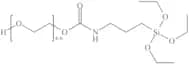
CAS :<p>Arylsilane Cross-Coupling Agent<br>The cross-coupling reaction is a highly useful methodology for the formation of carbon-carbon bonds. It involves two reagents, with one typically being a suitable organometallic reagent - the nucleophile - and the other a suitable organic substrate, normally an unsaturated halide, tosylate or similar - the electrophile.<br>Aromatic Silane - Conventional Surface Bonding<br>Aliphatic, fluorinated aliphatic or substituted aromatic hydrocarbon substituents are the hydrophobic entities which enable silanes to induce surface hydrophobicity. The organic substitution of the silane must be non-polar. The hydrophobic effect of the organic substitution can be related to the free energy of transfer of hydrocarbon molecules from an aqueous phase to a homogeneous hydrocarbon phase. A successful hydrophobic coating must eliminate or mitigate hydrogen bonding and shield polar surfaces from interaction with water by creating a non-polar interphase. Although silane and silicone derived coatings are in general the most hydrophobic, they maintain a high degree of permeability to water vapor. This allows coatings to breathe and reduce deterioration at the coating interface associated with entrapped water. Since ions are not transported through non-polar silane and silicone coatings, they offer protection to composite structures ranging from pigmented coatings to rebar reinforced concrete. A selection guide for hydrophobic silanes can be found on pages 22-31 of the Hydrophobicity, Hydrophilicity and Silane Surface Modification brochure.<br>Phenyltriethoxysilane; Triethoxysilylbenzene; Triethoxy(phenyl)silane<br>Viscosity, 25 °C: 1.7 cStDipole moment: 1.85 debyeSurface tension: 28 mN/mDielectric constant: 4.12Vapor pressure, 75 °C: 1 mmCoefficient of thermal expansion: 0.9 x 10⁻³Improves photoresist adhesion to silicon nitrideElectron donor component of polyolefin polymerization catalyst complexesEffective treatment for organic-grafted claysPhenylates allyl benzoatesCross-couples with aryl bromides without amine or phosphineligandsPhenylates allyl acetatesβ-phenylates enones under aqueous base conditionsExtensive review of silicon based cross-coupling agents: Denmark, S. E. et al. "Organic Reactions, Volume 75"Denmark, S. E. ed., John Wiley and Sons, 233, 2011<br></p>Formule :C12H20O3SiDegré de pureté :97%Couleur et forme :Straw LiquidMasse moléculaire :240.37N-(TRIETHOXYSILYLPROPYL)-O-POLYETHYLENE OXIDE URETHANE, 95%
CAS :<p>N-(triethoxysilylpropyl)-O-polyethylene oxide urethane; O-polyethylene oxide-N-(triethoxysilylpropyl)-urethane<br>Hydroxy functional trialkoxy silaneContains some bis(urethane) analogViscosity: 75-125 cStHydrophilic surface modifierForms PEGylated glass surfaces suitable for capillary electrophoresis<br></p>Formule :C10H22NO4SiO(CH2CH2O)4-6HDegré de pureté :95%Couleur et forme :Straw LiquidMasse moléculaire :400-5001,3,5-TRIVINYL-1,3,5-TRIMETHYLCYCLOTRISILOXANE
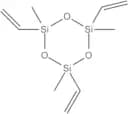
CAS :<p>Alkenylsilane Cross-Coupling Agent<br>The cross-coupling reaction is a highly useful methodology for the formation of carbon-carbon bonds. It involves two reagents, with one typically being a suitable organometallic reagent - the nucleophile - and the other a suitable organic substrate, normally an unsaturated halide, tosylate or similar - the electrophile.<br>1,3,5-Trivinyl-1,3,5-trimethylcyclotrisiloxane; D’3; Trimethyltrivinylcyclotrisiloxane; Trivinyltrimethylcyclotrisiloxane; 2,4,6-Trimethyl-2,4,6-trivinylcyclotrisiloxane<br>Reagent formation of styrenes and dienes.Undergoes “living” anion ring-opening polymerizationReagent for vinylations via cross-coupling protocolsExtensive review of silicon based cross-coupling agents: Denmark, S. E. et al. "Organic Reactions, Volume 75" Denmark, S. E. ed., John Wiley and Sons, 233, 2011<br></p>Formule :C9H18O3Si3Degré de pureté :97%Couleur et forme :LiquidMasse moléculaire :258.5


![1,3-BIS[2-(3,4-EPOXYCYCLOHEXYL)ETHYL]TETRAMETHYLDISILOXANE](/_next/image/?url=https%3A%2Fstatic.cymitquimica.com%2Fproducts%2F3H%2Fthumb-webp%2FSIB1092.0.webp&w=3840&q=75)