


Chimie organique synthétique
La chimie organique de synthèse est une branche de la chimie axée sur la conception et la construction de molécules organiques par des réactions chimiques contrôlées. Ce domaine joue un rôle crucial dans le développement de produits pharmaceutiques, agrochimiques, polymères et matériaux avancés. Chez CymitQuimica, nous proposons une gamme complète de réactifs, catalyseurs et building blocks de haute pureté, essentiels pour la chimie organique de synthèse. Notre catalogue comprend une variété de composés fonctionnalisés, groupes protecteurs, auxiliaires chiraux et réactifs de couplage, tous rigoureusement testés pour leur qualité et leur constance. En fournissant des matériaux de haute qualité, nous soutenons les chercheurs et les professionnels de l'industrie dans la réalisation de transformations synthétiques précises et efficaces, facilitant la découverte et le développement d'entités chimiques innovantes et de structures organiques complexes. Nos produits permettent des avancées en chimie médicinale, science des matériaux et biologie chimique, stimulant les progrès dans les applications de recherche et industrielles.
Sous-catégories appartenant à la catégorie "Chimie organique synthétique"
- Réactifs synthétiques(15.018 produits)
- Building Blocks(257.060 produits)
- Réactions de formation de liaisons C-C(885 produits)
- Groupes protecteurs(2.696 produits)
- Réactifs pour l'introduction/modification de groupes fonctionnels(1.021 produits)
207 produits trouvés pour "Chimie organique synthétique"
Trier par
Degré de pureté (%)
0
100
|
0
|
50
|
90
|
95
|
100
2-Amino-5-bromo-3,4-di-cyanopyrole
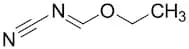
CAS :Produit contrôléFormule :C6H3BrN4Couleur et forme :NeatMasse moléculaire :211.019Ethyl Cyanoimidoformate
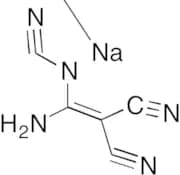
CAS :Produit contrôléFormule :C4H6N2OCouleur et forme :NeatMasse moléculaire :98.1031-Amino-1-cyanamido-2,2-dicyanoethylene Sodium Salt
CAS :Produit contrôlé<p>Applications 1-Amino-1-cyanamido-2,2-dicyanoethylene Sodium Salt s an intermediate in the synthesis of 2,4,6-Triamino-5-pyrimidinecarbonitrile which is a photodegradation product of two isostructural pesticides in aqueous solution: Cyromazine (C989300) and Dicyclanil.<br>References Kimbrough, R., et al.: Environ. Sci. Technol., 30, 908 (1996), Root, D., et al.: Pesticide Sci., 48, 25 (1996), Yokley, R., et al.: J. Agric. Food Chem., 48, 3352 (2000),<br></p>Formule :C5H2N5NaCouleur et forme :NeatMasse moléculaire :155.094-(Dicyanomethylene)-2-methyl-6-(julolidin-9-yl-vinyl)-4H-pyran
CAS :Produit contrôlé<p>Applications 4-(Dicyanomethylene)-2-methyl-6-(julolidin-4-yl-vinyl)-4H-pyran (CAS# 51325-95-2) is a useful research chemical compound.<br></p>Formule :C23H21N3OCouleur et forme :NeatMasse moléculaire :355.4325-Amino-3-cyano-4-iodo-1-[2,6-dichloro-4-(trifluoromethyl)phenyl]pyrazole
CAS :Produit contrôlé<p>Applications 5-Amino-3-cyano-4-iodo-1-[2,6-dichloro-4-(trifluoromethyl)phenyl]pyrazole is an intermediate in the synthesis of Fipronil (F342200), an broad spectrum insecticide which actively disrupts the CNS of contacted insects by blocking the passage of chloride ions through GABA receptors.<br>References Ling, S., et al.: App. Entomol. Zool., 44, 543 (2009), Li, X., et al.: Environ. Toxicol. Chem., 29, 127 (2010), Savant, R., et al.: J. Agric. Food Chem., 58, 1447 (2010),<br></p>Formule :C11H4Cl2F3IN4Couleur et forme :NeatMasse moléculaire :446.98N-Methyl-N-(3R,4R)-1-cyanoacetyl-4-methylpiperidin-3-yl-7-deazapurine-2-amine
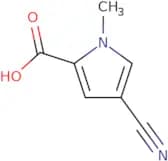
Produit contrôléFormule :C16H20N6OCouleur et forme :NeatMasse moléculaire :312.374-cyano-1-methyl-1H-pyrrole-2-carboxylic acid
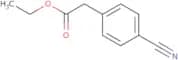
CAS :Versatile small molecule scaffoldFormule :C7H6N2O2Degré de pureté :Min. 95%Masse moléculaire :150.14 g/molEthyl 4-cyanophenylacetate
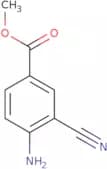
CAS :Versatile small molecule scaffoldFormule :C11H11NO2Degré de pureté :Min. 95%Masse moléculaire :189.21 g/molMethyl 4-amino-3-cyanobenzoate
CAS :Versatile small molecule scaffoldFormule :C9H8N2O2Degré de pureté :Min. 95%Masse moléculaire :176.17 g/molMethyl 3-cyanobicyclo[1.1.1]pentane-1-carboxylate
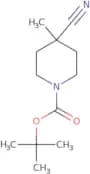
CAS :Versatile small molecule scaffoldFormule :C8H9NO2Degré de pureté :Min. 95%Masse moléculaire :151.16 g/moltert-Butyl 4-cyano-4-methylpiperidine-1-carboxylate
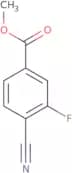
CAS :<p>Versatile small molecule scaffold</p>Formule :C12H20N2O2Degré de pureté :Min. 95%Masse moléculaire :224.3 g/molMethyl 4-cyano-3-fluorobenzoate
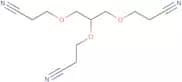
CAS :Please enquire for more information about Methyl 4-cyano-3-fluorobenzoate including the price, delivery time and more detailed product information at the technical inquiry form on this pageFormule :C9H6FNO2Degré de pureté :Min. 95%Masse moléculaire :179.15 g/mol1,2,3-Tris(2-cyanoethoxy)propane
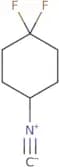
CAS :<p>1,2,3-Tris(2-cyanoethoxy)propane is a contaminant that has low detection limits and can be detected on-line. It has been shown to interact with oxygenated solutes in the chromatographic method used to analyze silicone. 1,2,3-Tris(2-cyanoethoxy)propane has also been shown to be an injectable solute that can desorb from silicone during the chromatographic analysis. This contaminant is not expressed by S. pneumoniae or S. pyogenes, but is expressed by E. coli and Streptococcus sp.</p>Formule :C12H17N3O3Degré de pureté :Min. 95%Masse moléculaire :251.29 g/mol1,1-Difluoro-4-isocyanocyclohexane
CAS :<p>Versatile small molecule scaffold</p>Formule :C7H9NF2Degré de pureté :Min. 95%Masse moléculaire :145.14 g/molPotassium hexacyanoruthenate(II) trihydrate
CAS :Produit contrôlé<p>Please enquire for more information about Potassium hexacyanoruthenate(II) trihydrate including the price, delivery time and more detailed product information at the technical inquiry form on this page</p>Formule :C6H2K4N6ORuDegré de pureté :Min. 95%Masse moléculaire :431.58 g/molethyl 3-(cyanomethyl)pyridine-2-carboxylate
CAS :Versatile small molecule scaffoldFormule :C10H10N2O2Degré de pureté :Min. 95%Masse moléculaire :190.2 g/molN-Butyl cyanoacetate
CAS :N-Butyl cyanoacetate is a colorless liquid that has a strong, unpleasant odor. It is used in the production of industrial chemicals and as an active methylene reagent in organic synthesis. It can be used to make diazonium salts and c1-c4 haloalkyl compounds. N-Butyl cyanoacetate is known to cause allergic reactions and has been shown to have an effect on the central nervous system, causing low energy levels and receptor activity.Formule :C7H11NO2Degré de pureté :Min. 95%Masse moléculaire :141.17 g/mol4-chloro-3-cyanobenzenesulfonyl chloride
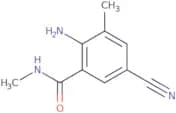
CAS :Versatile small molecule scaffoldFormule :C7H3Cl2NO2SDegré de pureté :Min. 95%Masse moléculaire :236.07 g/mol2-Amino-5-cyano-N,3-dimethylbenzamide
CAS :2-Amino-5-cyano-N,3-dimethylbenzamide is a diester of methylamine and an ester of an acid. It has shown antiinflammatory activity in rats and mice. 2-Amino-5-cyano-N,3-dimethylbenzamide has been shown to inhibit the production of prostaglandin E2 by inhibiting cyclooxygenase (COX) activity.Formule :C10H11N3ODegré de pureté :Min. 95%Masse moléculaire :189.22 g/molMethyl 4-cyanopicolinate
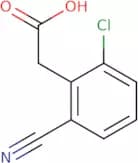
CAS :<p>Versatile small molecule scaffold</p>Formule :C8H6N2O2Degré de pureté :Min. 95%Masse moléculaire :162.15 g/mol2-(2-chloro-6-cyanophenyl)acetic acid
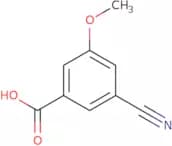
CAS :Versatile small molecule scaffoldFormule :C9H6ClNO2Degré de pureté :Min. 95%Masse moléculaire :195.6 g/mol3-cyano-5-methoxybenzoic acid
CAS :Versatile small molecule scaffoldFormule :C9H7NO3Degré de pureté :Min. 95%Masse moléculaire :177.16 g/mol1-[(tert-butoxy)carbonyl]-3-cyanopyrrolidine-3-carboxylic acid
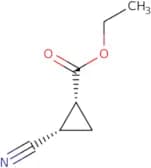
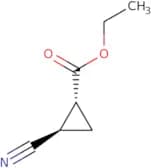
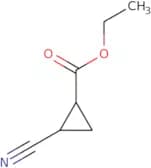
CAS :Versatile small molecule scaffoldFormule :C11H16N2O4Degré de pureté :Min. 95%Masse moléculaire :240.3 g/molcis-ethyl (1R,2S)-2-cyanocyclopropane-1-carboxylate
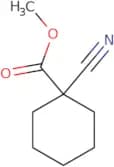
CAS :Versatile small molecule scaffoldFormule :C7H9NO2Degré de pureté :Min. 95%Masse moléculaire :139.15 g/molMethyl 1-cyanocyclohexanecarboxylate
CAS :Versatile small molecule scaffoldFormule :C9H13NO2Degré de pureté :Min. 95%Masse moléculaire :167.21 g/molMethyl 2-cyano-3-methylbenzoate
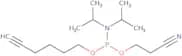
CAS :<p>Versatile small molecule scaffold</p>Formule :C10H9NO2Degré de pureté :Min. 95%Masse moléculaire :175.18 g/mol5-Hexyn-1-yl-(2-cyanoethyl)-(N,N-diisopropyl)-phosphoramidite
CAS :<p>Please enquire for more information about 5-Hexyn-1-yl-(2-cyanoethyl)-(N,N-diisopropyl)-phosphoramidite including the price, delivery time and more detailed product information at the technical inquiry form on this page</p>Degré de pureté :Min. 95%Methyl 5-cyanopicolinate
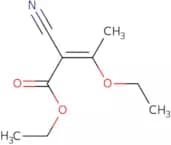
CAS :<p>Methyl 5-cyanopicolinate is a medicinal compound that is used in the treatment of various diseases. It has been shown to block the activation of plasminogen by plasmin, which prevents the breakdown of fibrin and other proteins. Methyl 5-cyanopicolinate has also been found to be an inhibitor of acetylcholinesterase, which leads to increased acetylcholine levels in the brain and can be used for the treatment of Alzheimer's disease. The synthesis and chemical studies of this substance are still ongoing.</p>Formule :C8H6N2O2Degré de pureté :Min. 95%Masse moléculaire :162.15 g/molethyl (2E)-2-cyano-3-ethoxybut-2-enoate
CAS :Ethyl (2E)-2-cyano-3-ethoxybut-2-enoate is an activated ester that can be synthesized by the reaction of ethyl chloroformate and 2-aminoacrylic acid in ethanol. This compound is used as a reagent for the synthesis of amidrazones, which are used as reactive intermediates in organic chemistry. The x-ray structural analysis shows that it is a racemic mixture of two diastereomers, with the more stable configuration being the one with the trans double bond on the benzene ring. It has been shown to have an nmr spectrum consisting of two signals at δ = 3.47 ppm and δ = 3.53 ppm, respectively, in a two dimensional nmr analysis.Formule :C9H13NO3Degré de pureté :Min. 95%Masse moléculaire :183.21 g/mol5-cyano-3-methylpyridine-2-carboxylic acid
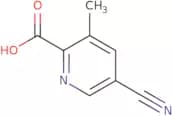
CAS :5-cyano-3-methylpyridine-2-carboxylic acid is a medicinal drug used to treat chronic diseases. It belongs to the group of p-glycoprotein (Pgp) inhibitors, which are trifluoromethylated compounds that are effluxed by Pgp from cells. 5-cyano-3-methylpyridine-2-carboxylic acid has been shown to inhibit BACE1, an enzyme responsible for the production of amyloid beta, which can lead to Alzheimer's disease. This compound also inhibits neural cell growth and nervous system activity in rats. The trifluoromethyl group in this molecule is important for optimization as it increases the affinity for binding with proteins.Formule :C8H6N2O2Degré de pureté :Min. 95%Masse moléculaire :162.14 g/molmethyl 2,5-dicyanobenzoate
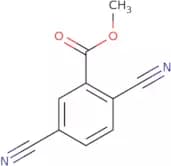
CAS :<p>Versatile small molecule scaffold</p>Formule :C10H6N2O2Degré de pureté :Min. 95%Masse moléculaire :186.17 g/molEthyl trans-2-cyanocyclopropane-1-carboxylate
CAS :Versatile small molecule scaffoldFormule :C7H9NO2Degré de pureté :Min. 95%Masse moléculaire :139.15 g/mol2-(4-cyanophenyl)-N-methylacetamide
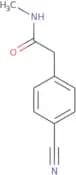
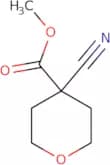
CAS :Versatile small molecule scaffoldFormule :C10H10N2ODegré de pureté :Min. 95%Masse moléculaire :174.2 g/molMethyl 4-cyanotetrahydro-2H-pyran-4-carboxylate
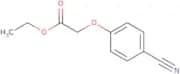
CAS :Versatile small molecule scaffoldFormule :C8H11NO3Degré de pureté :Min. 95%Masse moléculaire :169.18 g/molEthyl 2-(4-cyanophenoxy)acetate
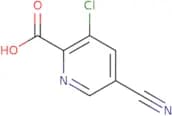
CAS :<p>Versatile small molecule scaffold</p>Formule :C11H11NO3Degré de pureté :Min. 95%Masse moléculaire :205.21 g/mol3-Chloro-5-cyano-2-pyridinecarboxylic acid
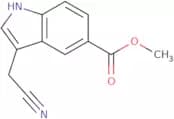
CAS :<p>Versatile small molecule scaffold</p>Formule :C7H3ClN2O2Degré de pureté :Min. 95%Masse moléculaire :182.56 g/molMethyl 3-(cyanomethyl)-1H-indole-5-carboxylate
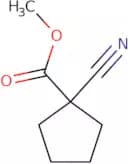
CAS :Versatile small molecule scaffoldFormule :C12H10N2O2Degré de pureté :Min. 95%Masse moléculaire :214.22 g/molMethyl 1-cyanocyclopentanecarboxylate
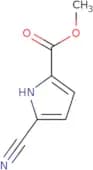
CAS :<p>Versatile small molecule scaffold</p>Formule :C8H11NO2Degré de pureté :Min. 95%Masse moléculaire :153.18 g/molMethyl 5-cyano-1H-pyrrole-2-carboxylate
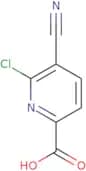
CAS :Methyl 5-cyano-1H-pyrrole-2-carboxylate is a chiral, intramolecular catalysis inhibitor of the enzyme acetylcholinesterase. It is a potent compound that inhibits the activity of this enzyme and prevents the breakdown of acetylcholine in the brain. Methyl 5-cyano-1H-pyrrole-2-carboxylate binds to the active site with an axial orientation and has been shown to be selective for parp-1. This molecule also inhibits other enzymes that are involved in protein synthesis and cell signaling, such as alkenes and alkaloids. Methyl 5-cyano-1H-pyrrole-2-carboxylate may have therapeutic value as a treatment for Alzheimer's disease due to its ability to inhibit acetylcholinesterase activity.Formule :C7H6N2O2Degré de pureté :Min. 95%Masse moléculaire :150.13 g/mol6-chloro-5-cyanopyridine-2-carboxylic acid
CAS :6-Chloro-5-cyanopyridine-2-carboxylic acid is an antitumor agent that inhibits tumor cell proliferation and induces cell death. It has been shown to be a selective inhibitor of the enzyme hepg2, which is involved in the conversion of cholesterol to bile acids. 6-Chloro-5-cyanopyridine-2-carboxylic acid has also been shown to inhibit the growth of tumor cells by binding to pyrimidine derivatives and acylating them. This reaction leads to the formation of reactive nitrogen species that cause DNA damage and lead to apoptotic cell death. The compound can be synthesized efficiently through an acylation reaction with benzoyl chloride.Formule :C7H3ClN2O2Degré de pureté :Min. 95%Masse moléculaire :182.6 g/mol1,9-Dicyanononane
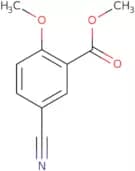
CAS :1,9-Dicyanonane is a reactive compound that is used in enzymatic reactions. It has an affinity for the carboxylate group of the enzyme and reacts with it to form products. 1,9-Dicyanonane can be used as an affinity label to identify enzymes in a reaction. This compound can also be labeled with stable isotopes of carbon, nitrogen, or hydrogen to make it more useful in NMR spectroscopy and mass spectrometry. The stable isotopes are usually 13C, 15N, or 2H. The use of these labels allows for calculation of the number of molecules in a sample by measuring the intensity of the peaks corresponding to the specific isotope.Formule :C11H18N2Degré de pureté :Min. 95%Masse moléculaire :178.27 g/molMethyl 5-cyano-2-methoxybenzoate
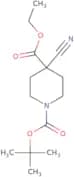
CAS :<p>Versatile small molecule scaffold</p>Formule :C10H9NO3Degré de pureté :Min. 95%Masse moléculaire :191.18 g/mol1-tert-Butyl 4-ethyl 4-cyanopiperidine-1,4-dicarboxylate
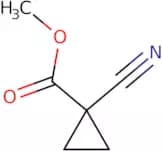
CAS :Versatile small molecule scaffoldFormule :C14H22N2O4Degré de pureté :Min. 95%Masse moléculaire :282.34 g/molMethyl 1-cyanocyclopropanecarboxylate
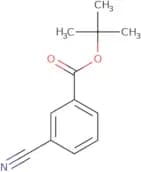
CAS :Versatile small molecule scaffoldFormule :C6H7NO2Degré de pureté :Min. 95%Masse moléculaire :125.13 g/moltert-Butyl 3-cyanobenzoate
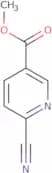
CAS :Versatile small molecule scaffoldFormule :C12H13NO2Degré de pureté :Min. 95%Masse moléculaire :203.24 g/molMethyl 6-cyanonicotinate
CAS :Versatile small molecule scaffoldFormule :C8H6N2O2Degré de pureté :Min. 95%Masse moléculaire :162.15 g/moltert-Butyl 3-cyano-3-(hydroxymethyl)azetidine-1-carboxylate
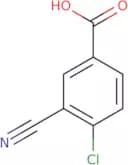
CAS :<p>Versatile small molecule scaffold</p>Formule :C10H16N2O3Degré de pureté :Min. 95%Masse moléculaire :212.25 g/mol4-Chloro-3-cyanobenzoic acid
CAS :<p>Versatile small molecule scaffold</p>Formule :C8H4ClNO2Degré de pureté :Min. 95%Masse moléculaire :181.58 g/mol2-Isocyano-1,3-dimethyl-benzene
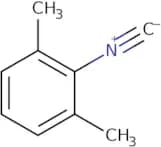
CAS :<p>2-Isocyano-1,3-dimethyl-benzene is an organic compound that is used to synthesize other compounds. It has a redox potential of -0.6 volts and a crystallography of orthorhombic with a space group of Pbca. It reacts with nitrogen atoms in the reaction solution to form stable complexes and can react with copper ions to form a copper complex. 2-Isocyano-1,3-dimethyl-benzene has been shown to undergo transfer reactions with molybdenum in the presence of xylene as solvent and ammonia gas as a catalyst. This chemical reaction mechanism leads to the formation of an isocyanide intermediate, which then reacts with water molecules to create an aminium ion and hydrogen cyanide. Titration calorimetry experiments have shown that 2-isocyano-1,3-dimethylbenzene has an enthalpy change of -2</p>Formule :C9H9NDegré de pureté :Min. 95%Masse moléculaire :131.17 g/molPotassiumhexacyanocobaltate(III)
CAS :Produit contrôléPotassiumhexacyanocobaltate(III) is a compound that is an optical material with a yellow colour. It has a high degree of anisotropy, and it can be used in magneto-optical devices. Potassiumhexacyanocobaltate(III) is bifunctional, meaning that it can have both magnetic and light emitting properties. The magnetic property arises from the spin-orbit coupling between the metal ions, while the light emission is due to radiative transitions involving the electrons in the metal ion. Potassiumhexacyanocobaltate(III) has been used to produce light emission in crystalline materials such as gallium arsenide and zinc selenide, as well as in devices such as LEDs.Formule :C5CoK3N6Degré de pureté :Min. 95%Masse moléculaire :320.32 g/molMethyl 4-cyano-2-methoxybenzoate
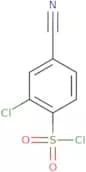
CAS :Versatile small molecule scaffoldFormule :C10H9NO3Degré de pureté :Min. 95%Masse moléculaire :191.18 g/mol2-Chloro-4-cyanobenzenesulfonyl chloride
CAS :<p>Versatile small molecule scaffold</p>Formule :C7H3Cl2NO2SDegré de pureté :Min. 95%Masse moléculaire :236.08 g/molMethyl 6-chloro-5-cyanopicolinate
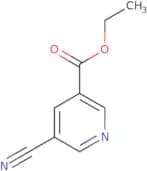
CAS :Versatile small molecule scaffoldFormule :C8H5ClN2O2Degré de pureté :Min. 95%Masse moléculaire :196.59 g/molEthyl 5-cyanonicotinate
CAS :<p>Versatile small molecule scaffold</p>Formule :C9H8N2O2Degré de pureté :Min. 95%Masse moléculaire :176.17 g/mol5-cyano-2-methoxybenzoic acid
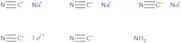
CAS :<p>Versatile small molecule scaffold</p>Formule :C9H7NO3Degré de pureté :Min. 95%Masse moléculaire :177.16 g/molSodium Pentacyanoammineferroate(II) Hydrate
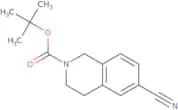
CAS :Produit contrôlé<p>Please enquire for more information about Sodium Pentacyanoammineferroate(II) Hydrate including the price, delivery time and more detailed product information at the technical inquiry form on this page</p>Formule :C5H3FeN6Na3·xH2ODegré de pureté :Min. 95%Masse moléculaire :271.94 g/moltert-Butyl 6-cyano-3,4-dihydroisoquinoline-2(1H)-carboxylate
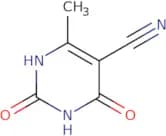
CAS :Versatile small molecule scaffoldFormule :C15H18N2O2Degré de pureté :Min. 95%Masse moléculaire :258.32 g/mol6-Methyl-5-cyanouracil
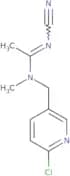
CAS :<p>Versatile small molecule scaffold</p>Formule :C6H5N3O2Degré de pureté :Min. 95%Masse moléculaire :151.12 g/molN-(6-Chloro-3-pyridylmethyl)-N-cyano-N-methylacetamidine
CAS :<p>N-(6-Chloro-3-pyridylmethyl)-N-cyano-N-methylacetamidine is a chemical pesticide that belongs to the class of chlorinated acetamides. It has been shown to be highly resistant to biological degradation, which means it can persist in the environment for a long time and accumulate in living organisms. This pesticide has been shown to have genotoxic effects in vivo and in vitro, and it has been shown to have an adverse effect on the kidney bean α subunit gene expression. In vitro assays have also shown that this compound is able to inhibit locomotor activity, as well as surface methodology optical sensor assays. N-(6-Chloro-3-pyridylmethyl)-N-cyano-N-methylacetamidine appears to be a promising candidate for wastewater treatment because it does not appear to be toxic at sublethal doses.</p>Formule :C10H11ClN4Degré de pureté :Min. 95%Masse moléculaire :222.67 g/mol4-Chloro-2-cyanophenylsulfonyl Chloride
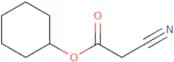
CAS :Versatile small molecule scaffoldFormule :C7H3NO2SCl2Degré de pureté :Min. 95%Masse moléculaire :236.07 g/molCyclohexyl cyanoacetate
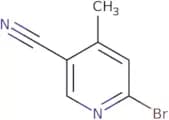
CAS :Cyclohexyl cyanoacetate is an amide derivative and a pyrimidine derivative. It is used in pharmaceutical formulations as an intermediate for the synthesis of pyrazoles, which are used in the treatment of hyperproliferative disorders. Cyclohexyl cyanoacetate inhibits bacterial growth by inhibiting protein synthesis, as it binds to ribosomes and blocks the binding site for amino acids. Cyclohexyl cyanoacetate also has antifungal properties and is an acid catalyst.Formule :C9H13NO2Degré de pureté :Min. 95%Masse moléculaire :167.21 g/mol2-Bromo-5-cyano-4-picoline
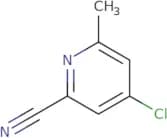
CAS :2-Bromo-5-cyano-4-picoline is a tyrosine kinase inhibitor that binds to the ATP binding site of the enzyme, inhibiting its activity. It has been shown to be effective in preclinical studies for the treatment of arthritis and cellular proliferation. 2-Bromo-5-cyano-4-picoline has been shown to be reversible and orally active.Formule :C7H5BrN2Degré de pureté :Min. 95%Masse moléculaire :197.04 g/mol4-Chloro-2-cyano-6-methylpyrimidine
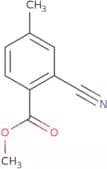
CAS :Versatile small molecule scaffoldFormule :C6H4ClN3Degré de pureté :Min. 95%Masse moléculaire :153.57 g/molMethyl 2-cyano-4-methylbenzoate
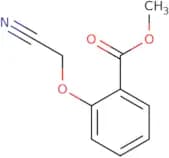
CAS :Versatile small molecule scaffoldFormule :C10H9NO2Degré de pureté :Min. 95%Masse moléculaire :175.18 g/molMethyl 2-(cyanomethoxy)benzoate
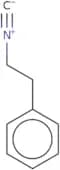
CAS :<p>Versatile small molecule scaffold</p>Formule :C10H9NO3Degré de pureté :Min. 95%Masse moléculaire :191.18 g/mol2-Isocyanoethylbenzene
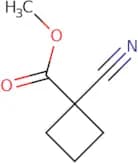
CAS :2-Isocyanoethylbenzene, also known as 2-IBAB, is an organic compound that contains a carbonyl group and two isocyanate groups. It is used as a catalyst in hydrosilylation reactions to synthesize polymers such as polyurethanes. The reaction between 2-isocyanoethylbenzene and copper complex produces an imine that reacts with phosphite to form quinoline derivatives. These quinoline derivatives are then reacted with carboxylates to form ruthenium complexes, which catalyze the polymerization of deionized water. The polymerization initiator for this process is typically an organic peroxide or azide.Formule :C9H9NDegré de pureté :Min. 95%Masse moléculaire :131.18 g/molMethyl 1-cyanocyclobutanecarboxylate
CAS :Versatile small molecule scaffoldFormule :C7H9NO2Degré de pureté :Min. 95%Masse moléculaire :139.16 g/mol(E)-ethyl 2-cyano-3-((3,5-difluorophenyl)amino)acrylate
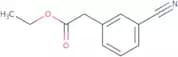
CAS :<p>Versatile small molecule scaffold</p>Formule :C12H10F2N2O2Degré de pureté :Min. 95%Masse moléculaire :252.22 g/molEthyl 2-(3-cyanophenyl)acetate
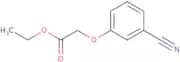
CAS :<p>Versatile small molecule scaffold</p>Formule :C11H11NO2Degré de pureté :Min. 95%Masse moléculaire :189.21 g/molEthyl 2-(3-cyanophenoxy)acetate
CAS :<p>Versatile small molecule scaffold</p>Formule :C11H11NO3Degré de pureté :Min. 95%Masse moléculaire :205.21 g/mol2-[4-(2,2-Dicyanovinyl)-N-ethyl-3-Methylaniline]ethyl carbanilate
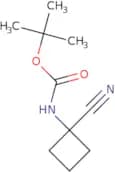
CAS :Please enquire for more information about 2-[4-(2,2-Dicyanovinyl)-N-ethyl-3-Methylaniline]ethyl carbanilate including the price, delivery time and more detailed product information at the technical inquiry form on this pageFormule :C22H22N4O2Degré de pureté :Min. 95%Masse moléculaire :374.44 g/moltert-Butyl N-(1-cyanocyclobutyl)carbamate
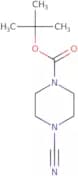
CAS :<p>Versatile small molecule scaffold</p>Formule :C10H16N2O2Degré de pureté :Min. 95%Masse moléculaire :196.25 g/moltert-butyl 4-cyanopiperazine-1-carboxylate
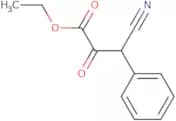
CAS :<p>Versatile small molecule scaffold</p>Formule :C10H17N3O2Degré de pureté :Min. 95%Masse moléculaire :211.26 g/molEthyl 3-cyano-3-phenylpyruvate
CAS :<p>Ethyl 3-cyano-3-phenylpyruvate is a chemical compound that is used as an antiviral agent. It has been shown in vitro to inhibit influenza virus and depression. Ethyl 3-cyano-3-phenylpyruvate is synthesized by the alkylation of furyl with phenyl group, followed by the reduction of the tetronic acid formed. The antiviral activity of ethyl 3-cyano-3-phenylpyruvate was analyzed by assessing the ability to inhibit viral replication and production of new viruses. The sodium salt form of this compound is used in foodstuff as a preservative.</p>Formule :C12H11NO3Degré de pureté :Min. 95%Masse moléculaire :217.22 g/molethyl 2-cyanocyclopropane-1-carboxylate
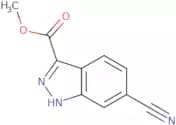
CAS :<p>Ethyl 2-cyanocyclopropane-1-carboxylate is a reactive chemical reagent that can be used to synthesize a variety of compounds. It is an aliphatic compound with a carbonyl group at the end of the molecule and belongs to a class of compounds called chlorohydrins. Ethyl 2-cyanocyclopropane-1-carboxylate has been used as an organoindium compound for the synthesis of stilbene derivatives. It can also be used to synthesize chlorinated alkenes, oxiranes, and other cyclopropanes. Ethyl 2-cyanocyclopropane-1-carboxylate can react with alcohols or phenols in presence of acid to form acetals or ketals, respectively.</p>Formule :C7H9NO2Degré de pureté :Min. 95%Masse moléculaire :139.15 g/molMethyl 6-cyano-1H-indazole-3-carboxylate
CAS :Versatile small molecule scaffoldFormule :C10H7N3O2Degré de pureté :Min. 95%Masse moléculaire :201.18 g/moltert-Butyl 4-(2-cyanoacetyl)piperidine-1-carboxylate
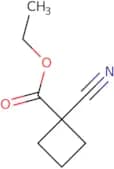
CAS :<p>Versatile small molecule scaffold</p>Formule :C13H20N2O3Degré de pureté :Min. 95%Masse moléculaire :252.31 g/molEthyl 1-cyanocyclobutanecarboxylate
CAS :Ethyl 1-cyanocyclobutanecarboxylate is a cyclic molecule that belongs to the homologues of ethylene. This compound has been shown to react with carbanions in the presence of a base to form anionic initiator molecules. Ethyl 1-cyanocyclobutanecarboxylate can be used as an experimental monomer for ring-opening polymerization reactions, which are nonquantitative and may require temperatures as high as 110°C. The rate of these reactions is determined by the concentration of monomers, which should be made as monodisperse as possible.Formule :C8H11NO2Degré de pureté :Min. 95%Masse moléculaire :153.18 g/mol2,5-Dimethyl-7,7,8,8-tetracyanoquinodimethane
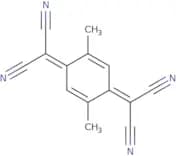
CAS :2,5-Dimethyl-7,7,8,8-tetracyanoquinodimethane is a layered compound that has been modified to have magnetic properties. This modification can be used for research purposes and the magnetically induced transfer of elements between compounds. 2,5-Dimethyl-7,7,8,8-tetracyanoquinodimethane can also be modified by adding an acceptor group to one of the layers in order to create an optical probe. The structural modifications of this molecule make it possible to create a sponge that can be used as a nanoreactor for catalysis or other reactions.Formule :C14H8N4Degré de pureté :Min. 95%Couleur et forme :PowderMasse moléculaire :232.25 g/mol2-Propenoic acid, 3-(4-cyanophenyl)-, (E)-
CAS :<p>2-Propenoic acid, 3-(4-cyanophenyl)-, (E)- is a fatty acid that is used in the production of biodiesel. This reaction is catalyzed by an acid methyl ester, which can be either reactive or unreactive. The product of this reaction - fatty acid methyl esters - has significant activity as an anion and has a high boiling point. It also has the potential to be used as a fuel in the future.</p>Formule :C10H7NO2Degré de pureté :Min. 95%Masse moléculaire :173.17 g/mol4-Amino-4-cyanopiperidine, N1-BOC protected
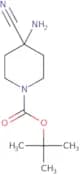
CAS :<p>Versatile small molecule scaffold</p>Formule :C11H19N3O2Degré de pureté :Min. 95%Masse moléculaire :225.29 g/molTetracyanoethylene
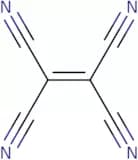
CAS :<p>Used for post-functional addition to polyphenylacetylene derivatives</p>Formule :C6N4Couleur et forme :White PowderMasse moléculaire :128.09 g/molMethyl 4-cyanobicyclo[2.2.2]octane-1-carboxylate
CAS :Versatile small molecule scaffoldFormule :C11H15NO2Degré de pureté :Min. 95%Masse moléculaire :193.24 g/molPotassium tetracyanoplatinate(II)
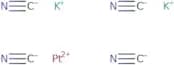
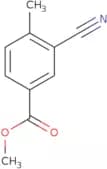
CAS :Produit contrôléPotassium tetracyanoplatinate(II) is a metal-organic framework that has been synthesized by the layer-by-layer self-assembly of potassium ions and cyanide anions. It can reversibly bind to anions such as chloride, sulfate, nitrate, and phosphate. The structural biology of this material was investigated using X-ray diffraction data in combination with electron microscopy techniques. The salt form of potassium tetracyanoplatinate(II) has been found to be stable up to 100 °C. Potassium tetracyanoplatinate(II) has shown antimicrobial properties against Bordetella pertussis.Formule :C4K2N4PtDegré de pureté :Min. 95%Couleur et forme :PowderMasse moléculaire :377.35 g/molMethyl 3-cyano-4-methylbenzoate
CAS :<p>Versatile small molecule scaffold</p>Formule :C10H9NO2Degré de pureté :Min. 95%Masse moléculaire :175.18 g/molEthyl 6-cyanoimidazo[1,2-a]pyridine-2-carboxylate
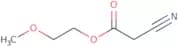
CAS :Versatile small molecule scaffoldFormule :C11H9N3O2Degré de pureté :Min. 95%Masse moléculaire :215.21 g/molAcetic acid, 2-cyano-, 2-methoxyethyl ester
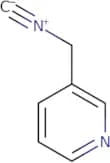
CAS :<p>2-Cyano-2-methoxyethyl acetic acid is a reactive organic solvent that has a boiling point of 152°C. It is soluble in water and has an acidic pH. This compound is used as a monomer, and is also used as an alkylating agent for the synthesis of polymers. 2-Cyano-2-methoxyethyl acetic acid can be copolymerized with other compounds to create a variety of products with different properties. The reaction time depends on the type of product being synthesized, but it typically takes up to 48 hours to complete the reaction. 2-Cyano-2-methoxyethyl acetic acid can react with c1–6 alkyl groups, which may affect its solubility. This compound has a high degree of configurability, which may allow it to be used in more chemical reactions than other organic solvents.</p>Formule :C6H9NO3Degré de pureté :Min. 95%Masse moléculaire :143.14 g/mol3-(Isocyanomethyl)pyridine
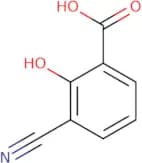
CAS :<p>3-(Isocyanomethyl)pyridine is a nucleophilic amine that is used in organic chemistry as a reagent. It can be used either as a primary amine or as an isocyanide, depending on the desired functionality. 3-(Isocyanomethyl)pyridine reacts with electrophiles such as phenols, alcohols, and carboxylic acids to form reactive intermediates. These intermediates are often useful for generating new molecules. 3-(Isocyanomethyl)pyridine is also capable of reacting with primary and secondary amines to yield multigram quantities of products.<br>3-(Isocyanomethyl)pyridine has been shown to be an innovative chemical that can be used in many different applications.</p>Formule :C7H6N2Degré de pureté :Min. 95%Masse moléculaire :118.14 g/mol3-cyano-2-hydroxybenzoicacid
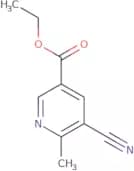
CAS :Versatile small molecule scaffoldFormule :C8H5NO3Degré de pureté :Min. 95%Masse moléculaire :163.13 g/molEthyl 5-cyano-6-methylnicotinate
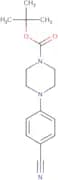
CAS :Versatile small molecule scaffoldFormule :C10H10N2O2Degré de pureté :Min. 95%Masse moléculaire :190.2 g/moltert-Butyl 4-(4-cyanophenyl)tetrahydro-1(2H)-pyrazinecarboxylate
CAS :<p>Versatile small molecule scaffold</p>Formule :C16H21N3O2Degré de pureté :Min. 95%Masse moléculaire :287.36 g/mol7-Amino-6-cyanopyrazolo[1,5-a]pyrimidine
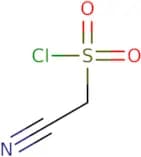
CAS :<p>Versatile small molecule scaffold</p>Formule :C7H5N5Degré de pureté :Min. 95%Masse moléculaire :159.15 g/molcyanomethanesulfonyl chloride
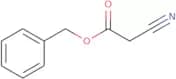
CAS :<p>Cyanomethanesulfonyl chloride is the precursor to a series of pharmaceuticals that are tyrosine kinase inhibitors. These compounds inhibit the growth and proliferation of cells by binding to the receptor tyrosine kinase, preventing it from activating and regulating other proteins. Cyanomethanesulfonyl chloride has been shown to inhibit inflammatory bowel disease in animal models. It also inhibits the production of amines and chloride, which may be responsible for its anti-inflammatory effects.</p>Formule :C2H2ClNO2SDegré de pureté :Min. 95%Masse moléculaire :139.6 g/molBenzyl 2-cyanoacetate
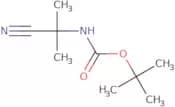
CAS :Benzyl 2-cyanoacetate is an aliphatic hydrocarbon that has been used in the synthesis of various quinoline derivatives. It can be prepared by the reaction of malonic acid with hydrochloric acid, followed by borohydride reduction and the addition of active methylene. Benzyl 2-cyanoacetate is also a precursor to a number of other compounds, including β-amino acids, which are used as pharmaceutical preparations. The chloride ions in benzyl 2-cyanoacetate react with nitro groups to form chloroquinolines. This compound is also an efflux pump inhibitor that blocks bacterial cells from exporting antibiotic molecules out of the cell.Formule :C10H9NO2Degré de pureté :Min. 95%Masse moléculaire :175.19 g/moltert-Butyl N-(1-cyano-1-methylethyl)carbamate
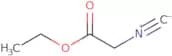
CAS :<p>Versatile small molecule scaffold</p>Formule :C9H16N2O2Degré de pureté :Min. 95%Masse moléculaire :184.24 g/molEthyl-2-isocyanoacetate
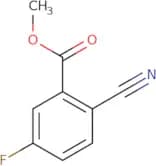
CAS :<p>Ethyl-2-isocyanoacetate is a chemical substance that is used in organic chemistry as a reagent for the synthesis of esters and amides. It has been shown to have strong antimicrobial activity against bacteria, including methicillin-resistant Staphylococcus aureus. This compound has also been shown to inhibit the growth of skin cancer cells, which may be due to its ability to induce apoptosis. Ethyl-2-isocyanoacetate reacts with nitro groups in proteins and amino acids by replacement of an oxygen atom from the hydroxyl group with a nitrogen atom from the carboxylic acid group. This reaction mechanism is catalyzed by ns3 protease, which is activated by hydrogen peroxide and thioredoxin reductase.</p>Formule :C5H7NO2Degré de pureté :Min. 95%Couleur et forme :Clear LiquidMasse moléculaire :113.11 g/molMethyl 2-cyano-5-fluorobenzoate
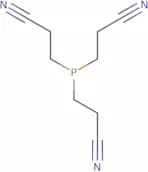
CAS :<p>Versatile small molecule scaffold</p>Formule :C9H6FNO2Degré de pureté :Min. 95%Masse moléculaire :179.15 g/molTris(2-cyanoethyl)phosphine
CAS :Tris(2-cyanoethyl)phosphine (TCEP) is a metal carbonyl compound that has been used as a reagent in organic chemistry. TCEP is an amphoteric molecule that can react with both acids and bases, and is stable in the pH range of 5 to 9. It has been shown to have anti-inflammatory properties by inhibiting neutrophil migration. TCEP also has biological properties, such as its ability to inhibit the growth of Cryptococcus neoformans. TCEP binds to the mitochondrial membrane potential, which prevents proton leakage through the membrane and inhibits oxidative phosphorylation. TCEP binds strongly to minerals such as sodium salts, which can be used to isolate this molecule from reaction solutions. TCEP can be obtained by laser ablation or X-ray crystallography techniques.Formule :C9H12N3PDegré de pureté :Min. 95 Area-%Masse moléculaire :193.19 g/mol3-chloro-4-cyanobenzoic acid
CAS :Versatile small molecule scaffoldFormule :C8H4ClNO2Degré de pureté :Min. 95%Masse moléculaire :181.58 g/mol4-Amino-6-bromo-5-cyano-7H-pyrrol[2,3-d]pyrimidine
CAS :<p>4-Amino-6-bromo-5-cyano-7H-pyrrol[2,3-d]pyrimidine is a synthetic compound that can inhibit the growth of tumor cells by preventing RNA replication. It has been shown to be an efficient method for screening potential antitumor agents. 4AB5C7H is extracted from the tumor cell lines and catalyzed by a variety of enzymes. The debromination process yields high yields of 4AB5C7H, which can be used as a potential inhibitor in cancer therapy.</p>Degré de pureté :Min. 95%



![5-Amino-3-cyano-4-iodo-1-[2,6-dichloro-4-(trifluoromethyl)phenyl]pyrazole](/_next/image/?url=https%3A%2Fstatic.cymitquimica.com%2Fproducts%2FTR%2Fthumb-webp%2FA603945.webp&w=3840&q=75)


![Methyl 3-cyanobicyclo[1.1.1]pentane-1-carboxylate](/_next/image/?url=https%3A%2Fstatic.cymitquimica.com%2Fproducts%2F3D%2Fthumb-webp%2FGGA32962.webp&w=3840&q=75)




![1-[(tert-butoxy)carbonyl]-3-cyanopyrrolidine-3-carboxylic acid](/_next/image/?url=https%3A%2Fstatic.cymitquimica.com%2Fproducts%2F3D%2Fthumb-webp%2FIWB75928.webp&w=3840&q=75)









![2-[4-(2,2-Dicyanovinyl)-N-ethyl-3-Methylaniline]ethyl carbanilate](/_next/image/?url=https%3A%2Fstatic.cymitquimica.com%2Fproducts%2F3D%2Fthumb-webp%2FFD171547.webp&w=3840&q=75)


![Methyl 4-cyanobicyclo[2.2.2]octane-1-carboxylate](/_next/image/?url=https%3A%2Fstatic.cymitquimica.com%2Fproducts%2F3D%2Fthumb-webp%2FECA20205.webp&w=3840&q=75)
![Ethyl 6-cyanoimidazo[1,2-a]pyridine-2-carboxylate](/_next/image/?url=https%3A%2Fstatic.cymitquimica.com%2Fproducts%2F3D%2Fthumb-webp%2FPIA95833.webp&w=3840&q=75)
![7-Amino-6-cyanopyrazolo[1,5-a]pyrimidine](/_next/image/?url=https%3A%2Fstatic.cymitquimica.com%2Fproducts%2F3D%2Fthumb-webp%2FPDA97557.webp&w=3840&q=75)

![4-Amino-6-bromo-5-cyano-7H-pyrrol[2,3-d]pyrimidine](/_next/image/?url=https%3A%2Fstatic.cymitquimica.com%2Fproducts%2F3D%2Fthumb-webp%2FFA145040.webp&w=3840&q=75)