Chimie organique synthétique
Sous-catégories appartenant à la catégorie "Chimie organique synthétique"
- Réactifs synthétiques(16.661 produits)
- Building Blocks(258.137 produits)
- Réactions de formation de liaisons C-C(881 produits)
- Groupes protecteurs(2.686 produits)
- Réactifs pour l'introduction/modification de groupes fonctionnels(1.022 produits)
202 produits trouvés pour "Chimie organique synthétique".
N-Methyl-N-(3R,4R)-1-cyanoacetyl-4-methylpiperidin-3-yl-7-deazapurine-2-amine
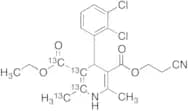
Produit contrôléFormule :C16H20N6OCouleur et forme :NeatMasse moléculaire :312.371,4-Dihydro-2,6-dimethyl-3-(2-cyanoethoxycarbonyl)-5-ethoxycarbonyl-4-(2,3-dichlorophenyl)pyridine-13C4
CAS :Produit contrôléFormule :C4C16H20Cl2N2O4Couleur et forme :NeatMasse moléculaire :427.262-Amino-5-bromo-3,4-di-cyanopyrole
CAS :Produit contrôléFormule :C6H3BrN4Couleur et forme :NeatMasse moléculaire :211.0194-(Dicyanomethylene)-2-methyl-6-(julolidin-9-yl-vinyl)-4H-pyran
CAS :Produit contrôléApplications 4-(Dicyanomethylene)-2-methyl-6-(julolidin-4-yl-vinyl)-4H-pyran (CAS# 51325-95-2) is a useful research chemical compound.
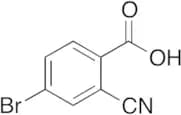
Formule :C23H21N3OCouleur et forme :NeatMasse moléculaire :355.4324-Bromo-2-cyanobenzoic Acid
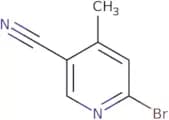
CAS :Produit contrôléFormule :C8H4BrNO2Couleur et forme :NeatMasse moléculaire :226.0272-Bromo-5-cyano-4-picoline
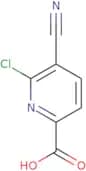
CAS :2-Bromo-5-cyano-4-picoline is a tyrosine kinase inhibitor that binds to the ATP binding site of the enzyme, inhibiting its activity. It has been shown to be effective in preclinical studies for the treatment of arthritis and cellular proliferation. 2-Bromo-5-cyano-4-picoline has been shown to be reversible and orally active.Formule :C7H5BrN2Degré de pureté :Min. 95%Masse moléculaire :197.04 g/mol6-chloro-5-cyanopyridine-2-carboxylic acid
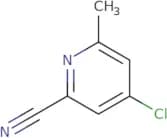
CAS :6-Chloro-5-cyanopyridine-2-carboxylic acid is an antitumor agent that inhibits tumor cell proliferation and induces cell death. It has been shown to be a selective inhibitor of the enzyme hepg2, which is involved in the conversion of cholesterol to bile acids. 6-Chloro-5-cyanopyridine-2-carboxylic acid has also been shown to inhibit the growth of tumor cells by binding to pyrimidine derivatives and acylating them. This reaction leads to the formation of reactive nitrogen species that cause DNA damage and lead to apoptotic cell death. The compound can be synthesized efficiently through an acylation reaction with benzoyl chloride.Formule :C7H3ClN2O2Degré de pureté :Min. 95%Masse moléculaire :182.6 g/mol4-Chloro-2-cyano-6-methylpyrimidine
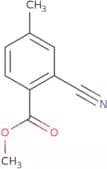
CAS :Versatile small molecule scaffoldFormule :C6H4ClN3Degré de pureté :Min. 95%Masse moléculaire :153.57 g/molMethyl 2-cyano-4-methylbenzoate
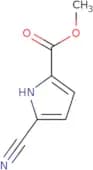
CAS :Versatile small molecule scaffoldFormule :C10H9NO2Degré de pureté :Min. 95%Masse moléculaire :175.18 g/molMethyl 5-cyano-1H-pyrrole-2-carboxylate
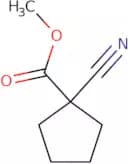
CAS :Methyl 5-cyano-1H-pyrrole-2-carboxylate is a chiral, intramolecular catalysis inhibitor of the enzyme acetylcholinesterase. It is a potent compound that inhibits the activity of this enzyme and prevents the breakdown of acetylcholine in the brain. Methyl 5-cyano-1H-pyrrole-2-carboxylate binds to the active site with an axial orientation and has been shown to be selective for parp-1. This molecule also inhibits other enzymes that are involved in protein synthesis and cell signaling, such as alkenes and alkaloids. Methyl 5-cyano-1H-pyrrole-2-carboxylate may have therapeutic value as a treatment for Alzheimer's disease due to its ability to inhibit acetylcholinesterase activity.Formule :C7H6N2O2Degré de pureté :Min. 95%Masse moléculaire :150.13 g/molMethyl 1-cyanocyclopentanecarboxylate
CAS :Versatile small molecule scaffold
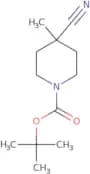
Formule :C8H11NO2Degré de pureté :Min. 95%Masse moléculaire :153.18 g/moltert-Butyl 4-cyano-4-methylpiperidine-1-carboxylate
CAS :Versatile small molecule scaffold
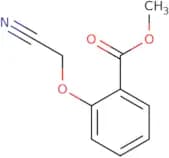
Formule :C12H20N2O2Degré de pureté :Min. 95%Masse moléculaire :224.3 g/molMethyl 2-(cyanomethoxy)benzoate
CAS :Versatile small molecule scaffold
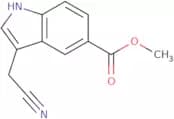
Formule :C10H9NO3Degré de pureté :Min. 95%Masse moléculaire :191.18 g/molMethyl 3-(cyanomethyl)-1H-indole-5-carboxylate
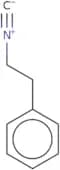
CAS :Versatile small molecule scaffoldFormule :C12H10N2O2Degré de pureté :Min. 95%Masse moléculaire :214.22 g/mol2-Isocyanoethylbenzene
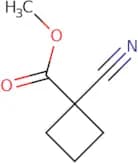
CAS :2-Isocyanoethylbenzene, also known as 2-IBAB, is an organic compound that contains a carbonyl group and two isocyanate groups. It is used as a catalyst in hydrosilylation reactions to synthesize polymers such as polyurethanes. The reaction between 2-isocyanoethylbenzene and copper complex produces an imine that reacts with phosphite to form quinoline derivatives. These quinoline derivatives are then reacted with carboxylates to form ruthenium complexes, which catalyze the polymerization of deionized water. The polymerization initiator for this process is typically an organic peroxide or azide.Formule :C9H9NDegré de pureté :Min. 95%Masse moléculaire :131.18 g/molMethyl 1-cyanocyclobutanecarboxylate
CAS :Versatile small molecule scaffoldFormule :C7H9NO2Degré de pureté :Min. 95%Masse moléculaire :139.16 g/mol(E)-ethyl 2-cyano-3-((3,5-difluorophenyl)amino)acrylate
CAS :Versatile small molecule scaffold
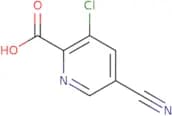
Formule :C12H10F2N2O2Degré de pureté :Min. 95%Masse moléculaire :252.22 g/mol3-Chloro-5-cyano-2-pyridinecarboxylic acid
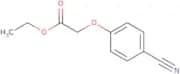
CAS :Versatile small molecule scaffoldFormule :C7H3ClN2O2Degré de pureté :Min. 95%Masse moléculaire :182.56 g/molEthyl 2-(4-cyanophenoxy)acetate
CAS :Versatile small molecule scaffold
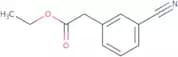
Formule :C11H11NO3Degré de pureté :Min. 95%Masse moléculaire :205.21 g/molEthyl 2-(3-cyanophenyl)acetate
CAS :Versatile small molecule scaffold
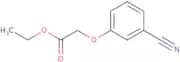
Formule :C11H11NO2Degré de pureté :Min. 95%Masse moléculaire :189.21 g/molEthyl 2-(3-cyanophenoxy)acetate
CAS :Versatile small molecule scaffold
Formule :C11H11NO3Degré de pureté :Min. 95%Masse moléculaire :205.21 g/mol2-[4-(2,2-Dicyanovinyl)-N-ethyl-3-Methylaniline]ethyl carbanilate
CAS :Please enquire for more information about 2-[4-(2,2-Dicyanovinyl)-N-ethyl-3-Methylaniline]ethyl carbanilate including the price, delivery time and more detailed product information at the technical inquiry form on this pageFormule :C22H22N4O2Degré de pureté :Min. 95%Masse moléculaire :374.44 g/molMethyl 3-cyanobicyclo[1.1.1]pentane-1-carboxylate
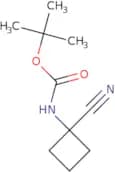
CAS :Versatile small molecule scaffoldFormule :C8H9NO2Degré de pureté :Min. 95%Masse moléculaire :151.16 g/moltert-Butyl N-(1-cyanocyclobutyl)carbamate
CAS :Versatile small molecule scaffold
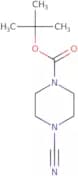
Formule :C10H16N2O2Degré de pureté :Min. 95%Masse moléculaire :196.25 g/moltert-butyl 4-cyanopiperazine-1-carboxylate
CAS :Versatile small molecule scaffold
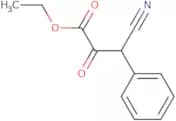
Formule :C10H17N3O2Degré de pureté :Min. 95%Masse moléculaire :211.26 g/molEthyl 3-cyano-3-phenylpyruvate
CAS :Ethyl 3-cyano-3-phenylpyruvate is a chemical compound that is used as an antiviral agent. It has been shown in vitro to inhibit influenza virus and depression. Ethyl 3-cyano-3-phenylpyruvate is synthesized by the alkylation of furyl with phenyl group, followed by the reduction of the tetronic acid formed. The antiviral activity of ethyl 3-cyano-3-phenylpyruvate was analyzed by assessing the ability to inhibit viral replication and production of new viruses. The sodium salt form of this compound is used in foodstuff as a preservative.
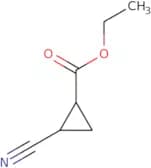
Formule :C12H11NO3Degré de pureté :Min. 95%Masse moléculaire :217.22 g/molethyl 2-cyanocyclopropane-1-carboxylate
CAS :Ethyl 2-cyanocyclopropane-1-carboxylate is a reactive chemical reagent that can be used to synthesize a variety of compounds. It is an aliphatic compound with a carbonyl group at the end of the molecule and belongs to a class of compounds called chlorohydrins. Ethyl 2-cyanocyclopropane-1-carboxylate has been used as an organoindium compound for the synthesis of stilbene derivatives. It can also be used to synthesize chlorinated alkenes, oxiranes, and other cyclopropanes. Ethyl 2-cyanocyclopropane-1-carboxylate can react with alcohols or phenols in presence of acid to form acetals or ketals, respectively.
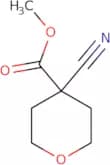
Formule :C7H9NO2Degré de pureté :Min. 95%Masse moléculaire :139.15 g/molMethyl 4-cyanotetrahydro-2H-pyran-4-carboxylate
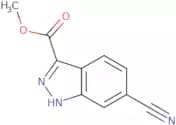
CAS :Versatile small molecule scaffoldFormule :C8H11NO3Degré de pureté :Min. 95%Masse moléculaire :169.18 g/molMethyl 6-cyano-1H-indazole-3-carboxylate
CAS :Versatile small molecule scaffoldFormule :C10H7N3O2Degré de pureté :Min. 95%Masse moléculaire :201.18 g/moltert-Butyl 4-(2-cyanoacetyl)piperidine-1-carboxylate
CAS :Versatile small molecule scaffold
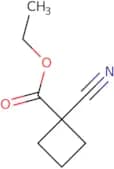
Formule :C13H20N2O3Degré de pureté :Min. 95%Masse moléculaire :252.31 g/molEthyl 1-cyanocyclobutanecarboxylate
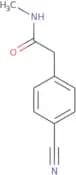
CAS :Ethyl 1-cyanocyclobutanecarboxylate is a cyclic molecule that belongs to the homologues of ethylene. This compound has been shown to react with carbanions in the presence of a base to form anionic initiator molecules. Ethyl 1-cyanocyclobutanecarboxylate can be used as an experimental monomer for ring-opening polymerization reactions, which are nonquantitative and may require temperatures as high as 110°C. The rate of these reactions is determined by the concentration of monomers, which should be made as monodisperse as possible.Formule :C8H11NO2Degré de pureté :Min. 95%Masse moléculaire :153.18 g/mol2-(4-cyanophenyl)-N-methylacetamide
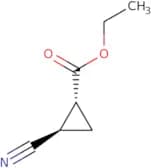
CAS :Versatile small molecule scaffoldFormule :C10H10N2ODegré de pureté :Min. 95%Masse moléculaire :174.2 g/molEthyl trans-2-cyanocyclopropane-1-carboxylate
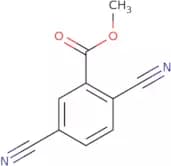
CAS :Versatile small molecule scaffoldFormule :C7H9NO2Degré de pureté :Min. 95%Masse moléculaire :139.15 g/molmethyl 2,5-dicyanobenzoate
CAS :Versatile small molecule scaffold
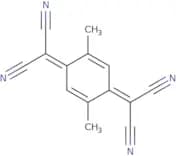
Formule :C10H6N2O2Degré de pureté :Min. 95%Masse moléculaire :186.17 g/mol2,5-Dimethyl-7,7,8,8-tetracyanoquinodimethane
CAS :2,5-Dimethyl-7,7,8,8-tetracyanoquinodimethane is a layered compound that has been modified to have magnetic properties. This modification can be used for research purposes and the magnetically induced transfer of elements between compounds. 2,5-Dimethyl-7,7,8,8-tetracyanoquinodimethane can also be modified by adding an acceptor group to one of the layers in order to create an optical probe. The structural modifications of this molecule make it possible to create a sponge that can be used as a nanoreactor for catalysis or other reactions.Formule :C14H8N4Degré de pureté :Min. 95%Couleur et forme :PowderMasse moléculaire :232.25 g/mol2-Propenoic acid, 3-(4-cyanophenyl)-, (E)-
CAS :2-Propenoic acid, 3-(4-cyanophenyl)-, (E)- is a fatty acid that is used in the production of biodiesel. This reaction is catalyzed by an acid methyl ester, which can be either reactive or unreactive. The product of this reaction - fatty acid methyl esters - has significant activity as an anion and has a high boiling point. It also has the potential to be used as a fuel in the future.
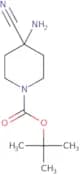
Formule :C10H7NO2Degré de pureté :Min. 95%Masse moléculaire :173.17 g/mol4-Amino-4-cyanopiperidine, N1-BOC protected
CAS :Versatile small molecule scaffold
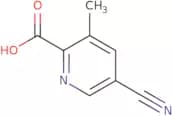
Formule :C11H19N3O2Degré de pureté :Min. 95%Masse moléculaire :225.29 g/mol5-cyano-3-methylpyridine-2-carboxylic acid
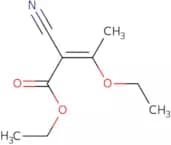
CAS :5-cyano-3-methylpyridine-2-carboxylic acid is a medicinal drug used to treat chronic diseases. It belongs to the group of p-glycoprotein (Pgp) inhibitors, which are trifluoromethylated compounds that are effluxed by Pgp from cells. 5-cyano-3-methylpyridine-2-carboxylic acid has been shown to inhibit BACE1, an enzyme responsible for the production of amyloid beta, which can lead to Alzheimer's disease. This compound also inhibits neural cell growth and nervous system activity in rats. The trifluoromethyl group in this molecule is important for optimization as it increases the affinity for binding with proteins.Formule :C8H6N2O2Degré de pureté :Min. 95%Masse moléculaire :162.14 g/molethyl (2E)-2-cyano-3-ethoxybut-2-enoate
CAS :Ethyl (2E)-2-cyano-3-ethoxybut-2-enoate is an activated ester that can be synthesized by the reaction of ethyl chloroformate and 2-aminoacrylic acid in ethanol. This compound is used as a reagent for the synthesis of amidrazones, which are used as reactive intermediates in organic chemistry. The x-ray structural analysis shows that it is a racemic mixture of two diastereomers, with the more stable configuration being the one with the trans double bond on the benzene ring. It has been shown to have an nmr spectrum consisting of two signals at δ = 3.47 ppm and δ = 3.53 ppm, respectively, in a two dimensional nmr analysis.Formule :C9H13NO3Degré de pureté :Min. 95%Masse moléculaire :183.21 g/molMethyl 5-cyanopicolinate
CAS :Methyl 5-cyanopicolinate is a medicinal compound that is used in the treatment of various diseases. It has been shown to block the activation of plasminogen by plasmin, which prevents the breakdown of fibrin and other proteins. Methyl 5-cyanopicolinate has also been found to be an inhibitor of acetylcholinesterase, which leads to increased acetylcholine levels in the brain and can be used for the treatment of Alzheimer's disease. The synthesis and chemical studies of this substance are still ongoing.Formule :C8H6N2O2Degré de pureté :Min. 95%Masse moléculaire :162.15 g/molMethyl 4-cyanobicyclo[2.2.2]octane-1-carboxylate
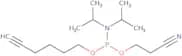
CAS :Versatile small molecule scaffoldFormule :C11H15NO2Degré de pureté :Min. 95%Masse moléculaire :193.24 g/mol5-Hexyn-1-yl-(2-cyanoethyl)-(N,N-diisopropyl)-phosphoramidite
CAS :Please enquire for more information about 5-Hexyn-1-yl-(2-cyanoethyl)-(N,N-diisopropyl)-phosphoramidite including the price, delivery time and more detailed product information at the technical inquiry form on this page
Degré de pureté :Min. 95%Methyl 2-cyano-3-methylbenzoate
CAS :Versatile small molecule scaffold
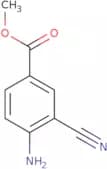
Formule :C10H9NO2Degré de pureté :Min. 95%Masse moléculaire :175.18 g/molMethyl 4-amino-3-cyanobenzoate
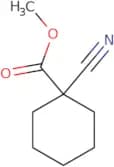
CAS :Versatile small molecule scaffoldFormule :C9H8N2O2Degré de pureté :Min. 95%Masse moléculaire :176.17 g/molMethyl 1-cyanocyclohexanecarboxylate
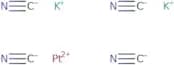
CAS :Versatile small molecule scaffoldFormule :C9H13NO2Degré de pureté :Min. 95%Masse moléculaire :167.21 g/molPotassium tetracyanoplatinate(II)
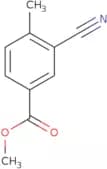
CAS :Produit contrôléPotassium tetracyanoplatinate(II) is a metal-organic framework that has been synthesized by the layer-by-layer self-assembly of potassium ions and cyanide anions. It can reversibly bind to anions such as chloride, sulfate, nitrate, and phosphate. The structural biology of this material was investigated using X-ray diffraction data in combination with electron microscopy techniques. The salt form of potassium tetracyanoplatinate(II) has been found to be stable up to 100 °C. Potassium tetracyanoplatinate(II) has shown antimicrobial properties against Bordetella pertussis.Formule :C4K2N4PtDegré de pureté :Min. 95%Couleur et forme :PowderMasse moléculaire :377.35 g/molMethyl 3-cyano-4-methylbenzoate
CAS :Versatile small molecule scaffold
Formule :C10H9NO2Degré de pureté :Min. 95%Masse moléculaire :175.18 g/molEthyl 6-cyanoimidazo[1,2-a]pyridine-2-carboxylate
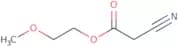
CAS :Versatile small molecule scaffoldFormule :C11H9N3O2Degré de pureté :Min. 95%Masse moléculaire :215.21 g/molAcetic acid, 2-cyano-, 2-methoxyethyl ester
CAS :2-Cyano-2-methoxyethyl acetic acid is a reactive organic solvent that has a boiling point of 152°C. It is soluble in water and has an acidic pH. This compound is used as a monomer, and is also used as an alkylating agent for the synthesis of polymers. 2-Cyano-2-methoxyethyl acetic acid can be copolymerized with other compounds to create a variety of products with different properties. The reaction time depends on the type of product being synthesized, but it typically takes up to 48 hours to complete the reaction. 2-Cyano-2-methoxyethyl acetic acid can react with c1–6 alkyl groups, which may affect its solubility. This compound has a high degree of configurability, which may allow it to be used in more chemical reactions than other organic solvents.Formule :C6H9NO3Degré de pureté :Min. 95%Masse moléculaire :143.14 g/mol3-(Isocyanomethyl)pyridine
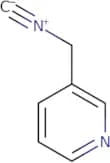
CAS :3-(Isocyanomethyl)pyridine is a nucleophilic amine that is used in organic chemistry as a reagent. It can be used either as a primary amine or as an isocyanide, depending on the desired functionality. 3-(Isocyanomethyl)pyridine reacts with electrophiles such as phenols, alcohols, and carboxylic acids to form reactive intermediates. These intermediates are often useful for generating new molecules. 3-(Isocyanomethyl)pyridine is also capable of reacting with primary and secondary amines to yield multigram quantities of products.
3-(Isocyanomethyl)pyridine has been shown to be an innovative chemical that can be used in many different applications.Formule :C7H6N2Degré de pureté :Min. 95%Masse moléculaire :118.14 g/mol






![2-[4-(2,2-Dicyanovinyl)-N-ethyl-3-Methylaniline]ethyl carbanilate](/_next/image/?url=https%3A%2Fstatic.cymitquimica.com%2Fproducts%2F3D%2Fthumb-webp%2FFD171547.webp&w=3840&q=75)
![Methyl 3-cyanobicyclo[1.1.1]pentane-1-carboxylate](/_next/image/?url=https%3A%2Fstatic.cymitquimica.com%2Fproducts%2F3D%2Fthumb-webp%2FGGA32962.webp&w=3840&q=75)



![Methyl 4-cyanobicyclo[2.2.2]octane-1-carboxylate](/_next/image/?url=https%3A%2Fstatic.cymitquimica.com%2Fproducts%2F3D%2Fthumb-webp%2FECA20205.webp&w=3840&q=75)

![Ethyl 6-cyanoimidazo[1,2-a]pyridine-2-carboxylate](/_next/image/?url=https%3A%2Fstatic.cymitquimica.com%2Fproducts%2F3D%2Fthumb-webp%2FPIA95833.webp&w=3840&q=75)