Chimie organique synthétique
Sous-catégories appartenant à la catégorie "Chimie organique synthétique"
- Réactifs synthétiques(18.707 produits)
- Building Blocks(257.199 produits)
- Réactions de formation de liaisons C-C(886 produits)
- Groupes protecteurs(2.686 produits)
- Réactifs pour l'introduction/modification de groupes fonctionnels(1.030 produits)
202 produits trouvés pour "Chimie organique synthétique".
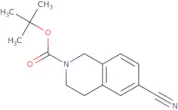
tert-Butyl 6-cyano-3,4-dihydroisoquinoline-2(1H)-carboxylate
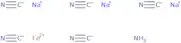
CAS :Versatile small molecule scaffoldFormule :C15H18N2O2Degré de pureté :Min. 95%Masse moléculaire :258.32 g/molSodium Pentacyanoammineferroate(II) Hydrate
CAS :Produit contrôléPlease enquire for more information about Sodium Pentacyanoammineferroate(II) Hydrate including the price, delivery time and more detailed product information at the technical inquiry form on this page
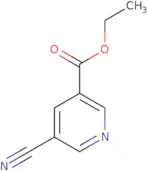
Formule :C5H3FeN6Na3·xH2ODegré de pureté :Min. 95%Masse moléculaire :271.94 g/molEthyl 5-cyanonicotinate
CAS :Versatile small molecule scaffold
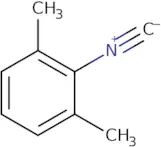
Formule :C9H8N2O2Degré de pureté :Min. 95%Masse moléculaire :176.17 g/mol2-Isocyano-1,3-dimethyl-benzene
CAS :2-Isocyano-1,3-dimethyl-benzene is an organic compound that is used to synthesize other compounds. It has a redox potential of -0.6 volts and a crystallography of orthorhombic with a space group of Pbca. It reacts with nitrogen atoms in the reaction solution to form stable complexes and can react with copper ions to form a copper complex. 2-Isocyano-1,3-dimethyl-benzene has been shown to undergo transfer reactions with molybdenum in the presence of xylene as solvent and ammonia gas as a catalyst. This chemical reaction mechanism leads to the formation of an isocyanide intermediate, which then reacts with water molecules to create an aminium ion and hydrogen cyanide. Titration calorimetry experiments have shown that 2-isocyano-1,3-dimethylbenzene has an enthalpy change of -2Formule :C9H9NDegré de pureté :Min. 95%Masse moléculaire :131.17 g/molMethyl 1-cyanocyclopropanecarboxylate
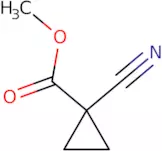
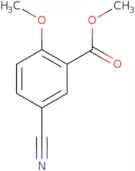
CAS :Versatile small molecule scaffoldFormule :C6H7NO2Degré de pureté :Min. 95%Masse moléculaire :125.13 g/molMethyl 5-cyano-2-methoxybenzoate
CAS :Versatile small molecule scaffold
Formule :C10H9NO3Degré de pureté :Min. 95%Masse moléculaire :191.18 g/molRef: 3D-QBA75712
Produit arrêtéMethyl 1-cyanocyclopentanecarboxylate
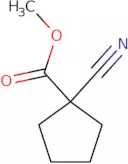
CAS :Versatile small molecule scaffold
Formule :C8H11NO2Degré de pureté :Min. 95%Masse moléculaire :153.18 g/molRef: 3D-QBA86212
Produit arrêté5-cyano-3-methylpyridine-2-carboxylic acid
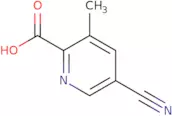
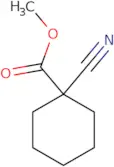
CAS :5-cyano-3-methylpyridine-2-carboxylic acid is a medicinal drug used to treat chronic diseases. It belongs to the group of p-glycoprotein (Pgp) inhibitors, which are trifluoromethylated compounds that are effluxed by Pgp from cells. 5-cyano-3-methylpyridine-2-carboxylic acid has been shown to inhibit BACE1, an enzyme responsible for the production of amyloid beta, which can lead to Alzheimer's disease. This compound also inhibits neural cell growth and nervous system activity in rats. The trifluoromethyl group in this molecule is important for optimization as it increases the affinity for binding with proteins.Formule :C8H6N2O2Degré de pureté :Min. 95%Masse moléculaire :162.14 g/molMethyl 1-cyanocyclohexanecarboxylate
CAS :Versatile small molecule scaffoldFormule :C9H13NO2Degré de pureté :Min. 95%Masse moléculaire :167.21 g/molRef: 3D-ICA92080
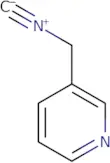
Produit arrêté3-(Isocyanomethyl)pyridine
CAS :3-(Isocyanomethyl)pyridine is a nucleophilic amine that is used in organic chemistry as a reagent. It can be used either as a primary amine or as an isocyanide, depending on the desired functionality. 3-(Isocyanomethyl)pyridine reacts with electrophiles such as phenols, alcohols, and carboxylic acids to form reactive intermediates. These intermediates are often useful for generating new molecules. 3-(Isocyanomethyl)pyridine is also capable of reacting with primary and secondary amines to yield multigram quantities of products.
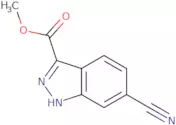
3-(Isocyanomethyl)pyridine has been shown to be an innovative chemical that can be used in many different applications.Formule :C7H6N2Degré de pureté :Min. 95%Masse moléculaire :118.14 g/molMethyl 6-cyano-1H-indazole-3-carboxylate
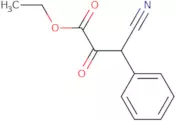
CAS :Versatile small molecule scaffoldFormule :C10H7N3O2Degré de pureté :Min. 95%Masse moléculaire :201.18 g/molEthyl 3-cyano-3-phenylpyruvate
CAS :Ethyl 3-cyano-3-phenylpyruvate is a chemical compound that is used as an antiviral agent. It has been shown in vitro to inhibit influenza virus and depression. Ethyl 3-cyano-3-phenylpyruvate is synthesized by the alkylation of furyl with phenyl group, followed by the reduction of the tetronic acid formed. The antiviral activity of ethyl 3-cyano-3-phenylpyruvate was analyzed by assessing the ability to inhibit viral replication and production of new viruses. The sodium salt form of this compound is used in foodstuff as a preservative.
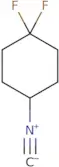
Formule :C12H11NO3Degré de pureté :Min. 95%Masse moléculaire :217.22 g/mol1,1-Difluoro-4-isocyanocyclohexane
CAS :Versatile small molecule scaffold
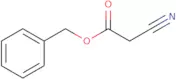
Formule :C7H9NF2Degré de pureté :Min. 95%Masse moléculaire :145.14 g/molBenzyl 2-cyanoacetate
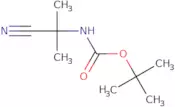
CAS :Benzyl 2-cyanoacetate is an aliphatic hydrocarbon that has been used in the synthesis of various quinoline derivatives. It can be prepared by the reaction of malonic acid with hydrochloric acid, followed by borohydride reduction and the addition of active methylene. Benzyl 2-cyanoacetate is also a precursor to a number of other compounds, including β-amino acids, which are used as pharmaceutical preparations. The chloride ions in benzyl 2-cyanoacetate react with nitro groups to form chloroquinolines. This compound is also an efflux pump inhibitor that blocks bacterial cells from exporting antibiotic molecules out of the cell.Formule :C10H9NO2Degré de pureté :Min. 95%Masse moléculaire :175.19 g/moltert-Butyl N-(1-cyano-1-methylethyl)carbamate
CAS :Versatile small molecule scaffold
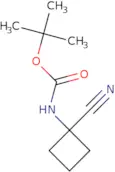
Formule :C9H16N2O2Degré de pureté :Min. 95%Masse moléculaire :184.24 g/moltert-Butyl N-(1-cyanocyclobutyl)carbamate
CAS :Versatile small molecule scaffold
Formule :C10H16N2O2Degré de pureté :Min. 95%Masse moléculaire :196.25 g/molRef: 3D-BAC92390
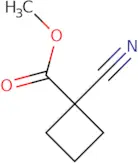
Produit arrêtéMethyl 1-cyanocyclobutanecarboxylate
CAS :Versatile small molecule scaffoldFormule :C7H9NO2Degré de pureté :Min. 95%Masse moléculaire :139.16 g/molRef: 3D-ICA92079
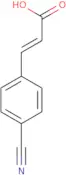
Produit arrêté2-Propenoic acid, 3-(4-cyanophenyl)-, (E)-
CAS :2-Propenoic acid, 3-(4-cyanophenyl)-, (E)- is a fatty acid that is used in the production of biodiesel. This reaction is catalyzed by an acid methyl ester, which can be either reactive or unreactive. The product of this reaction - fatty acid methyl esters - has significant activity as an anion and has a high boiling point. It also has the potential to be used as a fuel in the future.
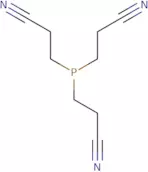
Formule :C10H7NO2Degré de pureté :Min. 95%Masse moléculaire :173.17 g/molTris(2-cyanoethyl)phosphine
CAS :Tris(2-cyanoethyl)phosphine (TCEP) is a metal carbonyl compound that has been used as a reagent in organic chemistry. TCEP is an amphoteric molecule that can react with both acids and bases, and is stable in the pH range of 5 to 9. It has been shown to have anti-inflammatory properties by inhibiting neutrophil migration. TCEP also has biological properties, such as its ability to inhibit the growth of Cryptococcus neoformans. TCEP binds to the mitochondrial membrane potential, which prevents proton leakage through the membrane and inhibits oxidative phosphorylation. TCEP binds strongly to minerals such as sodium salts, which can be used to isolate this molecule from reaction solutions. TCEP can be obtained by laser ablation or X-ray crystallography techniques.Formule :C9H12N3PDegré de pureté :Min. 95 Area-%Masse moléculaire :193.19 g/molRef: 3D-EAA02353
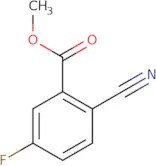
Produit arrêtéMethyl 2-cyano-5-fluorobenzoate
CAS :Versatile small molecule scaffold
Formule :C9H6FNO2Degré de pureté :Min. 95%Masse moléculaire :179.15 g/mol