Building Blocks
Sous-catégories appartenant à la catégorie "Building Blocks"
- Acides boroniques et dérivés de l'acide boronique(5.778 produits)
- Building Blocks Chiraux(1.243 produits)
- Building Blocks Hydrocarbonés(6.098 produits)
- Building Blocks organiques(61.036 produits)
205240 produits trouvés pour "Building Blocks"
2-Cyclopropylbenzaldehyde
CAS :Versatile small molecule scaffold
Formule :C10H10ODegré de pureté :Min. 95%Masse moléculaire :146.19 g/molRef: 3D-VAA03451
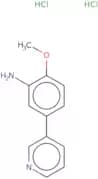
Produit arrêté2-Methoxy-5-(pyridin-3-yl)aniline dihydrochloride
CAS :Versatile small molecule scaffold
Formule :C12H14Cl2N2ODegré de pureté :Min. 95%Masse moléculaire :273.2 g/mol[3-(Oxan-4-yl)pyrrolidin-3-yl]methanol hydrochloride
CAS :Versatile small molecule scaffoldFormule :C10H20ClNO2Degré de pureté :Min. 95%Masse moléculaire :221.7 g/mol6-(2-Methylpropanoyl)-4H,7H-[1,2,4]triazolo[1,5-a]pyrimidin-7-one
CAS :Versatile small molecule scaffold
Formule :C9H10N4O2Degré de pureté :Min. 95%Masse moléculaire :206.2 g/mol[1-(Propan-2-yl)-1H-1,2,4-triazol-5-yl]methanamine
CAS :Versatile small molecule scaffoldFormule :C6H12N4Degré de pureté :Min. 95%Masse moléculaire :140.19 g/mol1-(Pyridin-3-yl)-1H-pyrazole-4-carboxylic acid hydrochloride
CAS :Versatile small molecule scaffold
Formule :C9H8ClN3O2Degré de pureté :Min. 95%Masse moléculaire :225.63 g/molRef: 3D-UFC04013
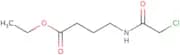
Produit arrêtéEthyl 4-(2-chloroacetamido)butanoate
CAS :Versatile small molecule scaffold
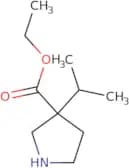
Formule :C8H14ClNO3Degré de pureté :Min. 95%Masse moléculaire :207.65 g/molEthyl 3-(propan-2-yl)pyrrolidine-3-carboxylate
CAS :Versatile small molecule scaffold
Formule :C10H19NO2Degré de pureté :Min. 95%Masse moléculaire :185.26 g/molMethyl 4-chloro-1-ethyl-1H-pyrazole-5-carboxylate
CAS :Versatile small molecule scaffold
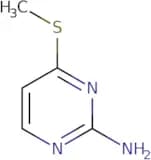
Formule :C7H9ClN2O2Degré de pureté :Min. 95%Masse moléculaire :188.61 g/mol4-(Methylsulfanyl)pyrimidin-2-amine
CAS :4-(Methylsulfanyl)pyrimidin-2-amine is a benzoyl derivative of pyrimidin-2-amine. It is a heterocyclic compound that can be synthesized from the reaction of cyanamide and benzoyl chloride. 4-(Methylsulfanyl)pyrimidin-2-amine is used as an intermediate in organic synthesis to produce other compounds.
Formule :C5H7N3SDegré de pureté :Min. 95%Masse moléculaire :141.2 g/molRef: 3D-BAA07354
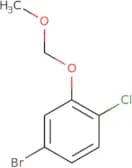
Produit arrêté4-Bromo-1-chloro-2-(methoxymethoxy)benzene
CAS :Versatile small molecule scaffoldFormule :C8H8BrClO2Degré de pureté :Min. 95%Masse moléculaire :251.5 g/molRef: 3D-SJC15193
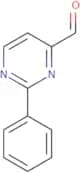
Produit arrêté2-Phenylpyrimidine-4-carbaldehyde
CAS :Versatile small molecule scaffold
Formule :C11H8N2ODegré de pureté :Min. 95%Masse moléculaire :184.19 g/mol3-Bromo-5-chloro-1H-pyrrolo[2,3-b]pyridine
CAS :Versatile small molecule scaffoldFormule :C7H4BrClN2Degré de pureté :Min. 95%Masse moléculaire :231.48 g/molRef: 3D-RJB54609
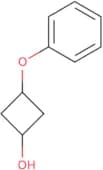
Produit arrêté(1R,3R)-3-Phenoxycyclobutan-1-ol
CAS :Versatile small molecule scaffold
Formule :C10H12O2Degré de pureté :Min. 95%Masse moléculaire :164.2 g/molRef: 3D-FDD47380
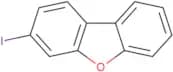
Produit arrêté3-Iododibenzofuran
CAS :3-Iododibenzofuran is a fluorescent compound that has been used as a probe for the study of neutral endopeptidase activity. The compound is characterized by a high degree of thermal stability and an inhibitory potency at pH 7.0 that is approximately 3 orders of magnitude greater than that of the active site inhibitor, anthracene. 3-Iododibenzofuran can be synthesized using chemoenzymatic methods, with efficiencies and profiles that are similar to those obtained in the conventional method. This probe can also be used to investigate the functional role of proteins in living cells or tissues.
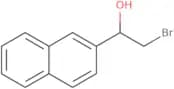
3-Iodobenzofuran has been shown to have pressor effects in rats and can cause tetrazole (a type of explosive) to detonate when heated, which makes it unsuitable for use in devices such as explosives or pyrotechnics.Formule :C12H7IODegré de pureté :Min. 95%Masse moléculaire :294.09 g/mol2-Bromo-1-(naphthalen-2-yl)ethan-1-ol
CAS :Versatile small molecule scaffold
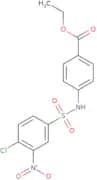
Formule :C12H11BrODegré de pureté :Min. 95%Masse moléculaire :251.12 g/molEthyl 4-(4-chloro-3-nitrobenzenesulfonamido)benzoate
CAS :Versatile small molecule scaffoldFormule :C15H13ClN2O6SDegré de pureté :Min. 95%Masse moléculaire :384.8 g/mol3-(3-Fluorophenoxymethyl)-5H,6H,7H,8H,9H-[1,2,4]triazolo[4,3-a]azepine
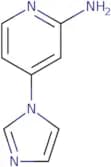
CAS :Versatile small molecule scaffoldFormule :C14H16FN3ODegré de pureté :Min. 95%Masse moléculaire :261.29 g/mol4-(1H-Imidazol-1-yl)pyridin-2-amine
CAS :Versatile small molecule scaffold
Formule :C8H8N4Degré de pureté :Min. 95%Masse moléculaire :160.18 g/molRef: 3D-PCC35538
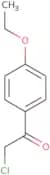
Produit arrêté2-Chloro-1-(4-ethoxyphenyl)ethan-1-one
CAS :2-Chloro-1-(4-ethoxyphenyl)ethan-1-one is a hydrocarbon radical that is used as a vitamin and in the synthesis of other molecules. This molecule has a covalent bond between the two chlorine atoms and one carbon atom. The hydrocarbon radical is also present in many hydrocarbons.
Formule :C10H11ClO2Degré de pureté :Min. 95%Masse moléculaire :198.64 g/molRef: 3D-PCA95382
Produit arrêtéEthyl 2-(3-nitrophenyl)acetate
CAS :Ethyl 2-(3-nitrophenyl)acetate is an organic compound. It is a chloride channel blocker that has been shown to inhibit the activity of multidrug-resistant proteins (e.g., p-glycoprotein and multidrug resistance protein). The uptake of this drug in cells is limited by its low oral bioavailability and its interaction with aluminium ions. This drug interacts with multidrug-resistance proteins, which are involved in the transport of drugs or toxins out of the cell, by competing for binding sites. Ethyl 2-(3-nitrophenyl)acetate inhibits the catalytic activity of these proteins, leading to a regression in multidrug resistance. It can also inhibit the activity of isoxazoles and alcohols.br>br>/p>
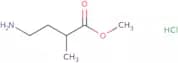
Formule :C10H11NO4Degré de pureté :Min. 95%Masse moléculaire :209.2 g/molMethyl 4-amino-2-methylbutanoate hydrochloride
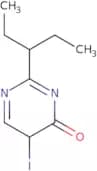
CAS :Versatile small molecule scaffoldFormule :C6H14ClNO2Degré de pureté :Min. 95%Masse moléculaire :167.63 g/mol5-Iodo-2-(pentan-3-yl)-3,4-dihydropyrimidin-4-one
CAS :Versatile small molecule scaffold
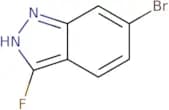
Formule :C9H13IN2ODegré de pureté :Min. 95%Masse moléculaire :292.12 g/mol6-Bromo-3-fluoro-1H-indazole
CAS :Versatile small molecule scaffold
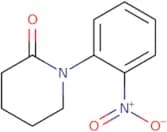
Formule :C7H4BrFN2Degré de pureté :Min. 95%Masse moléculaire :215.02 g/mol2-Piperidinone, 1-(2-nitrophenyl)-
CAS :Versatile small molecule scaffold
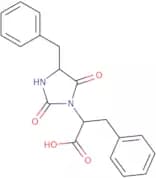
Formule :C11H12N2O3Degré de pureté :Min. 95%Masse moléculaire :220.22 g/mol2-(4-Benzyl-2,5-dioxoimidazolidin-1-yl)-3-phenylpropanoic acid
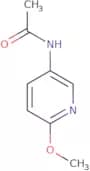
CAS :Versatile small molecule scaffoldFormule :C19H18N2O4Degré de pureté :Min. 95%Masse moléculaire :338.4 g/molN-(6-Methoxypyridin-3-yl)acetamide
CAS :Versatile small molecule scaffold
Formule :C8H10N2O2Degré de pureté :Min. 95%Masse moléculaire :166.18 g/molRef: 3D-NAA57540
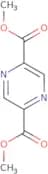
Produit arrêtéDimethyl Pyrazine-2,5-dicarboxylate
CAS :Versatile small molecule scaffold
Formule :C8H8N2O4Degré de pureté :Min. 95%Masse moléculaire :196.16 g/mol3-[(3-Methoxypropyl)carbamoyl]propanoic acid
CAS :Versatile small molecule scaffold
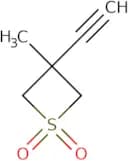
Formule :C8H15NO4Degré de pureté :Min. 95%Masse moléculaire :189.21 g/mol3-Ethynyl-3-methylthietane 1,1-dioxide
CAS :Versatile small molecule scaffold
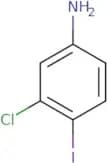
Formule :C6H8O2SDegré de pureté :Min. 95%Masse moléculaire :144.2 g/mol3-Chloro-4-iodoaniline
CAS :3-Chloro-4-iodoaniline is an activated, synthetic chemical that is used in the preparation of a variety of chemicals. 3-Chloro-4-iodoaniline can be prepared by the reaction of chloroacetic acid with nitrobenzene and hydrochloric acid. The compound may be purified by vacuum filtration and recrystallization from water. It is also a precursor to other chemicals that are used in the production of polyhalogenated aromatic compounds. 3-Chloro-4-iodoaniline has been found to react with amines and form the corresponding amides, which may be useful for chemical synthesis.
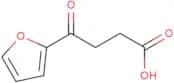
Formule :C6H5ClINDegré de pureté :Min. 95%Masse moléculaire :253.47 g/mol4-(Furan-2-yl)-4-oxobutanoic acid
CAS :Versatile small molecule scaffold
Formule :C8H8O4Degré de pureté :Min. 95%Masse moléculaire :168.15 g/mol(4-Chlorophenyl)({8-methyl-8-azabicyclo[3.2.1]octan-3-yl})methanamine
CAS :Versatile small molecule scaffold
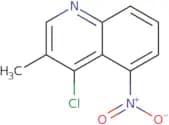
Formule :C15H21ClN2Degré de pureté :Min. 95%Masse moléculaire :264.79 g/mol4-Chloro-3-methyl-5-nitroquinoline
CAS :Versatile small molecule scaffold
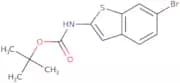
Formule :C10H7ClN2O2Degré de pureté :Min. 95%Masse moléculaire :222.63 g/moltert-Butyl N-(6-bromo-1-benzothiophen-2-yl)carbamate
CAS :Versatile small molecule scaffold
Formule :C13H14BrNO2SDegré de pureté :Min. 95%Masse moléculaire :328.23 g/mol4-Chloro-2-hydroxy-6-methylphenylboronic acid
CAS :Versatile small molecule scaffoldFormule :C7H8BClO3Degré de pureté :Min. 95%Masse moléculaire :186.4 g/molRef: 3D-HYB96150
Produit arrêté3-Hydroxy-5-methylpyridine
CAS :3-Hydroxy-5-methylpyridine (3HMP) is a chemical substance that has been classified as an amine. It is a product of the metabolism of purines, which are nitrogenous bases found in DNA and RNA. 3HMP is produced by aerogenic bacteria (such as Enterobacter), and can be used to estimate the number of these bacteria present in water samples. 3HMP has been shown to have antiviral properties against influenza virus, and can be used as a biomarker for the presence of other viruses in animals. 3HMP also has mineralization properties, which have been studied extensively, particularly with regards to pancreatic disease.
Formule :C6H7NODegré de pureté :Min. 95%Couleur et forme :PowderMasse moléculaire :109.13 g/mol2-Bromo-3,3,3-trifluoro-1-propene
CAS :Produit contrôlé2-Bromo-3,3,3-trifluoro-1-propene is a chemical compound that has been synthesized in an asymmetric reaction. The reactant is bromopropane and the product is 2,2,2-trifluoropropene. The methylene group on the propene molecule is activated by the nucleophilic attack of a fluoride ion from hydrogen fluoride to form a cavity with a highly strained bond. The kinetic study of this reaction revealed that the activation energy for the reaction is 42 kJ/mol. Palladium-catalyzed coupling reactions are catalyzed by palladium and require nonpolar solvents such as toluene or dichloromethane. This type of reaction has been shown to be exothermic with an isolated yield of 1%.
Formule :C3H2BrF3Degré de pureté :Min. 95%Couleur et forme :Colorless PowderMasse moléculaire :174.95 g/molRef: 3D-FB11073
Produit arrêté4,5-Dihydroxy-2,3-Pentanedione
CAS :4,5-Dihydroxy-2,3-pentanedione is a carbonyl compound that is the product of the oxidation of ascorbic acid. It is used in wastewater treatment and has antimicrobial properties against infectious diseases. This compound has been shown to inhibit protein synthesis by binding to the ribosome and preventing the formation of peptide bonds between amino acids. 4,5-Dihydroxy-2,3-pentanedione has also been shown to bind to plasma proteins, which may be due to its acyl chain structure. 4,5-Dihydroxy-2,3-pentanedione can be synthesized in a catalytic mechanism that involves dehydroascorbic acid and molecular oxygen.
Formule :C5H8O4Degré de pureté :Min. 95%Couleur et forme :PowderMasse moléculaire :132.11 g/molPiperyline
CAS :Piperyline is an alkanoic acid that has shown to be effective against skin cancer. It also has antimicrobial properties, which may be due to its ability to bind metal ions and form polymeric compounds. Piperyline inhibits microbial growth by inhibiting the synthesis of proteins and nucleic acids. The antimicrobial activity is related to its cationic polymerization with hydroxyl groups, which forms a structure that can inhibit microbial enzymes and disrupt microbial cell membranes. This compound also interacts with the skin's natural lipids, making it difficult for microorganisms to attach and grow on the skin. Piperyline is synthesized in organic chemistry laboratories as an amide precursor of other pharmaceuticals such as penicillin.
Formule :C16H17NO3Degré de pureté :Min. 95%Masse moléculaire :271.31 g/mol


![[3-(Oxan-4-yl)pyrrolidin-3-yl]methanol hydrochloride](/_next/image/?url=https%3A%2Fstatic.cymitquimica.com%2Fproducts%2F3D%2Fthumb-webp%2FUND37404.webp&w=3840&q=75)
![6-(2-Methylpropanoyl)-4H,7H-[1,2,4]triazolo[1,5-a]pyrimidin-7-one](/_next/image/?url=https%3A%2Fstatic.cymitquimica.com%2Fproducts%2F3D%2Fthumb-webp%2FUND37382.webp&w=3840&q=75)
![[1-(Propan-2-yl)-1H-1,2,4-triazol-5-yl]methanamine](/_next/image/?url=https%3A%2Fstatic.cymitquimica.com%2Fproducts%2F3D%2Fthumb-webp%2FUIC24186.webp&w=3840&q=75)


![3-Bromo-5-chloro-1H-pyrrolo[2,3-b]pyridine](/_next/image/?url=https%3A%2Fstatic.cymitquimica.com%2Fproducts%2F3D%2Fthumb-webp%2FRJB54609.webp&w=3840&q=75)
![3-(3-Fluorophenoxymethyl)-5H,6H,7H,8H,9H-[1,2,4]triazolo[4,3-a]azepine](/_next/image/?url=https%3A%2Fstatic.cymitquimica.com%2Fproducts%2F3D%2Fthumb-webp%2FQGB27246.webp&w=3840&q=75)

![3-[(3-Methoxypropyl)carbamoyl]propanoic acid](/_next/image/?url=https%3A%2Fstatic.cymitquimica.com%2Fproducts%2F3D%2Fthumb-webp%2FLGA78591.webp&w=3840&q=75)
![(4-Chlorophenyl)({8-methyl-8-azabicyclo[3.2.1]octan-3-yl})methanamine](/_next/image/?url=https%3A%2Fstatic.cymitquimica.com%2Fproducts%2F3D%2Fthumb-webp%2FITC29319.webp&w=3840&q=75)