


Building Blocks
Sous-catégories appartenant à la catégorie "Building Blocks"
- Acides boroniques et dérivés de l'acide boronique(5.778 produits)
- Building Blocks Chiraux(1.243 produits)
- Building Blocks Hydrocarbonés(6.099 produits)
- Building Blocks organiques(61.038 produits)
205376 produits trouvés pour "Building Blocks"
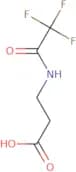
3-(Trifluoroacetamido)propanoic acid
CAS :Versatile small molecule scaffold
Formule :C5H6F3NO3Degré de pureté :Min. 95%Masse moléculaire :185.1 g/molRef: 3D-ACA63282
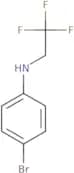
Produit arrêté4-bromo-N-(2,2,2-trifluoroethyl)aniline
CAS :Versatile small molecule scaffold
Formule :C8H7BrF3NDegré de pureté :Min. 95%Masse moléculaire :254 g/molRef: 3D-ACA88529
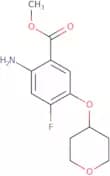
Produit arrêtéMethyl 2-amino-4-fluoro-5-(oxan-4-yloxy)benzoate
CAS :Versatile small molecule scaffold
Formule :C13H16FNO4Degré de pureté :Min. 95%Masse moléculaire :269.27 g/mol4-(4-Aminophenyl)-1-methyl-1H-pyrazolo[3,4-b]pyridine-3-carboxylic acid
CAS :Versatile small molecule scaffoldFormule :C14H12N4O2Degré de pureté :Min. 95%Masse moléculaire :268.27 g/mol4-Acetyl-5-methyl-3-(propan-2-yl)-1H-pyrrole-2-carboxylic acid
CAS :Versatile small molecule scaffold
Formule :C11H15NO3Degré de pureté :Min. 95%Masse moléculaire :209.24 g/mol4-Methyl-2-[(piperidin-4-yl)methyl]-1,3-thiazole-5-carboxylic acid dihydrochloride
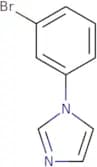
CAS :Versatile small molecule scaffoldFormule :C11H18Cl2N2O2SDegré de pureté :Min. 95%Masse moléculaire :313.2 g/mol1-(3-Bromophenyl)-1H-imidazole
CAS :Versatile small molecule scaffold
Formule :C9H7BrN2Degré de pureté :Min. 95%Masse moléculaire :223.07 g/molRef: 3D-ABA37202
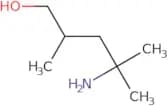
Produit arrêté4-Amino-2,4-dimethylpentan-1-ol
CAS :Versatile small molecule scaffold
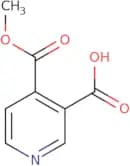
Formule :C7H17NODegré de pureté :Min. 95%Masse moléculaire :131.22 g/mol4-(Methoxycarbonyl)nicotinic acid
CAS :Versatile small molecule scaffold
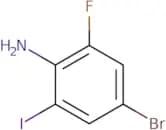
Formule :C8H7NO4Degré de pureté :Min. 95%Masse moléculaire :181.15 g/mol4-Bromo-2-fluoro-6-iodoaniline
CAS :Versatile small molecule scaffold
Formule :C6H4BrFINDegré de pureté :Min. 95%Masse moléculaire :315.91 g/molRef: 3D-BYB14919
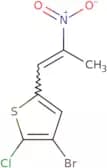
Produit arrêté3-Bromo-2-chloro-5-(2-nitroprop-1-en-1-yl)thiophene
CAS :Versatile small molecule scaffoldFormule :C7H5BrClNO2SDegré de pureté :Min. 95%Masse moléculaire :282.54 g/mol[2-(2-Ethoxyethoxy)ethyl](methyl)amine
CAS :Versatile small molecule scaffold
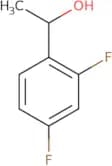
Formule :C7H17NO2Degré de pureté :Min. 95%Masse moléculaire :147.22 g/mol(1R)-1-(2,4-Difluorophenyl)ethan-1-ol
CAS :Versatile small molecule scaffold
Formule :C8H8F2ODegré de pureté :Min. 95%Masse moléculaire :158.14 g/molRef: 3D-BFA53435
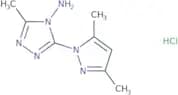
Produit arrêté3-(3,5-Dimethyl-1H-pyrazol-1-yl)-5-methyl-4H-1,2,4-triazol-4-amine hydrochloride
CAS :Versatile small molecule scaffold
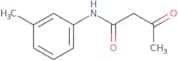
Formule :C8H13ClN6Degré de pureté :Min. 95%Masse moléculaire :228.68 g/molN-(3-Methylphenyl)-3-oxobutanamide
CAS :Versatile small molecule scaffold
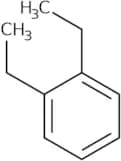
Formule :C11H13NO2Degré de pureté :Min. 95%Masse moléculaire :191.23 g/mol1,2-Diethylbenzene
CAS :1,2-Diethylbenzene is a trifluoroacetic acid derivative that is used as an acylation agent and a solid catalyst. 1,2-Diethylbenzene has been shown to increase the energy metabolism in cultured human cells. It also influences fatty acid synthesis and nmr spectra of plant families. 1,2-Diethylbenzene was found to be safe for use in sciatic nerve regeneration in Sprague-Dawley rats with axonopathy. This chemical can also be used as an analytical reagent for the separation of urine samples by liquid chromatography methods.
Formule :C10H14Degré de pureté :Min. 95%Masse moléculaire :134.22 g/molRef: 3D-AAA13501
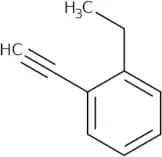
Produit arrêté1-Ethyl-2-ethynylbenzene
CAS :1-Ethyl-2-ethynylbenzene is an indene that can be synthesized by the reaction of 1-ethylbenzene with ethynylmagnesium bromide and trifluoroacetyl chloride. 1-Ethyl-2-ethynylbenzene reacts as a nucleophile with electrophiles, such as phenylsulfonyl and acetylene compounds, to form sulfones and acetylenes. It can also react with tetrafluoroborates to form indenes.
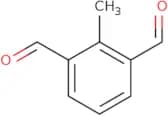
Formule :C10H10Degré de pureté :Min. 95%Masse moléculaire :130.19 g/mol2-Methylbenzene-1,3-dicarbaldehyde
CAS :2-Methylbenzene-1,3-dicarbaldehyde is a divalent hydrocarbon that has an oxidation catalyst. This compound is used as an intermediate in the production of drugs and pharmaceuticals. It has been shown to have cardiovascular disorders, such as vasodilatation and hypotension. The mechanism of action is not fully understood but may be related to its ability to act as a nitrovasodilator by increasing nitric oxide (NO) release. 2-Methylbenzene-1,3-dicarbaldehyde also produces psychotic disorders when long term exposure occurs. This compound has been shown to have neurotoxic effects in animal models with long term exposure.
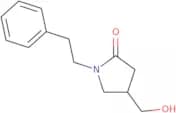
Formule :C9H8O2Degré de pureté :Min. 95%Masse moléculaire :148.16 g/mol4-(Hydroxymethyl)-1-(2-phenylethyl)pyrrolidin-2-one
CAS :Versatile small molecule scaffold
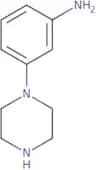
Formule :C13H17NO2Degré de pureté :Min. 95%Masse moléculaire :219.28 g/mol3-(Piperazin-1-yl)aniline
CAS :Versatile small molecule scaffold
Formule :C10H15N3Degré de pureté :Min. 95%Masse moléculaire :177.25 g/molRef: 3D-AFA42203
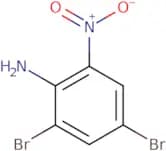
Produit arrêté2,4-Dibromo-6-nitroaniline
CAS :2,4-Dibromo-6-nitroaniline is a nitro compound that has been used in the production of dyes. It is also used as a component in the synthesis of other organic compounds. 2,4-Dibromo-6-nitroaniline can be produced by electrolysis of an acid solution containing radical cations and benzene. The radical cations are formed by proton transfer from the acid to the benzene, followed by electron transfer from benzene to the electrode. This process results in the formation of nitro groups on the benzene ring, which undergoes oxidation to form 2,4-dibromo-6-nitroaniline. The cyclic voltammetry shows that this process occurs via two pathways: one with a fast rate and one with a slow rate. The mechanism for this reaction is not yet known.
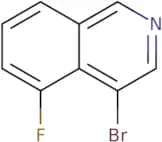
Formule :C6H4Br2N2O2Degré de pureté :Min. 95%Masse moléculaire :295.92 g/mol4-Bromo-5-fluoro-isoquinoline
CAS :Versatile small molecule scaffold
Formule :C9H5BrFNDegré de pureté :Min. 95%Masse moléculaire :226.04 g/mol4-({3-Oxo-2-azatricyclo[6.3.1.0,4,12]dodeca-1(11),4(12),5,7,9-pentaen-2-yl}methyl)benzohydrazide
CAS :Versatile small molecule scaffoldFormule :C19H15N3O2Degré de pureté :Min. 95%Masse moléculaire :317.3 g/molRef: 3D-EQA25451
Produit arrêté(1S)-1-(Oxan-4-yl)ethan-1-ol
CAS :Versatile small molecule scaffold
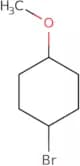
Formule :C7H14O2Degré de pureté :Min. 95%Masse moléculaire :130.18 g/mol1-Bromo-4-methoxycyclohexane
CAS :Versatile small molecule scaffold
Formule :C7H13BrODegré de pureté :Min. 95%Masse moléculaire :193.08 g/molMethyl[(3-propyl-1,2-oxazol-5-yl)methyl]amine
CAS :Versatile small molecule scaffold
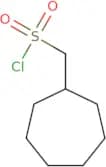
Formule :C8H14N2ODegré de pureté :Min. 95%Masse moléculaire :154.21 g/molCycloheptylmethanesulfonyl chloride
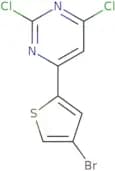
CAS :Cycloheptylmethanesulfonyl chloride is a heterocyclic compound that has been shown to cause neurotoxicity, or nerve damage. It inhibits the activity of two enzymes, acetylcholinesterase and butyrylcholinesterase, which are responsible for regulating the production of the neurotransmitter acetylcholine in the brain. Cycloheptylmethanesulfonyl chloride also inhibits other enzymes involved in the synthesis of proteins in neurons, leading to neuronal damage. Cycloheptylmethanesulfonyl chloride has been shown to be effective against neurological disorders such as neurodegenerative diseases and nerve damage.Formule :C8H15ClO2SDegré de pureté :Min. 95%Masse moléculaire :210.72 g/mol4-(4-Bromothiophen-2-yl)-2,6-dichloropyrimidine
CAS :Versatile small molecule scaffold
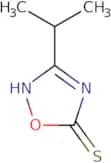
Formule :C8H3BrCl2N2SDegré de pureté :Min. 95%Masse moléculaire :310 g/mol3-(Propan-2-yl)-1,2,4-oxadiazole-5-thiol
CAS :Versatile small molecule scaffold
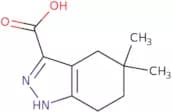
Formule :C5H8N2OSDegré de pureté :Min. 95%Masse moléculaire :144.2 g/mol5,5-Dimethyl-4,5,6,7-tetrahydro-1H-indazole-3-carboxylic acid
CAS :Versatile small molecule scaffoldFormule :C10H14N2O2Degré de pureté :Min. 95%Masse moléculaire :194.23 g/molrac-(2R,3S)-1-{[(9H-Fluoren-9-yl)methoxy]carbonyl}-3-phenylpyrrolidine-2-carboxylic acid
CAS :Rac-1-{[(9H-fluoren-9-yl)methoxy]carbonyl}-3-phenylpyrrolidine-2-carboxylic acid is a chiral, stereospecific, cyclic sulfate that is synthetized by the reaction of glycol with lactam. It has been found to be effective against various types of cancer cells. Rac-1-{[(9H-fluoren-9-yl)methoxy]carbonyl}-3-phenylpyrrolidine 2 carboxylic acid is an enantiopure compound that can be used as an intermediate in the synthesis of antiinflammatory drugs such as kainic acid.
Formule :C26H23NO4Degré de pureté :Min. 95%Masse moléculaire :413.5 g/molRef: 3D-ENC98387
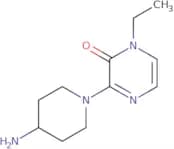
Produit arrêté3-(4-Aminopiperidin-1-yl)-1-ethyl-1,2-dihydropyrazin-2-one
CAS :Versatile small molecule scaffold
Formule :C11H18N4ODegré de pureté :Min. 95%Masse moléculaire :222.29 g/mol6-Chloro-3-methyl-[1,2,4]triazolo[3,4-a]-phthalazine
CAS :Versatile small molecule scaffold
Formule :C10H7ClN4Degré de pureté :Min. 95%Masse moléculaire :218.65 g/molRef: 3D-SCA45838
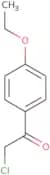
Produit arrêté2-Chloro-1-(4-ethoxyphenyl)ethan-1-one
CAS :2-Chloro-1-(4-ethoxyphenyl)ethan-1-one is a hydrocarbon radical that is used as a vitamin and in the synthesis of other molecules. This molecule has a covalent bond between the two chlorine atoms and one carbon atom. The hydrocarbon radical is also present in many hydrocarbons.
Formule :C10H11ClO2Degré de pureté :Min. 95%Masse moléculaire :198.64 g/molRef: 3D-PCA95382
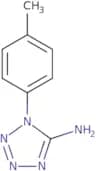
Produit arrêté1-(4-Methylphenyl)-1H-1,2,3,4-tetrazol-5-amine
CAS :Versatile small molecule scaffold
Formule :C8H9N5Degré de pureté :Min. 95%Masse moléculaire :175.19 g/mol1,3-Diazaspiro[4.4]nonane-2,4-dione
CAS :1,3-Diazaspiro[4.4]nonane-2,4-dione (1) is a new fungicide that was shown to have fungicidal activity in vitro against the grapevine pathogens Plasmopara viticola and Plasmopara obducens. This compound has been isolated from the plant Express erythroxylum coca (Erythroxylum coca). The compound belongs to the class of diaza spiro compounds and is a member of a family of diaza spiro compounds with antifungal activity. One possible mode of action for 1 is that it inhibits the synthesis of DNA by binding to bacterial DNA gyrase.
Formule :C7H10N2O2Degré de pureté :Min. 95%Masse moléculaire :154.17 g/molRef: 3D-AAA69951
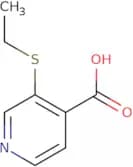
Produit arrêté3-(Ethylsulfanyl)pyridine-4-carboxylic acid
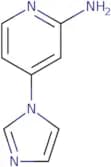
CAS :Versatile small molecule scaffoldFormule :C8H9NO2SDegré de pureté :Min. 95%Masse moléculaire :183.23 g/mol4-(1H-Imidazol-1-yl)pyridin-2-amine
CAS :Versatile small molecule scaffold
Formule :C8H8N4Degré de pureté :Min. 95%Masse moléculaire :160.18 g/molRef: 3D-PCC35538
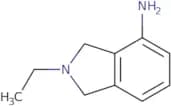
Produit arrêté2-Ethyl-2,3-dihydro-1H-isoindol-4-amine
CAS :Versatile small molecule scaffoldFormule :C10H14N2Degré de pureté :Min. 95%Masse moléculaire :162.23 g/mol5,6,7,8-Tetrahydroindolizine-1-carbonitrile
CAS :Versatile small molecule scaffold
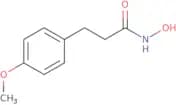
Formule :C9H10N2Degré de pureté :Min. 95%Masse moléculaire :146.19 g/molN-Hydroxy-3-(4-methoxyphenyl)propanamide
CAS :Versatile small molecule scaffold
Formule :C10H13NO3Degré de pureté :Min. 95%Masse moléculaire :195.21 g/molRef: 3D-SCA36326
Produit arrêté2-Amino-4-chloro-3-methoxybenzoic acid
CAS :Versatile small molecule scaffold
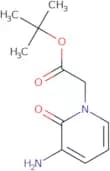
Formule :C8H8ClNO3Degré de pureté :Min. 95%Masse moléculaire :201.61 g/moltert-Butyl 2-(3-amino-2-oxo-1,2-dihydropyridin-1-yl)acetate
CAS :Versatile small molecule scaffold
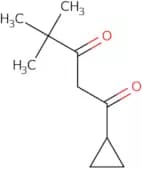
Formule :C11H16N2O3Degré de pureté :Min. 95%Masse moléculaire :224.26 g/mol1-Cyclopropyl-4,4-dimethylpentane-1,3-dione
CAS :Versatile small molecule scaffold
Formule :C10H16O2Degré de pureté :Min. 95%Masse moléculaire :168.23 g/mol4-[(Methylsulfanyl)methyl]benzoic acid
CAS :4-[(Methylsulfanyl)methyl]benzoic acid is a chiral compound with a sulfur atom. It can be prepared by the reaction between methylsulfonyl chloride and benzoyl chloride in chloroform or by the reaction of methoxysulfur trifluoride with benzoic acid. 4-[(Methylsulfanyl)methyl]benzoic acid can also be synthesized by the reaction of sulfone and carboxylic acid derivatives, such as benzyl or cyano. 4-[(Methylsulfanyl)methyl]benzoic acid is used as a fungicide, insecticide, and herbicide. The substituents on this molecule are able to form bonds with other molecules to create an array of different structures. The most common substitution is for methoxy, which has a hydroxy group attached to it. This substitution is found in many different types of molecules including some drugs, hormones, vitamins,
Formule :C9H10O2SDegré de pureté :Min. 95%Masse moléculaire :182.24 g/molRef: 3D-SCA00348
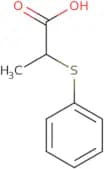
Produit arrêté2-(Phenylsulfanyl)propanoic acid
CAS :Versatile small molecule scaffold
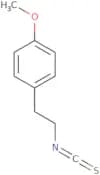
Formule :C9H10O2SDegré de pureté :Min. 95%Masse moléculaire :182.24 g/mol1-(2-Isothiocyanatoethyl)-4-methoxybenzene
CAS :Versatile small molecule scaffold
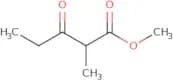
Formule :C10H11NOSDegré de pureté :Min. 95%Masse moléculaire :193.27 g/mol2-Methyl-3-oxo-pentanoicacid methyl ester
CAS :The synthesis of 2-methyl-3-oxo-pentanoic acid methyl ester is accomplished by a three step process. The first step is the intramolecular condensation of 2,2-dimethylpropionic acid with acetone to form a 1:1 mixture of 3,4-dihydroxybutyl and 4,4-dihydroxybutyl esters. The second step is the selective transesterification of the 3,4-dihydroxybutyl ester with benzaldehyde. This reaction provides an optically pure 2-methyl-3-oxo-pentanoic acid methyl ester as the major product. The third step is an aldol condensation between the ketone from the second step and acetone to produce another optically pure 2,2 dimethylpropionic acid methyl ester.Formule :C7H12O3Degré de pureté :Min. 95%Masse moléculaire :144.17 g/molRef: 3D-SAA42212
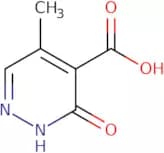
Produit arrêté2,3-Dihydro-5-methyl-3-oxopyridazine-4-carboxylic acid
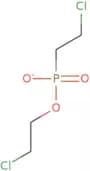
CAS :Versatile small molecule scaffoldFormule :C6H6N2O3Degré de pureté :Min. 95%Masse moléculaire :154.12 g/mol(2-Chloroethoxy)(2-chloroethyl)phosphinic acid
CAS :Versatile small molecule scaffold
Formule :C4H8Cl2O3PDegré de pureté :Min. 95%Masse moléculaire :205.98 g/molRef: 3D-SAA37830
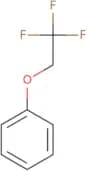
Produit arrêté2,2,2-Trifluoroethoxybenzene
CAS :2,2,2-Trifluoroethoxybenzene is an acid catalyst that is used in the production of chlorobenzene. This organic compound has been shown to produce a number of products when heated with dihydroxybenzene. These products include acid chlorides and benzoyl chloride that can be used as intermediates in other chemical reactions. 2,2,2-Trifluoroethoxybenzene has also been shown to react with alkali metals to produce inorganic acids. In addition to acting as an acid catalyst, this compound may be used in the synthesis of flecainide, which is an antiarrhythmic drug. This product also reacts with carbonyl groups and acidic molecules such as halogens to form alkali metal carboxylates and alkanes.
Formule :C8H7F3ODegré de pureté :Min. 95%Masse moléculaire :176.14 g/mol4-(chloromethyl)-1-methyl-1H-imidazole hydrochloride
CAS :Produit contrôléVersatile small molecule scaffold
Formule :C5H8Cl2N2Degré de pureté :Min. 95%Masse moléculaire :167.03 g/molRef: 3D-SAA28930
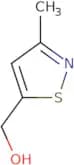
Produit arrêté(3-Methyl-1,2-thiazol-5-yl)methanol
CAS :Versatile small molecule scaffold
Formule :C5H7NOSDegré de pureté :Min. 95%Masse moléculaire :129.18 g/mol2-Chloro-3,4-dihydronaphthalen-1(2H)-one
CAS :2-Chloro-3,4-dihydronaphthalen-1(2H)-one is a sulfoxide with significant antifungal activity. It has been shown to be effective against Candida albicans and other fungi, including Aspergillus niger and Mucor racemosus. It is commonly used as an electrolyte in electroluminescent devices, such as light emitting diodes (LEDs). The reaction time for the formation of 2-chloro-3,4-dihydronaphthalen-1(2H)-one from potassium sulfate is dependent on the acid catalyst used. Organic chemists have shown that the use of 2-chloro-3,4-dihydronaphthalen-1(2H)-one can inhibit leukotriene synthesis.
Formule :C10H9OClDegré de pureté :Min. 95%Masse moléculaire :180.63 g/molN-(3-Methoxyphenyl)prop-2-enamide
CAS :Versatile small molecule scaffold
Formule :C10H11NO2Degré de pureté :Min. 95%Masse moléculaire :177.2 g/molEthyl spiro[2.3]hexane-1-carboxylate
CAS :Versatile small molecule scaffold
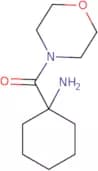
Formule :C9H14O2Degré de pureté :Min. 95%Masse moléculaire :154.21 g/mol1-(Morpholine-4-carbonyl)cyclohexan-1-amine
CAS :Versatile small molecule scaffold
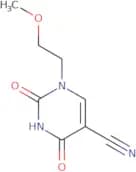
Formule :C11H20N2O2Degré de pureté :Min. 95%Masse moléculaire :212.29 g/mol1-(2-Methoxyethyl)-2,4-dioxo-1,2,3,4-tetrahydropyrimidine-5-carbonitrile
CAS :Versatile small molecule scaffoldFormule :C8H9N3O3Degré de pureté :Min. 95%Masse moléculaire :195.18 g/mol3-Bromo-5-chloro-1H-pyrrolo[2,3-b]pyridine
CAS :Versatile small molecule scaffoldFormule :C7H4BrClN2Degré de pureté :Min. 95%Masse moléculaire :231.48 g/molRef: 3D-RJB54609
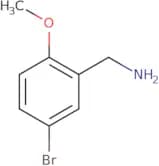
Produit arrêté(5-bromo-2-methoxyphenyl)methanamine
CAS :Versatile small molecule scaffold
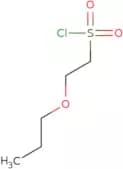
Formule :C8H10BrNODegré de pureté :Min. 95%Masse moléculaire :216.1 g/mol2-Propoxyethane-1-sulfonyl chloride
CAS :Versatile small molecule scaffoldFormule :C5H11ClO3SDegré de pureté :Min. 95%Masse moléculaire :186.66 g/mol5-{[(9H-Fluoren-9-ylmethoxy)carbonyl]amino}-2-fluorobenzoic acid
CAS :Versatile small molecule scaffold
Formule :C22H16FNO4Degré de pureté :Min. 95%Masse moléculaire :377.4 g/mol3-[(Trimethylsilyl)oxy]oxane-3-carbonitrile
CAS :Versatile small molecule scaffold
Formule :C9H17NO2SiDegré de pureté :Min. 95%Masse moléculaire :199.32 g/mol9-Oxo-6,7,8,9-tetrahydro-5H-benzo[7]annulene-2-carboxylic acid
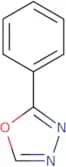
CAS :Versatile small molecule scaffoldFormule :C12H12O3Degré de pureté :Min. 95%Masse moléculaire :204.22 g/mol2-Phenyl-1,3,4-oxadiazole
CAS :2-Phenyl-1,3,4-oxadiazole is a 2-phenyloxazole with an oxygen atom at the 1 position. It is a white crystalline solid that is soluble in water and has antibacterial properties. This chemical can be used as a catalyst for the synthesis of organic compounds. 2-Phenyl-1,3,4-oxadiazole reacts with nitro groups to form oxime derivatives and has been shown to inhibit the growth of fungi such as Candida albicans and Aspergillus niger. 2-Phenyl-1,3,4-oxadiazole can also be used as an antifungal agent against Trichophyton rubrum.
2-Phenyl-1,3,4-oxadiazole may be synthesized by reacting phenol with acetone in the presence of nitric acid or sulfuric acid. The structural formula for this compound isFormule :C8H6N2ODegré de pureté :Min. 95%Masse moléculaire :146.15 g/molRef: 3D-AAA82556
Produit arrêtéN-{[2-(Trifluoromethyl)phenyl]methyl}oxetan-3-amine
CAS :Versatile small molecule scaffoldFormule :C11H12F3NODegré de pureté :Min. 95%Masse moléculaire :231.21 g/mol4-(Cyclohexyloxy)pyridin-2-amine
CAS :Versatile small molecule scaffold
Formule :C11H16N2ODegré de pureté :Min. 95%Masse moléculaire :192.3 g/moltert-Butyl (2,2-difluoro-3-hydroxypropyl)carbamate
CAS :Versatile small molecule scaffoldFormule :C10H13NO4Degré de pureté :Min. 95%Masse moléculaire :211.21 g/molRef: 3D-PCC39821
Produit arrêté2-Bromo-3,3,3-trifluoro-1-propene
CAS :Produit contrôlé2-Bromo-3,3,3-trifluoro-1-propene is a chemical compound that has been synthesized in an asymmetric reaction. The reactant is bromopropane and the product is 2,2,2-trifluoropropene. The methylene group on the propene molecule is activated by the nucleophilic attack of a fluoride ion from hydrogen fluoride to form a cavity with a highly strained bond. The kinetic study of this reaction revealed that the activation energy for the reaction is 42 kJ/mol. Palladium-catalyzed coupling reactions are catalyzed by palladium and require nonpolar solvents such as toluene or dichloromethane. This type of reaction has been shown to be exothermic with an isolated yield of 1%.
Formule :C3H2BrF3Degré de pureté :Min. 95%Couleur et forme :Colorless PowderMasse moléculaire :174.95 g/molRef: 3D-FB11073
Produit arrêté4-Chloro-2-hydroxy-6-methylphenylboronic acid
CAS :Versatile small molecule scaffoldFormule :C7H8BClO3Degré de pureté :Min. 95%Masse moléculaire :186.4 g/molRef: 3D-HYB96150
Produit arrêté4,5-Dihydro-1H-imidazol-2-amine hydrochloride
CAS :Please enquire for more information about 4,5-Dihydro-1H-imidazol-2-amine hydrochloride including the price, delivery time and more detailed product information at the technical inquiry form on this page
Formule :C3H7N3•HClDegré de pureté :Min. 95%Masse moléculaire :121.57 g/mol8-Bromo-2-methylimidazo[1,2-a]pyridine
CAS :Versatile small molecule scaffold
Formule :C8H7N2BrDegré de pureté :Min. 95%Masse moléculaire :211.05 g/mol1-Hydroxycyclopentane-1-carbonitrile
CAS :1-Hydroxycyclopentane-1-carbonitrile is a monomer that is hydrolyzed to form benzoin and cyanohydrins. It can be used in the production of scifinder as a monomer or dimerizer.
Formule :C6H9NODegré de pureté :Min. 95%Masse moléculaire :111.14 g/mol3-Hydroxy-5-methylpyridine
CAS :3-Hydroxy-5-methylpyridine (3HMP) is a chemical substance that has been classified as an amine. It is a product of the metabolism of purines, which are nitrogenous bases found in DNA and RNA. 3HMP is produced by aerogenic bacteria (such as Enterobacter), and can be used to estimate the number of these bacteria present in water samples. 3HMP has been shown to have antiviral properties against influenza virus, and can be used as a biomarker for the presence of other viruses in animals. 3HMP also has mineralization properties, which have been studied extensively, particularly with regards to pancreatic disease.
Formule :C6H7NODegré de pureté :Min. 95%Couleur et forme :PowderMasse moléculaire :109.13 g/mol4,5-Dihydroxy-2,3-Pentanedione
CAS :4,5-Dihydroxy-2,3-pentanedione is a carbonyl compound that is the product of the oxidation of ascorbic acid. It is used in wastewater treatment and has antimicrobial properties against infectious diseases. This compound has been shown to inhibit protein synthesis by binding to the ribosome and preventing the formation of peptide bonds between amino acids. 4,5-Dihydroxy-2,3-pentanedione has also been shown to bind to plasma proteins, which may be due to its acyl chain structure. 4,5-Dihydroxy-2,3-pentanedione can be synthesized in a catalytic mechanism that involves dehydroascorbic acid and molecular oxygen.
Formule :C5H8O4Degré de pureté :Min. 95%Couleur et forme :PowderMasse moléculaire :132.11 g/molPiperyline
CAS :Piperyline is an alkanoic acid that has shown to be effective against skin cancer. It also has antimicrobial properties, which may be due to its ability to bind metal ions and form polymeric compounds. Piperyline inhibits microbial growth by inhibiting the synthesis of proteins and nucleic acids. The antimicrobial activity is related to its cationic polymerization with hydroxyl groups, which forms a structure that can inhibit microbial enzymes and disrupt microbial cell membranes. This compound also interacts with the skin's natural lipids, making it difficult for microorganisms to attach and grow on the skin. Piperyline is synthesized in organic chemistry laboratories as an amide precursor of other pharmaceuticals such as penicillin.
Formule :C16H17NO3Degré de pureté :Min. 95%Masse moléculaire :271.31 g/mol

![4-(4-Aminophenyl)-1-methyl-1H-pyrazolo[3,4-b]pyridine-3-carboxylic acid](/_next/image/?url=https%3A%2Fstatic.cymitquimica.com%2Fproducts%2F3D%2Fthumb-webp%2FEEC70466.webp&w=3840&q=75)

![4-Methyl-2-[(piperidin-4-yl)methyl]-1,3-thiazole-5-carboxylic acid dihydrochloride](/_next/image/?url=https%3A%2Fstatic.cymitquimica.com%2Fproducts%2F3D%2Fthumb-webp%2FYPD34523.webp&w=3840&q=75)
amine](/_next/image/?url=https%3A%2Fstatic.cymitquimica.com%2Fproducts%2F3D%2Fthumb-webp%2FAAC06291.webp&w=3840&q=75)
![4-({3-Oxo-2-azatricyclo[6.3.1.0,4,12]dodeca-1(11),4(12),5,7,9-pentaen-2-yl}methyl)benzohydrazide](/_next/image/?url=https%3A%2Fstatic.cymitquimica.com%2Fproducts%2F3D%2Fthumb-webp%2FEQA25451.webp&w=3840&q=75)

![Methyl[(3-propyl-1,2-oxazol-5-yl)methyl]amine](/_next/image/?url=https%3A%2Fstatic.cymitquimica.com%2Fproducts%2F3D%2Fthumb-webp%2FSMB51964.webp&w=3840&q=75)
![rac-(2R,3S)-1-{[(9H-Fluoren-9-yl)methoxy]carbonyl}-3-phenylpyrrolidine-2-carboxylic acid](/_next/image/?url=https%3A%2Fstatic.cymitquimica.com%2Fproducts%2F3D%2Fthumb-webp%2FENC98387.webp&w=3840&q=75)
![6-Chloro-3-methyl-[1,2,4]triazolo[3,4-a]-phthalazine](/_next/image/?url=https%3A%2Fstatic.cymitquimica.com%2Fproducts%2F3D%2Fthumb-webp%2FSCA45838.webp&w=3840&q=75)
![1,3-Diazaspiro[4.4]nonane-2,4-dione](/_next/image/?url=https%3A%2Fstatic.cymitquimica.com%2Fproducts%2F3D%2Fthumb-webp%2FAAA69951.webp&w=3840&q=75)


![4-[(Methylsulfanyl)methyl]benzoic acid](/_next/image/?url=https%3A%2Fstatic.cymitquimica.com%2Fproducts%2F3D%2Fthumb-webp%2FSCA00348.webp&w=3840&q=75)



![Ethyl spiro[2.3]hexane-1-carboxylate](/_next/image/?url=https%3A%2Fstatic.cymitquimica.com%2Fproducts%2F3D%2Fthumb-webp%2FSAA20257.webp&w=3840&q=75)
![3-Bromo-5-chloro-1H-pyrrolo[2,3-b]pyridine](/_next/image/?url=https%3A%2Fstatic.cymitquimica.com%2Fproducts%2F3D%2Fthumb-webp%2FRJB54609.webp&w=3840&q=75)
![5-{[(9H-Fluoren-9-ylmethoxy)carbonyl]amino}-2-fluorobenzoic acid](/_next/image/?url=https%3A%2Fstatic.cymitquimica.com%2Fproducts%2F3D%2Fthumb-webp%2FRDC82236.webp&w=3840&q=75)
![3-[(Trimethylsilyl)oxy]oxane-3-carbonitrile](/_next/image/?url=https%3A%2Fstatic.cymitquimica.com%2Fproducts%2F3D%2Fthumb-webp%2FRDC77065.webp&w=3840&q=75)
![9-Oxo-6,7,8,9-tetrahydro-5H-benzo[7]annulene-2-carboxylic acid](/_next/image/?url=https%3A%2Fstatic.cymitquimica.com%2Fproducts%2F3D%2Fthumb-webp%2FPKB95830.webp&w=3840&q=75)
![N-{[2-(Trifluoromethyl)phenyl]methyl}oxetan-3-amine](/_next/image/?url=https%3A%2Fstatic.cymitquimica.com%2Fproducts%2F3D%2Fthumb-webp%2FPDC89412.webp&w=3840&q=75)




![8-Bromo-2-methylimidazo[1,2-a]pyridine](/_next/image/?url=https%3A%2Fstatic.cymitquimica.com%2Fproducts%2F3D%2Fthumb-webp%2FUXB37475.webp&w=3840&q=75)



