Building Blocks
Sous-catégories appartenant à la catégorie "Building Blocks"
- Acides boroniques et dérivés de l'acide boronique(5.778 produits)
- Building Blocks Chiraux(1.243 produits)
- Building Blocks Hydrocarbonés(6.099 produits)
- Building Blocks organiques(61.038 produits)
205376 produits trouvés pour "Building Blocks"
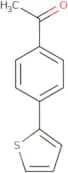
1-(4-Thiophen-2-yl-phenyl)-ethanone
CAS :Versatile small molecule scaffold
Formule :C12H10OSDegré de pureté :Min. 95%Masse moléculaire :202.27 g/molRef: 3D-KBA29437
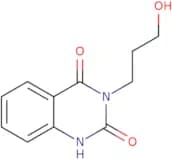
Produit arrêté3-(3-Hydroxypropyl)-1,2,3,4-tetrahydroquinazoline-2,4-dione
CAS :Versatile small molecule scaffoldFormule :C11H12N2O3Degré de pureté :Min. 95%Masse moléculaire :220.22 g/molRef: 3D-KBA25670
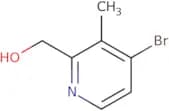
Produit arrêté(4-Bromo-3-methylpyridin-2-yl)methanol
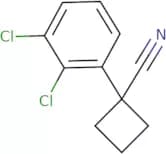
CAS :Versatile small molecule scaffoldFormule :C7H8BrNODegré de pureté :Min. 95%Masse moléculaire :202.05 g/mol1-(2,3-Dichlorophenyl)cyclobutanecarbonitrile
CAS :Versatile small molecule scaffold
Formule :C11H9Cl2NDegré de pureté :Min. 95%Masse moléculaire :226.1 g/molRef: 3D-KAC65334
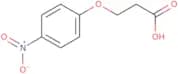
Produit arrêté3-(4-Nitrophenoxy)propionic acid
CAS :3-(4-Nitrophenoxy)propionic acid is a promiscuous compound that can be used to synthesize other compounds. It reacts with hydrochloric acid, nitro groups, and phosphorus pentoxide to produce nitro compounds. 3-(4-Nitrophenoxy)propionic acid reacts with benzoylamine in the presence of a cocatalyst to form alkoxycarbonyl products. The cocatalyst is typically a metal such as zinc or magnesium. 3-(4-Nitrophenoxy)propionic acid is also used as an agrochemical for controlling influenza virus and Influenzae bacteria.
!--Formule :C9H9NO5Degré de pureté :Min. 95%Masse moléculaire :211.17 g/molRef: 3D-KAA57216
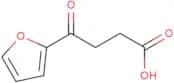
Produit arrêté4-(Furan-2-yl)-4-oxobutanoic acid
CAS :Versatile small molecule scaffold
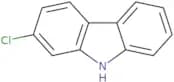
Formule :C8H8O4Degré de pureté :Min. 95%Masse moléculaire :168.15 g/mol2-Chloro-9H-carbazole
CAS :2-Chloro-9H-carbazole (2CzC) is a heterocyclic compound that belongs to the group of carbazoles. It can be used as medicine and has been shown to be a good control experiment for other carbazoles. The nucleophilicity of 2CzC is affected by the functional groups present in the molecule, and it has been shown to react with anions such as Cl-, Br-, or I-. This heterocycle also has two resonance forms, which are generated by the electron delocalization in the ring system. The gas phase kinetics of 2CzC have been found to follow an Arrhenius relationship, with k = 3.6x10^3 M^-1 s^-1 at 298 K. Yields for this compound have been found to be high, with 90% yield when synthesized from chloroacetone and phenylmagnesium bromide.
Formule :C12H8ClNDegré de pureté :Min. 95%Masse moléculaire :201.65 g/molRef: 3D-KAA53708
Produit arrêté2-Bromo-7-phenyl-5H-[1,3,4]thiadiazolo[3,2-a]pyrimidin-5-one
CAS :Versatile small molecule scaffold
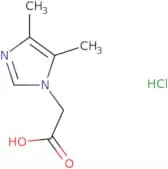
Formule :C11H6BrN3OSDegré de pureté :Min. 95%Masse moléculaire :308.16 g/mol(4,5-Dimethyl-1H-imidazol-1-yl)acetic acid hydrochloride
CAS :Versatile small molecule scaffold
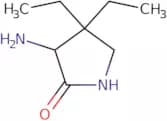
Formule :C7H11ClN2O2Degré de pureté :Min. 95%Masse moléculaire :190.63 g/mol3-Amino-4,4-diethylpyrrolidin-2-one
CAS :Versatile small molecule scaffoldFormule :C8H16N2ODegré de pureté :Min. 95%Masse moléculaire :156.23 g/molrac-(3R,4R)-3-Hydroxy-4-[(2-phenylethyl)amino]-1lambda6-thiolane-1,1-dione
CAS :Versatile small molecule scaffold
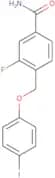
Formule :C12H17NO3SDegré de pureté :Min. 95%Masse moléculaire :255.34 g/mol3-Fluoro-4-(4-iodophenoxymethyl)benzamide
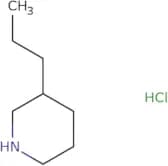
CAS :Versatile small molecule scaffoldFormule :C14H11FINO2Degré de pureté :Min. 95%Masse moléculaire :371.14 g/mol3-Propylpiperidine hydrochloride
CAS :Versatile small molecule scaffold
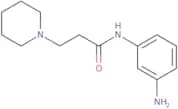
Formule :C8H18ClNDegré de pureté :Min. 95%Masse moléculaire :163.69 g/molN-(3-Aminophenyl)-3-(piperidin-1-yl)propanamide
CAS :Versatile small molecule scaffoldFormule :C14H21N3ODegré de pureté :Min. 95%Masse moléculaire :247.34 g/molRef: 3D-IJB26264
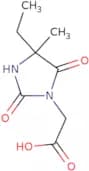
Produit arrêté(4-Ethyl-4-methyl-2,5-dioxo-imidazolidin-1-yl)-acetic acid
CAS :Versatile small molecule scaffold
Formule :C8H12N2O4Degré de pureté :Min. 95%Masse moléculaire :200.2 g/molRef: 3D-IJB20710
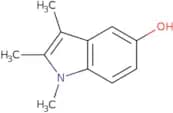
Produit arrêté1,2,3-Trimethyl-1H-indol-5-ol
CAS :Versatile small molecule scaffold
Formule :C11H13NODegré de pureté :Min. 95%Masse moléculaire :175.23 g/mol[2-(1H-1,3-Benzodiazol-1-yl)phenyl]methanamine dihydrochloride
CAS :Versatile small molecule scaffold
Formule :C14H15Cl2N3Degré de pureté :Min. 95%Masse moléculaire :296.2 g/molRef: 3D-IIC59359
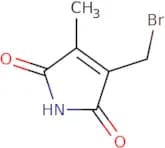
Produit arrêté3-(Bromomethyl)-4-methyl-2,5-dihydro-1H-pyrrole-2,5-dione
CAS :Versatile small molecule scaffold
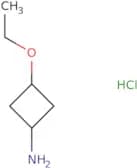
Formule :C6H6BrNO2Degré de pureté :Min. 95%Masse moléculaire :204.02 g/molrac-(1R,3R)-3-Ethoxycyclobutan-1-amine hydrochloride
CAS :Versatile small molecule scaffoldFormule :C6H14ClNODegré de pureté :Min. 95%Masse moléculaire :151.63 g/molRef: 3D-IGC07627
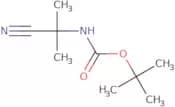
Produit arrêtétert-Butyl N-(1-cyano-1-methylethyl)carbamate
CAS :Versatile small molecule scaffold
Formule :C9H16N2O2Degré de pureté :Min. 95%Masse moléculaire :184.24 g/molRef: 3D-IFA11797
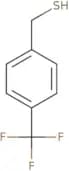
Produit arrêté4-(Trifluoromethyl)benzyl mercaptan
CAS :4-(Trifluoromethyl)benzyl mercaptan is a chemical that has been used as an additive to organic solar cells. It has been shown to improve the performance of these devices by reducing interfacial recombination and increasing electron mobility. This chemical also has semiconducting properties, which have been demonstrated by its ability to be translated in an electron microscope. In addition, 4-(Trifluoromethyl)benzyl mercaptan interacts with many solvents, such as chloroform and dichloromethane, leading to changes in their properties.
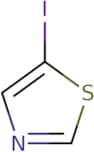
Formule :C8H7F3SDegré de pureté :Min. 95%Masse moléculaire :192.2 g/mol5-Iodo-1,3-thiazole
CAS :Versatile small molecule scaffold
Formule :C3H2INSDegré de pureté :Min. 95%Masse moléculaire :211.03 g/mol2-[2-(Furan-3-yl)-1,3-thiazol-4-yl]acetic acid
CAS :Versatile small molecule scaffold
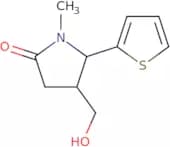
Formule :C9H7NO3SDegré de pureté :Min. 95%Masse moléculaire :209.22 g/mol4-(Hydroxymethyl)-1-methyl-5-(thiophen-2-yl)pyrrolidin-2-one
CAS :Versatile small molecule scaffold
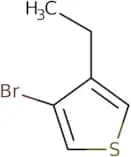
Formule :C10H13NO2SDegré de pureté :Min. 95%Masse moléculaire :211.28 g/mol3-Bromo-4-ethylthiophene
CAS :Versatile small molecule scaffold
Formule :C6H7BrSDegré de pureté :Min. 95%Masse moléculaire :191.09 g/mol(4-Amino-phenyl)-acetic acid methyl ester hydrochloride
CAS :Versatile small molecule scaffold
Formule :C9H12ClNO2Degré de pureté :Min. 95%Masse moléculaire :201.65 g/mol3-Bromo-2-methyl-furan
CAS :3-Bromo-2-methyl-furan is a substituted quinoline. It is a synthetic reagent that can be used for the synthesis of bromofuran derivatives. The methyl group on the 3rd carbon atom in 3-bromo-2-methyl-furan is a substituent that can be exchanged with other substituents, such as alkylation, to produce a variety of products.
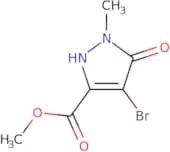
3-Bromo-2-methyl furan has been shown to be able to extract metal ions from their complexes and form stable complexes. This property makes it an ideal reagent for metalation reactions.Formule :C5H5BrODegré de pureté :Min. 95%Masse moléculaire :161 g/molMethyl 4-bromo-5-hydroxy-1-methyl-1H-pyrazole-3-carboxylate
CAS :Versatile small molecule scaffold
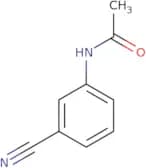
Formule :C6H7BrN2O3Degré de pureté :Min. 95%Masse moléculaire :235.04 g/molN-(3-Cyanophenyl)acetamide
CAS :N-(3-Cyanophenyl)acetamide is a hydrogen-bonding molecule that has been detected in the gas phase. It has also been observed to interact with water, forming hydrogen bonding interactions and solvatochromism. The equilibrium of N-(3-cyanophenyl)acetamide can be shifted by changing the solvent conditions and pH. This molecule has three conformations when it is in the gaseous phase, including a planar conformation. In addition, N-(3-cyanophenyl)acetamide can be used as a probe for determining hydrogen bonding interactions and conformations due to its ability to form hydrogen bonds with other molecules.
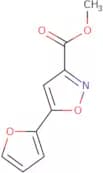
Formule :C9H8N2ODegré de pureté :Min. 95%Masse moléculaire :160.18 g/molMethyl 5-(2-furyl)isoxazole-3-carboxylate
CAS :Versatile small molecule scaffold
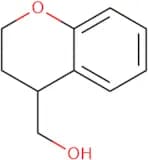
Formule :C9H7NO4Degré de pureté :Min. 95%Masse moléculaire :193.16 g/mol3,4-Dihydro-2H-1-benzopyran-4-ylmethanol
CAS :Versatile small molecule scaffold
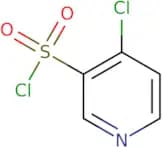
Formule :C10H12O2Degré de pureté :Min. 95%Masse moléculaire :164.2 g/mol4-chloropyridine-3-sulfonyl chloride
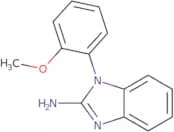
CAS :4-Chloropyridine-3-sulfonyl chloride is a thrombin inhibitor that has been discovered through the use of in vitro screening methods. It is a small molecule with lipophilic properties and oral bioavailability. This compound inhibits thrombin by binding to the active site of the enzyme, which prevents the formation of an enzyme-thrombin complex. The discovery was made using a pharmacophore-based approach and further modifications were made to improve its potency and increase its lipophilicity. This compound also exhibits an acceptable level of bioavailability in vivo, which may be due to its high solubility in water.Formule :C5H3Cl2NO2SDegré de pureté :Min. 95%Masse moléculaire :212.1 g/mol1-(2-Methoxyphenyl)-1H-1,3-benzodiazol-2-amine
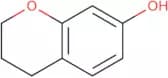
CAS :Versatile small molecule scaffoldFormule :C14H13N3ODegré de pureté :Min. 95%Masse moléculaire :239.27 g/mol3,4-dihydro-2H-1-benzopyran-7-ol
CAS :3,4-Dihydro-2H-1-benzopyran-7-ol is a monomer that is used to synthesize medicines. It has the formula CH3COCH=CH(OH)CH3 and belongs to the group of flavonoids. 3,4-Dihydro-2H-1-benzopyran-7-ol has acidic properties, which are due to its isoflavones. It can be used as an acid catalyst in organic synthesis reactions and is a reaction product of chloropropane. 3,4-Dihydro-2H-1-benzopyran-7-ol also has high yield and can act as a bioisostere for other compounds such as chromene.
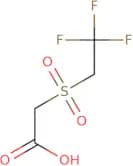
Formule :C9H10O2Degré de pureté :Min. 95%Masse moléculaire :150.18 g/mol2-(2,2,2-Trifluoroethanesulfonyl)acetic acid
CAS :Trifloxacin is a broad-spectrum antibacterial drug that belongs to the class of formyloxy compounds and the cephalosporin family. It has been shown to be active against both Gram-positive and Gram-negative bacteria, with activity against strains resistant to penicillin, ampicillin, erythromycin, and chloramphenicol. Trifloxacin binds to the bacterial ribosome by displacement of a pyridyl group in the ribosomal RNA, inhibiting protein synthesis. This binding inhibits cell growth by preventing the production of proteins that are vital for cell division.
br>
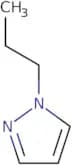
Trifloxacin has also been found to inhibit DNA gyrase and topoisomerase IV in vitro. Trifloxacin's mechanism of action is similar to that of other quinolones such as norfloxacin and ciprofloxacin.Formule :C4H5F3O4SDegré de pureté :Min. 95%Masse moléculaire :206.14 g/mol1-Propylpyrazole
CAS :1-Propylpyrazole is a non-classical inhibitor of aldehyde oxidase that has been shown to have an inhibitory effect on pentane. 1-Propylpyrazole has peroxidase-like activity, which means it can bind to lipid hydroperoxides in the presence of hydrogen peroxide or peroxidase. It has also been shown to be an effective inhibitor of dehydrogenase, which is an enzyme that catalyzes the oxidation of aldehydes and ketones to carboxylic acids. This drug is not active against classical aldehyde oxidases such as alcohol dehydrogenase, but it does inhibit polyunsaturated fatty acid synthesis by binding with cytochrome P450 enzymes.
Formule :C6H10N2Degré de pureté :Min. 95%Masse moléculaire :110.16 g/molRef: 3D-HBA50067
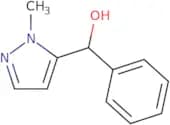
Produit arrêté(1-Methyl-1H-pyrazol-5-yl)(phenyl)methanol
CAS :Versatile small molecule scaffold
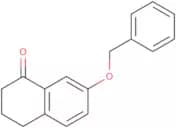
Formule :C11H12N2ODegré de pureté :Min. 95%Masse moléculaire :188.23 g/mol7-(Benzyloxy)-3,4-dihydronaphthalen-1(2H)-one
CAS :7-(Benzyloxy)-3,4-dihydronaphthalen-1(2H)-one is a tricyclic carboxamide that belongs to the carboxylic acid group. It has a constant boiling point and an acidic pH. 7-(Benzyloxy)-3,4-dihydronaphthalen-1(2H)-one is soluble in water and dilute acids. It has been shown that the melting point of 7-(Benzyloxy)-3,4-dihydronaphthalen-1(2H)-one is not affected by dilution or experiments. The chemical compounds are made up of benzoic acid and carboxylic acid groups that form a six-membered ring with two heterocycles on either side of the molecule.Formule :C17H16O2Degré de pureté :Min. 95%Masse moléculaire :252.31 g/mol6-Chloro-2,3,4,9-tetrahydro-1H-carbazol-3-ol
CAS :Versatile small molecule scaffold
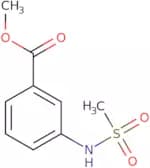
Formule :C12H12ClNODegré de pureté :Min. 95%Masse moléculaire :221.68 g/molMethyl 3-methanesulfonamidobenzoate
CAS :Methyl 3-methanesulfonamidobenzoate is an organic compound that is used as a reagent in organic synthesis. It has the chemical formula CH3O2C(CH2)2SO2CH=NOH. Methyl 3-methanesulfonamidobenzoate is a methyl ester of benzoic acid, which is also known as methyl benzoate. This compound has been shown to react with DNA, forming adducts with guanine and cytosine bases.
Formule :C9H11NO4SDegré de pureté :Min. 95%Masse moléculaire :229.26 g/molRef: 3D-HBA08705
Produit arrêté5-Methylquinoline
CAS :5-Methylquinoline is a quinoline derivative that is used in the synthesis of other quinoline derivatives. It can be synthesized from cinnamaldehyde, which can be obtained from cinnamic acid or benzaldehyde. 5-Methylquinoline has been shown to have antioxidant properties and inhibit colorectal carcinoma cells in vitro. The compound also inhibits the growth of caco-2 cells. One isomer of 5-methylquinoline, ethenyl, has been shown to cause a shift in the spectrum of light absorbed by caco-2 cells.
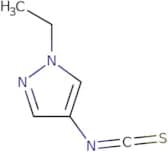
Formule :C10H9NDegré de pureté :Min. 95%Masse moléculaire :143.18 g/mol1-Ethyl-4-isothiocyanato-1H-pyrazole
CAS :Versatile small molecule scaffold
Formule :C6H7N3SDegré de pureté :Min. 95%Masse moléculaire :153.21 g/mol3-Fluoro-4-[3-(trifluoromethyl)-1H-pyrazol-1-yl]aniline
CAS :Versatile small molecule scaffold
Formule :C10H7F4N3Degré de pureté :Min. 95%Masse moléculaire :245.18 g/mol3-Chloro-4-[3-(trifluoromethyl)-1H-pyrazol-1-yl]aniline
CAS :Versatile small molecule scaffoldFormule :C10H7ClF3N3Degré de pureté :Min. 95%Masse moléculaire :261.63 g/moltert-Butyl 4-methoxy-3,10-diazabicyclo[4.3.1]dec-3-ene-10-carboxylate
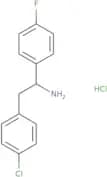
CAS :Versatile small molecule scaffoldFormule :C14H24N2O3Degré de pureté :Min. 95%Masse moléculaire :268.4 g/mol2-(4-Chlorophenyl)-1-(4-fluorophenyl)ethan-1-amine hydrochloride
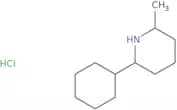
CAS :Versatile small molecule scaffoldFormule :C14H14Cl2FNDegré de pureté :Min. 95%Masse moléculaire :286.2 g/mol2-Cyclohexyl-6-methylpiperidine hydrochlorides
CAS :Versatile small molecule scaffold
Formule :C12H24ClNDegré de pureté :Min. 95%Masse moléculaire :217.8 g/molMethyl 5-azaspiro[3.5]nonane-8-carboxylate
CAS :Versatile small molecule scaffold
Formule :C10H17NO2Degré de pureté :Min. 95%Masse moléculaire :183.2 g/mol[3-(Propan-2-yl)phenyl]thiourea
CAS :Versatile small molecule scaffold
Formule :C10H14N2SDegré de pureté :Min. 95%Masse moléculaire :194.3 g/molRef: 3D-FMB39611
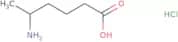
Produit arrêté5-Aminohexanoic acid hydrochloride
CAS :Versatile small molecule scaffold
Formule :C6H14ClNO2Degré de pureté :Min. 95%Masse moléculaire :167.63 g/mol(3,4-Dihydro-2H-chromen-6-ylmethyl)ae hydrochloride
CAS :Versatile small molecule scaffold
Formule :C10H14ClNODegré de pureté :Min. 95%Masse moléculaire :199.68 g/mol1-(2-Methylphenyl)propan-2-amine
CAS :Produit contrôlé1-(2-Methylphenyl)propan-2-amine is a fatty acid ester that is used as an excipient in pharmaceutical dosage forms. It is used to increase the viscosity of drug solutions and suspensions, and to provide a protective coating for tablets. 1-(2-Methylphenyl)propan-2-amine is insoluble in water, but soluble in organic solvents such as alcohols and acetone. It can be prepared by reacting a primary amine with a fatty acid chloride or anhydride. The compound has been shown to have high affinity for 5HT2A receptors in vitro, which may account for its psychoactive effects.
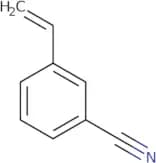
Formule :C10H15NDegré de pureté :Min. 95%Masse moléculaire :149.23 g/mol3-Ethenylbenzonitrile
CAS :3-Ethenylbenzonitrile is an organic compound that can be prepared by photolysis of 2-bromobenzonitrile in the presence of a nonpolar solvent. It is also synthesized by laser induced exciplex reaction between benzene and ethylene. 3-Ethenylbenzonitrile has a conformation that is dependent on the polarity of the solvent. In polar solvents, it adopts a bent structure while in nonpolar solvents, it adopts a linear structure. The molecule undergoes cyclobutane formation and then reacts with electron acceptors such as cations to form intermediates. These intermediates react with other molecules to form products.
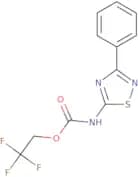
Formule :C9H7NDegré de pureté :Min. 95%Masse moléculaire :129.16 g/mol2,2,2-Trifluoroethyl N-(3-phenyl-1,2,4-thiadiazol-5-yl)carbamate
CAS :Versatile small molecule scaffold
Formule :C11H8F3N3O2SDegré de pureté :Min. 95%Masse moléculaire :303.26 g/mol3-[4-(1,3-Dioxolan-2-yl)oxan-4-yl]propan-1-amine
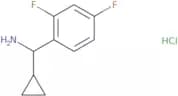
CAS :Versatile small molecule scaffoldFormule :C11H21NO3Degré de pureté :Min. 95%Masse moléculaire :215.29 g/molCyclopropyl(2,4-difluorophenyl)methanamine hydrochloride
CAS :Versatile small molecule scaffold
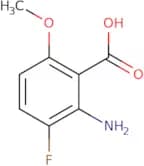
Formule :C10H12ClF2NDegré de pureté :Min. 95%Masse moléculaire :219.66 g/mol2-Amino-3-fluoro-6-methoxybenzoic acid
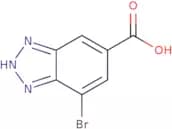
CAS :Versatile small molecule scaffoldFormule :C8H8FNO3Degré de pureté :Min. 95%Masse moléculaire :185.15 g/mol7-Bromo-1H-1,2,3-benzotriazole-5-carboxylic acid
CAS :Versatile small molecule scaffoldFormule :C7H4BrN3O2Degré de pureté :Min. 95%Masse moléculaire :242.03 g/molRef: 3D-EEC77168
Produit arrêté4-(3-Aminophenyl)-1-methyl-1H-pyrazolo[3,4-b]pyridine-3-carboxylic acid
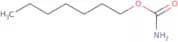
CAS :Versatile small molecule scaffoldFormule :C14H12N4O2Degré de pureté :Min. 95%Masse moléculaire :268.27 g/molHeptyl carbamate
CAS :Heptyl carbamate is a cholinergic antagonist of the blood disorders. It has been shown to inhibit hydroxy and hiv infection. In vitro assays have shown that heptyl carbamate inhibits the synthesis of fatty acid, thereby reducing cholesterol levels and inhibiting the production of insulin resistance in cells. Heptyl carbamate also binds to the same site on acetylcholinesterase as donepezil, which blocks the breakdown of acetylcholine and leads to an accumulation of this neurotransmitter in nerve cells. This increased concentration of acetylcholine in nerve cells can lead to a reduced incidence of Alzheimer's disease-related symptoms.
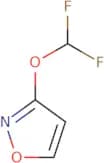
Formule :C8H17NO2Degré de pureté :Min. 95%Masse moléculaire :159.23 g/mol3-(Difluoromethoxy)-1,2-oxazole
CAS :Versatile small molecule scaffold
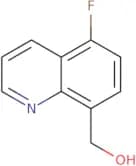
Formule :C4H3F2NO2Degré de pureté :Min. 95%Masse moléculaire :135.07 g/mol(5-Fluoroquinolin-8-yl)methanol
CAS :Versatile small molecule scaffold
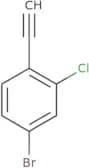
Formule :C10H8FNODegré de pureté :Min. 95%Masse moléculaire :177.17 g/mol4-Bromo-2-chloro-1-ethynylbenzene
CAS :Versatile small molecule scaffold
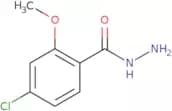
Formule :C8H4BrClDegré de pureté :Min. 95%Masse moléculaire :215.47 g/mol4-Chloro-2-methoxybenzohydrazide
CAS :Versatile small molecule scaffold
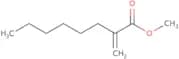
Formule :C8H9ClN2O2Degré de pureté :Min. 95%Masse moléculaire :200.62 g/molMethyl 2-methylideneoctanoate
CAS :Versatile small molecule scaffold
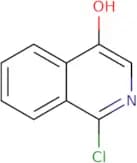
Formule :C10H18O2Degré de pureté :Min. 95%Masse moléculaire :170.25 g/mol1-Chloroisoquinolin-4-ol
CAS :1-Chloroisoquinolin-4-ol is a phenylpyrimidine with anti-inflammatory properties. It is used in the treatment of sensitivity and mediated diseases, such as osteoarthritis, rheumatoid arthritis, and ankylosing spondylitis. 1-Chloroisoquinolin-4-ol inhibits the enzymatic activity of matrix metalloproteinases (MMPs), which are enzymes that break down collagen and other proteins in the body. The inhibition of MMPs by 1-chloroisoquinolin-4-ol leads to reduced inflammation and pain. This compound is also an effective inhibitor of the activities of chloride channels involved in acid secretion by cells in the stomach lining, thus inhibiting acid production. 1-Chloroisoquinolin-4-ol has been shown to have anticholesterolemic effects on liver cells due to its ability to inhibit cholesterol synthesis through inhibition of HMG CoA
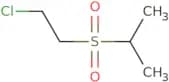
Formule :C9H6ClNODegré de pureté :Min. 95%Masse moléculaire :179.6 g/mol2-(2-Chloroethanesulfonyl)propane
CAS :Versatile small molecule scaffold
Formule :C5H11ClO2SDegré de pureté :Min. 95%Masse moléculaire :170.66 g/mol1-Hydroxycyclopentane-1-carbonitrile
CAS :1-Hydroxycyclopentane-1-carbonitrile is a monomer that is hydrolyzed to form benzoin and cyanohydrins. It can be used in the production of scifinder as a monomer or dimerizer.
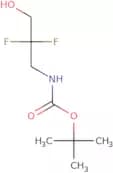
Formule :C6H9NODegré de pureté :Min. 95%Masse moléculaire :111.14 g/moltert-Butyl (2,2-difluoro-3-hydroxypropyl)carbamate
CAS :Versatile small molecule scaffoldFormule :C10H13NO4Degré de pureté :Min. 95%Masse moléculaire :211.21 g/molRef: 3D-PCC39821
Produit arrêté8-Bromo-2-methylimidazo[1,2-a]pyridine
CAS :Versatile small molecule scaffold
Formule :C8H7N2BrDegré de pureté :Min. 95%Masse moléculaire :211.05 g/mol4,5-Dihydro-1H-imidazol-2-amine hydrochloride
CAS :Please enquire for more information about 4,5-Dihydro-1H-imidazol-2-amine hydrochloride including the price, delivery time and more detailed product information at the technical inquiry form on this page
Formule :C3H7N3•HClDegré de pureté :Min. 95%Masse moléculaire :121.57 g/mol4-Chloro-2-hydroxy-6-methylphenylboronic acid
CAS :Versatile small molecule scaffoldFormule :C7H8BClO3Degré de pureté :Min. 95%Masse moléculaire :186.4 g/molRef: 3D-HYB96150
Produit arrêté2-Bromo-3,3,3-trifluoro-1-propene
CAS :Produit contrôlé2-Bromo-3,3,3-trifluoro-1-propene is a chemical compound that has been synthesized in an asymmetric reaction. The reactant is bromopropane and the product is 2,2,2-trifluoropropene. The methylene group on the propene molecule is activated by the nucleophilic attack of a fluoride ion from hydrogen fluoride to form a cavity with a highly strained bond. The kinetic study of this reaction revealed that the activation energy for the reaction is 42 kJ/mol. Palladium-catalyzed coupling reactions are catalyzed by palladium and require nonpolar solvents such as toluene or dichloromethane. This type of reaction has been shown to be exothermic with an isolated yield of 1%.
Formule :C3H2BrF3Degré de pureté :Min. 95%Couleur et forme :Colorless PowderMasse moléculaire :174.95 g/molRef: 3D-FB11073
Produit arrêté3-Hydroxy-5-methylpyridine
CAS :3-Hydroxy-5-methylpyridine (3HMP) is a chemical substance that has been classified as an amine. It is a product of the metabolism of purines, which are nitrogenous bases found in DNA and RNA. 3HMP is produced by aerogenic bacteria (such as Enterobacter), and can be used to estimate the number of these bacteria present in water samples. 3HMP has been shown to have antiviral properties against influenza virus, and can be used as a biomarker for the presence of other viruses in animals. 3HMP also has mineralization properties, which have been studied extensively, particularly with regards to pancreatic disease.
Formule :C6H7NODegré de pureté :Min. 95%Couleur et forme :PowderMasse moléculaire :109.13 g/mol4,5-Dihydroxy-2,3-Pentanedione
CAS :4,5-Dihydroxy-2,3-pentanedione is a carbonyl compound that is the product of the oxidation of ascorbic acid. It is used in wastewater treatment and has antimicrobial properties against infectious diseases. This compound has been shown to inhibit protein synthesis by binding to the ribosome and preventing the formation of peptide bonds between amino acids. 4,5-Dihydroxy-2,3-pentanedione has also been shown to bind to plasma proteins, which may be due to its acyl chain structure. 4,5-Dihydroxy-2,3-pentanedione can be synthesized in a catalytic mechanism that involves dehydroascorbic acid and molecular oxygen.
Formule :C5H8O4Degré de pureté :Min. 95%Couleur et forme :PowderMasse moléculaire :132.11 g/molPiperyline
CAS :Piperyline is an alkanoic acid that has shown to be effective against skin cancer. It also has antimicrobial properties, which may be due to its ability to bind metal ions and form polymeric compounds. Piperyline inhibits microbial growth by inhibiting the synthesis of proteins and nucleic acids. The antimicrobial activity is related to its cationic polymerization with hydroxyl groups, which forms a structure that can inhibit microbial enzymes and disrupt microbial cell membranes. This compound also interacts with the skin's natural lipids, making it difficult for microorganisms to attach and grow on the skin. Piperyline is synthesized in organic chemistry laboratories as an amide precursor of other pharmaceuticals such as penicillin.
Formule :C16H17NO3Degré de pureté :Min. 95%Masse moléculaire :271.31 g/mol

![2-Bromo-7-phenyl-5H-[1,3,4]thiadiazolo[3,2-a]pyrimidin-5-one](/_next/image/?url=https%3A%2Fstatic.cymitquimica.com%2Fproducts%2F3D%2Fthumb-webp%2FJYB10753.webp&w=3840&q=75)
![rac-(3R,4R)-3-Hydroxy-4-[(2-phenylethyl)amino]-1lambda6-thiolane-1,1-dione](/_next/image/?url=https%3A%2Fstatic.cymitquimica.com%2Fproducts%2F3D%2Fthumb-webp%2FJHD90934.webp&w=3840&q=75)
![[2-(1H-1,3-Benzodiazol-1-yl)phenyl]methanamine dihydrochloride](/_next/image/?url=https%3A%2Fstatic.cymitquimica.com%2Fproducts%2F3D%2Fthumb-webp%2FIIC59359.webp&w=3840&q=75)
![2-[2-(Furan-3-yl)-1,3-thiazol-4-yl]acetic acid](/_next/image/?url=https%3A%2Fstatic.cymitquimica.com%2Fproducts%2F3D%2Fthumb-webp%2FIDC97860.webp&w=3840&q=75)




![3-Fluoro-4-[3-(trifluoromethyl)-1H-pyrazol-1-yl]aniline](/_next/image/?url=https%3A%2Fstatic.cymitquimica.com%2Fproducts%2F3D%2Fthumb-webp%2FGQB46865.webp&w=3840&q=75)
![3-Chloro-4-[3-(trifluoromethyl)-1H-pyrazol-1-yl]aniline](/_next/image/?url=https%3A%2Fstatic.cymitquimica.com%2Fproducts%2F3D%2Fthumb-webp%2FGQB46761.webp&w=3840&q=75)
![tert-Butyl 4-methoxy-3,10-diazabicyclo[4.3.1]dec-3-ene-10-carboxylate](/_next/image/?url=https%3A%2Fstatic.cymitquimica.com%2Fproducts%2F3D%2Fthumb-webp%2FFSD25605.webp&w=3840&q=75)
![Methyl 5-azaspiro[3.5]nonane-8-carboxylate](/_next/image/?url=https%3A%2Fstatic.cymitquimica.com%2Fproducts%2F3D%2Fthumb-webp%2FFSD25496.webp&w=3840&q=75)
![[3-(Propan-2-yl)phenyl]thiourea](/_next/image/?url=https%3A%2Fstatic.cymitquimica.com%2Fproducts%2F3D%2Fthumb-webp%2FFMB39611.webp&w=3840&q=75)


![3-[4-(1,3-Dioxolan-2-yl)oxan-4-yl]propan-1-amine](/_next/image/?url=https%3A%2Fstatic.cymitquimica.com%2Fproducts%2F3D%2Fthumb-webp%2FEEC95155.webp&w=3840&q=75)
![4-(3-Aminophenyl)-1-methyl-1H-pyrazolo[3,4-b]pyridine-3-carboxylic acid](/_next/image/?url=https%3A%2Fstatic.cymitquimica.com%2Fproducts%2F3D%2Fthumb-webp%2FEEC70625.webp&w=3840&q=75)

![8-Bromo-2-methylimidazo[1,2-a]pyridine](/_next/image/?url=https%3A%2Fstatic.cymitquimica.com%2Fproducts%2F3D%2Fthumb-webp%2FUXB37475.webp&w=3840&q=75)