Building Blocks
Sous-catégories appartenant à la catégorie "Building Blocks"
- Acides boroniques et dérivés de l'acide boronique(5.774 produits)
- Building Blocks Chiraux(1.237 produits)
- Building Blocks Hydrocarbonés(6.098 produits)
- Building Blocks organiques(60.970 produits)
205134 produits trouvés pour "Building Blocks"
2-Methoxy-benzenesulfonic acid
CAS :2-Methoxy-benzenesulfonic acid is a synthetic chemical compound that is used in the production of polymers and other ester compounds. It can be produced by reacting benzenesulfonyl chloride with methanol in the presence of a strong acid catalyst. 2-Methoxy-benzenesulfonic acid reacts with radiation to produce reactive oxygen species that are capable of damaging cellular structures. The molecule contains an intramolecular hydrogen bond, which stabilizes the structure and helps to form hydrogen bonds with other molecules. 2-Methoxy-benzenesulfonic acid also has a hydroxyl group, which allows it to function as an acidic compound that can react with water and cause inflammation. This functional group also makes it soluble in water, allowing it to penetrate tissue structures.
Formule :C7H8O4SDegré de pureté :Min. 95%Masse moléculaire :188.2 g/mol3,5-Dimethylbenzaldehyde
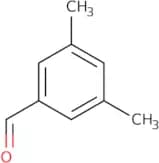
CAS :3,5-Dimethylbenzaldehyde is an organic compound that is a colorless liquid. It has a chemical formula of C9H12O2 and is classified as an aldehyde. 3,5-Dimethylbenzaldehyde can be synthesized by the reaction of isopropyl palmitate with xylene in the presence of carbon as a source. The reaction time required for this synthesis is approximately one day. The major products of this reaction are 3,5-dimethylbenzaldehyde and 2-methylbutanal. This reaction mechanism can also be used to determine the concentration of urinary metabolites in human urine samples. Analysis of these samples requires an organic solvent such as hexane or dichloromethane. Kinetic data was collected from the rate at which zinc powder reacts with 3,5-dimethylbenzaldehyde over time at different concentrations. A kinetic experiment was conducted using c–h bond activation to produce 3,5-dimethoxy
Formule :C9H10ODegré de pureté :Min. 95%Couleur et forme :Colorless Clear LiquidMasse moléculaire :134.18 g/mol1,2-Bis(chlorodimethylsilyl)ethane
CAS :1,2-Bis(chlorodimethylsilyl)ethane is a reactive chemical that is synthesized from hydroxychloroformates and hydrogen chloride. It reacts with silicon to form chlorosilanes, which are then used in the polymerization of siloxanes. 1,2-Bis(chlorodimethylsilyl)ethane has been shown to be an effective initiator for the polymerization of methyl methacrylate and ethylene glycol dimethacrylate. 1,2-Bis(chlorodimethylsilyl)ethane is also used as a hydroxyl group donor in organic reactions.
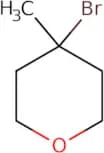
Formule :C6H16Cl2Si2Degré de pureté :Min. 95 Area-%Couleur et forme :PowderMasse moléculaire :215.27 g/mol4-Bromo-4-methyltetrahydropyran
CAS :Versatile small molecule scaffold
Formule :C6H11BrODegré de pureté :Min. 95%Masse moléculaire :179.06 g/molRef: 3D-RCA29988
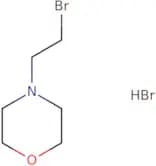
Produit arrêté4-(2-Bromoethyl)morpholine hydrobromide
CAS :4-(2-Bromoethyl)morpholine hydrobromide is a solvent that is used as an agent in the production of other chemicals. It is a colorless, crystalline solid with a constant melting point of 130 to 131 degrees Celsius. 4-(2-Bromoethyl)morpholine hydrobromide is soluble in acetone, ethanol, ether, and water. This chemical has been shown to be toxic and should be handled with care.
Formule :C6H13Br2NODegré de pureté :Min. 95%Masse moléculaire :274.98 g/molRef: 3D-SBA80294
Produit arrêté7-bromo-3-iodoimidazo[1,2-a]pyridine
CAS :Versatile small molecule scaffold
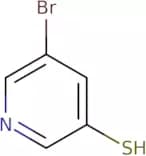
Formule :C7H4BrIN2Degré de pureté :Min. 95%Masse moléculaire :322.9 g/mol5-Bromopyridine-3-thiol
CAS :Versatile small molecule scaffold
Formule :C5H4BrNSDegré de pureté :Min. 95%Masse moléculaire :190.06 g/molRef: 3D-CXA33185
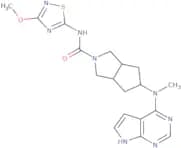
Produit arrêtéSHR 0302
CAS :Please enquire for more information about SHR 0302 including the price, delivery time and more detailed product information at the technical inquiry form on this page
Formule :C18H22N8O2SDegré de pureté :Min. 95%Masse moléculaire :414.49 g/mol4-Chloro-2-hydroxy-6-methylphenylboronic acid
CAS :Versatile small molecule scaffoldFormule :C7H8BClO3Degré de pureté :Min. 95%Masse moléculaire :186.4 g/molRef: 3D-HYB96150
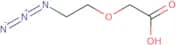
Produit arrêté2-(2-Azidoethoxy)acetic Acid
CAS :2-(2-Azidoethoxy)acetic Acid is a hydrophobic antibacterial agent that can be used to inhibit bacterial growth by disrupting the cell membrane. It has been shown to inhibit the growth of Staphylococcus aureus and Escherichia coli, which may be due to its ability to bind to the glutathione moiety in the bacterial cell membrane. 2-(2-Azidoethoxy)acetic Acid has been shown to have antimicrobial activity against both Gram-positive and Gram-negative bacteria in vitro. This compound is also able to cross the cell membrane, inhibiting bacterial replication in vivo.
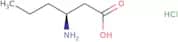
Formule :C4H7N3O3Degré de pureté :Min. 95%Masse moléculaire :145.12 g/mol(S)-3-Aminohexanoic acid hydrochloride ee
CAS :Versatile small molecule scaffold
Formule :C6H14ClNO2Degré de pureté :Min. 95%Masse moléculaire :167.63 g/molRef: 3D-PCA23461
Produit arrêté(S)-2-(N-Boc-aminomethyl)morpholine
CAS :Versatile small molecule scaffold
Formule :C10H20N2O3Degré de pureté :Min. 95%Masse moléculaire :216.27 g/molRef: 3D-AKB55159
Produit arrêté3,6-Dichloropicolinonitrile
CAS :3,6-Dichloropicolinonitrile is a peroxide that is used in the synthesis of organic compounds. It is produced by the reaction of sodium carbonate and hydrochloric acid with nitric acid as a catalyst. 3,6-Dichloropicolinonitrile has been shown to be more selective than other oxidizing agents such as hydrogen peroxide and potassium permanganate. The product can then be purified by adding diacetate, which selectively reacts with the chlorine to form acetyl chloride and glycolic acid. The resulting mixture can then be distilled to produce 3,6-dichloropicolinonitrile in high purity. 3,6-Dichloropicolinonitrile can also be used in electrochemical methods for the synthesis of cyanides or biochemically for virulent products such as pesticides and organic solvents.
Formule :C6H2Cl2N2Degré de pureté :Min. 95%Masse moléculaire :173 g/molRef: 3D-BAA70218
Produit arrêté1-[4-(Propan-2-yl)phenyl]ethan-1-ol
CAS :Versatile small molecule scaffold
Formule :C11H16ODegré de pureté :Min. 95%Masse moléculaire :164.24 g/molRef: 3D-BAA47510
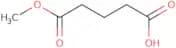
Produit arrêtéMonomethyl Glutarate
CAS :Monomethyl glutarate is a monomer for the synthesis of polymers. It has been used in the past as a precursor for the production of polyacrylic acid and its copolymers. Monomethyl glutarate is synthesized by the reaction of hydrochloric acid, high salt, and an expression plasmid containing glutarate dehydrogenase. This compound is also used as a reagent in kinetic studies of fatty acids and glutaric acid. Monomethyl glutarate is an acidic compound with a pKa value of 3.5 at 25°C. It is rapidly hydrolyzed in water to form monomethyl glutarate acid, which has a pKa value of 2.4 at 25°C. Monomethyl glutarate can be ingested orally or applied topically due to its low energy requirements for hydrolysis in water.
Formule :C6H10O4Degré de pureté :Min. 95%Masse moléculaire :146.14 g/molRef: 3D-BAA50127
Produit arrêté1-Hydroxycyclopentane-1-carbonitrile
CAS :1-Hydroxycyclopentane-1-carbonitrile is a monomer that is hydrolyzed to form benzoin and cyanohydrins. It can be used in the production of scifinder as a monomer or dimerizer.
Formule :C6H9NODegré de pureté :Min. 95%Masse moléculaire :111.14 g/mol2-Bromo-3,3,3-trifluoro-1-propene
CAS :Produit contrôlé2-Bromo-3,3,3-trifluoro-1-propene is a chemical compound that has been synthesized in an asymmetric reaction. The reactant is bromopropane and the product is 2,2,2-trifluoropropene. The methylene group on the propene molecule is activated by the nucleophilic attack of a fluoride ion from hydrogen fluoride to form a cavity with a highly strained bond. The kinetic study of this reaction revealed that the activation energy for the reaction is 42 kJ/mol. Palladium-catalyzed coupling reactions are catalyzed by palladium and require nonpolar solvents such as toluene or dichloromethane. This type of reaction has been shown to be exothermic with an isolated yield of 1%.
Formule :C3H2BrF3Degré de pureté :Min. 95%Couleur et forme :Colorless PowderMasse moléculaire :174.95 g/molRef: 3D-FB11073
Produit arrêtéMethyl 3-bromopyrrole-2-carboxylate
CAS :Versatile small molecule scaffoldFormule :C6H6BrNO2Degré de pureté :Min. 95%Masse moléculaire :204.02 g/molRef: 3D-RMB71457
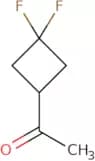
Produit arrêté1-(3,3-Difluorocyclobutyl)ethan-1-one
CAS :Versatile small molecule scaffold
Formule :C6H8F2ODegré de pureté :Min. 95%Masse moléculaire :134.13 g/molRef: 3D-WPC22357
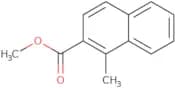
Produit arrêtéMethyl 1-methylnaphthalene-2-carboxylate
CAS :Versatile small molecule scaffold
Formule :C13H12O2Degré de pureté :Min. 95%Masse moléculaire :200.23 g/molRef: 3D-YCA72117
Produit arrêté2,4,6-Trichloronicotinaldehyde
CAS :Versatile small molecule scaffold
Formule :C6H2Cl3NODegré de pureté :Min. 95%Masse moléculaire :210.45 g/molRef: 3D-LAC26966
Produit arrêté2,5-Diethoxyterephthalohydrazide
CAS :2,5-Diethoxyterephthalohydrazide is an organic compound that has been used for the synthesis of linkers with various functional groups. It is a reactive intermediate in the synthesis of amines and compounds containing amine functional groups. 2,5-Diethoxyterephthalohydrazide has been shown to be stable under environmental conditions and can be used as a linker in organic solvents such as amines, alcohols or esters. This compound has also been shown to exhibit photocatalytic activity when irradiated by UV light. Techniques such as analytical chemistry and techniques can be used to characterize this compound's reactivity and stability.
Formule :C12H18N4O4Degré de pureté :Min. 95%Masse moléculaire :282.3 g/molCASIN
CAS :CASIN is a lysine-derived antimicrobial agent that inhibits the growth of bacteria by binding to the peptide chains of collagen, which are found in skin and mucous membranes. CASIN has been shown to inhibit the growth of many bacterial species, including those that are resistant to other antibiotics. CASIN can be used for the treatment of infectious diseases caused by bacteria, such as bacterial vaginosis or chlamydia. CASIN has also been shown to reduce body mass index in animal models. The mechanism of action is not known but may involve interference with an enzyme that controls the biosynthesis of fatty acids. The use of CASIN in humans is limited due to its toxicity on human cells and potential safety concerns.
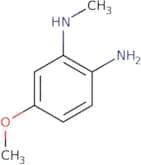
Formule :C20H22N2ODegré de pureté :Min. 95%Masse moléculaire :306.4 g/mol5-Methoxy-N1-methylbenzene-1,2-diamine
CAS :Versatile small molecule scaffold
Formule :C8H12N2ODegré de pureté :Min. 95%Masse moléculaire :152.19 g/molRef: 3D-EFA13948
Produit arrêté3-Hydroxy-5-methylpyridine
CAS :3-Hydroxy-5-methylpyridine (3HMP) is a chemical substance that has been classified as an amine. It is a product of the metabolism of purines, which are nitrogenous bases found in DNA and RNA. 3HMP is produced by aerogenic bacteria (such as Enterobacter), and can be used to estimate the number of these bacteria present in water samples. 3HMP has been shown to have antiviral properties against influenza virus, and can be used as a biomarker for the presence of other viruses in animals. 3HMP also has mineralization properties, which have been studied extensively, particularly with regards to pancreatic disease.
Formule :C6H7NODegré de pureté :Min. 95%Couleur et forme :PowderMasse moléculaire :109.13 g/mol1-(4-Ethylphenyl)-2,2,2-trifluoroethan-1-ol
CAS :Versatile small molecule scaffold
Formule :C10H11F3ODegré de pureté :Min. 95%Masse moléculaire :204.19 g/molRef: 3D-GFA25225
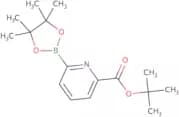
Produit arrêtétert-Butyl 6-(4,4,5,5-tetramethyl-1,3,2-dioxaborolan-2-yl)picolinate
CAS :Versatile small molecule scaffoldFormule :C16H24BNO4Degré de pureté :Min. 95%Masse moléculaire :305.2 g/mol4,5-Dihydroxy-2,3-Pentanedione
CAS :4,5-Dihydroxy-2,3-pentanedione is a carbonyl compound that is the product of the oxidation of ascorbic acid. It is used in wastewater treatment and has antimicrobial properties against infectious diseases. This compound has been shown to inhibit protein synthesis by binding to the ribosome and preventing the formation of peptide bonds between amino acids. 4,5-Dihydroxy-2,3-pentanedione has also been shown to bind to plasma proteins, which may be due to its acyl chain structure. 4,5-Dihydroxy-2,3-pentanedione can be synthesized in a catalytic mechanism that involves dehydroascorbic acid and molecular oxygen.
Formule :C5H8O4Degré de pureté :Min. 95%Couleur et forme :PowderMasse moléculaire :132.11 g/molN-(2-Methyl-6-benzoxazolyl)-2-propenamide
CAS :Please enquire for more information about N-(2-Methyl-6-benzoxazolyl)-2-propenamide including the price, delivery time and more detailed product information at the technical inquiry form on this page
Formule :C11H10N2O2Degré de pureté :Min. 95%Masse moléculaire :202.21 g/molPiperyline
CAS :Piperyline is an alkanoic acid that has shown to be effective against skin cancer. It also has antimicrobial properties, which may be due to its ability to bind metal ions and form polymeric compounds. Piperyline inhibits microbial growth by inhibiting the synthesis of proteins and nucleic acids. The antimicrobial activity is related to its cationic polymerization with hydroxyl groups, which forms a structure that can inhibit microbial enzymes and disrupt microbial cell membranes. This compound also interacts with the skin's natural lipids, making it difficult for microorganisms to attach and grow on the skin. Piperyline is synthesized in organic chemistry laboratories as an amide precursor of other pharmaceuticals such as penicillin.
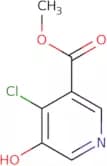
Formule :C16H17NO3Degré de pureté :Min. 95%Masse moléculaire :271.31 g/molMethyl 4-chloro-5-hydroxy-3-pyridinecarboxylate
CAS :Versatile small molecule scaffold
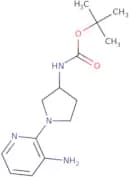
Formule :C7H6ClNO3Degré de pureté :Min. 95%Masse moléculaire :187.58 g/mol(R)-tert-Butyl 1-(3-aminopyridin-2-yl)pyrrolidin-3-ylcarbamate
CAS :Versatile small molecule scaffoldFormule :C14H22N4O2Degré de pureté :Min. 95%Masse moléculaire :278.35 g/molMacaridine
CAS :Please enquire for more information about Macaridine including the price, delivery time and more detailed product information at the technical inquiry form on this page
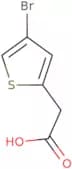
Formule :C13H13NO2Degré de pureté :Min. 95%Masse moléculaire :215.25 g/mol4-Bromothiophene-2-acetic acid
CAS :Versatile small molecule scaffold
Formule :C6H5BrO2SDegré de pureté :Min. 95%Masse moléculaire :221.07 g/molRef: 3D-LGA94289
Produit arrêté



![7-bromo-3-iodoimidazo[1,2-a]pyridine](/_next/image/?url=https%3A%2Fstatic.cymitquimica.com%2Fproducts%2F3D%2Fthumb-webp%2FWZB18455.webp&w=3840&q=75)



![1-[4-(Propan-2-yl)phenyl]ethan-1-ol](/_next/image/?url=https%3A%2Fstatic.cymitquimica.com%2Fproducts%2F3D%2Fthumb-webp%2FBAA47510.webp&w=3840&q=75)