Building Blocks
Cette section contient des produits fondamentaux pour la synthèse de composés organiques et biologiques. Building blocks sont les matériaux de départ essentiels utilisés pour construire des molécules complexes à travers diverses réactions chimiques. Ils jouent un rôle crucial dans la découverte de médicaments, la science des matériaux et la recherche chimique. Chez CymitQuimica, nous offrons une gamme diversifiée de building blocks de haute qualité pour soutenir vos recherches innovantes et projets industriels, en vous assurant de disposer des composants essentiels pour une synthèse réussie.
Sous-catégories appartenant à la catégorie "Building Blocks"
- Acides boroniques et dérivés de l'acide boronique(5.778 produits)
- Building Blocks Chiraux(1.243 produits)
- Building Blocks Hydrocarbonés(6.097 produits)
- Building Blocks organiques(61.052 produits)
201390 produits trouvés pour "Building Blocks"
Trier par
Degré de pureté (%)
0
100
|
0
|
50
|
90
|
95
|
100
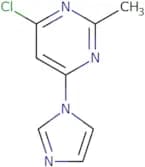
4-Chloro-6-(1H-imidazol-1-yl)-2-methylpyrimidine
CAS :<p>Versatile small molecule scaffold</p>Formule :C8H7ClN4Degré de pureté :Min. 95%Masse moléculaire :194.62 g/molRef: 3D-AAC18202
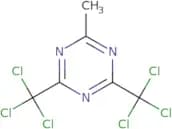
Produit arrêté2-Methyl-4,6-bis(trichloromethyl)-1,3,5-triazine
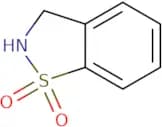
CAS :<p>2-Methyl-4,6-bis(trichloromethyl)-1,3,5-triazine is a triazine with an ionic structure. It is used as a precursor to benzene and acetonitrile. The yields of 2-methyl-4,6-bis(trichloromethyl)-1,3,5-triazine are higher in the presence of benzene compared to acetonitrile. The quantum yield for 2-methyl-4,6-bis(trichloromethyl)-1,3,5-triazine has been found to be 0.2 from the photophysical properties of its emission spectrum. This technique has been used to detect small amounts of singlet oxygen that are generated by photolysis or irradiation with lasers.</p>Formule :C6H3Cl6N3Degré de pureté :Min. 95%Masse moléculaire :329.81 g/mol2,3-dihydro-1lambda6,2-benzothiazole-1,1-dione
CAS :<p>2,3-Dihydro-1lambda6,2-benzothiazole-1,1-dione is a plant growth regulator that is used in horticultural applications. It is an anion that can be used as an additive to prevent corrosion and rusting of metals. 2,3-Dihydro-1lambda6,2-benzothiazole-1,1-dione reacts with chloride ions to form the corresponding chromatographic product. This compound also forms reaction products with other compounds such as pyrrole, amide and carbonyl group.</p>Formule :C7H7NO2SDegré de pureté :Min. 95%Masse moléculaire :169.2 g/molRef: 3D-AAA93616
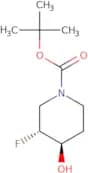
Produit arrêtétrans-1-BOC-3-Fluoro-4-hydroxypiperidine
CAS :<p>Versatile small molecule scaffold</p>Formule :C10H18FNO3Degré de pureté :Min. 95%Masse moléculaire :219.26 g/molRef: 3D-FNB02944
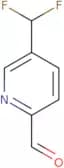
Produit arrêté5-(Difluoromethyl)pyridine-2-carbaldehyde
CAS :<p>Versatile small molecule scaffold</p>Formule :C7H5F2NODegré de pureté :Min. 95%Masse moléculaire :157.12 g/molRef: 3D-FNB11264
Produit arrêté(R)-1-(Methylamino)-2-propanol hydrochloride
CAS :<p>Versatile small molecule scaffold</p>Formule :C4H11NODegré de pureté :Min. 95%Masse moléculaire :89.14 g/molRef: 3D-GFA10146
Produit arrêté4-Bromo-6-methyl-2,3-dihydro-1H-inden-1-one
CAS :<p>Versatile small molecule scaffold</p>Formule :C10H9BrODegré de pureté :Min. 95%Masse moléculaire :225.09 g/molN-Methoxy-N,2-dimethylbenzamide
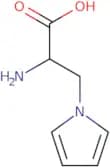
CAS :<p>Versatile small molecule scaffold</p>Formule :C10H13NO2Degré de pureté :Min. 95%Masse moléculaire :179.22 g/mol2-Amino-3-(1H-pyrrol-1-yl)propanoic acid
CAS :<p>Versatile small molecule scaffold</p>Formule :C7H10N2O2Degré de pureté :Min. 95%Masse moléculaire :154.17 g/molRef: 3D-HAA72330
Produit arrêté1-[(tert-butoxy)carbonyl]azepane-2-carboxylic acid
CAS :<p>Versatile small molecule scaffold</p>Formule :C12H21NO4Degré de pureté :Min. 95%Masse moléculaire :243.3 g/mol5-(4-Nitro-phenyl)-[1,3,4]thiadiazol-2-ylamine
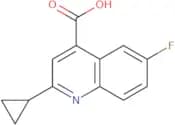
CAS :<p>Versatile small molecule scaffold</p>Formule :C8H6N4O2SDegré de pureté :Min. 95%Masse moléculaire :222.23 g/mol2-Cyclopropyl-6-fluoroquinoline-4-carboxylic acid
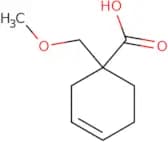
CAS :<p>Versatile small molecule scaffold</p>Formule :C13H10FNO2Degré de pureté :Min. 95%Masse moléculaire :231.22 g/mol1-(Methoxymethyl)cyclohex-3-ene-1-carboxylic acid
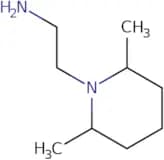
CAS :<p>Versatile small molecule scaffold</p>Formule :C9H14O3Degré de pureté :Min. 95%Masse moléculaire :170.21 g/mol2-(2,6-Dimethylpiperidin-1-yl)ethan-1-amine
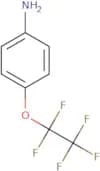
CAS :<p>Versatile small molecule scaffold</p>Formule :C9H20N2Degré de pureté :Min. 95%Masse moléculaire :156.27 g/mol4-(Perfluoroethoxy)aniline
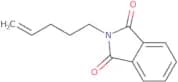
CAS :<p>Versatile small molecule scaffold</p>Formule :C8H6F5NODegré de pureté :Min. 95%Masse moléculaire :227.13 g/mol2-(Pent-4-en-1-yl)-2,3-dihydro-1H-isoindole-1,3-dione
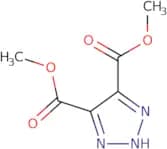
CAS :<p>Versatile small molecule scaffold</p>Formule :C13H13NO2Degré de pureté :Min. 95%Masse moléculaire :215.25 g/mol4,5-Dimethyl 1H-1,2,3-triazole-4,5-dicarboxylate
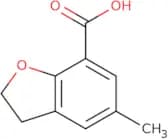
CAS :<p>Versatile small molecule scaffold</p>Formule :C6H7N3O4Degré de pureté :Min. 95%Masse moléculaire :185.14 g/mol5-Methyl-2,3-dihydro-1-benzofuran-7-carboxylic acid
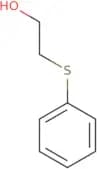
CAS :<p>Versatile small molecule scaffold</p>Formule :C10H10O3Degré de pureté :Min. 95%Masse moléculaire :178.18 g/mol2-(Phenylthio)ethanol
CAS :<p>2-Phenylthioethanol is a monomer that is used in the synthesis of silver trifluoromethanesulfonate. 2-Phenylthioethanol reacts with hydroxyl groups to form an ether linkage, which is the basis for its use as a monomer. 2-Phenylthioethanol has been shown to react with orthophosphate to form an ester linkage. This reaction is catalyzed by a nucleophile (e.g., chloride) and occurs at neutral pH in the presence of aluminium powder. The rate of this reaction increases with temperature and can be accelerated by diphenyl sulfoxide. The coatings industry uses 2-phenylthioethanol as a solvent for polyvinylchloride and polyurethane coatings, due to its ability to dissolve these materials without degrading them.</p>Formule :C8H10OSDegré de pureté :Min. 95%Masse moléculaire :154.23 g/molRef: 3D-AAA69912
Produit arrêté3-[3-(Trifluoromethoxy)phenyl]cyclobutan-1-amine hydrochloride
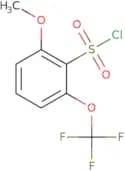
CAS :<p>Versatile small molecule scaffold</p>Formule :C11H13ClF3NODegré de pureté :Min. 95%Masse moléculaire :267.67 g/mol2-Methoxy-6-(trifluoromethoxy)benzene-1-sulfonyl chloride
CAS :<p>Versatile small molecule scaffold</p>Formule :C8H6ClF3O4SDegré de pureté :Min. 95%Masse moléculaire :290.64 g/molTricyclo[2.2.1.0,2,6]heptane-3-carboxylic acid
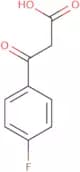
CAS :<p>Versatile small molecule scaffold</p>Formule :C8H10O2Degré de pureté :Min. 95%Masse moléculaire :138.16 g/mol3-(4-Fluorophenyl)-2-oxopropanoic acid
CAS :<p>Versatile small molecule scaffold</p>Formule :C9H7FO3Degré de pureté :Min. 95%Masse moléculaire :182.15 g/molRef: 3D-HAA76130
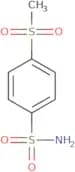
Produit arrêté4-Methanesulfonylbenzene-1-sulfonamide
CAS :<p>4-Methanesulfonylbenzene-1-sulfonamide is a research chemical that is used in assays to study the metabolism of penicillium chrysogenum and other fungi. The metabolite 4-methanesulfonylbenzenesulfonic acid has been shown to inhibit fungal growth by inhibiting the synthesis of proteins, such as ribosomal proteins, which are necessary for cell division. This research chemical has also been shown to inhibit the production of aflatoxins, which are carcinogenic compounds produced by Aspergillus flavus and other species of fungi. 4-Methanesulfonylbenzene-1-sulfonamide has been found to be safe for use in humans and animals and can be used as a replacement for methyl bromide due to its sustainable functionality.</p>Formule :C7H9NO4S2Degré de pureté :Min. 95%Masse moléculaire :235.3 g/molRef: 3D-AAA66724
Produit arrêté{3-[5-(4-Fluorophenyl)-1-methylpyrazol-3-yl]propyl}(methyl)amine
CAS :<p>Versatile small molecule scaffold</p>Formule :C14H18FN3Degré de pureté :Min. 95%Masse moléculaire :247.31 g/molRef: 3D-GXB82638
Produit arrêté4-[(2,4-Dimethylphenyl)sulfamoyl]-1H-pyrrole-2-carboxylic acid
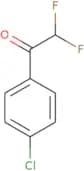
CAS :<p>Versatile small molecule scaffold</p>Formule :C13H14N2O4SDegré de pureté :Min. 95%Masse moléculaire :294.33 g/mol1-(4-Chloro-phenyl)-2,2-difluoro-ethanone
CAS :<p>Versatile small molecule scaffold</p>Formule :C8H5ClF2ODegré de pureté :Min. 95%Masse moléculaire :190.57 g/molRef: 3D-AAA65554
Produit arrêtéMethyl(pent-4-en-1-yl)amine hydrochloride
CAS :<p>Versatile small molecule scaffold</p>Formule :C6H14ClNDegré de pureté :Min. 95%Masse moléculaire :135.63 g/molRef: 3D-JMC07199
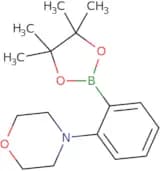
Produit arrêté2-(Morpholino)phenylboronic acid pinacolate
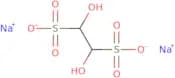
CAS :<p>Versatile small molecule scaffold</p>Formule :C16H24BNO3Degré de pureté :Min. 95%Masse moléculaire :289.2 g/molGlyoxal bis(sodium hydrogen sulfite) adduct hydrate
CAS :<p>Glyoxal bis(sodium hydrogen sulfite) adduct hydrate is a reactive compound that has been shown to react with quinoxaline derivatives. The nitrogen atoms in the amide and nitrogen atoms in the quinoxaline derivative are oxidized by oxidation catalyst, such as sodium carbonate, to form an amide-quinone. This reaction leads to the formation of a polyvinyl polymer that can be used for sample preparation. In addition, this compound has been shown to have receptor activity and detergent compositions. Glyoxal bis(sodium hydrogen sulfite) adduct hydrate also has antimicrobial properties and can be used for plant physiology studies and pharmacokinetic properties.</p>Formule :OHCCHO·2NaHSO3Degré de pureté :Min. 95%Masse moléculaire :266.16 g/mol[2,2-Bis(propan-2-yl)-1,3-dioxolan-4-yl]methanol
CAS :<p>2,2-Bis(propan-2-yl)-1,3-dioxolan-4-yl]methanol is a chemical compound with the molecular formula CHO. It is a colorless liquid that readily decomposes at high temperatures and has a pungent odor. 2,2-Bis(propan-2-yl)-1,3-dioxolan-4-yl]methanol is used as a buffer in sodium citrate injections to prevent the formation of kidney stones. It also has antiinflammatory properties and is used in horticultural applications to control pests and plant diseases. This chemical can be reconstituted with water to form an occlusive or inflammatory agent for use in controlling diseases such as herpes simplex virus and inflammatory diseases such as rheumatoid arthritis.</p>Formule :C10H20O3Degré de pureté :Min. 95%Masse moléculaire :188.26 g/molN-[(5-Methyl-2-thienyl)methyl]cyclopropanamine hydrochloride
CAS :<p>Versatile small molecule scaffold</p>Formule :C9H14ClNSDegré de pureté :Min. 95%Masse moléculaire :203.73 g/molN,N-Dimethyl-N'-[(5-methyl-2-thienyl)methyl]-1,2-ethanediamine dihydrochloride
CAS :<p>Versatile small molecule scaffold</p>Formule :C10H20Cl2N2SDegré de pureté :Min. 95%Masse moléculaire :271.2 g/molN-[4-Chloro-3-(trifluoromethyl)phenyl]-2-hydroxybenzamide
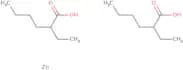
CAS :<p>Versatile small molecule scaffold</p>Formule :C14H9ClF3NO2Degré de pureté :Min. 95%Masse moléculaire :315.67 g/molEthylhexanoic acid zinc
CAS :<p>Ethylhexanoic acid zinc salt is a viscosity-increasing agent that is used in the production of high-viscosity polymers. It is a carboxylate salt of ethyl hexanoic acid and zinc. The reaction of ethylhexane with zirconium oxide produces a viscous liquid with a strong cationic polymerization activity. This product reacts with diphenyl ether and aromatic hydrocarbons to form solid products. The reaction with calcium stearate, an ester of glycerol, results in the formation of particles that are insoluble in water but soluble in organic solvents. Ethylhexane also reacts with ethylene diamine to form methyl myristate, which has kinetic data available for it.</p>Formule :C16H30O4ZnDegré de pureté :Min. 95%Masse moléculaire :351.8 g/molRef: 3D-AAA13653
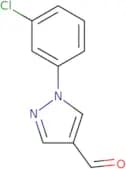
Produit arrêté1-(3-Chlorophenyl)-1H-pyrazole-4-carbaldehyde
CAS :<p>1-(3-Chlorophenyl)-1H-pyrazole-4-carbaldehyde is a pesticide that acts as a selective insecticide. It is effective against the larval stage of insects, such as the cabbage moth, Plutella xylostella. This compound has been shown to have biological activity against mites and insects with hydrazine hydrochloride and cinnabarinus. 1-(3-Chlorophenyl)-1H-pyrazole-4-carbaldehyde has also been shown to be able to cyclize with hydrazine to form an insecticidal compound.</p>Formule :C10H7ClN2ODegré de pureté :Min. 95%Masse moléculaire :206.63 g/molN-(2-Aminophenyl)butanamide hydrochloride
CAS :<p>Versatile small molecule scaffold</p>Formule :C10H15ClN2ODegré de pureté :Min. 95%Masse moléculaire :214.7 g/molRef: 3D-DQD64044
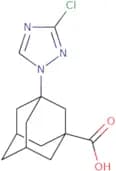
Produit arrêté3-(3-Chloro-1H-1,2,4-triazol-1-yl)adamantane-1-carboxylic acid
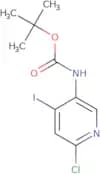
CAS :Versatile small molecule scaffoldFormule :C13H16ClN3O2Degré de pureté :Min. 95%Masse moléculaire :281.74 g/mol(6-Chloro-4-iodopyridin-3-yl)carbamic acid tert-butyl ester
CAS :<p>Versatile small molecule scaffold</p>Formule :C10H12ClIN2O2Degré de pureté :Min. 95%Masse moléculaire :354.57 g/molRef: 3D-ARA77700
Produit arrêté4-Bromo-1-[(4-chlorophenyl)methyl]-1H-pyrazol-3-amine
CAS :<p>Versatile small molecule scaffold</p>Formule :C10H9BrClN3Degré de pureté :Min. 95%Masse moléculaire :286.55 g/molRef: 3D-ARA75316
Produit arrêtétert-Butyl 5-nitroisoindoline-2-carboxylate
CAS :<p>tert-Butyl 5-nitroisoindoline-2-carboxylate is a platelet inhibitor that belongs to the group of antagonists. It has been shown to inhibit human platelets and inhibit the aggregation of fibrinogen. Tert-butyl 5-nitroisoindoline-2-carboxylate has also been shown to have high potency in animal models, but it is not yet known whether it will be effective in humans. The drug has been shown to be a potent antagonist at the platelet P2Y12 receptor, which mediates platelet aggregation and activation, as well as inhibiting ADP-, collagen-, thrombin-, and epinephrine-induced aggregation. Tert-butyl 5-nitroisoindoline-2-carboxylate may also act as a surrogate for agonists or mimetics of the P2Y12 receptor.</p>Formule :C13H16N2O4Degré de pureté :Min. 95%Masse moléculaire :264.28 g/mol2-[(5-Methyl-1,3-thiazol-2-yl)sulfanyl]-1-(thiophen-2-yl)ethan-1-one
CAS :<p>Versatile small molecule scaffold</p>Formule :C10H9NOS3Degré de pureté :Min. 95%Masse moléculaire :255.4 g/molRef: 3D-AQB93225
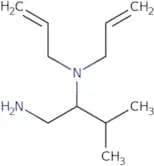
Produit arrêté(1-Amino-3-methylbutan-2-yl)bis(prop-2-en-1-yl)amine
CAS :<p>Versatile small molecule scaffold</p>Formule :C11H22N2Degré de pureté :Min. 95%Masse moléculaire :182.31 g/mol3-Cyclopropyl-3-azabicyclo[3.3.1]nonan-9-one
CAS :<p>Versatile small molecule scaffold</p>Formule :C11H17NODegré de pureté :Min. 95%Masse moléculaire :179.26 g/mol3-Ethyl-3-(4-methylphenyl)pyrrolidine-2,5-dione
CAS :<p>Versatile small molecule scaffold</p>Formule :C13H15NO2Degré de pureté :Min. 95%Masse moléculaire :217.26 g/mol4-[(2-Aminopyridin-3-yl)oxy]butanenitrile
CAS :<p>Versatile small molecule scaffold</p>Formule :C9H11N3ODegré de pureté :Min. 95%Masse moléculaire :177.2 g/molRef: 3D-CWB56149
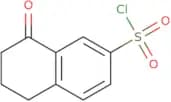
Produit arrêté8-Oxo-5,6,7,8-tetrahydronaphthalene-2-sulfonyl chloride
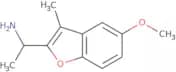
CAS :<p>Versatile small molecule scaffold</p>Formule :C10H9ClO3SDegré de pureté :Min. 95%Masse moléculaire :244.69 g/mol1-(5-Methoxy-3-methyl-1-benzofuran-2-yl)ethan-1-amine
CAS :<p>Versatile small molecule scaffold</p>Formule :C12H15NO2Degré de pureté :Min. 95%Masse moléculaire :205.25 g/molRef: 3D-CWB51891
Produit arrêté2-[4-(1,3-Dioxaindan-5-yl)-4-methyl-2,5-dioxoimidazolidin-1-yl]acetic acid
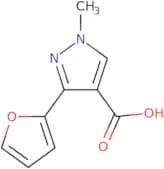
CAS :<p>Versatile small molecule scaffold</p>Formule :C13H12N2O6Degré de pureté :Min. 95%Masse moléculaire :292.24 g/mol3-(Furan-2-yl)-1-methyl-1H-pyrazole-4-carboxylic acid
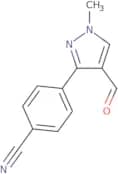
CAS :<p>Versatile small molecule scaffold</p>Formule :C9H8N2O3Degré de pureté :Min. 95%Masse moléculaire :192.17 g/mol4-(4-Formyl-1-methyl-1H-pyrazol-3-yl)benzonitrile
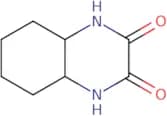
CAS :<p>Versatile small molecule scaffold</p>Formule :C12H9N3ODegré de pureté :Min. 95%Masse moléculaire :211.22 g/molrac-(4aR,8aS)-Decahydroquinoxaline-2,3-dione
CAS :<p>Versatile small molecule scaffold</p>Formule :C8H12N2O2Degré de pureté :Min. 95%Masse moléculaire :168.19 g/mol2'-Amino-[1,1'-bi(cyclopropane)]-2-carboxylic acid hydrochloride
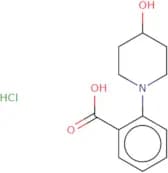
CAS :<p>Versatile small molecule scaffold</p>Formule :C7H12ClNO2Degré de pureté :Min. 95%Masse moléculaire :177.6 g/mol2-(4-Hydroxypiperidin-1-yl)benzoic acid hydrochloride
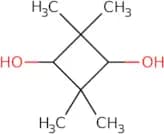
CAS :<p>Versatile small molecule scaffold</p>Formule :C12H16ClNO3Degré de pureté :Min. 95%Masse moléculaire :257.7 g/mol2,2,4,4-Tetramethyl-1,3-cyclobutanediol, mixture of isomers
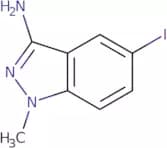
CAS :<p>Tetramethyl-1,3-cyclobutanediol is a diacid that can be used as a monomer for the production of polyesters. It has conformational properties that are different from other diols. Tetramethyl-1,3-cyclobutanediol is soluble in hydrochloric acid and reacts with coatings containing dibutyltin oxide to produce residues. This chemical also reacts with copper oxide, resulting in the formation of copper cyclohexanol and dibutyltin oxide. Tetramethyl-1,3-cyclobutanediol is able to react with carboxylic acids to form esters. This compound has been shown to be employed in the synthesis of polycarboxylic acids such as adipic acid and sebacic acid. Tetramethyl-1,3-cyclobutanediol has been used in the production of polyester resins by reacting with ethylene glycol and tere</p>Formule :C8H16O2Degré de pureté :Min. 95%Masse moléculaire :144.21 g/mol5-Iodo-1-methyl-1H-indazol-3-amine
CAS :<p>Versatile small molecule scaffold</p>Formule :C8H8IN3Degré de pureté :Min. 95%Masse moléculaire :273.07 g/molRef: 3D-CZB95523
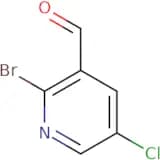
Produit arrêté2-bromo-5-chloropyridine-3-carbaldehyde
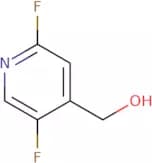
CAS :<p>Versatile small molecule scaffold</p>Formule :C6H3BrClNODegré de pureté :Min. 95%Masse moléculaire :220.5 g/mol(2,5-Difluoropyridin-4-yl)methanol
CAS :<p>Versatile small molecule scaffold</p>Formule :C6H5F2NODegré de pureté :Min. 95%Masse moléculaire :145.11 g/molRef: 3D-CZB60153
Produit arrêté2-Chloro-5-methoxy-4-methylpyridine
CAS :<p>Versatile small molecule scaffold</p>Formule :C7H8ClNODegré de pureté :Min. 95%Masse moléculaire :157.6 g/molRef: 3D-CZB59377
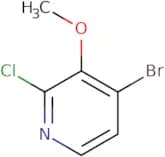
Produit arrêté4-Bromo-2-chloro-3-methoxypyridine
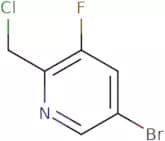
CAS :<p>Versatile small molecule scaffold</p>Formule :C6H5BrClNODegré de pureté :Min. 95%Masse moléculaire :222.47 g/mol5-Bromo-2-(chloromethyl)-3-fluoropyridine
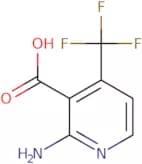
CAS :<p>Versatile small molecule scaffold</p>Formule :C6H4BrClFNDegré de pureté :Min. 95%Masse moléculaire :224.46 g/mol2-Amino-4-(trifluoromethyl)nicotinic acid
CAS :<p>Versatile small molecule scaffold</p>Formule :C7H5F3N2O2Degré de pureté :Min. 95%Masse moléculaire :206.12 g/molrac-Methyl 2-[(1R,3R)-3-amino-2,2-dimethylcyclobutyl]acetate
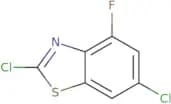
CAS :<p>Versatile small molecule scaffold</p>Formule :C9H17NO2Degré de pureté :Min. 95%Masse moléculaire :171.2 g/mol2,6-Dichloro-4-fluoro-1,3-benzothiazole
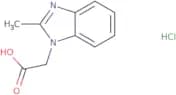
CAS :<p>Versatile small molecule scaffold</p>Formule :C7H2Cl2FNSDegré de pureté :Min. 95%Masse moléculaire :222.07 g/mol2-(2-Methyl-1H-1,3-benzodiazol-1-yl)acetic acid hydrochloride
CAS :<p>Versatile small molecule scaffold</p>Formule :C10H11ClN2O2Degré de pureté :Min. 95%Masse moléculaire :226.66 g/molRef: 3D-CXB31033
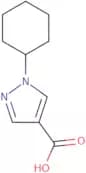
Produit arrêté1-Cyclohexyl-1H-pyrazole-4-carboxylic acid
CAS :<p>Versatile small molecule scaffold</p>Formule :C10H14N2O2Degré de pureté :Min. 95%Masse moléculaire :194.23 g/molRef: 3D-CXB29930
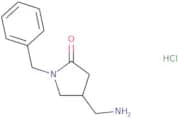
Produit arrêté4-(Aminomethyl)-1-benzylpyrrolidin-2-one hydrochloride
CAS :<p>Versatile small molecule scaffold</p>Formule :C12H17ClN2ODegré de pureté :Min. 95%Masse moléculaire :240.73 g/molRef: 3D-CXB27949
Produit arrêté5-(Propan-2-yl)-1-(pyridin-4-yl)-1H-pyrazole-3-carboxylic acid
CAS :<p>Versatile small molecule scaffold</p>Formule :C12H13N3O2Degré de pureté :Min. 95%Masse moléculaire :231.25 g/molRef: 3D-CXB27221
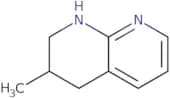
Produit arrêté3-Methyl-1,2,3,4-tetrahydro-1,8-naphthyridine
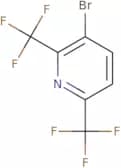
CAS :<p>Versatile small molecule scaffold</p>Formule :C9H12N2Degré de pureté :Min. 95%Masse moléculaire :148.2 g/mol3-Bromo-2,6-bis(trifluoromethyl)pyridine
CAS :<p>Versatile small molecule scaffold</p>Formule :C7H2BrF6NDegré de pureté :Min. 95%Masse moléculaire :293.99 g/molMethyl 2-amino-2-(1-hydroxycyclohexyl)acetate hydrochloride
CAS :<p>Versatile small molecule scaffold</p>Formule :C9H18ClNO3Degré de pureté :Min. 95%Masse moléculaire :223.7 g/mol4-(1-Phenyl-1H-pyrazol-4-yl)-1H-pyrrole-3-carboxylic acid
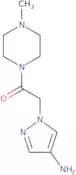
CAS :<p>Versatile small molecule scaffold</p>Formule :C14H11N3O2Degré de pureté :Min. 95%Masse moléculaire :253.26 g/mol2-(4-Amino-1H-pyrazol-1-yl)-1-(4-methylpiperazin-1-yl)ethan-1-one
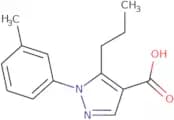
CAS :<p>Versatile small molecule scaffold</p>Formule :C10H17N5ODegré de pureté :Min. 95%Masse moléculaire :223.28 g/mol1-(3-Methylphenyl)-5-propyl-1H-pyrazole-4-carboxylic acid
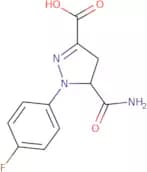
CAS :Versatile small molecule scaffoldFormule :C14H16N2O2Degré de pureté :Min. 95%Masse moléculaire :244.29 g/mol5-Carbamoyl-1-(4-fluorophenyl)-4,5-dihydro-1H-pyrazole-3-carboxylic acid
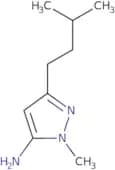
CAS :<p>Versatile small molecule scaffold</p>Formule :C11H10FN3O3Degré de pureté :Min. 95%Masse moléculaire :251.21 g/mol1-Methyl-3-(3-methylbutyl)-1H-pyrazol-5-amine
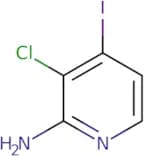
CAS :<p>Versatile small molecule scaffold</p>Formule :C9H17N3Degré de pureté :Min. 95%Masse moléculaire :167.25 g/mol3-Chloro-4-iodopyridin-2-amine
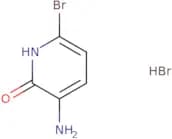
CAS :<p>3-Chloro-4-iodopyridin-2-amine is a chemical compound with the formula CHI. It is a white solid that can be used in evaluating cross-coupling reactions, such as the coupling of an alkyne with a chlorine atom. This chemical has been shown to react well with chlorination reagents and to form substituted cyanides. The nature of the substituent on the chlorine atom determines its regioselectivity and reactivity, making this compound useful for regiocontrolled synthesis.</p>Formule :C5H4ClIN2Degré de pureté :Min. 95%Masse moléculaire :254.46 g/mol3-amino-6-bromopyridin-2-ol hydrobromide
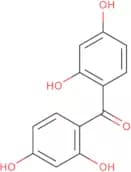
CAS :<p>Versatile small molecule scaffold</p>Formule :C5H6Br2N2ODegré de pureté :Min. 95%Masse moléculaire :269.9 g/mol2,2',4,4'-tetrahydroxybenzophenone
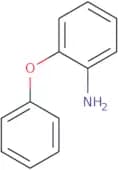
CAS :<p>2,2',4,4'-tetrahydroxybenzophenone is a hydroxylated benzophenone that has immunomodulatory effects. It binds to the receptor in the immune system and can cause an increase in cytokine production. 2,2',4,4'-tetrahydroxybenzophenone is cytotoxic and has significant toxicity in vitro. The molecule has been shown to disrupt mitochondrial membrane potential. This may be due to its ability to form hydrogen bonds with molecules on the mitochondrial membrane. 2,2',4,4'-tetrahydroxybenzophenone also modulates transcriptional regulation of genes involved in cell proliferation and apoptosis. The drug is detectable at low levels by mass spectrometry and is not known to have any toxicological effects.END>></p>Formule :C13H10O5Degré de pureté :Min. 95%Couleur et forme :Green PowderMasse moléculaire :246.22 g/mol2-Phenoxyaniline
CAS :<p>2-Phenoxyaniline is a nitro compound that can be converted to the corresponding palladium complexes. It is an inhibitor of the acylation reaction, which is a type of chemical reaction in which an organic molecule reacts with an acid. The inhibition of this reaction has been shown to have an effect on heart disease, specifically by lowering cholesterol levels and reducing atherosclerosis. 2-Phenoxyaniline has also been shown to inhibit the activation energy for electron transfer reactions, making it useful as a catalyst in analytical methods. 2-Phenoxyaniline also undergoes vibrational spectroscopy when exposed to liquid chromatography and other analytical methods.</p>Formule :C12H11NODegré de pureté :Min. 95%Couleur et forme :Brown PowderMasse moléculaire :185.22 g/molRef: 3D-FP106356
Produit arrêtétert-Butyl 5-bromo-3,4-dihydro-2,7-naphthyridine-2(1H)-carboxylate
CAS :<p>Versatile small molecule scaffold</p>Formule :C13H17BrN2O2Degré de pureté :Min. 95%Masse moléculaire :313.19 g/molRef: 3D-BAC01216
Produit arrêté2-Acetylbenzoic acid
CAS :<p>2-Acetylbenzoic acid is a functional molecule that contains an acetyl group. It can form hydrogen bonds with other molecules and has been shown to induce apoptosis in cells. The reaction products of 2-acetylbenzoic acid are malonic acid, acetylsalicylic acid, and 2-benzoylbenzoic acid. These three compounds are made by the addition of hydrogen or hydroxide to the molecule 2-acetylbenzoic acid. The molecule has two functional groups: a carbonyl group and an acetyl group. The chemical structure of this molecule can be seen in the figure below.<br>2-Acetylbenzoic Acid</p>Formule :C9H8O3Degré de pureté :Min. 95%Couleur et forme :PowderMasse moléculaire :164.16 g/mol2-Bromo-3,3,3-trifluoro-1-propene
CAS :Produit contrôlé<p>2-Bromo-3,3,3-trifluoro-1-propene is a chemical compound that has been synthesized in an asymmetric reaction. The reactant is bromopropane and the product is 2,2,2-trifluoropropene. The methylene group on the propene molecule is activated by the nucleophilic attack of a fluoride ion from hydrogen fluoride to form a cavity with a highly strained bond. The kinetic study of this reaction revealed that the activation energy for the reaction is 42 kJ/mol. Palladium-catalyzed coupling reactions are catalyzed by palladium and require nonpolar solvents such as toluene or dichloromethane. This type of reaction has been shown to be exothermic with an isolated yield of 1%.</p>Formule :C3H2BrF3Degré de pureté :Min. 95%Couleur et forme :Colorless PowderMasse moléculaire :174.95 g/molRef: 3D-FB11073
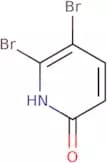
Produit arrêté5,6-Dibromopyridin-2-ol
CAS :<p>Versatile small molecule scaffold</p>Formule :C5H3Br2NODegré de pureté :Min. 95%Masse moléculaire :252.89 g/molRef: 3D-HEC94605
Produit arrêté1-[3-(Dimethylamino)propyl]-1-(4-fluorophenyl)-1,3-dihydro-3-oxo-5-isobenzofurancarbonitrile
CAS :<p>Please enquire for more information about 1-[3-(Dimethylamino)propyl]-1-(4-fluorophenyl)-1,3-dihydro-3-oxo-5-isobenzofurancarbonitrile including the price, delivery time and more detailed product information at the technical inquiry form on this page</p>Formule :C20H19FN2O2Degré de pureté :Min. 95%Masse moléculaire :338.38 g/mol3-Methylbenzo[b]thiophene-2-carboxylic acid
CAS :<p>3-Methylbenzo[b]thiophene-2-carboxylic acid (MBTCA) is a heterocyclic compound that is an intermediate in the synthesis of 3-methylthiophene-2-carboxylic acid, a precursor to other drugs. MBTCA is an aerobic, nonpolar compound that has shown antimicrobial activity against some bacteria and fungi. It also has been shown to have practicality as a biomolecular probe for methyl groups in organic solvents. MBTCA can be synthesized by nitration of benzene in the presence of sulfur and sulfoxides. This reaction produces nitrobenzene, which can then be oxidized by potassium permanganate or hydrogen peroxide to produce MBTCA. The most common isomer of MBTCA is 2-(3,5-dimethoxybenzylidene)tetrahydrofuran, with three methyl groups on the</p>Formule :C10H8O2SDegré de pureté :Min. 95%Masse moléculaire :192.23 g/mol4-(Methylamino)benzene-1-sulfonamide
CAS :<p>Versatile small molecule scaffold</p>Formule :C7H10N2O2SDegré de pureté :Min. 95%Masse moléculaire :186.23 g/mol3-(Methoxycarbonyl)pyridine-4-carboxylic acid
CAS :<p>Versatile small molecule scaffold</p>Formule :C8H7NO4Degré de pureté :Min. 95%Masse moléculaire :181.15 g/molRef: 3D-ZAA20279
Produit arrêtéH-Ser-Ala-Glu-Glu-Tyr-Glu-Tyr-Pro-Ser OH trifluoroacetate
CAS :<p>Please enquire for more information about H-Ser-Ala-Glu-Glu-Tyr-Glu-Tyr-Pro-Ser OH trifluoroacetate including the price, delivery time and more detailed product information at the technical inquiry form on this page</p>Formule :C47H63N9O20•(C2HF3O2)xDegré de pureté :Min. 95%Givinostat hydrochloride
CAS :<p>Givinostat hydrochloride is a research chemical that has shown potential in various fields. It is a molybdenum-based compound that has been studied for its effects on dopamine release and hydrogen evolution. Givinostat hydrochloride has also been investigated as an osteoclast inhibitor, which may be beneficial in the treatment of bone-related disorders such as osteoporosis. Additionally, it has shown promise as a retinoid and calpain inhibitor, suggesting its potential use in dermatological conditions and neurodegenerative diseases. The compound contains fluorine atoms, making it suitable for imaging studies using fluorine MRI techniques. Givinostat hydrochloride has been tested on MDA-MB-231 cells and has shown inhibitory effects on their growth, indicating its potential as an anticancer agent.</p>Formule :C24H27N3O4·HClDegré de pureté :Min. 95%Masse moléculaire :457.95 g/molRef: 3D-ZHA65729
Produit arrêté



![1-[(tert-butoxy)carbonyl]azepane-2-carboxylic acid](/_next/image/?url=https%3A%2Fstatic.cymitquimica.com%2Fproducts%2F3D%2Fthumb-webp%2FJRB70826.webp&w=3840&q=75)
![5-(4-Nitro-phenyl)-[1,3,4]thiadiazol-2-ylamine](/_next/image/?url=https%3A%2Fstatic.cymitquimica.com%2Fproducts%2F3D%2Fthumb-webp%2FAAA83363.webp&w=3840&q=75)
![3-[3-(Trifluoromethoxy)phenyl]cyclobutan-1-amine hydrochloride](/_next/image/?url=https%3A%2Fstatic.cymitquimica.com%2Fproducts%2F3D%2Fthumb-webp%2FJBD28849.webp&w=3840&q=75)
![Tricyclo[2.2.1.0,2,6]heptane-3-carboxylic acid](/_next/image/?url=https%3A%2Fstatic.cymitquimica.com%2Fproducts%2F3D%2Fthumb-webp%2FAAA69756.webp&w=3840&q=75)
![{3-[5-(4-Fluorophenyl)-1-methylpyrazol-3-yl]propyl}(methyl)amine](/_next/image/?url=https%3A%2Fstatic.cymitquimica.com%2Fproducts%2F3D%2Fthumb-webp%2FGXB82638.webp&w=3840&q=75)
![4-[(2,4-Dimethylphenyl)sulfamoyl]-1H-pyrrole-2-carboxylic acid](/_next/image/?url=https%3A%2Fstatic.cymitquimica.com%2Fproducts%2F3D%2Fthumb-webp%2FMMB60945.webp&w=3840&q=75)

![[2,2-Bis(propan-2-yl)-1,3-dioxolan-4-yl]methanol](/_next/image/?url=https%3A%2Fstatic.cymitquimica.com%2Fproducts%2F3D%2Fthumb-webp%2FAAA47043.webp&w=3840&q=75)
![N-[(5-Methyl-2-thienyl)methyl]cyclopropanamine hydrochloride](/_next/image/?url=https%3A%2Fstatic.cymitquimica.com%2Fproducts%2F3D%2Fthumb-webp%2FASB21404.webp&w=3840&q=75)
![N,N-Dimethyl-N'-[(5-methyl-2-thienyl)methyl]-1,2-ethanediamine dihydrochloride](/_next/image/?url=https%3A%2Fstatic.cymitquimica.com%2Fproducts%2F3D%2Fthumb-webp%2FASB21396.webp&w=3840&q=75)
![N-[4-Chloro-3-(trifluoromethyl)phenyl]-2-hydroxybenzamide](/_next/image/?url=https%3A%2Fstatic.cymitquimica.com%2Fproducts%2F3D%2Fthumb-webp%2FAAA36974.webp&w=3840&q=75)
![4-Bromo-1-[(4-chlorophenyl)methyl]-1H-pyrazol-3-amine](/_next/image/?url=https%3A%2Fstatic.cymitquimica.com%2Fproducts%2F3D%2Fthumb-webp%2FARA75316.webp&w=3840&q=75)

![2-[(5-Methyl-1,3-thiazol-2-yl)sulfanyl]-1-(thiophen-2-yl)ethan-1-one](/_next/image/?url=https%3A%2Fstatic.cymitquimica.com%2Fproducts%2F3D%2Fthumb-webp%2FAQB93225.webp&w=3840&q=75)
![3-Cyclopropyl-3-azabicyclo[3.3.1]nonan-9-one](/_next/image/?url=https%3A%2Fstatic.cymitquimica.com%2Fproducts%2F3D%2Fthumb-webp%2FAQB93118.webp&w=3840&q=75)

![4-[(2-Aminopyridin-3-yl)oxy]butanenitrile](/_next/image/?url=https%3A%2Fstatic.cymitquimica.com%2Fproducts%2F3D%2Fthumb-webp%2FCWB56149.webp&w=3840&q=75)
![2-[4-(1,3-Dioxaindan-5-yl)-4-methyl-2,5-dioxoimidazolidin-1-yl]acetic acid](/_next/image/?url=https%3A%2Fstatic.cymitquimica.com%2Fproducts%2F3D%2Fthumb-webp%2FCWB51377.webp&w=3840&q=75)
![2'-Amino-[1,1'-bi(cyclopropane)]-2-carboxylic acid hydrochloride](/_next/image/?url=https%3A%2Fstatic.cymitquimica.com%2Fproducts%2F3D%2Fthumb-webp%2FCVD03476.webp&w=3840&q=75)
![rac-Methyl 2-[(1R,3R)-3-amino-2,2-dimethylcyclobutyl]acetate](/_next/image/?url=https%3A%2Fstatic.cymitquimica.com%2Fproducts%2F3D%2Fthumb-webp%2FFPD79819.webp&w=3840&q=75)





![1-[3-(Dimethylamino)propyl]-1-(4-fluorophenyl)-1,3-dihydro-3-oxo-5-isobenzofurancarbonitrile](/_next/image/?url=https%3A%2Fstatic.cymitquimica.com%2Fproducts%2F3D%2Fthumb-webp%2FFD184085.webp&w=3840&q=75)
![3-Methylbenzo[b]thiophene-2-carboxylic acid](/_next/image/?url=https%3A%2Fstatic.cymitquimica.com%2Fproducts%2F3D%2Fthumb-webp%2FDAA13378.webp&w=3840&q=75)