Building Blocks
Cette section contient des produits fondamentaux pour la synthèse de composés organiques et biologiques. Building blocks sont les matériaux de départ essentiels utilisés pour construire des molécules complexes à travers diverses réactions chimiques. Ils jouent un rôle crucial dans la découverte de médicaments, la science des matériaux et la recherche chimique. Chez CymitQuimica, nous offrons une gamme diversifiée de building blocks de haute qualité pour soutenir vos recherches innovantes et projets industriels, en vous assurant de disposer des composants essentiels pour une synthèse réussie.
Sous-catégories appartenant à la catégorie "Building Blocks"
- Acides boroniques et dérivés de l'acide boronique(5.778 produits)
- Building Blocks Chiraux(1.243 produits)
- Building Blocks Hydrocarbonés(6.098 produits)
- Building Blocks organiques(61.046 produits)
203857 produits trouvés pour "Building Blocks"
Trier par
Degré de pureté (%)
0
100
|
0
|
50
|
90
|
95
|
100
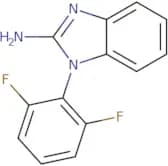
1-(2,6-Difluorophenyl)-1H-1,3-benzodiazol-2-amine
CAS :<p>Versatile small molecule scaffold</p>Formule :C13H9F2N3Degré de pureté :Min. 95%Masse moléculaire :245.23 g/mol5-Ethyl-1,3-dimethyl-2,4-dioxo-1H,2H,3H,4H-pyrido[2,3-d]pyrimidine-6-carboxylic acid
CAS :<p>Versatile small molecule scaffold</p>Formule :C12H13N3O4Degré de pureté :Min. 95%Masse moléculaire :263.25 g/mol1-[4-(Aminomethyl)phenyl]-3-(propan-2-yl)urea
CAS :<p>Versatile small molecule scaffold</p>Formule :C11H17N3ODegré de pureté :Min. 95%Masse moléculaire :207.27 g/molRef: 3D-NRB23822
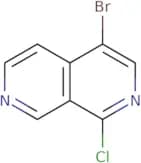
Produit arrêté4-bromo-1-chloro-2,7-naphthyridine
CAS :<p>Versatile small molecule scaffold</p>Formule :C8H4BrClN2Degré de pureté :Min. 95%Masse moléculaire :243.5 g/mol1-[6-(Pyridin-2-yl)pyridin-3-yl]ethan-1-one
CAS :<p>Versatile small molecule scaffold</p>Formule :C12H10N2ODegré de pureté :Min. 95%Masse moléculaire :198.22 g/mol(2S)-3-(4-Hydroxyphenyl)-2-[(methoxycarbonyl)amino]propanoic acid
CAS :<p>(2S)-3-(4-Hydroxyphenyl)-2-[(methoxycarbonyl)amino]propanoic acid is a natural product that is structurally related to oxazolines. It has been shown to inhibit the biosynthetic pathway of immunoglobulins, which may be due to its ability to inhibit oxidative cyclization and cyclization. It also has phenolic properties and can act as an antioxidant.</p>Formule :C11H13NO5Degré de pureté :Min. 95%Masse moléculaire :239.22 g/mol1-[(3-Bromophenyl)methyl]-1,2,3,4-tetrahydropyrimidine-2,4-dione
CAS :<p>Versatile small molecule scaffold</p>Formule :C11H9BrN2O2Degré de pureté :Min. 95%Masse moléculaire :281.1 g/mol4-(Quinolin-4-yloxy)aniline
CAS :<p>Versatile small molecule scaffold</p>Formule :C15H12N2ODegré de pureté :Min. 95%Masse moléculaire :236.27 g/molRef: 3D-NJB50393
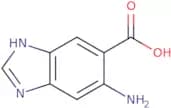
Produit arrêté6-Amino-1H-1,3-benzodiazole-5-carboxylic acid
CAS :<p>Versatile small molecule scaffold</p>Formule :C8H7N3O2Degré de pureté :Min. 95%Masse moléculaire :177.16 g/mol4-Amino-1-methyl-2λ⁶-thia-1-azaspiro[4.4]non-3-ene-2,2-dione
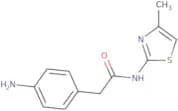
CAS :<p>Versatile small molecule scaffold</p>Formule :C8H14N2O2SDegré de pureté :Min. 95%Masse moléculaire :202.28 g/mol2-(4-Aminophenyl)-N-(4-methyl-1,3-thiazol-2-yl)acetamide
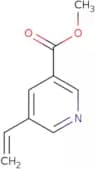
CAS :<p>Versatile small molecule scaffold</p>Formule :C12H13N3OSDegré de pureté :Min. 95%Masse moléculaire :247.32 g/mol5-Vinylnicotinic acid methyl ester
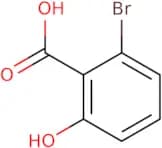
CAS :<p>5-Vinylnicotinic acid methyl ester belongs to the group of antimicrobial agents. It is a chemical compound that has been shown to be effective against cervical cancer and may have potential as an anticancer drug. 5-Vinylnicotinic acid methyl ester inhibits the growth of human chorionic gonadotropin (HCG) in women, which is a hormone necessary for ovulation and pregnancy. This compound also inhibits the growth of viruses, such as herpes simplex virus type 1 (HSV-1), and bacteria, such as dittrichia sp., which causes inflammation of the throat. 5-Vinylnicotinic acid methyl ester has also been shown to inhibit protein synthesis in human osteosarcoma cells at low concentrations, but not at high concentrations.</p>Formule :C9H9NO2Degré de pureté :Min. 95%Masse moléculaire :163.17 g/mol2-Bromo-6-hydroxybenzoic acid
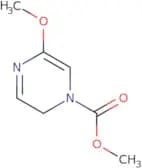
CAS :<p>2-Bromo-6-hydroxybenzoic acid is a nucleophilic compound with a bromine atom at the 2 position. It is used in organic synthesis as a building block in the preparation of amides and other functional groups. This efficient preparation can be achieved by treating anilines with sodium nitrite and hydroxylamine in ethanol.</p>Formule :C7H5BrO3Degré de pureté :Min. 95%Masse moléculaire :217.02 g/molMethyl 5-Methoxypyrazinecarboxylate
CAS :<p>Methyl 5-methoxypyrazinecarboxylate is an organic compound that belongs to the group of triazoles. It has been used as a pesticide for the control of plant pathogenic fungi, nematodes and insects, such as dextrose, chloride, oxadiazoles and agriculturally. This product is effective against pests at low doses. Methyl 5-methoxypyrazinecarboxylate inhibits the synthesis of proteins in plants by inhibiting chitin synthase enzymes in fungi and nematodes. It also inhibits the synthesis of proteins in insects by interfering with the synthesis of proteins involved in cell division.</p>Formule :C7H8N2O3Degré de pureté :Min. 95%Masse moléculaire :168.15 g/molRef: 3D-NBA78975
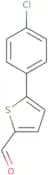
Produit arrêté5-(4-Chlorophenyl)thiophene-2-carbaldehyde
CAS :<p>Versatile small molecule scaffold</p>Formule :C11H7ClOSDegré de pureté :Min. 95%Masse moléculaire :222.69 g/molRef: 3D-NBA40171
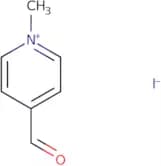
Produit arrêté4-Formyl-1-methylpyridin-1-ium iodide
CAS :<p>Versatile small molecule scaffold</p>Formule :C7H8INODegré de pureté :Min. 95%Masse moléculaire :249.05 g/molRef: 3D-NAA44153
Produit arrêté1-Methoxybicyclo[3.3.1]nonan-3-amine hydrochloride
CAS :<p>Versatile small molecule scaffold</p>Formule :C10H20ClNODegré de pureté :Min. 95%Masse moléculaire :205.7 g/mol2-Amino-4H,5H,6H-cyclopenta[b]thiophene-3-carboxylic acid hydrochloride
CAS :<p>Versatile small molecule scaffold</p>Formule :C8H10ClNO2SDegré de pureté :Min. 95%Masse moléculaire :219.7 g/mol2-{Bicyclo[2.2.1]heptan-1-yl}ethan-1-amine hydrochloride
CAS :<p>Versatile small molecule scaffold</p>Formule :C9H18ClNDegré de pureté :Min. 95%Masse moléculaire :175.7 g/mol3-Methoxyazetidine-3-carboxamide hydrochloride
CAS :Versatile small molecule scaffoldFormule :C5H11ClN2O2Degré de pureté :Min. 95%Masse moléculaire :166.6 g/mol6-Chloroquinoline-7-carboxylic acid hydrochloride
CAS :<p>Versatile small molecule scaffold</p>Formule :C10H7Cl2NO2Degré de pureté :Min. 95%Masse moléculaire :244.1 g/mol1-(Dimethoxy-1,2-thiazol-4-yl)ethan-1-amine hydrochloride
CAS :<p>Versatile small molecule scaffold</p>Formule :C7H13ClN2O2SDegré de pureté :Min. 95%Masse moléculaire :224.7 g/mol[1-(Difluoromethyl)-1H-pyrrol-2-yl]methanol
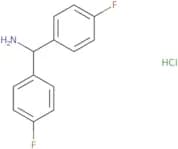
CAS :<p>Versatile small molecule scaffold</p>Formule :C6H7F2NODegré de pureté :Min. 95%Masse moléculaire :147.12 g/molBis(4-fluorophenyl)methanamine hydrochloride
CAS :<p>Versatile small molecule scaffold</p>Formule :C13H12ClF2NDegré de pureté :Min. 95%Masse moléculaire :255.69 g/molRef: 3D-MLA11167
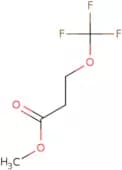
Produit arrêtéMethyl 3-(trifluoromethoxy)propanoate
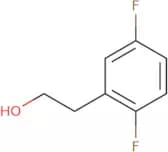
CAS :<p>Versatile small molecule scaffold</p>Formule :C5H7F3O3Degré de pureté :Min. 95%Masse moléculaire :172.1 g/mol2-(2,5-Difluorophenyl)ethanol
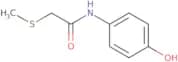
CAS :<p>Versatile small molecule scaffold</p>Formule :C8H8F2ODegré de pureté :Min. 95%Masse moléculaire :158.15 g/molN-(4-Hydroxyphenyl)-2-(methylsulfanyl)acetamide
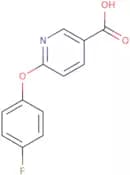
CAS :<p>Versatile small molecule scaffold</p>Formule :C9H11NO2SDegré de pureté :Min. 95%Masse moléculaire :197.26 g/mol6-(4-Fluorophenoxy)pyridine-3-carboxylic acid
CAS :<p>Versatile small molecule scaffold</p>Formule :C12H8FNO3Degré de pureté :Min. 95%Masse moléculaire :233.19 g/mol4-({[(Furan-2-yl)methyl](methyl)amino}methyl)-N-methylpyridin-2-amine
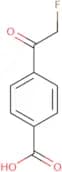
CAS :<p>Versatile small molecule scaffold</p>Formule :C13H17N3ODegré de pureté :Min. 95%Masse moléculaire :231.29 g/mol4-(2-Fluoroacetyl)benzoic acid
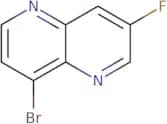
CAS :<p>Versatile small molecule scaffold</p>Formule :C9H7FO3Degré de pureté :Min. 95%Masse moléculaire :182.15 g/mol8-Bromo-3-fluoro-1,5-naphthyridine
CAS :<p>Versatile small molecule scaffold</p>Formule :C8H4BrFN2Degré de pureté :Min. 95%Masse moléculaire :227.03 g/moltrans-1,2-Dichloroethylene
CAS :<p>Trans-1,2-Dichloroethylene is a chlorinated hydrocarbon that is used in the production of polyvinyl chloride plastics. When ingested at dietary concentrations, trans-1,2-Dichloroethylene may cause liver damage and death in CD-1 mice. Trans-1,2-Dichloroethylene has been shown to react with nucleophilic substitutions and produce toxic reaction products. This chemical also causes polymerase chain reactions that can lead to cell death. The effective dose for this chemical is unknown because it has not been tested in clinical trials.</p>Formule :C2H2Cl2Degré de pureté :Min. 95%Masse moléculaire :96.94 g/molRef: 3D-FD34631
Produit arrêté4-(Methylamino)benzene-1-sulfonamide
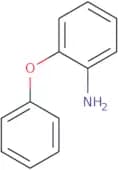
CAS :<p>Versatile small molecule scaffold</p>Formule :C7H10N2O2SDegré de pureté :Min. 95%Masse moléculaire :186.23 g/mol2-Phenoxyaniline
CAS :<p>2-Phenoxyaniline is a nitro compound that can be converted to the corresponding palladium complexes. It is an inhibitor of the acylation reaction, which is a type of chemical reaction in which an organic molecule reacts with an acid. The inhibition of this reaction has been shown to have an effect on heart disease, specifically by lowering cholesterol levels and reducing atherosclerosis. 2-Phenoxyaniline has also been shown to inhibit the activation energy for electron transfer reactions, making it useful as a catalyst in analytical methods. 2-Phenoxyaniline also undergoes vibrational spectroscopy when exposed to liquid chromatography and other analytical methods.</p>Formule :C12H11NODegré de pureté :Min. 95%Couleur et forme :Brown PowderMasse moléculaire :185.22 g/molRef: 3D-FP106356
Produit arrêté3-(Methoxycarbonyl)pyridine-4-carboxylic acid
CAS :<p>Versatile small molecule scaffold</p>Formule :C8H7NO4Degré de pureté :Min. 95%Masse moléculaire :181.15 g/molRef: 3D-ZAA20279
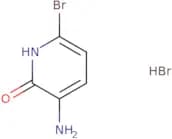
Produit arrêté3-amino-6-bromopyridin-2-ol hydrobromide
CAS :<p>Versatile small molecule scaffold</p>Formule :C5H6Br2N2ODegré de pureté :Min. 95%Masse moléculaire :269.9 g/moltert-Butyl 5-bromo-3,4-dihydro-2,7-naphthyridine-2(1H)-carboxylate
CAS :<p>Versatile small molecule scaffold</p>Formule :C13H17BrN2O2Degré de pureté :Min. 95%Masse moléculaire :313.19 g/molRef: 3D-BAC01216
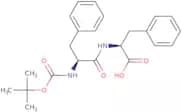
Produit arrêtéBoc-Phe-Phe-OH
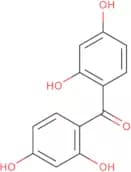
CAS :<p>Boc-Phe-Phe-OH is a linker that is used to create homologues. It has been shown to be able to form supramolecular structures and encapsulate biomolecules, such as amino acids. The ester linkage of Boc-Phe-Phe-OH can be modified by the addition of a carboxylic acid, which can lead to changes in its fluorescence and magnetic properties. Boc-Phe-Phe-OH is primarily used as an intermediate for fluorescent probes or other molecules.</p>Formule :C23H28N2O5Degré de pureté :Min. 95%Masse moléculaire :412.48 g/mol2,2',4,4'-tetrahydroxybenzophenone
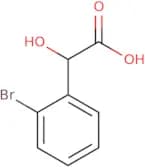
CAS :<p>2,2',4,4'-tetrahydroxybenzophenone is a hydroxylated benzophenone that has immunomodulatory effects. It binds to the receptor in the immune system and can cause an increase in cytokine production. 2,2',4,4'-tetrahydroxybenzophenone is cytotoxic and has significant toxicity in vitro. The molecule has been shown to disrupt mitochondrial membrane potential. This may be due to its ability to form hydrogen bonds with molecules on the mitochondrial membrane. 2,2',4,4'-tetrahydroxybenzophenone also modulates transcriptional regulation of genes involved in cell proliferation and apoptosis. The drug is detectable at low levels by mass spectrometry and is not known to have any toxicological effects.END>></p>Formule :C13H10O5Degré de pureté :Min. 95%Couleur et forme :Green PowderMasse moléculaire :246.22 g/mol2-(2-Bromophenyl)-2-hydroxyacetic acid
CAS :<p>2-Bromophenyl-2-hydroxyacetic acid is a ligand that binds to the ethylene receptor in plants and can be used as a monomer for the polymerization of polyethylene. It has been shown that 2-bromophenyl-2-hydroxyacetic acid can also be used as an initiator for the polymerization of β-cyclodextrin. This compound has also been shown to be an analyte in gas chromatography, which is used to separate compounds based on their chemical properties. The use of this compound as a tethering agent has also been investigated with copolymerization reactions in order to create more stable polymers. 2-Bromophenyl-2-hydroxyacetic acid has been found to inhibit nonsteroidal antiinflammatory drugs and may have potential applications for chiral synthesis, such as mandelic acid production.</p>Formule :C8H7BrO3Degré de pureté :Min. 95%Masse moléculaire :231.04 g/mol1-[3-(Dimethylamino)propyl]-1-(4-fluorophenyl)-1,3-dihydro-3-oxo-5-isobenzofurancarbonitrile
CAS :<p>Please enquire for more information about 1-[3-(Dimethylamino)propyl]-1-(4-fluorophenyl)-1,3-dihydro-3-oxo-5-isobenzofurancarbonitrile including the price, delivery time and more detailed product information at the technical inquiry form on this page</p>Formule :C20H19FN2O2Degré de pureté :Min. 95%Masse moléculaire :338.38 g/mol2-Acetylbenzoic acid
CAS :<p>2-Acetylbenzoic acid is a functional molecule that contains an acetyl group. It can form hydrogen bonds with other molecules and has been shown to induce apoptosis in cells. The reaction products of 2-acetylbenzoic acid are malonic acid, acetylsalicylic acid, and 2-benzoylbenzoic acid. These three compounds are made by the addition of hydrogen or hydroxide to the molecule 2-acetylbenzoic acid. The molecule has two functional groups: a carbonyl group and an acetyl group. The chemical structure of this molecule can be seen in the figure below.<br>2-Acetylbenzoic Acid</p>Formule :C9H8O3Degré de pureté :Min. 95%Couleur et forme :PowderMasse moléculaire :164.16 g/moltert-Butyl 3-(trifluoromethyl)piperazine-1-carboxylate
CAS :<p>Versatile small molecule scaffold</p>Formule :C10H17F3N2O2Degré de pureté :Min. 95%Masse moléculaire :254.25 g/molRef: 3D-LKB77969
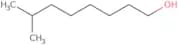
Produit arrêtéIsononyl alcohol
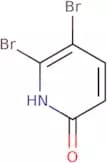
CAS :<p>Isononyl alcohol is a polycarboxylic acid that has been used in the treatment of skin conditions, such as atopic dermatitis and psoriasis. It has been shown to penetrate the skin and stimulate the production of sebum. Isononyl alcohol is also used as a plasticizer for polyvinyl chloride (PVC) and other plastics, which increases their flexibility. This chemical also has a hydrophobic effect, which may be due to its hydroxyl group. The unsaturated alkyl chain on this chemical also makes it susceptible to oxidation by ozone in air and water vapor in air. Isononyl alcohol is metabolized by humans through conjugation with glucuronic acid or sulfate esters.</p>Formule :C9H20ODegré de pureté :Min. 95%Couleur et forme :Clear LiquidMasse moléculaire :144.25 g/mol5,6-Dibromopyridin-2-ol
CAS :<p>Versatile small molecule scaffold</p>Formule :C5H3Br2NODegré de pureté :Min. 95%Masse moléculaire :252.89 g/molRef: 3D-HEC94605
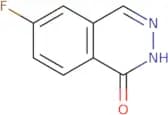
Produit arrêté6-fluoro-1,2-dihydrophthalazin-1-one
CAS :<p>Versatile small molecule scaffold</p>Formule :C8H5FN2ODegré de pureté :Min. 95%Masse moléculaire :164.14 g/molRef: 3D-YAA92851
Produit arrêté2-Bromo-3,3,3-trifluoro-1-propene
CAS :Produit contrôlé<p>2-Bromo-3,3,3-trifluoro-1-propene is a chemical compound that has been synthesized in an asymmetric reaction. The reactant is bromopropane and the product is 2,2,2-trifluoropropene. The methylene group on the propene molecule is activated by the nucleophilic attack of a fluoride ion from hydrogen fluoride to form a cavity with a highly strained bond. The kinetic study of this reaction revealed that the activation energy for the reaction is 42 kJ/mol. Palladium-catalyzed coupling reactions are catalyzed by palladium and require nonpolar solvents such as toluene or dichloromethane. This type of reaction has been shown to be exothermic with an isolated yield of 1%.</p>Formule :C3H2BrF3Degré de pureté :Min. 95%Couleur et forme :Colorless PowderMasse moléculaire :174.95 g/molRef: 3D-FB11073
Produit arrêté3-Methylbenzo[b]thiophene-2-carboxylic acid
CAS :<p>3-Methylbenzo[b]thiophene-2-carboxylic acid (MBTCA) is a heterocyclic compound that is an intermediate in the synthesis of 3-methylthiophene-2-carboxylic acid, a precursor to other drugs. MBTCA is an aerobic, nonpolar compound that has shown antimicrobial activity against some bacteria and fungi. It also has been shown to have practicality as a biomolecular probe for methyl groups in organic solvents. MBTCA can be synthesized by nitration of benzene in the presence of sulfur and sulfoxides. This reaction produces nitrobenzene, which can then be oxidized by potassium permanganate or hydrogen peroxide to produce MBTCA. The most common isomer of MBTCA is 2-(3,5-dimethoxybenzylidene)tetrahydrofuran, with three methyl groups on the</p>Formule :C10H8O2SDegré de pureté :Min. 95%Masse moléculaire :192.23 g/molN-Boc Palbociclib-d4
CAS :<p>Versatile small molecule scaffold</p>Formule :C29H33D4N7O4Degré de pureté :Min. 95%Masse moléculaire :551.67 g/molRef: 3D-BRC21474
Produit arrêté3-Bromo-6,7-dihydro-4H-pyrazolo[1,5-a]pyrazine-5-carboxylic acid tert-butyl ester
CAS :<p>Versatile small molecule scaffold</p>Formule :C11H16BrN3O2Degré de pureté :Min. 95%Masse moléculaire :302.17 g/molRef: 3D-WXB15425
Produit arrêtéBromo-PEG4-azide
CAS :<p>Bromo-PEG4-azide is a PEG compound with two different functional groups (also known as heterobifunctional). Unlike homobifunctional PEG compounds (same functional group on both ends), this type of compounds are more versatile as have two different anchor points. Bromo-PEG4-azide is used as a linker and spacer to add a PEG moiety, via pegylation (a bioconjugation technique) to proteins, peptides, oligonucleotides, small molecules and nanoparticles.</p>Formule :C10H20BrN3O4Degré de pureté :Min. 95%Masse moléculaire :326.19 g/mol4-Formylbenzoic acid
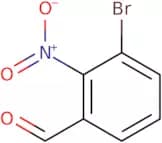
CAS :<p>4-Formylbenzoic acid is an organic compound with the molecular formula CH2=C(O)CH=CHCO2H. It is a white solid that is soluble in water and has a strong, unpleasant odor. 4-Formylbenzoic acid has been shown to have affinity for binding to odorous molecules such as sulfur compounds, amines, and mercaptans. The binding of these molecules to the 4-formylbenzoic acid leads to a decrease in their odor concentration. This process can be done using electrochemical impedance spectroscopy or optical sensors. The oxidation of 4-formylbenzoic acid by trifluoroacetic acid produces 2-formylphenol and formaldehyde, which are themselves volatile compounds with an unpleasant odor. These reactions may be used as wastewater treatment methods. Langmuir adsorption isotherm may be used as an analytical method for measuring the concentration of 4-formylbenzoic acid</p>Formule :C8H6O3Degré de pureté :Min. 98 Area-%Couleur et forme :White Yellow PowderMasse moléculaire :150.13 g/mol3-Bromo-2-nitrobenzaldehyde
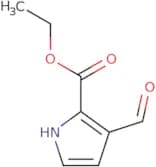
CAS :<p>3-Bromo-2-nitrobenzaldehyde is an organic chemical compound used in the synthesis of other chemical compounds. It is a colorless liquid that can be easily synthesized using potassium permanganate, tetrahydrofuran, acetone and hydrochloric acid. The chemical reaction is carried out by reacting potassium permanganate with hydrochloric acid to form potassium chloride and manganese dioxide. The manganese dioxide then reacts with acetone to produce 3-bromo-2-nitrobenzaldehyde. This synthetic method for producing 3-bromo-2-nitrobenzaldehyde uses less hazardous chemicals than the traditional method.</p>Formule :C7H4BrNO3Degré de pureté :Min. 95%Masse moléculaire :230.02 g/molethyl 3-formyl-1H-pyrrole-2-carboxylate
CAS :<p>Ethyl 3-formyl-1H-pyrrole-2-carboxylate is a formyl compound with the molecular formula C8H8O3. It is a colorless liquid that has a strong odor. The compound can be obtained by the reaction of ethyl acetoacetate and pyrrole in the presence of aluminum chloride. The compound has been studied for its nuclear magnetic resonance (NMR) properties. It has two conformers, which are distinguished by their different chemical shifts, and this difference can be used to study coupling between the carbonyl group and other groups in the molecule.</p>Formule :C8H9NO3Degré de pureté :Min. 95%Masse moléculaire :167.2 g/molRef: 3D-LBA13143
Produit arrêtéH-Ser-Ala-Glu-Glu-Tyr-Glu-Tyr-Pro-Ser OH trifluoroacetate
CAS :<p>Please enquire for more information about H-Ser-Ala-Glu-Glu-Tyr-Glu-Tyr-Pro-Ser OH trifluoroacetate including the price, delivery time and more detailed product information at the technical inquiry form on this page</p>Formule :C47H63N9O20•(C2HF3O2)xDegré de pureté :Min. 95%Givinostat hydrochloride
CAS :<p>Givinostat hydrochloride is a research chemical that has shown potential in various fields. It is a molybdenum-based compound that has been studied for its effects on dopamine release and hydrogen evolution. Givinostat hydrochloride has also been investigated as an osteoclast inhibitor, which may be beneficial in the treatment of bone-related disorders such as osteoporosis. Additionally, it has shown promise as a retinoid and calpain inhibitor, suggesting its potential use in dermatological conditions and neurodegenerative diseases. The compound contains fluorine atoms, making it suitable for imaging studies using fluorine MRI techniques. Givinostat hydrochloride has been tested on MDA-MB-231 cells and has shown inhibitory effects on their growth, indicating its potential as an anticancer agent.</p>Formule :C24H27N3O4·HClDegré de pureté :Min. 95%Masse moléculaire :457.95 g/molRef: 3D-ZHA65729
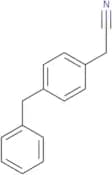
Produit arrêté4-Benzylphenylacetonitrile
CAS :<p>Versatile small molecule scaffold</p>Formule :C15H13NDegré de pureté :Min. 95%Masse moléculaire :207.28 g/mol

![5-Ethyl-1,3-dimethyl-2,4-dioxo-1H,2H,3H,4H-pyrido[2,3-d]pyrimidine-6-carboxylic acid](/_next/image/?url=https%3A%2Fstatic.cymitquimica.com%2Fproducts%2F3D%2Fthumb-webp%2FNRB26235.webp&w=3840&q=75)
![1-[4-(Aminomethyl)phenyl]-3-(propan-2-yl)urea](/_next/image/?url=https%3A%2Fstatic.cymitquimica.com%2Fproducts%2F3D%2Fthumb-webp%2FNRB23822.webp&w=3840&q=75)
![1-[6-(Pyridin-2-yl)pyridin-3-yl]ethan-1-one](/_next/image/?url=https%3A%2Fstatic.cymitquimica.com%2Fproducts%2F3D%2Fthumb-webp%2FNNA46340.webp&w=3840&q=75)
![(2S)-3-(4-Hydroxyphenyl)-2-[(methoxycarbonyl)amino]propanoic acid](/_next/image/?url=https%3A%2Fstatic.cymitquimica.com%2Fproducts%2F3D%2Fthumb-webp%2FNNA38645.webp&w=3840&q=75)
![1-[(3-Bromophenyl)methyl]-1,2,3,4-tetrahydropyrimidine-2,4-dione](/_next/image/?url=https%3A%2Fstatic.cymitquimica.com%2Fproducts%2F3D%2Fthumb-webp%2FNMA37681.webp&w=3840&q=75)

![4-Amino-1-methyl-2λ⁶-thia-1-azaspiro[4.4]non-3-ene-2,2-dione](/_next/image/?url=https%3A%2Fstatic.cymitquimica.com%2Fproducts%2F3D%2Fthumb-webp%2FNID35366.webp&w=3840&q=75)
![1-Methoxybicyclo[3.3.1]nonan-3-amine hydrochloride](/_next/image/?url=https%3A%2Fstatic.cymitquimica.com%2Fproducts%2F3D%2Fthumb-webp%2FMRD34349.webp&w=3840&q=75)
![2-Amino-4H,5H,6H-cyclopenta[b]thiophene-3-carboxylic acid hydrochloride](/_next/image/?url=https%3A%2Fstatic.cymitquimica.com%2Fproducts%2F3D%2Fthumb-webp%2FMRD34223.webp&w=3840&q=75)
![2-{Bicyclo[2.2.1]heptan-1-yl}ethan-1-amine hydrochloride](/_next/image/?url=https%3A%2Fstatic.cymitquimica.com%2Fproducts%2F3D%2Fthumb-webp%2FMRD33501.webp&w=3840&q=75)

![[1-(Difluoromethyl)-1H-pyrrol-2-yl]methanol](/_next/image/?url=https%3A%2Fstatic.cymitquimica.com%2Fproducts%2F3D%2Fthumb-webp%2FMLC58426.webp&w=3840&q=75)
amino}methyl)-N-methylpyridin-2-amine](/_next/image/?url=https%3A%2Fstatic.cymitquimica.com%2Fproducts%2F3D%2Fthumb-webp%2FMIC88875.webp&w=3840&q=75)




![1-[3-(Dimethylamino)propyl]-1-(4-fluorophenyl)-1,3-dihydro-3-oxo-5-isobenzofurancarbonitrile](/_next/image/?url=https%3A%2Fstatic.cymitquimica.com%2Fproducts%2F3D%2Fthumb-webp%2FFD184085.webp&w=3840&q=75)



![3-Methylbenzo[b]thiophene-2-carboxylic acid](/_next/image/?url=https%3A%2Fstatic.cymitquimica.com%2Fproducts%2F3D%2Fthumb-webp%2FDAA13378.webp&w=3840&q=75)

![3-Bromo-6,7-dihydro-4H-pyrazolo[1,5-a]pyrazine-5-carboxylic acid tert-butyl ester](/_next/image/?url=https%3A%2Fstatic.cymitquimica.com%2Fproducts%2F3D%2Fthumb-webp%2FWXB15425.webp&w=3840&q=75)