Building Blocks
Cette section contient des produits fondamentaux pour la synthèse de composés organiques et biologiques. Building blocks sont les matériaux de départ essentiels utilisés pour construire des molécules complexes à travers diverses réactions chimiques. Ils jouent un rôle crucial dans la découverte de médicaments, la science des matériaux et la recherche chimique. Chez CymitQuimica, nous offrons une gamme diversifiée de building blocks de haute qualité pour soutenir vos recherches innovantes et projets industriels, en vous assurant de disposer des composants essentiels pour une synthèse réussie.
Sous-catégories appartenant à la catégorie "Building Blocks"
- Acides boroniques et dérivés de l'acide boronique(5.756 produits)
- Building Blocks Chiraux(1.242 produits)
- Building Blocks Hydrocarbonés(6.095 produits)
- Building Blocks organiques(61.038 produits)
196817 produits trouvés pour "Building Blocks"
Trier par
Degré de pureté (%)
0
100
|
0
|
50
|
90
|
95
|
100
5-Oxo-1-[4-(trifluoromethyl)phenyl]-pyrrolidine-3-carboxylic acid
CAS :<p>Versatile small molecule scaffold</p>Formule :C12H10F3NO3Degré de pureté :Min. 95%Masse moléculaire :273.21 g/mol4,6-Dichloro-N-phenyl-1,3,5-triazin-2-amine
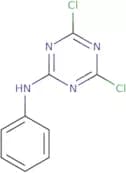
CAS :<p>4,6-Dichloro-N-phenyl-1,3,5-triazin-2-amine is a reactive and labile compound that has been shown to inhibit the nuclear factor kappa B (NF-κB). It is an analog of 2,4,6,-trichlorophenyl-1,3,5-triazine. 4,6-Dichloro-N-phenylsulfonyl triazin-2 amine is a chlorinated derivative of 4,6 dichloro triazin 2 amine. The chlorine atom in the molecule may be replaced with a cyanuric or chloride group. This chemical compound is used in dyestuffs and as a precursor for other chemicals. The effect varies depending on the dose administered.</p>Formule :C9H6Cl2N4Degré de pureté :Min. 95%Masse moléculaire :241.08 g/molRef: 3D-CAA27240
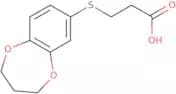
Produit arrêté3-(3,4-Dihydro-2H-1,5-benzodioxepin-7-ylsulfanyl)propanoic acid
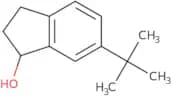
CAS :<p>Versatile small molecule scaffold</p>Formule :C12H14O4SDegré de pureté :Min. 95%Masse moléculaire :254.3 g/mol6-tert-Butyl-2,3-dihydro-1H-inden-1-ol
CAS :<p>Versatile small molecule scaffold</p>Formule :C13H18ODegré de pureté :Min. 95%Masse moléculaire :190.28 g/mol1-Butyl-2-(4-methoxyphenyl)-5-oxopyrrolidine-3-carboxylic acid
CAS :<p>Versatile small molecule scaffold</p>Formule :C16H21NO4Degré de pureté :Min. 95%Masse moléculaire :291.34 g/molRef: 3D-BJB72182
Produit arrêté2-[(Oxolan-2-yl)methoxy]benzaldehyde
CAS :<p>Versatile small molecule scaffold</p>Formule :C12H14O3Degré de pureté :Min. 95%Masse moléculaire :206.24 g/molRef: 3D-BJB32426
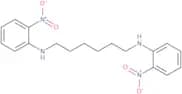
Produit arrêtéN(1),N(6)-Bis(2-nitrophenyl)-1,6-hexanediamine
CAS :<p>Versatile small molecule scaffold</p>Formule :C18H22N4O4Degré de pureté :Min. 95%Masse moléculaire :358.4 g/molRef: 3D-BBA10960
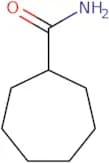
Produit arrêtéCycloheptanecarboxamide
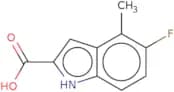
CAS :<p>Cycloheptanecarboxamide is a cellular amide that is used in the study of β-amino acids. Cycloheptanecarboxamide is a prodrug that is converted to cycloheptylamine, which has been shown to be an inhibitor of proliferation and a potent inhibitor of inflammatory diseases. Cycloheptylamine also inhibits the production of aliphatic hydrocarbons and mineralocorticoids, as well as the activation of mineralocorticoid receptors. It has been shown to be an organic solution that can be used to generate tartrate-resistant acid potassium ions (TRAP).</p>Formule :C8H15NODegré de pureté :Min. 95%Masse moléculaire :141.21 g/mol5-Fluoro-4-methyl-1H-indole-2-carboxylic acid
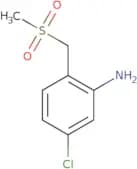
CAS :<p>Versatile small molecule scaffold</p>Formule :C10H8FNO2Degré de pureté :Min. 95%Masse moléculaire :193.2 g/mol5-Chloro-2-(methanesulfonylmethyl)aniline
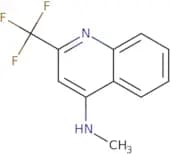
CAS :<p>Versatile small molecule scaffold</p>Formule :C8H10ClNO2SDegré de pureté :Min. 95%Masse moléculaire :219.69 g/molN-Methyl-2-(trifluoromethyl)quinolin-4-amine
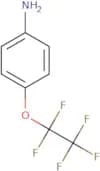
CAS :<p>Versatile small molecule scaffold</p>Formule :C11H9F3N2Degré de pureté :Min. 95%Masse moléculaire :226.2 g/mol4-(Perfluoroethoxy)aniline
CAS :<p>Versatile small molecule scaffold</p>Formule :C8H6F5NODegré de pureté :Min. 95%Masse moléculaire :227.13 g/mol2-Hydroxy-[1,1'-biphenyl]-3-carboxylic acid
CAS :<p>2-Hydroxy-[1,1'-biphenyl]-3-carboxylic acid (2HBC) is a monomer that belongs to the group of ester compounds. It has been shown to inhibit the growth of trichophyton mentagrophytes and other fungi by forming hydrogen bonds with the enzyme activities in the cell wall. 2HBC also inhibits microbial growth by binding to enzymes such as phospholipase A2, cyclooxygenase, and lipoxygenase, which are involved in inflammatory processes. This drug also inhibits bacterial growth by binding to the ribosome, preventing protein synthesis and leading to cell death. The inhibition of microbial growth is not limited to bacteria; it also occurs in fungi and protozoa. 2HBC has been shown to be active against both extracellular and intracellular microbial infections.</p>Formule :C13H10O3Degré de pureté :Min. 95%Masse moléculaire :214.22 g/mol2-Cyano-5-fluorophenol
CAS :<p>2-Cyano-5-fluorophenol is an organic compound that is used as a precursor to medicines and other chemicals. It reacts with calcium hydroxide in water to form 2-cyano-5-hydroxyfluorobenzene, which can be hydrolyzed to form 2-cyano-5-chlorofluorobenzene. This compound can also react with sodium hydroxide to produce sodium cyanate, which can be hydrolyzed to form sodium chloride and hydrogen cyanide gas. The alkali metal ions are needed for this reaction, which is why the product should not be exposed to water or moisture. 2-Cyano-5-fluorophenol has been shown to have liquid crystal properties and is used in the production of certain types of polymers. 2Cyano-5Fluorophenol crystals are also used in some medicines such as acetaminophen (paracetamol).</p>Formule :C7H4FNODegré de pureté :Min. 95%Masse moléculaire :137.11 g/molRef: 3D-LHA59001
Produit arrêté2-Oxa-spiro[3.3]heptan-6-ol
CAS :<p>Versatile small molecule scaffold</p>Formule :C6H10O2Degré de pureté :Min. 95%Masse moléculaire :114.14 g/molRef: 3D-NEC38108
Produit arrêté2-Bromo-3,3,3-trifluoro-1-propene
CAS :Produit contrôlé<p>2-Bromo-3,3,3-trifluoro-1-propene is a chemical compound that has been synthesized in an asymmetric reaction. The reactant is bromopropane and the product is 2,2,2-trifluoropropene. The methylene group on the propene molecule is activated by the nucleophilic attack of a fluoride ion from hydrogen fluoride to form a cavity with a highly strained bond. The kinetic study of this reaction revealed that the activation energy for the reaction is 42 kJ/mol. Palladium-catalyzed coupling reactions are catalyzed by palladium and require nonpolar solvents such as toluene or dichloromethane. This type of reaction has been shown to be exothermic with an isolated yield of 1%.</p>Formule :C3H2BrF3Degré de pureté :Min. 95%Couleur et forme :Colorless PowderMasse moléculaire :174.95 g/molRef: 3D-FB11073
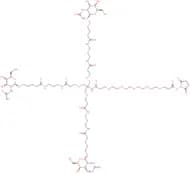
Produit arrêtéTri-b-GalNAc-PEG5-NHS ester
CAS :<p>Tri-GalNAc-NHS ester is a multivalent molecule composed of three GalNAc cluster arms. It is a protein degrader and a ligand of the asialoglycoprotein receptor (ASGPR) used for the development of targeted therapies for liver diseases. The GalNAc arms enable high-affinity binding to the ASGPR on hepatocyte surfaces. The crucial functional group, N-hydroxysuccinimide (NHS) ester, is known for its ease of conjugation with various biomolecules possessing amine (NH2) groups. This biocompatible reaction strategy allows the design and development of targeted conjugates such as drug-GalNAc conjugates, siRNA delivery vehicles, or probes for ASGPR imaging in the liver.</p>Formule :C79H137N11O37Degré de pureté :Min. 95%Couleur et forme :PowderMasse moléculaire :1,832.99 g/mol
![5-Oxo-1-[4-(trifluoromethyl)phenyl]-pyrrolidine-3-carboxylic acid](/_next/image/?url=https%3A%2Fstatic.cymitquimica.com%2Fproducts%2F3D%2Fthumb-webp%2FCAA35727.webp&w=3840&q=75)


![2-[(Oxolan-2-yl)methoxy]benzaldehyde](/_next/image/?url=https%3A%2Fstatic.cymitquimica.com%2Fproducts%2F3D%2Fthumb-webp%2FBJB32426.webp&w=3840&q=75)
![2-Hydroxy-[1,1'-biphenyl]-3-carboxylic acid](/_next/image/?url=https%3A%2Fstatic.cymitquimica.com%2Fproducts%2F3D%2Fthumb-webp%2FAAA30406.webp&w=3840&q=75)

![2-Oxa-spiro[3.3]heptan-6-ol](/_next/image/?url=https%3A%2Fstatic.cymitquimica.com%2Fproducts%2F3D%2Fthumb-webp%2FNEC38108.webp&w=3840&q=75)