Building Blocks
Sous-catégories appartenant à la catégorie "Building Blocks"
- Acides boroniques et dérivés de l'acide boronique(5.780 produits)
- Building Blocks Chiraux(1.241 produits)
- Building Blocks Hydrocarbonés(6.100 produits)
- Building Blocks organiques(61.023 produits)
205289 produits trouvés pour "Building Blocks"
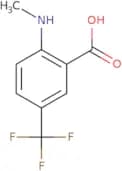
2-(Methylamino)-5-(trifluoromethyl)benzoic acid
CAS :Versatile small molecule scaffold
Formule :C9H8F3NO2Degré de pureté :Min. 95%Masse moléculaire :219.16 g/molCyclobutylmethanesulfonamide
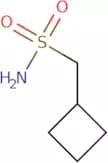
CAS :Cyclobutylmethanesulfonamide is a ligand that binds to the benzene ring of the protein cryptochrome. It is used in the treatment of Alzheimer's disease, glaucoma, dementia, and hyperactivity. Cyclobutylmethanesulfonamide provides protection against parasitic infestations by inhibiting the growth of erythrocytes, leukocytes, and some helminths. This drug also has an agriculturally beneficial effect by acting as a parasiticide against insects such as beetles, flies, ticks, and lice. Cyclobutylmethanesulfonamide is structurally very similar to pyridines but with a sulfonyl group at position 4 instead of a hydrogen atom.
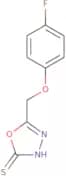
Formule :C5H11NO2SDegré de pureté :Min. 95%Masse moléculaire :149.21 g/mol5-(4-Fluorophenoxymethyl)-1,3,4-oxadiazole-2-thiol
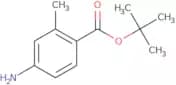
CAS :Versatile small molecule scaffoldFormule :C9H7FN2O2SDegré de pureté :Min. 95%Masse moléculaire :226.23 g/moltert-Butyl 4-amino-2-methylbenzoate
CAS :Versatile small molecule scaffold
Formule :C12H17NO2Degré de pureté :Min. 95%Masse moléculaire :207.27 g/molRef: 3D-VSA00339
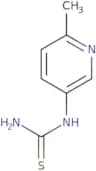
Produit arrêté(6-Methylpyridin-3-yl)thiourea
CAS :Versatile small molecule scaffold
Formule :C7H9N3SDegré de pureté :Min. 95%Masse moléculaire :167.23 g/mol[(2,3-Dihydro-1-benzofuran-5-yl)methyl](methyl)amine hydrochloride
CAS :Versatile small molecule scaffoldFormule :C10H14ClNODegré de pureté :Min. 95%Masse moléculaire :199.68 g/molRef: 3D-VQC51387
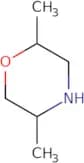
Produit arrêté2,5-Dimethylmorpholine
CAS :2,5-Dimethylmorpholine is an isomeric mixture of two compounds that are related to the morpholine class of chemical compounds. It has been shown to be a good acceptor for styrene and long-chain alkanes. 2,5-Dimethylmorpholine can be used as a mechanistic probe for styrene polymerization reactions, because it yields mechanistic information about the reaction selectivity. It has also been shown to have catalytic properties in amine synthesis and isomers with dodecyl chains.
2,5-Dimethylmorpholine is a colorless liquid with a boiling point of 69°C and an odor threshold of 1 ppm.Formule :C6H14ClNODegré de pureté :Min. 95%Masse moléculaire :151.63 g/molRef: 3D-AAA10656
Produit arrêté3-Methylpentanoic-d11 acid
CAS :3-Methylpentanoic-d11 acid is an organic compound. It is a fatty acid that is produced by the fermentation of yeast. 3-Methylpentanoic-d11 acid can be used as a carbon source for protein synthesis and has been shown to have antifungal activity in vitro against Candida albicans, Saccharomyces cerevisiae, and Aspergillus niger. 3-Methylpentanoic-d11 acid also has radical scavenging activities, which inhibit lipid peroxide formation. This compound does not have any known metabolites or reactions.
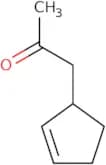
Formule :C6HD11O2Degré de pureté :Min. 95%Masse moléculaire :127.23 g/mol2-Cyclopentenyl-1-acetone
CAS :Versatile small molecule scaffold
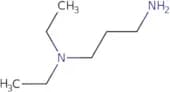
Formule :C8H12ODegré de pureté :Min. 95%Masse moléculaire :124.18 g/molN,N-Diethyl-1,3-diaminopropane
CAS :N,N-Diethyl-1,3-diaminopropane (DEET) is a compound that has been used as an insect repellent. It is a low molecular weight aliphatic amine, with two amino groups and two ethylene diamine groups. The transport properties of DEET are due to its high solubility in aromatic solvents and its lack of reactivity. It is highly soluble in water and glycol ethers. DEET's reaction mechanism begins with the nucleophilic attack of the amine on the carbonyl carbon atom in trifluoroacetic acid, forming an intermediate tautomeric form. The nucleophilic attack by the amine on the carbonyl carbon atom in trifluoroacetic acid leads to a tetrahedral intermediate which undergoes a second nucleophilic attack by hydroxide ion from hydrochloric acid, forming an intermediate tautomeric form. This
Formule :C7H18N2Degré de pureté :Min. 95%Masse moléculaire :130.24 g/molRef: 3D-AAA10478
Produit arrêté3-Chloro-N,N-diethylpropan-1-amine
CAS :3-Chloro-N,N-diethylpropan-1-amine is a reactive molecule that binds to the active site of tuberculostatic activity and is used in chemotherapy. It has been shown to have inhibitory properties against human placental alkaline phosphatase, an enzyme present in large quantities in the placenta. The 3-chloro-N,N-diethylpropan-1-amine is a synthetic compound with antineoplastic properties. It can be used as a chemotherapeutic agent for cancer and gastrocnemius muscle cancer. The molecular structure of 3-chloro-N,N-diethylpropan-1-amine contains oxindole and hydroxyl group.
Formule :C7H16ClNDegré de pureté :Min. 95%Masse moléculaire :149.66 g/molRef: 3D-AAA10477
Produit arrêtéN,N-Dibenzylethanolamine
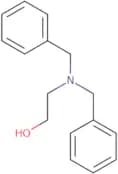
CAS :Dibenzylethanolamine is a molecule with the molecular formula C17H26O2. It is a dibasic amine, meaning it has two hydroxyl groups. Dibenzylethanolamine has a specific chemical structure that consists of an alcohol group and two amine groups. The hydrogen atoms on the oxygen atoms in the hydroxyl group are replaced by methyl groups. This component is also used as a solvent for organic solutions, such as paints and varnishes.
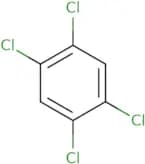
Formule :C16H19NODegré de pureté :Min. 95%Masse moléculaire :241.34 g/mol1,2,4,5-Tetrachlorobenzene
CAS :1,2,4,5-Tetrachlorobenzene is a chlorinated aromatic compound that is used as an industrial chemical and in wastewater treatment. It has been detected in the atmosphere at low levels and is present in small quantities in some food products. The toxicity of 1,2,4,5-tetrachlorobenzene to animals has been studied by observing the effects on aminotransferase activity after oral exposure. Acute toxicity studies have shown that 1,2,4,5-tetrachlorobenzene causes dose-dependent inhibition of enzyme activity following administration. It has also been found to be toxic to plants with a half-maximal inhibitory concentration (IC50) of 0.32 mg/L.
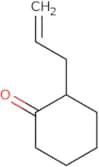
Formule :C6H2Cl4Degré de pureté :Min. 95%Masse moléculaire :215.89 g/mol2-Allylcyclohexanone
CAS :2-Allylcyclohexanone is an unsaturated ketone that is synthesized by the ring-opening of allyl cyclohexane carboxylate with sodium hydroxide. It can be used as a chemical intermediate for the synthesis of other compounds. 2-Allylcyclohexanone can also be used to react with hydroxide solution to produce a salt and an alcohol. The hydroxide solution can act as a base, reducing the carbonyl group in the presence of an acid to form the corresponding alcohol. This reaction is stereoselective because it only occurs when there are two different groups on adjacent carbons.
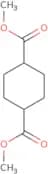
2-Allylcyclohexanone has been shown to inhibit non-nucleoside reverse transcriptase inhibitors (NNRTIs) such as nevirapine, efavirenz, and delavirdine. In addition, it has been found to have functional groups that are capable of reactingFormule :C9H14ODegré de pureté :Min. 95%Masse moléculaire :138.21 g/molDimethyl Cyclohexane-1,4-dicarboxylate(1,4-Cyclohexanedicarboxylic Dimethyl Ester)
CAS :Dimethyl cyclohexane-1,4-dicarboxylate is an aliphatic hydrocarbon with a molecular formula of C8H14O2. It is found in the environment as a natural product and can be synthesized by hydrogenation of cyclohexane. Dimethyl cyclohexane-1,4-dicarboxylate has been shown to bind to certain receptors and has been used in studies to determine receptor binding. It also has a reactive functional group that reacts with hydroxyl groups, producing reaction products. Dimethyl cyclohexane-1,4-dicarboxylate is toxic when ingested and may cause irritation on contact with skin or eyes. It can be used as a catalyst in the production of polycarboxylic acid from fatty acids.Formule :C10H16O4Degré de pureté :Min. 95%Masse moléculaire :200.23 g/molRef: 3D-AAA09460
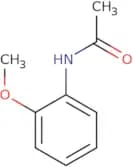
Produit arrêtéN-(2-Methoxyphenyl)acetamide
CAS :N-(2-Methoxyphenyl)acetamide is a dietary supplement that is used to treat nasal congestion and high blood pressure. It is an amide with a hydrogen bond that reacts with water in the presence of oxygen to form an acylation reaction with nitrogen atoms. This reaction has been shown to be selective, as it does not react with other types of amides. N-(2-Methoxyphenyl)acetamide can also be used to diagnose edrophonium chloride and oxindole reactions.
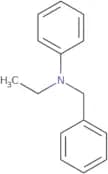
Formule :CH3CONHC6H4OCH3Degré de pureté :Min. 95%Masse moléculaire :165.19 g/molN-Ethyl-N-benzylaniline
CAS :N-Ethyl-N-benzylaniline is a detergent that is used in the production of soap. It has been shown to be effective in reducing human serum albumin and fatty acids, which are thought to be important factors in cancer and inflammatory diseases. The detergent also inhibits toll-like receptor 4 (TLR4) activation, which may be involved in the development of infectious diseases. In addition, this chemical is an inhibitor of triticum aestivum and can be used for the treatment of inflammatory diseases or infectious diseases. N-Ethyl-N-benzylaniline has also been shown to have a number of chromatographic properties, including ion exchange, adsorption, partitioning, and gel permeation chromatography.
Formule :C15H17NDegré de pureté :Min. 95%Masse moléculaire :211.31 g/molRef: 3D-AAA09259
Produit arrêtéMethyl 4-{[(tert-butoxy)carbonyl]amino}cyclopent-1-ene-1-carboxylate
CAS :Versatile small molecule scaffold
Formule :C12H19NO4Degré de pureté :Min. 95%Masse moléculaire :241.28 g/molRef: 3D-UWB93604
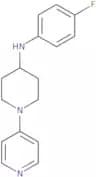
Produit arrêtéN-(4-Fluorophenyl)-1-(pyridin-4-yl)piperidin-4-amine
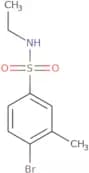
CAS :Versatile small molecule scaffoldFormule :C16H18FN3Degré de pureté :Min. 95%Masse moléculaire :271.33 g/molN-Ethyl 4-bromo-3-methylbenzenesulfonamide
CAS :Versatile small molecule scaffoldFormule :C9H12BrNO2SDegré de pureté :Min. 95%Masse moléculaire :278.17 g/mol

amine hydrochloride](/_next/image/?url=https%3A%2Fstatic.cymitquimica.com%2Fproducts%2F3D%2Fthumb-webp%2FVQC51387.webp&w=3840&q=75)


![Methyl 4-{[(tert-butoxy)carbonyl]amino}cyclopent-1-ene-1-carboxylate](/_next/image/?url=https%3A%2Fstatic.cymitquimica.com%2Fproducts%2F3D%2Fthumb-webp%2FUWB93604.webp&w=3840&q=75)