Building Blocks
Sous-catégories appartenant à la catégorie "Building Blocks"
- Acides boroniques et dérivés de l'acide boronique(5.780 produits)
- Building Blocks Chiraux(1.241 produits)
- Building Blocks Hydrocarbonés(6.100 produits)
- Building Blocks organiques(61.017 produits)
205265 produits trouvés pour "Building Blocks"
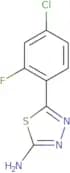
5-(4-Chloro-2-fluorophenyl)-1,3,4-thiadiazol-2-amine
CAS :Versatile small molecule scaffold
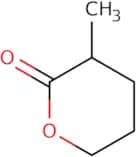
Formule :C8H5ClFN3SDegré de pureté :Min. 95%Masse moléculaire :229.66 g/molTetrahydro-3-methylpyran-2-one
CAS :Versatile small molecule scaffold
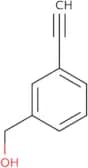
Formule :C6H10O2Degré de pureté :Min. 95%Masse moléculaire :114.14 g/mol(3-Ethynylphenyl)methanol
CAS :(3-Ethynylphenyl)methanol is a colorless, volatile liquid with a chloroform-like odor. It is soluble in organic solvents and insoluble in water. It has a boiling point of 114°C and a melting point of -37°C. (3-Ethynylphenyl)methanol can be found as an impurity in polyester resins and polyurethane foams. This compound is also used to produce polymers such as polycondensation, polyesters, and dimethylformamide. (3-Ethynylphenyl)methanol is produced by the direct chlorination of phenol. The compound can be polymerized to form polymers that are resistant to uv light and heat, such as terephthaloyl chloride.
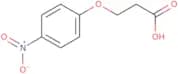
Formule :C9H8ODegré de pureté :Min. 95%Masse moléculaire :132.16 g/mol3-(4-Nitrophenoxy)propionic acid
CAS :3-(4-Nitrophenoxy)propionic acid is a promiscuous compound that can be used to synthesize other compounds. It reacts with hydrochloric acid, nitro groups, and phosphorus pentoxide to produce nitro compounds. 3-(4-Nitrophenoxy)propionic acid reacts with benzoylamine in the presence of a cocatalyst to form alkoxycarbonyl products. The cocatalyst is typically a metal such as zinc or magnesium. 3-(4-Nitrophenoxy)propionic acid is also used as an agrochemical for controlling influenza virus and Influenzae bacteria.
!--Formule :C9H9NO5Degré de pureté :Min. 95%Masse moléculaire :211.17 g/molRef: 3D-KAA57216
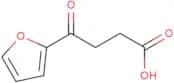
Produit arrêté4-(Furan-2-yl)-4-oxobutanoic acid
CAS :Versatile small molecule scaffold
Formule :C8H8O4Degré de pureté :Min. 95%Masse moléculaire :168.15 g/molN,N'-Bis(3-aminopropyl)ethylenediamine
CAS :N,N'-Bis(3-aminopropyl)ethylenediamine is a molecule that contains an amine and a nitro group. The nitro group is electron-rich and can be reduced to the corresponding amino function by reduction with metal ions. In addition, N,N'-Bis(3-aminopropyl)ethylenediamine can bind to chloride ions through their respective amines. This process is called ion pairing or salt bridge formation, which stabilizes the pH of the solution. N,N'-Bis(3-aminopropyl)ethylenediamine has been shown to be effective in titration calorimetry experiments as an indicator of drug binding.
Formule :C8H22N4Degré de pureté :Min. 95%Masse moléculaire :174.29 g/molRef: 3D-KAA56326
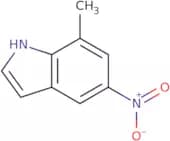
Produit arrêté7-Methyl-5-nitro-1H-indole
CAS :Versatile small molecule scaffold
Formule :C9H8N2O2Degré de pureté :Min. 95%Masse moléculaire :176.17 g/molRef: 3D-KAA55308
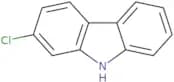
Produit arrêté2-Chloro-9H-carbazole
CAS :2-Chloro-9H-carbazole (2CzC) is a heterocyclic compound that belongs to the group of carbazoles. It can be used as medicine and has been shown to be a good control experiment for other carbazoles. The nucleophilicity of 2CzC is affected by the functional groups present in the molecule, and it has been shown to react with anions such as Cl-, Br-, or I-. This heterocycle also has two resonance forms, which are generated by the electron delocalization in the ring system. The gas phase kinetics of 2CzC have been found to follow an Arrhenius relationship, with k = 3.6x10^3 M^-1 s^-1 at 298 K. Yields for this compound have been found to be high, with 90% yield when synthesized from chloroacetone and phenylmagnesium bromide.
Formule :C12H8ClNDegré de pureté :Min. 95%Masse moléculaire :201.65 g/molRef: 3D-KAA53708
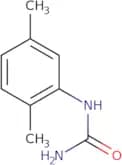
Produit arrêté(2,5-Dimethylphenyl)urea
CAS :Versatile small molecule scaffold
Formule :C9H12N2ODegré de pureté :Min. 95%Masse moléculaire :164.2 g/molRef: 3D-KAA53308
Produit arrêté1-Bromo-2-nitroethane
CAS :1-Bromo-2-nitroethane is an organic solvent that has been found to be a useful chiral reagent for the synthesis of a variety of organic compounds. It can be used as a catalyst in asymmetric syntheses, and its high stereoselectivity makes it very useful in the construction of complex molecules. 1-Bromo-2-nitroethane is also used in the oxidation of cycloalkanes and carbonyls, which are oxidized by nitroalkanes to form nitro compounds. The catalytic efficiency of 1-bromo-2-nitroethane provides chemists with an excellent tool for synthesizing nitriles.
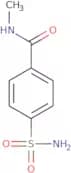
Formule :C2H4BrNO2Degré de pureté :Min. 95%Masse moléculaire :153.96 g/molN-Methyl-4-sulfamoylbenzamide
CAS :Versatile small molecule scaffold
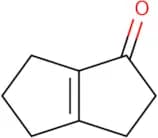
Formule :C8H10N2O3SDegré de pureté :Min. 95%Masse moléculaire :214.24 g/mol1,2,3,4,5,6-Hexahydropentalen-1-one
CAS :Versatile small molecule scaffold
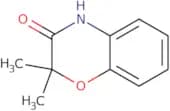
Formule :C8H10ODegré de pureté :Min. 95%Masse moléculaire :122.16 g/mol2,2-Dimethyl-3,4-dihydro-2H-1,4-benzoxazin-3-one
CAS :2,2-Dimethyl-3,4-dihydro-2H-1,4-benzoxazin-3-one is a potential cancer drug that belongs to the family of bromodomain inhibitors. It inhibits the transcriptional activity of the androgen receptor by binding to its DNA binding domain. This binding prevents the formation of a transcriptionally active complex with other proteins that are required for gene expression. Bromodomain inhibition has been shown to be effective in vivo and in vitro against castration resistant prostate cancer cells. 2,2-Dimethyl-3,4-dihydro-2H-1,4-benzoxazin-3-one also has an oral bioavailability profile that is suitable for oral administration as a therapeutic agent. This drug also binds to the terminal domain of family members, which may lead to increased potency against these enzymes.
Formule :C10H11NO2Degré de pureté :Min. 95%Masse moléculaire :177.2 g/molN-[(4-Chlorophenyl)methyl]benzenesulfonamide
CAS :Versatile small molecule scaffold
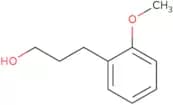
Formule :C13H12ClNO2SDegré de pureté :Min. 95%Masse moléculaire :281.76 g/mol3-(2-methoxy-phenyl)-propan-1-ol
CAS :3-(2-methoxy-phenyl)-propan-1-ol is a phenylpropanoid glycoside that has been shown to have diagnostic potential for the detection of a number of diseases. The reaction rate of 3-(2-methoxy-phenyl)-propan-1-ol can be determined by integrating the intensity of the signal from an electron spectrometer. This compound can also be used as a marker in the diagnosis of diseases such as melanogenesis, where it is found in higher concentrations than normal in the skin and other tissues. It is insoluble in water and emits fluorescence when exposed to ultraviolet light, which makes it useful for diagnostic purposes.
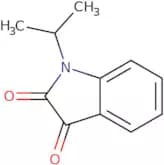
Formule :C10H14O2Degré de pureté :Min. 95%Masse moléculaire :166.22 g/mol1-Isopropyl-1H-indole-2,3-dione
CAS :Versatile small molecule scaffold
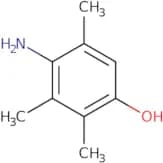
Formule :C11H11NO2Degré de pureté :Min. 95%Masse moléculaire :189.21 g/mol4-Amino-2,3,5-trimethylphenol
CAS :Versatile small molecule scaffold
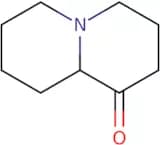
Formule :C9H13NODegré de pureté :Min. 95%Masse moléculaire :151.21 g/molOctahydro-1H-quinolizin-1-one
CAS :Octahydro-1H-quinolizin-1-one is a drug that has been shown to be an effective treatment for inflammatory diseases, including inflammatory bowel disease and mucopolysaccharidosis. It binds to the M1 receptors in tissues, which leads to the inhibition of proinflammatory cytokines such as interleukin-1 (IL-1) and tumor necrosis factor (TNF). Octahydro-1H-quinolizin-1-one also has been shown to be an allosteric modulator for the IL-4 receptor. The drug also inhibits etoposide induced apoptosis in cancer cells, suggesting it may have therapeutic potential against cancer.
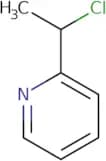
Formule :C9H15NODegré de pureté :Min. 95%Masse moléculaire :153.22 g/mol2-(1-Chloro-ethyl)-pyridine
CAS :2-(1-Chloro-ethyl)-pyridine is a triazole that is used as a chlorination catalyst. It has been shown to be an effective catalyst for the chlorination of ketones and acetylpyridine. 2-(1-Chloro-ethyl)-pyridine also catalyzes the transfer hydrogenation of pyridines, which can be useful in the synthesis of pharmaceuticals. Mechanistically, 2-(1-Chloro-ethyl)-pyridine is mononuclear with two active chlorine atoms and exhibits both nucleophilic and electrophilic properties.
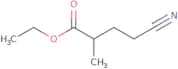
Formule :C7H8ClNDegré de pureté :Min. 95%Masse moléculaire :141.6 g/molEthyl 4-cyano-2-methylbutanoate
CAS :Versatile small molecule scaffold
Formule :C8H13NO2Degré de pureté :Min. 95%Masse moléculaire :155.19 g/mol


![N-[(4-Chlorophenyl)methyl]benzenesulfonamide](/_next/image/?url=https%3A%2Fstatic.cymitquimica.com%2Fproducts%2F3D%2Fthumb-webp%2FKAA50497.webp&w=3840&q=75)