Building Blocks
Sous-catégories appartenant à la catégorie "Building Blocks"
- Acides boroniques et dérivés de l'acide boronique(5.774 produits)
- Building Blocks Chiraux(1.237 produits)
- Building Blocks Hydrocarbonés(6.098 produits)
- Building Blocks organiques(60.970 produits)
205135 produits trouvés pour "Building Blocks"
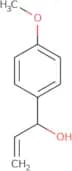
1-(4-Methoxyphenyl)prop-2-en-1-ol
CAS :1-(4-Methoxyphenyl)prop-2-en-1-ol (1MPE) is a model compound that has been shown to inhibit the growth of cancer cells in vitro and in vivo. 1MPE inhibits the activity of human liver enzymes, such as cytochrome P450, which are involved in metabolizing xenobiotics and drugs. 1MPE also binds to the DNA repair enzyme topoisomerase II alpha and inhibits its activity. The binding of 1MPE with this enzyme prevents the relaxation of DNA, leading to cell death by apoptosis. 1MPE has been shown to have toxic effects on rat primary hepatocytes and rat liver microsomes. It also inhibits the growth of CD-1 mice transplanted with human colon tumor cells. In addition, 1MPE is excreted unchanged in urine samples from rats dosed orally with high doses of this drug.
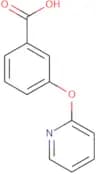
Formule :C10H12O2Degré de pureté :Min. 95%Masse moléculaire :164.2 g/mol3-(Pyridin-2-yloxy)benzoic acid
CAS :3-(Pyridin-2-yloxy)benzoic acid is an organic compound that belongs to the group of anilides. It has been shown to be toxic to plants by inhibiting their chlorophyll production and by causing phytotoxicity. 3-(Pyridin-2-yloxy)benzoic acid also inhibits the germination of seeds, primarily due to its inhibition of growth hormone activity. 3-(Pyridin-2-yloxy)benzoic acid can be used as a herbicide because it is highly effective against broadleaf plants, but not grasses. This compound is also relatively non-toxic to mammals and birds, but can cause skin irritation in humans.
Formule :C12H9NO3Degré de pureté :Min. 95%Masse moléculaire :215.2 g/molRef: 3D-BCA36230
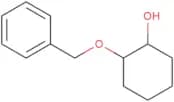
Produit arrêtérac-(1R,2R)-2-(Benzyloxy)cyclohexan-1-ol
CAS :Versatile small molecule scaffold
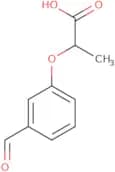
Formule :C13H18O2Degré de pureté :Min. 95%Masse moléculaire :206.28 g/mol2-(3-Formylphenoxy)propanoic acid
CAS :Versatile small molecule scaffold
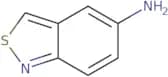
Formule :C10H10O4Degré de pureté :Min. 95%Masse moléculaire :194.18 g/mol2,1-Benzothiazol-5-amine
CAS :Versatile small molecule scaffold
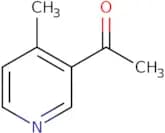
Formule :C7H6N2SDegré de pureté :Min. 95%Masse moléculaire :150.2 g/mol1-(4-Methyl-3-pyridinyl)ethanone
CAS :1-(4-Methyl-3-pyridinyl)ethanone is an organic compound that yields optical pyruvic acid on hydrolysis. It also has unselective dehydrogenase activity on a variety of substrates, including dioxane and 2,2,2-trichloroethanol. 1-(4-Methyl-3-pyridinyl)ethanone can be used as a reagent for the synthesis of chiral iminium salts or as a dehydrating agent in organic synthesis. It is also used to synthesize vitamin B6 and indole alkaloids. The chemical structure of 1-(4-methyl-3-pyridinyl)ethanone is similar to that of benzaldehyde (C6H5CH2CHO), which has benzylic hydroxyl group on the benzene ring. This compound can be oxidized to yield a dianion that can be used as a photocat
Formule :C8H9NODegré de pureté :Min. 95%Masse moléculaire :135.16 g/mol[4-(Prop-2-yn-1-yl)phenyl]methanol
CAS :Allylbromide is an organic compound that has a cyclic, allenyl ring structure. It is produced by the reaction of magnesium and ethylene glycol with bromobenzene in the presence of tetrahydrofuran. Allylbronide is used as an insecticide and has been shown to be effective against mosquitoes, fleas, and ticks. Allylbronide also has a strong anticholinesterase activity which makes it useful for the treatment of acute organophosphate poisoning. It binds to the active site of acetylcholinesterase and blocks its function, leading to accumulation of acetylcholine at nerve endings.
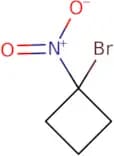
Formule :C10H10ODegré de pureté :Min. 95%Masse moléculaire :146.19 g/mol1-Bromo-1-nitrocyclobutane
CAS :Versatile small molecule scaffold
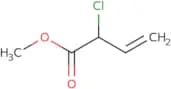
Formule :C4H6BrNO2Degré de pureté :Min. 95%Masse moléculaire :180 g/molMethyl 2-chlorobut-3-enoate
CAS :Methyl 2-chlorobut-3-enoate is a benzyl functionalized cyclization product. It is synthesized from homoallylamines by a diastereoselective synthesis in the presence of carbamates. The cyclization reaction is induced by a transition metal or stereochemical change, which provides the desired stereochemistry in high yield and diastereoselectivity. Methyl 2-chlorobut-3-enoate has been used in biologically significant reactions such as the synthesis of homoallylic amines, which are important intermediates for pharmaceuticals, pesticides, and herbicides.
Formule :C5H7ClO2Degré de pureté :Min. 95%Masse moléculaire :134.56 g/molEthyl fumaroyl chloride
CAS :Ethyl fumaroyl chloride is an activating agent that can be used as an antibacterial or bacteriostatic agent. Ethyl fumaroyl chloride is active against a variety of bacteria, including strains that are resistant to other antibiotics. The inhibitory effect of ethyl fumaroyl chloride is due to the presence of chlorine in its structure. This substance has been shown to be effective against human cancer cells and may be a potential treatment for cancer. It also has organocatalytic properties and can be used in organic synthesis, making it a versatile chemical.
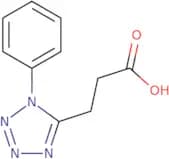
Formule :C6H7ClO3Degré de pureté :Min. 95%Masse moléculaire :162.57 g/mol3-(1-Phenyl-1H-1,2,3,4-tetrazol-5-yl)propanoic acid
CAS :Versatile small molecule scaffoldFormule :C10H10N4O2Degré de pureté :Min. 95%Masse moléculaire :218.21 g/mol2,2-Bis(chloromethyl)-1,3-dioxolane
CAS :2,2-Bis(chloromethyl)-1,3-dioxolane is a chemical intermediate that can be used in the production of polyester resins. It is a colorless liquid with an unpleasant odor. 2,2-Bis(chloromethyl)-1,3-dioxolane reacts with ethylene and glycol to produce polyester resins. This reaction occurs at high temperatures and produces a mixture of products such as diols and triols. When heated in acidic conditions, the compound hydrolyzes to form dihydroxyacetone and p-toluenesulfonic acid. The compound is also used as an industrial solvent for acidic materials. Recrystallizing the product from ethylene glycol results in a white crystalline powder that can be used in the manufacture of other chemicals such as sulfate salts.
Formule :C5H8Cl2O2Degré de pureté :Min. 95%Masse moléculaire :171.02 g/molRef: 3D-BBA27150
Produit arrêté3,4-Dihydro-2H-pyrano[2,3-b]pyridine
CAS :Versatile small molecule scaffold
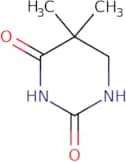
Formule :C8H9NODegré de pureté :Min. 95%Masse moléculaire :135.17 g/mol5,5-Dimethyl-1,3-diazinane-2,4-dione
CAS :5,5-Dimethyl-1,3-diazinane-2,4-dione is a hydrophobic molecule that regulates gene expression. It binds to the transcription factor TFEB and inhibits its activity. 5,5-Dimethyl-1,3-diazinane-2,4-dione also interacts with the transcription factor E2F and inhibits its activity. This agent is able to increase erythroid differentiation and inhibit hematopoietic differentiation. 5,5-Dimethyl-1,3-diazinane-2,4-dione has been shown to activate apoptosis by binding to DNA and inhibiting transcription of genes necessary for cell division. The affinity of this agent for DNA may be due to methyl groups on its structure.
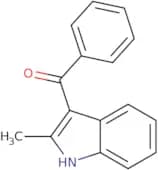
Formule :C6H10N2O2Degré de pureté :Min. 95%Masse moléculaire :142.16 g/mol3-Benzoyl-2-methyl-1H-indole
CAS :Produit contrôlé3-Benzoyl-2-methyl-1H-indole is an isomer of tetrahydrocarbazole. It has a high yield and optical purity. 3-Benzoyl-2-methyl-1H indole can be synthesized from β-unsaturated aldehydes, such as 2-(4,4,5,5-tetramethyl-[1,3,2]dioxaborolan-2yl)-3,5,6,-trimethylphenol. The compound has been shown to react with alkali metals to form a salt in the presence of dehydrogenative conditions. This reaction proceeds via an iminium intermediate that reacts with the metal salt to produce the product. 3BzIMeI can also react with alcohols or amines in the presence of heterocycles such as mesitylene to form substituted benzimidazoles.
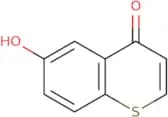
Formule :C16H13NODegré de pureté :Min. 95%Masse moléculaire :235.28 g/mol6-Hydroxy-4H-thiochromen-4-one
CAS :Versatile small molecule scaffold
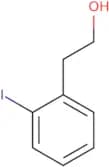
Formule :C9H6O2SDegré de pureté :Min. 95%Masse moléculaire :178.21 g/mol2-(2-iodophenyl)ethanol
CAS :2-(2-iodophenyl)ethanol is a ketone that can be made by refluxing benzene with phosphite and halides. It can also be synthesized from 2-phenylethanol, which is obtained from the reaction of acetone with sodium hydroxide. 2-(2-Iodophenyl)ethanol has been used as a precursor to other compounds in organic chemistry. This compound has been shown to react with dichlorophosphite or sulphonium to form organopalladium intermediates. Carbonylation reactions are another method for synthesizing this compound.
Formule :C8H9IODegré de pureté :Min. 95%Masse moléculaire :248.06 g/molRef: 3D-BBA05940
Produit arrêté1-(Trifluoromethyl)isoquinoline
CAS :1-(Trifluoromethyl)isoquinoline is an organic compound that is made from a photoredox reaction, which involves the use of a metal catalyst and light to produce reactive species. This chemical can be used in the synthesis of vinyl compounds, such as styrene, by regiospecifically adding an isocyanide. 1-(Trifluoromethyl)isoquinoline has been shown to be a useful reagent for experiments involving regiospecific reactions.
Formule :C10H6F3NDegré de pureté :Min. 95%Masse moléculaire :197.16 g/mol2,4-Dichloro-6-phenylpyrimidine
CAS :2,4-Dichloro-6-phenylpyrimidine is a nucleophilic reagent that has been used to synthesize pyrimidine derivatives. It has been shown to react with cyanoacetic acid and malononitrile in the presence of an organolithium reagent to form 2,6-dichloro-2,4-dihydroxypyrimidine. This compound reacts with chlorine gas to give 2,4-dichloro-6-(chloromethyl)pyrimidine. This reaction is regioselective and does not affect the other substituents on the ring. The reaction proceeds via a nucleophilic attack on the carbon atom adjacent to the nitrogen atom.
Formule :C10H6Cl2N2Degré de pureté :Min. 95%Masse moléculaire :225.07 g/mol1-Chloro-3-isocyano-2-methylbenzene
CAS :Versatile small molecule scaffold
Formule :C8H6ClNDegré de pureté :Min. 95%Masse moléculaire :151.59 g/mol

![[4-(Prop-2-yn-1-yl)phenyl]methanol](/_next/image/?url=https%3A%2Fstatic.cymitquimica.com%2Fproducts%2F3D%2Fthumb-webp%2FBCA17648.webp&w=3840&q=75)


![3,4-Dihydro-2H-pyrano[2,3-b]pyridine](/_next/image/?url=https%3A%2Fstatic.cymitquimica.com%2Fproducts%2F3D%2Fthumb-webp%2FBBA26789.webp&w=3840&q=75)