Building Blocks
Sous-catégories appartenant à la catégorie "Building Blocks"
- Acides boroniques et dérivés de l'acide boronique(5.778 produits)
- Building Blocks Chiraux(1.243 produits)
- Building Blocks Hydrocarbonés(6.098 produits)
- Building Blocks organiques(61.036 produits)
205240 produits trouvés pour "Building Blocks"
9-Methylfluorene-9-carboxylic acid
CAS :9-Methylfluorene-9-carboxylic acid is an organic compound that has a benzyl group attached to the 9th carbon of the fluorene ring. It is a colorless solid with a melting point of -78.5 °C. The synthesis of this compound involves the reaction of 9-fluorenone with diethyl ether in the presence of formic acid and phosphorous pentoxide. This reaction results in the formation of 9-methylene-9-fluorene, which is then oxidized to form 9-methylanthracene. Finally, methanol is added to form 9-methylfluorene-9-carboxylic acid. The molecular weight for this compound is 152 g/mol and it has an mp at -78.5 °C and bp at 138 °C. This compound can be used as a fingerprinting agent due to its characteristic UV absorption spectrum, which peaks
Formule :C15H12O2Degré de pureté :Min. 95%Masse moléculaire :224.25 g/mol6-Ethyltetrahydro-2H-pyran-2-one
CAS :6-Ethyltetrahydro-2H-pyran-2-one is a monatomic chemical in the diptera family. It is used as a detection method for host plants, and has been found to be present in fatty acids of coatings and analytical chemistry. 6-Ethyltetrahydro-2H-pyran-2-one can also be found in cuticular hydrocarbons and viscosity. The fluorescence of this compound is an analytical method that can be used to identify it. This chemical has also been shown to have antiviral properties, which are due to its ability to induce the expression of genes involved in the production of aldolases.
Formule :C7H12O2Degré de pureté :Min. 95%Masse moléculaire :128.17 g/mol2-Hydroxymethyl-1,4-benzodioxan
CAS :2-Hydroxymethyl-1,4-benzodioxan is an organic compound that has a hydrophobic base. It is a white to light yellow crystalline powder with a melting point of about 110 degrees Celsius. 2-Hydroxymethyl-1,4-benzodioxan is soluble in organic solvents and reacts with acids to form salts. The reaction products are high in value, which means they are very reactive. It can be used as an inorganic base and has been shown to react with substances such as potassium hydroxide or sodium hydroxide to form salts. 2-Hydroxymethyl-1,4-benzodioxan has been shown to have cardiac arrhythmia activity and may also be involved in the transport mechanism of ions across cell membranes.
Formule :C9H10O3Degré de pureté :Min. 95%Masse moléculaire :166.17 g/molOct-7-en-2-one
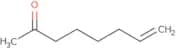
CAS :Oct-7-en-2-one is a reactive diketone that reacts with oxygen to form peroxides and other reactive oxygen species. This isomeric compound has been shown to react with nucleophiles, such as styrene, forming an intermediate that undergoes a nucleophilic attack by the carbonyl group. The mechanism of this reaction remains unclear, but it may be rationalized by invoking the following steps: 1) Oct-7-en-2-one reacts with molecular oxygen to form peroxides and other reactive oxygen species; 2) The peroxides then react with styrene to produce an intermediate; 3) Finally, the carbonyl group of the intermediate reacts with the nucleophilic group on the styrene molecule.
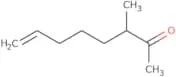
Formule :C8H14ODegré de pureté :Min. 95%Masse moléculaire :126.2 g/mol3-Methyloct-7-en-2-one
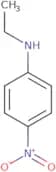
CAS :Versatile small molecule scaffoldFormule :C9H16ODegré de pureté :Min. 95%Masse moléculaire :140.22 g/molN-Ethyl-N-(4-nitrophenyl)amine
CAS :N-Ethyl-N-(4-nitrophenyl)amine is a stabilizer that can be used in the production of polymers. It is an experimental thermodynamic stabilizer with a high yield and good temperature stability (between −30°C and 120°C). N-Ethyl-N-(4-nitrophenyl)amine has been shown to interact with centralite, which is a compound with two nitrobenzene rings. This interaction leads to the formation of a new crystal structure that has improved optical properties. The crystal growth rate increases as the temperature increases, which results in a change in morphology from rod-like to globular, depending on the liquid phase.Formule :C8H10N2O2Degré de pureté :Min. 95%Masse moléculaire :166.18 g/mol4-Acetyl-1-naphthol
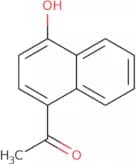
CAS :4-Acetyl-1-naphthol is a labile compound that can be degraded by phototransformation. It is an intermediate in the preparation of carbaryl, a pesticide that inhibits cholinesterase and is used to control insects. 4-Acetyl-1-naphthol reacts with phosphorus pentachloride to form chloroacetanilide, which is a precursor for many herbicides. This compound also forms exciplexes with benzoates and cyclic compounds such as chloride or chlorine. 4-Acetyl-1-naphthol has been shown to have ligand properties, binding to metal ions and forming stable compounds.Formule :C12H10O2Degré de pureté :Min. 95%Masse moléculaire :186.21 g/mol2-Phenylindolizine-3-carbaldehyde
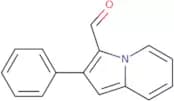
CAS :2-Phenylindolizine-3-carbaldehyde is a heterocyclic compound that is an intermediate in the synthesis of indolizine. It has been shown to be an efficient reaction intermediate for the synthesis of imines and other heterocycles. 2-Phenylindolizine-3-carbaldehyde reacts with hydroxylamine to form an iminium ion, which then reacts with either a second molecule of hydroxylamine or an electrophile (such as acetone) to form the desired indolizine product. The high yield and efficiency make it a good choice for synthesizing indolizines.
Formule :C15H11NODegré de pureté :Min. 95%Masse moléculaire :221.25 g/mol2-(Cyclohex-2-en-1-yl)acetic acid
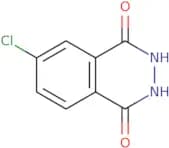
CAS :Versatile small molecule scaffoldFormule :C8H12O2Degré de pureté :Min. 95%Masse moléculaire :140.18 g/mol6-Chloro-1,2,3,4-tetrahydrophthalazine-1,4-dione
CAS :Versatile small molecule scaffoldFormule :C8H5ClN2O2Degré de pureté :Min. 95%Masse moléculaire :196.59 g/mol1,2-Thiazole-5-carbonyl chloride
CAS :Versatile small molecule scaffold
Formule :C4H2ClNOSDegré de pureté :Min. 95%Masse moléculaire :147.58 g/mol1-(1,2-Thiazol-5-yl)ethan-1-one
CAS :Versatile small molecule scaffoldFormule :C5H5NOSDegré de pureté :Min. 95%Masse moléculaire :127.17 g/molrac-(1S,4S)-4-(Hydroxymethyl)cyclohexanol
CAS :Rac-4-hydroxymethylcyclohexanol is an alicyclic glycol that has shown to have strong antibacterial activity against gram-positive bacteria and a wide range of gram-negative bacteria. It has been shown to be active against Mycobacterium tuberculosis, Bordetella pertussis, and Helicobacter pylori. This compound also inhibits the growth of various species of fungi.Formule :C7H14O2Degré de pureté :Min. 95%Masse moléculaire :130.18 g/mol3-(Morpholin-4-ylcarbonyl)-2-naphthol
CAS :Versatile small molecule scaffold
Formule :C15H15NO3Degré de pureté :Min. 95%Masse moléculaire :257.28 g/mol3-(Prop-2-yn-1-yloxy)phenol
CAS :3-(Prop-2-yn-1-yloxy)phenol is a low molecular weight, azide-containing compound. It is synthesized by the reaction of propargyl alcohol with sodium azide in the presence of magnesium as a catalyst. 3-(Prop-2-yn-1-yloxy)phenol can be used as an activating agent for Grignard reagents, and it has been shown to be effective in bulk polymerization reactions. The terminal alkynes react with 1,3-dipolar cycloaddition to form two new carbon atoms that are bound to the original carbon atom. This process is known as transfer. 3-(Prop-2-yn-1-yloxy)phenol has also been shown to have low molecular weight, which makes it useful for reactions at lower temperatures.
Formule :C9H8O2Degré de pureté :Min. 95%Masse moléculaire :148.16 g/mol3-Amino-4-ethylbenzene-1-sulfonic acid
CAS :Versatile small molecule scaffoldFormule :C8H11NO3SDegré de pureté :Min. 95%Masse moléculaire :201.25 g/mol2-Hydroxyethyl N,N-dimethylcarbamate
CAS :Versatile small molecule scaffold
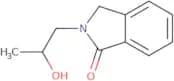
Formule :C5H11NO3Degré de pureté :Min. 95%Masse moléculaire :133.15 g/mol2-(2-Hydroxypropyl)-2,3-dihydro-1H-isoindol-1-one
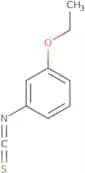
CAS :Versatile small molecule scaffoldFormule :C11H13NO2Degré de pureté :Min. 95%Masse moléculaire :191.23 g/mol1-Ethoxy-3-isothiocyanatobenzene
CAS :1-Ethoxy-3-isothiocyanatobenzene is a structural modification of phenyl isothiocyanate. It has been shown to inhibit the polymerization of pyrazole derivatives, which are important for cellular growth and proliferation. 1-Ethoxy-3-isothiocyanatobenzene has also been shown to inhibit the cell apoptosis process by binding to the intracellular domain of Mcl-1, a protein that regulates mitochondrial membrane potential and release of cytochrome c. This compound also inhibits the hepg2 cell line, which is involved in the synthesis of prostaglandins and inflammatory mediators. The inhibition of this cell line may be due to its ability to disrupt cellular structure.Formule :C9H9NOSDegré de pureté :Min. 95%Masse moléculaire :179.24 g/mol1-Ethyl-4-methyl-1H-pyrazol-5-amine
CAS :Versatile small molecule scaffold
Formule :C6H11N3Degré de pureté :Min. 95%Masse moléculaire :125.17 g/mol