Building Blocks
Sous-catégories appartenant à la catégorie "Building Blocks"
- Acides boroniques et dérivés de l'acide boronique(5.781 produits)
- Building Blocks Chiraux(1.242 produits)
- Building Blocks Hydrocarbonés(6.101 produits)
- Building Blocks organiques(61.038 produits)
205338 produits trouvés pour "Building Blocks"
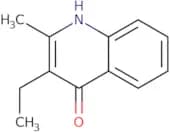
3-Ethyl-2-methylquinolin-4-ol
CAS :Versatile small molecule scaffold
Formule :C12H13NODegré de pureté :Min. 95%Masse moléculaire :187.24 g/mol1-Chloro-4-isocyanobenzene
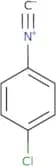
CAS :1-Chloro-4-isocyanobenzene (1CI) is an organic compound that has been used as a chemical probe for the detection of amines and other molecules on metal surfaces. The frequency shift in Raman spectra, which is observed after the addition of 1CI to the metal surface, is used to detect amines. 1CI has also been shown to be a potent inhibitor of mitochondrial function. This molecule binds to nucleophilic sites on metal surfaces and forms covalent bonds with them, leading to a high degree of inhibition.
1CI can be synthesized in three steps from commercially available starting materials and is relatively easy to purify.Formule :C7H4ClNDegré de pureté :Min. 95%Masse moléculaire :137.56 g/mol2-Bromopropanedinitrile
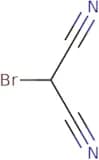
CAS :2-Bromopropanedinitrile is an organic solvent that is used as a reactant in the production of polyurethane. It has been shown to have antibacterial activity against a number of bacteria, including Escherichia coli, Staphylococcus aureus, Bacillus subtilis, and Proteus vulgaris. 2-Bromopropanedinitrile exhibits its antimicrobial effect by reacting with the chloride ion and nucleophilic attack on the carbonyl group. This reaction causes the chemical to polymerize and form cross-links between molecules of DNA. The compound also has antifungal properties, which may be due to its hydroxyl groups or hydrogenated side chains.
Formule :C3HBrN2Degré de pureté :Min. 95%Masse moléculaire :144.96 g/molRef: 3D-BAA88522
Produit arrêté4-tert-Butylpiperidine
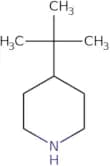
CAS :4-tert-Butylpiperidine is an organic chemical compound that is a colorless liquid with a strong, unpleasant odor. 4-tert-Butylpiperidine is a nonselective, nucleophilic sulfoxide oxidant that reacts with the electron pair of a sulfur atom in sulfoxides and halides to form alkylating products. It has been used in the oxidation of toluene to benzoic acid and in the synthesis of piperazine. 4-tert-Butylpiperidine can also be used to chlorinate aluminium or as an analytical reagent for the detection of chloride ions. The chemical structure includes two isomeric forms, namely alpha and beta. Alpha is more stable than beta and will react faster; however, beta can be isolated from mixtures of the two compounds by distillation.
Formule :C9H19NDegré de pureté :Min. 95%Masse moléculaire :141.25 g/mol2-(3-Hydroxyphenoxy)acetic acid
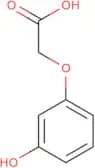
CAS :2-(3-Hydroxyphenoxy)acetic acid is an organic compound that belongs to the phenoxy family. It is a cross-linker, which means that it links two molecules or parts of a molecule together. 2-(3-Hydroxyphenoxy)acetic acid has been used as a component in the production of polyurethane, cellulose acetate, and nylon. This chemical can be synthesized by reacting phenol with acetic anhydride in the presence of pyridine and tannins. 2-(3-Hydroxyphenoxy)acetic acid can be neutralized by adding sodium carbonate to form sodium phenoxide and sodium acetate. Alkylene chains can be introduced by reacting this compound with alkyl halides such as chloroethane or bromoethane in the presence of ammonia and sodium hydroxide. Phenolic groups can be introduced by reacting this compound with formaldehyde and trichlor
Formule :C8H8O4Degré de pureté :Min. 95%Masse moléculaire :168.15 g/molRef: 3D-BAA87883
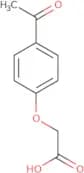
Produit arrêté4-Acetylphenoxyacetic acid
CAS :4-Acetylphenoxyacetic acid is a hydroxamic acid, which inhibits the deacetylation of histones. This compound has been shown to inhibit histone deacetylase activity and to induce a conformational change in the enzyme. 4-Acetylphenoxyacetic acid is also a peptidomimetic that can be used as a lead compound for antiviral agents. It is also an inhibitor of chalcone synthase and can be used as a lead compound for new drugs against cancer. 4-Acetylphenoxyacetic acid has been shown to have anti-inflammatory effects in mice, which may be due to its ability to suppress prostaglandin synthesis by inhibiting cyclooxygenase-2 (COX-2).
Formule :CH3COC6H4OCH2CO2HDegré de pureté :Min. 95%Masse moléculaire :194.18 g/mol(3-Acetylphenoxy)acetic acid
CAS :Versatile small molecule scaffold
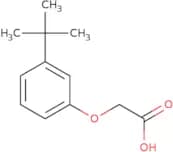
Formule :C10H10O4Degré de pureté :Min. 95%Masse moléculaire :194.19 g/mol2-(3-tert-Butylphenoxy)acetic acid
CAS :Versatile small molecule scaffold
Formule :C12H16O3Degré de pureté :Min. 95%Masse moléculaire :208.25 g/mol2-[3-(Propan-2-yl)phenoxy]acetic acid
CAS :2-[3-(Propan-2-yl)phenoxy]acetic acid is a chemical compound that is used as an additive in benzene, and is a phytotoxic chemical. It prevents the formation of chlorophyll by blocking electron transport and inhibiting photosynthesis. 2-[3-(Propan-2-yl)phenoxy]acetic acid is used to induce callus tissue from lettuce, radish, and other plants. This compound also inhibits the growth of various bacteria including Escherichia coli and Pseudomonas aeruginosa.
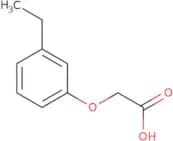
Formule :C11H14O3Degré de pureté :Min. 95%Masse moléculaire :194.23 g/mol2-(3-Ethylphenoxy)acetic acid
CAS :2-(3-Ethylphenoxy)acetic acid is a phenoxyacetic acid that can be used as an igniting agent. It can be synthesized by the reaction of an alcohol with a carboxylic acid chloride in the presence of a base. The compound weighs 130.2 g/mol and has a melting point of 50°C. 2-(3-Ethylphenoxy)acetic acid is often used as a reagent for weighing zirconium oxide, which is used in some dental prostheses and dentures. It reacts with zirconia to produce ZrO2 and CO2 gas. The compound also reacts with water to form hydrogen gas, which makes it useful as a catalyst for oxidation reactions when heating zirconium metal in air.
Formule :C10H12O3Degré de pureté :Min. 95%Masse moléculaire :180.2 g/molRef: 3D-BAA87851
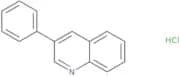
Produit arrêté3-Phenylquinoline hydrochloride
CAS :Versatile small molecule scaffold
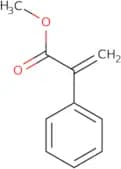
Formule :C15H12ClNDegré de pureté :Min. 95%Masse moléculaire :241.71 g/molMethyl 2-phenylacrylate
CAS :Methyl 2-phenylacrylate is a synthetic chemical that is used in the production of polymers. It reacts with oxygen to give an oxidative carbonylation product, which consists of a particle and a functional group. The particle can be made insoluble by polymerisation. The reaction mechanism involves the donation of a methyl cinnamate group to the carbonyl group, which has a redox potential and kinetic energy that are sufficient for the reaction to proceed. Methyl 2-phenylacrylate has been used as an initiator for free radical polymerisation, which leads to cross-linked polymers. This initiator also reacts with other functional groups such as phenol or amine groups.
Formule :C10H10O2Degré de pureté :Min. 95%Masse moléculaire :162.19 g/mol6H-Benzo[C][1,2]benzothiazine 5,5-dioxide
CAS :6H-Benzo[C][1,2]benzothiazine 5,5-dioxide is a white crystalline solid with a molecular weight of 169.14. It is soluble in ether and benzene, but insoluble in water. 6H-Benzo[C][1,2]benzothiazine 5,5-dioxide has been shown to yield adducts with hydrochlorination and to react with quinones and other electrophiles to form chlorinated products. The regioselectivity of the reaction is determined by the anion of the substrate; chloride being the most reactive. The interaction of 6H-Benzo[C][1,2]benzothiazine 5,5-dioxide with anions such as diimide or sulfinic acid leads to the formation of different isomeric adducts.
Formule :C12H9NO2SDegré de pureté :Min. 95%Masse moléculaire :231.27 g/molRef: 3D-BAA86433
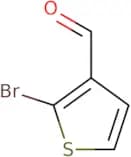
Produit arrêté2-Bromothiophene-3-carbaldehyde
CAS :2-Bromothiophene-3-carbaldehyde is a versatile monomer that can be used for the synthesis of a wide range of products. 2-Bromothiophene-3-carbaldehyde has been used in the synthesis of hexacyclic and grignard reagents, as well as aldehydes, which are precursors to many other chemicals. It is also an isomeric compound and can be used for cross coupling reactions. The yields of this chemical are high, making it an ideal choice for use in organic syntheses. 2-Bromothiophene-3-carbaldehyde can also be used in solar cells to produce polymers with optimal reaction rates. This chemical is often used as a monomer in the formylation and dimethylformamide processes.
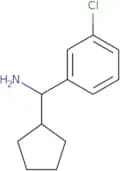
Formule :C5H3BrOSDegré de pureté :Min. 95%Masse moléculaire :191.05 g/mol(3-Chlorophenyl)(cyclopentyl)methanamine
CAS :Versatile small molecule scaffold
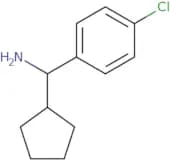
Formule :C12H16ClNDegré de pureté :Min. 95%Masse moléculaire :209.71 g/mol(4-Chlorophenyl)(cyclopentyl)methanamine
CAS :Versatile small molecule scaffold
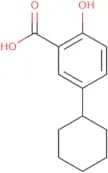
Formule :C12H16ClNDegré de pureté :Min. 95%Masse moléculaire :209.71 g/mol5-Cyclohexyl-2-hydroxybenzoic acid
CAS :5-Cyclohexyl-2-hydroxybenzoic acid is a compound that belongs to the group of phenolic compounds. It has been clinically used for the treatment of systemic hypertension and is used in the manufacture of dyes, resins, flavors and fragrances. 5-Cyclohexyl-2-hydroxybenzoic acid can be found in light exposure, metal cations and environmental pollution. The use of this compound may lead to depression, which may be due to its effects on the vessel diameter. This drug also has an effect on blood pressure by stimulating vasodilatation through an endothelium-dependent mechanism.
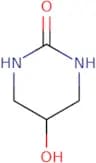
Formule :C13H16O3Degré de pureté :Min. 95%Masse moléculaire :220.26 g/mol5-Hydroxy-1,3-diazinan-2-one
CAS :Versatile small molecule scaffold
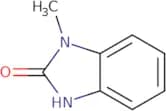
Formule :C4H8N2O2Degré de pureté :Min. 95%Masse moléculaire :116.12 g/mol1-Methyl-2-benzimidazolinone
CAS :1-Methyl-2-benzimidazolinone is a synthetic compound that has been shown to be cytotoxic to cancer cells. It binds to metal ions and forms reactive intermediates, which are able to react with nucleophiles in cellular macromolecules. The reaction mechanism of 1-methyl-2-benzimidazolinone is similar to the reaction of picolinic acid with metal hydroxides. The heteroarylations of this compound have also been studied using chemical ligation, and it has been found that the d4 receptor may play a role in its cytotoxicity.
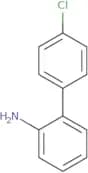
Formule :C8H8N2ODegré de pureté :Min. 95%Masse moléculaire :148.16 g/mol4'-Chloro-biphenyl-2-ylamine
CAS :4'-Chloro-biphenyl-2-ylamine is an organic solvent that is used in alkalization and as a reagent in chemical reactions. It has been shown to be bactericidal, with a broad spectrum of activity against Gram-positive and Gram-negative bacteria. 4'-Chloro-biphenyl-2-ylamine can be synthesized by the reaction of biphenyl with hydrogen chloride, producing an azide and chloride. The azide reacts with chloroacetic acid to produce the desired compound.
Formule :C12H10ClNDegré de pureté :Min. 95%Masse moléculaire :203.67 g/mol

![2-[3-(Propan-2-yl)phenoxy]acetic acid](/_next/image/?url=https%3A%2Fstatic.cymitquimica.com%2Fproducts%2F3D%2Fthumb-webp%2FBAA87852.webp&w=3840&q=75)
![6H-Benzo[C][1,2]benzothiazine 5,5-dioxide](/_next/image/?url=https%3A%2Fstatic.cymitquimica.com%2Fproducts%2F3D%2Fthumb-webp%2FBAA86433.webp&w=3840&q=75)