


Building Blocks
Sous-catégories appartenant à la catégorie "Building Blocks"
- Acides boroniques et dérivés de l'acide boronique(5.774 produits)
- Building Blocks Chiraux(1.237 produits)
- Building Blocks Hydrocarbonés(6.098 produits)
- Building Blocks organiques(60.970 produits)
205134 produits trouvés pour "Building Blocks"
6-Chlorohexanol
CAS :6-Chlorohexanol is a fatty alcohol with a hydroxyl group. It is soluble in water and has a phase transition temperature of -114°C. 6-Chlorohexanol can be synthesized by reacting 2,6-dichlorophenol with hydrochloric acid and sodium hydroxide in the presence of azobenzene. The reaction solution is then heated to about 300°C for 3 hours. 6-Chlorohexanol is used as a model system for studying the photochemical reactions of fatty acids. Hydroxy groups are susceptible to light exposure, which leads to the formation of carbonyl compounds such as malonic acid and chloride monomers.Formule :C6H13ClODegré de pureté :Min. 95%Couleur et forme :PowderMasse moléculaire :136.62 g/molR-(-)-3-Chloro-1,2-propanediol
CAS :R-(-)-3-Chloro-1,2-propanediol is a chiral epoxide that is used in the synthesis of other chemicals. It has been shown to be active against bacterial strains such as corynebacterium and coryneform bacteria. This chemical can be synthesized from hydrochloric acid and chlorinated propane with an asymmetric synthesis. The R-(-)-3-Chloro-1,2-propanediol can also be synthesized through electrochemical methods using chloride ion as the reducing agent. This compound is soluble in water and shows kinetic activity with carbon sources when used as an antibiotic.
Formule :C3H7ClO2Degré de pureté :Min. 95%Couleur et forme :Colorless Clear LiquidMasse moléculaire :110.54 g/mol6-Chloro-2-fluoropurine
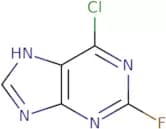
CAS :6-Chloro-2-fluoropurine is an analytical reagent with a monoclonal antibody that binds to the nucleic acid of HL-60 cells and can be used for optical analysis. 6-Chloro-2-fluoropurine has been shown to have significant cytotoxicity against HL-60 cells, which may be due to its ability to bind to intracellular targets. 6-Chloro-2-fluoropurine has also been shown to inhibit the growth of HL-60 cells in a fluorescein angiography study and is used as a diagnostic agent for diagnosis of cancer.Formule :C5H2ClFN4Degré de pureté :Min. 98 Area-%Couleur et forme :Off-White PowderMasse moléculaire :172.55 g/molChlorbutanol hemihydrate
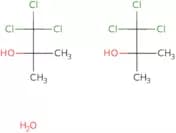
CAS :Chlorbutanol hemihydrate is an antimicrobial agent that is used as an intra-articular injection, and has been shown to be effective against choline chloride. Chlorbutanol hemihydrate binds to the active substances and reacts with chlorine atom to form an active substance. The reaction rate of chlorbutanol hemihydrate with chlorine atoms is slow, so it can be administered intravenously or intramuscularly. Functional assays have shown that chlorbutanol hemihydrate can inhibit the growth of cancer cells in a dose-dependent manner. It also inhibits the production of oxytocin receptor in mice tissues. Chlorbutanol hemihydrate has been shown to be safe for humans when given at doses up to 10 times higher than the recommended dosage, but may cause allergic reactions in some people.Formule :C4H7Cl3O•(H2O)0Degré de pureté :Min. 95%Couleur et forme :White PowderMasse moléculaire :186.46 g/molCytosine
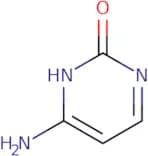
CAS :Pyrimidine nucleobase; component of nucleic acidsFormule :C4H5N3ODegré de pureté :(Hplc) Min. 99%Couleur et forme :White PowderMasse moléculaire :111.1 g/molChloroiodomethane, stabilised with copper
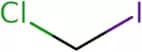
CAS :Chloroiodomethane is a chemical that is used as an intermediate in the production of other chemicals. It is a colourless liquid with a strong odour. 3-Bromopropylamine hydrobromide reacts with chloroiodomethane to form 3-bromopropyl bromide, which can be reacted with hydrogen chloride to form the corresponding acid chloride. This reaction product can then be reacted with β-amino acids to form amides or esters. The reaction mechanism of this process involves nucleophilic substitution of chloroiodomethane by the amino group of the β-amino acid to produce an intermediate α,β-unsaturated carbonyl chloride, which undergoes elimination to give the final product. Chloroiodomethane also reacts rapidly with fatty acids and hydroxyl groups in biological systems, leading to inflammatory diseases such as HIV infection.Formule :CH2ClIDegré de pureté :Min. 95%Couleur et forme :Colorless Clear LiquidMasse moléculaire :176.38 g/molCyclobutanesulfonyl chloride
CAS :Cyclobutanesulfonyl chloride is a reagent that is used for the synthesis of 1-6-alkylcyclobutanes. It can be used to synthesize heterocyclic compounds, including those with high optical purity. Cyclobutanesulfonyl chloride has been shown to have antiviral and antiproliferative properties. It has also been shown to exhibit anticancer activity in vitro and in vivo. The mechanism of action for this compound is unclear, but it may inhibit protein synthesis by attacking the amino acid methionine in proteins or by inhibiting DNA replication.Formule :C4H7ClO2SDegré de pureté :Min. 95%Couleur et forme :Clear LiquidMasse moléculaire :154.62 g/mol2-Bromo-1-(4-chloro-3-fluorophenyl)ethanone
CAS :Please enquire for more information about 2-Bromo-1-(4-chloro-3-fluorophenyl)ethanone including the price, delivery time and more detailed product information at the technical inquiry form on this pageFormule :C8H5BrCIFODegré de pureté :Min. 95%Masse moléculaire :354.94 g/molCyclopent-2-en-1-ol
CAS :Cyclopent-2-en-1-ol is a reactive monomer that can react with chloride and hydroxyl groups. It can also undergo reaction with sodium carbonate to form a cyclic ester. Cyclopent-2-en-1-ol can be converted to an epoxide by the use of acid catalyst. This compound also has the ability to polymerize, forming polymers that are used in rayon production.Formule :C5H8ODegré de pureté :Min. 95%Couleur et forme :Clear LiquidMasse moléculaire :84.12 g/molCucurbit[7]uril
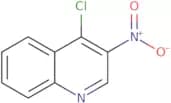
CAS :Cucurbit[7]uril is a chemical compound that can be used as a fluorescent probe for protein target. It has been shown to produce significant cytotoxicity against cancer cell lines in vitro. Cucurbit[7]uril also exhibits hydrophobic effects, which bind to the cell nuclei of cancer cells and inhibits DNA replication. The photophysical properties of cucurbit[7]uril are stable under physiological conditions and it can be used in vivo as a styryl dye. This chemical compound is also able to form stable complexes with carbonyl oxygens, making it an interesting candidate for anti-cancer drug development.Formule :C42H42N28O14Degré de pureté :Min. 95%Couleur et forme :White To Yellow SolidMasse moléculaire :1,162.96 g/mol4-Chloro-3-nitroquinoline
CAS :4-Chloro-3-nitroquinoline is a quinoline derivative that can be synthesized by cross-coupling reaction. The amide and n-oxide functional groups are the most reactive sites. It can react with nucleophiles such as haloamines, azides, and pyridazines to form covalent bonds. 4-Chloro-3-nitroquinoline has been shown to have anti-HIV activity in vitro and in vivo in animal models. In addition, this compound has shown potential use for the treatment of leishmania.Formule :C9H5ClN2O2Degré de pureté :Min. 95%Couleur et forme :Slightly Yellow PowderMasse moléculaire :208.6 g/mol4-Chloro-8-quinolinol
CAS :4-Chloro-8-quinolinol is a quinoline derivative that has been shown to have pharmacological effects. It is used in the synthesis of other compounds, such as 5-chloro-8-hydroxyquinoline, which is used in the treatment of cancer. 4-Chloro-8-quinolinol can also be prepared by oxidizing 5,6,7,8 tetrachloroquinoline with chlorine and ammonia. The photophysical properties of this compound are analogous to those of benzothiazole derivatives. The fluorescence emission spectrum ranges from 360 nm to 450 nm with a maximum at 390 nm and emission intensity at 350 nm. This compound exhibits fungitoxicity against Penicillium notatum and Aspergillus fumigatus.
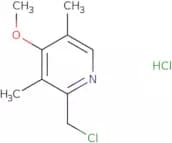
Formule :C9H6ClNODegré de pureté :Min. 95%Masse moléculaire :179.6 g/mol2-(Chloromethyl)-4-methoxy-3,5-dimethylpyridine hydrochloride
CAS :2-(Chloromethyl)-4-methoxy-3,5-dimethylpyridine hydrochloride is a benzimidazole derivative. It has a chemical stability and can be used for wastewater treatment. It is also a pump inhibitor and can be used for anhydrous sodium magnesium salts. This product is synthesized from the reaction of protonated 2-bromo-4-methoxyphenol with 2,6-dimethylpyridine in the presence of hydrochloric acid. The reaction was carried out in an asymmetric synthesis using a proton transport system. 2-(Chloromethyl)-4-methoxy-3,5-dimethylpyridine hydrochloride is soluble in water and has a pH of 1 to 3. It has been shown that this product can be used as an antioxidant and as a metal chelation agent.
Formule :C9H13Cl2NODegré de pureté :Min. 95%Couleur et forme :PowderMasse moléculaire :222.11 g/molCymiazole
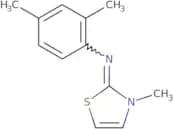
CAS :Veterinary drug, ectoparasiticide
Formule :C12H14N2SDegré de pureté :Min. 95%Couleur et forme :Brown Clear LiquidMasse moléculaire :218.32 g/mol4-Chlorobenzenethiol
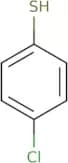
CAS :4-Chlorobenzenethiol is a chemical compound that contains a fatty acid. It is an intramolecular hydrogen donor with the ability to form a disulfide bond. The compound also has high stability and can be used in organic synthesis reactions involving reactive sulfur groups. 4-Chlorobenzenethiol reacts with sodium carbonate to produce sodium thiocarbonate and chloroform, which are then reacted with phosphorus pentoxide for oxidation. The reaction mechanism is similar to that of the Diels-Alder reaction and the model system involves dinucleotide phosphate. 4-Chlorobenzenethiol can be reacted with hydrochloric acid or trifluoroacetic acid as an oxidizing agent.
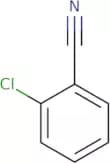
Formule :C6H5ClSDegré de pureté :Min. 95%Couleur et forme :White PowderMasse moléculaire :144.62 g/mol2-Chlorobenzonitrile
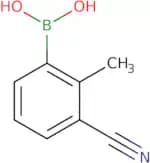
CAS :2-Chlorobenzonitrile is a white solid that is soluble in organic solvents. It is an aryl halide and has a chemical structure of C6ClCN. 2-Chlorobenzonitrile is used as a raw material for the production of dyes and pharmaceuticals. This compound reacts with hydrochloric acid to form 4-chlorobenzonitrile, which can be used in the synthesis of other chemicals. 2-Chlorobenzonitrile can also react with n-dimethyl formamide in an optimal reaction solution to form 4-chlorobenzonitrile. The FTIR spectroscopy on this compound shows that it has a chloride group at 795 cm−1. The optimum reaction temperature for this compound is between 100 and 120 °C, but it will react with inorganic acids such as sulfuric acid or phosphoric acid at higher temperatures. Synthesis of this compound can be done by reactingFormule :C7H4ClNDegré de pureté :Min. 95%Couleur et forme :White PowderMasse moléculaire :137.57 g/mol3-Cyano-2-methylphenylboronic acid
CAS :3-Cyano-2-methylphenylboronic acid is a high quality compound that can be used as a reagent, intermediate, or building block in the synthesis of complex compounds. This chemical is also useful as a speciality chemical and research chemical. 3-Cyano-2-methylphenylboronic acid has versatile uses in organic synthesis due to its versatility in reactions and building blocks.
Formule :C8H8BNO2Degré de pureté :Min. 95%Couleur et forme :PowderMasse moléculaire :160.97 g/mol(1R,5S,6r)-rel-3-Oxabicyclo[3.1.0]hexane-6-carboxylic acid
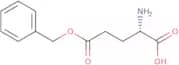
CAS :Versatile small molecule scaffoldFormule :C6H8O3Degré de pureté :Min. 95%Masse moléculaire :128.13 g/molL-Glutamic acid 5-benzyl ester
CAS :L-Glutamic acid 5-benzyl ester is an amino acid that has been synthesized to have a lysine residue. It is an ester hydrochloride and has been shown to have broad-spectrum antimicrobial properties. L-glutamic acid 5-benzyl ester's antimicrobial activity is thought to be due to its chemical structure which allows it to act as an antimicrobial peptide, binding to receptors on the surface of bacterial cells and inhibiting their growth. L-glutamic acid 5-benzyl ester also inhibits osteogenic genes in cervical cancer cells, but not in normal cells.Formule :C12H15NO4Degré de pureté :Min. 95%Couleur et forme :White Off-White PowderMasse moléculaire :237.25 g/molIr[dffppy]2-(4,4′-dcf3bpy)pf6
CAS :Please enquire for more information about Ir[dffppy]2-(4,4′-dcf3bpy)pf6 including the price, delivery time and more detailed product information at the technical inquiry form on this pageFormule :C34H16F18IrN4PDegré de pureté :Min. 95%Masse moléculaire :1,045.68 g/mol





![Cucurbit[7]uril](/_next/image/?url=https%3A%2Fstatic.cymitquimica.com%2Fproducts%2F3D%2Fthumb-webp%2FFC171865.webp&w=3840&q=75)

![(1R,5S,6r)-rel-3-Oxabicyclo[3.1.0]hexane-6-carboxylic acid](/_next/image/?url=https%3A%2Fstatic.cymitquimica.com%2Fproducts%2F3D%2Fthumb-webp%2FFCA78088.webp&w=3840&q=75)
![Ir[dffppy]2-(4,4′-dcf3bpy)pf6](/_next/image/?url=https%3A%2Fstatic.cymitquimica.com%2Fproducts%2F3D%2Fthumb-webp%2FFGD43792.webp&w=3840&q=75)