Building Blocks
Cette section contient des produits fondamentaux pour la synthèse de composés organiques et biologiques. Building blocks sont les matériaux de départ essentiels utilisés pour construire des molécules complexes à travers diverses réactions chimiques. Ils jouent un rôle crucial dans la découverte de médicaments, la science des matériaux et la recherche chimique. Chez CymitQuimica, nous offrons une gamme diversifiée de building blocks de haute qualité pour soutenir vos recherches innovantes et projets industriels, en vous assurant de disposer des composants essentiels pour une synthèse réussie.
Sous-catégories appartenant à la catégorie "Building Blocks"
- Acides boroniques et dérivés de l'acide boronique(5.778 produits)
- Building Blocks Chiraux(1.243 produits)
- Building Blocks Hydrocarbonés(6.098 produits)
- Building Blocks organiques(61.046 produits)
203857 produits trouvés pour "Building Blocks"
Trier par
Degré de pureté (%)
0
100
|
0
|
50
|
90
|
95
|
100
4-[(Propan-2-yloxy)methyl]benzoic acid
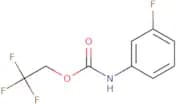
CAS :<p>Versatile small molecule scaffold</p>Formule :C11H14O3Degré de pureté :Min. 95%Couleur et forme :PowderMasse moléculaire :194.23 g/mol2,2,2-Trifluoroethyl N-(3-fluorophenyl)carbamate
CAS :<p>Versatile small molecule scaffold</p>Formule :C9H7F4NO2Degré de pureté :Min. 95%Masse moléculaire :237.15 g/molRef: 3D-AIA87684
Produit arrêté4-Methyl-2-(2-methylphenyl)pentanoic acid
CAS :<p>Versatile small molecule scaffold</p>Formule :C13H18O2Degré de pureté :Min. 95%Masse moléculaire :206.28 g/mol3-[(4-Aminopiperidin-1-yl)methyl]benzonitrile
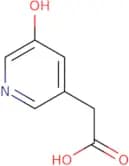
CAS :<p>Versatile small molecule scaffold</p>Formule :C13H17N3Degré de pureté :Min. 95%Masse moléculaire :215.29 g/mol2-(5-Hydroxypyridin-3-yl)acetic acid
CAS :<p>Versatile small molecule scaffold</p>Formule :C7H7NO3Degré de pureté :Min. 95%Masse moléculaire :153.14 g/mol2-[4-(4-Methoxyphenoxy)phenyl]ethan-1-amine hydrochloride
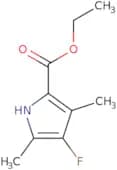
CAS :<p>Versatile small molecule scaffold</p>Formule :C15H18ClNO2Degré de pureté :Min. 95%Masse moléculaire :279.76 g/mol4-Fluoro-3,5-dimethyl-1H-pyrrole-2-carboxylic acid ethyl ester
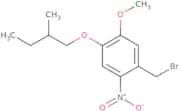
CAS :<p>Versatile small molecule scaffold</p>Formule :C9H12FNO2Degré de pureté :Min. 95%Masse moléculaire :185.2 g/mol1-(Bromomethyl)-5-methoxy-4-(2-methylbutoxy)-2-nitrobenzene
CAS :<p>Versatile small molecule scaffold</p>Formule :C13H18BrNO4Degré de pureté :Min. 95%Masse moléculaire :332.19 g/mol2-[(3-Phenyl-1,2,4-oxadiazol-5-yl)methoxy]acetic acid
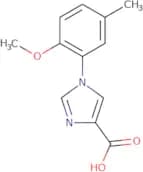
CAS :<p>Versatile small molecule scaffold</p>Formule :C11H10N2O4Degré de pureté :Min. 95%Masse moléculaire :234.21 g/mol1-(2-Methoxy-5-methylphenyl)-1H-imidazole-4-carboxylic acid
CAS :<p>Versatile small molecule scaffold</p>Formule :C12H12N2O3Degré de pureté :Min. 95%Masse moléculaire :232.23 g/mol2-[Cyclopentyl({1-methyl-1H-pyrazolo[3,4-d]pyrimidin-4-yl})amino]ethan-1-ol
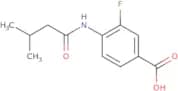
CAS :<p>Versatile small molecule scaffold</p>Formule :C13H19N5ODegré de pureté :Min. 95%Masse moléculaire :261.32 g/mol3-Fluoro-4-(3-methylbutanamido)benzoic acid
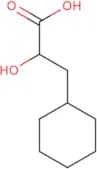
CAS :<p>Versatile small molecule scaffold</p>Formule :C12H14FNO3Degré de pureté :Min. 95%Masse moléculaire :239.24 g/mol3-Cyclohexyl-2-hydroxypropanoic acid
CAS :<p>Versatile small molecule scaffold</p>Formule :C9H16O3Degré de pureté :Min. 95%Masse moléculaire :172.22 g/molRef: 3D-ABA40054
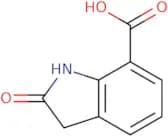
Produit arrêté2-oxo-Indoline-7-carboxylic acid
CAS :<p>2-Oxo-indoline-7-carboxylic acid is an antiinflammatory agent that belongs to the class of hydrazines. It has been shown to have antiinflammatory activity in stepwise manner, which starts with a hydrazine group attacking the carbonyl group of a carboxylic acid and forming a new heterocyclic ring. 2-Oxo-indoline-7-carboxylic acid also has esterase inhibitory effect and can be used for the treatment of inflammatory diseases such as rheumatoid arthritis.</p>Formule :C9H7NO3Degré de pureté :Min. 95%Masse moléculaire :177.16 g/molRef: 3D-ABA36943
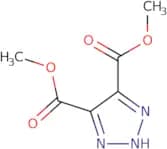
Produit arrêté4,5-Dimethyl 1H-1,2,3-triazole-4,5-dicarboxylate
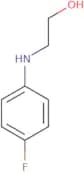
CAS :<p>Versatile small molecule scaffold</p>Formule :C6H7N3O4Degré de pureté :Min. 95%Masse moléculaire :185.14 g/mol2-(4-Fluoro-phenylamino)-ethanol
CAS :<p>Versatile small molecule scaffold</p>Formule :C8H10FNODegré de pureté :Min. 95%Masse moléculaire :155.17 g/molRef: 3D-AAA70217
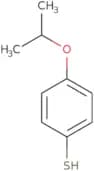
Produit arrêté4-(Propan-2-yloxy)benzene-1-thiol
CAS :<p>4-(Propan-2-yloxy)benzene-1-thiol is a chemical that inhibits the enzyme acetyl-coa carboxylase. It is used in medicinal chemistry to create inhibitors of this enzyme. 4-(Propan-2-yloxy)benzene-1-thiol has been found to be selective for the inhibition of acetyl-coa carboxylase and not other enzymes such as malonyl coenzyme A carboxykinase. The high throughput screening of this compound has led to the discovery of new inhibitors with potential therapeutic benefits.</p>Formule :C9H12OSDegré de pureté :Min. 95%Masse moléculaire :168.26 g/molRef: 3D-AAA70212
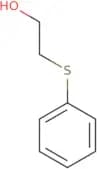
Produit arrêté2-(Phenylthio)ethanol
CAS :<p>2-Phenylthioethanol is a monomer that is used in the synthesis of silver trifluoromethanesulfonate. 2-Phenylthioethanol reacts with hydroxyl groups to form an ether linkage, which is the basis for its use as a monomer. 2-Phenylthioethanol has been shown to react with orthophosphate to form an ester linkage. This reaction is catalyzed by a nucleophile (e.g., chloride) and occurs at neutral pH in the presence of aluminium powder. The rate of this reaction increases with temperature and can be accelerated by diphenyl sulfoxide. The coatings industry uses 2-phenylthioethanol as a solvent for polyvinylchloride and polyurethane coatings, due to its ability to dissolve these materials without degrading them.</p>Formule :C8H10OSDegré de pureté :Min. 95%Masse moléculaire :154.23 g/molRef: 3D-AAA69912
Produit arrêtéTricyclo[2.2.1.0,2,6]heptane-3-carboxylic acid
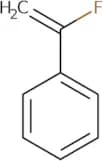
CAS :<p>Versatile small molecule scaffold</p>Formule :C8H10O2Degré de pureté :Min. 95%Masse moléculaire :138.16 g/molalpha-Fluorostyrene
CAS :<p>Styrene is a synthetic monomer that belongs to the group of cycloalkanes. It is a colorless, volatile liquid with a boiling point of at least 100°C and a viscosity of 0.5-2 mm2/s. Styrene is usually used in the production of polystyrene plastic and styrenic resins. Its most well-known application is in the manufacture of polystyrene foam insulation (commonly known as Styrofoam). Styrene can be converted into other compounds by thermolysis, oxidation, or hydrolysis. One such conversion is debromination, which occurs when styrene reacts with bromine in an alkaline solution to produce di-bromostyrene and hydrogen bromide gas. The isotopomers alpha-fluorostyrene and beta-fluorostyrene are derivatives of styrene that are used for analysis purposes because they have different physical properties due to their different masses.</p>Formule :C8H7FDegré de pureté :Min. 95%Masse moléculaire :122.14 g/mol
![4-[(Propan-2-yloxy)methyl]benzoic acid](/_next/image/?url=https%3A%2Fstatic.cymitquimica.com%2Fproducts%2F3D%2Fthumb-webp%2FAJB02134.webp&w=3840&q=75)


![3-[(4-Aminopiperidin-1-yl)methyl]benzonitrile](/_next/image/?url=https%3A%2Fstatic.cymitquimica.com%2Fproducts%2F3D%2Fthumb-webp%2FAEB21223.webp&w=3840&q=75)
![2-[4-(4-Methoxyphenoxy)phenyl]ethan-1-amine hydrochloride](/_next/image/?url=https%3A%2Fstatic.cymitquimica.com%2Fproducts%2F3D%2Fthumb-webp%2FAEA95600.webp&w=3840&q=75)
![2-[(3-Phenyl-1,2,4-oxadiazol-5-yl)methoxy]acetic acid](/_next/image/?url=https%3A%2Fstatic.cymitquimica.com%2Fproducts%2F3D%2Fthumb-webp%2FABC54398.webp&w=3840&q=75)
![2-[Cyclopentyl({1-methyl-1H-pyrazolo[3,4-d]pyrimidin-4-yl})amino]ethan-1-ol](/_next/image/?url=https%3A%2Fstatic.cymitquimica.com%2Fproducts%2F3D%2Fthumb-webp%2FABC47906.webp&w=3840&q=75)
![Tricyclo[2.2.1.0,2,6]heptane-3-carboxylic acid](/_next/image/?url=https%3A%2Fstatic.cymitquimica.com%2Fproducts%2F3D%2Fthumb-webp%2FAAA69756.webp&w=3840&q=75)