Building Blocks
Sous-catégories appartenant à la catégorie "Building Blocks"
- Acides boroniques et dérivés de l'acide boronique(5.781 produits)
- Building Blocks Chiraux(1.242 produits)
- Building Blocks Hydrocarbonés(6.101 produits)
- Building Blocks organiques(61.038 produits)
205338 produits trouvés pour "Building Blocks"
methyl 2-(4-amino-1H-pyrazol-1-yl)acetate hydrochloride
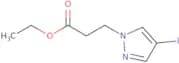
CAS :Versatile small molecule scaffoldFormule :C6H10ClN3O2Degré de pureté :Min. 95%Masse moléculaire :191.6 g/molEthyl 3-(4-iodopyrazol-1-yl)propanoate
CAS :Versatile small molecule scaffold
Formule :C8H11IN2O2Degré de pureté :Min. 95%Masse moléculaire :294.09 g/molRef: 3D-GAA64580
Produit arrêté(6-Bromobenzo[d][1,3]dioxol-5-yl)methanol
CAS :Versatile small molecule scaffold
Formule :C8H7BrO3Degré de pureté :Min. 95%Masse moléculaire :231.04 g/mol4,5-Dichloropyridazine-3,6-diol
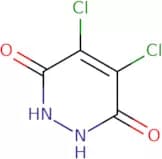
CAS :Dichloropyridazine-3,6-diol is a furan derivative that has been shown to act as an inhibitor of the oxidative deamination of pyridine. It is also a nucleophilic reagent with a chlorine atom and two hydroxylamine groups in its structure. The carbonyl oxygen atom and the cyclic carbonyl group are both susceptible to oxidation and can be used to form chlorides. Dichloropyridazine-3,6-diol is resistant to acid chlorides such as thionyl chloride or phosphoric acid. This compound undergoes dehydration reactions with carboxylic acids and chlorides, yielding the corresponding carboxylate or chloride.
Formule :C4H2Cl2N2O2Degré de pureté :Min. 95%Masse moléculaire :180.97 g/mol2-Methyl-1,2,3,4-tetrahydroquinoxaline
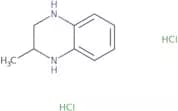
CAS :2-Methyl-1,2,3,4-tetrahydroquinoxaline is an enantioselective antioxidant that has been shown to have a chiral conformation. It has also been found to be a catalyst in the reductive elimination of hydrochloric acid. This compound can be hydrogenated by catalytic hydrogenation and this reaction produces tetralin as a by-product. 2-Methyl-1,2,3,4-tetrahydroquinoxaline is used in research because it contains a methyl group and amines that are important for biological functions.
Formule :C9H12N2Degré de pureté :Min. 95%Masse moléculaire :148.2 g/molRef: 3D-GAA64055
Produit arrêtéBenzothiazol-2-yl-(4-ethoxy-phenyl)-amine
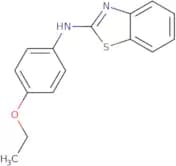
CAS :Benzothiazol-2-yl-(4-ethoxy-phenyl)-amine is a compound that has been shown to be active against solid tumours and metastases. It has been shown to inhibit phosphatase activity in the presence of monoclonal antibodies, which is an indicator for cancerous cells. Benzothiazol-2-yl-(4-ethoxy-phenyl)-amine may be used as a diagnostic marker for determining the presence of cancer cells in patients with infectious diseases, such as HIV/AIDS. This compound has also been shown to inhibit phosphatase activity in the presence of monoclonal antibodies, which is an indicator for cancerous cells. Benzothiazol-2-yl-(4-ethoxy-phenyl)-amine may be used as a diagnostic marker for determining the presence of cancer cells in patients with infectious diseases, such as HIV/AIDS.Formule :C15H14N2OSDegré de pureté :Min. 95%Masse moléculaire :270.4 g/mol3,5-Diamino-4-methylbenzoic acid
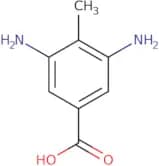
CAS :3,5-Diamino-4-methylbenzoic acid is a chemical compound with the formula C6H3N3O2. It is an organic nitrite that reacts readily with nucleophiles such as alcohols, phenols, and amines to form the corresponding N-substituted benzoic acid. The reaction proceeds via a two step process in which 3,5-diamino-4-methylbenzoic acid first reacts with sodium nitrite to produce 3,5-diamino-4-nitrobenzoic acid followed by hydrolysis of this intermediate to form the desired product. Nitrite salts are used in the food industry as preservatives and antimicrobials. They can be applied as a gas or dissolved in water. Nitrite salts are also used for wastewater treatment and for environmental remediation.
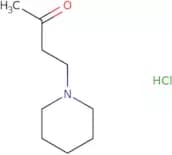
Formule :C8H10N2O2Degré de pureté :Min. 95%Masse moléculaire :166.18 g/mol4-(Piperidin-1-yl)butan-2-one hydrochloride
CAS :Versatile small molecule scaffold
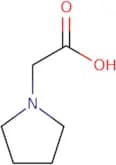
Formule :C9H18ClNODegré de pureté :Min. 95%Masse moléculaire :191.7 g/molPyrrolidin-1-yl-acetic acid hydrochloride
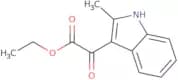
CAS :Pyrrolidin-1-yl-acetic acid hydrochloride is a drug that inhibits the enzyme protease, which is involved in the replication of HIV. It also inhibits the enzyme piperazine, an essential cofactor for retroviral replication. Pyrrolidin-1-yl-acetic acid hydrochloride has been shown to inhibit insulin resistance and increase glucose uptake in animal models. This drug may be a potential treatment for diabetes mellitus type 2. The structural formula of this drug is shown below:Formule :C6H12ClNO2Degré de pureté :Min. 95%Masse moléculaire :165.62 g/molEthyl 2-(2-methyl-1H-indol-3-yl)-2-oxoacetate
CAS :Versatile small molecule scaffold
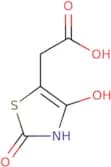
Formule :C13H13NO3Degré de pureté :Min. 95%Masse moléculaire :231.25 g/mol2-(Dihydroxy-1,3-thiazol-5-yl)acetic acid
CAS :Versatile small molecule scaffold
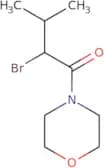
Formule :C5H5NO4SDegré de pureté :Min. 95%Masse moléculaire :175.16 g/mol2-Bromo-3-methyl-1-(morpholin-4-yl)butan-1-one
CAS :Versatile small molecule scaffold
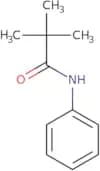
Formule :C9H16BrNO2Degré de pureté :Min. 95%Masse moléculaire :250.13 g/molN-Phenylpivalamide
CAS :N-Phenylpivalamide is an asymmetric synthesis that is a reaction yield of activated secondary amine and alkylsulfonyl chloride. The effective dose of n-phenylpivalamide is 0.01 mg/kg and the chloride ion, nitrogen atoms, and amines are all reactive functional groups. The nmr spectra show that this compound has stereoisomers.
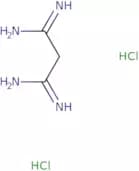
Formule :C11H15NODegré de pureté :Min. 95%Masse moléculaire :177.24 g/molPropanebis(imidamide) dihydrochloride
CAS :Propanebis(imidamide) dihydrochloride is a drug that inhibits the enzyme guanylate cyclase. It is used to treat cardiovascular disorders, such as angina pectoris and hypertension. Propanebis(imidamide) dihydrochloride has been shown to inhibit the kinase, cyclase, and phosphodiesterase enzymes. This inhibition leads to an increase in the levels of cyclic guanosine monophosphate (cGMP). As a result, blood vessels are dilated, which reduces blood pressure and heart rate. The drug also increases the levels of intracellular cGMP by inhibiting protein kinase G. Propanebis(imidamide) dihydrochloride can be administered orally or intravenously.
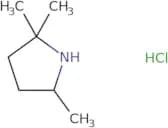
Formule :C3H10Cl2N4Degré de pureté :Min. 95%Masse moléculaire :173.04 g/mol2,2,5-Trimethylpyrrolidine hydrochloride
CAS :Versatile small molecule scaffoldFormule :C7H16ClNDegré de pureté :Min. 95%Masse moléculaire :149.66 g/molRef: 3D-GAA62067
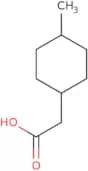
Produit arrêté4-Methylcyclohexaneacetic acid, mixture of cis and trans
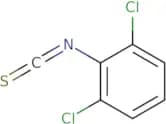
CAS :4-Methylcyclohexaneacetic acid, mixture of cis and trans is a white crystalline solid with a melting point of about 125°C. It is soluble in organic solvents, including diethanolamine, ethanolamine, and amines. 4-Methylcyclohexaneacetic acid is commercially available as the mixture of cis and trans isomers. This compound has been used to synthesize ferroelectric materials because it can be readily polymerized with ethylene glycol or diethylether. 4-Methylcyclohexaneacetic acid has also been used as an intermediate for the manufacture of pharmaceuticals.Formule :C9H16O2Degré de pureté :Min. 95%Masse moléculaire :156.22 g/mol2,6-Dichlorophenylisothiocyanate
CAS :2,6-Dichlorophenylisothiocyanate is a chloride that is used to treat tuberculosis. It is a prodrug that is hydrolyzed in the body to form 2-amino-3-chloropyrazine and imidazoles which are active against Mycobacterium tuberculosis and Mycobacterium avium complex. 2,6-Dichlorophenylisothiocyanate can be administered orally as well as intravenously. It has been shown to have tuberculostatic activity in animal models of experimental tuberculosis. The mechanism of action for this drug is not fully understood, but it may be due to its ability to inhibit protein synthesis by binding to bacterial ribosomes.
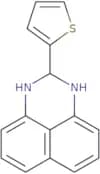
Formule :Cl2C6H3NCSDegré de pureté :Min. 95%Masse moléculaire :204.08 g/mol2-(Thiophen-2-yl)-2,3-dihydro-1H-perimidine
CAS :The compound 2-(thiophen-2-yl)-2,3-dihydro-1H-perimidine has been found to exhibit potent acetylcholinesterase (AChE) inhibitory activity. AChE is the target of organophosphate and carbamate insecticides and nerve agents. The inhibition study revealed that 2-(thiophen-2-yl)-2,3-dihydro-1H-perimidine binds to the active site of AChE with a strong binding affinity. The crystal structures of this molecule have been determined by x-ray crystallography, which revealed that it has a dipole moment. This molecule was also found to have an absorbance at frequencies in the fingerprint region, which can be used for identification purposes. The theory behind its structure was determined by vibrational spectroscopy techniques as well as analyses of its crystal structures.
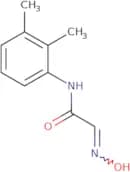
Formule :C15H12N2SDegré de pureté :Min. 95%Masse moléculaire :252.3 g/molN-(2,3-Dimethylphenyl)-2-(N-hydroxyimino)acetamide
CAS :Versatile small molecule scaffold
Formule :C10H12N2O2Degré de pureté :Min. 95%Masse moléculaire :192.21 g/molRef: 3D-GAA57944
Produit arrêté4-Fluoro-6-methoxypyridin-3-amine
CAS :Versatile small molecule scaffold
Formule :C6H7FN2ODegré de pureté :Min. 95%Masse moléculaire :142.13 g/mol


![(6-Bromobenzo[d][1,3]dioxol-5-yl)methanol](/_next/image/?url=https%3A%2Fstatic.cymitquimica.com%2Fproducts%2F3D%2Fthumb-webp%2FGAA64234.webp&w=3840&q=75)