Building Blocks
Sous-catégories appartenant à la catégorie "Building Blocks"
- Acides boroniques et dérivés de l'acide boronique(5.780 produits)
- Building Blocks Chiraux(1.241 produits)
- Building Blocks Hydrocarbonés(6.100 produits)
- Building Blocks organiques(61.010 produits)
205258 produits trouvés pour "Building Blocks"
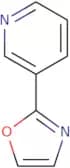
3-(1,3-Oxazol-2-yl)pyridine
CAS :Versatile small molecule scaffold
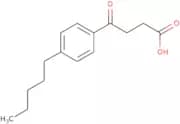
Formule :C8H6N2ODegré de pureté :Min. 95%Masse moléculaire :146.15 g/mol4-Oxo-4-(4-pentylphenyl)butanoic acid
CAS :Versatile small molecule scaffold
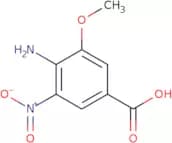
Formule :C15H20O3Degré de pureté :Min. 95%Masse moléculaire :248.32 g/mol4-Amino-3-methoxy-5-nitrobenzoic acid
CAS :Versatile small molecule scaffoldFormule :C8H8N2O5Degré de pureté :Min. 95%Masse moléculaire :212.16 g/mol2-Bromo-5-fluoro-4-methoxybenzoic acid
CAS :Versatile small molecule scaffold
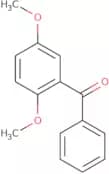
Formule :C8H6BrFO3Degré de pureté :Min. 95%Masse moléculaire :249.03 g/mol(2,5-Dimethoxyphenyl)(phenyl)methanone
CAS :Versatile small molecule scaffold
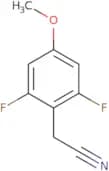
Formule :C15H14O3Degré de pureté :Min. 95%Masse moléculaire :242.27 g/mol2,6-Difluoro-4-methoxyphenylacetonitrile
CAS :Versatile small molecule scaffold
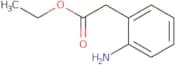
Formule :C9H7F2NODegré de pureté :Min. 95%Masse moléculaire :183.16 g/molethyl 2-(2-aminophenyl)acetate
CAS :Ethyl 2-(2-aminophenyl)acetate is a cytotoxic agent that binds to DNA and inhibits the synthesis of RNA and protein. It has been shown to inhibit the growth of murine leukemia cells in culture at concentrations between 0.3 and 3 mM, which are dependent on the concentration of benzyl substituents. Ethyl 2-(2-aminophenyl)acetate also exhibits dose-dependent cytotoxic activity against murine leukemia cells. The cytotoxic effects of this compound have been studied in vivo and in vitro using murine leukemia cells (WEHI-3).
Formule :C10H13NO2Degré de pureté :Min. 95%Masse moléculaire :179.2 g/molRef: 3D-PCA46085
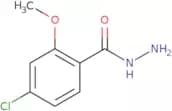
Produit arrêté4-Chloro-2-methoxybenzohydrazide
CAS :Versatile small molecule scaffold
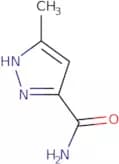
Formule :C8H9ClN2O2Degré de pureté :Min. 95%Masse moléculaire :200.62 g/mol5-Methyl-1H-pyrazole-3-carboxylic acid amide
CAS :Versatile small molecule scaffold
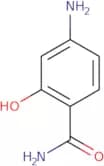
Formule :C5H7N3ODegré de pureté :Min. 95%Masse moléculaire :125.13 g/mol4-Amino-2-hydroxybenzamide
CAS :4-Amino-2-hydroxybenzamide is an aminoaryl amide that is produced by the thermal decomposition of 4-amino-2,6-dihydroxyphenylacetamide. It has been shown to be a potent inhibitor of the growth of bacteria and yeast, including Mycobacterium tuberculosis. The inhibitory effect was found to be due to inhibition of RNA synthesis as well as protein synthesis. This compound has also been shown to be effective against other types of microorganisms such as Pseudomonas aeruginosa and Staphylococcus aureus.
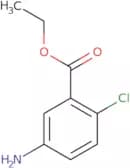
Formule :C7H8N2O2Degré de pureté :Min. 95%Masse moléculaire :152.15 g/molEthyl 5-amino-2-chlorobenzoate
CAS :Versatile small molecule scaffold
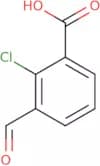
Formule :C9H10ClNO2Degré de pureté :Min. 95%Masse moléculaire :199.63 g/mol2-Chloro-3-formylbenzoic acid
CAS :Versatile small molecule scaffold
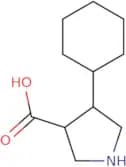
Formule :C8H5ClO3Degré de pureté :Min. 95%Masse moléculaire :184.57 g/molrac-(3R,4R)-4-Cyclohexylpyrrolidine-3-carboxylic acid
CAS :Versatile small molecule scaffold
Formule :C11H19NO2Degré de pureté :Min. 95%Masse moléculaire :197.3 g/mol2-Hydroxy-3,3-dimethylbutanoic acid
CAS :2-Hydroxy-3,3-dimethylbutanoic acid is an organic compound that is used as a precursor to hypochlorite. It is synthesized by the catalytic oxidation of ethyl formate with a palladium catalyst in an alkaline solution. The resulting 2-hydroxy-3,3-dimethylbutanoic acid has a high yield and can be used as a starting material for the manufacture of sodium hypochlorite and other chlorinating agents. The optical purity of the product can be improved by using ruthenium or copper catalysts in place of palladium.
Formule :C6H12O3Degré de pureté :Min. 95%Masse moléculaire :132.16 g/molRef: 3D-EAA02620
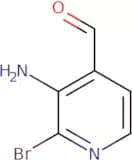
Produit arrêté3-Amino-2-bromopyridine-4-carbaldehyde
CAS :Versatile small molecule scaffold
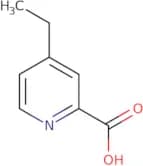
Formule :C6H5BrN2ODegré de pureté :Min. 95%Masse moléculaire :201.02 g/mol4-Ethylpyridine-2-carboxylic acid
CAS :Versatile small molecule scaffold
Formule :C8H9NO2Degré de pureté :Min. 95%Masse moléculaire :151.16 g/molRef: 3D-EAA02113
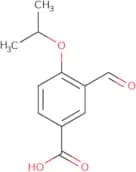
Produit arrêté3-Formyl-4-(propan-2-yloxy)benzoic acid
CAS :Versatile small molecule scaffoldFormule :C11H12O4Degré de pureté :Min. 95%Masse moléculaire :208.21 g/mol11-Aminoundecan-1-ol
CAS :11-Aminoundecan-1-ol is a bifunctional molecule that binds to the receptor and stabilizes it. It can be used as an antimicrobial agent against human pathogens, such as HIV, by preventing the virus from attaching to cells. 11-Aminoundecan-1-ol also has activity against plant viruses. This compound is an anhydroglucose with hydroxamic acid groups that are responsible for its antiviral properties and also contains a particle with azide functionalities. 11-Aminoundecan-1-ol has shown efficacy in inhibiting the replication of human Herpes simplex virus types 1 and 2 (HSV) in vitro, which may be due to its ability to bind to the HSV glycoprotein B envelope protein GP2.
11-Aminoundecan-1-ol can also bind to the receptor lysine and stabilize it. This binding prevents azides from reacting with lFormule :C11H25NODegré de pureté :Min. 95%Masse moléculaire :187.32 g/molRef: 3D-CBA78089
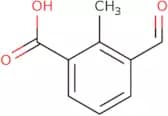
Produit arrêté3-Formyl-2-methylbenzoic acid
CAS :Versatile small molecule scaffold
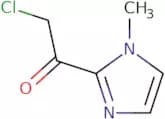
Formule :C9H8O3Degré de pureté :Min. 95%Masse moléculaire :164.16 g/mol2-Chloro-1-(1-methyl-1H-imidazol-2-yl)ethan-1-one
CAS :Versatile small molecule scaffold
Formule :C6H7ClN2ODegré de pureté :Min. 95%Masse moléculaire :158.58 g/molRef: 3D-KJB77272
Produit arrêté