Building Blocks
Sous-catégories appartenant à la catégorie "Building Blocks"
- Acides boroniques et dérivés de l'acide boronique(5.780 produits)
- Building Blocks Chiraux(1.239 produits)
- Building Blocks Hydrocarbonés(6.100 produits)
- Building Blocks organiques(61.005 produits)
205234 produits trouvés pour "Building Blocks"
5-(Hydroxymethyl)-3-methyl-1,3-oxazolidin-2-one
CAS :Versatile small molecule scaffold
Formule :C5H9NO3Degré de pureté :Min. 95%Masse moléculaire :131.13 g/mol6-Amino-2H,3H-imidazo[2,1-b][1,3]thiazole-5-carbonitrile
CAS :Versatile small molecule scaffold
Formule :C6H6N4SDegré de pureté :Min. 95%Masse moléculaire :166.21 g/molRef: 3D-XDA87669
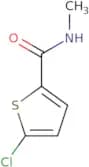
Produit arrêté5-Chloro-N-methylthiophene-2-carboxamide
CAS :Versatile small molecule scaffold
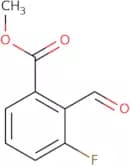
Formule :C6H6ClNOSDegré de pureté :Min. 95%Masse moléculaire :175.64 g/molMethyl 3-fluoro-2-formylbenzoate
CAS :Versatile small molecule scaffold
Formule :C9H7FO3Degré de pureté :Min. 95%Masse moléculaire :182.15 g/mol1-[4-Chloro-3-(trifluoromethyl)benzenesulfonyl]piperazine
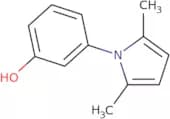
CAS :Versatile small molecule scaffoldFormule :C11H12ClF3N2O2SDegré de pureté :Min. 95%Masse moléculaire :328.74 g/mol3-(2,5-Dimethyl-1-pyrrolyl)phenol
CAS :3-(2,5-Dimethyl-1-pyrrolyl)phenol is a novel catalyst that can be used in the synthesis of aliphatic amines. In this process, the pyrrole derivatives are first reacted with n-substituted aliphatic amines to produce an intermediate 3-(2,5-dimethyl-1-pyrrolyl)phenol derivative. The 3-(2,5-dimethyl-1-pyrrolyl)phenol derivative is then heated with an aliphatic amine to yield the desired product. This process is efficient and has been shown to produce high yields of products. The FTIR and NMR spectra of 3-(2,5-dimethyl-1-pyrrolyl)phenol show it is a pure compound.
Formule :C12H13NODegré de pureté :Min. 95%Masse moléculaire :187.24 g/molRef: 3D-XDA60833
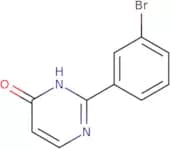
Produit arrêté2-(3-Bromophenyl)-3,4-dihydropyrimidin-4-one
CAS :Versatile small molecule scaffold
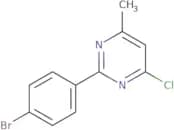
Formule :C10H7BrN2ODegré de pureté :Min. 95%Masse moléculaire :251.08 g/mol2-(4-Bromophenyl)-4-chloro-6-methylpyrimidine
CAS :Versatile small molecule scaffold
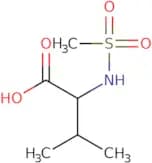
Formule :C11H8BrClN2Degré de pureté :Min. 95%Masse moléculaire :283.55 g/mol(2S)-2-Methanesulfonamido-3-methylbutanoic acid
CAS :Versatile small molecule scaffold
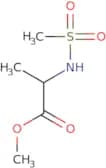
Formule :C6H13NO4SDegré de pureté :Min. 95%Masse moléculaire :195.24 g/molMethyl (2S)-2-methanesulfonamidopropanoate
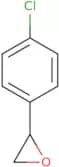
CAS :Versatile small molecule scaffoldFormule :C5H11NO4SDegré de pureté :Min. 95%Masse moléculaire :181.21 g/mol(2S)-2-(4-Chlorophenyl)oxirane
CAS :(2S)-2-(4-Chlorophenyl)oxirane is an enantiopure epoxide that is used as a building block in organic synthesis. It is prepared by reacting styrene with peracetic acid, yielding the desired product in good isolated yield. The compound has been shown to inhibit the enzyme epoxide hydrolase and may be useful for the treatment of bacterial infections. (2S)-2-(4-Chlorophenyl)oxirane also has been shown to have anti-inflammatory activity, which may be due to its ability to induce apoptosis.
Formule :C8H7ClODegré de pureté :Min. 95%Masse moléculaire :154.59 g/molN-Ethyl-2-(ethylamino)acetamide
CAS :Versatile small molecule scaffold
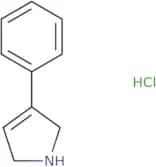
Formule :C6H14N2ODegré de pureté :Min. 95%Masse moléculaire :130.19 g/mol3-Phenyl-2,5-dihydro-1H-pyrrole hydrochloride
CAS :Versatile small molecule scaffold
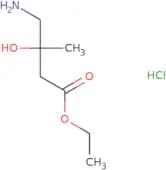
Formule :C10H12ClNDegré de pureté :Min. 95%Masse moléculaire :181.66 g/molEthyl 4-amino-3-hydroxy-3-methylbutanoate hydrochloride
CAS :Versatile small molecule scaffold
Formule :C7H16ClNO3Degré de pureté :Min. 95%Masse moléculaire :197.66 g/molEthyl 2-[4-(2-chloroethoxy)phenoxy]acetate
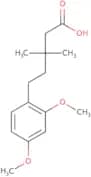
CAS :Versatile small molecule scaffoldFormule :C12H15ClO4Degré de pureté :Min. 95%Masse moléculaire :258.7 g/mol5-(2,4-Dimethoxyphenyl)-3,3-dimethylpentanoic acid
CAS :Versatile small molecule scaffold
Formule :C15H22O4Degré de pureté :Min. 95%Masse moléculaire :266.33 g/molRef: 3D-XDA30584
Produit arrêté3,9-Diazabicyclo[3.3.2]decan-10-one
CAS :Versatile small molecule scaffold
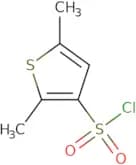
Formule :C8H14N2ODegré de pureté :Min. 95%Masse moléculaire :154.21 g/mol2,5-Dimethylthiophene-3-sulfonyl chloride
CAS :2,5-Dimethylthiophene-3-sulfonyl chloride is a versatile research chemical that is known for its modular and stable properties. It is commonly used in various scientific studies and experiments. This compound offers researchers the ability to explore different reactions and synthesis pathways due to its stability. With its modular structure, it can be easily incorporated into different chemical frameworks to create new compounds with unique properties. Whether you are conducting academic research or working on industrial applications, 2,5-Dimethylthiophene-3-sulfonyl chloride is a reliable choice that can help advance your scientific endeavors.
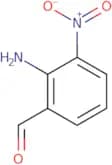
Formule :C6H7ClO2S2Degré de pureté :Min. 95%Masse moléculaire :210.7 g/mol2-Amino-3-nitrobenzaldehyde
CAS :2-Amino-3-nitrobenzaldehyde is an organic compound that contains a quinoline ring. It is the product of the oxidative coupling of 2-amino-3-nitrobenzoic acid and hydrogen peroxide. The reaction mechanism begins with epoxidation of the quinoline ring, followed by a nitration to form 7-nitroindole. The 8-nitroquinoline is formed from an oxidation of the 7-nitroindole, which then undergoes hydrogenation to form 2-amino-3-nitrobenzaldehyde. This reaction can be used in elucidating the molecular structure of 8-nitroquinoline.
Formule :C7H6N2O3Degré de pureté :Min. 95%Masse moléculaire :166.14 g/molRef: 3D-XDA27197
Produit arrêté2-Cyclohexylbenzoic Acid
CAS :2-Cyclohexylbenzoic acid is a chiral compound that belongs to the class of pharmaceutical preparations. It is used as an inhibitor of enzymes such as hydroxylase, which is involved in the production of prostaglandins and leukotrienes, and has been shown to be effective in treating bowel disease. 2-Cyclohexylbenzoic acid may also be effective in the treatment of chronic bronchitis and autoimmune diseases.
2-Cyclohexylbenzoic acid binds to the active site on certain enzymes, thereby inhibiting their function. This drug also has a strong inhibitory effect on inflammation and oxidative stress, which may be due to its ability to inhibit phospholipase A2 (PLA2), an enzyme that triggers inflammatory reactions by catalyzing the release of arachidonic acid from membrane phospholipids. The light exposure can cause photochemical damage to the skin by inducing oxidation or peroxFormule :C13H16O2Degré de pureté :Min. 95%Masse moléculaire :204.26 g/mol


![6-Amino-2H,3H-imidazo[2,1-b][1,3]thiazole-5-carbonitrile](/_next/image/?url=https%3A%2Fstatic.cymitquimica.com%2Fproducts%2F3D%2Fthumb-webp%2FXDA87669.webp&w=3840&q=75)
![1-[4-Chloro-3-(trifluoromethyl)benzenesulfonyl]piperazine](/_next/image/?url=https%3A%2Fstatic.cymitquimica.com%2Fproducts%2F3D%2Fthumb-webp%2FXDA63013.webp&w=3840&q=75)

![Ethyl 2-[4-(2-chloroethoxy)phenoxy]acetate](/_next/image/?url=https%3A%2Fstatic.cymitquimica.com%2Fproducts%2F3D%2Fthumb-webp%2FXDA31540.webp&w=3840&q=75)
![3,9-Diazabicyclo[3.3.2]decan-10-one](/_next/image/?url=https%3A%2Fstatic.cymitquimica.com%2Fproducts%2F3D%2Fthumb-webp%2FXDA27842.webp&w=3840&q=75)