Building Blocks
Cette section contient des produits fondamentaux pour la synthèse de composés organiques et biologiques. Building blocks sont les matériaux de départ essentiels utilisés pour construire des molécules complexes à travers diverses réactions chimiques. Ils jouent un rôle crucial dans la découverte de médicaments, la science des matériaux et la recherche chimique. Chez CymitQuimica, nous offrons une gamme diversifiée de building blocks de haute qualité pour soutenir vos recherches innovantes et projets industriels, en vous assurant de disposer des composants essentiels pour une synthèse réussie.
Sous-catégories appartenant à la catégorie "Building Blocks"
- Acides boroniques et dérivés de l'acide boronique(5.778 produits)
- Building Blocks Chiraux(1.242 produits)
- Building Blocks Hydrocarbonés(6.098 produits)
- Building Blocks organiques(61.059 produits)
199580 produits trouvés pour "Building Blocks"
Trier par
Degré de pureté (%)
0
100
|
0
|
50
|
90
|
95
|
100
3,7-Dimethyl 2H-Furo[2,3-c]pyran-2-one (>90%)
CAS :Produit contrôlé<p>Applications Forest fires are actually beneficial for ecosystems, provided they don’t happen too often. After a fire, plants germinate and grow incredibly fast. KAR4 is a compound in smoke responsible for promoting the seed germination of a wide range of plant species. The researchers named the compounds “the karrikins”, for “karrik”, an aboriginal word for smoke.<br>References Sakuma, H., et al.: .Agric Biol. Chem., 45, 443 (1981), Stevens, J., et al.: Plant Soil, 298, 113 (2007), Nelson, D., et al.: Plant Physiol., 149, 863 (2009),<br></p>Formule :C9H8O3Degré de pureté :>90%Couleur et forme :NeatMasse moléculaire :164.164-Aminopiperidine
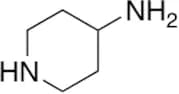
CAS :Produit contrôlé<p>Applications 4-Aminopiperidine is a useful reactant in organic synthesis.<br>References Park, Sun Jun, et al.: Bioorg. & Med. Chem. Let., 27(18), 4399-4404 (2017);Le Manach, Claire, et al.: J. of Med. Chem., 59(21), 9890-9905 (2016)<br></p>Formule :C5H12N2Couleur et forme :NeatMasse moléculaire :100.162Dimethyl Chlorothiophosphate (>85%)
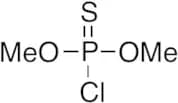
CAS :<p>Stability Moisture Sensitive<br>Applications Dimethyl chlorothiophosphate is an organophosphorus reagent that is used to synthesize phosphorus analogues of γ-aminobutyric acid, compounds that exhibit anticonvulsant properties. Dimethyl chlorothiophosphate is also used as a reagent to synthesize Parathion (P192220), a widely used pesticide.<br> Not a dangerous good if item is equal to or less than 1g/ml and there is less than 100g/ml in the package<br>References Cates, L., et al.: J. Med. Chem., 27, 654 (1984); DeBruin, K. & Boros, E.: J. Org. Chem., 55, 609 (1990); Hall, S.: J. Am. Chem. Soci., 72, 2768 (1950); Kotronarou, A. & Hoffmann, M.: Env. Sci. Tech., 26, 1460 (1992)<br></p>Formule :C2H6ClO2PSDegré de pureté :>85%Couleur et forme :ColourlessMasse moléculaire :160.563,3-Dimethylbutyric Acid
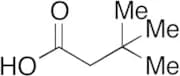
CAS :Produit contrôlé<p>Applications 3,3-Dimethylbutyric Acid is used in the synthesis of imidazo[4,5-c]pyridine derivatives as anitmicrobial agents.<br> Not a dangerous good if item is equal to or less than 1g/ml and there is less than 100g/ml in the package<br>References Jose. G., et. al.: Eur. J. Med. Chem., 77, 288 (2014)<br></p>Formule :C6H12O2Couleur et forme :Clear Colourless To Light YellowMasse moléculaire :116.164-(4-Diethylaminostyryl)-1-methylpyridinium iodide
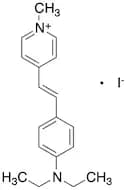
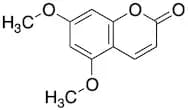
CAS :Produit contrôlé<p>Applications 4-(4-Diethylaminostyryl)-1-methylpyridinium iodide is a fluorescent cationic styryl probe for mitochondrial staining. It is used in the functional live cell fluorescence imaging for pulmonary neuroepithelial body microenvironments.<br></p>Formule :C18H23N2·ICouleur et forme :NeatMasse moléculaire :267.39 + (126.90)5,7-Dimethoxycoumarin
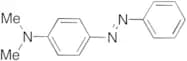
CAS :Produit contrôlé<p>Applications 5,7-Dimethoxycoumarin is a derivitized coumarin compound.<br></p>Formule :C11H10O4Couleur et forme :NeatMasse moléculaire :206.19Dimethyl Yellow
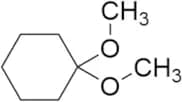
CAS :Produit contrôlé<p>Applications Dimethyl Yellow can induce cytochrome P-448, monooxygenase activities and UDPGT activity.<br> Not a dangerous good if item is equal to or less than 1g/ml and there is less than 100g/ml in the package<br>References Fujita, S., et. al.: Chem-Biol. Interact., 52, 15 (1984);<br></p>Formule :C14H15N3Couleur et forme :Dark YellowMasse moléculaire :225.291,1-Dimethoxycyclohexane
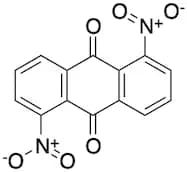
CAS :Produit contrôlé<p>Applications 1,1-Dimethoxycyclohexane (cas# 933-40-4) is a useful research chemical.<br></p>Formule :C8H16O2Couleur et forme :NeatMasse moléculaire :144.2111,5-Dinitroanthraquinone
CAS :Produit contrôlé<p>Applications 1,5-Dinitroanthraquinone 97% (cas# 82-35-9) is a useful research chemical.<br></p>Formule :C14H6N2O6Degré de pureté :97%Couleur et forme :NeatMasse moléculaire :298.21Dimethyl Itaconate
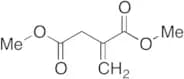
CAS :Produit contrôlé<p>Applications Dimethyl Itaconate is a chemical reagent used in the synthesis of functionalized 2-isoxazolines used in fragment-based drug discovery.<br>References Tran, N. et al.: Tetrahedron Lett., 56, 4119 (2015); Louise Hazeland, E. et al.: Chem. Comm., 51, 10206 (2015);<br></p>Formule :C7H10O4Couleur et forme :NeatMasse moléculaire :158.1521,3-Diethylurea
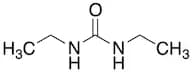
CAS :Produit contrôlé<p>Applications 1,3-Diethylurea<br></p>Formule :C5H12N2OCouleur et forme :NeatMasse moléculaire :116.16N,N-Dimethyl-m-phenylenediamine, Dihydrochloride
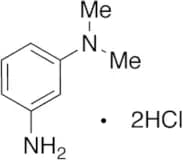
CAS :Produit contrôlé<p>Applications N,N-Dimethyl-m-phenylenediamine, Dihydrochloride (cas# 3575-32-4) is a compound useful in organic synthesis.<br> Not a dangerous good if item is equal to or less than 1g/ml and there is less than 100g/ml in the package<br></p>Formule :C8H12N2·2ClHCouleur et forme :NeatMasse moléculaire :209.124,4-Diethylcyclohexan-1-amine Hydrochloride
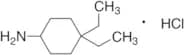
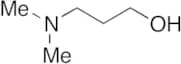
CAS :Produit contrôlé<p>Applications 4,4-diethylcyclohexan-1-amine hydrochloride (cas# 1087747-58-7) is a useful research chemical.<br></p>Formule :C10H21N·HClCouleur et forme :NeatMasse moléculaire :191.741N,N-Dimethylpropanolamine
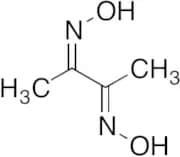
CAS :Produit contrôléFormule :C5H13NOCouleur et forme :NeatMasse moléculaire :103.16Dimethylglyoxime
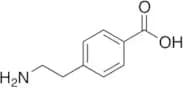
CAS :<p>Applications Dimethylglyoxime is a chelating agent which forms complexes with metals such as copper, nickel, and palladium..<br> Not a dangerous good if item is equal to or less than 1g/ml and there is less than 100g/ml in the package<br></p>Formule :C4H8N2O2Couleur et forme :WhiteMasse moléculaire :116.124-(2-Amino-ethyl)benzoic Acid
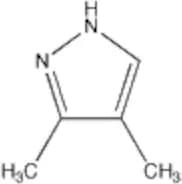
CAS :Produit contrôlé<p>Applications 4-(2-Amino-ethyl)-benzoic Acid is a useful reagent for the preparation of amino acid derivatives with anticancer activity.<br>References Kim, S., et al.: PCT Int. Appl. (2020), WO 2020204548 A1<br></p>Formule :C9H11NO2Couleur et forme :White To Off-WhiteMasse moléculaire :165.183,4-Dimethylpyrazole
CAS :Produit contrôlé<p>Applications 3,4-Dimethylpyrazole (cas# 2820-37-3) is a compound useful in organic synthesis.<br></p>Formule :C5H8N2Couleur et forme :White To Light YellowMasse moléculaire :96.133,5-Dimethylpyrazole
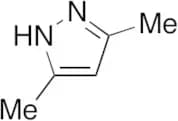
CAS :<p>Applications 3,5-Dimethylpyrazole his a catalyst in the sulfonation of acetic anhydride to sulfoacetic acid and methanedisulfonic acid. 3,5-Dimethylpyrazole has been used in the synthesis of bipyrazolic tripodal derivatives with in vitro antitumor, antifungal and antibacterial activities.<br>References Jianrattanasawat, S., Mezei, G.: Inorg. Chim. Acta, 384, 318 (2012); Radi, S., et. al.: Lett. Drug Design Disc., 9, 305 (2012); Radi, S., et. al.: Res. J. Chem. Sci., 2, 40 (2012)<br></p>Formule :C5H8N2Couleur et forme :White To Off-WhiteMasse moléculaire :96.132,5-Dimethylpyrazine
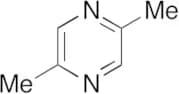
CAS :<p>Applications 2,5-Dimethylpyrazine is used as a reagent in the synthesis of bone-targeted proteasome inhibitors for multiple myeloma (MM). 2,5-Dimethylpyrazine is also used in the preparation of 3-Methyl-2,5-bis-(2-hydroxyethyl)pyrazine (M295340); a degredation product of Clavulanic Acid (C563750) which is a β-lactamase inhibitor, typically added to amoxicillin to increase its effectiveness.<br>References Agyin, J.K., et al.: Bioorg. Med. Chem. Lett., 23, 6455 (2013); Reading, C. and Cole, M.: Antimicrob. Ag. Chemother., 11, 852 (1977); Ball, A.P., et al.: Lancet, 1, 620 (1980); Brogden, R.N., et al. Drugs, 22, 337 (1981); Haginaka, J. et al.: Chem. Pharm. Bull., 33, 218 (1985)<br></p>Formule :C6H8N2Couleur et forme :NeatMasse moléculaire :108.14
![3,7-Dimethyl 2H-Furo[2,3-c]pyran-2-one (>90%)](/_next/image/?url=https%3A%2Fstatic.cymitquimica.com%2Fproducts%2FTR%2Fthumb-webp%2FD473065.webp&w=3840&q=75)