Building Blocks
Cette section contient des produits fondamentaux pour la synthèse de composés organiques et biologiques. Building blocks sont les matériaux de départ essentiels utilisés pour construire des molécules complexes à travers diverses réactions chimiques. Ils jouent un rôle crucial dans la découverte de médicaments, la science des matériaux et la recherche chimique. Chez CymitQuimica, nous offrons une gamme diversifiée de building blocks de haute qualité pour soutenir vos recherches innovantes et projets industriels, en vous assurant de disposer des composants essentiels pour une synthèse réussie.
Sous-catégories appartenant à la catégorie "Building Blocks"
- Acides boroniques et dérivés de l'acide boronique(5.778 produits)
- Building Blocks Chiraux(1.242 produits)
- Building Blocks Hydrocarbonés(6.098 produits)
- Building Blocks organiques(61.059 produits)
199580 produits trouvés pour "Building Blocks"
Trier par
Degré de pureté (%)
0
100
|
0
|
50
|
90
|
95
|
100
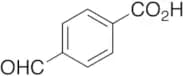
4-Formylbenzoic Acid
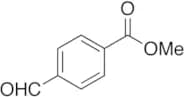
CAS :Produit contrôlé<p>Applications A metabolite of aldehydes.<br>References Shiobara, Y., et al.: Xenobiotica, 9, 157 (1979),<br></p>Formule :C8H6O3Couleur et forme :NeatMasse moléculaire :150.134-Formylbenzoic Acid Methyl Ester
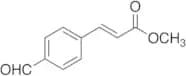
CAS :Produit contrôlé<p>Applications 4-Formylbenzoic Acid Methyl Ester is a benzoic acid derivative with antioxidant activity.<br>References Conde, E. et al.: Food Chem., 114, 806 (2009);<br></p>Formule :C9H8O3Couleur et forme :NeatMasse moléculaire :164.16(E)-4-Formylcinnamic Acid Methyl Ester
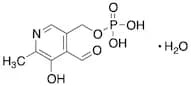
CAS :Produit contrôlé<p>Applications Cinnamic Acid derivative<br>References Sato, M., et al.: Chem. Pharm. Bull., 42, 521 (1994), Remiszewski, S., et al.: J. Med. Chem., 46, 4609 (2003),<br></p>Formule :C11H10O3Couleur et forme :NeatMasse moléculaire :190.2(4-Formyl-5-hydroxy-6-methylpyridin-3-yl)methyl Dihydrogen Phosphate Hydrate
CAS :<p>Stability Air Sensitive, Moisture Sensitive<br>Applications (4-Formyl-5-hydroxy-6-methylpyridin-3-yl)methyl dihydrogen phosphate hydrate (cas# 41468-25-1) is a useful research chemical.<br></p>Formule :C8H10NO6P·H2OCouleur et forme :White To Off-WhiteMasse moléculaire :265.16(2S,3R,5S)-5-[(N-Formyl-L-leucyl)oxy]-2-hexyl-3-hydroxyhexadecanoic Acid (Orlistat Impurity)
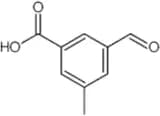
CAS :<p>Applications A product from thermal and hydrolytic degradation of Orlistat. Orlistat impurity.<br>References Stalder, H., et al.: Helv. Chimica Acta, 75, 1593 (1992),<br></p>Formule :C29H55NO6Couleur et forme :NeatMasse moléculaire :513.75013-Formyl-5-methylbenzoic Acid
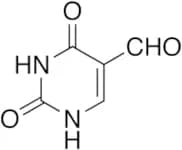
CAS :Produit contrôlé<p>Applications 3-Formyl-5-methylbenzoic Acid<br></p>Formule :C9H8O3Couleur et forme :NeatMasse moléculaire :164.165-Formyl Uracil
CAS :Produit contrôlé<p>Applications Nucleoside derivatives of 5-substituted uracil have been explored for their potential application as anti-viral agents and in the treatment of tumors.<br>References Ressner, E.C., et al.: J. Med. Chem., 19, 1, 194 (1976)<br></p>Formule :C5H4N2O3Couleur et forme :NeatMasse moléculaire :140.102H-Furo[2,3-c]pyran-2-one
CAS :<p>Applications Forest fires are actually beneficial for ecosystems, provided they don’t happen too often. After a fire, plants germinate and grow incredibly fast. 2H-Furo[2,3-c]pyran-2-one, KAR2, is a compound in smoke responsible for promoting the seed germination of a wide range of plant species. The researchers named the compounds “the karrikins”, for “karrik”, an aboriginal word for smoke.<br>References Sakuma, H., et al.: .Agric Biol. Chem., 45, 443 (1981), Stevens, J., et al.: Plant Soil, 298, 113 (2007), Nelson, D., et al.: Plant Physiol., 149, 863 (2009),<br></p>Formule :C7H4O3Couleur et forme :NeatMasse moléculaire :136.1Furoyl Chloride
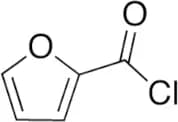
CAS :<p>Applications Furoyl Chloride is used in the preparation of novel dibenzothiepins that show antibiofilm activity.<br> Not a dangerous good if item is equal to or less than 1g/ml and there is less than 100g/ml in the package<br>References Stecoza, C. et al.: Curr. Org. Chem., 17, 113 (2013);<br></p>Formule :C5H3ClO2Couleur et forme :NeatMasse moléculaire :130.531-(2-Furyl)ethanol
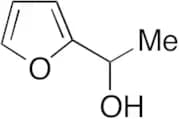
CAS :Produit contrôlé<p>Applications 1-(2-Furyl)ethanol is an intermediate in the synthesis of 2H-Furo[2,3-c]pyran-2-one derivatives of their germination-promoting activity.<br>References Singh, V., et al.: Synthetic. Commun., 40, 1280 (2010);<br></p>Formule :C6H8O2Couleur et forme :Colourless To Light YellowMasse moléculaire :112.126Ethyl 4-iodobenzoate
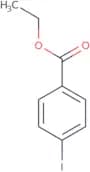
CAS :<p>Ethyl 4-iodobenzoate is an amide that reacts with a variety of substances, including retinoic acid and pemetrexed. It is a reactive substance that can be used in the synthesis of other substances such as iron oxides and transfer mechanism. Ethyl 4-iodobenzoate is also used for the preparation of picolinic acid and crystalline structure. Radical coupling reactions are most common and involve halides, phenyl groups, and aryl halides. The reaction temperature ranges from room temperature to 100 ˚C, while the reaction mechanism varies depending on the type of coupling reaction.</p>Formule :C9H9IO2Degré de pureté :Min. 95%Couleur et forme :PowderMasse moléculaire :276.07 g/mol(S)-2,5-Dihydro-3,6-dimethoxy-2-isopropylpyrazine
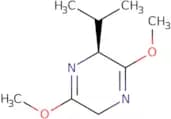
CAS :(S)-2,5-Dihydro-3,6-dimethoxy-2-isopropylpyrazine and its enantiomer, (R)-2,5-Dihydro-3,6-dimethoxy-2-isopropylpyrazine, are also known as Schöllkopf chiral auxiliaries or Schöllkopf reagents, and are used to produce optically pure α-amino acids via asymmetric synthesis. The Schöllkopf reagent can be deprotonated at the prochiral α-carbon, and the resulting enolate is trapped with electrophiles to yield adducts with high (typically > 95% d.e.) diastereoselectivity. The enolate is essentially planar, and the steric bulk of the isopropyl group directs the incoming electrophile to attack from the opposite face, yielding trans adducts. A wide range of electrophiles including alkyl halides, alkyl sulfonates, acyl chlorides, aldehydes, ketones, epoxides, thioketones and enones can be used. Hydrolysis, typically under mild acidic conditions, yields the non-substituted amino acid with high (typically > 95 e.e.) enantiopurity.Formule :C9H16N2O2Degré de pureté :Min. 97%Couleur et forme :Colorless Clear LiquidMasse moléculaire :184.24 g/mol2,5-Dibromopyrazine
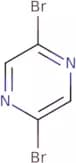
CAS :2,5-Dibromopyrazine is a heterocyclic compound that can be synthesized by the Suzuki coupling reaction of 2-bromo-1,3-dibromopropane with an acceptor. It has been shown to have glycemic parameters and a high rate enhancement for the water molecule photophysical isomerization reaction. Structural isomers of 2,5-dibromopyrazine exist as well and are thought to have different rates of photocatalytic activity. The rate enhancement may be due to the increase in electron density on the heteroatoms in the ring.Formule :C4H2Br2N2Degré de pureté :Min. 98%Couleur et forme :Brown White Off-White Yellow Clear LiquidMasse moléculaire :237.88 g/mol4-Chloro-2-methyl-5-(propan-2-yl)phenol
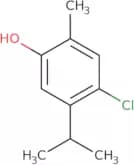
CAS :4-Chloro-2-methyl-5-(propan-2-yl)phenol (4CMPP) is a synthetic compound that belongs to the group of fatty alcohols. It is used in clinical diagnostics for the detection of cancer cells. 4CMPP was detected in the human plasma and erythrocytes using solid phase microextraction (SPME). The homologues of 4CMPP were also identified. The chemical structure of 4CMPP consists of a chain with two methyl groups and a phenolic group at opposite ends. This compound has been shown to be cytotoxic, as well as an inhibitor of translation and protein synthesis.Formule :C10H13ClODegré de pureté :Min. 95%Couleur et forme :PowderMasse moléculaire :184.66 g/molDipropyl ether
CAS :<p>Dipropyl ether is a reagent that is used in organic synthesis as a reaction component or building block for the preparation of complex compounds. It is also known to be an intermediate in the production of propylene oxide, which is used in the production of polyurethane. Dipropyl ether has been shown to be useful as a research chemical and speciality chemical. This compound has CAS number 111-43-3 and can be prepared by reacting diethyl ether with propene, acetone, or chloroform.</p>Formule :C4H9NO2SMasse moléculaire :135.19 g/molMonomethyl triazeno imidazole carboxamide
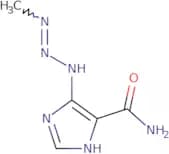
CAS :<p>Monomethyl triazeno imidazole carboxamide (MTIC) is a drug that is used to treat cancer. It has been shown to inhibit the proliferation of tumor cells and induce apoptosis by inhibiting the expression of proteins, such as Bcl-2, which are involved in regulating mitochondrial membrane potential. MTIC has also been shown to inhibit protein synthesis and cell signaling pathways, such as the PI3K/Akt pathway. The use of MTIC for diagnosis purposes can be achieved using electrochemical impedance spectroscopy. A concentration–time curve can be obtained by incubating a biological sample with MTIC and measuring cell response using an impedance spectrophotometer. The clinical properties of MTIC include its ability to be administered orally or intravenously, have low toxicity, and inhibit the growth of tumor cells in vivo and in vitro.</p>Formule :C5H8N6ODegré de pureté :(¹H-Nmr) Min. 95 Area-%Couleur et forme :White PowderMasse moléculaire :168.16 g/molO-Methyl-L-tyrosine
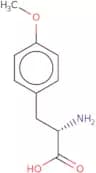
CAS :O-Methyl-L-tyrosine is a non-protein amino acid that inhibits protein synthesis by preventing the formation of peptide bonds. It has been shown to be an effective inhibitor of methionyl and cysteyl synthetases, which are enzymes that synthesize proteins. O-Methyl-L-tyrosine has also been used in clinical studies to treat translation defects associated with Duchenne muscular dystrophy (DMD) and spinal muscular atrophy (SMA). This drug is a synthetic amino acid that is not found in nature. Its structure consists of two methyl groups bonded to the oxygen atom on the tyrosine side chain, making it more stable than L-tyrosine. OMT binds to the enzyme methionyl synthetase in its active site, preventing formation of peptide bonds during protein synthesis. In addition, this drug has been shown to inhibit methyltetrahydrofolate reductase, an enzyme involvedFormule :C10H13NO3Degré de pureté :Min. 95%Couleur et forme :White PowderMasse moléculaire :195.22 g/mol4-Bromo-1-butene
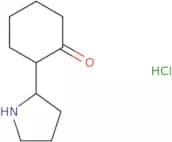
CAS :4-Bromo-1-butene is a useful building block, reaction component, and useful scaffold that can be used in the synthesis of various chemical compounds. This compound is a high quality, complex compound with versatile building blocks that can be used as a reagent in research or as a speciality chemical. 4-Bromo-1-butene has been found to have many uses in the production of other chemicals such as pharmaceuticals, pesticides, and cosmetics.Formule :C3H8INMasse moléculaire :185.01 g/mol2-(Pyrrolidin-2-yl)cyclohexan-1-one hydrochloride
CAS :Versatile small molecule scaffoldFormule :C10H18ClNODegré de pureté :Min. 95%Couleur et forme :PowderMasse moléculaire :203.71 g/molIndole-3-carboxaldehyde
CAS :<p>Indole-3-carboxaldehyde is a versatile building block that can be used as an intermediate in the production of complex compounds. It is also a research chemical and reagent for speciality chemicals. Indole-3-carboxaldehyde has been shown to react with other chemicals to form high quality, useful intermediates or reaction components. This compound can also be used as a scaffold for chemical synthesis.</p>Formule :C9H7NOMasse moléculaire :145.16 g/molRef: 3D-I-2200
1kgÀ demander100gÀ demander250gÀ demander500gÀ demander2500gÀ demander-Unit-kgkgÀ demander

![(2S,3R,5S)-5-[(N-Formyl-L-leucyl)oxy]-2-hexyl-3-hydroxyhexadecanoic Acid (Orlistat Impurity)](/_next/image/?url=https%3A%2Fstatic.cymitquimica.com%2Fproducts%2FTR%2Fthumb-webp%2FF700590.webp&w=3840&q=75)
![2H-Furo[2,3-c]pyran-2-one](/_next/image/?url=https%3A%2Fstatic.cymitquimica.com%2Fproducts%2FTR%2Fthumb-webp%2FF864800.webp&w=3840&q=75)