Building Blocks
Cette section contient des produits fondamentaux pour la synthèse de composés organiques et biologiques. Building blocks sont les matériaux de départ essentiels utilisés pour construire des molécules complexes à travers diverses réactions chimiques. Ils jouent un rôle crucial dans la découverte de médicaments, la science des matériaux et la recherche chimique. Chez CymitQuimica, nous offrons une gamme diversifiée de building blocks de haute qualité pour soutenir vos recherches innovantes et projets industriels, en vous assurant de disposer des composants essentiels pour une synthèse réussie.
Sous-catégories appartenant à la catégorie "Building Blocks"
- Acides boroniques et dérivés de l'acide boronique(5.778 produits)
- Building Blocks Chiraux(1.242 produits)
- Building Blocks Hydrocarbonés(6.098 produits)
- Building Blocks organiques(61.059 produits)
199579 produits trouvés pour "Building Blocks"
Trier par
Degré de pureté (%)
0
100
|
0
|
50
|
90
|
95
|
100
8-Aminoquinoline-3-carboxylic acid
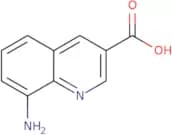
CAS :8-Aminoquinoline-3-carboxylic acid is a small molecule that inhibits the activity of the enzyme, catechol-O-methyltransferase (COMT), which is responsible for the demethylation of dopamine. 8-Aminoquinoline-3-carboxylic acid has been shown to be potent and selective in inhibiting COMT and thereby preventing the degradation of dopamine. This compound has been used in screening assays to identify other small molecules that can act as COMT inhibitors. The role of COMT in neurodegenerative diseases such as Parkinson's disease and Alzheimer's disease has been investigated using this inhibitor as a model system. 8-Aminoquinoline-3-carboxylic acid also binds to methylated DNA, which may explain its effect on cellular growth factor signaling pathways.Formule :C10H8N2O2Degré de pureté :Min. 95%Couleur et forme :PowderMasse moléculaire :188.19 g/molBoc-D-Leu-OH
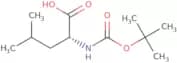
CAS :Boc-D-Leu-OH is a cyclic peptide that has been shown to have antibacterial activity. It is a monomer with a hydroxy group and a cavity. Boc-D-Leu-OH was found to be able to transport hydrophobic compounds across membranes, which may be due to its hydrophobic nature. Boc-D-Leu-OH also induces apoptosis in cells, which can lead to cancer. This compound has been optimized by structural modifications and residue substitutions, which have led to improved properties such as enhanced stability and increased antimicrobial activity.Formule :C11H21NO4Degré de pureté :Min. 95%Couleur et forme :PowderMasse moléculaire :231.29 g/mol3,4-Dimethoxy-5-hydroxycinnamic acid
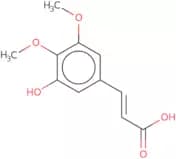
CAS :<p>3,4-Dimethoxy-5-hydroxycinnamic acid is a monoterpenoid indole alkaloid that belongs to the class of biochemical compounds. It is a promiscuous compound and can be found in many plants, such as coffee beans, black pepper, cinnamon, and thyme. 3,4-Dimethoxy-5-hydroxycinnamic acid has been shown to have antimicrobial properties against bacteria and fungi. The metabolomics study showed that this compound may also have anti-inflammatory effects. 3,4-Dimethoxy-5-hydroxycinnamic acid was shown to enhance the transcription of ferulic acid in E. coli cells. This compound was also shown to decrease the levels of transcripts for genes involved in lipid metabolism and fatty acid biosynthesis in human liver cells.</p>Formule :C11H12O5Degré de pureté :Min. 98 Area-%Couleur et forme :PowderMasse moléculaire :224.21 g/mol2,3-Dihydroxy-4-methoxybenzaldehyde
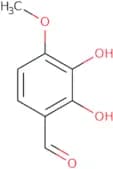
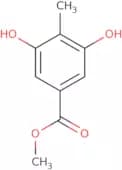
CAS :<p>2,3-Dihydroxy-4-methoxybenzaldehyde is the oxidized form of 2,3-dihydroxybenzaldehyde. It has been used in biological studies to investigate the biosynthetic pathways of reductoisomerase and analytical methods for detecting hydrogen bonds in samples. This chemical can also be found in urine samples as a metabolite of adenine nucleotide and polypeptides. The chemical has been shown to have health benefits, such as being a recombinant that helps cell culture.</p>Formule :C8H8O4Degré de pureté :Min. 95%Couleur et forme :PowderMasse moléculaire :168.15 g/mol3,5-Dihydroxy-4-methylbenzoic acid methyl ester
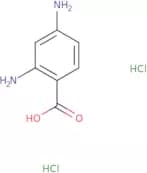
CAS :<p>3,5-Dihydroxy-4-methylbenzoic acid methyl ester is a fine chemical that is used as a versatile building block in the synthesis of pharmaceuticals, agrochemicals and other chemicals. It can be used as an intermediate in the synthesis of organic compounds and research chemicals. This compound is also used as a reaction component in organic syntheses and is often found in speciality chemicals. 3,5-Dihydroxy-4-methylbenzoic acid methyl ester is soluble in most solvents and has high purity. It is a complex compound that can be used as a useful building block or reagent for many different reactions.</p>Formule :C9H10O4Degré de pureté :Min. 95%Couleur et forme :PowderMasse moléculaire :182.17 g/mol2,4-Diaminobenzoic acid dihydrochloride
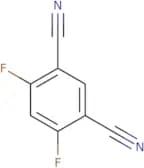
CAS :<p>2,4-Diaminobenzoic acid dihydrochloride is a versatile building block for complex compounds. This compound can be used as a research chemical and is also a reagent and speciality chemical. 2,4-Diaminobenzoic acid dihydrochloride has been used in the synthesis of many useful compounds, including pharmaceuticals and agrochemicals. It is also an intermediate in the synthesis of some pharmaceuticals and agrochemicals. 2,4-Diaminobenzoic acid dihydrochloride can be used as a scaffold to produce new molecules that are potentially useful as drugs or other chemicals.</p>Formule :C7H8N2O2•(HCL)2Degré de pureté :Min. 95%Couleur et forme :Off-White PowderMasse moléculaire :225.07 g/mol4,6-Difluorobenzene-1,3-dicarbonitrile
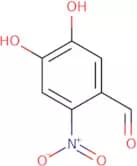
CAS :<p>Symmetrical functionalised aromatic</p>Formule :C8H2F2N2Degré de pureté :Min. 95%Couleur et forme :PowderMasse moléculaire :164.11 g/mol3,4-Dihydroxy-6-nitrobenzaldehyde
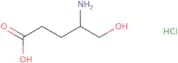
CAS :3,4-Dihydroxy-6-nitrobenzaldehyde is a nitrite that can be used to produce nitric acid. It can also be used in the synthesis of caffeic acid and protocatechuic aldehyde. This molecule is also a catalyst for the conversion of 3,4-dihydroxybenzoic acid to chloride and purine derivatives. 3,4-Dihydroxy-6-nitrobenzaldehyde is nucleophilic and can react with an electron pair donor such as methyl ester or dimerization. The product of this reaction is an unsaturated compound called hyperuricemic mice.Formule :C7H5NO5Degré de pureté :Min. 95%Couleur et forme :Yellow PowderMasse moléculaire :183.12 g/mol(4S)-4-Amino-5-hydroxypentanoic acid hydrochloride
CAS :Versatile small molecule scaffoldFormule :C5H11NO3•HClDegré de pureté :Min. 95%Couleur et forme :PowderMasse moléculaire :169.61 g/mol2,6-Dinitro-4-methylaniline
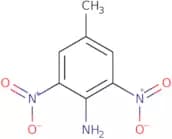
CAS :<p>2,6-Dinitro-4-methylaniline is an amide that has been shown to induce cancer in animals. It has a high affinity for nucleic acids and forms covalent bonds with DNA. 2,6-Dinitro-4-methylaniline is metabolized by the liver and excreted by the kidneys into urine, where it can be detected in urine samples. This compound has been shown to bioconcentrate in organisms and accumulate in tissues as well as activate radiation. The activation of this compound is dose dependent and may be due to its ability to form covalent bonds with DNA.</p>Formule :C7H7N3O4Degré de pureté :Min. 95%Couleur et forme :PowderMasse moléculaire :197.15 g/mol2,4-Dimethoxy-5-methylbenzaldehyde
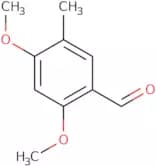
CAS :<p>2,4-Dimethoxy-5-methylbenzaldehyde is an aryl aldehyde that can be synthesized from 2,4-dimethoxyphenol and methyl benzoate. It can also be produced by condensation of benzaldehyde with chloroform in the presence of zinc chloride. This compound is used in the production of various pharmaceuticals, including antihistamines, antidepressants, and antipsychotics.</p>Formule :C10H12O3Degré de pureté :Min. 95%Couleur et forme :PowderMasse moléculaire :180.2 g/mol3,4-Dihydroxy-5-methoxybenzaldehyde
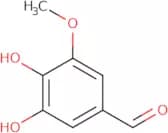
CAS :<p>3,4-Dihydroxy-5-methoxybenzaldehyde is a synthetic compound that has shown to have inhibitory effects on the replication of DNA and RNA. It also inhibits the growth of bacteria in culture by binding to the nucleic acid. The chemical structure of 3,4-Dihydroxy-5-methoxybenzaldehyde is similar to that of bisbenzylisoquinoline alkaloids, which are found in plants such as opium poppy. This similarity may explain its ability to inhibit bacterial growth. 3,4-Dihydroxy-5-methoxybenzaldehyde may be used as a drug candidate for treating bacterial infections.</p>Formule :C8H8O4Degré de pureté :Min. 95%Couleur et forme :PowderMasse moléculaire :168.15 g/mol3,5-Dinitrosalicylaldehyde
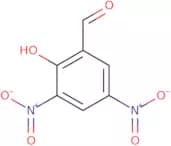
CAS :<p>3,5-Dinitrosalicylaldehyde is an oxidizing agent that is used in organic chemistry to produce aldehydes or carboxylic acids. It reacts with the amino groups of lysine residues and converts them to nitro groups. 3,5-Dinitrosalicylaldehyde is also used as a reagent in the determination of the number of lysine residues in proteins by titration with hydrochloric acid. The reaction mechanism of 3,5-dinitrosalicylaldehyde involves formation of an electron deficient intermediate that oxidizes chloride ions to form water molecules and chloride radicals. These intermediates react with nitro groups on lysine residues, resulting in nitro compounds. Crystallography studies have shown that the molecular structure of 3,5-dinitrosalicylaldehyde has two nitro groups and one hydroxyl group.</p>Formule :C7H4N2O6Degré de pureté :Min. 95%Couleur et forme :Yellow PowderMasse moléculaire :212.12 g/mol2,4-di-tert-Butylaniline hydrochloride
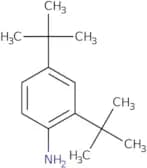
CAS :<p>The reaction mechanism of 2,4-di-tert-butylaniline hydrochloride is the alkylation of anilines with protonated tert-butyl chloride. This reaction proceeds by a substitution process in which one or more hydrogen atoms are replaced by the substituent. The selectivity of this reaction depends on the parameters and conditions used to carry it out. The reaction can be carried out under autogenous conditions or with the addition of a catalyst such as nickel (Ni), palladium (Pd) or platinum (Pt). The product obtained can be modified by changing the catalyst, solvent, temperature, pressure and other parameters. Reaction kinetics is affected by additives such as water, alcohols and acids that may be added during the reaction process. The size and shape of nanoparticles can also affect kinetic properties.<br>2,4-di-tert-Butylaniline hydrochloride has been shown to have high activity for organic synthesis in hom</p>Formule :C14H24ClNDegré de pureté :Min. 95%Couleur et forme :White PowderMasse moléculaire :241.8 g/mol(2,5-Dichlorophenyl)acetone
CAS :(2,5-Dichlorophenyl)acetone is a chemical compound that is used as a reaction component in the synthesis of other compounds. It can be used as a reagent in the preparation of high quality research chemicals, speciality chemicals and fine chemicals. It is also used as an intermediate in the synthesis of complex compounds. (2,5-Dichlorophenyl)acetone has CAS number 102052-40-4.Formule :C9H8Cl2ODegré de pureté :Min. 95%Couleur et forme :PowderMasse moléculaire :203.06 g/mol5-Methanesulfinylpentanenitrile
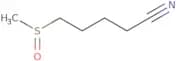
CAS :<p>5-Methanesulfinylpentanenitrile is a compound that is found in plants such as broccoli, cabbage, and cauliflower. It has been shown to have anticarcinogenic properties in cell culture studies. The activity of sulforaphane can be increased by the presence of glucosinolates. Sulforaphane inhibits the synthesis of fatty acids and is metabolized by detoxification enzymes. Amides are formed from sulforaphane, which can be detected using preparative high performance liquid chromatography (prep-HPLC). The water solubility of sulforaphane can be increased by heating it to a temperature above its boiling point so that it becomes supercritical (above its critical temperature). This allows for the preparation of dry weight samples for analysis.</p>Formule :C6H11NOSDegré de pureté :Min. 95%Masse moléculaire :145.23 g/mol2,4-Difluoro-3-hydroxybenzoic acid methyl ester
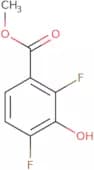
CAS :<p>2,4-Difluoro-3-hydroxybenzoic acid methyl ester is a fine chemical that is used as a versatile building block for research chemicals and other complex compounds. It can be used as a reaction component in the synthesis of new chemical entities or as a reagent for organic chemistry reactions. 2,4-Difluoro-3-hydroxybenzoic acid methyl ester has CAS No. 194804-80-3 and is available in high quality.</p>Formule :C8H6F2O3Degré de pureté :Min. 95%Couleur et forme :PowderMasse moléculaire :188.13 g/molCilostazol Related Compound C
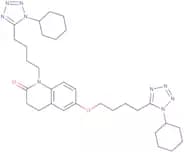
CAS :<p>Cilostazol is a drug that is used to treat the symptoms of intermittent claudication. It is a quinone-type inorganic base, obtained by the hydration of cilostazol. Cilostazol is an inhibitor of phosphodiesterase type 3 (PDE3) and has been shown to inhibit platelet aggregation, which may be due to its ability to inhibit PDE3 and prevent the breakdown of cyclic guanosine monophosphate (cGMP).</p>Formule :C31H45N9O2Degré de pureté :Min. 95%Couleur et forme :PowderMasse moléculaire :575.75 g/mol(+)-Diacetyl-D-tartaric acid
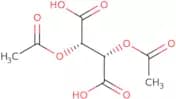
CAS :<p>(+)-Diacetyl-D-tartaric acid is a chiral organic compound that is soluble in organic solvents. It can be used as a catalyst for the asymmetric synthesis of organic compounds and has been shown to cleave bonds with high stereoselectivity. (+)-Diacetyl-D-tartaric acid also exhibits mesomorphic properties, meaning it changes from liquid to solid and vice versa at certain temperatures. The optical activity of this compound can be seen by its magnetic resonance spectrum, which displays two peaks at different wavelengths. This molecule has been shown to have potential uses in microscopy, as well as for the preparation of monomers for magnetic materials.</p>Formule :C8H10O8Degré de pureté :Min. 95%Couleur et forme :White PowderMasse moléculaire :234.16 g/mol3,5-Dimethoxybenzaldehyde
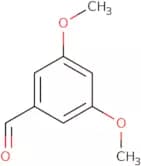
CAS :<p>3,5-Dimethoxybenzaldehyde is a fungicide that can kill fungal cells by inhibiting the synthesis of ergosterol, an important component of the fungal cell membrane. It has been shown to be effective against Cryptococcus neoformans and other fungi. 3,5-Dimethoxybenzaldehyde inhibits mitochondrial superoxide production and the growth of fungi in a model system. The optimum concentration for inhibition was determined in a kinetic and thermodynamic study. This compound has also been shown to have anti-inflammatory properties, which may be due to its ability to inhibit prostaglandin synthesis.</p>Formule :C9H10O3Degré de pureté :Min. 98%Couleur et forme :PowderMasse moléculaire :166.17 g/mol