Building Blocks
Cette section contient des produits fondamentaux pour la synthèse de composés organiques et biologiques. Building blocks sont les matériaux de départ essentiels utilisés pour construire des molécules complexes à travers diverses réactions chimiques. Ils jouent un rôle crucial dans la découverte de médicaments, la science des matériaux et la recherche chimique. Chez CymitQuimica, nous offrons une gamme diversifiée de building blocks de haute qualité pour soutenir vos recherches innovantes et projets industriels, en vous assurant de disposer des composants essentiels pour une synthèse réussie.
Sous-catégories appartenant à la catégorie "Building Blocks"
- Acides boroniques et dérivés de l'acide boronique(5.778 produits)
- Building Blocks Chiraux(1.242 produits)
- Building Blocks Hydrocarbonés(6.098 produits)
- Building Blocks organiques(61.059 produits)
199580 produits trouvés pour "Building Blocks"
Trier par
Degré de pureté (%)
0
100
|
0
|
50
|
90
|
95
|
100
Salicylic acid
CAS :<p>Salicylic acid is a weak organic acid that is used as a plant hormone. It has been shown to have enzyme activities that may be involved in the regulation of glycol ether metabolism, photosynthetic activity, p-hydroxybenzoic acid biosynthesis and nutrient solution. Salicylic acid also inhibits nitrite ion production by reacting with acetylsalicylic, which is an inhibitor of the enzyme nitric oxide synthase. Salicylic acid may inhibit transcriptional regulation by steric interactions with DNA or by binding to regulatory proteins. The structural analysis of salicylic acid shows an intramolecular hydrogen bond between the hydroxyl group and carbonyl group which could lead to enzyme inhibition.</p>Formule :C7H6O3Degré de pureté :Min. 95%Couleur et forme :White Off-White PowderMasse moléculaire :138.12 g/molMethyl 4-(2-chloroethyl)benzoate
CAS :<p>Versatile small molecule scaffold</p>Formule :C10H11ClO2Degré de pureté :Min. 95%Masse moléculaire :198.65 g/mol5-Amino-1H-indole-2-carboxylic acid
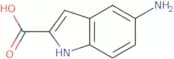
CAS :5-Amino-1H-indole-2-carboxylic acid is a chemical compound that belongs to the group of alcohols. It has been shown to have a viscosity increasing effect in industrial applications and can be used as an environmental pollutant. This compound is also a surface active agent, and it has been shown to be an effective antitumor agent. 5-Amino-1H-indole-2-carboxylic acid is a nonionic surfactant with urea derivative properties. It can be used for the treatment of skin conditions such as eczema and psoriasis, but should not be applied to open wounds.Formule :C9H8N2O2Degré de pureté :Min. 95%Couleur et forme :PowderMasse moléculaire :176.17 g/mol4-(1,3-Thiazol-4-yl)phenol
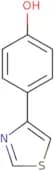
CAS :<p>4-(1,3-Thiazol-4-yl)phenol is a diagnostic marker for bladder cancer. It is expressed in bladder cells and its levels are higher in urine samples of patients with bladder cancer than in controls. 4-(1,3-Thiazol-4-yl)phenol can be used as a biomarker for diagnosis of bladder cancer and to monitor the treatment response. The concentration of this compound can also be used to assess the risk of recurrence or progression to invasive disease. The function of 4-(1,3-thiazol-4-yl)phenol in the body is not known, but it may act as a growth factor or stabilizer for cells. This molecule has been shown to have therapeutic effects on epithelial cancers such as colorectal and pancreatic cancers.</p>Formule :C9H7NOSDegré de pureté :Min. 95%Couleur et forme :PowderMasse moléculaire :177.22 g/mol5-Fluoro-N1,N1-dimethylbenzene-1,3-diamine
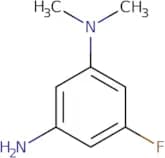
CAS :<p>5-Fluoro-N1,N1-dimethylbenzene-1,3-diamine is a reaction component that can be used in the synthesis of compounds with a wide range of applications. It can be used as a reagent and has been shown to exhibit high quality in research. 5-Fluoro-N1,N1-dimethylbenzene-1,3-diamine is also known to be useful for the synthesis of pharmaceuticals, agrochemicals and other chemicals. The compound can be used as an intermediate or building block in the synthesis of more complex compounds. 5-Fluoro-N1,N1-dimethylbenzene-1,3-diamine is also versatile due to its ability to react with various types of functional groups including amines and thiols. This product is a fine chemical that exhibits a high degree of purity when synthesized.</p>Formule :C8H11FN2Degré de pureté :Min. 95%Couleur et forme :Clear LiquidMasse moléculaire :154.18 g/molAP1867-2-(carboxymethoxy)
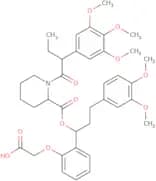
CAS :<p>AP1867-2-(carboxymethoxy) is a high purity research tool for the study of receptor and ligand interactions. It has been shown to be an activator of ion channels and a ligand of G protein-coupled receptors. AP1867-2-(carboxymethoxy) is also used in the study of protein interactions, antibody production, and cell biology.</p>Formule :C38H47NO11Degré de pureté :Min. 95%Couleur et forme :PowderMasse moléculaire :693.8 g/mol1-Methyl-3-(pyridin-4-yl)-1H-pyrazole-4-carboxylic acid
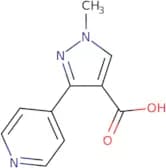
CAS :Versatile small molecule scaffoldFormule :C10H9N3O2Degré de pureté :Min. 95%Couleur et forme :PowderMasse moléculaire :203.20 g/mol4-{2-[2-(2-Methoxyethoxy)ethoxy]ethoxy}aniline
CAS :Versatile small molecule scaffoldFormule :C13H21NO4Degré de pureté :Min. 95%Couleur et forme :Clear LiquidMasse moléculaire :255.31 g/mol(R)-3-Aminoquinuclidine dihydrochloride
CAS :3-Aminoquinuclidine dihydrochloride is a high quality, reagent, complex compound that can be used as a useful intermediate to produce other fine chemicals. The CAS number for this compound is 123536-14-1. 3-Aminoquinuclidine dihydrochloride is a fine chemical that has many uses in the production of research chemicals and speciality chemicals. This compound can be used as a versatile building block in synthesis reactions and as a reaction component.Formule :C7H16Cl2N2Degré de pureté :Min. 97 Area-%Masse moléculaire :199.12 g/molRef: 3D-Q-100108
25gÀ demander50gÀ demander100gÀ demander250gÀ demander500gÀ demander-Unit-ggÀ demandern-Pentyl 4-hydroxybenzoate
CAS :<p>n-Pentyl 4-hydroxybenzoate is a preservative that inhibits the growth of microorganisms. It is used in products such as cosmetics, pharmaceuticals, and food to prevent spoilage. The antimicrobial activity of n-pentyl 4-hydroxybenzoate has been shown to be due to p-hydroxybenzoic acid, which binds to bacterial cell walls. This binding prevents the formation of an antibiotic-inhibitor complex with the enzyme cell wall synthesis that is required for cell wall biosynthesis, inhibiting protein synthesis and cell division. n-Pentyl 4-hydroxybenzoate has also been shown to inhibit bacterial growth in vitro and in vivo in rats by interfering with protein synthesis in rat liver microsomes.</p>Formule :C12H16O3Degré de pureté :Min. 95%Couleur et forme :Off-White PowderMasse moléculaire :208.25 g/mol2-Phenoxybenzoic acid
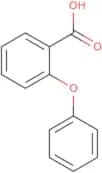
CAS :<p>2-Phenoxybenzoic acid is a hydrochloride salt that is used as a reagent in analytical chemistry. It reacts with the carboxylate group of amino acids, proteins, and peptides to form a stable, water-soluble complex. The reaction is typically monitored by measuring the change in optical density at 260 nm. 2-Phenoxybenzoic acid reacts with bcr-abl kinase and colloidal gold to form an insoluble precipitate that can be detected with electron microscopy. This compound also has biological properties such as inhibiting carbonic anhydrase activity and changing the pH of the solution. 2-Phenoxybenzoic acid was originally synthesized from diphenyl ether and phenol (C6H5OH).<br>2-Phenoxybenzoic acid can be converted into 2-(4-nitrophenoxy) benzoic acid by reacting it with sodium nitrite followed by hydrochloric acid</p>Formule :C13H10O3Degré de pureté :Min. 95%Couleur et forme :PowderMasse moléculaire :214.22 g/molPamoic acid
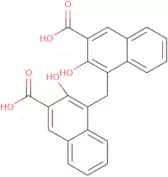
CAS :<p>Pamoic acid is a natural compound that has been found to exhibit antimicrobial activity against a variety of microorganisms. Pamoic acid is also used in the treatment of infectious diseases, such as leprosy, tuberculosis, and AIDS. The biological properties of pamoic acid are due to its ability to bind with peptide hormones and act as a pharmacological agent. Pamoic acid is able to inhibit the synthesis of peptide hormones by binding to their receptors on the cell surface. This inhibition can lead to immunosuppression (e.g., autoimmune diseases) and mitochondrial membrane depolarization. Pamoic acid is also able to bind with benzalkonium chloride, which may account for some of its antimicrobial activity.<br>Pamoic acid is synthesized from pantothenic acid (vitamin B5) and caproic acid by means of an enzymatic process called transamination.</p>Formule :C23H16O6Degré de pureté :Min. 95%Couleur et forme :Yellow PowderMasse moléculaire :388.37 g/mol4-[(1E)-3-Hydroxyprop-1-en-1-yl]phenol
CAS :<p>4-[(1E)-3-Hydroxyprop-1-en-1-yl]phenol (4-HP) is a natural compound that belongs to the group of polyphenols. It is one of the main constituents of the plant extract, which is obtained from leaves of the plant Ferula communis. 4-HP has been shown to have antiinflammatory activity by inhibiting prostaglandin synthesis in 3T3-L1 preadipocytes. The synergic effect can be explained by a combination of its antioxidant and antiinflammatory properties. In an analytical method, 4-HP was found to be present in ferulic acid and p-hydroxybenzoic acid. 4-HP also inhibits dna polymerase activity and rna synthesis at low concentration levels. The mechanism of action may be due to the inhibition of bacterial dna gyrase and topoisomerase I, leading to bacterial cell death.</p>Formule :C9H10O2Degré de pureté :Min. 95%Masse moléculaire :150.17 g/mol4-[(1E)-Prop-1-en-1-yl]phenol
CAS :Eugenol is a phenolic compound and the main active ingredient of clove oil. Eugenol has been shown to have antioxidant, anti-inflammatory, analgesic, and antimicrobial properties. It also inhibits the growth of cancer cells in vitro (mcf-7 cells). The mechanism of eugenol’s activity is not well understood. It may involve activation of adenine nucleotide levels by inhibiting the production of p-hydroxybenzoic acid or by increasing nucleotide levels by inhibiting the conversion to p-hydroxybenzoic acid. Eugenol also inhibits bacterial DNA gyrase and topoisomerase IV, which are enzymes that maintain the integrity of bacterial DNA. This inhibition leads to cell death by inhibiting protein synthesis. Eugenol has been shown to inhibit mineralization in petunia plants and may have a similar effect on human bone tissue.Formule :C9H10ODegré de pureté :90%Masse moléculaire :134.17 g/molPPACK hydrochloride
CAS :Please enquire for more information about PPACK hydrochloride including the price, delivery time and more detailed product information at the technical inquiry form on this pageFormule :C21H31ClN6O3•xHClDegré de pureté :Min. 95%Couleur et forme :PowderMasse moléculaire :487.42 g/mol6-Phenoxy-3-pyridinemethanol
CAS :<p>Please enquire for more information about 6-Phenoxy-3-pyridinemethanol including the price, delivery time and more detailed product information at the technical inquiry form on this page</p>Formule :C12H11NO2Degré de pureté :Min. 95%Couleur et forme :Clear LiquidMasse moléculaire :201.22 g/mol1,1,2,3,3-Pentachloropropane
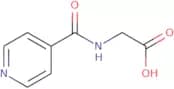
CAS :<p>Please enquire for more information about 1,1,2,3,3-Pentachloropropane including the price, delivery time and more detailed product information at the technical inquiry form on this page</p>Formule :C3H3Cl5Degré de pureté :Min. 95%Couleur et forme :Clear LiquidMasse moléculaire :216.32 g/mol2-(Pyridin-4-ylformamido)acetic acid
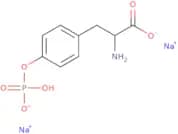
CAS :<p>2-(Pyridin-4-ylformamido)acetic acid is a chemical intermediate that is used in the synthesis of other compounds. It is a chemical building block, useful for the production of fine chemicals and speciality chemicals. 2-(Pyridin-4-ylformamido)acetic acid can be used as a reaction component or reagent in organic synthesis. It has been shown to have high purity and quality for research purposes. CAS No. 2015-20-5.br><br>2-(Pyridin-4-ylformamido)acetic acid can be used to synthesize a variety of compounds with different properties, such as antihistamines, antibiotics, antihypertensives, and antipsychotics.</p>Formule :C8H8N2O3Degré de pureté :Min. 95 Area-%Couleur et forme :PowderMasse moléculaire :180.16 g/molPhospho-L-tyrosine disodium
CAS :<p>Phospho-L-tyrosine disodium is a versatile building block that has many different uses in research. It is used as a reagent for the synthesis of other chemicals, such as vitamins, drugs and pesticides. The compound can be used to make high quality, useful intermediates for chemical reactions or as a reaction component. Phospho-L-tyrosine disodium is a speciality chemical that can be used in the production of many complex compounds. This product also has CAS number 1610350-91-8.</p>Formule :C9H10NNa2O6PDegré de pureté :Min. 95%Couleur et forme :White PowderMasse moléculaire :305.13 g/mol(R)-1-(Thiazol-2-yl)ethanamine dihydrochloride
CAS :<p>Versatile small molecule scaffold</p>Formule :C5H8N2S•(HCl)2Degré de pureté :Min. 95%Couleur et forme :PowderMasse moléculaire :200.66 g/mol


![4-{2-[2-(2-Methoxyethoxy)ethoxy]ethoxy}aniline](/_next/image/?url=https%3A%2Fstatic.cymitquimica.com%2Fproducts%2F3D%2Fthumb-webp%2FFPA11694.webp&w=3840&q=75)


![4-[(1E)-3-Hydroxyprop-1-en-1-yl]phenol](/_next/image/?url=https%3A%2Fstatic.cymitquimica.com%2Fproducts%2F3D%2Fthumb-webp%2FVAA64940.webp&w=3840&q=75)
![4-[(1E)-Prop-1-en-1-yl]phenol](/_next/image/?url=https%3A%2Fstatic.cymitquimica.com%2Fproducts%2F3D%2Fthumb-webp%2FVAA64939.webp&w=3840&q=75)