Building Blocks
Cette section contient des produits fondamentaux pour la synthèse de composés organiques et biologiques. Building blocks sont les matériaux de départ essentiels utilisés pour construire des molécules complexes à travers diverses réactions chimiques. Ils jouent un rôle crucial dans la découverte de médicaments, la science des matériaux et la recherche chimique. Chez CymitQuimica, nous offrons une gamme diversifiée de building blocks de haute qualité pour soutenir vos recherches innovantes et projets industriels, en vous assurant de disposer des composants essentiels pour une synthèse réussie.
Sous-catégories appartenant à la catégorie "Building Blocks"
- Acides boroniques et dérivés de l'acide boronique(5.778 produits)
- Building Blocks Chiraux(1.242 produits)
- Building Blocks Hydrocarbonés(6.098 produits)
- Building Blocks organiques(61.059 produits)
199580 produits trouvés pour "Building Blocks"
Trier par
Degré de pureté (%)
0
100
|
0
|
50
|
90
|
95
|
100
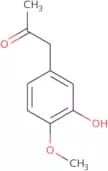
(3-Hydroxy-4-methoxyphenyl)acetone
CAS :<p>(3-Hydroxy-4-methoxyphenyl)acetone is a versatile building block that can be used as a reagent or in the synthesis of complex compounds. It is a useful intermediate in the synthesis of pharmaceuticals, agrochemicals, and other specialty chemicals. This compound also has the potential to serve as a scaffold for drug discovery.</p>Formule :C10H12O3Degré de pureté :(%) Min. 85%Couleur et forme :PowderMasse moléculaire :180.2 g/mol8-Hydroxy-2-quinolinecarbonitrile
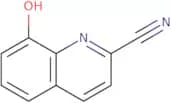
CAS :8-Hydroxy-2-quinolinecarbonitrile is an uncomplexed ligand that can be used for the synthesis of metal complexes. 8-Hydroxy-2-quinolinecarbonitrile is insoluble in most solvents, including water, and has a high melting point. This compound can be synthesized from acetonitrile and primary amines by condensing with formaldehyde. It is not possible to catalyze this reaction, as it does not undergo homolysis or heterolysis reactions. The uncomplexed ligand has been shown to bind to metal ions such as copper and silver. Its diffraction pattern was found to have a polynuclear nature with a number of diffraction peaks within the range of 5–9 Å.Formule :C10H6N2ODegré de pureté :Min. 95%Couleur et forme :PowderMasse moléculaire :170.17 g/molPyridine 4-acetic acid HCl
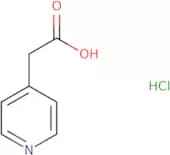
CAS :<p>Pyridine 4-acetic acid HCl is a synthetic, fluorescent probe with reactive and luminescence properties. It is used for the detection of hydrogen bond formation in organic compounds. It is also used as a probe to study the molecular interactions between metal ions and β-unsaturated aldehydes. Pyridine 4-acetic acid HCl has been shown to be useful for transduction of light energy into chemical energy. The pyridine ring makes this compound an excellent candidate for molecular modeling studies due to its rigid structure.</p>Formule :C7H8ClNO2Degré de pureté :Min. 95%Couleur et forme :PowderMasse moléculaire :173.6 g/molHexadecyl pyridinium bromide
CAS :Cationic surfactant; antisepticFormule :C21H38BrNCouleur et forme :White PowderMasse moléculaire :384.44 g/mol4-Hydroxy-2-mercapto-6-methy1-pyrimidine
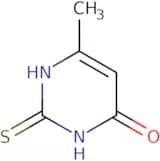
CAS :4-Hydroxy-2-mercapto-6-methylpyrimidine is a structural analysis of the molecule. It is a pyrimidine compound that has been found to be effective against human bowel disease and congestive heart failure, as well as in a model system of infectious diseases. 4-Hydroxy-2-mercapto-6-methylpyrimidine inhibits the activity of cyclin D2 by binding to it and preventing its attachment to the G1/S phase checkpoint. This compound also inhibits the activity of c. glabrata polymerase chain reaction (PCR) and human leukemia cells HL60 cells. 4-Hydroxy-2-mercapto-6-methylpyrimidine is an analytical method for xray diffraction data, which has been shown to have antibacterial properties due to its ability to inhibit methylthiouracil from being converted into thyroxine in the body.Formule :C5H6N2OSDegré de pureté :Min. 95%Couleur et forme :White Clear LiquidMasse moléculaire :142.18 g/molcis-4-Hydroxy-L-proline
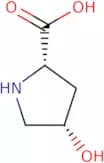
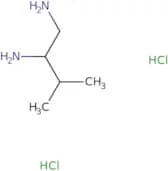
CAS :<p>Cis-4-Hydroxy-L-proline is a bound form of proline that is formed by the condensation of two molecules of glyoxylate. It is a basic structure and an intermediate in the synthesis of collagen, which is a protein found in connective tissue. Cis-4-Hydoxy-L-proline has been shown to be an active form of proline for the treatment of primary sclerosing cholangitis, as it can decrease bile acid levels. This compound has also been used as an analytical method for determining collagen content in biological samples. The polymerase chain reaction technique uses cis-4-Hydroxy-L-proline as a matrix effect to amplify DNA sequences. Cis-4-Hydroxy-L-proline has also been shown to have optimum concentrations at 3mM and 0.5mM in model systems.br></p>Formule :C5H9NO3Degré de pureté :Min. 95%Couleur et forme :White PowderMasse moléculaire :131.13 g/mol3-Methylbutane-1,2-diamine dihydrochloride
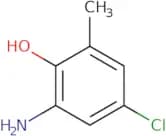
CAS :<p>3-Methylbutane-1,2-diamine dihydrochloride is a reagent that is used as a building block in organic synthesis. It can be used as an intermediate or reactant in the preparation of compounds with other functional groups. 3-Methylbutane-1,2-diamine dihydrochloride is also known to have applications in polymer chemistry and pharmaceuticals. This chemical has been assigned CAS No. 54750-81-1 and is available for purchase through various chemical suppliers.</p>Formule :C5H16Cl2N2Degré de pureté :Min. 95 Area-%Couleur et forme :PowderMasse moléculaire :175.1 g/mol2-Amino-4-chloro-6-methylphenol
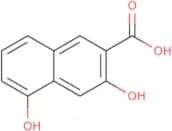
CAS :<p>2-Amino-4-chloro-6-methylphenol is a radioactive tracer that is used in biomedical imaging and has high binding affinity to the 5-HT3 receptor. 2-Amino-4-chloro-6-methylphenol can be used to study the mechanisms of cancer and other diseases. The specific activity of this tracer is around 1000 Ci/mmol at 37°C. This compound is a ligand for the 5HT3 receptor, which has been shown to be associated with nausea and vomiting, anxiety, depression, epilepsy, and Alzheimer's disease. It also binds with high affinity to serotonin receptors in the brain.</p>Formule :C7H8ClNODegré de pureté :Min. 95 Area-%Couleur et forme :PowderMasse moléculaire :157.6 g/mol3,5-Dihydroxy-2-naphthoic acid
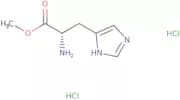
CAS :<p>3,5-Dihydroxy-2-naphthoic acid (DHNA) is an organic compound with a red shift in the optical spectrum. DHNA is a regulatory domain found in functional groups, such as salicylic acid. It has been shown to inhibit bacterial growth and gram-negative organisms, including Escherichia coli and Pseudomonas aeruginosa. DHNA is also a potent inducer of triticum aestivum lysine carboxypeptidase A and B, which are proteases that function in protein digestion. This property may be due to its ability to bind to receptor subtypes of the epidermal growth factor type 2 receptor family.</p>Formule :C11H8O4Degré de pureté :Min. 95%Couleur et forme :White PowderMasse moléculaire :204.18 g/molL-Histidine methyl ester dihydrochloride
CAS :<p>L-Histidine methyl ester dihydrochloride is a β-amino acid with the chemical formula HNCH2CH(CH3)CO2H. It has the functional group of an isopropyl group and a chloride ion. L-Histidine methyl ester dihydrochloride has been shown to bind to receptors in the central nervous system that are involved in pain perception. As a result, it can be used for the treatment of neuropathic pain, chronic pain, and cancer pain. This drug also inhibits nitric oxide production by binding to iron ions or copper ions. L-Histidine methyl ester dihydrochloride has been shown to have antiinflammatory effects as well as antioxidant properties.</p>Formule :C7H11N3O2•(HCl)2Degré de pureté :Min. 95%Couleur et forme :PowderMasse moléculaire :242.1 g/mol3-(4-Fluorophenyl)cyclopentan-1-amine
CAS :Versatile small molecule scaffoldFormule :C11H14FNDegré de pureté :(%) Min. 80%Masse moléculaire :179.23 g/molBis(trifluoromethane)sulfonimide lithium salt
CAS :Please enquire for more information about Bis(trifluoromethane)sulfonimide lithium salt including the price, delivery time and more detailed product information at the technical inquiry form on this pageFormule :C2F6LiNO4S2Masse moléculaire :287.09 g/molRef: 3D-Q-101273
1kgÀ demander5kgÀ demander250gÀ demander500gÀ demander2500gÀ demander-Unit-kgkgÀ demander3-Hydroxy-2-methoxybenzoic acid
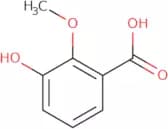
CAS :<p>3-Hydroxy-2-methoxybenzoic acid (3HMB) is a phenolic compound that is found in the heartwood of Eucalyptus trees, fruits such as apples and cherries, and some vegetables. 3HMB has been shown to inhibit tumor necrosis factor-α (TNF-α) production by proinflammatory cytokines such as IL-1β and IL-6, which are produced by cells in response to infection or tissue injury. 3HMB also inhibits the activity of tyrosol oxygenase, which converts tyrosol to vanillic acid. Vanillic acid can be converted into vanillin, an important precursor for the synthesis of pigments that give fruits their color. 3HMB has been shown to inhibit the growth of cancer cells in vitro.</p>Formule :C8H8O4Degré de pureté :Min. 95%Couleur et forme :PowderMasse moléculaire :168.15 g/mol3-Iodo-[1,2,3]triazolo[1,5-α]pyridine
CAS :<p>3-Iodo-[1,2,3]triazolo[1,5-α]pyridine is a fine chemical that is used as a versatile building block in the synthesis of complex compounds. It has been shown to be an intermediate for research chemicals and as a reaction component in reactions with other chemicals. 3-Iodo-[1,2,3]triazolo[1,5-α]pyridine is also a useful scaffold for the production of drugs. The compound can be synthesized from readily available starting materials and has the advantage of being easily purified. 3-Iodo-[1,2,3]triazolo[1,5-α]pyridine has CAS No. 916756-21-3 and a molecular weight of 219.27 g/mol.</p>Formule :C6H4IN3Degré de pureté :Min. 95%Couleur et forme :PowderMasse moléculaire :245.02 g/mol3-Hydroxy-4-methylbenzaldehyde
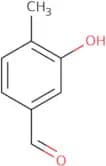
CAS :<p>3-Hydroxy-4-methylbenzaldehyde is a chemical that is synthesized from 3-hydroxy-4-methylphenol and dimethylformamide. It has been shown to interact with aluminium, which may be due to its ability to form a 1:1 complex with the metal. 3-Hydroxy-4-methylbenzaldehyde also exhibits electrochemical methods and isomers with other aldehydes. This chemical can be used in gas chromatography/mass spectrometry (GCMS) as an internal standard for fatty acid analysis.</p>Formule :C8H8O2Degré de pureté :Min. 95%Couleur et forme :White PowderMasse moléculaire :136.15 g/mol2-Ethyl-2-oxazoline
CAS :Please enquire for more information about 2-Ethyl-2-oxazoline including the price, delivery time and more detailed product information at the technical inquiry form on this pageFormule :C6H14ClNO5Masse moléculaire :215.63 g/mol4-[(Pyridine-3-carbonyl)amino]butyric acid
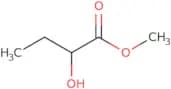
CAS :<p>4-[(Pyridine-3-carbonyl)amino]butyric acid (4-PBA) is a non-proteinogenic amino acid that has been found in food and has been shown to have therapeutic effects on a number of diseases. 4-PBA is converted to gamma-aminobutyric acid (GABA) by the enzyme GABA transaminase. It also has a synergistic effect with sodium succinate, which is another precursor in the production of GABA. This synergistic effect increases the amount of GABA produced from 4-PBA and sodium succinate when they are consumed together. 4-PBA also binds to receptors for dopamine, which may be why it is effective for treating diabetic neuropathy and Parkinson's disease.</p>Formule :C10H12N2O3Degré de pureté :Min. 95%Couleur et forme :White PowderMasse moléculaire :208.21 g/molMethyl 2-hydroxybutanoate
CAS :Versatile small molecule scaffoldFormule :C5H10O3Degré de pureté :Min. 95%Couleur et forme :Clear LiquidMasse moléculaire :118.13 g/mol3,3-Bis(hydroxymethyl)oxetane
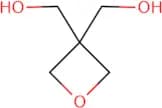
CAS :<p>3,3-Bis(hydroxymethyl)oxetane is a monomer that belongs to the class of polyols. It is synthesized by ring-opening polymerization of 3,3-bis(hydroxymethyl)oxetane with trifluoromethanesulfonic acid as the catalyst. The kinetic studies show that this monomer reacts with water at high rates and has a high melting point. It is also found to be an excellent uptake agent for organic nitrates. 3,3-Bis(hydroxymethyl)oxetane can be used in the production of polyurethanes and other polymers as well as in cosmetic products.</p>Formule :C5H10O3Degré de pureté :Min. 95%Couleur et forme :PowderMasse moléculaire :118.13 g/molEthyl 3-aminobenzoate
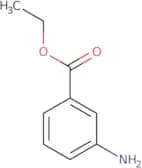
CAS :<p>Ethyl 3-aminobenzoate is a chemical that is used as an anesthetic. It is administered intravenously and has been shown to have effects on the cardiovascular system, such as lowering blood pressure, decreasing heart rate and increasing the time it takes for the heart to recover after a contraction. Ethyl 3-aminobenzoate also affects the central nervous system by causing anesthesia and changes in brain function. Its effects are reversible with administration of naloxone or flumazenil.</p>Formule :C9H11NO2Degré de pureté :Min. 95%Couleur et forme :PowderMasse moléculaire :165.19 g/mol




![3-Iodo-[1,2,3]triazolo[1,5-α]pyridine](/_next/image/?url=https%3A%2Fstatic.cymitquimica.com%2Fproducts%2F3D%2Fthumb-webp%2FRLB75621.webp&w=3840&q=75)

![4-[(Pyridine-3-carbonyl)amino]butyric acid](/_next/image/?url=https%3A%2Fstatic.cymitquimica.com%2Fproducts%2F3D%2Fthumb-webp%2FFP15522.webp&w=3840&q=75)