Building Blocks
Cette section contient des produits fondamentaux pour la synthèse de composés organiques et biologiques. Building blocks sont les matériaux de départ essentiels utilisés pour construire des molécules complexes à travers diverses réactions chimiques. Ils jouent un rôle crucial dans la découverte de médicaments, la science des matériaux et la recherche chimique. Chez CymitQuimica, nous offrons une gamme diversifiée de building blocks de haute qualité pour soutenir vos recherches innovantes et projets industriels, en vous assurant de disposer des composants essentiels pour une synthèse réussie.
Sous-catégories appartenant à la catégorie "Building Blocks"
- Acides boroniques et dérivés de l'acide boronique(5.778 produits)
- Building Blocks Chiraux(1.242 produits)
- Building Blocks Hydrocarbonés(6.098 produits)
- Building Blocks organiques(61.098 produits)
199594 produits trouvés pour "Building Blocks"
Trier par
Degré de pureté (%)
0
100
|
0
|
50
|
90
|
95
|
100
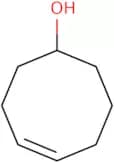
5-Hydroxy-1-cyclooctene
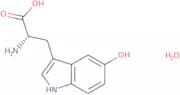
CAS :<p>5-Hydroxy-1-cyclooctene is a monomer of polymers that can be used to introduce new properties to polymers. It is also an effective surface modifier, which can be used to modify the surface properties of polymeric materials. 5-Hydroxy-1-cyclooctene has been shown to bind to calcium ions and may have potential for use in active targeting and as a neutral pH probe. The polymer concentration influences the x-ray structure, which has been studied using x-ray diffraction methods. The absorption spectrum of 5-hydroxy-1-cyclooctene has been examined in vitro and it has been found that this molecule absorbs light in the visible region at wavelengths between 400 nm and 700 nm. It also emits luminescence with a maximum peak at 690 nm. The second order rate constant for the reaction with ruthenium complex is 2.2×10^8 M^(-1)s^(-1). This</p>Formule :C8H14ODegré de pureté :Min. 95%Couleur et forme :Clear LiquidMasse moléculaire :126.2 g/mol5-Hydroxy-L-tryptophan
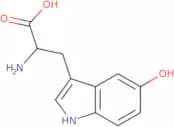
CAS :<p>5-hydroxy-L-tryptophan (5HTP) is a naturally occurring amino acid that is an intermediate in the synthesis of the neurotransmitter serotonin. 5HTP appears to be able to increase levels of serotonin in the brain and may be used to treat mood disorders, including depression and anxiety. In clinical trials, 5HTP was found to be as effective as some antidepressant drugs for treating depression. Studies have shown that 5HTP increases locomotor activity and dopamine concentrations. It also increases physiological functions such as temperature regulation, heart rate, blood pressure, and respiration rate. The mechanism by which 5HTP achieves these effects is not yet fully understood but may involve its ability to bind to specific receptors on cells in different regions of the brain.<br>5HTP has been shown to inhibit polymerase chain reactions (PCR) in vitro by binding to DNA gyrase and topoisomerase IV enzyme activities. It also inhibits fatty acid oxidation in vitro by binding</p>Formule :C11H12N2O3Degré de pureté :Min. 95%Couleur et forme :PowderMasse moléculaire :220.22 g/molDL-5-Hydroxytryptophan
CAS :<p>DL-5-Hydroxytryptophan (5-HTP) is a naturally occurring amino acid that is converted to serotonin in the brain. It is used to treat depression and anxiety, as well as other psychological disorders. 5-HTP has been shown to stimulate the production of serotonin, which may be due to its ability to activate 5-HT2 receptors. 5-HTP has also been shown to increase the activity of various enzymes, such as esterase and aminopeptidase, in human serum. 5-HTP has been shown to have no effects on carcinoid syndrome or 5-ht concentrations in blood plasma. However, it does have biochemical properties that are different from those of other amino acids and can be used as a fluorescent probe for biological research.</p>Formule :C11H12N2O3Degré de pureté :Min. 95%Couleur et forme :White PowderMasse moléculaire :220.22 g/mol2-Hydroxy-5-methylbenzaldehyde
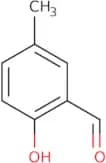
CAS :<p>2-Hydroxy-5-methylbenzaldehyde (2HMBA) is a biologically active molecule that has been shown to bind to human serum albumin. The binding constants for the two molecules are relatively low, with a Kd of approximately 2.6 x 10 M. The nitrogen atoms in the molecule form hydrogen bonds with the hydroxyl group on the ethylene diamine, which stabilizes it and prevents it from dissolving in water. This compound also has a cyclohexane ring and can be found in natural products such as erythronolide B, an antibiotic produced by Streptomyces erythreus. 2HMBA is stable when complexed with hydrochloric acid or potassium dichromate and can be used in structural analysis of other molecules.</p>Formule :C8H8O2Degré de pureté :Min. 95%Couleur et forme :Off-White PowderMasse moléculaire :136.15 g/molHypoxanthine
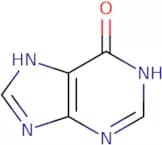
CAS :<p>Hypoxanthine is a nucleoside that is found in human cells. It is synthesized from guanine by the enzyme, xanthine oxidoreductase. Hypoxanthine is also produced from xanthine by adenosine deaminase and converted back to xanthine, which can then be reused for DNA synthesis. Hypoxanthine has been shown to inhibit the growth of photosynthetic bacteria, such as Rhodopseudomonas viridis and Rhodobacter sphaeroides. This inhibition may be due to an equilibrative nucleotide effect on the folate receptor. The x-ray diffraction data collected from the chrysanthemum flower (a source of hypoxanthine) showed that hypoxanthine has a calcium salt structure.</p>Formule :C5H4N4ODegré de pureté :Min. 95%Couleur et forme :White PowderMasse moléculaire :136.11 g/mol4-Hydroxybenzaldehyde
CAS :<p>4-Hydroxybenzaldehyde is a phenolic compound that is produced in plants. 4-Hydoxybenzaldehyde is used as an extractant for sodium carbonate and hydroxyl group from acetate extract. The locomotor activity of animals was tested following administration of this substance, and it has been shown to have a high resistance against x-ray crystallography. The reaction mechanism for the formation of p-hydroxybenzoic acid from 4-hydroxybenzaldehyde has been proposed, which may be due to the oxidation of 4-hydroxybenzaldehyde by hydrogen peroxide. This reaction also induces apoptosis pathway in cells. Kinetic data for the reaction between 4-hydroxybenzaldehyde and hydrogen peroxide were obtained using UV spectroscopy.</p>Formule :C7H6O2Degré de pureté :Min. 95%Couleur et forme :White PowderMasse moléculaire :122.12 g/mol7-Fluoro-2-methyl-1H-indole
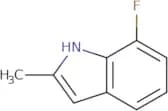
CAS :<p>7-Fluoro-2-methyl-1H-indole is a chemical compound that can be used as a building block to synthesize other organic compounds. The compound is also useful as a reagent in reactions such as the conversion of nitrobenzene to aniline. 7-Fluoro-2-methyl-1H-indole is soluble in acetone, chloroform, and ether. It has CAS number 432025-24-6, which identifies it as a fine chemical with many uses.</p>Formule :C9H8FNDegré de pureté :Min. 95%Couleur et forme :White PowderMasse moléculaire :149.16 g/mol3-Fluoro-4-methoxybenzaldehyde
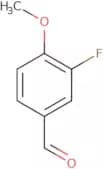
CAS :<p>3-Fluoro-4-methoxybenzaldehyde is a chemical compound that is used in the synthesis of natural products. It has been shown to have inhibitory properties against cancer cells, and has been synthesized as an analog of 3-fluoro-4-hydroxybenzaldehyde. The biological function of 3-fluoro-4-methoxybenzaldehyde is not yet known. Hydrochloric acid may be used to react with 3-fluoro-4-methoxybenzaldehyde to form a salt. This chemical also has anti-tumor effects and can be synthesized using cryogenic techniques.</p>Formule :C8H7FO2Degré de pureté :Min. 95%Couleur et forme :Slightly Yellow PowderMasse moléculaire :154.14 g/mol3-Fluoro-4-hydroxybenzaldehyde
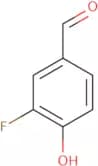
CAS :<p>3-Fluoro-4-hydroxybenzaldehyde is a hydroxyl group with an activation energy of 87.7 kJ/mol. The molecule can be synthesized by the reaction of salicylaldehyde and 3,4-dihydroxybenzaldehyde in the presence of an organic solvent such as chloroform or methylene chloride. This compound has been shown to cause cell death in ht-29 cells and cancer cell lines, as well as human ovarian carcinoma cells. It causes apoptosis by inhibiting mitochondrial membrane potential, which leads to decreased intracellular ATP levels. 3-Fluoro-4-hydroxybenzaldehyde is most commonly used in molecular modeling studies to represent the hydroxyl group due to its simplicity in comparison to other hydroxyl groups like methanol or ethanol.</p>Formule :C7H5FO2Degré de pureté :90%Couleur et forme :White PowderMasse moléculaire :140.11 g/molFmoc-L-cysteine
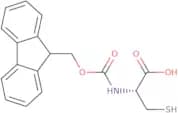
CAS :<p>Fmoc-L-cysteine is a reactive thiol that can be used for the synthesis of peptides and proteins. Fmoc-L-cysteine is synthesized by hydrothiolation of L-cysteine with 3-mercaptopropionic acid, which leads to the formation of a disulfide bond. The reaction product is purified by column chromatography and analyzed by NMR spectroscopy. Fmoc-L-cysteine has been shown to have efficient prenylation activity in vitro and in cell culture experiments. It has also been shown to be an important amino acid for the formation of amyloid protein aggregates, as well as being involved with other helical peptides in plants. X-ray crystal structures have been determined for Fmoc-L-cysteine bound to monoclonal antibodies.</p>Formule :C18H17NO4SDegré de pureté :Min. 98 Area-%Couleur et forme :PowderMasse moléculaire :343.4 g/mol6-(Fmoc-amino)-1-hexanol
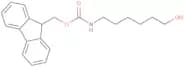
CAS :6-(Fmoc-amino)-1-hexanol is a high quality chemical that can be used as an intermediate in the synthesis of many complex compounds, such as pharmaceuticals, fine chemicals and research chemicals. It is often used as a building block in the synthesis of other useful chemicals and has been shown to have versatile reactions with many functional groups. 6-(Fmoc-amino)-1-hexanol can be used in reactions involving nucleophilic substitution, elimination, amination, esterification and transesterification.Formule :C21H25NO3Degré de pureté :Min. 95%Couleur et forme :PowderMasse moléculaire :339.43 g/molFmoc-Gly-Gly-Gly-OH
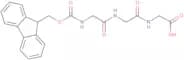
CAS :<p>Fmoc-gly-gly-gly-OH is a synthetic amino acid with the carboxylate group at the alpha position and an amide group at the beta position. It is a white solid that can be synthesized by reacting glycine ethyl ester with glyoxylic acid in a solvent such as chloroform. Fmoc-gly-gly-gly-OH has been used to study the binding of oxytocin to its receptor, which is important for regulating uterine contraction during childbirth. The compound also has potential applications in drug delivery, biotechnology, and medical research.</p>Formule :C21H21N3O6Degré de pureté :Min. 95%Couleur et forme :PowderMasse moléculaire :411.41 g/molFMoc-L-Allylglycine
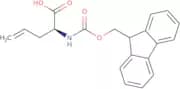
CAS :<p>FMoc-L Allylglycine is a synthetic reactive molecule that binds to the P2Y receptor. It is active in the cell maturation process and stimulates receptor activity. FMoc-L-Allylglycine has been shown to have anticancer properties, as well as an effect on human serum and bovine fetal serum. The nitrogen atoms in FMoc-L-Allylglycine are capable of forming strong bonds with buffers and imprinting agents, which can be used to study biomolecules. The disulfide bond in FMoc-L-Allylglycine can be cleaved with reductive conditions, making it a useful tool for the synthesis of peptides.</p>Formule :C20H19NO4Degré de pureté :Min. 95%Couleur et forme :White PowderMasse moléculaire :337.37 g/molEthyl 5-methylindole-2-carboxylate
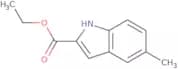
CAS :<p>Ethyl 5-methylindole-2-carboxylate is an antioxidant that is used as a reagent in the synthesis of other compounds. It has been shown to inhibit cancer cell growth in vitro via its ability to inhibit the metabolic activity of human hepatoma cells. Ethyl 5-methylindole-2-carboxylate has also been shown to have cytotoxic activity against human hepatoma cells in vitro, and may be a potential anticancer drug candidate.</p>Formule :C12H13NO2Degré de pureté :Min. 95%Couleur et forme :PowderMasse moléculaire :203.24 g/molEthyl 6-Bromoindole-2-carboxylate
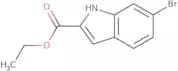
CAS :Please enquire for more information about Ethyl 6-Bromoindole-2-carboxylate including the price, delivery time and more detailed product information at the technical inquiry form on this pageFormule :C11H10BrNO2Degré de pureté :Min. 95%Masse moléculaire :268.11 g/molEthyl 5-acetoxyindole-2-carboxylate
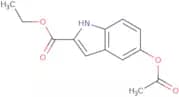
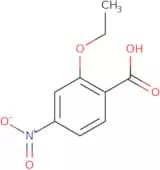
CAS :<p>Please enquire for more information about Ethyl 5-acetoxyindole-2-carboxylate including the price, delivery time and more detailed product information at the technical inquiry form on this page</p>Formule :C13H13NO4Degré de pureté :Min. 95%Masse moléculaire :247.25 g/mol2-Ethoxy-4-nitrobenzoic acid
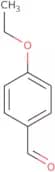
CAS :<p>2-Ethoxy-4-nitrobenzoic acid is a nitrobenzoyl compound that is used as an anticoccidial drug. It has shown to be effective against coccidiosis in poultry. 2-Ethoxy-4-nitrobenzoic acid binds to the aminobenzoate moiety of the enzyme glutamic acid decarboxylase, thereby inhibiting its activity. This inhibits the production of lactic acid and leads to cell death by lack of energy. Amprolium is a coccidiostat that inhibits the synthesis of beta-alanine in cells, which leads to inhibition of protein synthesis and cell death.</p>Formule :C9H9NO5Degré de pureté :Min. 95%Couleur et forme :PowderMasse moléculaire :211.17 g/mol4-Ethoxybenzaldehyde
CAS :<p>4-Ethoxybenzaldehyde is a chemical compound with antioxidant properties. It has been found to inhibit the proliferation of cervical cancer cells and melanoma cells, as well as to protect against radiation-induced oxidative damage in human skin. 4-Ethoxybenzaldehyde also inhibits the influenza virus by interfering with its ability to replicate. This compound is used in many different products, including cosmetics and pharmaceuticals. The most common use of 4-ethoxybenzaldehyde is as an excipient in tablet formulations. In this application, it can be used to maintain drug stability and improve disintegration time. In addition, it may have some anti-inflammatory effects that are related to its ability to inhibit the production of prostaglandins and leukotrienes. 4-Ethoxybenzaldehyde has been shown to have antioxidant properties for diabetics as well as for patients with autoimmune diseases such as multiple sclerosis and systemic lupus erythematosus (SLE). The</p>Formule :C9H10O2Degré de pureté :Min. 98.5 Area-%Couleur et forme :Colorless Clear LiquidMasse moléculaire :150.17 g/mol2-[(1-Carboxyethyl)amino]propanoic acid
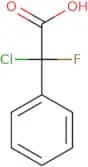
CAS :<p>2-[(1-Carboxyethyl)amino]propanoic acid (CEPA) is a cell lysing agent that can be used to kill bacteria, fungi, and viruses. CEPA has antimicrobial activity against Gram-positive and Gram-negative bacteria, including MRSA, VRE, and Candida. CEPA has been shown to have chronic pulmonary effects in mice by inhibiting the growth of lung tissue cells. It also inhibits the growth of metastable tumor cells in mice. CEPA binds to the peptidoglycan layer of bacterial cell walls and causes cell lysis by disrupting hydrogen bonding interactions between water molecules and CEPA's carboxyl group. CEPA is a member of group P2 in the CID database with a chemical stability in water vapor greater than 90%. CEPA is soluble in metoprolol succinate at pH 5-6 but insoluble at pH 8 or higher due to the formation of hydrogen tartrate crystals.</p>Formule :C6H11NO4Degré de pureté :Min. 95%Masse moléculaire :161.16 g/mol2-Chloro-2-fluoro-2-phenylacetic acid
CAS :<p>Versatile small molecule scaffold</p>Formule :C8H6ClFO2Degré de pureté :90%MinCouleur et forme :PowderMasse moléculaire :188.58 g/mol


![2-[(1-Carboxyethyl)amino]propanoic acid](/_next/image/?url=https%3A%2Fstatic.cymitquimica.com%2Fproducts%2F3D%2Fthumb-webp%2FUIA75519.webp&w=3840&q=75)