Building Blocks
Cette section contient des produits fondamentaux pour la synthèse de composés organiques et biologiques. Building blocks sont les matériaux de départ essentiels utilisés pour construire des molécules complexes à travers diverses réactions chimiques. Ils jouent un rôle crucial dans la découverte de médicaments, la science des matériaux et la recherche chimique. Chez CymitQuimica, nous offrons une gamme diversifiée de building blocks de haute qualité pour soutenir vos recherches innovantes et projets industriels, en vous assurant de disposer des composants essentiels pour une synthèse réussie.
Sous-catégories appartenant à la catégorie "Building Blocks"
- Acides boroniques et dérivés de l'acide boronique(5.778 produits)
- Building Blocks Chiraux(1.242 produits)
- Building Blocks Hydrocarbonés(6.098 produits)
- Building Blocks organiques(61.034 produits)
199601 produits trouvés pour "Building Blocks"
Trier par
Degré de pureté (%)
0
100
|
0
|
50
|
90
|
95
|
100
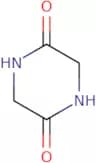
Glycine anhydride
CAS :<p>Glycine anhydride is a fine chemical that is used as a building block in the synthesis of many other compounds. It is also used as a reagent, and can be found in research chemicals, speciality chemicals, or high-quality products. Glycine anhydride is also used as a reaction component to make other molecules. It is versatile and can be used as a scaffold for complex compounds. Glycine anhydride has CAS No. 106-57-0 and can be found in the following chemical name: 3-(2-Aminoethyl)glycine anhydride</p>Formule :C4H6N2O2Masse moléculaire :114.1 g/molRef: 3D-G-4600
1kgÀ demander5kgÀ demander10kgÀ demander25kgÀ demander2500gÀ demander-Unit-kgkgÀ demander2-[4-(Methylamino)oxan-4-yl]ethan-1-ol
CAS :<p>Versatile small molecule scaffold</p>Formule :C8H17NO2Degré de pureté :Min. 90%Couleur et forme :Clear LiquidMasse moléculaire :159.23 g/mol8α-Phenyl-octahydropyrrolo[1,2-a]pyrimidin-6-one
CAS :<p>Versatile small molecule scaffold</p>Formule :C13H16N2ODegré de pureté :Min. 95%Couleur et forme :PowderMasse moléculaire :216.3 g/molImidazolyl-4-ethanol
CAS :<p>Imidazolyl-4-ethanol is a glycoside derivative that inhibits the synthesis of proteins, fats, and nucleic acids by inhibiting the enzyme phosphofructokinase. The compound has been shown to have anti-inflammatory properties that are similar to those of nonsteroidal antiinflammatory drugs. This drug also has a kinetic energy of -1.2 kcal/mol and it has a ph optimum of 7.5. Imidazolyl-4-ethanol has been shown to be useful in vitro for the synthesis of antibodies against monoclonal antibodies and for radiation protection. It can also be used as a radioactive tracer in vivo.</p>Formule :C5H8N2ODegré de pureté :Min. 90 Area-%Couleur et forme :PowderMasse moléculaire :112.13 g/mol2-(1-Ethyl-1H-pyrazol-4-yl)acetic acid
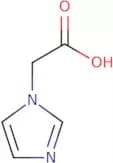
CAS :<p>Versatile small molecule scaffold</p>Formule :C7H10N2O2Degré de pureté :Min. 95%Couleur et forme :PowderMasse moléculaire :154.17 g/molH-Imidazoleacetic acid
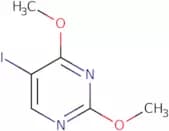
CAS :<p>H-Imidazoleacetic acid is a synthetic compound that can be used to produce other compounds. It is soluble in water and has a hydrophilic interaction with calcium carbonate. H-Imidazoleacetic acid may be recycled, as it is easily synthesized from ethyl bromoacetate by reaction with hydrochloric acid. This substance has shown anticancer activity and may be used to treat blood pressure. The chromatographic method for H-Imidazoleacetic acid involves the use of extracellular medium to remove the organic solvent, followed by reversed phase chromatography on an ion exchange column. H-Imidazoleacetic acid is soluble in water and has a hydrophilic interaction with calcium carbonate. It may be recycled, as it is easily synthesized from ethyl bromoacetate by reaction with hydrochloric acid. This substance has shown anticancer activity and may be used to treat blood pressure. The</p>Formule :C5H6N2O2Degré de pureté :Min. 95%Couleur et forme :PowderMasse moléculaire :126.11 g/mol5-Iodo-2,4-dimethoxypyrimidine
CAS :<p>5-Iodo-2,4-dimethoxypyrimidine is a chemical compound that can be used as a ligand for palladium. It is selective for alcohols and carbinols. The compound has been shown to catalyze the desilylation of organic halides and oxidized alcohols with high yields. 5-Iodo-2,4-dimethoxypyrimidine can also be used in the synthesis of carbohydrates and vinyl acetate. The yield of dehydrohalogenated products was found to be high when 5-iodo-2,4-dimethoxypyrimidine was used as a catalyst.</p>Formule :C6H7IN2O2Degré de pureté :Min. 95%Couleur et forme :PowderMasse moléculaire :266.04 g/molIndole-3-butyric acid
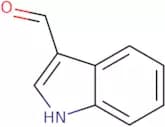
CAS :<p>Plant hormone; auxin; inducer of root development; used in plant rooting</p>Formule :C12H13NO2Degré de pureté :Min 98%Couleur et forme :White Yellow PowderMasse moléculaire :203.24 g/molIndole-3-carboxaldehyde
CAS :<p>Indole-3-carboxaldehyde is a chemical compound that is used as an antimicrobial agent. The biological properties of this compound are not well studied, but it has been shown to be effective against bacteria and fungi. Indole-3-carboxaldehyde has been shown to inhibit the enzyme activity of sodium carbonate, which is involved in the production of lactic acid in bacteria. This effect may contribute to its antibacterial activity. Indole-3-carboxaldehyde is also a potential anticancer agent because it can bind to toll-like receptor 4 (TLR4). Indole-3-carboxaldehyde reacts with sulfa drugs through a mechanism similar to the reaction between hydrogen peroxide and potassium permanganate. It has been shown that indole-3-carboxaldehyde can be used as a pesticide for plants and as an electrochemical impedance spectroscopy probe for histological analysis.</p>Formule :C9H7NOCouleur et forme :PowderMasse moléculaire :145.16 g/mol3-Indolemethanol
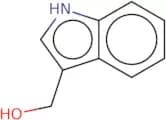
CAS :<p>3-Indolemethanol is a chemical compound that is used for chemiluminescent reaction. It can be used as an experimental model for studying the effects of 3-indolemethanol on murine hepatoma and human osteosarcoma cells in vitro. This compound has been shown to have oral hypoglycemic activity and to inhibit cancer cell growth. 3-Indolemethanol has also been shown to modulate signal pathways, such as the MAPK pathway, which may lead to pro-apoptotic protein activation or inhibition of physiological effects.</p>Formule :C9H9NODegré de pureté :Min. 95%Couleur et forme :White PowderMasse moléculaire :147.18 g/mol6-Iodopurine
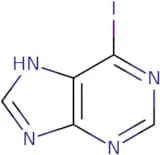
CAS :<p>6-Iodopurine is a biologically active substance that belongs to the group of carbinols. It is biosynthesized from 6-chloropurine and an iridoid glucoside, and has been shown to have biochemical properties. 6-Iodopurine can be converted into 6-iodoindoxyl by oxidation with halogens or transfer mechanism with palladium-catalyzed cross-coupling. A high efficiency method for the synthesis of this substance has been developed using a strain of bacteria. The reaction requires an activation energy of 150 kJ/mol.br><br>6-Iodopurine inhibits tumor growth by inhibiting DNA synthesis. It also possesses anti-inflammatory activity, which may be due to its inhibitory effects on prostaglandin synthesis.</p>Formule :C5H3IN4Degré de pureté :Min. 95%Couleur et forme :White PowderMasse moléculaire :246.01 g/molIsatin
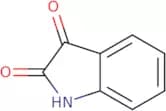
CAS :<p>Isatin is a natural compound that can be found in the bark of the Cinchona tree. It has inhibitory properties against the enzyme polymerase chain reaction (PCR) and has been shown to have antimicrobial activity. Isatin also has an effect on 5-HT concentrations, which may be due to its ability to inhibit platelet aggregation and induce vasoconstriction. Isatin has been shown to have anticancer effects in vitro, and also inhibits cellular transformation by reducing DNA synthesis.</p>Formule :C8H5NO2Degré de pureté :Min. 98 Area-%Couleur et forme :Red PowderMasse moléculaire :147.13 g/mol5-Iodoindole
CAS :<p>5-Iodoindole is an organic compound that is used as a nematicide. It has been shown to have cytostatic effects on the growth of human pathogens, juveniles, and model systems. 5-Iodoindole inhibits the production of reactive amines and pyridine in vivo. It also inhibits glutamine metabolism by competitive inhibition at the glutamate dehydrogenase enzyme. 5-Iodoindole also has hemolytic activity and is able to induce transcriptomic changes in P. aeruginosa cells.</p>Formule :C8H6NIDegré de pureté :Min. 95%Couleur et forme :PowderMasse moléculaire :243.04 g/molIndole
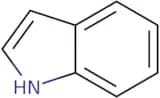
CAS :<p>Indole is a nitrogen-containing heterocyclic aromatic organic compound. Copper chloride in the presence of trifluoroacetic acid and indole gives rise to an indolenine derivative, which reacts with nitrogen atoms to form a copper nitride. This reaction is used as a model system for biological properties of indole. Indolenine has been shown to have bone cancer prevention and treatment effects in mice, and may also be beneficial in autoimmune diseases and metabolic disorders, due to its ability to inhibit toll-like receptor signaling pathways. The wild-type strain has shown resistance to antibiotics, which can be overcome by using mutant strains that are resistant to antibiotic treatments.</p>Formule :C8H7NDegré de pureté :Min. 95 Area-%Couleur et forme :Off-White PowderMasse moléculaire :117.15 g/mol4-Imidazoleacetic acid HCl
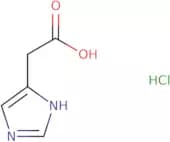
CAS :<p>4-Imidazoleacetic acid HCl is a fluorescent probe that binds to the α1 subunit of the dinucleotide phosphate (NADH) oxidoreductase. It has been shown to inhibit mitochondrial functions, which may be due to its ability to inhibit the pentose phosphate pathway and reduce reactive oxygen species levels. 4-Imidazoleacetic acid HCl has also shown inhibitory properties against congestive heart failure by acting on the mitochondria and inhibiting energy metabolism. It can also be used as a chemical biology tool for studying protein interactions with NADH dehydrogenase. The x-ray crystal structures have revealed that 4-imidazoleacetic acid HCl binds to the active site of NADH oxidoreductase with an orientation that mimics a substrate molecule. This allows it to bind tightly and disrupt enzyme activity.</p>Formule :C5H6N2O2·HClDegré de pureté :Min. 95%Couleur et forme :PowderMasse moléculaire :162.57 g/mol(2S)-2-(4-Chloro-2-methylphenoxy)propanoic acid
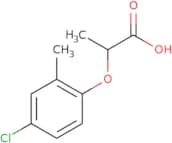
CAS :<p>(2S)-2-(4-Chloro-2-methylphenoxy)propanoic acid (MCPP) is a phenoxy herbicide that is used in the control of annual and perennial broadleaf weeds. It is often found in wastewater treatment plants because it binds to iron ions and can be removed by coagulation, adsorption, or chemical precipitation. MCPP has been shown to produce genotoxic effects in model systems and high values for enzyme activities. The long-term efficacy of MCPP was studied using a bacterial strain with high levels of resistance to this compound. Structural analysis showed that MCPP contains a chlorophenoxy radical, which may contribute to its carcinogenic potential.</p>Formule :C10H11ClO3Degré de pureté :Min. 95%Couleur et forme :PowderMasse moléculaire :214.64 g/mol4-(Bromomethyl)-1-phenyl-1H-1,2,3-triazole
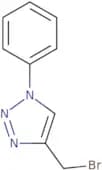
CAS :<p>4-(Bromomethyl)-1-phenyl-1H-1,2,3-triazole (4BPHT) is a versatile building block for organic synthesis. It is a speciality chemical that can be used as a reagent or a research chemical. 4BPHT has been used in the synthesis of complex compounds and has been shown to be useful in the preparation of high quality compounds. 4BPHT is also an intermediate for the synthesis of useful scaffolds and can be used as a reaction component.</p>Formule :C9H8BrN3Degré de pureté :Min. 95%Couleur et forme :PowderMasse moléculaire :238.08 g/molMethyl 4-(2-chloroethyl)benzoate
CAS :<p>Versatile small molecule scaffold</p>Formule :C10H11ClO2Degré de pureté :Min. 95%Masse moléculaire :198.65 g/mol1-(Aminooxy)propane hydrochloride
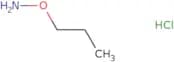
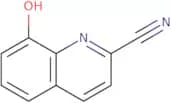
CAS :<p>1-Aminooxypropane hydrochloride is an alkylthio group with a phenoxy group and an antibacterial activity. It is used as a precursor for the synthesis of many organic compounds. 1-Aminooxypropane hydrochloride is produced by the reaction of ethyl bromoacetate and ammonia in liquid ammonia, or by the reaction of propylene oxide with methylamine to produce 1-aminooxypropane. It has been shown to exhibit antimicrobial activity against certain strains of Escherichia coli and Salmonella enterica serovar Typhimurium, but not against Staphylococcus aureus. This compound is also used as a building block for metal ion catalysts such as copper complexes, amines, trifluoromethylated heterocyclic compounds, and others.</p>Formule :C3H10ClNODegré de pureté :Min. 95%Couleur et forme :PowderMasse moléculaire :111.57 g/mol8-Hydroxy-2-quinolinecarbonitrile
CAS :8-Hydroxy-2-quinolinecarbonitrile is an uncomplexed ligand that can be used for the synthesis of metal complexes. 8-Hydroxy-2-quinolinecarbonitrile is insoluble in most solvents, including water, and has a high melting point. This compound can be synthesized from acetonitrile and primary amines by condensing with formaldehyde. It is not possible to catalyze this reaction, as it does not undergo homolysis or heterolysis reactions. The uncomplexed ligand has been shown to bind to metal ions such as copper and silver. Its diffraction pattern was found to have a polynuclear nature with a number of diffraction peaks within the range of 5–9 Å.Formule :C10H6N2ODegré de pureté :Min. 95%Couleur et forme :PowderMasse moléculaire :170.17 g/mol

![2-[4-(Methylamino)oxan-4-yl]ethan-1-ol](/_next/image/?url=https%3A%2Fstatic.cymitquimica.com%2Fproducts%2F3D%2Fthumb-webp%2FHHC67998.webp&w=3840&q=75)
![8α-Phenyl-octahydropyrrolo[1,2-a]pyrimidin-6-one](/_next/image/?url=https%3A%2Fstatic.cymitquimica.com%2Fproducts%2F3D%2Fthumb-webp%2FGAA02925.webp&w=3840&q=75)