Building Blocks
Cette section contient des produits fondamentaux pour la synthèse de composés organiques et biologiques. Building blocks sont les matériaux de départ essentiels utilisés pour construire des molécules complexes à travers diverses réactions chimiques. Ils jouent un rôle crucial dans la découverte de médicaments, la science des matériaux et la recherche chimique. Chez CymitQuimica, nous offrons une gamme diversifiée de building blocks de haute qualité pour soutenir vos recherches innovantes et projets industriels, en vous assurant de disposer des composants essentiels pour une synthèse réussie.
Sous-catégories appartenant à la catégorie "Building Blocks"
- Acides boroniques et dérivés de l'acide boronique(5.778 produits)
- Building Blocks Chiraux(1.242 produits)
- Building Blocks Hydrocarbonés(6.098 produits)
- Building Blocks organiques(61.059 produits)
199580 produits trouvés pour "Building Blocks"
Trier par
Degré de pureté (%)
0
100
|
0
|
50
|
90
|
95
|
100
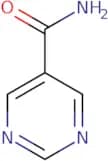
Pyrimidine-5-carboxamide
CAS :<p>Pyrimidine-5-carboxamide is a heterocyclic compound that is used as an inhibitor of the pan-PI3K. This drug binds to the CB2 receptor, which has been found in inflammatory cells in the gastrointestinal tract. Pyrimidine-5-carboxamide inhibits inflammatory bowel disease by inhibiting the activity of p38 MAP kinase and JNK, which are key mediators of inflammation. It also inhibits insulin resistance and liver fibrosis by targeting PI3K/Akt signaling pathways. Pyrimidine-5-carboxamide has been shown to have anti-inflammatory effects on the skin, hair follicles, and intestines; it may be used for treating alopecia areata, bowel disease, or hepatic cancer.</p>Formule :C5H5N3ODegré de pureté :Min. 95%Couleur et forme :PowderMasse moléculaire :123.11 g/mol3-Methoxybenzoic acid
CAS :3-Methoxybenzoic acid is a compound that has two carboxyl groups, one on each of the two benzene rings. It is a white crystalline solid with a melting point of 86°C and a boiling point of 240°C at 1 mmHg. 3-Methoxybenzoic acid can be found in plants such as cranberries and strawberries. It also occurs naturally in animal fat, where it functions as an antioxidant and antimicrobial agent. 3-Methoxybenzoic acid has been shown to have synergistic effects when combined with protocatechuic acid in the treatment of carcinoma cells.Formule :C8H8O3Degré de pureté :Min. 95%Couleur et forme :PowderMasse moléculaire :152.15 g/mol4,4'-Dibenzoic acid
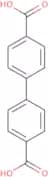
CAS :4,4'-Dibenzoic acid is a chemical compound that has been used as a precursor to other compounds. It is also used in the production of polycarbonates and epoxy resins. 4,4'-Dibenzoic acid has low energy, which means it can be transported more easily than high energy molecules. This property makes it an excellent candidate for use as an enhancement agent for organometallic catalysts such as biphenyl. The structure of 4,4'-dibenzoic acid consists of two benzene rings connected by an ethylene chain. This molecule has one hydrogen bond on each side of the molecule. The 4-hydroxyl group on the left side of the molecule is susceptible to oxidation and can act as an oxidation catalyst when exposed to heat or radiation.Formule :C14H10O4Degré de pureté :Min. 95%Couleur et forme :PowderMasse moléculaire :242.23 g/mol3,5-Dihydroxy-4-acetyltoluene
CAS :<p>3,5-Dihydroxy-4-acetyltoluene is a versatile building block that is used in the production of various pharmaceutical and agrochemical intermediates. It can be used as a reagent for organic synthesis and as a speciality chemical. 3,5-Dihydroxy-4-acetyltoluene has been shown to have high quality and utility. This compound can also be used as a reaction component or scaffold.</p>Formule :C9H10O3Degré de pureté :Min. 95%Couleur et forme :PowderMasse moléculaire :166.17 g/mol2,2'-Dithiobis(pyridine-N-oxide)
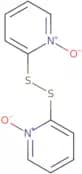
CAS :<p>2,2'-Dithiobis(pyridine-N-oxide) is a chemical compound that has been shown to have anti-inflammatory effects in vitro. It inhibits the production of inflammatory cytokines such as TNF-α and IL-1β in vitro, which are associated with many inflammatory skin diseases. This agent also has an apoptotic effect on cells, leading to cell death by triggering caspase activation. 2,2'-Dithiobis(pyridine-N-oxide) has also been shown to be effective against cancer cells in vitro. This agent may cause cancer by increasing the expression of proapoptotic proteins and decreasing the expression of anti-apoptotic proteins.</p>Formule :C10H8N2O2S2Degré de pureté :Min. 98 Area-%Couleur et forme :White PowderMasse moléculaire :252.31 g/mol2-(4-Iodo-1H-1,2,3-triazol-1-yl)acetic acid
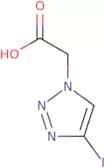
CAS :2-(4-Iodo-1H-1,2,3-triazol-1-yl)acetic acid is a versatile building block that can be used as a reagent or research chemical. It is an intermediate in the synthesis of substituted 2-(4-iodo-1H-1,2,3-triazol-1-yl)acetamides with diverse substituents. This compound has been shown to have antiplatelet activity and is a potential drug candidate for treatment of cardiovascular diseases.Formule :C4H4IN3O2Degré de pureté :Min. 95%Masse moléculaire :253 g/molN-Hydroxysuccinimide
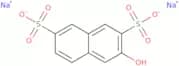
CAS :<p>An additive in carbodiimide peptide coupling</p>Formule :C4H5NO3Couleur et forme :White PowderMasse moléculaire :115.09 g/molDisodium 2-naphthol-3,6-disulfonate
CAS :<p>Disodium 2-naphthol-3,6-disulfonate is a cationic surfactant that reacts with chloride ions to form a gel. It can be used as an inhibitor of corrosion and foaming in the oil industry. Disodium 2-naphthol-3,6-disulfonate has also been shown to have a linear response with fluorescence techniques when it interacts with metal ions. The kinetic data for this reaction is dependent on the concentration of chloride ions, which are generated by hydrochloric acid upon addition of water.</p>Formule :C10H6Na2O7S2Degré de pureté :Min. 97 Area-%Couleur et forme :PowderMasse moléculaire :348.26 g/molN-Fmoc-4-ethynyl-L-phenylalanine
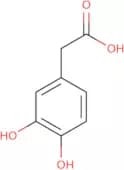
CAS :<p>Versatile small molecule scaffold</p>Formule :C26H21NO4Degré de pureté :Min. 95%Couleur et forme :PowderMasse moléculaire :411.45 g/mol3,4-Dihydroxyphenylacetic acid
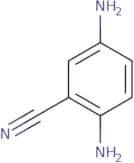
CAS :<p>3,4-Dihydroxyphenylacetic acid (DOPAC) is a metabolite of dopamine and is found in the central nervous system. Dopamine is an important neurotransmitter that is involved in the regulation of movement, emotional responses, and hormone release. Dopamine is synthesized from tyrosine by tyrosine hydroxylase and then converted to L-3,4-dihydroxyphenylalanine by L-aromatic amino acid decarboxylase. DOPAC can be formed from dopamine by monoamine oxidases or catechol O-methyltransferases. The level of DOPAC in the brain has been shown to be increased following exposure to neurotoxins such as 6-hydroxy dopamine or 1-methyl 4-phenyl 1,2,3,6 tetrahydropyridine (MPTP). This increase may be due to decreased activity of monoamine oxidases. The level</p>Formule :C8H8O4Degré de pureté :Min. 95%Couleur et forme :Beige PowderMasse moléculaire :168.15 g/mol2,5-Diaminobenzonitrile
CAS :<p>2,5-Diaminobenzonitrile is a chemical compound with the molecular formula C6H5N3. It is a white crystalline solid that is insoluble in water and soluble in organic solvents such as acetone, chloroform, and ether. 2,5-Diaminobenzonitrile has been shown to be an effective monomer for polymer synthesis due to its stability and high densities. This chemical also has the ability to undergo hydrogen bonding and form hydrogen peroxide when heated to a temperature of 100 °C. The thermal isomerization of 2,5-diaminobenzonitrile can be slowed by adding other amines or nitrites.</p>Formule :C7H7N3Degré de pureté :Min. 95%Couleur et forme :PowderMasse moléculaire :133.15 g/mol3',4'-Dihydroxyacetophenone
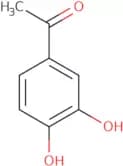
CAS :<p>3',4'-Dihydroxyacetophenone is a transcription-polymerase chain inhibitor that is used in the laboratory to study the effects of the enzyme on gene expression. It has been shown to inhibit transcription by binding to the polymerase and inhibiting RNA synthesis. 3',4'-Dihydroxyacetophenone also inhibits acetate extract enzyme activities, such as collagenase, protease, and lipase. This chemical also induces toll-like receptor (TLR) signaling pathways, which are responsible for inflammation responses. 3',4'-Dihydroxyacetophenone has been shown to have synergistic effects with protocatechuic acid, an antioxidant found in plants that is believed to be responsible for its anti-inflammatory properties. The mechanism of action of this chemical is still unknown; however, it may bind to fatty acids and form stable complexes that inhibit the activity of enzymes or change their shape so they can no longer function properly.</p>Formule :C8H8O3Degré de pureté :Min. 95%Couleur et forme :PowderMasse moléculaire :152.15 g/mol1,4-Diiodobenzene
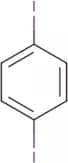
CAS :<p>1,4-Diiodobenzene is an anti-retroviral drug that is used in the treatment of HIV infection. It has a molecular weight of 208.2 and a melting point of -68°C. 1,4-Diiodobenzene binds to intracellular targets, such as reverse transcriptase, proteases and integrase in HIV-1. This drug also has immunomodulatory effects on T cells and B cells. 1,4-Diiodobenzene has been shown to be effective against bacterial vaginosis and may have beneficial effects on body mass index and fatty acid metabolism.</p>Formule :C6H4I2Degré de pureté :Min. 98 Area-%Couleur et forme :White PowderMasse moléculaire :329.9 g/mol3,5-Dinitroaniline
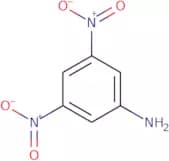
CAS :3,5-Dinitroaniline is a chemical compound that has been shown to inhibit the growth of Pseudomonas aeruginosa. 3,5-Dinitroaniline binds to the bacterial cytochrome oxidase enzyme, which prevents the formation of ATP and disrupts cellular respiration. It also inhibits the synthesis of fatty acids in bacteria by binding to their DNA and RNA. 3,5-Dinitroaniline has also been shown to have genotoxic activity in bacteria by causing DNA strand breaks.Formule :C6H5N3O4Degré de pureté :Min. 95%Couleur et forme :Slightly Yellow PowderMasse moléculaire :183.12 g/mol2,9-Dimethyl-1,10-phenanthroline
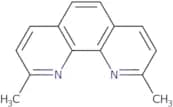
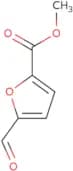
CAS :Chelating agent used to detect aqueous copper ions by electrochemiluminescenceFormule :C14H12N2Degré de pureté :Min. 98 Area-%Couleur et forme :Yellow PowderMasse moléculaire :208.26 g/molMethyl 5-formylfuran-2-carboxylate
CAS :<p>Methyl 5-formylfuran-2-carboxylate (MFC) is a furan derivative that has been used for the synthesis of pharmaceuticals, agrochemicals, and other organic compounds. MFC is synthesized from methanol and formaldehyde in a low concentration to produce a mixture containing methyl 5-formylfuran-2-carboxylate. It can also be synthesized from methanol and formaldehyde in a high concentration to produce crystalline solid MFC. The use of MFC as a template for crystallization has been investigated with success. This compound can be used as a catalyst in the oxidative dehydrogenation of 5-hydroxymethylfurfural to produce 5-formylfuran. MFC is efficient and selective for this reaction, making it an attractive candidate for industrial production of furan derivatives.</p>Formule :C7H6O4Degré de pureté :Min. 95%Couleur et forme :PowderMasse moléculaire :154.1 g/molDMDM hydantoin, 50% min aqueous solution
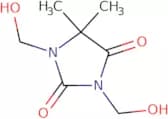
CAS :DMDM Hydantoin is a preservative that is used in the production of many products, including personal care products and pharmaceuticals. DMDM Hydantoin is an antimicrobial agent that inhibits microbial growth by interfering with the microorganism's cell membrane. This chemical also has a low toxicity to humans and other mammals. It has been shown to inhibit the growth of bacteria in wastewater treatment plants and can be used to prevent the spread of infectious diseases. It also has antibacterial properties against some strains of Staphylococcus aureus, such as methicillin-resistant strains (MRSA). DMDM Hydantoin is often found in hair conditioners, shampoos, and other cosmetic products. It can be absorbed through the skin or ingested orally. Although it is not classified as carcinogenic, it may cause contact dermatitis or alopecia areata because of its ability to inhibit prostaglandin synthesis in animal studies.Formule :C7H12N2O4Degré de pureté :(%) Min. 50%Couleur et forme :Clear LiquidMasse moléculaire :188.18 g/mol4-Hydroxypyridine
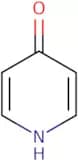
CAS :<p>4-Hydroxypyridine is a nitrite ion that contains two nitrogen atoms. It is used to study microbial metabolism and the role of nitrogen in biological systems. 4-Hydroxypyridine can be synthesized from pyridinium, which can be prepared by treating aniline with nitrous acid. The synthesis of 4-hydroxypyridine has been investigated using a hydroxylation reaction catalyzed by palladium, followed by cyclization to form a cyclic peptide. This reaction has been shown to have significant cytotoxicity against HIV-infected cells, with light emission as a result of the reaction between the hydrogen atom on the pyridine ring and oxygen molecule.</p>Formule :C5H5NODegré de pureté :Min. 98 Area-%Couleur et forme :White PowderMasse moléculaire :95.1 g/mol5,6-Dichloroindole
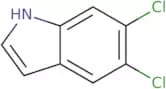
CAS :<p>5,6-Dichloroindole is a chemical compound that contains a functional group with acidic properties. The compound has been shown to inhibit the activity of bafilomycin A1, which is an inhibitor of vacuolar ATPase. This inhibition leads to an increase in intracellular phosphate levels and an accumulation of lysosomal membrane proteins. 5,6-Dichloroindole has also been found to inhibit bone resorption in gramine-fed rats. It also has anti-inflammatory effects and inhibits the growth of zoobotryon pinnatum cells and algal cells. 5,6-Dichloroindole can be used as a molecular descriptor for predicting the presence or absence of bryozoan species in a sample.</p>Formule :C8H5Cl2NCouleur et forme :PowderMasse moléculaire :186.04 g/mol3-Hydroxypiperidine
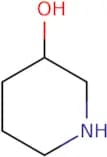
CAS :<p>3-Hydroxypiperidine is a chemical compound that contains an asymmetric carbonyl group. It has been used in the synthesis of enantiopure pharmaceuticals, and is also a competitive inhibitor for some enzymes. 3-Hydroxypiperidine can be synthesized by hydrogenation reduction or hydroxylation of piperidine. This compound has been shown to have pharmacokinetic properties in rats and mice, as well as inhibitory effects on brain functions such as memory retention and learning. 3-Hydroxypiperidine has also been shown to induce apoptosis in breast cancer cells, which may be due to its ability to inhibit protein synthesis in these cells.</p>Formule :C5H11NODegré de pureté :Min. 95%Couleur et forme :White PowderMasse moléculaire :101.15 g/mol