Building Blocks
Cette section contient des produits fondamentaux pour la synthèse de composés organiques et biologiques. Building blocks sont les matériaux de départ essentiels utilisés pour construire des molécules complexes à travers diverses réactions chimiques. Ils jouent un rôle crucial dans la découverte de médicaments, la science des matériaux et la recherche chimique. Chez CymitQuimica, nous offrons une gamme diversifiée de building blocks de haute qualité pour soutenir vos recherches innovantes et projets industriels, en vous assurant de disposer des composants essentiels pour une synthèse réussie.
Sous-catégories appartenant à la catégorie "Building Blocks"
- Acides boroniques et dérivés de l'acide boronique(5.778 produits)
- Building Blocks Chiraux(1.243 produits)
- Building Blocks Hydrocarbonés(6.097 produits)
- Building Blocks organiques(61.052 produits)
201390 produits trouvés pour "Building Blocks"
Trier par
Degré de pureté (%)
0
100
|
0
|
50
|
90
|
95
|
100
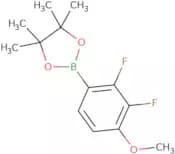
2-(2,3-Difluoro-4-methoxyphenyl)-4,4,5,5-tetramethyl-1,3,2-dioxaborolane
CAS :Versatile small molecule scaffoldFormule :C13H17BF2O3Degré de pureté :Min. 95%Couleur et forme :PowderMasse moléculaire :270.08 g/molN,1,3-Trimethylpiperidin-4-amine
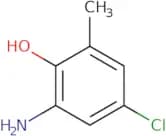
CAS :<p>Versatile small molecule scaffold</p>Formule :C8H18N2Degré de pureté :Min. 95%Couleur et forme :PowderMasse moléculaire :142.24 g/mol2-Amino-4-chloro-6-methylphenol
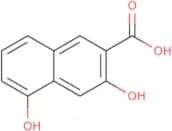
CAS :<p>2-Amino-4-chloro-6-methylphenol is a radioactive tracer that is used in biomedical imaging and has high binding affinity to the 5-HT3 receptor. 2-Amino-4-chloro-6-methylphenol can be used to study the mechanisms of cancer and other diseases. The specific activity of this tracer is around 1000 Ci/mmol at 37°C. This compound is a ligand for the 5HT3 receptor, which has been shown to be associated with nausea and vomiting, anxiety, depression, epilepsy, and Alzheimer's disease. It also binds with high affinity to serotonin receptors in the brain.</p>Formule :C7H8ClNODegré de pureté :Min. 95 Area-%Couleur et forme :PowderMasse moléculaire :157.6 g/mol3,5-Dihydroxy-2-naphthoic acid
CAS :<p>3,5-Dihydroxy-2-naphthoic acid (DHNA) is an organic compound with a red shift in the optical spectrum. DHNA is a regulatory domain found in functional groups, such as salicylic acid. It has been shown to inhibit bacterial growth and gram-negative organisms, including Escherichia coli and Pseudomonas aeruginosa. DHNA is also a potent inducer of triticum aestivum lysine carboxypeptidase A and B, which are proteases that function in protein digestion. This property may be due to its ability to bind to receptor subtypes of the epidermal growth factor type 2 receptor family.</p>Formule :C11H8O4Degré de pureté :Min. 95%Couleur et forme :White PowderMasse moléculaire :204.18 g/moltert-Butyl 3-formyl-5H,6H,7H,8H-[1,2,4]triazolo[4,3-α]pyrazine-7-carboxylate
CAS :<p>Tert-butyl 3-formyl-5H,6H,7H,8H-[1,2,4]triazolo[4,3-α]pyrazine-7-carboxylate is a research chemical that is used as a building block in the synthesis of complex compounds. It is also used as a reagent and a speciality chemical. Tert-butyl 3-formyl-5H,6H,7H,8H-[1,2,4]triazolo[4,3-α]pyrazine-7-carboxylate is an intermediate in the synthesis of other chemicals with high quality and versatile building blocks. It has been used in reactions to produce various heterocycles including 1-(2'-aminophenoxy)propane hydrochloride.</p>Formule :C11H16N4O3Degré de pureté :Min. 95%Couleur et forme :PowderMasse moléculaire :252.27 g/molMethyl 4-(2-chloroethyl)benzoate
CAS :<p>Versatile small molecule scaffold</p>Formule :C10H11ClO2Degré de pureté :Min. 95%Masse moléculaire :198.65 g/mol2-(2-Aminoethyl)-2H,3H-[1,2,4]triazolo[4,3-a]pyridin-3-one
CAS :2-(2-Aminoethyl)-2H,3H-[1,2,4]triazolo[4,3-a]pyridin-3-one is a versatile building block that can be used as a reagent and reaction component in organic synthesis. This compound has been shown to have high quality and is useful in research on speciality chemicals. 2-(2-Aminoethyl)-2H,3H-[1,2,4]triazolo[4,3-a]pyridin-3-one has found use in the preparation of various compounds with diverse therapeutic properties. It is also an excellent building block for complex compounds.Formule :C8H10N4ODegré de pureté :Min. 95%Couleur et forme :PowderMasse moléculaire :178.19 g/mol[(2-Bromophenyl)sulfamoyl]dimethylamine
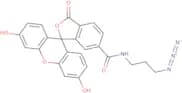
CAS :Versatile small molecule scaffoldFormule :C8H11BrN2O2SDegré de pureté :Min. 95%Couleur et forme :PowderMasse moléculaire :279.16 g/mol6-FAM azide
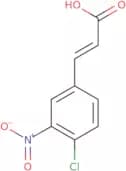
CAS :6-Fluorescein Azide or 6-FAM azide finds application in biomolecules labelling. 6-FAM azide reacts with a terminal alkyne or cyclooctene derivative with a fast click reaction, forming a stable adduct.Formule :C24H18N4O6Degré de pureté :Min. 95%Couleur et forme :PowderMasse moléculaire :458.43 g/mol4-Chloro-3-nitrocinnamic acid
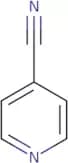
CAS :<p>4-Chloro-3-nitrocinnamic acid is a thionyl chloride derivative of cinnamic acid. It is used as an intermediate in the preparation of pharmaceuticals and dyestuffs. 4-Chloro-3-nitrocinnamic acid inhibits the activity of amides, dimethylformamide, alkaline hydrolysis, xylene, carboxyphenyl, cinnamic, refluxing, nitrophenyl and carboxylic acids. 4-Chloro-3-nitrocinnamic acid reacts with chloride to form the corresponding chloride salt. This compound can also react with formamide to form an amide salt. The ester group of 4-chloro-3-nitrocinnamic acid can be cleaved by nitro compounds to produce nitro derivatives.</p>Formule :C9H6ClNO4Degré de pureté :Min. 95%Couleur et forme :Off-White PowderMasse moléculaire :227.6 g/mol4-Cyanopyridine
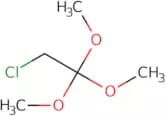
CAS :<p>4-Cyanopyridine is an organic compound with the chemical formula (CN)N. It is a white solid that is soluble in water and polar solvents. When exposed to hydrochloric acid, 4-cyanopyridine undergoes a reaction that converts it to picolinic acid. This reaction proceeds through a mechanism in which the nucleophilic hydroxyl group of 4-cyanopyridine attacks the protonated nitrogen atom of hydrochloric acid. The resulting intermediate then loses a proton and becomes picolinic acid. Kinetic data on this reaction has been obtained from UV-vis spectroscopy, X-ray diffraction, and mass spectrometry experiments. The crystal structures of the bound form of 4-cyanopyridine and its quinoline derivatives have also been determined by x-ray crystallography.</p>Formule :C6H4N2Degré de pureté :Min. 95%Couleur et forme :PowderMasse moléculaire :104.11 g/mol2-Chloro-1,1,1-trimethoxyethane
CAS :<p>2-Chloro-1,1,1-trimethoxyethane is a reagent that is used in the synthesis of recombinant proteins. It is also used to produce monoclonal antibodies. Fatty acids can be analyzed by using these reagents as they are soluble in this solvent. The structural analysis of fatty acids has been shown to have anticancer activity. 2-Chloro-1,1,1-trimethoxyethane reacts with glycosyl residues on lysine residues in proteins and produces an acid that causes the protein to unfold and denature. This reaction has been shown to have anticancer activity against cervical cancer cells in human liver cells.</p>Formule :C5H11ClO3Degré de pureté :Min. 97.5%Couleur et forme :Colorless Clear LiquidMasse moléculaire :154.59 g/mol6-Chloro-7-iodo-7-deazapurine
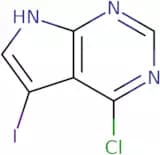
CAS :<p>6-Chloro-7-iodo-7-deazapurine is a nucleoside analogue that is synthesized by a cross-coupling reaction between 6-chloro-2,4(1H,3H)-pyrimidinedione and 7-iodo-7-(trifluoromethyl)purine. 6CIDP has been shown to inhibit growth of epidermal cells at concentrations as low as 0.1 µM, with cytostatic effects seen at 10 µM. 6CIDP has also been shown to potently inhibit the replication of the human papilloma virus in vitro and in vivo. 6CIDP is currently being investigated for the treatment of AIDS and other viral infections. The molecular modeling studies on this compound have revealed that it may be a potent inhibitor of the epidermal growth factor receptor (EGFR).</p>Formule :C6H3ClIN3Degré de pureté :Min. 98 Area-%Couleur et forme :White PowderMasse moléculaire :279.47 g/molCyclopentylmethanol
CAS :Cyclopentylmethanol is a chemical compound with the molecular formula CH3OH. It is a colorless liquid that is soluble in water and has a distinctive, sweet odor. Cyclopentylmethanol is used as an intermediate in organic synthesis and as a solvent for nitrocellulose, cellulose acetate, cellulose nitrate, and similar materials. It reacts with chlorine at high temperatures to form chlorinated cyclopentylmethanols. This reaction can be used to synthesize hydroxyapatite (a mineral) from calcium phosphate (a mineral). Cyclopentylmethanol also reacts with nicotinic acetylcholine receptors in the brain, causing them to desensitize. Hydroxyapatite can also be synthesized by reacting cyclopentylmethanol with dinucleotide phosphate and hydroxyl group containing compounds such as esters or soluble guanylate cyclase enzymes. The reactions produce hydrogenFormule :C6H12ODegré de pureté :Min. 95%Couleur et forme :Clear Colourless LiquidMasse moléculaire :100.16 g/molN-(1-Cyano-1-methylethyl)-2-methylpropanamide
CAS :N-(1-Cyano-1-methylethyl)-2-methylpropanamide is a chemical that is used in pharmaceutical dosage. It is a prodrug of aminopropiophenone, which has been shown to be useful for the treatment of depression. This chemical is readily soluble in water and hydrochloric acid, but insoluble in trifluoroacetic acid or hydrophilic interaction chromatography. N-(1-Cyano-1-methylethyl)-2-methylpropanamide has been shown to bind to chloride ions, amines, and dodecyl groups.Formule :C8H14N2ODegré de pureté :Min. 95%Couleur et forme :PowderMasse moléculaire :154.21 g/mol5-Chloropentan-2-ol
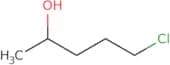
CAS :<p>5-Chloropentan-2-ol is a chemical compound that is found in the leaves of the tobacco plant, Nicotiana tabacum. It is an organic compound that belongs to the group of furans and has been classified as a dye sensitizer. 5-Chloropentan-2-ol is found in small quantities in the leaves of Nicotiana tabacum and has been shown to be responsible for some of the flavour and organoleptic properties of tobacco. The chemical structure of 5-chloropentan-2-ol consists of a 5 carbon chain with two hydroxyl groups on carbons 1 and 2. It has been shown to have high levels of mutagenicity when tested on bacteria, but does not affect animal cells.</p>Formule :C5H11ClODegré de pureté :Min. 85%Masse moléculaire :122.59 g/mol7-Bromo-5-methoxyindole-3-carboxylic acid
CAS :<p>Please enquire for more information about 7-Bromo-5-methoxyindole-3-carboxylic acid including the price, delivery time and more detailed product information at the technical inquiry form on this page</p>Formule :C10H8BrNO3Degré de pureté :Min. 95%Couleur et forme :PowderMasse moléculaire :270.09 g/mol2-Bromo-5-chloropyridine
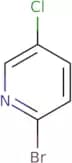
CAS :<p>2-Bromo-5-chloropyridine is a synthetic compound that acts as an inhibitor of tyrosine kinase. It binds to the active site of the enzyme and blocks its activity. This inhibits protein phosphorylation, which is essential for cell signaling. The mechanism of this inhibition is similar to that of piperidine and diethanolamine, which are competitive inhibitors of the enzyme. 2-Bromo-5-chloropyridine also reacts with chloride ion to give bipyridines, which have been shown to inhibit cholesterol ester transfer protein (CETP) by binding covalently to the enzyme's active site. 2-Bromo-5-chloropyridine has been shown to be effective in inhibiting tumor growth in mice when given orally at doses ranging from 10 mg/kg to 30 mg/kg daily.<br>2-Bromo-5-chloropyridine can also be used as a starting material for</p>Formule :C5H3BrClNDegré de pureté :Min. 98 Area-%Couleur et forme :White PowderMasse moléculaire :192.44 g/mol1-Bromo-2-chloro-3-fluorobenzene
CAS :<p>1-Bromo-2-chloro-3-fluorobenzene is a halide of fluorine and chlorine. It is used in the production of biphenyls and fluoroarenes. 1-Bromo-2-chloro-3-fluorobenzene has anticarcinogenic properties in animal studies, but it can be toxic to humans. Exposure to 1-bromo-2,3 difluorobenzene may lead to neurological, respiratory, hepatic, ocular, and gastrointestinal toxicity. This compound also has been shown to affect the liver enzymes as an enzyme inducer and is believed to be carcinogenic in animals.</p>Formule :C6H3BrClFDegré de pureté :Min. 95%Couleur et forme :PowderMasse moléculaire :209.44 g/mol4-Bromo-2-chloroaniline
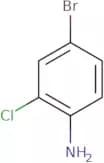
CAS :<p>4-Bromo-2-chloroaniline (4BCA) is an exciplex that forms in the presence of hydrogen peroxide and chloride ions. It is unreactive with fluconazole and other related molecules, but is able to photoreduce hydrogen peroxide. The molecular mechanism of 4BCA is a result of its ability to form a covalent bond with DNA containing pyrimidine bases. This reaction results in the formation of pyrimidine dimers, which can lead to cell death through the inhibition of DNA synthesis and repair. 4BCA has been shown to be effective against cancer cells at high concentrations, but does not affect healthy cells. The effectiveness against cancer cells may be due to the fact that this exciplex reacts with uv irradiation and irradiation, which leads to a higher concentration of reactive oxygen species (ROS).</p>Formule :C6H5BrClNDegré de pureté :Min. 95%Couleur et forme :PowderMasse moléculaire :206.47 g/mol


![tert-Butyl 3-formyl-5H,6H,7H,8H-[1,2,4]triazolo[4,3-α]pyrazine-7-carboxylate](/_next/image/?url=https%3A%2Fstatic.cymitquimica.com%2Fproducts%2F3D%2Fthumb-webp%2FZWB06903.webp&w=3840&q=75)

![2-(2-Aminoethyl)-2H,3H-[1,2,4]triazolo[4,3-a]pyridin-3-one](/_next/image/?url=https%3A%2Fstatic.cymitquimica.com%2Fproducts%2F3D%2Fthumb-webp%2FUQB10876.webp&w=3840&q=75)
![[(2-Bromophenyl)sulfamoyl]dimethylamine](/_next/image/?url=https%3A%2Fstatic.cymitquimica.com%2Fproducts%2F3D%2Fthumb-webp%2FZNA54050.webp&w=3840&q=75)