Building Blocks
Cette section contient des produits fondamentaux pour la synthèse de composés organiques et biologiques. Building blocks sont les matériaux de départ essentiels utilisés pour construire des molécules complexes à travers diverses réactions chimiques. Ils jouent un rôle crucial dans la découverte de médicaments, la science des matériaux et la recherche chimique. Chez CymitQuimica, nous offrons une gamme diversifiée de building blocks de haute qualité pour soutenir vos recherches innovantes et projets industriels, en vous assurant de disposer des composants essentiels pour une synthèse réussie.
Sous-catégories appartenant à la catégorie "Building Blocks"
- Acides boroniques et dérivés de l'acide boronique(5.778 produits)
- Building Blocks Chiraux(1.243 produits)
- Building Blocks Hydrocarbonés(6.097 produits)
- Building Blocks organiques(61.052 produits)
201390 produits trouvés pour "Building Blocks"
Trier par
Degré de pureté (%)
0
100
|
0
|
50
|
90
|
95
|
100
Azomethine-H monosodium salt monohydrate
CAS :Azomethine-H is a research chemical that is used as a versatile building block for the synthesis of other compounds. It has been shown to be an intermediate in the synthesis of many complex compounds, and can also be used as a reagent or speciality chemical. Azomethine-H is soluble in water and organic solvents, which makes it useful for reactions involving deprotection, extraction, or alkylation. The CAS registry number for this compound is 304655-82-1.Formule :C17H12NNaO8S2·H2ODegré de pureté :Min. 95.0 Area-%Couleur et forme :Yellow PowderMasse moléculaire :463.42 g/mol4-Amino-3-nitroacetophenone
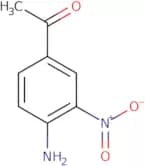
CAS :<p>4-Amino-3-nitroacetophenone is a ketone that is synthesized by the reaction of acetophenone and nitric acid. It has been used as a precursor in the production of dyes, pharmaceuticals, and explosives. The conversion of 4-amino-3-nitroacetophenone to 2,4,6-trinitrophenol is catalyzed by aluminium powder or activated charcoal. This reagent converts the amide group to an amine group by reacting with water in the presence of oxygen. Diethyl ether can be used as a solvent for this reaction.</p>Formule :C8H8N2O3Degré de pureté :Min. 95%Couleur et forme :Orange PowderMasse moléculaire :180.16 g/molD-Alanine benzyl ester p-toluenesulfonate salt
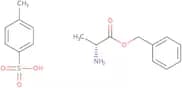
CAS :D-Alanine benzyl ester p-toluenesulfonate salt is a fine chemical that is used in research and development. It is a versatile building block that can be used as an intermediate or a reaction component. D-Alanine benzyl ester p-toluenesulfonate salt has been shown to have high quality, which makes it useful for the production of complex compounds. This compound can be used as a speciality chemical or as a reagent in research.Formule :C10H13NO2·C7H8O3SDegré de pureté :Min. 95%Couleur et forme :PowderMasse moléculaire :351.42 g/mol4-Chloro-3,5-dimethylbenzoic acid
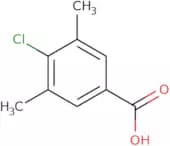
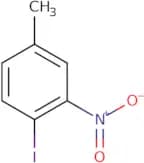
CAS :<p>4-Chloro-3,5-dimethylbenzoic acid (4CMB) is a building block in organic chemistry. It can be used as a reagent, speciality chemical, and research chemical. 4CMB is used to make an intermediate for the synthesis of other chemicals and it can also be used as a reaction component in more complex reactions. CAS No. 90649-78-8</p>Formule :C9H9ClO2Degré de pureté :Min. 95%Couleur et forme :PowderMasse moléculaire :184.62 g/mol4-Iodo-3-nitrotoluene
CAS :<p>Versatile small molecule scaffold</p>Formule :C7H6INO2Degré de pureté :Min. 95%Couleur et forme :PowderMasse moléculaire :263.03 g/mol1,3-Adamantanediamine dihydrochloride
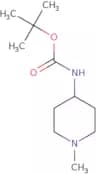
CAS :1,3-Adamantanediamine dihydrochloride is a mimetic that has been shown to inhibit the fibrinolytic activity of nipecotic acid. This compound also inhibits the platelet aggregation induced by the activation of collagen receptors. It has been shown to have an antagonistic effect on NMDA receptors and to induce apoptosis in cancer cells. The structure of 1,3-Adamantanediamine dihydrochloride is similar to that of adamantane, which is a naturally occurring molecule found in plants and animals.Formule :C10H18N2·2HClDegré de pureté :Min. 95%Couleur et forme :White PowderMasse moléculaire :239.18 g/moltert-Butyl N-(1-methylpiperidin-4-yl)carbamate
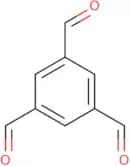
CAS :Versatile small molecule scaffoldFormule :C11H22N2O2Degré de pureté :Min. 95%Couleur et forme :PowderMasse moléculaire :214.3 g/molBenzene-1,3,5-tricarbaldehyde
CAS :<p>Trifluoroacetic acid is a nonsteroidal anti-inflammatory drug that belongs to the group of carboxylic acids. Benzene-1,3,5-tricarbaldehyde is used as an intermediate in the synthesis of trifluoroacetic acid and has been shown to be effective against microbial infections. It has been shown to inhibit the growth of bacteria such as Staphylococcus aureus and Bacillus cereus by disrupting their DNA replication. Benzene-1,3,5-tricarbaldehyde also inhibits the production of inflammatory cytokines and reduces inflammation. The compound has chemical stability and does not react with human serum or other biological fluids.</p>Formule :C9H6O3Degré de pureté :Min. 95%Couleur et forme :PowderMasse moléculaire :162.15 g/mol4-Aminomethylbenzoic acid
CAS :<p>4-Aminomethylbenzoic acid (4AMBA) is a metabolite that is formed from the amino acid methionine. It has been shown to inhibit the growth of prostate cancer cells in vitro and in vivo. 4-Aminomethylbenzoic acid inhibits the activity of polymerase chain reaction (PCR), which is an enzyme that catalyzes DNA replication. The hydroxyl group on 4-aminomethylbenzoic acid reacts with one of the phosphate groups on DNA, forming a covalent bond and inhibiting DNA synthesis. This inhibition occurs at the step called initiation, where DNA synthesis begins by binding of RNA polymerase to a specific sequence of DNA. In addition, 4-aminomethylbenzoic acid also inhibits the activity of x-ray diffraction data, which is an enzyme that catalyzes RNA transcription. Histological analysis shows that 4-aminomethylbenzoic acid causes congestive heart</p>Formule :C8H9NO2Degré de pureté :Min. 98 Area-%Couleur et forme :White PowderMasse moléculaire :151.16 g/mol(R)-3-Aminoquinuclidine dihydrochloride
CAS :3-Aminoquinuclidine dihydrochloride is a high quality, reagent, complex compound that can be used as a useful intermediate to produce other fine chemicals. The CAS number for this compound is 123536-14-1. 3-Aminoquinuclidine dihydrochloride is a fine chemical that has many uses in the production of research chemicals and speciality chemicals. This compound can be used as a versatile building block in synthesis reactions and as a reaction component.Formule :C7H16Cl2N2Degré de pureté :Min. 97 Area-%Masse moléculaire :199.12 g/molRef: 3D-Q-100108
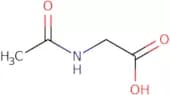
25gÀ demander50gÀ demander100gÀ demander250gÀ demander500gÀ demander-Unit-ggÀ demanderN-Acetylglycine
CAS :<p>N-Acetylglycine is an amide, which is a molecule with both a carboxylate and hydroxyl group. It belongs to the class of antimicrobial agents and has been shown to inhibit the growth of bacteria by inhibiting synthesis of folic acid and other metabolites. N-Acetylglycine also inhibits the formation of terminal residues from amino acids. The analytical method for this compound is based on the reaction between n-acetylglycine and hydrogen chloride in methanol. This produces picolinic acid, which can be detected using ultraviolet spectroscopy at a wavelength of 325 nm.</p>Formule :C4H7NO3Degré de pureté :Min. 95%Couleur et forme :White PowderMasse moléculaire :117.1 g/mol1-Amino-1-cyclopropanecarboxylic acid
CAS :<p>1-Amino-1-cyclopropanecarboxylic acid (ACC) is a precursor of ethylene, which is a plant hormone that regulates many aspects of plant growth and development. ACC can be converted to ethylene by the enzyme ACC synthase. The conversion of ACC to ethylene is facilitated by the enzymes ACC oxidase and ACC deaminase. Ethylene has been shown to regulate the expression of genes involved in photosynthesis, protein synthesis, and other metabolic pathways. Ethylene also modulates physiological processes such as fruit ripening, leaf senescence, and stomatal closure. This molecule participates in a variety of biological reactions including receptor activity and protein degradation via ubiquitin ligases. It also regulates calcium levels in cells through its role in signal transduction pathways.</p>Formule :C4H7NO2Degré de pureté :Min. 95%Couleur et forme :PowderMasse moléculaire :101.1 g/moltert-Butyl octahydrocyclopenta[c]pyrrol-4-ylcarbamate
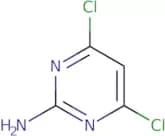
CAS :<p>Tert-Butyl octahydrocyclopenta[c]pyrrol-4-ylcarbamate is a versatile building block that is a useful intermediate. It can be used as an additive in the synthesis of pharmaceuticals and other organic compounds. Tert-Butyl octahydrocyclopenta[c]pyrrol-4-ylcarbamate has been shown to possess antiviral activity, which may be due to its ability to inhibit viral DNA polymerase.</p>Formule :C12H22N2O2Degré de pureté :Min. 95%Couleur et forme :PowderMasse moléculaire :226.32 g/mol2-Amino-4,6-dichloropyrimidine
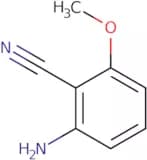
CAS :<p>2-Amino-4,6-dichloropyrimidine is a chemical compound that can be used as an intermediate in the synthesis of other compounds. It is usually prepared by chlorinating 2-amino-pyrimidine with sodium hypochlorite. 2-Amino-4,6-dichloropyrimidine has been shown to inhibit the growth of herpes simplex virus and influenza virus when it is added to cell cultures. This compound also inhibits the replication of protonated nucleic acids by reacting with the amide group of nucleophilic amino acids in DNA or RNA. The reaction between 2-amino-4,6-dichloropyrimidine and amines gives pyridinium salts, which are useful intermediates in organic chemistry reactions.</p>Formule :C4H3Cl2N3Degré de pureté :90%Couleur et forme :Off-White PowderMasse moléculaire :163.99 g/mol2-Amino-6-methoxybenzonitrile
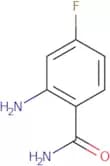
CAS :2-Amino-6-methoxybenzonitrile is an organic compound that belongs to a group of monosubstituted hydroxylamines. It has been used in the synthesis of various analogues, such as caprolactam and methoxyanthranilic acid. Hydrochloric acid reacts with 2-amino-6-methoxybenzonitrile to form 2-amino-6-hydroxybenzonitrile, which can be oxidized to 2-amino-6-(hydroxymethyl)benzonitrile. This reaction is catalyzed by copper or zinc metal.Formule :C8H8N2ODegré de pureté :Min. 95%Couleur et forme :PowderMasse moléculaire :148.16 g/mol2-Amino-4-fluorobenzamide
CAS :2-Amino-4-fluorobenzamide is a catalyst that reacts with alcohols and cyclizes them to form quinazolinones. It has been shown to oxidize various alcohols including those with an electron-donating group, such as esters and nitro groups. 2-Amino-4-fluorobenzamide also reacts with electron-deficient alcohols, such as oximes and hydrazines. The mechanism of the oxidative cyclizations is not well understood but it is likely that they are initiated by a nucleophilic attack on the carbonyl carbon atom followed by a concerted or stepwise oxidation of the C=O double bond. The oxidative cyclization reactions are mechanistically similar to those of other catalytic oxidations, such as those used in the industrial production of acetic acid from methanol.Formule :C7H7FN2ODegré de pureté :Min. 95%Couleur et forme :PowderMasse moléculaire :154.14 g/molN-Acetyl-L-tyrosine
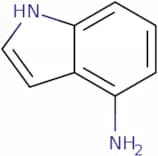
CAS :<p>N-Acetyl-L-tyrosine is a tyrosine derivative with a chemical structure similar to that of an amino acid. It is used as a model system in biochemistry and molecular biology to study the transfer reactions of tyrosine, which are important for energy metabolism, protein synthesis, and metal chelation. N-Acetyl-L-tyrosine is also an effective substrate molecule for many analytical methods, such as thin layer chromatography or liquid chromatography.</p>Formule :C11H13NO4Degré de pureté :Min. 95%Couleur et forme :White PowderMasse moléculaire :223.23 g/mol4-Aminoindole
CAS :<p>4-Aminoindole is a heterocycle with a carboxy group and four nitrogen atoms. It can be synthesized by reacting hydrochloric acid with nitrobenzene. 4-Aminoindole has shown potential as a drug target, which may be due to its ability to inhibit the enzyme carboxamidase. The compound is also acidic in water, making it an ideal candidate for use as an acid catalyst. Electropolymerization of 4-aminoindole has been achieved using Pt electrodes in the presence of an acidic environment. This reaction results in the formation of functional groups on the metal surface that are not found in most other electropolymerization reactions.</p>Formule :C8H8N2Couleur et forme :PowderMasse moléculaire :132.16 g/mol4-Anisylchlorodiphenylmethane
CAS :<p>4-Anisylchlorodiphenylmethane is a trifluoroacetic acid derivative of diphenyl sulfoxide. It is activated by hydrochloric acid and hydrogen chloride to form the corresponding anisyl chlorodiphenylmethane chloride. This compound has a high resistance to nucleophilic attack, with a reaction solution that is resistant to nucleophiles such as water, amines, alcohols, and carboxylic acids. 4-Anisylchlorodiphenylmethane can be synthesized from uridine and acetic acid in the presence of diphenyl sulfoxide and a base. The reaction is then heated at reflux for 24 hours. 4-Anisylchlorodiphenylmethane binds to DNA as well as RNA templates in vitro and can be used for linear regression analysis of DNA sequences. It also has inhibitory effects on cell growth in culture.</p>Formule :C20H17ClODegré de pureté :Min. 95%Couleur et forme :White PowderMasse moléculaire :308.8 g/molTrimethylpyruvic acid
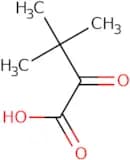
CAS :<p>Trimethylpyruvic acid is an organic compound that is a colorless liquid with a strong odor. It is produced by the oxidation of l-tert-leucine with hydrogen peroxide in the presence of sodium hydroxide. The molecule is chiral, which means it can exist as two different forms that have different physical and chemical properties. Trimethylpyruvic acid can be used for the synthesis of other molecules, including amides, carboxylic acids, and nucleotides. It also has photochemical properties and can be used in reactions that require heating or light.</p>Formule :C6H10O3Degré de pureté :Min. 95%Couleur et forme :Clear LiquidMasse moléculaire :130.14 g/mol






![tert-Butyl octahydrocyclopenta[c]pyrrol-4-ylcarbamate](/_next/image/?url=https%3A%2Fstatic.cymitquimica.com%2Fproducts%2F3D%2Fthumb-webp%2FKHA69312.webp&w=3840&q=75)