Building Blocks
Cette section contient des produits fondamentaux pour la synthèse de composés organiques et biologiques. Building blocks sont les matériaux de départ essentiels utilisés pour construire des molécules complexes à travers diverses réactions chimiques. Ils jouent un rôle crucial dans la découverte de médicaments, la science des matériaux et la recherche chimique. Chez CymitQuimica, nous offrons une gamme diversifiée de building blocks de haute qualité pour soutenir vos recherches innovantes et projets industriels, en vous assurant de disposer des composants essentiels pour une synthèse réussie.
Sous-catégories appartenant à la catégorie "Building Blocks"
- Acides boroniques et dérivés de l'acide boronique(5.778 produits)
- Building Blocks Chiraux(1.243 produits)
- Building Blocks Hydrocarbonés(6.098 produits)
- Building Blocks organiques(61.057 produits)
200710 produits trouvés pour "Building Blocks"
Trier par
Degré de pureté (%)
0
100
|
0
|
50
|
90
|
95
|
100
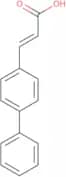
4-Phenylcinnamic acid
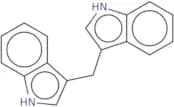
CAS :<p>4-Phenylcinnamic acid is a prenylated aromatic compound that is used as a chromatographic stationary phase. It has been shown to inhibit the activity of tyrosinase and thus may be used for the treatment of hyperpigmentation disorders such as melasma. 4-Phenylcinnamic acid interacts with piperidine and inhibits its activity, which may lead to new drug development. Molecular modelling of 4-phenylcinnamic acid has shown that it is possible to introduce functional groups into the molecule, making it more reactive. The introduction of biphenyl derivatives may improve the lipophilicity of this molecule.</p>Formule :C15H12O2Degré de pureté :Min. 95%Couleur et forme :White PowderMasse moléculaire :224.25 g/mol3,3'-Diindolymethane (synthetic)
CAS :<p>3,3'-Diindolylmethane, also known as DIM, is natural compound derived from indole. In a recent study, DIM was evaluated as a potential agent for preventing biofilm formation by Streptococcus mutans, which is a major cause of dental caries. The researchers found that DIM significantly inhibited biofilm formation (by 92%) and reduced the production of extracellular polymeric substances (EPS), which are important for biofilm stability particularly under acidic conditions. The study suggests that 3,3'-diindolylmethane has anti-biofilm and anti-virulence properties against S. mutans, and it is a potential candidate for reducing biofilm formation and preventing dental caries.<br>It has been also reported that 3,3'-diindolymethane can act as a chemopreventive agent. DIM has estrogenic effects without interacting with the binding domain of the estrogen receptors. This study found that DIM could suppress cell growth and disrupt cell cycle progression of young adult mouse colonocytes (YAMCs) in vitro. Moreover, DIM altered gene expression associated with apoptosis and cell proliferation, and it induced transcriptional activity of the estrogen receptor (ER), which was inhibited by an ER antagonist.</p>Formule :C17H14N2Degré de pureté :Min. 95%Couleur et forme :PowderMasse moléculaire :246.31 g/mol3-Nitro-5-(trifluoromethyl)benzoic acid
CAS :3-Nitro-5-(trifluoromethyl)benzoic acid is a versatile chemical that is an intermediate in the synthesis of a number of pharmaceutical compounds. It can be used to synthesize complex compounds and has been shown to have a high reactivity as well as being useful as a building block for other reactions. 3-Nitro-5-(trifluoromethyl)benzoic acid is also used as a reagent or reaction component in various research projects, such as in the synthesis of many pharmaceuticals and fine chemicals. This chemical has CAS No. 328-80-3, which provides it with high quality and makes it a valuable speciality chemical.Formule :C8H4F3NO4Degré de pureté :80%Couleur et forme :PowderMasse moléculaire :235.12 g/mol6-Bromo-2-(4-bromophenyl)-indole
CAS :<p>6-Bromo-2-(4-bromophenyl)-indole is a fine chemical with CAS No. 28718-96-9 that can be used as a versatile building block for the synthesis of complex compounds, useful scaffold for research chemicals, and reaction component for speciality chemicals. This compound has high quality and is a reagent in the synthesis of other compounds.</p>Formule :C14H9Br2NDegré de pureté :Min. 95%Couleur et forme :Off white to pale yellow powder.Masse moléculaire :351.04 g/mol2-Nitrobenzylamine hydrochloride
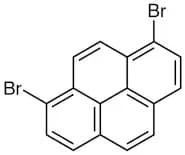
CAS :<p>2-Nitrobenzylamine hydrochloride is a compound that has been shown to have cancer-fighting properties. It inhibits the synthesis of proteins necessary for the proliferation of cancer cells, but it does not affect the synthesis of proteins in healthy cells. This drug is used to diagnose and treat certain types of cancers, such as lymphoma and leukemia. 2-Nitrobenzylamine hydrochloride can be modified by genetic engineering techniques to specifically target cancer cells, which may help with the treatment of other types of diseases in the future. It is believed that this drug will be useful for treating cancers that are resistant to chemotherapy or radiation therapy, as well as those that are caused by mutations in DNA.</p>Formule :C7H9ClN2O2Degré de pureté :Min. 95%Couleur et forme :PowderMasse moléculaire :188.61 g/mol1,8-Dibromopyrene
CAS :Formule :C16H8Br2Degré de pureté :>90.0%(HPLC)Couleur et forme :White to Light yellow powder to crystalMasse moléculaire :360.054-Chlorobenzofuro[3,2-d]pyrimidine
CAS :Formule :C10H5ClN2ODegré de pureté :>98.0%(GC)Couleur et forme :White to Yellow to Green powder to crystalMasse moléculaire :204.611,2-Dibromo-2,4-dicyanobutane
CAS :<p>1,2-Dibromo-2,4-dicyanobutane is a chemical substance with antimicrobial properties. It is used as an ingredient in the production of health care products and preservatives for food. 1,2-Dibromo-2,4-dicyanobutane inhibits bacterial growth by preventing the synthesis of fatty acids and proteins. This compound has been shown to have synergistic effects when combined with benzalkonium chloride or potassium dichromate. 1,2-Dibromo-2,4-dicyanobutane has not been found to be carcinogenic in animal studies and does not cause allergic reactions.</p>Formule :C6H6Br2N2Degré de pureté :Min. 95%Couleur et forme :White PowderMasse moléculaire :265.93 g/mol2-(1H-Imidazol-2-yl)pyridine
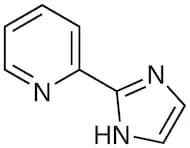
CAS :Formule :C8H7N3Degré de pureté :>98.0%(GC)(T)Couleur et forme :White to Light yellow to Light orange powder to crystalMasse moléculaire :145.172-Oxo-1-imidazolidinecarbonyl Chloride
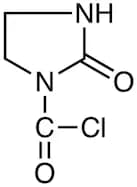
CAS :Formule :C4H5ClN2O2Degré de pureté :>97.0%(T)Couleur et forme :White to Almost white powder to crystalMasse moléculaire :148.553-Chloro-4-methoxybenzonitrile
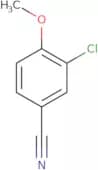
CAS :<p>3-Chloro-4-methoxybenzonitrile is a chemical compound that can be used as a reactant, reagent, or building block in the synthesis of other chemicals. It is an important intermediate for the production of pharmaceuticals, pesticides and dyes. 3-Chloro-4-methoxybenzonitrile is also being investigated for use in the manufacture of photoresists for semiconductor device fabrication. This chemical is listed on the Chemical Abstracts Service registry with CAS number 102151-33-7.</p>Formule :C8H6ClNODegré de pureté :Min. 95%Couleur et forme :SolidMasse moléculaire :167.59 g/mol4-Nitropyridine-2-carboxylic acid
CAS :4-Nitropyridine-2-carboxylic acid (4NPCA) is a nitro compound that can form both an n-oxide and a deuterium isotope effect. 4NPCA has been shown to react with picolinic acid, forming a stable chelate ligand that is stabilized by the electron withdrawal of the nitro group. 4NPCA also reacts with acetonitrile to form isotopomers, which are molecules that differ only in the number of atoms of hydrogen or deuterium present. The formation of these isotopomers occurs through an intramolecular hydrogen transfer from the hydroxyl group on one molecule to the nitro group on another.Formule :C6H4N2O4Degré de pureté :Min. 95%Couleur et forme :Pale yellow solid.Masse moléculaire :168.11 g/molIsoquinoline N-Oxide
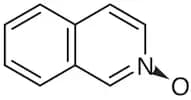
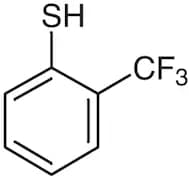
CAS :Formule :C9H7NODegré de pureté :>98.0%(T)(qNMR)Couleur et forme :Light yellow to Yellow to Orange powder to crystalMasse moléculaire :145.162-(Trifluoromethyl)benzenethiol
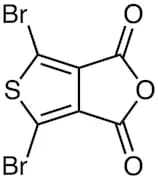
CAS :Formule :C7H5F3SDegré de pureté :>97.0%(GC)(T)Couleur et forme :Colorless to Light yellow to Light orange clear liquidMasse moléculaire :178.172,5-Dibromo-3,4-thiophenedicarboxylic Anhydride
CAS :Formule :C6Br2O3SDegré de pureté :>98.0%(GC)Couleur et forme :Light yellow to Brown to Dark green powder to crystalMasse moléculaire :311.934,4'-Dinonyl-2,2'-bithiazole
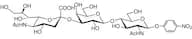
CAS :Formule :C24H40N2S2Degré de pureté :>98.0%(GC)Couleur et forme :White to Yellow to Green powder to crystalMasse moléculaire :420.72Neu5Acα(2-6)Galβ(1-3)GlcNAc-β-pNP
Formule :C31H45N3O21Degré de pureté :>97.0%(HPLC)Couleur et forme :White to Light yellow to Green powder to crystalMasse moléculaire :795.70Neu5Acα(2-3)Galβ(1-4)GlcNAc-β-pNP
CAS :Formule :C31H45N3O21Degré de pureté :>95.0%(HPLC)Couleur et forme :White to Almost white powder to crystalMasse moléculaire :795.702-Cyano-6-methoxy benzothiazole
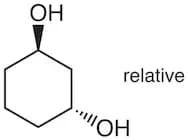
CAS :<p>2-Cyano-6-methoxy benzothiazole is a bioluminescent molecule that emits light when reacted with an enzyme from the firefly luciferase family. This molecule has been used in assays for detecting gram-negative bacteria and in vitro assays for measuring the enzyme activities of cytochrome P450, β-lactamases, and DNA gyrase. 2-Cyano-6-methoxy benzothiazole has also been used to measure human serum concentrations of drugs such as acetaminophen and phenytoin. The luminescence intensity is proportional to the concentration of these drugs in the serum. 2-Cyano-6-methoxy benzothiazole is synthesized by reacting a hydroxyl group with an inorganic acid.</p>Formule :C9H6N2OSDegré de pureté :Min. 95%Couleur et forme :White PowderMasse moléculaire :190.22 g/moltrans-1,3-Cyclohexanediol
CAS :Formule :C6H12O2Degré de pureté :>98.0%(GC)Couleur et forme :White to Almost white powder to crystalMasse moléculaire :116.16




![4-Chlorobenzofuro[3,2-d]pyrimidine](/_next/image/?url=https%3A%2Fstatic.cymitquimica.com%2Fproducts%2F3B%2Fthumb-webp%2FC2800.webp&w=3840&q=75)