Building Blocks
Cette section contient des produits fondamentaux pour la synthèse de composés organiques et biologiques. Building blocks sont les matériaux de départ essentiels utilisés pour construire des molécules complexes à travers diverses réactions chimiques. Ils jouent un rôle crucial dans la découverte de médicaments, la science des matériaux et la recherche chimique. Chez CymitQuimica, nous offrons une gamme diversifiée de building blocks de haute qualité pour soutenir vos recherches innovantes et projets industriels, en vous assurant de disposer des composants essentiels pour une synthèse réussie.
Sous-catégories appartenant à la catégorie "Building Blocks"
- Acides boroniques et dérivés de l'acide boronique(5.778 produits)
- Building Blocks Chiraux(1.243 produits)
- Building Blocks Hydrocarbonés(6.098 produits)
- Building Blocks organiques(61.057 produits)
200710 produits trouvés pour "Building Blocks"
Trier par
Degré de pureté (%)
0
100
|
0
|
50
|
90
|
95
|
100
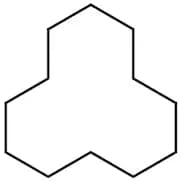
Cyclododecane
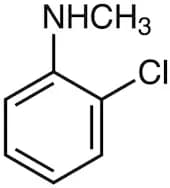
CAS :Formule :C12H24Degré de pureté :>99.0%(GC)Couleur et forme :White to Almost white powder to crystalMasse moléculaire :168.322-Chloro-N-methylaniline
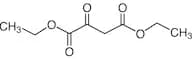
CAS :Formule :C7H8ClNDegré de pureté :>98.0%(GC)(T)Couleur et forme :Colorless to Red to Green clear liquidMasse moléculaire :141.60Diethyl Oxalacetate
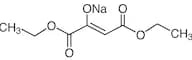
CAS :Formule :C8H12O5Degré de pureté :>95.0%(GC)Couleur et forme :Colorless to Light yellow clear liquidMasse moléculaire :188.18Diethyl Oxalacetate Sodium Salt
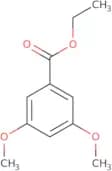
CAS :Formule :C8H11NaO5Degré de pureté :>95.0%(T)Couleur et forme :White to Light yellow to Light orange powder to crystalMasse moléculaire :210.163,5-Dimethoxybenzoic acid ethyl ester
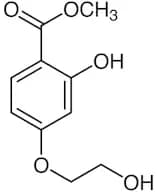
CAS :<p>3,5-Dimethoxybenzoic acid ethyl ester is a carbonic acid ester that can be used as a synthetic intermediate. It is synthesized by reacting 3,5-dimethoxybenzoic acid with the ethyl chloride. The molecular weight of 3,5-dimethoxybenzoic acid ethyl ester is 222.6 g/mol. The homologous series includes dimethylformamide, diethylformamide, and diisopropylformamide. This compound has been shown to inhibit growth factor signaling in vitro and in vivo and may have potential therapeutic applications for cancer treatment. Impurities that may be found in 3,5-dimethoxybenzoic acid ethyl ester include chloride and sulfinyl groups. Synopses of the molecular modeling study are available on request.</p>Formule :C11H14O4Degré de pureté :Min. 95%Masse moléculaire :210.23 g/molMethyl 4-(2-Hydroxyethoxy)salicylate
Formule :C10H12O5Degré de pureté :>98.0%(GC)Couleur et forme :White to Light yellow to Light orange powder to crystalMasse moléculaire :212.202-Bromo-2',4'-difluoroacetophenone
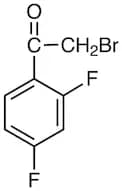
CAS :Formule :C8H5BrF2ODegré de pureté :>98.0%(GC)Couleur et forme :White or Colorless to Light yellow to Light orange powder to lump to clear liquidMasse moléculaire :235.033,5-Dimethoxy-4-hydroxybenzoic acid methyl ester
CAS :<p>3,5-Dimethoxy-4-hydroxybenzoic acid methyl ester (DMHBME) is a natural compound that has been shown to have high redox potential values and chemical stability. This compound is an inhibitor of p-hydroxylases and has been shown to inhibit human serum laccase activity. DMHBME also inhibits polymerase chain reactions in the presence of DNA templates, which may be due to its ability to bind to the enzyme at the active site. DMHBME is a potent antimicrobial agent that can be used as a fungicide or preservative in food products. It is also effective against bacteria such as Staphylococcus aureus, Clostridium perfringens, Escherichia coli, and Mycobacterium tuberculosis.</p>Formule :C10H12O5Degré de pureté :Min. 95%Couleur et forme :White PowderMasse moléculaire :212.2 g/mol3,5-Dibromo-4-hydroxytoluene
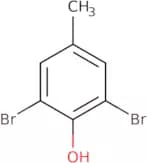
CAS :3,5-Dibromo-4-hydroxytoluene (DBHT) is a brominated aromatic hydrocarbon. It has been shown to be an efficient debrominating agent for bromophenols and chloride, which are two major environmental pollutants. DBHT can also catalyze the conversion of styrene to benzene and acetic acid in the presence of hydrogen, as well as methylating styrene. This chemical is an effective catalyst for the formation of metabolic intermediates and crystal x-ray diffraction studies have shown that DBHT is a good substrate for enzyme activity.Formule :C7H6Br2ODegré de pureté :Min. 95%Couleur et forme :White To Yellow To Light Brown SolidMasse moléculaire :265.93 g/mol3,4-Dichloro-2-methylpyridine
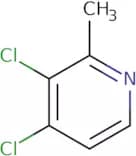
CAS :3,4-Dichloro-2-methylpyridine is a novel sulfur analogue that has been shown to have significant antitumor activity in breast cancer xenografts. 3,4-Dichloro-2-methylpyridine inhibits the growth of tumor cells by binding to their DNA and inhibiting RNA synthesis. It also inhibits the production of reactive oxygen species and stabilizes cell membranes. 3,4-Dichloro-2-methylpyridine has been found to be active against human tumors in vivo and is a potential anticancer drug for human use.Formule :C6H5Cl2NDegré de pureté :Min. 95%Couleur et forme :PowderMasse moléculaire :162.02 g/mol2-Amino-5(6)-benzoylbenzimidazole
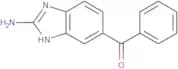
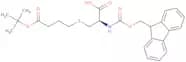
CAS :<p>2-Amino-5(6)-benzoylbenzimidazole is an antifilarial and anthelmintic drug that belongs to the benzimidazole class. It is used for the treatment of filarial infections in humans, including lymphatic filariasis, which is caused by worms transmitted by mosquitoes. 2-Amino-5(6)-benzoylbenzimidazole has low bioavailability due to its poor water solubility. The drug can be administered orally or topically and is metabolized in the liver. The metabolites are excreted in urine as glucuronides and sulfates.</p>Formule :C14H11N3ODegré de pureté :Min. 95%Couleur et forme :PowderMasse moléculaire :237.26 g/molFmoc-Cys(3-(t-butoxycarbonyl)-propyl)-OH
CAS :Fmoc-Cys(3-(t-butoxycarbonyl)-propyl)-OH is a cysteine derivative that has been shown to be effective in the treatment of ulcers. It is a competitive inhibitor of the enzyme cyclooxygenase, which is responsible for the production of prostaglandins, and can be used to decrease inflammation. Fmoc-Cys(3-(t-butoxycarbonyl)-propyl)-OH has been shown to inhibit carassius erythrocyte meiosis, with an effective dose of 0.02 mM. The drug also has a conformation that can bind to the hydroxamic acid moiety, which is thought to be responsible for its anti-inflammatory properties. This drug also inhibits genotype 3a2 and 5b2 of Cyprinus carpio and may have potential as a chemotherapeutic agent for these genotypes.END>Formule :C26H31NO6SDegré de pureté :Min. 95%Couleur et forme :PowderMasse moléculaire :485.59 g/mol1,2-Dibromo-2,4-dicyanobutane
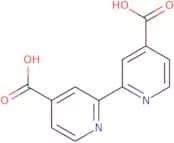
CAS :<p>1,2-Dibromo-2,4-dicyanobutane is a chemical substance with antimicrobial properties. It is used as an ingredient in the production of health care products and preservatives for food. 1,2-Dibromo-2,4-dicyanobutane inhibits bacterial growth by preventing the synthesis of fatty acids and proteins. This compound has been shown to have synergistic effects when combined with benzalkonium chloride or potassium dichromate. 1,2-Dibromo-2,4-dicyanobutane has not been found to be carcinogenic in animal studies and does not cause allergic reactions.</p>Formule :C6H6Br2N2Degré de pureté :Min. 95%Couleur et forme :White PowderMasse moléculaire :265.93 g/mol2,2'-Bipyridine-4,4'-dicarboxylic acid
CAS :<p>2,2'-Bipyridine-4,4'-dicarboxylic acid (BBDA) is a synthetic molecule that has been used as an oxidant in organic synthesis. It is a redox-active compound with a reversible oxidation potential of +0.2 V. The electron transfer to the adjacent nitrogen atom is accompanied by light emission at 490 nm and chloride ion release. BBDA reacts with potassium dichromate in water to form 2,2'-bipyridine-6,6'-dicarboxylic acid and potassium chloride. This reaction can be monitored by magnetic resonance analysis and X-ray absorption spectroscopy. The formation of BBDA from dimethylformamide and esters has been reported in the literature.</p>Formule :C12H8N2O4Degré de pureté :Min. 95%Couleur et forme :PowderMasse moléculaire :244.21 g/molGalβ(1-4)[Neu5Acα(2-6)]GlcNAc-β-pNP
Formule :C31H45N3O21Degré de pureté :>90.0%(HPLC)Couleur et forme :White to Light yellow powder to crystalMasse moléculaire :795.708-Bromo-1-octene
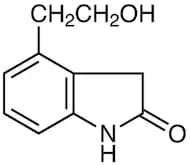
CAS :<p>8-Bromo-1-octene is a biologically active molecule that is an aliphatic hydrocarbon with a hydroxyl group. It is used in the study of growth factors and viruses, and has been shown to inhibit the growth of cells in tissue cultures. 8-Bromo-1-octene has also been shown to inhibit RNA synthesis and protein synthesis in vitro, as well as the growth of recombinant virus. 8-Bromo-1-octene can be synthesized by reacting 6-bromo-1-hexene with hydrogen bromide, or can be obtained from commercially available sources.</p>Formule :C8H15BrDegré de pureté :Min. 95%Couleur et forme :Colorless Slightly Yellow Clear LiquidMasse moléculaire :191.11 g/mol4-(2-Hydroxyethyl)oxindole
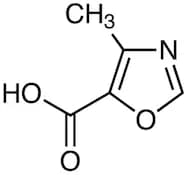
CAS :Formule :C10H11NO2Degré de pureté :>98.0%(GC)Couleur et forme :White to Orange to Green powder to crystalMasse moléculaire :177.204-Methyloxazole-5-carboxylic Acid
CAS :Formule :C5H5NO3Degré de pureté :>98.0%(T)Couleur et forme :White to Gray to Brown powder to crystalMasse moléculaire :127.102,6-Dibromobenzoic acid
CAS :<p>2,6-Dibromobenzoic acid is a synthetic molecule that can be used to synthesize pyrrole derivatives in the presence of a base. It has been shown to react with a number of molecules, including halogens and chlorides. The active site of 2,6-dibromobenzoic acid is its bromine atom. The steric interactions between the 2,6-dibromobenzoic acid molecule and the substrate are strong enough to prevent other molecules from accessing the active site. Chlorides and diphenylmethane can also bind to 2,6-dibromobenzoic acid due to their similar properties. This molecule has also been shown to interact with aluminium and solvents such as ethanol or acetone.</p>Formule :C7H4Br2O2Degré de pureté :Min. 95%Couleur et forme :White PowderMasse moléculaire :279.91 g/mol3-(2-Methoxyphenyl)propionic Acid
CAS :Formule :C10H12O3Degré de pureté :>98.0%(GC)(T)Couleur et forme :White to Almost white powder to crystalMasse moléculaire :180.20




![Galβ(1-4)[Neu5Acα(2-6)]GlcNAc-β-pNP](/_next/image/?url=https%3A%2Fstatic.cymitquimica.com%2Fproducts%2F3B%2Fthumb-webp%2FG0353.webp&w=3840&q=75)