Building Blocks
Cette section contient des produits fondamentaux pour la synthèse de composés organiques et biologiques. Building blocks sont les matériaux de départ essentiels utilisés pour construire des molécules complexes à travers diverses réactions chimiques. Ils jouent un rôle crucial dans la découverte de médicaments, la science des matériaux et la recherche chimique. Chez CymitQuimica, nous offrons une gamme diversifiée de building blocks de haute qualité pour soutenir vos recherches innovantes et projets industriels, en vous assurant de disposer des composants essentiels pour une synthèse réussie.
Sous-catégories appartenant à la catégorie "Building Blocks"
- Acides boroniques et dérivés de l'acide boronique(5.778 produits)
- Building Blocks Chiraux(1.243 produits)
- Building Blocks Hydrocarbonés(6.098 produits)
- Building Blocks organiques(61.057 produits)
200716 produits trouvés pour "Building Blocks"
Trier par
Degré de pureté (%)
0
100
|
0
|
50
|
90
|
95
|
100
(αS)-α-[[2-(4-Morpholinyl)acetyl]amino]benzenebutanoyl-L-leucyl-L-phenylalanine phenylmethyl ester
CAS :Please enquire for more information about (αS)-α-[[2-(4-Morpholinyl)acetyl]amino]benzenebutanoyl-L-leucyl-L-phenylalanine phenylmethyl ester including the price, delivery time and more detailed product information at the technical inquiry form on this pageFormule :C38H48N4O6Degré de pureté :Min. 95%Couleur et forme :PowderMasse moléculaire :656.81 g/mol3,4-Difluorophenyl Isothiocyanate
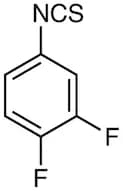
CAS :Formule :C7H3F2NSDegré de pureté :>98.0%(GC)Couleur et forme :White - Yellow LiquidMasse moléculaire :171.162-Amino-3-fluorobenzoic acid methyl ester
CAS :2-Amino-3-fluorobenzoic acid methyl ester (2AFBME) is an antibacterial agent that inhibits bacterial protein synthesis by binding to ribosomes and inhibiting the release of amino acids during translation. 2AFBME has been shown to have antibacterial activity against aureus, streptococcus, and staphylococcus strains in laboratory tests. The clinical development of 2AFBME has not yet been completed.Formule :C8H8FNO2Degré de pureté :Min. 95%Couleur et forme :Yellow PowderMasse moléculaire :169.15 g/mol7-Aminoquinoline
CAS :7-Aminoquinoline is a nucleophilic compound that is involved in the catalysis of bond cleavage. It has been shown to react with organic molecules and produce an oxygenative interaction. 7-Aminoquinoline has been shown to produce anti-inflammatory properties by inhibiting prostaglandin synthesis, which occurs through the inhibition of cyclooxygenase activity.Formule :C9H8N2Degré de pureté :Min. 95%Couleur et forme :Yellow PowderMasse moléculaire :144.17 g/mol2,2-Dimethylvaleric acid
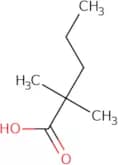
CAS :2,2-Dimethylvaleric acid is a fatty acid that can be synthesized from 2,2-dimethylolpropane. It has been shown to reduce blood pressure in mice by inhibiting the synthesis of certain fatty acids. The mechanism of action may be due to the inhibition of messenger RNA (mRNA) and protein synthesis in the central nervous system. 2,2-Dimethylvaleric acid has also been shown to have neurotrophic effects on cultured cells and is an effective antioxidant. This compound has been used as a control for diode experiments in optical systems.Formule :C7H14O2Degré de pureté :Min. 95%Couleur et forme :Colorless Clear LiquidMasse moléculaire :130.18 g/mol1,2-Dimethylnaphthalene
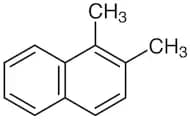
CAS :Formule :C12H12Degré de pureté :>95.0%(GC)Couleur et forme :Colorless to Light orange to Yellow clear liquidMasse moléculaire :156.233-(Diethylboryl) pyridine
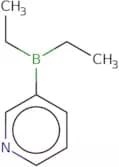
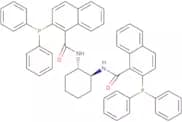
CAS :<p>3-(Diethylboryl) pyridine is a halogenated biphenyl. It is used in the synthesis of 3-aryl substituted pyridines by cross-coupling reactions with aryl iodides, bromides and chlorides. Cross-coupling reactions are usually carried out at low temperatures (0 to 20°C) in order to minimize side reactions. The reaction is usually conducted in a biphasic system containing an organic solvent and water, which facilitates the extraction of the product from the mixture. 3-(Diethylboryl) pyridine reacts with halide ions via an electrophilic substitution reaction to form a reactive intermediate, which reacts with palladium catalyst to produce the desired product. This process is also called catalytic hydrogenation. 3-(Diethylboryl) pyridine has been shown to inhibit human cytochrome P450 enzymes, which are involved in drug metabolism and break down drugs</p>Formule :C9H14BNDegré de pureté :Min. 95%Couleur et forme :PowderMasse moléculaire :147.03 g/mol(1S,2S)-(-)-1,2-Diaminocyclohexane-N,N'-bis(2-diphenylphosphino-1-naphthoyl)
CAS :(1S,2S)-(-)-1,2-Diaminocyclohexane-N,N'-bis(2-diphenylphosphino-1-naphthoyl) is an alkoxyallene that is synthesized from the reaction of allene and ethylene oxide. It has been shown to inhibit abnormal cell growth in vitro. (1S,2S)-(-)-1,2-Diaminocyclohexane-N,N'-bis(2-diphenylphosphino-1-naphthoyl) also inhibits cancer cell proliferation in vivo and shows a high degree of stereoselectivity and enantioselectivity. This compound can be used as an anticancer agent due to its ability to selectively kill cancer cells while leaving normal cells unharmed.Formule :C52H44N2O2P2Degré de pureté :Min. 94.5 Area-%Couleur et forme :PowderMasse moléculaire :790.87 g/molTriethyl phosphonoacetate
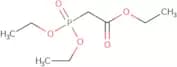
CAS :<p>Triethyl phosphonoacetate is a dpp-iv inhibitor that has been shown to have beneficial effects on congestive heart failure. It is a pyrimidine compound that can be synthesized in an asymmetric synthesis reaction. The hydroxyl group on the triethyl phosphonoacetate molecule reacts with potassium dichromate to form a reactive intermediate, which undergoes hydrolysis by hydrochloric acid to release acetaldehyde. Acetaldehyde then reacts with malonic acid to produce triethyl phosphonoacetate. Triethyl phosphonoacetate has been shown to have biological properties that are similar to those of other dpp-iv inhibitors, and it has also been shown to have receptor binding activity.</p>Formule :C8H17O5PDegré de pureté :Min. 98%Couleur et forme :Colorless Clear LiquidMasse moléculaire :224.19 g/molBoc-4-(aminomethyl)-L-phenylalanine
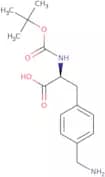
CAS :<p>Boc-4-(aminomethyl)-L-phenylalanine is a useful building block in research and development of pharmaceuticals, agricultural chemicals, and other chemical products. It is a versatile intermediate that can be used in the production of many types of organic compounds. Boc-4-(aminomethyl)-L-phenylalanine has been used as a reagent for the preparation of various complex compounds and a reaction component in organic synthesis. It is also used to produce fluoroquinolones and other antibiotics. CAS No.: 137452-49-4</p>Formule :C15H22N2O4Degré de pureté :Min. 95%Masse moléculaire :294.35 g/molPro-Gly-OH
CAS :<p>Pro-Gly-OH is a cyclic peptide that has been shown to have antimicrobial activity. Pro-Gly-OH has been shown to be an intramolecular hydrogen acceptor, which leads to the formation of a carbonyl group. This compound also has site specific interactions with the cell membrane and is taken up by cells. It is active at acidic pHs and can be activated by growth factors.<br>The conformational properties of Pro-Gly-OH are due to hydrogen bonding interactions and amide bond formation.</p>Formule :C7H12N2O3Degré de pureté :Min. 95%Couleur et forme :PowderMasse moléculaire :172.18 g/mol7,7,8,8-Tetracyanoquinodimethane
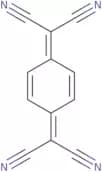
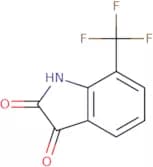
CAS :7,7,8,8-Tetracyanoquinodimethane is a quinoid compound that is used as an analytical chemical reagent. It has been shown to be a powerful reducing agent and can be used in the determination of trace amounts of metals. 7,7,8,8-Tetracyanoquinodimethane also reacts with cationic surfactants and hydroxyl groups to form stable compounds. The nitrogen atoms in this molecule are capable of multiple transfer reactions with other molecules.br>br> The redox potentials of this substance are negative and it has been shown to have the ability to transport pharmaceutical preparations across cell membranes. Boron nitride (BN) has been shown to stabilize the structure of 7,7,8,8-tetracyanoquinodimethane by forming strong hydrogen bonds between the BN and hydroxyl groups on this molecule.Formule :C12H4N4Degré de pureté :Min. 95%Couleur et forme :Yellow To Green Or Brown SolidMasse moléculaire :204.19 g/mol7-(Trifluoromethyl)1H-indole-2,3-dione
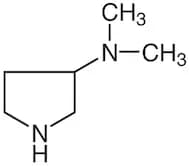
CAS :<p>Trifluoromethyl-substituted 7-(trifluoromethyl)1H-indole-2,3-dione is a trifluoromethyl analogue of indole-2,3-dione that has been shown to have antimalarial activity. It has been shown to be active against plasmodium and cancer cells in vitro. Trifluoromethyl group can be replaced by other substituents such as methoxy, ethoxy, or nitro groups. The compound has centrosymmetric structures and an elemental composition of C8H4F3N.</p>Formule :C9H4F3NO2Degré de pureté :Min. 95%Couleur et forme :PowderMasse moléculaire :215.13 g/mol3-(Dimethylamino)pyrrolidine
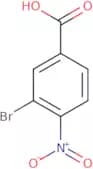
CAS :Formule :C6H14N2Degré de pureté :>98.0%(GC)(T)Couleur et forme :Colorless to Light yellow clear liquidMasse moléculaire :114.193-Bromo-4-nitrobenzoic acid
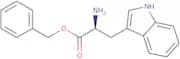
CAS :3-Bromo-4-nitrobenzoic acid is a chemical compound with the molecular formula CHBrNO2. It is a versatile building block that can be used in the synthesis of many different compounds. 3-Bromo-4-nitrobenzoic acid is a white crystalline solid that is soluble in water, ethanol, and ether. It reacts with many substances to produce other useful compounds. It can also be used as a reagent for the detection of proteins or nucleic acids. This product has been shown to be an effective intermediate in organic reactions and has been used as a scaffold in the synthesis of complex molecules such as natural products, pharmaceuticals, and agrochemicals.Formule :C7H4BrNO4Degré de pureté :Min. 95%Couleur et forme :PowderMasse moléculaire :246.02 g/molL-Tryptophan benzyl ester
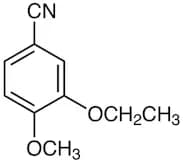
CAS :L-Tryptophan benzyl ester is an angiotensin converting enzyme (ACE) inhibitor that is used as a deodorant. It inhibits the action of ACE, which leads to the formation of angiotensin II and a decrease in blood pressure. L-Tryptophan benzyl ester also prevents the formation of metastases and reduces the risk of cancer cells spreading to other parts of the body. This drug also has solvating properties, which may lead to its ability to inhibit enzymes such as catalase and isomerase. L-Tryptophan benzyl ester has been shown to have antithrombotic effects by inhibiting platelet aggregation and reducing blood clotting time. The geometric isomers of this compound have different plasma concentrations than the optical isomers because they are not metabolised in the same way in humans.Formule :C18H18N2O2Degré de pureté :Min. 95%Couleur et forme :White To Off-White SolidMasse moléculaire :294.35 g/mol3-Ethoxy-4-methoxybenzonitrile
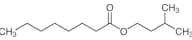
CAS :Formule :C10H11NO2Degré de pureté :>98.0%(GC)Couleur et forme :White to Light yellow powder to crystalMasse moléculaire :177.20Isoamyl n-Octanoate (contains 2-Methylbutyl n-Octanoate)
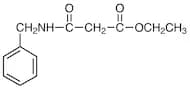
CAS :Formule :C13H26O2Degré de pureté :min. 97.0 %(total of isomer)(GC)Couleur et forme :Colorless to Light yellow clear liquidMasse moléculaire :214.35Ethyl 3-(Benzylamino)-3-oxopropionate
CAS :Formule :C12H15NO3Degré de pureté :>98.0%(GC)Couleur et forme :White to Light yellow powder to crystalMasse moléculaire :221.26Octadecyl Vinyl Ether
CAS :Formule :C20H40ODegré de pureté :>85.0%(GC)Couleur et forme :White to Almost white powder to lumpMasse moléculaire :296.54
![(αS)-α-[[2-(4-Morpholinyl)acetyl]amino]benzenebutanoyl-L-leucyl-L-phenylalanine phenylmethyl ester](/_next/image/?url=https%3A%2Fstatic.cymitquimica.com%2Fproducts%2F3D%2Fthumb-webp%2FFM183824.webp&w=3840&q=75)