Building Blocks
Cette section contient des produits fondamentaux pour la synthèse de composés organiques et biologiques. Building blocks sont les matériaux de départ essentiels utilisés pour construire des molécules complexes à travers diverses réactions chimiques. Ils jouent un rôle crucial dans la découverte de médicaments, la science des matériaux et la recherche chimique. Chez CymitQuimica, nous offrons une gamme diversifiée de building blocks de haute qualité pour soutenir vos recherches innovantes et projets industriels, en vous assurant de disposer des composants essentiels pour une synthèse réussie.
Sous-catégories appartenant à la catégorie "Building Blocks"
- Acides boroniques et dérivés de l'acide boronique(5.778 produits)
- Building Blocks Chiraux(1.243 produits)
- Building Blocks Hydrocarbonés(6.097 produits)
- Building Blocks organiques(61.048 produits)
203115 produits trouvés pour "Building Blocks"
Trier par
Degré de pureté (%)
0
100
|
0
|
50
|
90
|
95
|
100
1-Phenyl-3-(propan-2-yl)urea
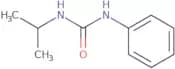
CAS :<p>1-Phenyl-3-(propan-2-yl)urea is a chemical compound that is used in the synthesis of organic compounds. It has been shown to be useful as a building block and also has applications in the preparation of complex compounds. 1-Phenyl-3-(propan-2-yl)urea can be used as a reagent for reactions involving esterification, hydrolysis, cyclization, and nitration. The compound is also useful for research purposes and can be used as an intermediate for other chemicals.</p>Formule :C10H14N2ODegré de pureté :Min. 95%Couleur et forme :PowderMasse moléculaire :178.23 g/mol2-(3-Methyl-1,2-oxazol-4-yl)acetic acid
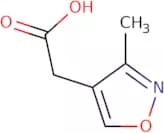
CAS :<p>2-(3-Methyl-1,2-oxazol-4-yl)acetic acid is a useful reagent with a wide range of applications. It is the starting material for the synthesis of many complex compounds that are used in pharmaceuticals, agrochemicals, and other industries. 2-(3-Methyl-1,2-oxazol-4-yl)acetic acid has been shown to be a versatile building block for the synthesis of speciality chemicals and research chemicals. The compound has also been used as a reaction component in organic synthesis.</p>Formule :C6H7NO3Degré de pureté :Min. 95%Couleur et forme :PowderMasse moléculaire :141.12 g/molPhenyl salicylate
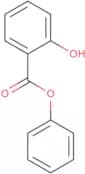
CAS :<p>Phenyl salicylate is a phenolic compound that is used as an antipyretic and analgesic. It has the ability to inhibit prostaglandin synthesis, which can lead to reduced inflammation in the body. Phenyl salicylate has been shown to bind to specific receptors on cells, which leads to inhibition of prostaglandin synthesis. This receptor binding may also be responsible for its anti-inflammatory properties. Phenyl salicylate is metabolized in the liver and excreted through the kidneys.</p>Formule :C13H10O3Degré de pureté :Min. 98%Couleur et forme :White PowderMasse moléculaire :214.22 g/molPotassium nonafluoro-1-butanesulfonate
CAS :Potassium nonafluoro-1-butanesulfonate (NBS) is a chemical compound that is used to remove trifluoroacetic acid from wastewater. It can also be used as an analytical reagent to measure cytosolic calcium concentrations in cells. In addition, NBS has been shown to have a high degree of chemical stability, but it may react with hydrogen fluoride and cause toxicity in humans. The pharmacokinetic properties of this drug are not well-known, but it has been shown to accumulate in the liver and fat tissues and pass into the maternal blood stream during pregnancy. NBS also inhibits the synthesis of p-hydroxybenzoic acid, which leads to hepatic steatosis in mice with diet-induced obesity. This drug also affects 3t3-l1 preadipocytes and human serum.Formule :C4F9KO3SCouleur et forme :PowderMasse moléculaire :338.19 g/mol2-Amino-5-ethyl-phenol
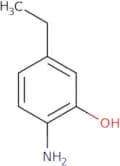
CAS :<p>2-Amino-5-ethylphenol is a phenolic compound that functions as an intermediate in the synthesis of other aminophenols. It is synthesized by reacting 2-aminoethanol with hydrochloric acid and sodium nitrite. 2-Amino-5-ethylphenol has been shown to be a proton donor, which means it can react with water to form hydrogen ions. It also has been found to interact with amines, which are organic compounds containing nitrogen. This interaction was found to depend on the concentration of the amine, pH, and temperature. The thermodynamic parameters for this reaction were determined using modelling and michaelis–menten kinetics.</p>Formule :C8H11NODegré de pureté :Min. 95%Couleur et forme :PowderMasse moléculaire :137.18 g/molN-4-Boc-2-piperazine carboxylic acid
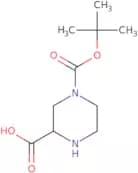
CAS :<p>N-4-Boc-2-piperazine carboxylic acid is an organic acid that functions in the metabolism of purine and bile acids. It is also involved in the metabolic pathway of the kidney, which is important for the elimination of waste products from the body. N-4-Boc-2-piperazine carboxylic acid has been shown to be useful as a marker for distinguishing between different types of kidney disease. It is a metabolite found in urine and can be used as an analytical tool for detecting renal function. This compound has also been shown to have long term effects on bile acid metabolism.</p>Formule :C10H18N2O4Degré de pureté :Min. 95%Couleur et forme :White PowderMasse moléculaire :230.26 g/molDL-Penicillamine
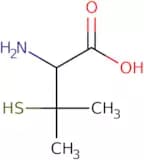
CAS :<p>DL-Penicillamine is a penicillamine that is used in the treatment of various diseases such as rheumatoid arthritis and primary sclerosing cholangitis. It has been shown to inhibit the production of inflammatory prostaglandins, which are responsible for pain and swelling. DL-Penicillamine has been used as a fluorescence probe for the detection of nonsteroidal anti-inflammatory drugs in water samples. DL-Penicillamine is also used to study coordination geometry and rate constants in solid tumours using fluorescence spectroscopy. This drug can be analyzed using chromatographic techniques or by X-ray diffraction data obtained with an electrochemical impedance spectroscopy system. The analytical method was published in 1981 by J.D. Hamer, et al., in "Analytical Chemistry".</p>Formule :C5H11NO2SDegré de pureté :Min. 95%Couleur et forme :White PowderMasse moléculaire :149.21 g/mol1-Piperidineethanol
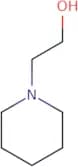
CAS :<p>1-Piperidineethanol is an active analogue of 1-piperidinepropanol. It has been shown to be a 5-HT4 receptor agonist that can inhibit the enzyme matrix polymerase, which is involved in the production of brain infarctions. The reaction mechanism for 1-piperidineethanol is not well understood, but it has been shown to react with hydrogen ions and amines to form a ternary complex. This complex reacts with hydrogen bond donors such as water or alcohols to form a reaction rate. The reaction rate depends on the concentration of hydrogen ions and amines in the solution.</p>Formule :C7H15NODegré de pureté :Min. 99%Couleur et forme :Colorless Clear LiquidMasse moléculaire :129.2 g/mol4-Chloro-2-hydroxybenzamide
CAS :<p>4-Chloro-2-hydroxybenzamide is a useful building block that is used in the synthesis of complex compounds. It can be used as a research chemical, reaction component, or a speciality chemical. It has been shown to be a versatile building block that can be used in the synthesis of various compounds with different structures and properties. 4-Chloro-2-hydroxybenzamide has also been shown to have high quality and is structurally related to other useful scaffolds such as 1,3-dihydroxybenzene.</p>Formule :C7H6ClNO2Degré de pureté :Min. 95 Area-%Couleur et forme :PowderMasse moléculaire :171.58 g/molPyridine 4-acetic acid HCl
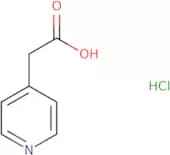
CAS :Pyridine 4-acetic acid HCl is a synthetic, fluorescent probe with reactive and luminescence properties. It is used for the detection of hydrogen bond formation in organic compounds. It is also used as a probe to study the molecular interactions between metal ions and β-unsaturated aldehydes. Pyridine 4-acetic acid HCl has been shown to be useful for transduction of light energy into chemical energy. The pyridine ring makes this compound an excellent candidate for molecular modeling studies due to its rigid structure.Formule :C7H8ClNO2Degré de pureté :Min. 95%Couleur et forme :PowderMasse moléculaire :173.6 g/molPoly ε L-lysine HCl approx MW 4500Da
CAS :Poly epsilon L-lysine HCl is a water soluble, biodegradable, cationic peptide that can be produced via fermentation by Streptomyces albulus. It shows a wide range of antimicrobial activity against microorganisms such as bacteria, yeasts and molds and is stable at high temperatures and under both acidic and alkaline conditions. This non-toxic poly-L-lysine is commonly used as a supplement or preservative in various food, beverage and cosmetics products. It can also be used for microscopy glass slides coating.Formule :(C6H12N2O•HCl)nDegré de pureté :Min. 95.0 Area-%Couleur et forme :Off-White Yellow Powdertert-Butyl N-[2-(aminooxy)ethyl]carbamate
CAS :tert-Butyl N-[2-(aminooxy)ethyl]carbamate is a fine chemical that can be used as a versatile building block in the synthesis of complex compounds. It can also be used to synthesize useful scaffolds, which are chemical substances that form the basis for the design of new drugs. This compound has CAS No. 75051-55-7 and is a useful intermediate, research chemicals, and reaction component for speciality chemicals. Tert-butyl N-[2-(aminooxy)ethyl]carbamate has been shown to have high quality and is an excellent reagent in organic synthesis.Formule :C7H16N2O3Degré de pureté :Min. 95 Area-%Couleur et forme :Clear LiquidMasse moléculaire :176.2 g/molDL-Phosphinothricin ammonium salt
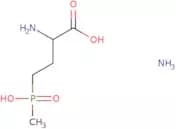
CAS :<p>Non-proteinogenic amino acid; Inhibitor of glutamine synthetase</p>Formule :C5H15N2O4PDegré de pureté :Min. 95 Area-%Couleur et forme :White PowderMasse moléculaire :198.16 g/mol(3-Isopropyl-[1,2,4]oxadiazol-5-yl)-acetonitrile
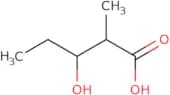
CAS :Heterocycle with nitrile functional handleFormule :C7H9N3ODegré de pureté :Min. 95%Couleur et forme :PowderMasse moléculaire :151.17 g/mol3-Hydroxy-2-methylpentanoic acid
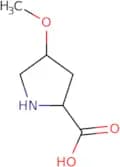
CAS :2-Hydroxy-3-methylpentanoic acid (HMVA) is an organic acid generated by L-isoleucine metabolism. There are 4 stereoisomers of HMVA (2S,3S-HMVA, 2R,3R-HMVA, 2S,3R-HMVA and 2R,3S-HMVA). HMVA is found in the urine and blood of normal individuals but in very elevated levels in patients with maple syrup urine disease (MSUD). Maple syrup urine disease (MSUD) is an inherited metabolic disease predominantly characterized by neurological dysfunction including psychomotor/delay/mental retardation.Formule :C6H12O3Degré de pureté :Min. 95%Couleur et forme :Clear LiquidMasse moléculaire :132.16 g/mol(2S,4S)-4-Methoxypyrrolidine-2-carboxylic acid
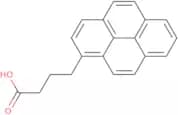
CAS :<p>Versatile small molecule scaffold</p>Formule :C6H11NO3Degré de pureté :Min. 95%Masse moléculaire :145.16 g/mol1-Pyrenebutyric acid
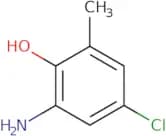
CAS :<p>1-Pyrenebutyric acid is a sodium salt that belongs to the group of polymerase chain reaction (PCR) reagents. It is used in PCR as a fluorescent probe for detecting the presence of dinucleotide phosphate and covalent linkages. 1-Pyrenebutyric acid has been shown to be a potential biomarker for electrochemical impedance spectroscopy and can be used as an optical sensor for optimal concentration. This compound has also been used in biological studies to detect the presence of human immunoglobulin, which binds to it with high affinity. 1-Pyrenebutyric acid undergoes a phase transition at a temperature between -190 and -195 degrees Celsius, which makes it useful as a fluorescence dye.</p>Formule :C20H16O2Degré de pureté :Min. 95%Couleur et forme :Off-White PowderMasse moléculaire :288.34 g/mol2-Amino-4-chloro-6-methylphenol
CAS :<p>2-Amino-4-chloro-6-methylphenol is a radioactive tracer that is used in biomedical imaging and has high binding affinity to the 5-HT3 receptor. 2-Amino-4-chloro-6-methylphenol can be used to study the mechanisms of cancer and other diseases. The specific activity of this tracer is around 1000 Ci/mmol at 37°C. This compound is a ligand for the 5HT3 receptor, which has been shown to be associated with nausea and vomiting, anxiety, depression, epilepsy, and Alzheimer's disease. It also binds with high affinity to serotonin receptors in the brain.</p>Formule :C7H8ClNODegré de pureté :Min. 95 Area-%Couleur et forme :PowderMasse moléculaire :157.6 g/mol3,5-Dihydroxy-2-naphthoic acid
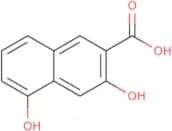
CAS :<p>3,5-Dihydroxy-2-naphthoic acid (DHNA) is an organic compound with a red shift in the optical spectrum. DHNA is a regulatory domain found in functional groups, such as salicylic acid. It has been shown to inhibit bacterial growth and gram-negative organisms, including Escherichia coli and Pseudomonas aeruginosa. DHNA is also a potent inducer of triticum aestivum lysine carboxypeptidase A and B, which are proteases that function in protein digestion. This property may be due to its ability to bind to receptor subtypes of the epidermal growth factor type 2 receptor family.</p>Formule :C11H8O4Degré de pureté :Min. 95%Couleur et forme :White PowderMasse moléculaire :204.18 g/mol3,5-Dihydroxycinnamic acid
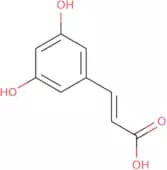
CAS :<p>3,5-Dihydroxycinnamic acid is a metabolite of the amino acid tyrosine and an intermediate in the biosynthesis of phenylalanine. It has been shown to have anti-inflammatory properties that may be due to its ability to inhibit prostaglandin synthesis. 3,5-Dihydroxycinnamic acid has also been identified as a carcinogen and is associated with an increased risk of cancer in women. 3,5-Dihydroxycinnamic acid is found in urine samples at concentrations between 2 and 10 µmol/L.</p>Formule :C9H8O4Degré de pureté :Min. 98 Area-%Couleur et forme :PowderMasse moléculaire :180.16 g/mol



![tert-Butyl N-[2-(aminooxy)ethyl]carbamate](/_next/image/?url=https%3A%2Fstatic.cymitquimica.com%2Fproducts%2F3D%2Fthumb-webp%2FADA05155.webp&w=3840&q=75)
![(3-Isopropyl-[1,2,4]oxadiazol-5-yl)-acetonitrile](/_next/image/?url=https%3A%2Fstatic.cymitquimica.com%2Fproducts%2F3D%2Fthumb-webp%2FPZB75236.webp&w=3840&q=75)