


Building Blocks
Sous-catégories appartenant à la catégorie "Building Blocks"
- Acides boroniques et dérivés de l'acide boronique(5.784 produits)
- Building Blocks Chiraux(1.244 produits)
- Building Blocks Hydrocarbonés(6.105 produits)
- Building Blocks organiques(61.076 produits)
205454 produits trouvés pour "Building Blocks"
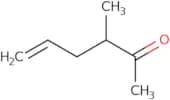
3-Methylhex-5-en-2-one
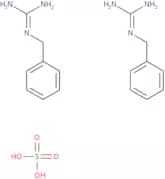
CAS :Versatile small molecule scaffoldFormule :C7H12ODegré de pureté :Min. 95%Masse moléculaire :112.17 g/mol1-Benzylguanidine hemisulfate
CAS :Versatile small molecule scaffoldFormule :C16H24N6O4SDegré de pureté :Min. 95%Masse moléculaire :396.47 g/molN,N-Dimethyl-5-nitropyridin-2-amine
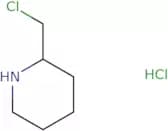
CAS :N,N-Dimethyl-5-nitropyridin-2-amine is a molecule with high polarizability. It is used in the production of optoelectronics and functional theory. The kinetic constants are determined by protonation and deprotonation reactions. The thermodynamic constants are determined by protonation and deprotonation reactions, as well as by the dipole moment of the compound. Preparative methods include intramolecular hydrogen transfer reaction or reductive amination. The impurities present in this molecule are aminopyridine and proton.Formule :C7H9N3O2Degré de pureté :Min. 95%Masse moléculaire :167.17 g/mol2-Chloromethyl-piperidine hydrochloride
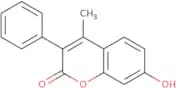
CAS :Versatile small molecule scaffoldFormule :C6H13Cl2NDegré de pureté :Min. 95%Masse moléculaire :170.08 g/mol7-Hydroxy-4-methyl-3-phenyl-2H-chromen-2-one
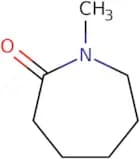
CAS :7-Hydroxy-4-methyl-3-phenyl-2H-chromen-2-one is a disubstituted coumarin nucleus and a potent anti-HIV agent. It has been synthesised as a lead compound to inhibit HIV reverse transcriptase by binding to its active site, which is the enzyme responsible for DNA synthesis. The probe exhibits dose dependent inhibition of HIV replication, with an IC50 of 0.5 μM. This compound also inhibits cysteine proteases, such as cathepsin B, and reverses the effects of certain chemotherapeutic agents on cancer cells. 7-Hydroxy-4-methyl-3-phenyl-2H-chromen-2-one is fluorescent in solution and this property can be used for detection purposes.Formule :C16H12O3Degré de pureté :Min. 95%Masse moléculaire :252.26 g/molN-Methylcaprolactam
CAS :N-Methylcaprolactam is a white, crystalline compound with a melting point of 28.5°C. It is soluble in water and insoluble in organic solvents. N-Methylcaprolactam has a molecular weight of 152.2 g/mol and its chemical formula is C8H14N2O2. The divalent hydrocarbon has an aromatic hydrocarbon ring with two protonated nitrogen atoms bonded to this ring, which are responsible for the molecule's polarizability. N-Methylcaprolactam has been shown to activate rat liver microsomes, which may be due to its ability to bind to the enzyme adenylate cyclase and inhibit protein synthesis. This drug also causes a decrease in the level of water vapor and chloride ions in the environment and can be found as an environmental pollutant from metal hydroxides or water molecules reacting with aliphatic hydrocarbons such as methane or ethane. Struct
Formule :C7H13NODegré de pureté :Min. 95%Masse moléculaire :127.18 g/mol4-(1H-benzo[d]imidazol-2-yl)-N,N-dimethylaniline
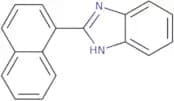
CAS :4-(1H-benzo[d]imidazol-2-yl)-N,N-dimethylaniline is a molecule with the chemical formula C8H6N2. It has an optimised vibrational profile that can be used to identify it. The functional theory of molecular orbitals predicts that 4-(1H-benzo[d]imidazol-2-yl)-N,N-dimethylaniline will have a molecular electrostatic potential (MEP) of -0.13 kcal/mol and a shift of 0.04 cm(-1). The MEP and shift are calculated by using a single crystal x-ray diffraction experiment. This molecule has conformational parameters that can be calculated by using optimised atomic orbital parameters, which will give the conformational probability for each conformation as well as the total energy for each conformation. The conformations are then plotted on a graph in order to find the most probable conFormule :C15H15N3Degré de pureté :Min. 95%Masse moléculaire :237.31 g/mol2-(Naphthalen-1-yl)-1H-1,3-benzodiazole
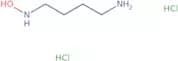
CAS :Versatile small molecule scaffoldFormule :C17H12N2Degré de pureté :Min. 95%Masse moléculaire :244.29 g/molN-(4-Aminobutyl)hydroxylamine dihydrochloride
CAS :Versatile small molecule scaffoldFormule :C4H14Cl2N2ODegré de pureté :Min. 95%Masse moléculaire :177.07 g/molN-Butylacrylamide
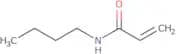
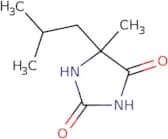
CAS :N-Butylacrylamide is a monomer that is used in the production of polymers. It is a colorless, oily liquid that is soluble in organic solvents but not water. N-Butylacrylamide has been shown to inhibit microbial growth by binding to phosphonates and organic solvents, which are found on the surface of bacteria. These interactions lead to cell death by preventing the uptake of nutrients and causing leakage of cellular contents. The phase transition temperature for N-butyl acrylamide is below room temperature, making it an ideal candidate for use as an anti-infective agent.Formule :C7H13NODegré de pureté :Min. 95%Masse moléculaire :127.18 g/mol5-Iso-butyl-5-methylhydantoin
CAS :5-Iso-butyl-5-methylhydantoin is an organic compound that contains a sulphonic acid group. It has the chemical formula of CH3C(O)NHCH2SO3H. 5-Iso-butyl-5-methylhydantoin is soluble in water and has a pH between 1 and 4. It can be used as a solvent for substances with high solubility, such as additives, solutions, and inorganic materials. The flow properties of 5-isobutyl-5-methylhydantoin are dependent on the binder or carbon atoms present.
Formule :C8H14N2O2Degré de pureté :Min. 95%Masse moléculaire :170.21 g/mol(3,3-Dimethylbicyclo[2.2.1]heptan-2-yl)methanol
CAS :Versatile small molecule scaffoldFormule :C10H18ODegré de pureté :Min. 95%Masse moléculaire :154.25 g/mol(2-Phenylethyl)propylamine
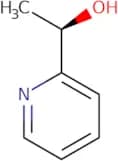
CAS :Produit contrôlé2-Phenylethyl)propylamine is an aminophenol that is a monosubstituted aromatic compound. 2-Phenylethyl)propylamine has been shown to be a bifunctional substrate for the cytochrome P450 enzyme and is also a receptor affinity analog of cannabinoids. The liposome formulation of 2-phenylethylamine has been shown to have an enhanced blood stability, which makes it useful for analytical toxicology as well as in pharmaceutical research. The oxidase type of 2-phenylethylamine has been shown to have inorganic particles, which may cause particle aggregation during storage.Formule :C11H17NDegré de pureté :Min. 95%Masse moléculaire :163.26 g/mol(R)-2-(1-Hydroxyethyl)pyridine
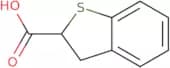
CAS :(R)-2-(1-Hydroxyethyl)pyridine is an enantiopure compound that is used as a catalyst in the production of alcohols, carbinols and hydrocarbons. It has been shown to be a high yield preparative catalyst for catalytic asymmetric reactions. The enzyme alcohol dehydrogenase catalyses the oxidation of (R)-2-(1-hydroxyethyl)pyridine to form an intermediate that can then be oxidized by the enzyme carbinol dehydrogenase, which produces carbinols. This product has also been found to act as a vasodilator and nonselective inhibitor of phosphodiesterases 3 and 4.Formule :C7H9NODegré de pureté :Min. 95%Masse moléculaire :123.15 g/mol2,3-Dihydro-1-benzothiophene-2-carboxylic acid
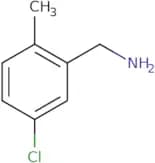
CAS :2,3-Dihydro-1-benzothiophene-2-carboxylic acid is a hydrocarbon with the molecular formula C10H8O3. It has a benzene and phenolic functional groups. The compound is quantified by gas chromatography, which can be preselected to identify specific compounds, such as hydrocarbons and aromatic hydrocarbons. The compound can also be analyzed using spectrometric techniques, such as UV/Vis spectroscopy. 2,3-Dihydro-1-benzothiophene-2-carboxylic acid is found in databases of mass spectrometry data. It can be used to determine the structure of benzylsuccinic acid and naphthalenes.Formule :C9H8O2SDegré de pureté :Min. 95%Masse moléculaire :180.23 g/mol5-Chloro-2-methylbenzylamine
CAS :5-Chloro-2-methylbenzylamine is a chemical compound that has been shown to be an effective ozone depleter. It has also been used to study the relationship between chemical structure and reactivity, as well as in regression analysis. The ionic, nucleophilic, and electron properties of 5-Chloro-2-methylbenzylamine have been studied by looking at its affinity for different metal ions. This molecule can be used in organic pollutant remediation because of its ability to catalyze the regeneration of ozonide when it is oxidized by oxygen in water. This reaction is reversible, so 5-Chloro-2-methylbenzylamine can be regenerated from the ozonide product.
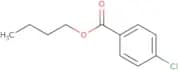
Formule :C8H10ClNDegré de pureté :Min. 95%Masse moléculaire :155.63 g/molButyl 4-chlorobenzoate
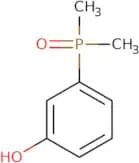
CAS :Butyl 4-chlorobenzoate is an organic compound that has a radical chain mechanism of action. It is used as a photosensitizer in photodynamic therapy and can be activated by ultraviolet light. The radical species generated by this drug attacks the DNA of the bacteria, leading to cell death. One of the key steps in the process is the transfer of a hydrogen atom from butyl 4-chlorobenzoate to an electron donor, such as hydroxyanisole, followed by irradiation with light to generate radical species. Butyl 4-chlorobenzoate also inhibits bacterial growth through its ability to act as an acid and cause acidic pH changes within cells.Formule :C11H13ClO2Degré de pureté :Min. 95%Masse moléculaire :212.67 g/mol3-(Dimethylphosphoryl)phenol
CAS :Versatile small molecule scaffold
Formule :C8H11O2PDegré de pureté :Min. 95%Masse moléculaire :170.15 g/mol2-Methylimidazo[1,2-a]pyrazin-3-amine
CAS :Versatile small molecule scaffoldFormule :C7H8N4Degré de pureté :Min. 95%Masse moléculaire :148.17 g/mol2-Phenylimidazo[1,2-a]pyrazin-3-amine
CAS :Versatile small molecule scaffoldFormule :C12H10N4Degré de pureté :Min. 95%Masse moléculaire :210.23 g/mol


![4-(1H-benzo[d]imidazol-2-yl)-N,N-dimethylaniline](/_next/image/?url=https%3A%2Fstatic.cymitquimica.com%2Fproducts%2F3D%2Fthumb-webp%2FCAA56271.webp&w=3840&q=75)
![(3,3-Dimethylbicyclo[2.2.1]heptan-2-yl)methanol](/_next/image/?url=https%3A%2Fstatic.cymitquimica.com%2Fproducts%2F3D%2Fthumb-webp%2FCBA89945.webp&w=3840&q=75)

![2-Methylimidazo[1,2-a]pyrazin-3-amine](/_next/image/?url=https%3A%2Fstatic.cymitquimica.com%2Fproducts%2F3D%2Fthumb-webp%2FCBA95552.webp&w=3840&q=75)
![2-Phenylimidazo[1,2-a]pyrazin-3-amine](/_next/image/?url=https%3A%2Fstatic.cymitquimica.com%2Fproducts%2F3D%2Fthumb-webp%2FCBA95553.webp&w=3840&q=75)