Building Blocks
Sous-catégories appartenant à la catégorie "Building Blocks"
- Acides boroniques et dérivés de l'acide boronique(5.781 produits)
- Building Blocks Chiraux(1.242 produits)
- Building Blocks Hydrocarbonés(6.101 produits)
- Building Blocks organiques(61.038 produits)
205338 produits trouvés pour "Building Blocks"
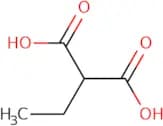
Ethylmalonic Acid
CAS :Ethylmalonic acid (EA) is a metabolic intermediate that is synthesized in the mitochondria. It is a product of the oxidation of malonyl-CoA and succinyl-CoA by the enzyme dehydrogenase. EA has been shown to be produced in vivo, and can be used as a marker for mitochondrial dysfunction. EA levels are increased in patients with metabolic disorders such as diabetes mellitus and obesity, as well as other diseases such as cancer, Alzheimer’s disease, Parkinson’s disease, Huntington’s disease, multiple sclerosis, amyotrophic lateral sclerosis (ALS), heart failure, chronic obstructive pulmonary disorder (COPD), kidney diseases, liver diseases and anemia. EA levels can also be used to diagnose mitochondrial disorders such as mitochondrial DNA depletion syndrome and Kearns-Sayre syndrome.Formule :C5H8O4Degré de pureté :Min. 95%Masse moléculaire :132.11 g/mol1,8-Naphthosultam
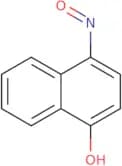
CAS :1,8-Naphthosultam is a naphthenic molecule that has been shown to have redox potentials and functional groups. It is an inhibitor of the catalytic mechanism of the proton pump in the membrane of the gastric parietal cell. The inhibition of this enzyme leads to a decrease in gastric acid secretion and it can be used for the treatment of dyspepsia. 1,8-Naphthosultam binds to a pharmacophore on the proton pump (H+/K+ ATPase) that is composed of two amino acid residues, Asp-85 and His-57. This binding prevents substrate from entering the catalytic site, which eventually leads to inhibition of acid secretion.Formule :C10H7NO2SDegré de pureté :Min. 95%Masse moléculaire :205.23 g/mol4-Nitrosonaphthalen-1-ol
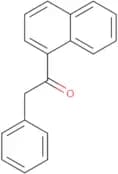
CAS :4-Nitrosonaphthalen-1-ol is a chemical compound that can be used as an immunosorbent in diagnostic assays. It has been shown to react with parathyroid hormone and to have a detection sensitivity of 2.5 pg/mL in immunoassays. 4-Nitrosonaphthalen-1-ol is also used for the detection of nitric oxide by electrochemical biosensors, with a detection limit of 0.4 μM and a reaction rate of 10 seconds. The technique is most sensitive to metal ions such as Cu2+, Ni2+, Zn2+, and Mn2+. 4NOS has been shown to bind to the membrane of cells at nanomolar concentrations, making it useful for molecular probes, low detection, and nanomaterials.Formule :C10H7NO2Degré de pureté :Min. 95%Masse moléculaire :173.17 g/mol1-(naphthalen-1-yl)-2-phenylethanone
CAS :1-(Naphthalen-1-yl)-2-phenylethanone is a ketone that has been prepared by reacting anhydrous sodium acetate with naphthalene-1,2-dicarboxylic acid. The yield of this reaction is 65%. 1-(Naphthalen-1-yl)-2-phenylethanone has been characterized by IR and NMR spectroscopy as well as elemental analysis. It has been shown to be amidated and methylated, which are the two most common methods of derivatization. 1-(Naphthalen-1-yl)-2-phenylethanone can be dehydrated in the presence of aryl halides or subjected to a carboxylic acid mediated carbonylation to form an anion, which can then be further elucidated by fragmentation. This molecule also undergoes halide mediated reactions, such as the formation of benzyl bromide from benzene andFormule :C18H14ODegré de pureté :Min. 95%Masse moléculaire :246.3 g/mol2-Chloronaphthalen-1-ol
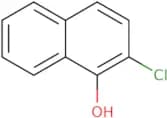
CAS :2-Chloronaphthalen-1-ol is a molecule that has been studied as a possible therapeutic agent for autoimmune diseases. This compound binds to the pd-l1 receptor, which is associated with autoimmune diseases. 2-Chloronaphthalen-1-ol also binds to monoclonal antibodies, which are used in diagnostic procedures and histochemical staining of biological samples. The reactive functional group on this molecule allows it to bind to other molecules through covalent bonds, which can lead to structural analysis and diagnosis of certain diseases. 2-Chloronaphthalen-1-ol is an organic compound that belongs to the class of naphthalene derivatives. It has a reactive functional group that allows it to form covalent bonds with other molecules. This property has made it an important model system for studying reactive functional groups in chemical reactions and for diagnostic purposes in immunology and histochemistry.Formule :C10H7ClODegré de pureté :Min. 95%Masse moléculaire :178.61 g/mol6-Hydroxynaphthalene-1,2-dione
CAS :Versatile small molecule scaffold
Formule :C10H6O3Degré de pureté :Min. 95%Masse moléculaire :174.15 g/molN-Propylnaphthalen-1-amine
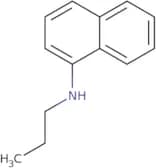
CAS :N-Propylnaphthalen-1-amine is a heterocycle that has two functional groups, fluorescence and photophysical properties. It can be synthesised in nature or synthetically. N-Propylnaphthalen-1-amine is used as an antifungal agent with a mechanism of action that is not yet fully understood. It interacts with the chlorides on the cell wall, which enhances its ability to kill fungi. The constant for this drug is 1×10^5M and the chloride transfer interaction constant is 2×10^2L/mol.
Formule :C13H15NDegré de pureté :Min. 95%Masse moléculaire :185.26 g/mol3-(9H-Purin-6-ylsulfanyl)propanoic acid
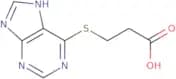
CAS :Versatile small molecule scaffoldFormule :C8H8N4O2SDegré de pureté :Min. 95%Masse moléculaire :224.24 g/mol2-Iodo-m-xylene
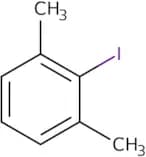
CAS :2-Iodo-m-xylene is a synthetic compound that can be used in the synthesis of other chemicals. It is an aromatic hydrocarbon with two isomers: ortho-iodo and para-iodo. 2-Iodo-m-xylene can be used as a photoelectron donor, which means it can provide electrons to other molecules or atoms. This chemical has been shown to cleave bonds and form new compounds when exposed to radiation or heat. The mechanism of bond cleavage is thought to involve the formation of free radicals, which are highly reactive molecules that contain an unpaired electron. 2-Iodo-m-xylene forms methylbenzenes from chlorobenzene when irradiated with light. When protonated, this molecule forms chlorobenzene and silicon tetrachloride, a volatile liquid compound.Formule :C8H9IDegré de pureté :Min. 95%Masse moléculaire :232.06 g/mol2-Hydroxy-3-methyl-butanedioic acid
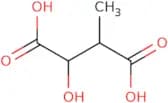
CAS :2-Hydroxy-3-methyl-butanedioic acid is a natural compound that belongs to the group of regulatory molecules. It is a metabolite of 2,3-dihydroxypropanoic acid and it is biosynthesized in bacteria by dehydrogenase enzymes. It has been shown to have allosteric binding on the Nudix hydrolase domain and inhibit the activity of this enzyme. The size exclusion chromatography technique was used to determine that 2-hydroxy-3-methyl-butanedioic acid inhibits the growth of Neisseria meningitidis bacteria. This compound has also been found to be useful in diagnostic tests for detecting Neisseria meningitidis infections.Formule :C5H8O5Degré de pureté :Min. 95%Masse moléculaire :148.11 g/mol2,4-Dibromo-6-methylphenol
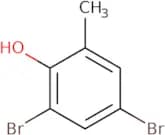
CAS :2,4-Dibromo-6-methylphenol is a halophenol that can be found in human urine. It is used as a diagnostic agent for the identification of propionate. 2,4-Dibromo-6-methylphenol was detected by mass spectrometric analysis and structural studies. The optimum concentration for this compound is 0.5 ppm in hydrochloric acid.Formule :C7H6Br2ODegré de pureté :Min. 95%Couleur et forme :PowderMasse moléculaire :265.93 g/molN,N-Dimethyl-o-toluidine
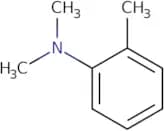
CAS :Dimethyl-o-toluidine is an aryl amine that can be used as an antimicrobial agent. It has been shown to have the highest redox potential of all the aryl amines and has been found to be effective against bacteria and fungi. Dimethyl-o-toluidine can also be used as a therapeutic drug in the treatment of insulin resistance, which may be due to its ability to inhibit the activity of enzymes that catalyze the formation of reactive oxygen species (ROS) and nitric oxide (NO). This drug binds to amines, cationic polymerization, and physiological effects. Dimethyl-o-toluidine is rapidly metabolized by esterases in the blood and liver, meaning it does not accumulate in these organs. It is excreted from the body through urine or bile within 24 hours after administration.Formule :C9H13NDegré de pureté :Min. 95%Masse moléculaire :135.21 g/mol1-Chloro-2-naphthol
CAS :1-Chloro-2-naphthol is a chemical compound that is used for biological purposes.Formule :C10H7ClODegré de pureté :Min. 95%Masse moléculaire :178.62 g/mol1,2,3,4-Tetrachlorobenzene
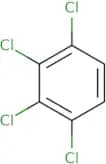
CAS :1,2,3,4-Tetrachlorobenzene is a chemical compound that has been used as an intermediate in the production of other chemicals. It is also used as a solvent and in the manufacture of dyes and pesticides. 1,2,3,4-Tetrachlorobenzene is stable in air but reacts with metal hydroxides and sodium carbonate to form tetrachloro-1-hydroxybenzene. It has shown hypoglycemic effect in bacterial strain. The toxicity of 1,2,3,4-tetrachlorobenzene is evaluated by studying its effects on redox potential and water vapor. It also causes liver cells to release enzymes; therefore it can be used for analytical methods. The surface methodology of 1,2,3,4-tetrachlorobenzene can be studied by solid phase microextraction (SPME).Formule :C6H2Cl4Degré de pureté :Min. 95%Masse moléculaire :215.89 g/mol2-Methylquinoline-3-carboxylic acid
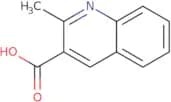
CAS :2-Methylquinoline-3-carboxylic acid (2MQCA) is a nucleophilic, acidic and hiv integrase inhibitor. It has been shown to inhibit the activity of HIV integrase by binding to the active site of the enzyme. 2MQCA has a strong affinity for chloride ions and is soluble in organic solvents such as diethyl ether or chloroform. 2MQCA shows diffraction peaks at 2.5Å, which is indicative of an acidic molecule with a hydroxymethyl group. Reaction time for a reaction between 2MQCA and methylamine was found to be optimal at 10 minutes at room temperature and pH 5. The technique used for this reaction was NMR spectroscopy.Formule :C11H9NO2Degré de pureté :Min. 95%Masse moléculaire :187.2 g/mol1,2,4,5-Tetraiodobenzene
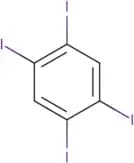
CAS :1,2,4,5-Tetraiodobenzene is a fluorescent molecule that has been used in optical imaging and molecular imaging. 1,2,4,5-Tetraiodobenzene is a fluorophore with an isolated yield of 100%. It has been shown to be useful as a rate enhancer for the transfer of singlet oxygen.
Formule :C6H2I4Degré de pureté :Min. 95%Masse moléculaire :581.7 g/mol2-Ethylsuccinic acid
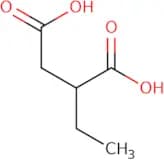
CAS :2-Ethylsuccinic acid is a trifluoroacetic acid derivative. It can be used as a cationic surfactant, cross-linking agent, and a trifluoromethanesulfonic acid (TFMS) catalyst. 2-Ethylsuccinic acid has been shown to react with calcium carbonate, hydroxyl group, or divalent hydrocarbon to form a film-forming polymer. This compound also has the ability to form polycarboxylic acids when reacted with glycol ethers and aluminium. 2-Ethylsuccinic acid is used as a solid catalyst for the acylation reaction of amines and alcohols.
Formule :C6H10O4Degré de pureté :Min. 95%Masse moléculaire :146.14 g/mol2-Hydroxyheptanoic acid
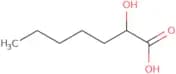
CAS :2-Hydroxyheptanoic acid is a metabolite of 2,6-dihydroxypyridine (DHP), which is an organic compound that can be found in the environment and produced by microbes. 2-Hydroxyheptanoic acid has been shown to inhibit the function of the ryanodine receptor in rat cardiac cells, which may cause arrhythmia. The drug also inhibits fatty acid synthesis and hydrolysis in the small intestine. It is synthesized from oleic acid through demethylation or hydroxylation. The technique used to produce this drug is not known. Verticillium produces this metabolite as a result of its metabolism of DHP.END>Formule :C7H14O3Degré de pureté :Min. 95%Masse moléculaire :146.18 g/molp-Phenetidine Hydrochloride
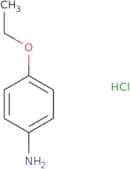
CAS :p-Phenetidine hydrochloride is a pharmaceutical preparation that is used as an intermediate in the production of chlorate, which is used in the synthesis of other organochlorine compounds. It can be prepared by reacting p-phenetidine with a solution of hydrochloric acid and zirconium dichloride in a reaction vessel. The reaction products are then heat treated to produce a solid catalyst, which can be further reacted with organic acids to form metal ion complexes. These complexes are stable and can be separated from unreacted reactants by distillation or recrystallization. The kinetic method has been shown to be useful for determining the order of reaction between these complex ions. The benzalkonium chloride acts as a cocatalyst in this process, while the solid catalyst provides kinetic stability to the process.Formule :C8H11NO·HClDegré de pureté :Min. 95%Masse moléculaire :173.64 g/molPramoxine HCl
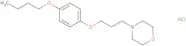
CAS :Pramoxine HCl is a leukotriene receptor antagonist that inhibits the action of the enzyme phospholipase A2, which is responsible for the conversion of arachidonic acid to prostaglandin H2. Pramoxine HCl has been shown to inhibit skin cell proliferation and induce apoptosis in human skin cells. It also has anti-inflammatory properties, and may have therapeutic potential for treating autoimmune diseases such as Crohn's disease. Pramoxine HCl is a colorless liquid that has a particle size of less than 10 microns, and has an odor of benzalkonium chloride. The melting point of pramoxine is 203°C, and its boiling point is 390°C.Formule :C17H27NO3·HClDegré de pureté :Min. 95%Masse moléculaire :329.86 g/mol