Building Blocks
Cette section contient des produits fondamentaux pour la synthèse de composés organiques et biologiques. Building blocks sont les matériaux de départ essentiels utilisés pour construire des molécules complexes à travers diverses réactions chimiques. Ils jouent un rôle crucial dans la découverte de médicaments, la science des matériaux et la recherche chimique. Chez CymitQuimica, nous offrons une gamme diversifiée de building blocks de haute qualité pour soutenir vos recherches innovantes et projets industriels, en vous assurant de disposer des composants essentiels pour une synthèse réussie.
Sous-catégories appartenant à la catégorie "Building Blocks"
- Acides boroniques et dérivés de l'acide boronique(5.783 produits)
- Building Blocks Chiraux(1.242 produits)
- Building Blocks Hydrocarbonés(6.105 produits)
- Building Blocks organiques(61.055 produits)
205383 produits trouvés pour "Building Blocks"
Trier par
Degré de pureté (%)
0
100
|
0
|
50
|
90
|
95
|
100
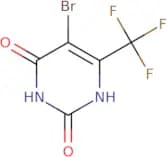
5-Bromo-6-(trifluoromethyl)pyrimidine-2,4(1H,3H)-dione
CAS :Versatile small molecule scaffold
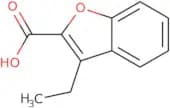
Formule :C5H2BrF3N2O2Degré de pureté :Min. 95%Masse moléculaire :258.98 g/mol3-Ethyl-1-benzofuran-2-carboxylic acid
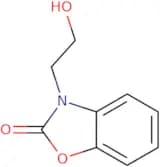
CAS :Versatile small molecule scaffoldFormule :C11H10O3Degré de pureté :Min. 95%Masse moléculaire :190.19 g/mol3-(2-Hydroxyethyl)-2,3-dihydro-1,3-benzoxazol-2-one
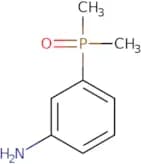
CAS :Versatile small molecule scaffoldFormule :C9H9NO3Degré de pureté :Min. 95%Masse moléculaire :179.17 g/mol3-(Dimethylphosphoryl)aniline
CAS :Versatile small molecule scaffoldFormule :C8H12NOPDegré de pureté :Min. 95%Masse moléculaire :169.16 g/mol1-[(2-Methylpropyl)sulfanyl]propan-2-one
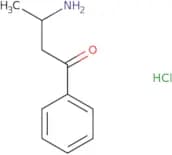
CAS :Versatile small molecule scaffoldFormule :C7H14OSDegré de pureté :Min. 95%Masse moléculaire :146.25 g/mol3-Amino-1-phenylbutan-1-one hydrochloride
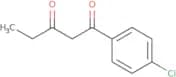
CAS :Versatile small molecule scaffoldFormule :C10H14ClNODegré de pureté :Min. 95%Masse moléculaire :199.68 g/mol1-(4-Chlorophenyl)pentane-1,3-dione
CAS :Versatile small molecule scaffold
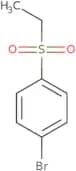
Formule :C11H11ClO2Degré de pureté :Min. 95%Masse moléculaire :210.65 g/mol1-Bromo-4-(ethylsulfonyl)benzene
CAS :Versatile small molecule scaffoldFormule :C8H9BrO2SDegré de pureté :Min. 95%Masse moléculaire :249.13 g/mol2H,3H,4H-Pyrido[1,2-a][1,3,5]triazine-2,4-dione
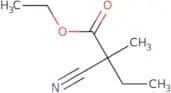
CAS :Versatile small molecule scaffoldFormule :C7H5N3O2Degré de pureté :Min. 95%Masse moléculaire :163.13 g/molEthyl 2-cyano-2-methylbutanoate
CAS :Versatile small molecule scaffold
Formule :C8H13NO2Degré de pureté :Min. 95%Masse moléculaire :155.19 g/mol3-{3,5-Dioxo-4-azatricyclo[5.2.1.0,2,6]dec-8-en-4-yl}propanoic acid
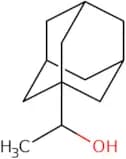
CAS :Versatile small molecule scaffoldFormule :C12H13NO4Degré de pureté :Min. 95%Masse moléculaire :235.24 g/mol1-(1-Adamantyl)ethanol
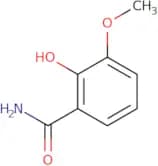
CAS :1-(1-Adamantyl)ethanol is an organic solution with a viscosity of 1.06 cP at 20 °C. It has a hydrochloric acid (HCl) content of less than 0.001%. The chemical compound has been shown to be therapeutically effective in autoimmune diseases, such as multiple sclerosis, lupus erythematosus, and rheumatoid arthritis. 1-(1-Adamantyl)ethanol has been shown to inhibit the production of proinflammatory cytokines and chemokines that are associated with these diseases. This compound also inhibits the activation of T cells and B cells, which are immune cells that play important roles in these inflammatory processes. 1-(1-Adamantyl)ethanol can be taken orally in a pharmaceutical dosage form or intravenously as an infusion therapy.Formule :C12H20ODegré de pureté :Min. 95%Masse moléculaire :180.29 g/mol2-Hydroxy-3-methoxybenzamide
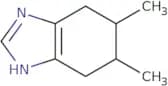
CAS :2-Hydroxy-3-methoxybenzamide is an organic molecule that binds to a series of receptors in the central nervous system. It is thought to be an agonist for the D2 receptor, which mediates inhibition of dopamine release from neurons. 2-Hydroxy-3-methoxybenzamide has been synthesized and shown to have high affinity for the D2 receptor, as well as other receptors in the brain. This drug has been shown to have beneficial effects on hyperactivity in rats and could be used for the treatment of Parkinson's disease or schizophrenia.Formule :C8H9NO3Degré de pureté :Min. 95%Masse moléculaire :167.16 g/mol5,6-Dimethyl-4,5,6,7-tetrahydro-1H-1,3-benzodiazole
CAS :Versatile small molecule scaffold
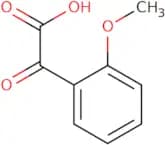
Formule :C9H14N2Degré de pureté :Min. 95%Masse moléculaire :150.22 g/mol2-(2-Methoxyphenyl)-2-oxoacetic acid
CAS :Versatile small molecule scaffold
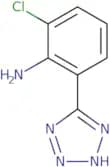
Formule :C9H8O4Degré de pureté :Min. 95%Masse moléculaire :180.16 g/mol2-Chloro-6-(2H-tetrazol-5-yl)aniline
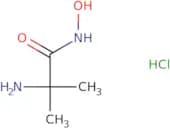
CAS :Versatile small molecule scaffoldFormule :C7H6ClN5Degré de pureté :Min. 95%Masse moléculaire :195.61 g/mol2-Amino-N-hydroxy-2-methylpropanamide hydrochloride
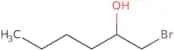
CAS :Versatile small molecule scaffoldFormule :C4H11ClN2O2Degré de pureté :Min. 95%Masse moléculaire :154.59 g/mol1-Bromohexan-2-ol
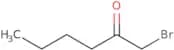
CAS :1-Bromohexan-2-ol is a chiral alcohol that has been used to study the mechanisms of dehydration and stabilization. The molecule is also an epitaxial reagent. It has been shown that 1-bromohexan-2-ol dehydrates in acidic conditions to produce 1,2-dibromohexane. Furthermore, it can be used as an optical resolution agent for chiral molecules and can be used during the synthesis of ionic liquids. 1-Bromohexan-2-ol is a chiral molecule with a high degree of stereospecificity, which can be used in catalysis and bilayered supramolecular assembly.Formule :C6H13BrODegré de pureté :Min. 95%Masse moléculaire :181.07 g/mol1-Bromohexan-2-one
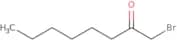
CAS :1-Bromohexan-2-one is a bifunctional monomer that can be used in the synthesis of polystyrene. It has two functional groups, a carboxylic acid and an alcohol. The carboxyl group of the 1-bromohexan-2-one is activated by a strong base such as pyridine to form an ester or an amide. The alcohol group can be converted into a carbonyl group with a strong oxidizing agent such as benzoic acid, which is then reacted with ammonia to form an amine. 1-Bromohexan-2-one is also used in the synthesis of fluorescent compounds. It reacts with various heterocycles to produce fluorescence when irradiated with light at wavelengths of 350 nm or 380 nm.Formule :C6H11BrODegré de pureté :Min. 95%Masse moléculaire :179.05 g/mol1-Bromooctan-2-one
CAS :1-Bromooctan-2-one (BOA) is a lipolytic enzyme inhibitor that blocks the activity of phosphatidylcholine lipase and monoacylglycerol lipase. It also inhibits transport properties and has been shown to inhibit histidine decarboxylase, which converts histidine into histamine. The nitrogen atoms in BOA are substituted with fluorine and can be converted to enantiopure derivatives by chemoenzymatic reactions. These derivatives have been shown to be more potent inhibitors of phosphatidylcholine lipase than BOA itself.Formule :C8H15BrODegré de pureté :Min. 95%Masse moléculaire :207.11 g/mol

![1-[(2-Methylpropyl)sulfanyl]propan-2-one](/_next/image/?url=https%3A%2Fstatic.cymitquimica.com%2Fproducts%2F3D%2Fthumb-webp%2FBBA72861.webp&w=3840&q=75)
![2H,3H,4H-Pyrido[1,2-a][1,3,5]triazine-2,4-dione](/_next/image/?url=https%3A%2Fstatic.cymitquimica.com%2Fproducts%2F3D%2Fthumb-webp%2FBBA73741.webp&w=3840&q=75)
![3-{3,5-Dioxo-4-azatricyclo[5.2.1.0,2,6]dec-8-en-4-yl}propanoic acid](/_next/image/?url=https%3A%2Fstatic.cymitquimica.com%2Fproducts%2F3D%2Fthumb-webp%2FBBA74997.webp&w=3840&q=75)