Building Blocks
Cette section contient des produits fondamentaux pour la synthèse de composés organiques et biologiques. Building blocks sont les matériaux de départ essentiels utilisés pour construire des molécules complexes à travers diverses réactions chimiques. Ils jouent un rôle crucial dans la découverte de médicaments, la science des matériaux et la recherche chimique. Chez CymitQuimica, nous offrons une gamme diversifiée de building blocks de haute qualité pour soutenir vos recherches innovantes et projets industriels, en vous assurant de disposer des composants essentiels pour une synthèse réussie.
Sous-catégories appartenant à la catégorie "Building Blocks"
- Acides boroniques et dérivés de l'acide boronique(5.778 produits)
- Building Blocks Chiraux(1.242 produits)
- Building Blocks Hydrocarbonés(6.098 produits)
- Building Blocks organiques(61.059 produits)
199580 produits trouvés pour "Building Blocks"
Trier par
Degré de pureté (%)
0
100
|
0
|
50
|
90
|
95
|
100
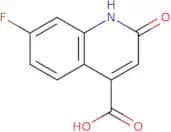
7-Fluoro-2-oxo-1,2-dihydroquinoline-4-carboxylic acid
CAS :Versatile small molecule scaffoldFormule :C10H6FNO3Degré de pureté :Min. 95%Masse moléculaire :207.16 g/mol(2,5-Dibromopyridin-3-yl)methanol
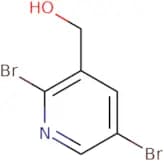
CAS :<p>Versatile small molecule scaffold</p>Formule :C6H5Br2NODegré de pureté :Min. 95%Masse moléculaire :266.92 g/mol4-bromo-5-fluoro-1H-indole
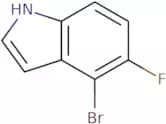
CAS :<p>Versatile small molecule scaffold</p>Formule :C8H5BrFNDegré de pureté :Min. 95%Masse moléculaire :214.04 g/mol4-Bromo-2-methoxy-5-methylpyridine
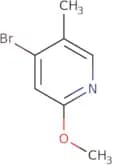
CAS :Versatile small molecule scaffoldFormule :C7H8BrNODegré de pureté :Min. 95%Masse moléculaire :202.05 g/mol2-Chloro-4-fluoro-3-methylpyridine
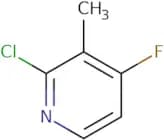
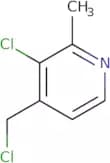
CAS :Versatile small molecule scaffoldFormule :C6H5ClFNDegré de pureté :Min. 95%Masse moléculaire :145.56 g/mol3-Chloro-4-(chloromethyl)-2-methylpyridine
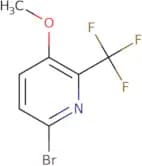
CAS :Versatile small molecule scaffoldFormule :C7H7Cl2NDegré de pureté :Min. 95%Masse moléculaire :176.04 g/mol6-Bromo-3-methoxy-2-(trifluoromethyl)pyridine
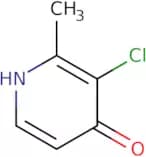
CAS :Versatile small molecule scaffoldFormule :C7H5BrF3NODegré de pureté :Min. 95%Masse moléculaire :256.02 g/mol3-Chloro-2-methylpyridin-4-ol
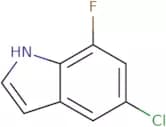
CAS :Versatile small molecule scaffoldFormule :C6H6ClNODegré de pureté :Min. 95%Masse moléculaire :143.57 g/mol5-Chloro-7-fluoro-1H-indole
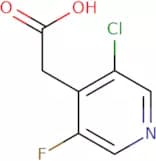
CAS :<p>Versatile small molecule scaffold</p>Formule :C8H5ClFNDegré de pureté :Min. 95%Masse moléculaire :169.58 g/mol2-(3-Chloro-5-fluoropyridin-4-yl)acetic acid
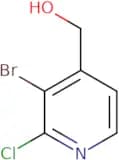
CAS :Versatile small molecule scaffoldFormule :C7H5ClFNO2Degré de pureté :Min. 95%Masse moléculaire :189.57 g/mol(3-Bromo-2-chloropyridin-4-yl)methanol
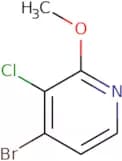
CAS :Versatile small molecule scaffoldFormule :C6H5BrClNODegré de pureté :Min. 95%Masse moléculaire :222.47 g/mol4-Bromo-3-chloro-2-methoxypyridine
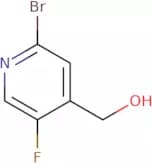
CAS :Versatile small molecule scaffoldFormule :C6H5BrClNODegré de pureté :Min. 95%Masse moléculaire :222.47 g/mol(2-Bromo-5-fluoropyridin-4-yl)methanol
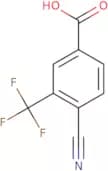
CAS :<p>Versatile small molecule scaffold</p>Formule :C6H5BrFNODegré de pureté :Min. 95%Masse moléculaire :206.01 g/mol4-Cyano-3-(trifluoromethyl)benzoic acid
CAS :<p>4-Cyano-3-(trifluoromethyl)benzoic acid (4CBA) is a chemical compound that exhibits a high uptake by cells. It is used in the treatment of infectious diseases and has been shown to be active against viruses, such as HIV, and bacteria, such as Mycobacterium tuberculosis. 4CBA is chemically stable in human serum or plasma and can be prepared using caffeine or theophylline as an internal standard. This agent can also be used for diagnosis of various chemical substances in biological samples and is suitable for sample preparation. The 4CBA monomer has been electropolymerized on a solid phase microextraction (SPME) fiber to form a microsphere with an average diameter of 5μm.</p>Formule :C9H4F3NO2Degré de pureté :Min. 95%Masse moléculaire :215.13 g/mol3-Acetamidopyridine-2-carboxylic acid
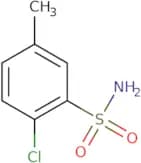
CAS :Versatile small molecule scaffoldFormule :C8H8N2O3Degré de pureté :Min. 95%Masse moléculaire :180.16 g/mol2-Chloro-5-methylbenzene-1-sulfonamide
CAS :2-Chloro-5-methylbenzene-1-sulfonamide is an organic compound that is a crystalline solid at room temperature. It has been shown to have antibiotic properties, and it competitively inhibits the bacterial enzyme dihydropteroate synthase. This product also interacts with hydrogen bonds in the crystal structure of 2-chloro-5-methylbenzene-1 sulfonamide and crystallizes as a 1:1 molecular complex with the macrocyclic ether.Formule :C7H8ClNO2SDegré de pureté :Min. 95%Masse moléculaire :205.66 g/mol2-Azabicyclo[2.2.2]octan-3-one
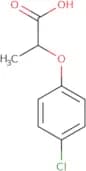
CAS :2-Azabicyclo[2.2.2]octan-3-one is a cyclic molecule that has a protonated form and a deprotonated form. The protonation of the ring nitrogen atom leads to conformational changes in the molecule, which are observed as changes in the magnetic properties of 2-azabicyclo[2.2.2]octan-3-one. These changes occur in the frequency range from 1 to 10 GHz, with a constant that depends on the solvent used for measurements (acetonitrile) and on the dilution factor of 2-azabicyclo[2.2.2]octan-3-oneFormule :C7H11NODegré de pureté :Min. 95%Masse moléculaire :125.17 g/mol2-(4-Chlorophenoxy)propionic acid
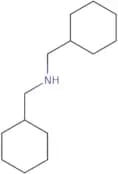
CAS :<p>2-(4-Chlorophenoxy)propionic acid is a synthetic phenoxy compound that binds to the peroxisome proliferator-activated receptor gamma (PPARγ) and induces peroxisome proliferation. It also has the ability to induce enantioselective degradation of xenopus oocytes. 2-(4-Chlorophenoxy)propionic acid is an aliphatic monocarboxylic acid with a hydroxyl group on the second carbon atom from the left end of the molecule. The chemical structure of this compound consists of a chlorine atom, two carbons, and two hydrogens. The name "2-(4-chlorophenoxy)propionic acid" may be abbreviated as "2-CPPA."</p>Formule :C9H9ClO3Degré de pureté :Min. 95%Masse moléculaire :200.62 g/molBis(cyclohexylmethyl)amine
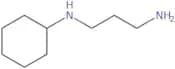
CAS :<p>Versatile small molecule scaffold</p>Formule :C14H27NDegré de pureté :Min. 95%Masse moléculaire :209.37 g/molN1-Cyclohexylpropane-1,3-diamine
CAS :<p>N1-Cyclohexylpropane-1,3-diamine is a potent compound that has been shown to inhibit cholesterol synthesis and mitochondrial membrane potential. This drug also has anti-cancer effects and can be used for the treatment of cancers in which nuclear DNA is affected by light emission. N1-Cyclohexylpropane-1,3-diamine has been shown to have physiological activities such as cell growth inhibition, matrix effect, and intracellular hydrogen release. The drug binds to the enzyme activity site with a coordination geometry that is similar to other inhibitors of cholesterol synthesis. N1-Cyclohexylpropane-1,3-diamine was crystallized from methanol at room temperature and its molecular structure was determined by X-ray diffraction techniques.</p>Formule :C9H20N2Degré de pureté :Min. 95%Masse moléculaire :156.27 g/mol


![2-Azabicyclo[2.2.2]octan-3-one](/_next/image/?url=https%3A%2Fstatic.cymitquimica.com%2Fproducts%2F3D%2Fthumb-webp%2FDAA30669.webp&w=3840&q=75)