Building Blocks
Cette section contient des produits fondamentaux pour la synthèse de composés organiques et biologiques. Building blocks sont les matériaux de départ essentiels utilisés pour construire des molécules complexes à travers diverses réactions chimiques. Ils jouent un rôle crucial dans la découverte de médicaments, la science des matériaux et la recherche chimique. Chez CymitQuimica, nous offrons une gamme diversifiée de building blocks de haute qualité pour soutenir vos recherches innovantes et projets industriels, en vous assurant de disposer des composants essentiels pour une synthèse réussie.
Sous-catégories appartenant à la catégorie "Building Blocks"
- Acides boroniques et dérivés de l'acide boronique(5.778 produits)
- Building Blocks Chiraux(1.243 produits)
- Building Blocks Hydrocarbonés(6.097 produits)
- Building Blocks organiques(61.052 produits)
201390 produits trouvés pour "Building Blocks"
Trier par
Degré de pureté (%)
0
100
|
0
|
50
|
90
|
95
|
100
[(3-Chloro-4-methoxyphenyl)amino]carbonitrile
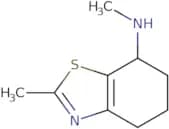
CAS :Versatile small molecule scaffoldFormule :C8H7ClN2ODegré de pureté :Min. 95%Masse moléculaire :182.61 g/molN,2-Dimethyl-4,5,6,7-tetrahydro-1,3-benzothiazol-7-amine
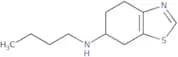
CAS :<p>Versatile small molecule scaffold</p>Formule :C9H14N2SDegré de pureté :Min. 95%Masse moléculaire :182.29 g/molN-Butyl-4,5,6,7-tetrahydro-1,3-benzothiazol-6-amine
CAS :Versatile small molecule scaffoldFormule :C11H18N2SDegré de pureté :Min. 95%Masse moléculaire :210.34 g/mol2,4-Dichloropyridine-3-carboxamide
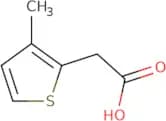
CAS :<p>Versatile small molecule scaffold</p>Formule :C6H4Cl2N2ODegré de pureté :Min. 95%Masse moléculaire :191.02 g/mol2-(3-Methylthiophen-2-yl)acetic acid
CAS :<p>Versatile small molecule scaffold</p>Formule :C7H8O2SDegré de pureté :Min. 95%Masse moléculaire :156.2 g/mol2-Imino-4-oxo-[1,3]thiazinane-6-carboxylic acid
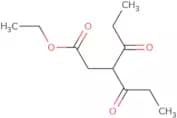
CAS :Versatile small molecule scaffoldFormule :C5H6N2O3SDegré de pureté :Min. 95%Masse moléculaire :174.18 g/molEthyl 4-oxo-3-propanoylhexanoate
CAS :Versatile small molecule scaffoldFormule :C11H18O4Degré de pureté :Min. 95%Masse moléculaire :214.26 g/mol2-[3-(4-Fluorophenyl)-1-phenyl-1H-pyrazol-4-yl]acetic acid
CAS :<p>Versatile small molecule scaffold</p>Formule :C17H13FN2O2Degré de pureté :Min. 95%Masse moléculaire :296.29 g/mol2-[3-(4-Bromophenyl)-1-phenyl-1H-pyrazol-4-yl]acetic acid
CAS :2-[3-(4-Bromophenyl)-1-phenyl-1H-pyrazol-4-yl]acetic acid is a research tool that can be used to study the interaction of peptides with ion channels, receptors and other proteins. It has been shown to inhibit the activity of various ion channels, including voltage gated sodium channels and calcium channels. 2-[3-(4-Bromophenyl)-1-phenyl-1H-pyrazol-4-yl]acetic acid is also a ligand for various receptors, including opioid receptors and serotonin receptors. This chemical compound has been used in pharmacological studies as a receptor antagonist.Formule :C17H13BrN2O2Degré de pureté :Min. 95%Masse moléculaire :357.2 g/mol2-[3-(4-Methoxyphenyl)-1-phenyl-1H-pyrazol-4-yl]acetic acid
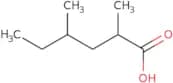
CAS :Versatile small molecule scaffoldFormule :C18H16N2O3Degré de pureté :Min. 95%Masse moléculaire :308.3 g/mol2,4-Dimethylhexanoic acid
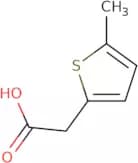
CAS :Versatile small molecule scaffoldFormule :C8H16O2Degré de pureté :Min. 95%Masse moléculaire :144.21 g/mol2-(5-Methylthiophen-2-yl)acetic acid
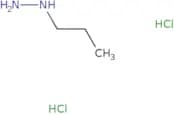
CAS :<p>2-(5-Methylthiophen-2-yl)acetic acid is an organic compound that is a colorless liquid. It has been reported to be used as a bacteriostatic agent and has been found to inhibit the growth of bacteria in culture. 2-(5-Methylthiophen-2-yl)acetic acid preferentially inhibits aerobic metabolism, which may be due to its ability to inhibit the synthesis of fatty acids. This chemical also undergoes biotransformations in cultures and is readily biodegradable. Analysis of 2-(5-methylthiophen-2-yl)acetic acid can be done by gas chromatography or high performance liquid chromatography.</p>Formule :C7H8O2SDegré de pureté :Min. 95%Masse moléculaire :156.2 g/molPropylhydrazine dihydrochloride
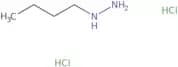
CAS :Propylhydrazine dihydrochloride is a pyrazole derivative that has been shown to have inhibitory effects on the immune system. It has been used as a treatment agent for autoimmune diseases such as rheumatoid arthritis and multiple sclerosis. Propylhydrazine dihydrochloride inhibits inflammatory responses by binding to retinoic acid receptors, blocking the production of inflammatory mediators such as prostaglandins and leukotrienes. In addition, this compound inhibits the release of histamine from mast cells, which may be due to its ability to inhibit the activity of acid receptors in these cells.Formule :C3H12Cl2N2Degré de pureté :Min. 95%Masse moléculaire :147.04 g/molButylhydrazine dihydrochloride
CAS :Butylhydrazine dihydrochloride is a retinoic acid analog that inhibits the production of nerve cells in the brain, thereby preventing degenerative diseases such as Alzheimer's disease. This drug has been shown to inhibit the production of nerve cells and prevent neurodegeneration in mice by targeting retinoic acid receptors. Butylhydrazine dihydrochloride is also used as a diluent for other drugs, such as pyrazolopyrimidine derivatives, which can cause death if administered alone. Butylhydrazine dihydrochloride may have an autoimmune effect, due to its ability to inhibit the production of antibodies and T-cell responses.Formule :C4H14Cl2N2Degré de pureté :Min. 95%Masse moléculaire :161.07 g/molAllylhydrazine Dihydrochloride
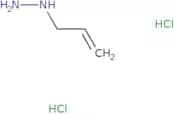
CAS :Produit contrôlé<p>Allylhydrazine is a chemical compound that is used as an inhibitor of cellular kinases. It has been shown to inhibit the growth of colon and prostate cancer cells, as well as breast and lung cancer cells. Allylhydrazine is a disubstituted imidazole with two amino groups and one hydrazine group. This product also inhibits angiogenesis and has been shown to prevent the formation of new blood vessels in solid tumors. Allylhydrazine has been synthesized from allyl alcohol in the presence of acidified hydrogen chloride gas, providing a yield of about 50%.</p>Formule :C3H10Cl2N2Degré de pureté :Min. 95%Masse moléculaire :145.03 g/mol4-(3-Fluorophenyl)butanoic acid
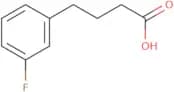
CAS :<p>Versatile small molecule scaffold</p>Formule :C10H11FO2Degré de pureté :Min. 95%Masse moléculaire :182.19 g/mol4-(4-Methoxyphenyl)-6-oxo-2-sulfanyl-1,6-dihydropyrimidine-5-carbonitrile
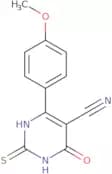
CAS :4-(4-Methoxyphenyl)-6-oxo-2-sulfanyl-1,6-dihydropyrimidine-5-carbonitrile (DMP) is a potentiodynamic polarization and electrochemical impedance spectroscopic technique that can be used to measure the corrosion inhibition efficiency of anodic inhibitors. DMP is an electron donor that can reduce the concentration of chloride ions and copper ions on the anode surface. It also has a strong inhibition effect on both kinetic and equilibrium corrosion reactions. The impedance analysis of DMP shows that it does not have any significant effect on the elements in the solution, such as copper, chloride, or sulfuric acid. This suggests that DMP is a good inhibitor for corrosion reactions in alkaline solutions.Formule :C12H9N3O2SDegré de pureté :Min. 95%Masse moléculaire :259.29 g/mol2-oxo-1,2-dihydroquinoline-6-carboxylic acid
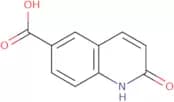
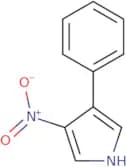
CAS :Quinoline-2-carboxylic acid is a quinoline residue that has been hydrolyzed to the corresponding 2-oxo-1,2-dihydroquinoline-6-carboxylic acid. It is an alkoxy, alkenyl, and cardiotonic drug that has been used as a carbostyril skeleton.Formule :C10H7NO3Degré de pureté :Min. 95%Masse moléculaire :189.17 g/mol3-Nitro-4-phenyl-1H-pyrrole
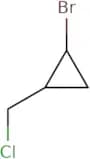
CAS :<p>Versatile small molecule scaffold</p>Formule :C10H8N2O2Degré de pureté :Min. 95%Masse moléculaire :188.18 g/mol1-Bromo-2-(chloromethyl)cyclopropane
CAS :1-Bromo-2-(chloromethyl)cyclopropane is a methylenecyclopropane that reacts with thiophenol to form an anion. This reaction can be catalyzed by bases or acid. 1-Bromo-2-(chloromethyl)cyclopropane reacts with alcohols to produce nitriles, which are compounds containing the functional group, -C(O)NRR'. Nitriles can also be formed by the direct reaction of anions and alcohols, but this process is less efficient. 1-Bromo-2-(chloromethyl)cyclopropane is used as a solvent in organic chemistry because it reacts with many substances and forms new compounds.Formule :C4H6BrClDegré de pureté :Min. 95%Masse moléculaire :169.4 g/mol
![[(3-Chloro-4-methoxyphenyl)amino]carbonitrile](/_next/image/?url=https%3A%2Fstatic.cymitquimica.com%2Fproducts%2F3D%2Fthumb-webp%2FVCA59015.webp&w=3840&q=75)


![2-Imino-4-oxo-[1,3]thiazinane-6-carboxylic acid](/_next/image/?url=https%3A%2Fstatic.cymitquimica.com%2Fproducts%2F3D%2Fthumb-webp%2FVCA59636.webp&w=3840&q=75)
![2-[3-(4-Fluorophenyl)-1-phenyl-1H-pyrazol-4-yl]acetic acid](/_next/image/?url=https%3A%2Fstatic.cymitquimica.com%2Fproducts%2F3D%2Fthumb-webp%2FVCA59811.webp&w=3840&q=75)
![2-[3-(4-Bromophenyl)-1-phenyl-1H-pyrazol-4-yl]acetic acid](/_next/image/?url=https%3A%2Fstatic.cymitquimica.com%2Fproducts%2F3D%2Fthumb-webp%2FVCA59812.webp&w=3840&q=75)
![2-[3-(4-Methoxyphenyl)-1-phenyl-1H-pyrazol-4-yl]acetic acid](/_next/image/?url=https%3A%2Fstatic.cymitquimica.com%2Fproducts%2F3D%2Fthumb-webp%2FVCA59813.webp&w=3840&q=75)