Building Blocks
Cette section contient des produits fondamentaux pour la synthèse de composés organiques et biologiques. Building blocks sont les matériaux de départ essentiels utilisés pour construire des molécules complexes à travers diverses réactions chimiques. Ils jouent un rôle crucial dans la découverte de médicaments, la science des matériaux et la recherche chimique. Chez CymitQuimica, nous offrons une gamme diversifiée de building blocks de haute qualité pour soutenir vos recherches innovantes et projets industriels, en vous assurant de disposer des composants essentiels pour une synthèse réussie.
Sous-catégories appartenant à la catégorie "Building Blocks"
- Acides boroniques et dérivés de l'acide boronique(5.780 produits)
- Building Blocks Chiraux(1.241 produits)
- Building Blocks Hydrocarbonés(6.100 produits)
- Building Blocks organiques(61.029 produits)
205306 produits trouvés pour "Building Blocks"
Trier par
Degré de pureté (%)
0
100
|
0
|
50
|
90
|
95
|
100
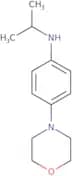
4-(Morpholin-4-yl)-N-(propan-2-yl)aniline
CAS :Versatile small molecule scaffoldFormule :C13H20N2ODegré de pureté :Min. 95%Masse moléculaire :220.31 g/mol2-Amino-6-methoxy-4,5,6,7-tetrahydro-1-benzothiophene-3-carbonitrile
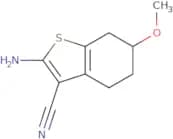
CAS :Versatile small molecule scaffoldFormule :C10H12N2OSDegré de pureté :Min. 95%Masse moléculaire :208.28 g/mol2-Methylcyclohex-1-ene-1-carboxylic acid
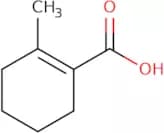
CAS :Versatile small molecule scaffoldFormule :C8H12O2Degré de pureté :Min. 95%Masse moléculaire :140.18 g/mol1-Methanesulfinyl-3-methylbenzene
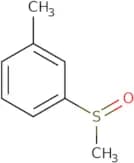
CAS :1-Methanesulfinyl-3-methylbenzene is a white crystalline solid that belongs to the class of aromatic compounds. It has a melting point of 134° C and a boiling point of 350° C. 1-Methanesulfinyl-3-methylbenzene has been shown to have an x-ray crystal structure with four asymmetric units. This compound has also been analyzed by elemental analyses, which showed it contains hydrogen (H), carbon (C), sulfur (S), and oxygen (O) elements. 1-Methanesulfinyl-3-methylbenzene is soluble in organic solvents such as ethyl acetate, but insoluble in water or alcohols. It can be recrystallized from solvents such as ethyl acetate or diethyl ether. 1-Methanesulfinyl-3-methylbenzene is used for the synthesis of other organic compounds and for research purposes.Formule :C8H10OSDegré de pureté :Min. 95%Masse moléculaire :154.23 g/mol1-Methanesulfinyl-3-methoxybenzene
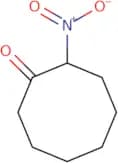
CAS :Versatile small molecule scaffoldFormule :C8H10O2SDegré de pureté :Min. 95%Masse moléculaire :170.23 g/mol2-Nitrocyclooctan-1-one
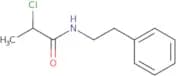
CAS :Versatile small molecule scaffoldFormule :C8H13NO3Degré de pureté :Min. 95%Masse moléculaire :171.2 g/mol2-Chloro-N-(2-phenylethyl)propanamide
CAS :2-Chloro-N-(2-phenylethyl)propanamide is an isoquinoline ring that has been synthesized and tested for its ability to inhibit the biosynthesis of ergosterol. It was found to be more effective than other known inhibitors, such as tetraethyl pyrophosphate, in inhibiting this compound. 2-Chloro-N-(2-phenylethyl)propanamide may be a potential drug candidate for the treatment of fungal diseases. The mechanism for inhibition is not yet known.
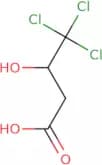
Formule :C11H14ClNODegré de pureté :Min. 95%Masse moléculaire :211.69 g/mol4,4,4-Trichloro-3-hydroxybutanoic acid
CAS :4,4,4-Trichloro-3-hydroxybutanoic acid is a benzyl ester of the fatty acid 4,4,4-trichloro-3-hydroxybutanoic acid. The molecule has an optical isomer that can be synthesized from the corresponding symmetrical compound. The synthesis of 4,4,4-trichloro-3-hydroxybutanoic acid involves the reaction of benzyl alcohol with trichloromethyl chloride in the presence of an acid catalyst. This reaction yields two isomers: one of which has the same configuration as the starting material and one that is an optical isomer. The latter can be converted to its antipode by hydrogenation or by heating with sodium methoxide in methanol.Formule :C4H5Cl3O3Degré de pureté :Min. 95%Masse moléculaire :207.43 g/mol2-{[(3-Chlorophenyl)amino]methyl}phenol
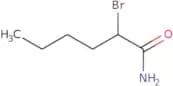
CAS :Versatile small molecule scaffoldFormule :C13H12ClNODegré de pureté :Min. 95%Masse moléculaire :233.69 g/mol2-Bromohexanamide
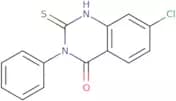
CAS :2-Bromohexanamide is a receptor binding molecule that binds to the 5-HT2A receptor. 2-Bromohexanamide has been shown to be effective in treating autoimmune diseases, including psoriasis and rheumatoid arthritis. It is also used for the treatment of cancer, specifically for the prevention of chemotherapy-induced nausea and vomiting. 2-Bromohexanamide has been shown to bind to the 5-HT7 receptor, which is involved in regulating mood and appetite. The drug has a hydroxyl group that reacts with nucleophilic attack at the amide bond to form an acid complex. This reaction mechanism results in a molecule that can bind to receptors and cause receptor activity.Formule :C6H12BrNODegré de pureté :Min. 95%Masse moléculaire :194.07 g/mol7-Chloro-2,3-dihydro-3-phenyl-2-thioxo-1H-quinazolin-4-one
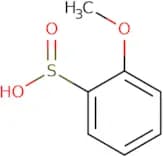
CAS :Versatile small molecule scaffoldFormule :C14H9ClN2OSDegré de pureté :Min. 95%Masse moléculaire :288.75 g/mol2-Methoxybenzene-1-sulfinic acid
CAS :2-Methoxybenzene-1-sulfinic acid is a synthetic drug that has been used as an anti-schistosomiasis agent. It is structurally related to the natural substrate of the enzyme schistosomal beta-ketoacyl synthase, and has been shown to inhibit this enzyme in vivo with a potency similar to that of praziquantel.
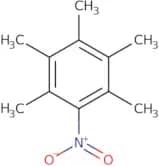
Formule :C7H8O3SDegré de pureté :Min. 95%Masse moléculaire :172.2 g/mol1,2,3,4,5-Pentamethyl-6-nitrobenzene
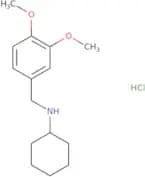
CAS :The chemical name for 1,2,3,4,5-Pentamethyl-6-nitrobenzene is 6-Nitroso-1,1′-(3,3′-dimethylpropyl)-1,2,3,-4,5-pentamethylbenzene. It is a colorless liquid that has a boiling point of 190 °C and density of 1.0 g/mL. 6NMN is soluble in acetone and ethanol but insoluble in water. This compound has been shown to be an effective antihypertensive agent with reversible vasodilator properties. Clinical development of 6NMN has been hindered by the lack of a suitable animal model for congestive heart failure (CHF). There are no known functional groups on this molecule; however it does have a phenolic group at the para position and hydroxyl group at the meta position on the benzene ring. The compound also has two nitro groups thatFormule :C11H15NO2Degré de pureté :Min. 95%Masse moléculaire :193.24 g/molBenzenemethanamine, N-cyclohexyl-3,4-dimethoxy-, hydrochloride
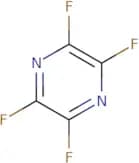
CAS :Versatile small molecule scaffoldFormule :C15H24ClNO2Degré de pureté :Min. 95%Masse moléculaire :285.81 g/molTetrafluoropyrazine
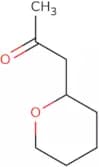
CAS :Tetrafluoropyrazine is a fluorinated electrophilic compound that serves as an oxygen nucleophile. It reacts with hydrochloric acid and chlorine to form hydrogen chloride and tetrafluoropyrazine hydrochloride, respectively. Tetrafluoropyrazine has been shown to bind to the 5-HT7 receptor in rat brains, which may be due to its chemical similarity to serotonin. Magnetic resonance spectroscopy revealed that tetrafluoropyrazine contains nitrogen atoms in its structure. The polymer film structure of this molecule was determined by X-ray crystallography. Tetrafluoropyrazine also has the ability to oxidize polyethylene glycols and polypropylene glycols, which may be due to its ability to act as an electron acceptor.Formule :C4F4N2Degré de pureté :Min. 95%Masse moléculaire :152.05 g/mol1-(Oxan-2-yl)propan-2-one
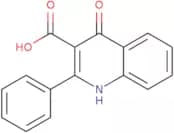
CAS :Versatile small molecule scaffoldFormule :C8H14O2Degré de pureté :Min. 95%Masse moléculaire :142.2 g/mol4-Oxo-2-phenyl-1,4-dihydroquinoline-3-carboxylic acid
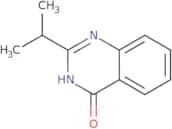
CAS :Versatile small molecule scaffoldFormule :C16H11NO3Degré de pureté :Min. 95%Masse moléculaire :265.26 g/mol4-Hydroxy-2-(iso-propyl)quinazoline
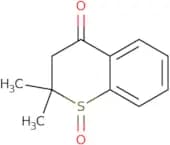
CAS :Versatile small molecule scaffoldFormule :C11H12N2ODegré de pureté :Min. 95%Masse moléculaire :188.23 g/mol2,3-Ddihydro-2,2-dimethyl-4H-1-benzothiopyran-4-one 1-oxide
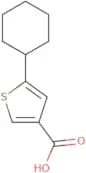
CAS :Versatile small molecule scaffoldFormule :C11H12O2SDegré de pureté :Min. 95%Masse moléculaire :208.28 g/mol5-Cyclohexylthiophene-3-carboxylic acid
CAS :Versatile small molecule scaffoldFormule :C11H14O2SDegré de pureté :Min. 95%Masse moléculaire :210.29 g/mol

![2-{[(3-Chlorophenyl)amino]methyl}phenol](/_next/image/?url=https%3A%2Fstatic.cymitquimica.com%2Fproducts%2F3D%2Fthumb-webp%2FNAA16055.webp&w=3840&q=75)