Building Blocks
Sous-catégories appartenant à la catégorie "Building Blocks"
- Acides boroniques et dérivés de l'acide boronique(5.778 produits)
- Building Blocks Chiraux(1.243 produits)
- Building Blocks Hydrocarbonés(6.099 produits)
- Building Blocks organiques(61.038 produits)
205376 produits trouvés pour "Building Blocks"
4-(1-Methyl-1H-imidazol-5-yl)pyrrolidin-2-one
CAS :Versatile small molecule scaffoldFormule :C8H11N3ODegré de pureté :Min. 95%Masse moléculaire :165.19 g/molStobadine
CAS :Stobadine is a drug that belongs to the class of drugs that are known as dopamine agonists. It has antioxidative properties and may help to prevent oxidative injury in neurons. Stobadine also inhibits the activity of lysosomal enzymes, which are responsible for breaking down proteins, lipids, and nucleic acids. The drug also has been shown to have anti-inflammatory effects, with a potential to inhibit locomotor activity in mice. Stobadine is not used as an antibiotic or antiviral agent and does not act against any bacterial or viral pathogens. However, it has been shown to be effective against some parasitic diseases such as Trypanosoma cruzi (a protozoan parasite).
Formule :C13H18N2Degré de pureté :Min. 95%Masse moléculaire :202.3 g/mol3-Amino-5-bromo-6-methylpyridin-2-ol
CAS :Versatile small molecule scaffoldFormule :C6H7BrN2ODegré de pureté :Min. 95%Masse moléculaire :203.04 g/mol2,2-Dimethyltetradecanoic acid
CAS :2,2-Dimethyltetradecanoic acid is a fatty acid that is biosynthesized by the enzyme synthase from echinocandin A. It has been shown to have antifungal activity against Candida albicans and Saccharomyces cerevisiae. The ring structure of 2,2-dimethyltetradecanoic acid may be important for its chromatographic properties, as it has been shown to separate well on silica gel. This chemical is also used in chemical biology experiments because of its ability to bind to DNA. 2,2-Dimethyltetradecanoic acid binds to the guanine nucleotide binding site and inhibits transcription initiation.
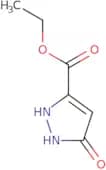
Formule :C16H32O2Degré de pureté :Min. 95%Masse moléculaire :256.42 g/mol5-Hydroxy-1H-pyrazole-3-carboxylic acid ethyl ester
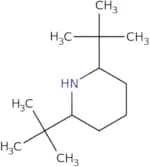
CAS :5-Hydroxy-1H-pyrazole-3-carboxylic acid ethyl ester is a synthetic oxytocin analog that has been shown to have high inhibitory potency on the oxytocin receptor. It is a dihydrate form of 5-hydroxy-1H pyrazole 3-carboxylic acid ethyl ester, and its crystal structure was determined by x-ray crystallography. This compound binds to the oxytocin receptor with a binding affinity of 0.4 nM and stabilizes the receptor in its active conformation. These properties make it an attractive lead for drug discovery efforts to combat oxytocin deficiency or related disorders such as autism spectrum disorder (ASD).Formule :C6H8N2O3Degré de pureté :Min. 95%Masse moléculaire :156.14 g/mol2,6-Di-tert-butylpiperidine
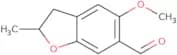
CAS :Versatile small molecule scaffoldFormule :C13H27NDegré de pureté :Min. 95%Masse moléculaire :197.36 g/mol5-Methoxy-2-methyl-2,3-dihydro-1-benzofuran-6-carbaldehyde
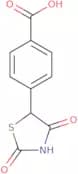
CAS :Versatile small molecule scaffoldFormule :C11H12O3Degré de pureté :Min. 95%Masse moléculaire :192.21 g/mol4-(2,4-Dioxo-1,3-thiazolidin-5-yl)benzoic acid
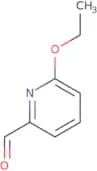
CAS :Versatile small molecule scaffoldFormule :C10H7NO4SDegré de pureté :Min. 95%Masse moléculaire :237.23 g/mol6-Ethoxypyridine-2-carbaldehyde
CAS :Versatile small molecule scaffold
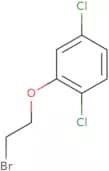
Formule :C8H9NO2Degré de pureté :Min. 95%Masse moléculaire :151.16 g/mol2-(2-Bromoethoxy)-1,4-dichlorobenzene
CAS :Versatile small molecule scaffold
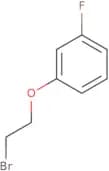
Formule :C8H7BrCl2ODegré de pureté :Min. 95%Masse moléculaire :269.95 g/mol1-(2-bromoethoxy)-3-fluorobenzene
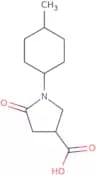
CAS :Versatile small molecule scaffoldFormule :C8H8BrFODegré de pureté :Min. 95%Masse moléculaire :219.05 g/mol1-(4-Methylcyclohexyl)-5-oxopyrrolidine-3-carboxylic acid
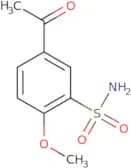
CAS :Produit contrôlé1-(4-Methylcyclohexyl)-5-oxopyrrolidine-3-carboxylic acid is a synthetic ligand that binds to the receptor site on the GABA receptor, which is responsible for inhibiting neuronal activity. The binding of 1-(4-methylcyclohexyl)-5-oxopyrrolidine-3-carboxylic acid to the GABA receptor alters the conformation of the protein and causes it to open ion channels in the cell membrane. This leads to an influx of chloride ions and hyperpolarization of the neuron, resulting in inhibition of neuronal activity. 1-(4-Methylcyclohexyl)-5-oxopyrrolidine-3-carboxylic acid has been shown to inhibit ligand binding to some other receptors, such as NMDA and AMPA glutamate receptors.Formule :C12H19NO3Degré de pureté :Min. 95%Masse moléculaire :225.28 g/mol5-Acetyl-2-methoxybenzene-1-sulfonamide
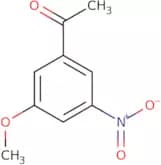
CAS :Versatile small molecule scaffoldFormule :C9H11NO4SDegré de pureté :Min. 95%Masse moléculaire :229.3 g/mol1-(3-Methoxy-5-nitrophenyl)ethan-1-one
CAS :Versatile small molecule scaffold
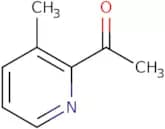
Formule :C9H9NO4Degré de pureté :Min. 95%Masse moléculaire :195.17 g/mol1-(3-Methylpyridin-2-yl)ethanone
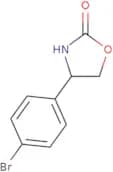
CAS :Versatile small molecule scaffoldFormule :C8H9NODegré de pureté :Min. 95%Masse moléculaire :135.17 g/mol4-(4-Bromophenyl)-1,3-oxazolidin-2-one
CAS :Versatile small molecule scaffold
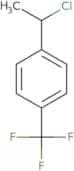
Formule :C9H8BrNO2Degré de pureté :Min. 95%Masse moléculaire :242.07 g/mol1-(1-Chloroethyl)-4-(trifluoromethyl)benzene
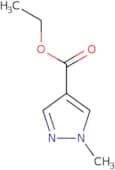
CAS :Versatile small molecule scaffoldFormule :C9H8ClF3Degré de pureté :Min. 95%Masse moléculaire :208.61 g/molEthyl 1-methylpyrazole-4-carboxylate
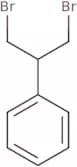
CAS :Ethyl 1-methylpyrazole-4-carboxylate (EMPC) is an organic compound, a pyrazole carboxylic acid derivative. It is the simplest alkyl ester of pyrazole-4-carboxylic acid. EMPC is used as a fungicide, yielding a maximum of 13% yield in water with hexamethylenetetramine. The reaction proceeds via activated chloroformate and carbonyl intermediates. Structural analogues with aminopyrazoles have been developed as selective herbicides and reagents for the synthesis of heterocycles. EMPC has been shown to inhibit the growth of fungi by inhibiting chitin synthesis and cell wall formation at the fungal membrane level.Formule :C7H10N2O2Degré de pureté :Min. 95%Masse moléculaire :154.17 g/mol(1,3-Dibromopropan-2-yl)benzene
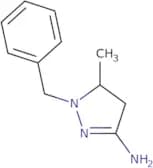
CAS :(1,3-Dibromopropan-2-yl)benzene is a x-ray crystallography and electrocatalysis protonation. It is a cyclic voltammetry that catalyzes the oxidation of trifluoroacetic acid in the presence of an electron donor to form trifluoroacetic acid. The cyclic voltammetry technique has been applied to study the electrocatalytic activity of (1,3-dibromopropan-2-yl)benzene in water. The crystal structures of (1,3-dibromopropan-2-yl)benzene have been determined using x-ray crystallography techniques. =ENDFormule :C9H10Br2Degré de pureté :Min. 95%Masse moléculaire :277.98 g/mol1-Benzyl-5-methyl-4,5-dihydro-1H-pyrazol-3-amine
CAS :Versatile small molecule scaffoldFormule :C11H15N3Degré de pureté :Min. 95%Masse moléculaire :189.26 g/mol