Building Blocks
Sous-catégories appartenant à la catégorie "Building Blocks"
- Acides boroniques et dérivés de l'acide boronique(5.778 produits)
- Building Blocks Chiraux(1.243 produits)
- Building Blocks Hydrocarbonés(6.098 produits)
- Building Blocks organiques(61.036 produits)
205240 produits trouvés pour "Building Blocks"
N-{1-[4-(2,2,2-Trifluoroethoxy)phenyl]ethylidene}hydroxylamine
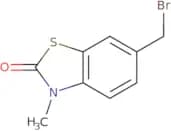
CAS :Versatile small molecule scaffoldFormule :C10H10F3NO2Degré de pureté :Min. 95%Masse moléculaire :233.19 g/mol6-(Bromomethyl)-3-methyl-2,3-dihydro-1,3-benzothiazol-2-one
CAS :Versatile small molecule scaffold
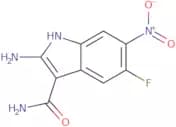
Formule :C9H8BrNOSDegré de pureté :Min. 95%Masse moléculaire :258.14 g/mol2-Amino-5-fluoro-6-nitro-1H-indole-3-carboxamide
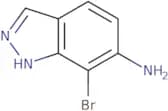
CAS :Versatile small molecule scaffoldFormule :C9H7FN4O3Degré de pureté :Min. 95%Masse moléculaire :238.18 g/mol7-Bromo-1H-indazol-6-amine
CAS :Versatile small molecule scaffoldFormule :C7H6BrN3Degré de pureté :Min. 95%Masse moléculaire :212.05 g/mol1-Propyl-1-[2-(2,4,6-trichloro-3-hydroxyphenoxy)ethyl]urea
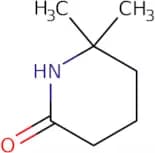
CAS :Versatile small molecule scaffoldFormule :C12H15Cl3N2O3Degré de pureté :Min. 95%Masse moléculaire :341.6 g/mol6,6-dimethylpiperidin-2-one
CAS :Versatile small molecule scaffold
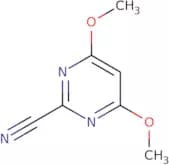
Formule :C7H13NODegré de pureté :Min. 95%Masse moléculaire :127.19 g/mol4,6-Dimethoxypyrimidine-2-carbonitrile
CAS :4,6-Dimethoxypyrimidine-2-carbonitrile (DMP) is a chemical compound that belongs to the class of sulfones. It has been shown to be effective in the treatment of sulfate-reducing bacteria, such as Clostridium and Desulfovibrio. DMP is also used for the chlorination of organic compounds, such as chlorinated phenols and chlorinated benzenes. DMP can be synthesized by reacting 4,6-dimethoxybenzene with carbon disulfide and sodium hydroxide in aqueous solution.
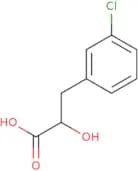
Formule :C7H7N3O2Degré de pureté :Min. 95%Masse moléculaire :165.15 g/mol3-(3-Chlorophenyl)-2-hydroxypropanoic acid
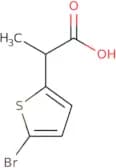
CAS :Versatile small molecule scaffoldFormule :C9H9ClO3Degré de pureté :Min. 95%Masse moléculaire :200.62 g/mol2-(5-Bromothiophen-2-yl)propanoic acid
CAS :Versatile small molecule scaffold
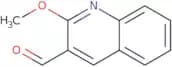
Formule :C7H7BrO2SDegré de pureté :Min. 95%Masse moléculaire :235.1 g/mol2-Methoxy-quinoline-3-carbaldehyde
CAS :2-Methoxy-quinoline-3-carbaldehyde (2MQC) is a novel oxadiazole derivative that has been shown to exhibit good in vitro antimicrobial activity against staphylococcus aureus and typhimurium. 2MQC also has inhibitory properties against the enzyme hepg2, which is involved in the production of reactive oxygen species by neutrophils. 2MQC inhibits the growth of bacteria by binding to their DNA and inhibiting protein synthesis. This compound also has anti-diabetic effects, as it increases glucose uptake and reduces blood sugar levels in mice with high blood sugar levels.
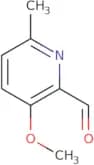
Formule :C11H9NO2Degré de pureté :Min. 95%Masse moléculaire :187.19 g/mol3-Methoxy-6-methylpyridine-2-carbaldehyde
CAS :Versatile small molecule scaffoldFormule :C8H9NO2Degré de pureté :Min. 95%Masse moléculaire :151.16 g/mol6-Chloro-2-(trifluoromethyl)imidazo[1,2-a]pyridine
CAS :Versatile small molecule scaffoldFormule :C8H4ClF3N2Degré de pureté :Min. 95%Masse moléculaire :220.58 g/mol2-Amino-2-(2,4-difluorophenyl)acetonitrile
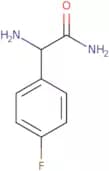
CAS :Versatile small molecule scaffoldFormule :C8H6F2N2Degré de pureté :Min. 95%Masse moléculaire :168.14 g/mol2-Amino-2-(4-fluorophenyl)acetamide
CAS :Versatile small molecule scaffold
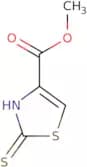
Formule :C8H9FN2ODegré de pureté :Min. 95%Masse moléculaire :168.17 g/molMethyl 2-sulfanyl-1,3-thiazole-4-carboxylate
CAS :Versatile small molecule scaffold
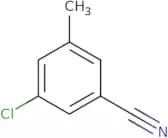
Formule :C5H5NO2S2Degré de pureté :Min. 95%Masse moléculaire :175.2 g/mol3-Chloro-5-methylbenzonitrile
CAS :3-Chloro-5-methylbenzonitrile belongs to the class of carboxylic arylboronic acids, which are used in the synthesis of amides, ketones, and esters. The transformation of 3-chloro-5-methylbenzonitrile can be achieved by nitriles or tetrazoles. Nitriles are converted into cyanation products by treatment with hydrogen cyanide (HCN). Tetrazole is converted into a heteroarene by treatment with sodium azide (NaN3). The resulting heteroarenes can react with an ester to produce a substituted benzene.Formule :C8H6ClNDegré de pureté :Min. 95%Masse moléculaire :151.59 g/mol5-Methyl-2-(tributylstannyl)pyridine
CAS :Produit contrôlé5-Methyl-2-(tributylstannyl)pyridine (MTBP) is a ligand that has been used to polymerize ethylene. It is synthesized by the hydrosilylation of 2-bromopyridine with tributyltin hydride, followed by reaction with trimethylaluminium in a cavity. MTBP has been shown to be an effective catalyst for the hydrosilylation of olefins, where it can be used as a replacement for bulky and expensive transition metals such as platinum. 5-Methyl-2-(tributylstannyl)pyridine can also be used to catalyze the synthesis of supramolecular structures and photophysical processes.
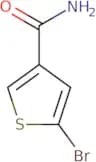
Formule :C18H33NSnDegré de pureté :Min. 95%Masse moléculaire :382.17 g/mol5-Bromothiophene-3-carboxamide
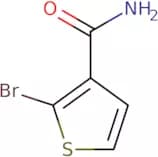
CAS :Versatile small molecule scaffoldFormule :C5H4BrNOSDegré de pureté :Min. 95%Masse moléculaire :206.06 g/mol2-Bromothiophene-3-carboxamide
CAS :Versatile small molecule scaffold
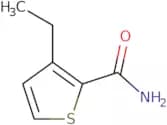
Formule :C5H4BrNOSDegré de pureté :Min. 95%Masse moléculaire :206.06 g/mol3-Ethylthiophene-2-carboxamide
CAS :Versatile small molecule scaffoldFormule :C7H9NOSDegré de pureté :Min. 95%Masse moléculaire :155.22 g/mol
![N-{1-[4-(2,2,2-Trifluoroethoxy)phenyl]ethylidene}hydroxylamine](/_next/image/?url=https%3A%2Fstatic.cymitquimica.com%2Fproducts%2F3D%2Fthumb-webp%2FPFA48644.webp&w=3840&q=75)

![1-Propyl-1-[2-(2,4,6-trichloro-3-hydroxyphenoxy)ethyl]urea](/_next/image/?url=https%3A%2Fstatic.cymitquimica.com%2Fproducts%2F3D%2Fthumb-webp%2FPFA52096.webp&w=3840&q=75)
![6-Chloro-2-(trifluoromethyl)imidazo[1,2-a]pyridine](/_next/image/?url=https%3A%2Fstatic.cymitquimica.com%2Fproducts%2F3D%2Fthumb-webp%2FPHA11620.webp&w=3840&q=75)