Building Blocks
Cette section contient des produits fondamentaux pour la synthèse de composés organiques et biologiques. Building blocks sont les matériaux de départ essentiels utilisés pour construire des molécules complexes à travers diverses réactions chimiques. Ils jouent un rôle crucial dans la découverte de médicaments, la science des matériaux et la recherche chimique. Chez CymitQuimica, nous offrons une gamme diversifiée de building blocks de haute qualité pour soutenir vos recherches innovantes et projets industriels, en vous assurant de disposer des composants essentiels pour une synthèse réussie.
Sous-catégories appartenant à la catégorie "Building Blocks"
- Acides boroniques et dérivés de l'acide boronique(5.778 produits)
- Building Blocks Chiraux(1.243 produits)
- Building Blocks Hydrocarbonés(6.097 produits)
- Building Blocks organiques(61.052 produits)
201390 produits trouvés pour "Building Blocks"
Trier par
Degré de pureté (%)
0
100
|
0
|
50
|
90
|
95
|
100
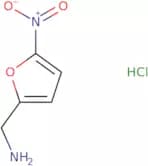
(5-Nitrofuran-2-yl)methanamine hydrochloride
CAS :Versatile small molecule scaffoldFormule :C5H7ClN2O3Degré de pureté :Min. 95%Masse moléculaire :178.57 g/mol2-Methylprop-2-ene-1-sulfonamide
CAS :Versatile small molecule scaffoldFormule :C4H9NO2SDegré de pureté :Min. 95%Masse moléculaire :135.19 g/mol5-Dichloro-2-nitrophenol
CAS :5-Dichloro-2-nitrophenol is a chemical that is used as an immunomodulator, pesticide, or herbicide. It is activated by the body to form a reactive intermediate that can bind to DNA and create mutations. 5-Dichloro-2-nitrophenol has been shown to cause oxidative damage in cell cultures and other tissues, such as proximal tubules of the kidney. It also produces malondialdehyde oxidation products which are known to be cytotoxic. In addition, preincubation with 5-Dichloro-2-nitrophenol increases the sensitivity of cells to other oxidative stressors such as peroxides and hydrogen peroxide.Formule :C6H3Cl2NO3Degré de pureté :Min. 95%Masse moléculaire :208 g/mol1,8,10,12-Tetraazatricyclo[7.3.0.0,3,7]dodeca-3(7),9,11-trien-2-one
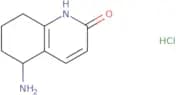
CAS :Versatile small molecule scaffoldFormule :C8H8N4ODegré de pureté :Min. 95%Masse moléculaire :176.18 g/mol5-Amino-1,2,5,6,7,8-hexahydroquinolin-2-one hydrochloride
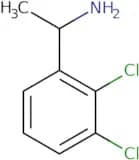
CAS :<p>Versatile small molecule scaffold</p>Formule :C9H13ClN2ODegré de pureté :Min. 95%Masse moléculaire :200.66 g/mol1-(2,3-Dichlorophenyl)ethan-1-amine
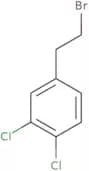
CAS :<p>Versatile small molecule scaffold</p>Formule :C8H9Cl2NDegré de pureté :Min. 95%Masse moléculaire :190.07 g/mol4-(2-Bromoethyl)-1,2-dichlorobenzene
CAS :<p>Versatile small molecule scaffold</p>Formule :C8H7BrCl2Degré de pureté :Min. 95%Masse moléculaire :253.95 g/molN-[4-(2-Bromoethyl)phenyl]acetamide
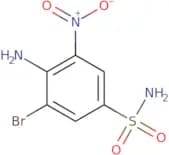
CAS :<p>Versatile small molecule scaffold</p>Formule :C10H12BrNODegré de pureté :Min. 95%Masse moléculaire :242.11 g/mol4-Amino-3-bromo-5-nitro-benzenesulfonamide
CAS :<p>Versatile small molecule scaffold</p>Formule :C6H6BrN3O4SDegré de pureté :Min. 95%Masse moléculaire :296.1 g/mol1-N-Benzyl-4-chlorobenzene-1,2-diamine
CAS :1-N-Benzyl-4-chlorobenzene-1,2-diamine is a chemical compound that is used as an anticancer drug. It is a potent inhibitor of protein kinase C and has been shown to induce cell cycle arrest in the G1 phase of the cell cycle. 1-N-Benzyl-4-chlorobenzene-1,2-diamine also induces apoptosis in cancer cells. The cytometric analysis of apoptotic processes was used to determine the pharmacokinetic properties of 1-N-Benzyl-4-chlorobenzene-1,2-diamine. This drug may be mediated by annexin A5 or other proteins. Radionuclide imaging studies were conducted in order to assess the pharmacokinetics of 1NBDBCD in humans.Formule :C13H13ClN2Degré de pureté :Min. 95%Masse moléculaire :232.71 g/mol3-Chlorothieno[2,3-b]thiophene-2-carboxylic acid
CAS :<p>Versatile small molecule scaffold</p>Formule :C7H3ClO2S2Degré de pureté :Min. 95%Masse moléculaire :218.7 g/molEthyl N-(4-hydroxycyclohexyl)carbamate
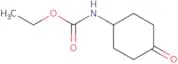
CAS :<p>Versatile small molecule scaffold</p>Formule :C9H17NO3Degré de pureté :Min. 95%Masse moléculaire :187.24 g/molEthyl N-(4-oxocyclohexyl)carbamate
CAS :<p>Versatile small molecule scaffold</p>Formule :C9H15NO3Degré de pureté :Min. 95%Masse moléculaire :185.22 g/mol2-[4-(2-Oxoethyl)phenyl]acetaldehyde
CAS :Versatile small molecule scaffoldFormule :C10H10O2Degré de pureté :Min. 95%Masse moléculaire :162.18 g/mol4H,5H,6H,7H,8H,9H-[1,2,4]Triazolo[3,2-b]quinazolin-9-one
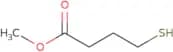
CAS :Versatile small molecule scaffoldFormule :C9H10N4ODegré de pureté :Min. 95%Masse moléculaire :190.2 g/molMethyl 4-sulfanylbutanoate
CAS :<p>Methyl 4-sulfanylbutanoate is a leukotriene D4, which is an inflammatory mediator. It can be activated by the addition of hydrogen peroxide or tetrahydropyran and then becomes a potent leukotriene antagonist. Methyl 4-sulfanylbutanoate also inhibits the activity of acyltransferases, which are enzymes that catalyze reactions in the synthesis of arachidonic acid. This compound has been shown to have inhibitory effects on inflammatory bowel disease and may be useful for treating cerebral inflammation.</p>Formule :C5H10O2SDegré de pureté :Min. 95%Masse moléculaire :134.2 g/mol2-(4-Methylphenyl)ethan-1-amine hydrochloride
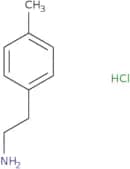
CAS :Produit contrôléVersatile small molecule scaffoldFormule :C9H13N·HClDegré de pureté :Min. 95%Masse moléculaire :171.67 g/mol2-Bromocyclooctan-1-one
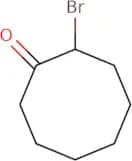
CAS :<p>2-Bromocyclooctan-1-one is a chiral, fluorinated ketone that has been used as a reagent in conformational studies. It is also the precursor to other compounds of interest. 2-Bromocyclooctan-1-one reacts with thioacetamide to form an intermediate that can be hydrolyzed by water or acid to produce 2,4,6-trichlorobenzene sulphonyl chloride. In acetonitrile, it displays repulsion between the two bromine atoms. The conformation of this compound is dependent on solvent and conformational studies have been done using solvents such as acetonitrile and chloroform.</p>Formule :C8H13BrODegré de pureté :Min. 95%Masse moléculaire :205.09 g/mol3,5-Dichloro-2-(2-chloroacetamido)benzoic acid
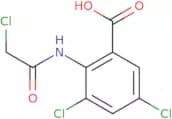
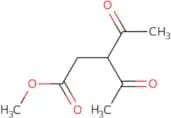
CAS :Versatile small molecule scaffoldFormule :C9H6Cl3NO3Degré de pureté :Min. 95%Masse moléculaire :282.5 g/molMethyl 3-acetyl-4-oxopentanoate
CAS :<p>Methyl 3-acetyl-4-oxopentanoate is a synthetic porphyrin precursor. It is an isomer of hematoporphyrin, which has been shown to be an effective photosensitizer for the treatment of psoriasis. Methyl 3-acetyl-4-oxopentanoate has also been shown to have degradative properties, and can be used to synthesize pyrrole compounds. This synthetic porphyrin precursor can also be used in the production of other porphyrins such as protoporphyrins and porphyrins.</p>Formule :C8H12O4Degré de pureté :Min. 95%Masse moléculaire :172.18 g/mol


![1,8,10,12-Tetraazatricyclo[7.3.0.0,3,7]dodeca-3(7),9,11-trien-2-one](/_next/image/?url=https%3A%2Fstatic.cymitquimica.com%2Fproducts%2F3D%2Fthumb-webp%2FPBA22560.webp&w=3840&q=75)
![N-[4-(2-Bromoethyl)phenyl]acetamide](/_next/image/?url=https%3A%2Fstatic.cymitquimica.com%2Fproducts%2F3D%2Fthumb-webp%2FPBA23206.webp&w=3840&q=75)

![3-Chlorothieno[2,3-b]thiophene-2-carboxylic acid](/_next/image/?url=https%3A%2Fstatic.cymitquimica.com%2Fproducts%2F3D%2Fthumb-webp%2FPBA24408.webp&w=3840&q=75)

![2-[4-(2-Oxoethyl)phenyl]acetaldehyde](/_next/image/?url=https%3A%2Fstatic.cymitquimica.com%2Fproducts%2F3D%2Fthumb-webp%2FPBA24600.webp&w=3840&q=75)
![4H,5H,6H,7H,8H,9H-[1,2,4]Triazolo[3,2-b]quinazolin-9-one](/_next/image/?url=https%3A%2Fstatic.cymitquimica.com%2Fproducts%2F3D%2Fthumb-webp%2FPBA24761.webp&w=3840&q=75)