Building Blocks
Sous-catégories appartenant à la catégorie "Building Blocks"
- Acides boroniques et dérivés de l'acide boronique(5.778 produits)
- Building Blocks Chiraux(1.243 produits)
- Building Blocks Hydrocarbonés(6.098 produits)
- Building Blocks organiques(61.042 produits)
204339 produits trouvés pour "Building Blocks"
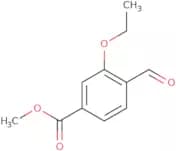
3-ethoxy-4-formyl-benzoic acid methyl ester
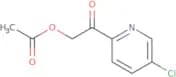
CAS :Versatile small molecule scaffoldFormule :C11H12O4Degré de pureté :Min. 95%Masse moléculaire :208.21 g/mol2-(5-Chloropyridin-2-yl)-2-oxoethyl acetate
CAS :Versatile small molecule scaffold
Formule :C9H8ClNO3Degré de pureté :Min. 95%Masse moléculaire :213.62 g/mol4-Methyl-1,2-oxazolidin-4-ol hydrochloride
CAS :Versatile small molecule scaffold
Formule :C4H10ClNO2Degré de pureté :Min. 95%Masse moléculaire :139.6 g/molPyrrolo[1,2-b]pyridazin-4(1H)-one
CAS :Versatile small molecule scaffold
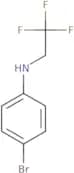
Formule :C7H6N2ODegré de pureté :Min. 95%Masse moléculaire :134.14 g/mol4-bromo-N-(2,2,2-trifluoroethyl)aniline
CAS :Versatile small molecule scaffold
Formule :C8H7BrF3NDegré de pureté :Min. 95%Masse moléculaire :254 g/molRef: 3D-ACA88529
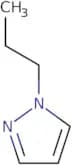
Produit arrêté1-Propylpyrazole
CAS :1-Propylpyrazole is a non-classical inhibitor of aldehyde oxidase that has been shown to have an inhibitory effect on pentane. 1-Propylpyrazole has peroxidase-like activity, which means it can bind to lipid hydroperoxides in the presence of hydrogen peroxide or peroxidase. It has also been shown to be an effective inhibitor of dehydrogenase, which is an enzyme that catalyzes the oxidation of aldehydes and ketones to carboxylic acids. This drug is not active against classical aldehyde oxidases such as alcohol dehydrogenase, but it does inhibit polyunsaturated fatty acid synthesis by binding with cytochrome P450 enzymes.
Formule :C6H10N2Degré de pureté :Min. 95%Masse moléculaire :110.16 g/molRef: 3D-HBA50067
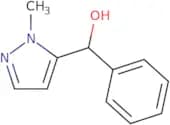
Produit arrêté(1-Methyl-1H-pyrazol-5-yl)(phenyl)methanol
CAS :Versatile small molecule scaffold
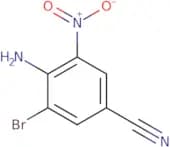
Formule :C11H12N2ODegré de pureté :Min. 95%Masse moléculaire :188.23 g/mol4-Amino-3-bromo-5-nitrobenzonitrile
CAS :Versatile small molecule scaffold
Formule :C7H4BrN3O2Degré de pureté :Min. 95%Masse moléculaire :242.03 g/molRef: 3D-PZB72033
Produit arrêté1-[(3-Bromothiophen-2-yl)methyl]piperazine
CAS :Versatile small molecule scaffold
Formule :C9H13BrN2SDegré de pureté :Min. 95%Masse moléculaire :261.18 g/mol1-[2-(Propan-2-yloxy)ethyl]cyclopropan-1-amine hydrochloride
CAS :Versatile small molecule scaffoldFormule :C8H18ClNODegré de pureté :Min. 95%Masse moléculaire :179.69 g/moltert-Butyl 4-methoxy-3,10-diazabicyclo[4.3.1]dec-3-ene-10-carboxylate
CAS :Versatile small molecule scaffoldFormule :C14H24N2O3Degré de pureté :Min. 95%Masse moléculaire :268.4 g/mol4-(4-Bromophenyl)-2,6-dichloropyrimidine
CAS :Versatile small molecule scaffold
Formule :C10H5BrCl2N2Degré de pureté :Min. 95%Masse moléculaire :303.97 g/mol1-[(4-Bromophenyl)methyl]-3-(2-methylpropyl)-1,4-diazepane
CAS :Versatile small molecule scaffold
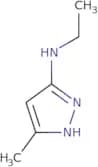
Formule :C16H25BrN2Degré de pureté :Min. 95%Masse moléculaire :325.29 g/molN-Ethyl-5-methyl-1H-pyrazol-3-amine
CAS :Versatile small molecule scaffold
Formule :C6H11N3Degré de pureté :Min. 95%Masse moléculaire :125.17 g/mol2-[(tert-Butyldimethylsilyl)oxy]benzaldehyde
CAS :2-[(tert-Butyldimethylsilyl)oxy]benzaldehyde (BBSA) is a traceless synthetic reagent that is used for the termination of peptide synthesis. It can also be used in the synthesis of benzofurans, carbonyl compounds, and thioacetals. The high yield and chemoselectivity makes BBSA a competitive reagent for these types of reactions. BBSA can be prepared from hydrogen peroxide, esters, enol ethers, or peroxides. These latter reactants are more selective than hydrogen peroxide and do not lead to oxidation of substrates or side products. This product is also useful for the synthesis of thioketals.
Formule :C13H20O2SiDegré de pureté :Min. 95%Masse moléculaire :236.38 g/molRef: 3D-REA58512
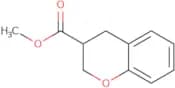
Produit arrêtéMethyl chroman-3-carboxylate
CAS :Versatile small molecule scaffold
Formule :C11H12O3Degré de pureté :Min. 95%Masse moléculaire :192.21 g/mol8-Chloro-3-methyl-1H-pyrrolo[3,2-c]quinoline
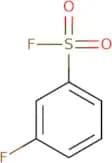
CAS :Versatile small molecule scaffoldFormule :C12H9ClN2Degré de pureté :Min. 95%Masse moléculaire :216.66 g/mol3-Fluorobenzene-1-sulfonyl fluoride
CAS :3-Fluorobenzene-1-sulfonyl fluoride is a chemical compound that can be used as a catalyst to synthesize organic compounds. It is a colorless liquid, which is soluble in water and organic solvents. This catalyst has been shown to be more efficient than the traditional catalysts, such as tetraphenylphosphonium chloride, potassium fluoride or sodium borohydride. 3-Fluorobenzene-1-sulfonyl fluoride also reacts with nitro groups to produce dinitro compounds, which are valuable synthetic intermediates for the production of dyes and pharmaceuticals. The synthesis of this compound can be carried out in high yields with stoichiometric amounts of reactants.
Formule :C6H4F2O2SDegré de pureté :Min. 95%Masse moléculaire :178.16 g/mol[3-(Oxan-4-yl)pyrrolidin-3-yl]methanol hydrochloride
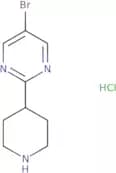
CAS :Versatile small molecule scaffoldFormule :C10H20ClNO2Degré de pureté :Min. 95%Masse moléculaire :221.7 g/mol5-Bromo-2-(piperidin-4-yl)pyrimidine hydrochloride
CAS :Versatile small molecule scaffold
Formule :C9H13BrClN3Degré de pureté :Min. 95%Masse moléculaire :278.58 g/molEthyl 1-amino-1-cyclobutanecarboxylate monohydrochloride
CAS :Ethyl 1-amino-1-cyclobutanecarboxylate monohydrochloride is a cyclic carbonyl compound that is used as a building block in organic synthesis. It has been used to synthesize a number of natural products, such as piperarborenine and cyclobutanes. This compound can be synthesized by reacting ethyl chloroformate with cyclobutanecarbaldehyde in the presence of an acid or base catalyst. The steric and geometric properties of this molecule are highlighted below.
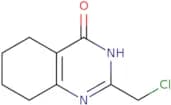
Formule :C2H5O2CC4H6NH2·HClDegré de pureté :Min. 95%Masse moléculaire :179.64 g/mol2-(Chloromethyl)-5,6,7,8-tetrahydroquinazolin-4(3H)-one
CAS :Versatile small molecule scaffold
Formule :C9H11ClN2ODegré de pureté :Min. 95%Masse moléculaire :198.65 g/mol2-[Ethyl(propan-2-yl)amino]ethan-1-ol
CAS :Produit contrôléVersatile small molecule scaffold
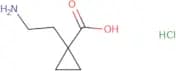
Formule :C7H17NODegré de pureté :Min. 95%Masse moléculaire :131.22 g/mol1-(2-aminoethyl)cyclopropane-1-carboxylic acid hydrochloride
CAS :Versatile small molecule scaffold
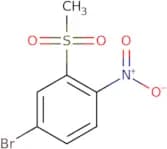
Formule :C6H12ClNO2Degré de pureté :Min. 95%Masse moléculaire :165.62 g/mol4-Bromo-2-methanesulfonyl-1-nitrobenzene
CAS :Versatile small molecule scaffold
Formule :C7H6BrNO4SDegré de pureté :Min. 95%Masse moléculaire :280.1 g/molRef: 3D-YGC03381
Produit arrêté4-[(2-Amino-1,3-thiazol-5-yl)methyl]-3-(trifluoromethyl)benzonitrile
CAS :Versatile small molecule scaffold
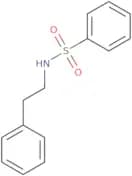
Formule :C12H8F3N3SDegré de pureté :Min. 95%Masse moléculaire :283.27 g/molN-(2-Phenylethyl)benzenesulfonamide
CAS :N-(2-Phenylethyl)benzenesulfonamide is a biodegradable and aerobic catalyst that is used in the production of nitrates. It can be recycled and has a high solubility, which allows for efficient extraction from wastewater effluents. The reactor system can be operated at an aerobic or anaerobic conditions. N-(2-Phenylethyl)benzenesulfonamide is soluble in water and can be hydrolyzed by acids or bases to release ammonia gas. The process can also be sustainable due to the use of renewable energy sources such as solar, wind, tidal, or biomass power.
Formule :C14H15NO2SDegré de pureté :Min. 95%Masse moléculaire :261.34 g/molRef: 3D-CDA19899
Produit arrêté2-[6-(Furan-2-yl)-3-methyl-4-(trifluoromethyl)-1H-pyrazolo[3,4-b]pyridin-1-yl]acetic acid
CAS :Versatile small molecule scaffoldFormule :C14H10F3N3O3Degré de pureté :Min. 95%Masse moléculaire :325.24 g/mol2-{3-Cyclopropyl-5-methyl-1H-pyrazolo[3,4-b]pyridin-1-yl}acetic acid
CAS :Versatile small molecule scaffoldFormule :C12H13N3O2Degré de pureté :Min. 95%Masse moléculaire :231.25 g/mol6-Ethyl-3-methyl-1-phenyl-1H-pyrazolo[3,4-b]pyridine-4-carboxylic acid
CAS :Versatile small molecule scaffold
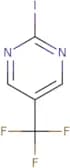
Formule :C16H15N3O2Degré de pureté :Min. 95%Masse moléculaire :281.31 g/mol2-Iodo-5-(trifluoromethyl)pyrimidine
CAS :Versatile small molecule scaffold
Formule :C5H2F3IN2Degré de pureté :Min. 95%Masse moléculaire :273.98 g/molRef: 3D-MEA93095
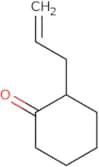
Produit arrêté2-Allylcyclohexanone
CAS :2-Allylcyclohexanone is an unsaturated ketone that is synthesized by the ring-opening of allyl cyclohexane carboxylate with sodium hydroxide. It can be used as a chemical intermediate for the synthesis of other compounds. 2-Allylcyclohexanone can also be used to react with hydroxide solution to produce a salt and an alcohol. The hydroxide solution can act as a base, reducing the carbonyl group in the presence of an acid to form the corresponding alcohol. This reaction is stereoselective because it only occurs when there are two different groups on adjacent carbons.
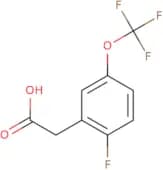
2-Allylcyclohexanone has been shown to inhibit non-nucleoside reverse transcriptase inhibitors (NNRTIs) such as nevirapine, efavirenz, and delavirdine. In addition, it has been found to have functional groups that are capable of reactingFormule :C9H14ODegré de pureté :Min. 95%Masse moléculaire :138.21 g/mol2-Fluoro-5-(trifluoromethoxy)phenylacetic acid
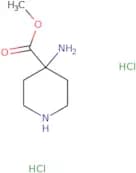
CAS :Versatile small molecule scaffoldFormule :C9H6F4O3Degré de pureté :Min. 95%Masse moléculaire :238.14 g/molMethyl 4-aminopiperidine-4-carboxylate dihydrochloride
CAS :Versatile small molecule scaffoldFormule :C7H16Cl2N2O2Degré de pureté :Min. 95%Masse moléculaire :231.12 g/mol2-[1-(Difluoromethyl)-3,5-dimethyl-1H-pyrazol-4-yl]acetic acid
CAS :Produit contrôlé2-[1-(Difluoromethyl)-3,5-dimethyl-1H-pyrazol-4-yl]acetic acid is a potent inhibitor of peptide binding to the receptor. It has a Kd value of 0.2 μM and a Ki value of 1.6 μM in the inhibition of insulin binding to its receptor. 2-[1-(Difluoromethyl)-3,5-dimethyl-1H-pyrazol-4-yl]acetic acid is also an activator of protein interactions and ligand for research tools used for studying ion channels and other receptors. This chemical can be used as high purity reagent for life sciences, including cell biology and pharmacology.
Formule :C8H10F2N2O2Degré de pureté :Min. 95%Masse moléculaire :204.17 g/molRef: 3D-WYB72452
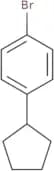
Produit arrêté1-Bromo-4-cyclopentylbenzene
CAS :1-Bromo-4-cyclopentylbenzene (1-BCPB) is a chlorinated aromatic compound that can be synthesized by reacting 1-bromo-4-chlorobenzene and cyclopentylmagnesium bromide. The reaction sequence begins with the addition of hydrochloric acid to the first reactant, followed by magnesium chloride and ether. The mixture is heated to produce a liquid solution of ethylhexyloxy pyridine, which reacts with the second reactant in a sequence that leads to the desired product. 1-BCPB is used as an intermediate in organic synthesis. It has been shown to have moderate interaction with paraldehyde and pyridinium salts at room temperature, but it does not react with cycloalkyls or pyridinium salts at elevated temperatures.
Formule :C11H13BrDegré de pureté :Min. 95%Masse moléculaire :225.13 g/molRef: 3D-JCA73491
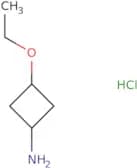
Produit arrêtérac-(1R,3R)-3-Ethoxycyclobutan-1-amine hydrochloride
CAS :Versatile small molecule scaffoldFormule :C6H14ClNODegré de pureté :Min. 95%Masse moléculaire :151.63 g/molRef: 3D-IGC07627
Produit arrêté2-Bromo-3,3,3-trifluoro-1-propene
CAS :Produit contrôlé2-Bromo-3,3,3-trifluoro-1-propene is a chemical compound that has been synthesized in an asymmetric reaction. The reactant is bromopropane and the product is 2,2,2-trifluoropropene. The methylene group on the propene molecule is activated by the nucleophilic attack of a fluoride ion from hydrogen fluoride to form a cavity with a highly strained bond. The kinetic study of this reaction revealed that the activation energy for the reaction is 42 kJ/mol. Palladium-catalyzed coupling reactions are catalyzed by palladium and require nonpolar solvents such as toluene or dichloromethane. This type of reaction has been shown to be exothermic with an isolated yield of 1%.
Formule :C3H2BrF3Degré de pureté :Min. 95%Couleur et forme :Colorless PowderMasse moléculaire :174.95 g/molRef: 3D-FB11073
Produit arrêtéPiperyline
CAS :Piperyline is an alkanoic acid that has shown to be effective against skin cancer. It also has antimicrobial properties, which may be due to its ability to bind metal ions and form polymeric compounds. Piperyline inhibits microbial growth by inhibiting the synthesis of proteins and nucleic acids. The antimicrobial activity is related to its cationic polymerization with hydroxyl groups, which forms a structure that can inhibit microbial enzymes and disrupt microbial cell membranes. This compound also interacts with the skin's natural lipids, making it difficult for microorganisms to attach and grow on the skin. Piperyline is synthesized in organic chemistry laboratories as an amide precursor of other pharmaceuticals such as penicillin.
Formule :C16H17NO3Degré de pureté :Min. 95%Masse moléculaire :271.31 g/mol


![Pyrrolo[1,2-b]pyridazin-4(1H)-one](/_next/image/?url=https%3A%2Fstatic.cymitquimica.com%2Fproducts%2F3D%2Fthumb-webp%2FNKB72026.webp&w=3840&q=75)
![1-[(3-Bromothiophen-2-yl)methyl]piperazine](/_next/image/?url=https%3A%2Fstatic.cymitquimica.com%2Fproducts%2F3D%2Fthumb-webp%2FWYB72635.webp&w=3840&q=75)
![1-[2-(Propan-2-yloxy)ethyl]cyclopropan-1-amine hydrochloride](/_next/image/?url=https%3A%2Fstatic.cymitquimica.com%2Fproducts%2F3D%2Fthumb-webp%2FPZC01648.webp&w=3840&q=75)
![tert-Butyl 4-methoxy-3,10-diazabicyclo[4.3.1]dec-3-ene-10-carboxylate](/_next/image/?url=https%3A%2Fstatic.cymitquimica.com%2Fproducts%2F3D%2Fthumb-webp%2FFSD25605.webp&w=3840&q=75)

![1-[(4-Bromophenyl)methyl]-3-(2-methylpropyl)-1,4-diazepane](/_next/image/?url=https%3A%2Fstatic.cymitquimica.com%2Fproducts%2F3D%2Fthumb-webp%2FQJC93175.webp&w=3840&q=75)
![2-[(tert-Butyldimethylsilyl)oxy]benzaldehyde](/_next/image/?url=https%3A%2Fstatic.cymitquimica.com%2Fproducts%2F3D%2Fthumb-webp%2FREA58512.webp&w=3840&q=75)
![8-Chloro-3-methyl-1H-pyrrolo[3,2-c]quinoline](/_next/image/?url=https%3A%2Fstatic.cymitquimica.com%2Fproducts%2F3D%2Fthumb-webp%2FTCA49997.webp&w=3840&q=75)
![[3-(Oxan-4-yl)pyrrolidin-3-yl]methanol hydrochloride](/_next/image/?url=https%3A%2Fstatic.cymitquimica.com%2Fproducts%2F3D%2Fthumb-webp%2FUND37404.webp&w=3840&q=75)

![2-[Ethyl(propan-2-yl)amino]ethan-1-ol](/_next/image/?url=https%3A%2Fstatic.cymitquimica.com%2Fproducts%2F3D%2Fthumb-webp%2FCAA89361.webp&w=3840&q=75)
![4-[(2-Amino-1,3-thiazol-5-yl)methyl]-3-(trifluoromethyl)benzonitrile](/_next/image/?url=https%3A%2Fstatic.cymitquimica.com%2Fproducts%2F3D%2Fthumb-webp%2FMMB62900.webp&w=3840&q=75)
![2-[6-(Furan-2-yl)-3-methyl-4-(trifluoromethyl)-1H-pyrazolo[3,4-b]pyridin-1-yl]acetic acid](/_next/image/?url=https%3A%2Fstatic.cymitquimica.com%2Fproducts%2F3D%2Fthumb-webp%2FMMB60578.webp&w=3840&q=75)
![2-{3-Cyclopropyl-5-methyl-1H-pyrazolo[3,4-b]pyridin-1-yl}acetic acid](/_next/image/?url=https%3A%2Fstatic.cymitquimica.com%2Fproducts%2F3D%2Fthumb-webp%2FMMB60570.webp&w=3840&q=75)
![6-Ethyl-3-methyl-1-phenyl-1H-pyrazolo[3,4-b]pyridine-4-carboxylic acid](/_next/image/?url=https%3A%2Fstatic.cymitquimica.com%2Fproducts%2F3D%2Fthumb-webp%2FMMB69138.webp&w=3840&q=75)
![2-[1-(Difluoromethyl)-3,5-dimethyl-1H-pyrazol-4-yl]acetic acid](/_next/image/?url=https%3A%2Fstatic.cymitquimica.com%2Fproducts%2F3D%2Fthumb-webp%2FWYB72452.webp&w=3840&q=75)