Building Blocks
Sous-catégories appartenant à la catégorie "Building Blocks"
- Acides boroniques et dérivés de l'acide boronique(5.778 produits)
- Building Blocks Chiraux(1.243 produits)
- Building Blocks Hydrocarbonés(6.098 produits)
- Building Blocks organiques(61.036 produits)
205240 produits trouvés pour "Building Blocks"
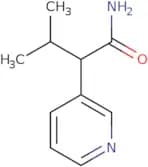
3-Methyl-2-(pyridin-3-yl)butanamide
CAS :Versatile small molecule scaffold
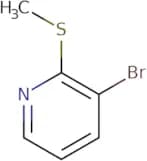
Formule :C10H14N2ODegré de pureté :Min. 95%Masse moléculaire :178.23 g/mol3-Bromo-2-(methylthio)pyridine
CAS :Versatile small molecule scaffold
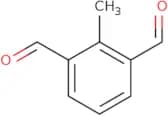
Formule :C6H6BrNSDegré de pureté :Min. 95%Masse moléculaire :204.09 g/mol2-Methylbenzene-1,3-dicarbaldehyde
CAS :2-Methylbenzene-1,3-dicarbaldehyde is a divalent hydrocarbon that has an oxidation catalyst. This compound is used as an intermediate in the production of drugs and pharmaceuticals. It has been shown to have cardiovascular disorders, such as vasodilatation and hypotension. The mechanism of action is not fully understood but may be related to its ability to act as a nitrovasodilator by increasing nitric oxide (NO) release. 2-Methylbenzene-1,3-dicarbaldehyde also produces psychotic disorders when long term exposure occurs. This compound has been shown to have neurotoxic effects in animal models with long term exposure.
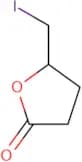
Formule :C9H8O2Degré de pureté :Min. 95%Masse moléculaire :148.16 g/mol5-(Iodomethyl)oxolan-2-one
CAS :Versatile small molecule scaffold
Formule :C5H7IO2Degré de pureté :Min. 95%Masse moléculaire :226.01 g/molRef: 3D-BAA72932
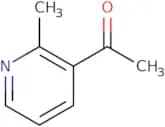
Produit arrêté1-(2-Methylpyridin-3-yl)ethanone
CAS :1-(2-Methylpyridin-3-yl)ethanone is a ketone that can be synthesized using the reaction of methyl sulfone, benzyl sulfone, and sulphone. It has been shown to have anti-inflammatory properties by inhibiting prostaglandin synthesis and has been used as a nonsteroidal anti-inflammatory drug (NSAID). 1-(2-Methylpyridin-3-yl)ethanone has also been shown to have analgesic effects in mice. This synthetic compound may be useful in treating inflammation, pain, and fever.
Formule :C8H9NODegré de pureté :Min. 95%Masse moléculaire :135.16 g/molRef: 3D-BAA72112
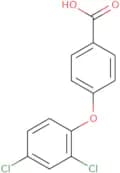
Produit arrêté4-(2,4-Dichlorophenoxy)benzoic acid
CAS :Versatile small molecule scaffold
Formule :C13H8Cl2O3Degré de pureté :Min. 95%Masse moléculaire :283.1 g/molRef: 3D-AMB00504
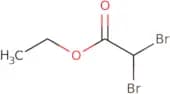
Produit arrêtéAcetic acid, dibromo-, ethyl ester
CAS :Acetic acid, dibromo-, ethyl ester is a reactive molecule that can be used as a nucleophilic substituent. It has hydroxyl group and ruthenium complex. It is a particle that can be used in the production of monoclonal antibodies. Acetic acid, dibromo-, ethyl ester also has viscosity and polycarboxylic acid. This chemical reacts with β-unsaturated ketones to form polymerization initiator. Acetic acid, dibromo-, ethyl ester also has carbonyl group and monoclonal antibodies. Acetic acid, dibromo-, ethyl ester can be conjugated with ethyl bromoacetate to produce conjugates.
Formule :C4H6Br2O2Degré de pureté :Min. 95%Masse moléculaire :245.9 g/mol2-[(3-Nitrophenyl)formamido]acetic acid
CAS :2-[(3-Nitrophenyl)formamido]acetic acid (2NPA) is a modifying agent that has been used in the modification of carboxyl groups. It can react with nucleophiles to form adducts and with carbodiimides to form ureas. 2NPA reacts with amino acids, peptides, and other nitrogenous compounds at their carboxyl groups to form ester or amide bonds. The nature of the residues after modification varies depending on the nature of the carboxyl group that was modified.
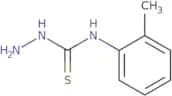
Formule :C9H8N2O5Degré de pureté :Min. 95%Masse moléculaire :224.17 g/mol4-(2-Methylphenyl)-3-thiosemicarbazide
CAS :4-(2-Methylphenyl)-3-thiosemicarbazide is a crystalline solid that belongs to the group of benzoic acid derivatives. It has an orthorhombic crystal structure, with a yellow color. The crystals are measured at room temperature, and it has an atomic weight of 197.11 g/mol. 4-(2-Methylphenyl)-3-thiosemicarbazide is stable in air and in solution, but decomposes at temperatures above 250°C. This compound has been studied by using X-ray diffraction measurements and Bruker parameters. Its isotropic radiation is recorded at the following wavelength: 1.5418 Å (1).
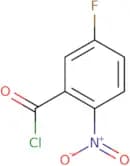
Formule :C8H11N3SDegré de pureté :Min. 95%Masse moléculaire :181.26 g/mol5-Fluoro-2-nitrobenzoyl chloride
CAS :5-Fluoro-2-nitrobenzoyl chloride is a conformationally locked macrocyclic compound that has been synthesized by solid phase synthesis. It is found in two conformational states and can be made to switch between these two states by applying a force to the molecule. This conformation can be controlled by changing the side chain of 5-fluoro-2-nitrobenzoyl chloride, which can be done experimentally. The conformational behavior of this macrocycle was studied using molecular dynamics simulations and it was found that there are four possible conformations for the molecule. The conformations with different side chains were found to have different energies, which could be used as a measure of their relative stability.
Formule :C7H3ClFNO3Degré de pureté :Min. 95%Masse moléculaire :203.55 g/molRef: 3D-AAA39402
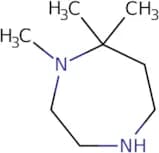
Produit arrêté1,7,7-Trimethyl-1,4-diazepane
CAS :Versatile small molecule scaffold
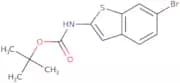
Formule :C8H18N2Degré de pureté :Min. 95%Masse moléculaire :142.24 g/moltert-Butyl N-(6-bromo-1-benzothiophen-2-yl)carbamate
CAS :Versatile small molecule scaffold
Formule :C13H14BrNO2SDegré de pureté :Min. 95%Masse moléculaire :328.23 g/mol1-(Propan-2-yl)-N-[1-(propan-2-yl)-4,5,6,7-tetrahydro-1H-indazol-5-yl]-4,5,6,7-tetrahydro-1H-indazol-5-amine
CAS :Versatile small molecule scaffold
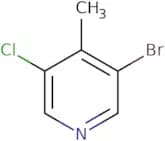
Formule :C20H31N5Degré de pureté :Min. 95%Masse moléculaire :341.5 g/mol3-Bromo-5-chloro-4-methylpyridine
CAS :Versatile small molecule scaffold
Formule :C6H5BrClNDegré de pureté :Min. 95%Masse moléculaire :206.47 g/molRef: 3D-KAC01008
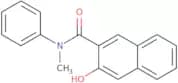
Produit arrêté3-Hydroxy-N-methyl-N-phenylnaphthalene-2-carboxamide
CAS :Versatile small molecule scaffold
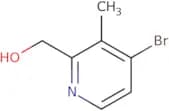
Formule :C18H15NO2Degré de pureté :Min. 95%Masse moléculaire :277.3 g/mol(4-Bromo-3-methylpyridin-2-yl)methanol
CAS :Versatile small molecule scaffoldFormule :C7H8BrNODegré de pureté :Min. 95%Masse moléculaire :202.05 g/mol2-[(2-Methoxyethyl)amino]propanamide hydrochloride
CAS :Versatile small molecule scaffold
Formule :C6H15ClN2O2Degré de pureté :Min. 95%Masse moléculaire :182.65 g/molRef: 3D-IAC63932
Produit arrêté3-Bromo-5H,6H,8H-[1,2,4]triazolo[3,4-c][1,4]oxazine
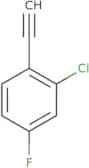
CAS :Versatile small molecule scaffoldFormule :C5H6BrN3ODegré de pureté :Min. 95%Masse moléculaire :204.02 g/mol2-Chloro-1-ethynyl-4-fluorobenzene
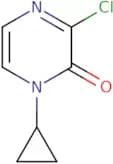
CAS :Versatile small molecule scaffoldFormule :C8H4ClFDegré de pureté :Min. 95%Masse moléculaire :154.57 g/mol3-Chloro-1-cyclopropyl-1,2-dihydropyrazin-2-one
CAS :Versatile small molecule scaffold
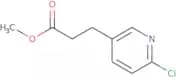
Formule :C7H7ClN2ODegré de pureté :Min. 95%Masse moléculaire :170.59 g/molMethyl 3-(6-chloropyridin-3-yl)propanoate
CAS :Versatile small molecule scaffold
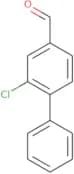
Formule :C9H10ClNO2Degré de pureté :Min. 95%Masse moléculaire :199.63 g/mol3-Chloro-4-phenylbenzaldehyde
CAS :Versatile small molecule scaffold
Formule :C13H9ClODegré de pureté :Min. 95%Masse moléculaire :216.66 g/molRef: 3D-HCA59244
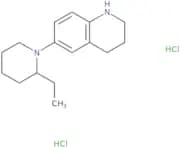
Produit arrêté6-(2-Ethylpiperidin-1-yl)-1,2,3,4-tetrahydroquinoline dihydrochloride
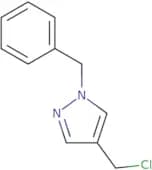
CAS :Versatile small molecule scaffoldFormule :C16H26Cl2N2Degré de pureté :Min. 95%Masse moléculaire :317.3 g/mol1-Benzyl-4-(chloromethyl)-1H-pyrazole
CAS :Produit contrôléVersatile small molecule scaffoldFormule :C11H11ClN2Degré de pureté :Min. 95%Masse moléculaire :206.67 g/molRef: 3D-LJB20495
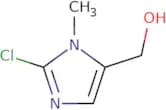
Produit arrêté(2-Chloro-1-methyl-1H-imidazol-5-yl)methanol
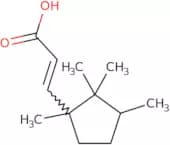
CAS :Versatile small molecule scaffoldFormule :C5H7ClN2ODegré de pureté :Min. 95%Masse moléculaire :146.57 g/mol3-(1,2,2,3-Tetramethylcyclopentyl)prop-2-enoic acid
CAS :Versatile small molecule scaffold
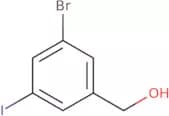
Formule :C12H20O2Degré de pureté :Min. 95%Masse moléculaire :196.29 g/mol(3-bromo-5-iodophenyl)methanol
CAS :Versatile small molecule scaffold
Formule :C7H6BrIODegré de pureté :Min. 95%Masse moléculaire :312.9 g/mol3-Amino-7-oxa-1λ⁶-thiaspiro[3.5]nonane-1,1-dione hydrochloride
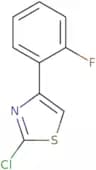
CAS :Versatile small molecule scaffoldFormule :C7H14ClNO3SDegré de pureté :Min. 95%Masse moléculaire :227.7 g/mol2-Chloro-4-(2-fluorophenyl)-1,3-thiazole
CAS :Versatile small molecule scaffold
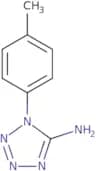
Formule :C9H5ClFNSDegré de pureté :Min. 95%Masse moléculaire :213.66 g/mol1-(4-Methylphenyl)-1H-1,2,3,4-tetrazol-5-amine
CAS :Versatile small molecule scaffold
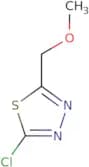
Formule :C8H9N5Degré de pureté :Min. 95%Masse moléculaire :175.19 g/mol2-Chloro-5-(methoxymethyl)-1,3,4-thiadiazole
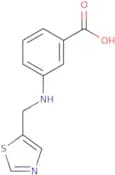
CAS :Versatile small molecule scaffoldFormule :C4H5ClN2OSDegré de pureté :Min. 95%Masse moléculaire :164.61 g/mol3-((Thiazol-5-ylmethyl)amino)benzoic acid
CAS :Versatile small molecule scaffold
Formule :C11H10N2O2SDegré de pureté :Min. 95%Masse moléculaire :234.28 g/mol8-Fluoro-3-methyl-1,2,3,4-tetrahydroquinoline hydrochloride
CAS :Versatile small molecule scaffold
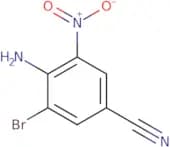
Formule :C10H13ClFNDegré de pureté :Min. 95%Masse moléculaire :201.67 g/mol4-Amino-3-bromo-5-nitrobenzonitrile
CAS :Versatile small molecule scaffold
Formule :C7H4BrN3O2Degré de pureté :Min. 95%Masse moléculaire :242.03 g/molRef: 3D-PZB72033
Produit arrêtéN-(1-Benzyl-3-phenylpyrrolidin-3-yl)acetamide
CAS :Versatile small molecule scaffoldFormule :C19H22N2ODegré de pureté :Min. 95%Masse moléculaire :294.4 g/mol3-Hydroxy-5-methylpyridine
CAS :3-Hydroxy-5-methylpyridine (3HMP) is a chemical substance that has been classified as an amine. It is a product of the metabolism of purines, which are nitrogenous bases found in DNA and RNA. 3HMP is produced by aerogenic bacteria (such as Enterobacter), and can be used to estimate the number of these bacteria present in water samples. 3HMP has been shown to have antiviral properties against influenza virus, and can be used as a biomarker for the presence of other viruses in animals. 3HMP also has mineralization properties, which have been studied extensively, particularly with regards to pancreatic disease.
Formule :C6H7NODegré de pureté :Min. 95%Couleur et forme :PowderMasse moléculaire :109.13 g/mol4-Chloro-2-hydroxy-6-methylphenylboronic acid
CAS :Versatile small molecule scaffoldFormule :C7H8BClO3Degré de pureté :Min. 95%Masse moléculaire :186.4 g/molRef: 3D-HYB96150
Produit arrêté2-Bromo-3,3,3-trifluoro-1-propene
CAS :Produit contrôlé2-Bromo-3,3,3-trifluoro-1-propene is a chemical compound that has been synthesized in an asymmetric reaction. The reactant is bromopropane and the product is 2,2,2-trifluoropropene. The methylene group on the propene molecule is activated by the nucleophilic attack of a fluoride ion from hydrogen fluoride to form a cavity with a highly strained bond. The kinetic study of this reaction revealed that the activation energy for the reaction is 42 kJ/mol. Palladium-catalyzed coupling reactions are catalyzed by palladium and require nonpolar solvents such as toluene or dichloromethane. This type of reaction has been shown to be exothermic with an isolated yield of 1%.
Formule :C3H2BrF3Degré de pureté :Min. 95%Couleur et forme :Colorless PowderMasse moléculaire :174.95 g/molRef: 3D-FB11073
Produit arrêté4,5-Dihydroxy-2,3-Pentanedione
CAS :4,5-Dihydroxy-2,3-pentanedione is a carbonyl compound that is the product of the oxidation of ascorbic acid. It is used in wastewater treatment and has antimicrobial properties against infectious diseases. This compound has been shown to inhibit protein synthesis by binding to the ribosome and preventing the formation of peptide bonds between amino acids. 4,5-Dihydroxy-2,3-pentanedione has also been shown to bind to plasma proteins, which may be due to its acyl chain structure. 4,5-Dihydroxy-2,3-pentanedione can be synthesized in a catalytic mechanism that involves dehydroascorbic acid and molecular oxygen.
Formule :C5H8O4Degré de pureté :Min. 95%Couleur et forme :PowderMasse moléculaire :132.11 g/molPiperyline
CAS :Piperyline is an alkanoic acid that has shown to be effective against skin cancer. It also has antimicrobial properties, which may be due to its ability to bind metal ions and form polymeric compounds. Piperyline inhibits microbial growth by inhibiting the synthesis of proteins and nucleic acids. The antimicrobial activity is related to its cationic polymerization with hydroxyl groups, which forms a structure that can inhibit microbial enzymes and disrupt microbial cell membranes. This compound also interacts with the skin's natural lipids, making it difficult for microorganisms to attach and grow on the skin. Piperyline is synthesized in organic chemistry laboratories as an amide precursor of other pharmaceuticals such as penicillin.
Formule :C16H17NO3Degré de pureté :Min. 95%Masse moléculaire :271.31 g/mol

![2-[(3-Nitrophenyl)formamido]acetic acid](/_next/image/?url=https%3A%2Fstatic.cymitquimica.com%2Fproducts%2F3D%2Fthumb-webp%2FAAA61710.webp&w=3840&q=75)
![1-(Propan-2-yl)-N-[1-(propan-2-yl)-4,5,6,7-tetrahydro-1H-indazol-5-yl]-4,5,6,7-tetrahydro-1H-indaz…](/_next/image/?url=https%3A%2Fstatic.cymitquimica.com%2Fproducts%2F3D%2Fthumb-webp%2FJDC14931.webp&w=3840&q=75)
![2-[(2-Methoxyethyl)amino]propanamide hydrochloride](/_next/image/?url=https%3A%2Fstatic.cymitquimica.com%2Fproducts%2F3D%2Fthumb-webp%2FIAC63932.webp&w=3840&q=75)
![3-Bromo-5H,6H,8H-[1,2,4]triazolo[3,4-c][1,4]oxazine](/_next/image/?url=https%3A%2Fstatic.cymitquimica.com%2Fproducts%2F3D%2Fthumb-webp%2FHWC64136.webp&w=3840&q=75)
![3-Amino-7-oxa-1λ⁶-thiaspiro[3.5]nonane-1,1-dione hydrochloride](/_next/image/?url=https%3A%2Fstatic.cymitquimica.com%2Fproducts%2F3D%2Fthumb-webp%2FFPD79892.webp&w=3840&q=75)