Building Blocks
Sous-catégories appartenant à la catégorie "Building Blocks"
- Acides boroniques et dérivés de l'acide boronique(5.784 produits)
- Building Blocks Chiraux(1.242 produits)
- Building Blocks Hydrocarbonés(6.105 produits)
- Building Blocks organiques(61.061 produits)
205399 produits trouvés pour "Building Blocks"
1,3-Oxathiolan-2-one
CAS :Versatile small molecule scaffold
Formule :C3H4O2SDegré de pureté :Min. 95%Masse moléculaire :104.13 g/mol5-Isopropyl-3,8-dimethylazulene-1-carbaldehyde
CAS :Versatile small molecule scaffold
Formule :C16H18ODegré de pureté :Min. 95%Masse moléculaire :226.32 g/mol3-[(2-Methoxyphenyl)amino]propanoic acid
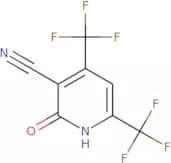
CAS :Versatile small molecule scaffoldFormule :C10H13NO3Degré de pureté :Min. 95%Masse moléculaire :195.21 g/mol2-Oxo-4,6-bis(trifluoromethyl)-1,2-dihydropyridine-3-carbonitrile
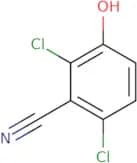
CAS :Versatile small molecule scaffoldFormule :C8H2F6N2ODegré de pureté :Min. 95%Masse moléculaire :256.1 g/mol2,6-Dichloro-3-hydroxybenzonitrile
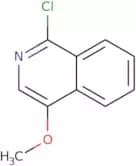
CAS :2,6-Dichloro-3-hydroxybenzonitrile is a monophenolic compound that can be found in the faeces of rats and rabbits. It has been shown to inhibit biochemical activity in tissue culture, sublethal doses of argon and excised incubated tissues. 2,6-Dichloro-3-hydroxybenzonitrile also has an inhibitory effect on the production of acid in sulphates, enzyme preparations and assays. This chemical has been shown to have an inhibitory effect on mitochondrial function by decreasing ATP levels.Formule :C7H3Cl2NODegré de pureté :Min. 95%Masse moléculaire :188.01 g/mol1-Chloro-4-methoxyisoquinoline
CAS :1-Chloro-4-methoxyisoquinoline is an intermediate in the synthesis of isoquinolines. It is a white solid that is soluble in organic solvents such as ether, chloroform, and acetone. The chemical structure of 1-chloro-4-methoxyisoquinoline has not been well studied due to its instability.
Formule :C10H8ClNODegré de pureté :Min. 95%Masse moléculaire :193.63 g/mol5-Methyl-benzo[1,2,5]thiadiazol-4-ylamine
CAS :Versatile small molecule scaffold
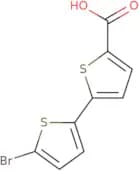
Formule :C7H7N3SDegré de pureté :Min. 95%Masse moléculaire :165.22 g/mol5-(5-Bromothiophen-2-yl)thiophene-2-carboxylic acid
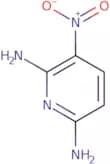
CAS :Versatile small molecule scaffoldFormule :C9H5BrO2S2Degré de pureté :Min. 95%Masse moléculaire :289.2 g/mol2,6-diamino-3-nitropyridine
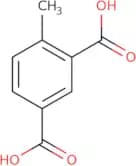
CAS :2,6-Diamino-3-nitropyridine is a chemical compound that has been used as a catalyst for hydrogenation reduction in the synthesis of various organic compounds. It is a colorless solid that can be obtained by reacting ethyl chloroformate with ammonia and pyridine. 2,6-Diamino-3-nitropyridine can also be synthesized by ammonolysis of chloroformates or maleates with ammonia. The reaction mechanism of this process is similar to that of the catalytic hydrogenation reduction. This chemical is used in the preparation of flupirtine maleate, an anti-inflammatory drug with analgesic properties.Formule :C5H6N4O2Degré de pureté :Min. 95%Masse moléculaire :154.13 g/mol4-Methylisophthalic acid
CAS :4-Methylisophthalic acid is a carboxylic acid that belongs to the group of compounds known as isomers. It has been found in heartwood, dioxane, and piperazine. 4-Methylisophthalic acid has been shown to have an inhibitory effect on the growth of certain bacteria. This compound also has chemical compositions similar to those of monomethyl esters and methyl benzoate. The chemical treatment of this compound with solvents such as ethylene or acetone can result in its conversion into methylbenzoate or ethylbenzoate.
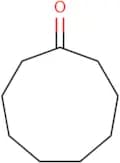
Formule :C9H8O4Degré de pureté :Min. 95%Masse moléculaire :180.16 g/molCyclononanone
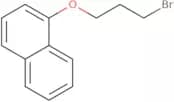
CAS :Cyclononanone is a reactive compound that is metabolized in the body, primarily by oxidation to cyclohexanone. Cyclononanone is a lipid soluble chemical with high reactivity. It has been shown to have toxic effects on human cells and can be used as a chemical substrate in the study of lipid peroxidation. Cyclononanone also has some therapeutic properties, such as its ability to inhibit pro-inflammatory cytokine production and decrease the number of receptor cells for T cells. Cyclononanone has also been shown to have anti-inflammatory and antioxidant properties. This compound binds to the amide group of proteins and inhibits the hydrophobic effect, which may be related to its role as an anti-inflammatory agent.Formule :C9H16ODegré de pureté :Min. 95%Masse moléculaire :140.23 g/mol1-(3-Bromopropoxy)naphthalene
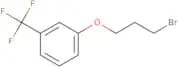
CAS :Versatile small molecule scaffoldFormule :C13H13BrODegré de pureté :Min. 95%Masse moléculaire :265.14 g/mol1-(3-Bromopropoxy)-3-(trifluoromethyl)benzene
CAS :Versatile small molecule scaffold
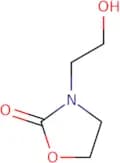
Formule :C10H10BrF3ODegré de pureté :Min. 95%Masse moléculaire :283.08 g/mol3-(2-Hydroxyethyl)-1,3-oxazolidin-2-one
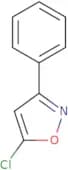
CAS :3-(2-Hydroxyethyl)-1,3-oxazolidin-2-one is a synthetic compound that is used as an antioxidant and antibacterial agent. The chemical has been shown to be effective against a wide range of microorganisms, including bacteria, fungi, and viruses. 3-(2-Hydroxyethyl)-1,3-oxazolidin-2-one inhibits bacterial growth by modifying the cell membrane and disrupting the cell wall. This compound also has been found to react with amines in proteins, which may account for its antimicrobial activity. 3-(2-Hydroxyethyl)-1,3-oxazolidin-2-one reacts with oxygen to form hydroxyl radicals that can attack the lipid membrane of cells. It also reacts with piperazine in a reaction that produces nitric oxide radicals and hydrogen peroxide. This process can lead to oxidative carbonylation of polymers such as polypropylene or polyvinyl chloride (PVCFormule :C5H9NO3Degré de pureté :Min. 95%Masse moléculaire :131.13 g/mol5-Chloro-3-phenylisoxazole
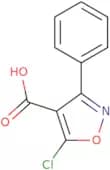
CAS :5-Chloro-3-phenylisoxazole is a versatile compound with various applications. It has been widely used in research as a collagen cross-linking agent and in the synthesis of new compounds for drug development. Additionally, it has shown potential as an inhibitor of glycogen synthase kinase (GSK-3β), an enzyme involved in the regulation of cell signaling pathways.Formule :C9H6ClNODegré de pureté :Min. 95%Masse moléculaire :179.6 g/mol5-Chloro-3-phenyl-1,2-oxazole-4-carboxylic acid
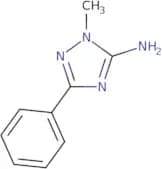
CAS :Versatile small molecule scaffoldFormule :C10H6ClNO3Degré de pureté :Min. 95%Masse moléculaire :223.61 g/mol1-Methyl-3-phenyl-1H-1,2,4-triazol-5-amine
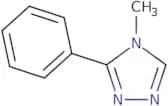
CAS :Versatile small molecule scaffoldFormule :C9H10N4Degré de pureté :Min. 95%Masse moléculaire :174.2 g/mol4-Methyl-3-phenyl-4H-1,2,4-triazole
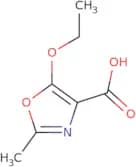
CAS :Versatile small molecule scaffoldFormule :C9H9N3Degré de pureté :Min. 95%Masse moléculaire :159.19 g/mol5-Ethoxy-2-methyl-1,3-oxazole-4-carboxylic acid
CAS :Versatile small molecule scaffoldFormule :C7H9NO4Degré de pureté :Min. 95%Masse moléculaire :171.15 g/mol4-Bromo-2,3,5,6-tetramethylbenzoic acid
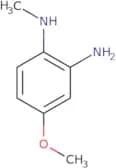
CAS :Versatile small molecule scaffoldFormule :C11H13BrO2Degré de pureté :Min. 95%Masse moléculaire :257.12 g/mol4-Methoxy-1-N-methylbenzene-1,2-diamine
CAS :Versatile small molecule scaffoldFormule :C8H12N2ODegré de pureté :Min. 95%Masse moléculaire :152.19 g/mol4-Methoxy-N-methyl-2-nitrobenzenamine
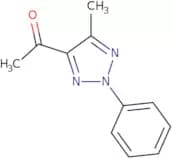
CAS :4-Methoxy-N-methyl-2-nitrobenzenamine is a quinone that is found in nature. It has been shown to have anti-tumour properties and may be used to treat tumours. 4-Methoxy-N-methyl-2-nitrobenzenamine has also been shown to have an oxidoreductase activity, which is an enzyme that catalyzes the oxidation of organic compounds. This compound also binds to tumour cells by hydrogen bonding and intramolecular hydrogen bonds. 4MMBN can bind to a proton on one molecule and a sulfoxide on another, which is a type of hydrogen bond. The recombinant human form of this compound has been shown to inhibit the growth of cancer cells in vitro.Formule :C8H10N2O3Degré de pureté :Min. 95%Masse moléculaire :182.18 g/mol1-(5-Methyl-2-phenyl-2H-1,2,3-triazol-4-yl)ethan-1-one
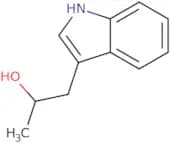
CAS :Versatile small molecule scaffoldFormule :C11H11N3ODegré de pureté :Min. 95%Masse moléculaire :201.22 g/mol1-(1H-Indol-3-yl)propan-2-ol
CAS :Produit contrôléVersatile small molecule scaffold
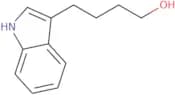
Formule :C11H13NODegré de pureté :Min. 95%Masse moléculaire :175.23 g/mol4-(1H-Indol-3-yl)butan-1-ol
CAS :Versatile small molecule scaffoldFormule :C12H15NODegré de pureté :Min. 95%Masse moléculaire :189.25 g/mol2,3-Dihydro-1H-isoindole-2-carboxamide
CAS :2,3-Dihydro-1H-isoindole-2-carboxamide is a synthetic compound that inhibits the synthesis of monoacylglycerol. It is an inhibitor of the enzyme diacylglycerol lipase (DAGL). This inhibition causes an increase in the levels of free fatty acids and glycerol, which are substrates for triglyceride synthesis. The increased levels of free fatty acids have been shown to have protective effects on heart diseases, while the increase in glycerol decreases fat deposition in adipose tissue. 2,3-Dihydro-1H-isoindole-2-carboxamide has been used as a tool to study the contribution of DAGL to triglyceride biosynthesis in cell culture and animal models.Formule :C9H10N2ODegré de pureté :Min. 95%Masse moléculaire :162.19 g/mol2-[4-(Methylsulfanyl)phenoxy]propanoic acid
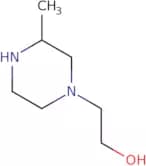
CAS :Versatile small molecule scaffoldFormule :C10H12O3SDegré de pureté :Min. 95%Masse moléculaire :212.27 g/mol2-(3-Methylpiperazin-1-yl)ethan-1-ol
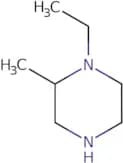
CAS :Versatile small molecule scaffoldFormule :C7H16N2ODegré de pureté :Min. 95%Masse moléculaire :144.21 g/mol1-Ethyl-2-methyl-piperazine
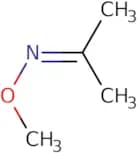
CAS :Versatile small molecule scaffoldFormule :C7H16N2Degré de pureté :Min. 95%Masse moléculaire :128.22 g/molMethoxy(propan-2-ylidene)amine
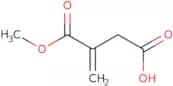
CAS :Please enquire for more information about Methoxy(propan-2-ylidene)amine including the price, delivery time and more detailed product information at the technical inquiry form on this pageFormule :C4H9NODegré de pureté :Min. 95 Area-%Masse moléculaire :87.12 g/mol3-(Methoxycarbonyl)but-3-enoic acid
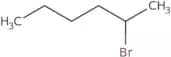
CAS :3-(Methoxycarbonyl)but-3-enoic acid is a monomer that belongs to the group of organic compounds. It has a viscosity of 0.1, and is soluble in water and alcohols. 3-(Methoxycarbonyl)but-3-enoic acid can be used for the synthesis of polyvinyl alcohol, an organic polymer. This compound has functional groups such as hydroxyl and carboxylic acids, which are important in biological functions such as DNA replication and protein synthesis. 3-(Methoxycarbonyl)but-3-enoic acid is also used for the production of carbon nanotubes by chemical vapor deposition, as well as metal hydroxides with high melting points.Formule :C6H8O4Degré de pureté :Min. 95%Masse moléculaire :144.12 g/mol2-Bromohexane (contains 3-Bromohexane) (stabilized with Copper chip)
CAS :2-Bromohexane is an organic compound and a chemical building block. It is produced by the reaction of 1,3-dibromohexane with copper. 2-Bromohexane is used in the production of epoxides and other chemicals. The synthesis of 2-bromohexane starts with the addition of bromine to 1,3-dibromohexane followed by the addition of copper (II) chloride. This reaction produces 3-bromohexane as a byproduct which can be removed from the reaction mixture using a Dean–Stark trap. In this process, two moles of hydrogen are used to convert one mole of bromine into one mole of hydrogen bromide gas, which can be easily condensed into liquid form. The monoalkylation product 2-bromohexane reacts with an alkyl halide to produce a mixture containing two different alkyl halides. These
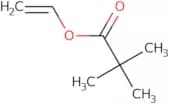
Formule :C6H13BrDegré de pureté :85%Masse moléculaire :165.07 g/molVinyl Pivalate (stabilized with HQ)
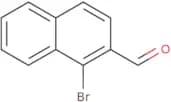
CAS :Vinyl Pivalate is a polyvinyl polymer stabilized with HQ. It is produced by condensation polymerization of vinyl acetate and pivalic acid in presence of a free radical initiator. The monomer ratio is 80:20. Vinyl Pivalate has a high degree of thermal expansion, which makes it suitable for use in the manufacture of films, coatings and adhesives. This polymer also has good chemical resistance and can be used in the manufacture of products where heat resistance is required. Vinyl Pivalate's reactive properties make it ideal for use as an ingredient in the production of polymers with reactive groups such as carboxylic acids or amines. The reaction mechanism for this polymerization is shown below:Formule :C7H12O2Degré de pureté :Min. 95%Masse moléculaire :128.17 g/mol1-Bromo-2-naphthaldehyde
CAS :1-Bromo-2-naphthaldehyde is a reactive aldehyde that reacts with alkyl halides to form unsymmetrical adducts. This compound undergoes intramolecular hydrogenation and can be used as an excellent starting material for synthesizing ferrocenes. 1-Bromo-2-naphthaldehyde is also used in the synthesis of photochromic compounds, which are compounds that change color when exposed to ultraviolet radiation. 1-Bromo-2-naphthaldehyde undergoes protonation and forms hydrogen bonds with other molecules, making it useful for research on hydrogen bonding.Formule :C11H7BrODegré de pureté :Min. 95%Masse moléculaire :235.08 g/molDiclosan-d4
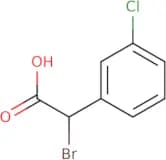
CAS :Diclosan-d4 is a cationic surfactant that is used in the treatment of wastewater. It has been shown to inhibit bacterial growth and reduce the number of bacteria in water. Diclosan-d4 is used as a biocide in detergent compositions, such as laundry detergents and dishwashing liquids. It also has antimicrobial properties against fungi, which may be due to its ability to bind to fatty acids and cell membranes. This compound binds to polymeric surfaces through electrostatic interactions with carboxyl groups on the polymer film surface. Diclosan-d4 is used at concentrations of 10 ppm for subclinical mastitis in cows, but can cause lung cell toxicity at higher concentrations.Formule :C12H4D4Cl2O2Degré de pureté :Min. 95%Masse moléculaire :259.12 g/mol2-Bromo-2-(3-chlorophenyl)acetic acid
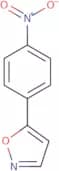
CAS :Versatile small molecule scaffoldFormule :C8H6BrClO2Degré de pureté :Min. 95%Masse moléculaire :249.49 g/mol5-(4-Nitrophenyl)isoxazole
CAS :Versatile small molecule scaffoldFormule :C9H6N2O3Degré de pureté :Min. 95%Masse moléculaire :190.16 g/molEthylene glycol bis(propionitrile) ether
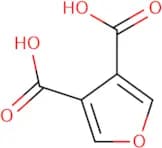
CAS :Ethylene glycol bis(propionitrile) ether is a byproduct of the production of ethylene. It is introduced into a reaction solution containing acrylonitrile, which reacts to form an intermediate that can then be isolated from the solution. The intermediate is neutralized and reacted with water to produce ethylene glycol bis(propionitrile) ether. The electrochemical impedance spectroscopy (EIS) technique has been used to study the morphology and solvation of this compound.Formule :C8H12N2O2Degré de pureté :Min. 95%Masse moléculaire :168.2 g/mol3,4-Furandicarboxylic acid
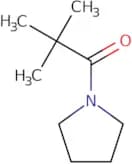
CAS :3,4-Furandicarboxylic acid is a crystalline compound that belongs to the group of carboxylic acids. It is formed by the hydrogenation of 3,4-dihydroxyphenylacetic acid and has been used in the industrial production of diethyl esters. The crystal structure of 3,4-furandicarboxylic acid has been determined using X-ray crystallography. This compound forms a dihedral angle with the ethyl group and hydrogen bonds to the proton on one side and an intramolecular hydrogen bond on the other side. 3,4-Furandicarboxylic acid is used as a precursor for hydrochloric acid and as an energy-efficient fuel in organic synthesis reactions.Formule :C6H4O5Degré de pureté :Min. 95%Masse moléculaire :156.09 g/mol2,2-Dimethyl-1-(pyrrolidin-1-yl)propan-1-one
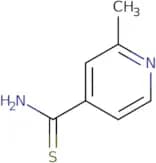
CAS :Versatile small molecule scaffoldFormule :C9H17NODegré de pureté :Min. 95%Masse moléculaire :155.24 g/mol2-Methy-4-thioisonicotinicamide
CAS :Versatile small molecule scaffoldFormule :C7H8N2SDegré de pureté :Min. 95%Masse moléculaire :152.22 g/mol4'-Nitrobenzanilide
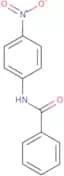
CAS :4'-Nitrobenzanilide is an organic compound that is used to synthesize dyes and other chemicals. It can be prepared by reacting a primary or secondary amine with 4-nitrochlorobenzene in the presence of a base. This reaction produces the nitroanilide, which can be oxidized to the nitrobenzanilide. The high yield and low toxicity of this process make it an attractive alternative to older methods of production. 4'-Nitrobenzanilide has been shown to have significant environmental effects, particularly in terms of pollution caused by chlorinated solvents.Formule :C13H10N2O3Degré de pureté :Min. 95%Masse moléculaire :242.23 g/mol4-Methoxy-N-methylbenzamide
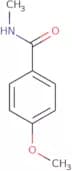
CAS :4-Methoxy-N-methylbenzamide is a benzene that has been synthetically modified to an amide, which is then annulated to an isoquinoline. This compound has two functionalizations: one cyclopropane and one diffraction. The yield of this reaction was approximately 55%. 4-Methoxy-N-methylbenzamide (4MMB) is a x-ray active molecule with a dihedral angle of about 60°, which is common in natural products. 4MMB is also an oxidative molecule and reacts with biomolecules. 4MMB contains the following characteristic structural features: an aromatic ring, a carbonyl group, and two amide bonds.
Formule :C9H11NO2Degré de pureté :Min. 95%Masse moléculaire :165.19 g/mol2-Bromopropionaldehyde Diethyl Acetal
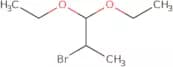
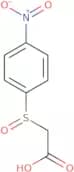
CAS :2-Bromopropionaldehyde diethyl acetal is an organic compound that is used as a reactant in the preparation of other compounds. It can be prepared by the reaction of 3-bromo-1-propanol with magnesium in ether. The reaction is catalyzed by pyridinium chlorochromate, which facilitates the ring-opening reaction. The product can also be used to introduce alkyl groups onto aromatic rings, such as benzene and naphthalene. 2-Bromopropionaldehyde diethyl acetal has a high redox potential, making it reactive and nucleophilic.Formule :C7H15BrO2Degré de pureté :Min. 95%Masse moléculaire :211.1 g/mol2-(4-Nitrobenzenesulfinyl)acetic acid
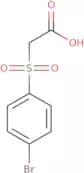
CAS :2-(4-Nitrobenzenesulfinyl)acetic acid is an organic compound that has a hydrogen bond acceptor and a hydrogen bond donor. It also has two groups of nitrobenzenesulfonic acid attached to the same carbon atom, and therefore contains both electron-donating and electron-withdrawing groups.Formule :C8H7NO5SDegré de pureté :Min. 95%Masse moléculaire :229.21 g/mol2-(4-Bromobenzenesulfonyl)acetic acid
CAS :Versatile small molecule scaffoldFormule :C8H7BrO4SDegré de pureté :Min. 95%Masse moléculaire :279.11 g/mol2-[(4-Nitrophenyl)sulfanyl]acetic acid
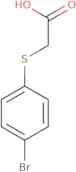
CAS :2-[(4-Nitrophenyl)sulfanyl]acetic acid is a colorless liquid with a boiling point of 168°C. It is soluble in water, glycol, and ether, but not in ethanol. 2-[(4-Nitrophenyl)sulfanyl]acetic acid has been shown to be an acceptor for borate, forming the perborate ion. It also reacts with glycol to form the glyoxalate ion. The compound has been shown to react with nitric acid and ethylene glycol to form nitroethane and acetic acid molecules. This reaction is catalyzed by hydrogen bonding between the oxygen atoms of acetic acid and nitric acid, which causes an electron transfer from nitric acid to acetic acid molecules. This process results in reactive species that can then react with other substances such as hydrogen bonds or peracetic acid.Formule :C8H7NO4SDegré de pureté :Min. 95%Masse moléculaire :213.21 g/mol(4-Bromo-phenylsulfanyl)-acetic acid
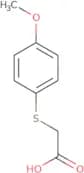
CAS :Versatile small molecule scaffoldFormule :C8H7BrO2SDegré de pureté :Min. 95%Masse moléculaire :247.11 g/mol2-((4-Methoxyphenyl)thio)acetic acid
CAS :Versatile small molecule scaffoldFormule :C9H10O3SDegré de pureté :Min. 95%Masse moléculaire :198.24 g/mol1-(4-Bromophenyl)-3,3-dimethylurea
CAS :1-(4-Bromophenyl)-3,3-dimethylurea is a growth regulator that belongs to the heterocycle pyrazole derivative. It binds to the cytochrome P450 enzyme and inhibits the production of proteins vital for cell division, leading to cell death by inhibiting the production of proteins vital for cell division. 1-(4-Bromophenyl)-3,3-dimethylurea has been shown to inhibit methionine adenosyltransferase and suppress DNA methylation. This drug also has a toxic effect on respiratory system cells, which may be due to its ability to induce apoptosis.Formule :C9H11BrN2ODegré de pureté :Min. 95%Masse moléculaire :243.1 g/mol


![3-[(2-Methoxyphenyl)amino]propanoic acid](/_next/image/?url=https%3A%2Fstatic.cymitquimica.com%2Fproducts%2F3D%2Fthumb-webp%2FDAA33466.webp&w=3840&q=75)
![5-Methyl-benzo[1,2,5]thiadiazol-4-ylamine](/_next/image/?url=https%3A%2Fstatic.cymitquimica.com%2Fproducts%2F3D%2Fthumb-webp%2FDAA33893.webp&w=3840&q=75)

![2-[4-(Methylsulfanyl)phenoxy]propanoic acid](/_next/image/?url=https%3A%2Fstatic.cymitquimica.com%2Fproducts%2F3D%2Fthumb-webp%2FDAA36490.webp&w=3840&q=75)


![2-[(4-Nitrophenyl)sulfanyl]acetic acid](/_next/image/?url=https%3A%2Fstatic.cymitquimica.com%2Fproducts%2F3D%2Fthumb-webp%2FDAA40675.webp&w=3840&q=75)