Building Blocks
Sous-catégories appartenant à la catégorie "Building Blocks"
- Acides boroniques et dérivés de l'acide boronique(5.780 produits)
- Building Blocks Chiraux(1.240 produits)
- Building Blocks Hydrocarbonés(6.100 produits)
- Building Blocks organiques(61.009 produits)
205248 produits trouvés pour "Building Blocks"
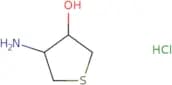
rac-(3R,4S)-4-Aminothiolan-3-ol hydrochloride
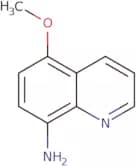
CAS :Versatile small molecule scaffoldFormule :C4H10ClNOSDegré de pureté :Min. 95%Masse moléculaire :155.65 g/mol8-Amino-5-methoxyquinoline
CAS :8-Amino-5-methoxyquinoline is a quinoline derivative that can be prepared by a radical mechanism. It is synthesized from ammonium nitrate and c–h bond. 8-Amino-5-methoxyquinoline has been used in the synthesis of various other compounds and for the study of its functional groups. The compound also has been studied to determine if it can be an effective catalyst for reactions such as amination reactions, but it is not considered very efficient in this role.Formule :C10H10N2ODegré de pureté :Min. 95%Masse moléculaire :174.2 g/molBenzyl-(5,6-dihydro-4H-[1,3]thiazin-2-yl)-amine
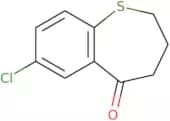
CAS :Versatile small molecule scaffoldFormule :C11H14N2SDegré de pureté :Min. 95%Masse moléculaire :206.31 g/mol7-Chloro-2,3,4,5-tetrahydro-1-benzothiepin-5-one
CAS :Versatile small molecule scaffoldFormule :C10H9ClOSDegré de pureté :Min. 95%Masse moléculaire :212.7 g/mol4,6-Dichloro-1H-benzo[D]imidazol-2-amine
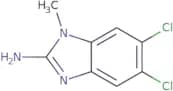
CAS :Versatile small molecule scaffoldFormule :C7H5Cl2N3Degré de pureté :Min. 95%Masse moléculaire :202.04 g/mol5,6-Dichloro-1-methyl-1H-1,3-benzodiazol-2-amine
CAS :Versatile small molecule scaffoldFormule :C8H7Cl2N3Degré de pureté :Min. 95%Masse moléculaire :216.06 g/molImidazo[1,2-a]pyridin-3-ylmethanol
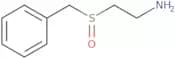
CAS :Imidazo[1,2-a]pyridin-3-ylmethanol (IM) is a heterocyclic compound that has been used as a fluorescent sensor for acidic environments. IM has been shown to emit fluorescence when it reacts with hydroxymethyl groups in the presence of solvents. This reaction is an example of fluorescence emission. The emission of the molecule is dependent on its environment, and can be sensitive to changes in pH or solvent composition. IM has also been used extensively in synthetic organic chemistry as a reactive intermediate, due to its high reactivity and low toxicity.Formule :C8H8N2ODegré de pureté :Min. 95%Masse moléculaire :148.17 g/mol2-Phenylmethanesulfinylethan-1-amine
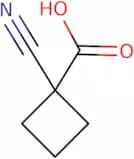
CAS :Versatile small molecule scaffoldFormule :C9H13NOSDegré de pureté :Min. 95%Masse moléculaire :183.27 g/mol1-Cyanocyclobutanecarboxylic acid
CAS :Versatile small molecule scaffoldFormule :C6H7NO2Degré de pureté :Min. 95%Masse moléculaire :125.13 g/molN-{Imidazo[1,2-a]pyridin-3-ylmethylidene}hydroxylamine
CAS :Versatile small molecule scaffoldFormule :C8H7N3ODegré de pureté :Min. 95%Masse moléculaire :161.16 g/mol1-{6-bromoimidazo[1,2-a]pyridin-3-yl}ethan-1-one
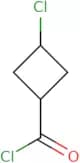
CAS :Versatile small molecule scaffoldFormule :C9H7BrN2ODegré de pureté :Min. 95%Masse moléculaire :239.07 g/mol3-Chlorocyclobutanecarbonyl chloride
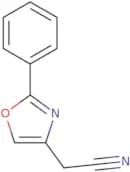
CAS :3-Chlorocyclobutanecarbonyl chloride is a chemical compound that is used in organic synthesis as a diiodide source. 3-Chlorocyclobutanecarbonyl chloride can be prepared by reacting acetone with cyclobutenes in the presence of catalytic amounts of copper(II) or silver(I) oxide. The reaction affords the desired product in high yield and can be mediated by strong acids such as hydrochloric acid.Formule :C5H6Cl2ODegré de pureté :Min. 95%Masse moléculaire :153 g/mol2-(2-Phenyl-1,3-oxazol-4-yl)acetonitrile
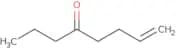
CAS :Versatile small molecule scaffoldFormule :C11H8N2ODegré de pureté :Min. 95%Masse moléculaire :184.19 g/molOct-7-en-4-one
CAS :Versatile small molecule scaffold
Formule :C8H14ODegré de pureté :Min. 95%Masse moléculaire :126.2 g/molMethyl 2-[(4-hydroxyphenyl)sulfanyl]acetate
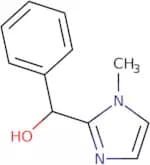
CAS :Versatile small molecule scaffoldFormule :C9H10O3SDegré de pureté :Min. 95%Masse moléculaire :198.24 g/mol(1-Methyl-1H-imidazol-2-yl)(phenyl)methanol
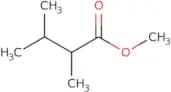
CAS :Versatile small molecule scaffoldFormule :C11H12N2ODegré de pureté :Min. 95%Masse moléculaire :188.23 g/molMethyl 2,3-dimethylbutanoate
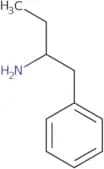
CAS :Methyl 2,3-dimethylbutanoate is a synthetic cannabinoid that has been found to be an agonist of the CB2 receptor. It can be used as an analytical reference for assays of other synthetic cannabinoids. The structure of methyl 2,3-dimethylbutanoate has been determined by NMR and MS spectroscopy. Methyl 2,3-dimethylbutanoate is anticholinergic and has a depressant effect on the central nervous system. This drug also binds to the human liver cb2 receptor with high affinity. In mice, methyl 2,3-dimethylbutanoate induces a higher level of apoptosis in hematopoietic cells than 5F-MDMB-PINACA. Methy 2,3-dimethylbutanoate has been detected in heroin and urine samples from humans who smoked marijuana or used other synthetic cannabinoids.Formule :C7H14O2Degré de pureté :Min. 95%Masse moléculaire :130.18 g/mol1-Phenyl-2-butanamine
CAS :Produit contrôlé1-Phenyl-2-butanamine is a dietary supplement that is used as a stimulant. It has been shown to increase the uptake of glucose and glycogen in the liver, which may be due to its ability to stimulate insulin secretion. 1-Phenyl-2-butanamine was also found to inhibit the growth of human pathogens such as Helicobacter pylori and Mycoplasma pneumoniae. This compound has also been shown to have conformational properties in urine samples.
Formule :C10H15NDegré de pureté :Min. 95%Masse moléculaire :149.23 g/mol(2R)-1-Phenylbutan-2-amine
CAS :Produit contrôléVersatile small molecule scaffoldFormule :C10H15NDegré de pureté :Min. 95%Masse moléculaire :149.23 g/mol3,3-dimethylbutan-1-amine hydrochloride
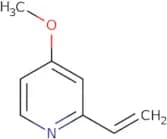
CAS :Versatile small molecule scaffoldFormule :C6H16ClNDegré de pureté :Min. 95%Masse moléculaire :137.65 g/mol4-Methoxy-2-vinylpyridine
CAS :4-Methoxy-2-vinylpyridine is an electrophilic compound that is used as a ligand in industrial applications. It has been shown to form complexes with copper and other elements, such as silver and gold. This compound is also used to study the thermodynamic and kinetic interactions between arenes and substituents. 4-Methoxy-2-vinylpyridine can be synthesized by reacting 2-methylpyridine with methyl acetate in the presence of a base. The reaction produces an unsymmetrical molecule because the methyl group on the pyridine ring cannot be substituted. The phenol group is also hydroxylated during this process.
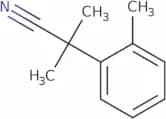
Formule :C8H9NODegré de pureté :Min. 95%Masse moléculaire :135.17 g/mol2-Methyl-2-(2-methylphenyl)propanenitrile
CAS :Versatile small molecule scaffoldFormule :C11H13NDegré de pureté :Min. 95%Masse moléculaire :159.23 g/mol2-(4-Chlorophenyl)-2-methylpropanenitrile
CAS :Versatile small molecule scaffoldFormule :C10H10ClNDegré de pureté :Min. 95%Masse moléculaire :179.64 g/mol1-(4-Methoxy-phenyl)-1-methyl-ethylamine
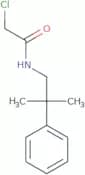
CAS :Dihydrotestosterone (DHT) is a steroid hormone that is produced in the body. It is converted from testosterone by the enzyme 5-alpha reductase. DHT has been shown to have an important role in prostate cancer, as well as other types of cancer such as breast cancer and hirsutism. DHT can also be used to treat certain types of hair loss, such as male pattern baldness or female pattern baldness. The drug 1-(4-methoxy-phenyl)-1-methyl-ethylamine has been shown to block the synthesis of DHT by inhibiting 5-alpha reductase, which prevents the conversion of testosterone into DHT.Formule :C10H15NODegré de pureté :Min. 95%Masse moléculaire :165.23 g/mol2-Chloro-N-(2-methyl-2-phenylpropyl)acetamide
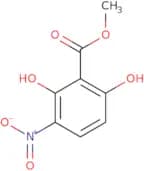
CAS :Versatile small molecule scaffoldFormule :C12H16ClNODegré de pureté :Min. 95%Masse moléculaire :225.71 g/molmethyl 2,6-dihydroxy-3-nitrobenzoate
CAS :Versatile small molecule scaffoldFormule :C8H7NO6Degré de pureté :Min. 95%Masse moléculaire :213.14 g/molethyl 3-oxo-2-phenyl-2,3-dihydro-1H-pyrazole-4-carboxylate
CAS :Ethyl 3-oxo-2-phenyl-2,3-dihydro-1H-pyrazole-4-carboxylate is an aliphatic amine that has been shown to be a piperidine and pyrrolidine analog. This compound has been shown to produce yields of up to 98% with the use of a simple procedure and it has been used as a starting material for the synthesis of other compounds. In addition, this compound behaves like an aliphatic amine because it can undergo reductive amination with nitrites and carboxamides.
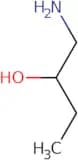
Formule :C12H12N2O3Degré de pureté :Min. 95%Masse moléculaire :232.24 g/mol(S)-1-Aminobutan-2-ol
CAS :Versatile small molecule scaffold
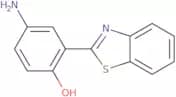
Formule :C4H11NODegré de pureté :Min. 95%Masse moléculaire :89.14 g/mol2-(5-Amino-2-hydroxyphenyl)benzothiazole
CAS :2-(5-Amino-2-hydroxyphenyl)benzothiazole is a hydrophobic, organic molecule that has been used in the synthesis of magnetic materials. This compound is synthesized by trimethylation of 2-(5-amino-2-hydroxyphenyl)benzothiazole followed by chlorination with trichloroacetic acid. The synthesized substance exhibits fluorescence and has been used in microscopy studies. The photophysical properties and the transfer dynamics of this compound have also been studied using absorption spectroscopy and fluorescence microscopy techniques. It has also been shown to have chloride ion binding properties. In addition, this organic molecule has been found to have functional groups that are mesoporous in nature.Formule :C13H10N2OSDegré de pureté :Min. 95%Masse moléculaire :242.3 g/molrac-1-[(1R,2R)-2-(4-Methoxyphenyl)cyclopropyl]ethan-1-one
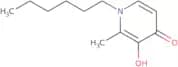
CAS :Versatile small molecule scaffoldFormule :C12H14O2Degré de pureté :Min. 95%Masse moléculaire :190.24 g/mol1-Hexyl-3-hydroxy-2-methyl-1,4-dihydropyridin-4-one
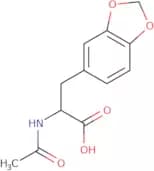
CAS :Versatile small molecule scaffoldFormule :C12H19NO2Degré de pureté :Min. 95%Masse moléculaire :209.28 g/mol3-(1,3-Dioxaindan-5-yl)-2-acetamidopropanoic acid
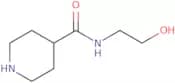
CAS :Versatile small molecule scaffoldFormule :C12H13NO5Degré de pureté :Min. 95%Masse moléculaire :251.23 g/molN-(2-Hydroxyethyl)-4-piperidinecarboxamide hydrochloride
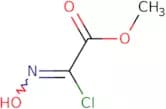
CAS :Versatile small molecule scaffoldFormule :C8H17ClN2O2Degré de pureté :Min. 95%Masse moléculaire :208.69 g/molMethyl 2-chloro-2-(hydroxyimino)acetate
CAS :Methyl 2-chloro-2-(hydroxyimino)acetate is a benzyl derivative of nikkomycin. It is the diastereomer of ethylene benzyl chloride and has been shown to inhibit the growth of bacteria by inhibiting dehydrogenase, which is an enzyme involved in amino acid metabolism. Methyl 2-chloro-2-(hydroxyimino)acetate has been shown to be enantiopure, with only one of its two possible stereoisomers present. This product also inhibits the growth of bacteria by binding to lysine residues on their cell surface and preventing them from synthesizing proteins.
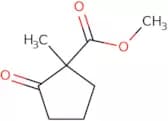
Formule :C3H4ClNO3Degré de pureté :Min. 95%Masse moléculaire :137.52 g/molMethyl 1-methyl-2-oxocyclopentane-1-carboxylate
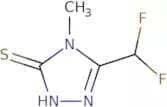
CAS :Methyl 1-methyl-2-oxocyclopentane-1-carboxylate is an enantiomer of methyl 1-methylcyclohexane carboxylate. This compound is prepared by reduction of the corresponding aldehyde with lithium aluminum hydride, followed by cyclization with hydrochloric acid. The product is then converted to the corresponding alcohol by reaction with dimethylformamide and sodium methoxide. Methyl 1-methyl-2-oxocyclopentane-1-carboxylate has been used in the synthesis of a number of chiral secondary alcohols. The resulting diastereomers are separated using column chromatography or recrystallization to provide pure enantiomers. Voltammetry may also be used to determine the chiral purity of these compounds.Formule :C8H12O3Degré de pureté :Min. 95%Masse moléculaire :156.18 g/mol5-(Difluoromethyl)-4-methyl-4H-1,2,4-triazole-3-thiol
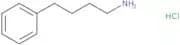
CAS :Versatile small molecule scaffoldFormule :C4H5F2N3SDegré de pureté :Min. 95%Masse moléculaire :165.17 g/mol4-Phenylbutylamine hydrochloride
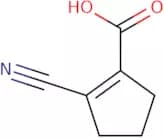
CAS :4-Phenylbutylamine hydrochloride is a chemopreventive agent that has been shown to inhibit tumorigenesis in animal models of lung cancer. The compound can be used to prevent the development of adenomas and neoplasia, which may be due to its ability to inhibit carcinogenesis. This drug inhibits the growth of tumors by inducing apoptosis, inhibiting cell proliferation, and altering the expression of genes that regulate cell cycle progression. 4-Phenylbutylamine hydrochloride also has significant effects on animals with pulmonary neoplasia.Formule :C10H16ClNDegré de pureté :Min. 95%Masse moléculaire :185.69 g/mol2-Cyanocyclopent-1-ene-1-carboxylic acid
CAS :Versatile small molecule scaffoldFormule :C7H7NO2Degré de pureté :Min. 95%Masse moléculaire :137.14 g/mol2,3-Dimethyl 6-methylpyrazolo[1,5-a]pyridine-2,3-dicarboxylate
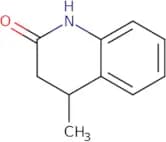
CAS :Versatile small molecule scaffoldFormule :C12H12N2O4Degré de pureté :Min. 95%Masse moléculaire :248.23 g/mol4-Methyl-1,2,3,4-tetrahydroquinolin-2-one
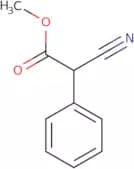
CAS :Versatile small molecule scaffoldFormule :C10H11NODegré de pureté :Min. 95%Masse moléculaire :161.2 g/molMethyl 2-cyano-2-phenylacetate
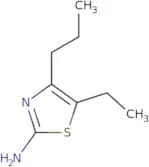
CAS :Methyl 2-cyano-2-phenylacetate is a phthalazinone derivative that is used to treat cardiovascular and neurological disorders. It has been shown to be neuroprotective in animal models of Parkinson's disease. Methyl 2-cyano-2-phenylacetate also has antihypotensive, antianemic, nitro, and antibacterial properties. This drug is soluble in both water and organic solvents and can be administered by injection or orally. Methyl 2-cyano-2-phenylacetate inhibits the synthesis of guanylate cyclase, which produces cyclic guanosine monophosphate (cGMP) from guanosine triphosphate (GTP). cGMP can act as a second messenger for various tissues. The inhibition of cGMP production leads to hypotension and vasodilation.Formule :C10H9NO2Degré de pureté :Min. 95%Masse moléculaire :175.18 g/mol5-Ethyl-4-propyl-1,3-thiazol-2-amine
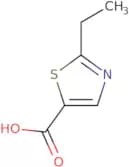
CAS :Versatile small molecule scaffoldFormule :C8H14N2SDegré de pureté :Min. 95%Masse moléculaire :170.28 g/mol2-Ethyl-1,3-thiazole-5-carboxylic acid
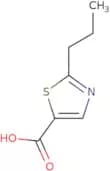
CAS :Versatile small molecule scaffoldFormule :C6H7NO2SDegré de pureté :Min. 95%Masse moléculaire :157.19 g/mol2-Propylthiazole-5-carboxylic acid
CAS :2-Propylthiazole-5-carboxylic acid (2PTZ) is a fluorescent probe that is used in diagnostic and research applications. This compound is a substrate for the dehydrogenase enzyme, which catalyzes its oxidation to 2-propylthiazolidine-4,5-dione. 2PTZ is used for the measurement of plasma proteins and tissues after myocardial infarction. It can be used as a marker of oxidative damage caused by ischaemic injury in rat ligation experiments. The fluorescence intensity of 2PTZ increases with the degree of oxidative damage.Formule :C7H9NO2SDegré de pureté :Min. 95%Masse moléculaire :171.22 g/mol2-Butyl-1,3-thiazole-5-carboxylic acid
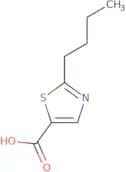
CAS :Versatile small molecule scaffoldFormule :C8H11NO2SDegré de pureté :Min. 95%Masse moléculaire :185.25 g/mol9-Methyl-9H-purine-2,6-diamine
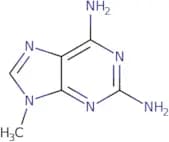
CAS :Versatile small molecule scaffold
Formule :C6H8N6Degré de pureté :Min. 95%Masse moléculaire :164.17 g/mol6-(Dimethylamino)-2-pyridinecarboxylic acid
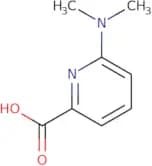
CAS :Versatile small molecule scaffold
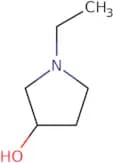
Formule :C8H10N2O2Degré de pureté :Min. 95%Masse moléculaire :166.18 g/mol1-Ethyl-3-pyrrolidinol
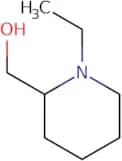
CAS :1-Ethyl-3-pyrrolidinol is an organic compound belonging to the class of zwitterionic compounds. It has a molecular weight of 210.24 g/mol and two chiral centers. It is soluble in water, methanol, ethanol, acetone and benzene but insoluble in ether and hexane. 1-Ethyl-3-pyrrolidinol can be synthesized by reacting 4-hydroxybenzaldehyde with ammonia and ethyl bromide in the presence of sodium ethoxide. The compound is used as a reagent for organic synthesis, specifically for converting ketones into esters or amides. It reacts with aldehydes to form esters or with acid chlorides to form amides.Formule :C6H13NODegré de pureté :Min. 95%Masse moléculaire :115.17 g/mol(1-Ethyl-2-piperidinyl)methanol
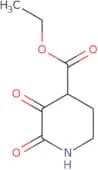
CAS :Versatile small molecule scaffoldFormule :C8H17NODegré de pureté :Min. 95%Masse moléculaire :143.23 g/molEthyl 2,3-dioxopiperidine-4-carboxylate
CAS :Versatile small molecule scaffoldFormule :C8H11NO4Degré de pureté :Min. 95%Masse moléculaire :185.18 g/mol

![Benzyl-(5,6-dihydro-4H-[1,3]thiazin-2-yl)-amine](/_next/image/?url=https%3A%2Fstatic.cymitquimica.com%2Fproducts%2F3D%2Fthumb-webp%2FFBA48073.webp&w=3840&q=75)
![4,6-Dichloro-1H-benzo[D]imidazol-2-amine](/_next/image/?url=https%3A%2Fstatic.cymitquimica.com%2Fproducts%2F3D%2Fthumb-webp%2FFBA48676.webp&w=3840&q=75)
![Imidazo[1,2-a]pyridin-3-ylmethanol](/_next/image/?url=https%3A%2Fstatic.cymitquimica.com%2Fproducts%2F3D%2Fthumb-webp%2FFBA48943.webp&w=3840&q=75)
![N-{Imidazo[1,2-a]pyridin-3-ylmethylidene}hydroxylamine](/_next/image/?url=https%3A%2Fstatic.cymitquimica.com%2Fproducts%2F3D%2Fthumb-webp%2FFBA49308.webp&w=3840&q=75)
![1-{6-bromoimidazo[1,2-a]pyridin-3-yl}ethan-1-one](/_next/image/?url=https%3A%2Fstatic.cymitquimica.com%2Fproducts%2F3D%2Fthumb-webp%2FFBA49341.webp&w=3840&q=75)
![Methyl 2-[(4-hydroxyphenyl)sulfanyl]acetate](/_next/image/?url=https%3A%2Fstatic.cymitquimica.com%2Fproducts%2F3D%2Fthumb-webp%2FFBA51263.webp&w=3840&q=75)





![rac-1-[(1R,2R)-2-(4-Methoxyphenyl)cyclopropyl]ethan-1-one](/_next/image/?url=https%3A%2Fstatic.cymitquimica.com%2Fproducts%2F3D%2Fthumb-webp%2FFBA62568.webp&w=3840&q=75)
![2,3-Dimethyl 6-methylpyrazolo[1,5-a]pyridine-2,3-dicarboxylate](/_next/image/?url=https%3A%2Fstatic.cymitquimica.com%2Fproducts%2F3D%2Fthumb-webp%2FFBA68996.webp&w=3840&q=75)